

Free Benin Kingdom Travel Guide & Mobile App
Explore Benin Kingdom with free travel guides. Discover regional history, expert tips, proposed trips, and audio guides on web or mobile app.


Explore Benin Kingdom through Benin City's royal history, bronze-casting traditions, museums, markets and enduring Edo cultural life.
Read more about Benin Kingdom
When is the best time to visit Benin Kingdom?
Best: December–February · 30–31°C| Month | High (°C) | Rainfall (mm) |
|---|---|---|
| January (best) | 30 | 10 |
| February (best) | 31 | 15 |
| March | 32 | 30 |
| April | 32 | 50 |
| May | 31 | 80 |
| June | 30 | 120 |
| July | 30 | 160 |
| August | 29 | 180 |
| September | 30 | 160 |
| October | 30 | 120 |
| November | 30 | 60 |
| December (best) | 30 | 20 |
Getting to and around Benin Kingdom
How to get there
Transportation
Top city travel guides in Benin Kingdom
The cities of Benin Kingdom, and the easiest places to base yourself.
-

-

-

-


Swipe for more cities
Destinations in Benin Kingdom
Resorts, valleys and scenic spots worth a trip of their own.
-

-


Swipe for more destinations
Best attractions in Benin Kingdom
Benin City's principal attractions centre on history, artistic production and living Edo culture. The National Museum provides an accessible introduction to Benin's courtly traditions and the wider history of the area, while Igun Street is associated with the city's enduring brass-casting guild tradition. The Benin Moat, or Iya, offers evidence of the extensive earthworks that once defined and protected the historic city, although the surviving remains are encountered within a modern urban environment rather than an untouched archaeological landscape. Other experiences include local markets, religious architecture, civic spaces and opportunities to learn about Edo food and craft traditions. The city is also a base for journeys into the broader landscapes of Edo State, including forested areas and rural communities, but these are separate excursions requiring reliable transport and current local advice. Visitors interested in royal history should distinguish museum collections, contemporary craft production and living palace traditions, since each represents a different part of the kingdom's legacy. Benin City's attraction landscape is therefore less about a single monumental circuit than about connecting places, stories and people across an active Nigerian city.
-
Museum
National Museum Benin City
Explore the National Museum Benin City, where history and culture of the Edo people come alive through captivating artifacts and exhibitions.
-
Tourist attraction
Pythons Temple
Experience the spiritual heritage of Benin at Pythons Temple, a unique destination that celebrates local culture and the sacred bond with nature.
-
Cultural landmark
Oba Palace
Explore the magnificent Oba Palace, a cultural landmark in Benin City showcasing the rich history and artistry of the Edo people.
-
Water park
Park Vega Waterpark
Dive into endless fun at Park Vega Waterpark, Agbor's ultimate destination for aquatic adventures, relaxation, and family-friendly activities.

Best landmarks in Benin Kingdom
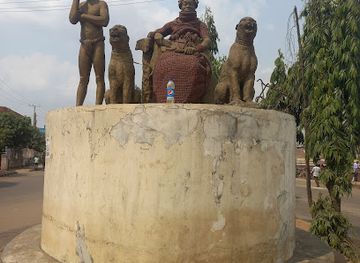
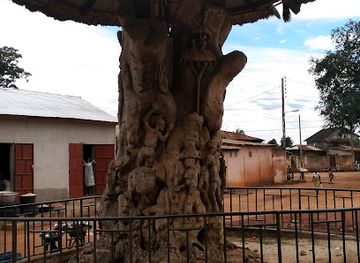
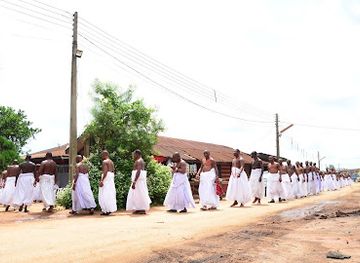
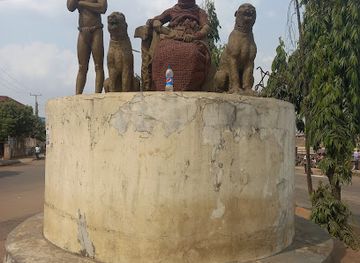
The Benin Moat is the most important surviving physical reminder of the scale of the historic city. Known locally as the Iya, the network of earthworks once marked and defended the urban and territorial structure of Benin, extending far beyond the small sections visible to many contemporary visitors. The National Museum is significant not only as a collection but also as a public place where the history of the kingdom is interpreted within modern Benin City. Igun Street has landmark value through its association with the brass-casting guilds and the continuation of a court-linked craft tradition. The Oba's Palace is central to Benin's political and cultural symbolism, although it is a living royal institution and access must follow current palace protocols. The Emotan Statue and its surrounding area commemorate a figure associated with Benin historical tradition and the city's civic memory. Together, these places show that the kingdom's heritage survives through earthworks, royal institutions, public memorials and artisan communities rather than through one complete preserved medieval city.
-
Movie theater
Kada Plaza Cinema & Entertainment Centre
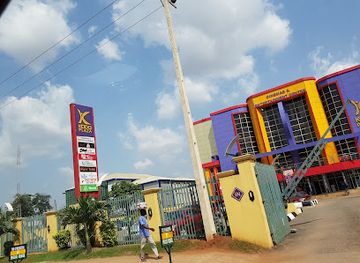
Discover the ultimate entertainment experience at Kada Plaza Cinema & Entertainment Centre in Benin City, featuring movies, dining, and gaming all in one location.
-
Museum
National Museum Benin City
Discover the cultural treasures of the Benin Kingdom at the National Museum in Benin City, a captivating journey through history and artistry.
-
Zoo
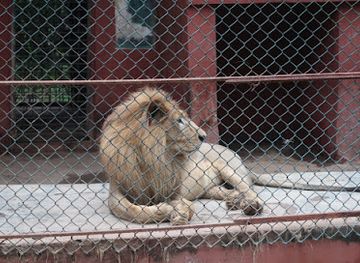
Ogba Zoo, Benin City.
Experience the vibrant wildlife and lush landscapes of Ogba Zoo in Benin City, an unforgettable destination for nature lovers and families.
-
Tourist attraction
Pythons Temple
Explore the enchanting Pythons Temple in Ouidah, Benin, a spiritual haven where Voodoo traditions come to life amidst sacred pythons and rich cultural heritage.
Explore Benin Kingdom on the map
Plan your trip on one map. See where the top cities, national parks and sights are, and book hotels and experiences in a few clicks.
Best hotels in Benin Kingdom
Best restaurants in Benin Kingdom
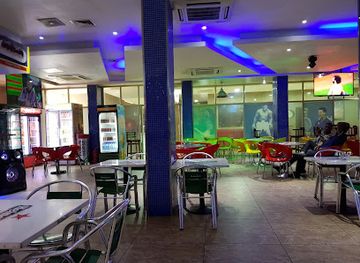
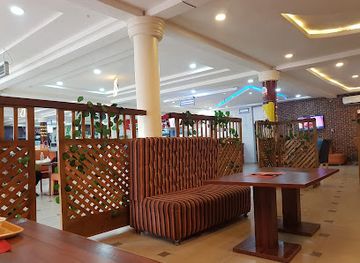
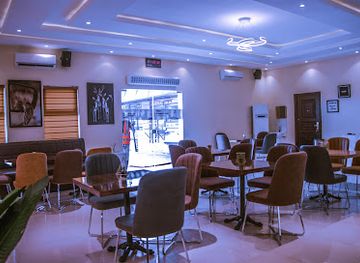
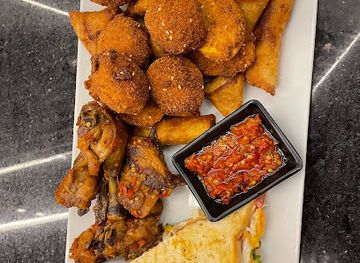
Dining in Benin City reflects the broader food culture of southern Nigeria while retaining Edo preferences and local specialities. Restaurants, hotels and informal eateries commonly serve rice, beans, yam, plantain, cassava, grilled meat, chicken and fish, with soups and stews eaten alongside pounded yam or other swallows. Edo dishes such as black soup, often called banga-like or obo-based in local contexts depending on preparation, and other richly seasoned soups may appear on menus, though recipes and names vary between households and establishments. Roadside grills and small neighbourhood restaurants can be useful for trying everyday food, while established hotels offer more predictable service and a wider range of Nigerian and international dishes. Markets and food stalls provide fresh produce, snacks and drinks, but hygiene standards differ, so choose busy outlets with good turnover and clean preparation areas. Tipping is not uniformly required, though a modest amount may be appreciated where service has been provided.
-
Restaurant
Kada Fried Chicken
Discover delicious meals at Kada Fried Chicken - where local flavors meet casual dining in Benin City.
-
Fast Food
GT food plus (New Q)
Discover a delightful mix of local and international flavors at GT Food Plus in Benin City – where fast food meets quality.
-
Bar
Barcode Station
Discover Barcode Station in Benin City: A lively bar offering great food and drinks with delivery options in a vibrant atmosphere.
-
Family-friendly
Home & away Restaurant
Discover culinary delights at Home & Away Restaurant in Benin City - where family-friendly dining meets authentic flavors.
Best bars in Benin Kingdom
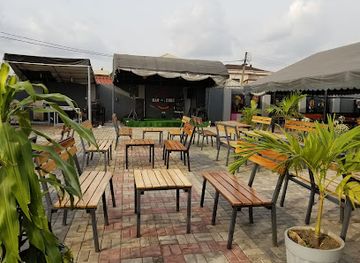
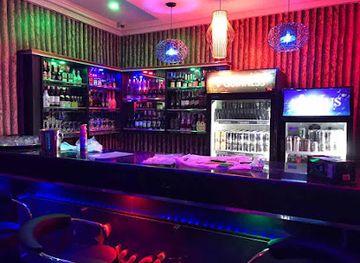
Evening life in Benin City is concentrated around restaurants, hotel lounges, neighbourhood bars, live-music settings and social venues rather than a single defined nightlife district. The city has a youthful population and an active contemporary music culture, but particular clubs and events can change quickly, so current local recommendations are more reliable than fixed listings. Visitors may find Nigerian beer, soft drinks, spirits and cocktails in established venues, while informal bars offer a more local atmosphere. In quieter parts of the city, evenings commonly centre on food, conversation and family or community gatherings. Use a trusted taxi or driver after dark, keep phones and valuables discreet, and check payment arrangements before ordering. Drinking is not necessary to engage with Benin City's evening culture; restaurants, cultural conversations and music-led venues provide alternatives.
-
Bar
Barcode Station
Discover Barcode Station: A lively bar and lounge in Benin City, blending delicious cuisine with a vibrant atmosphere for an unforgettable experience.
-
Lounge
The Quid
Experience the vibrant atmosphere and stylish comfort of The Quid, a premier lounge in Benin City perfect for relaxation and social gatherings.
-
Grill
Luciano Bar And Lounge
Discover the vibrant flavors and lively atmosphere of Luciano Bar And Lounge in Benin City, Nigeria, a perfect spot for food and music lovers.
-
Bar
VICE CITY
Discover the vibrant nightlife at VICE CITY, where jazz and country music create a unique atmosphere in Benin City.

Best nightclubs in Benin Kingdom
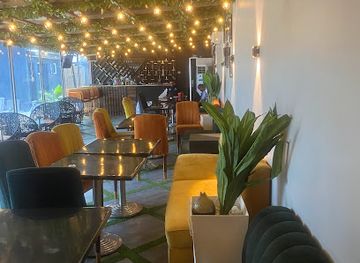
Evening life in Benin City is concentrated around restaurants, hotel lounges, neighbourhood bars, live-music settings and social venues rather than a single defined nightlife district. The city has a youthful population and an active contemporary music culture, but particular clubs and events can change quickly, so current local recommendations are more reliable than fixed listings. Visitors may find Nigerian beer, soft drinks, spirits and cocktails in established venues, while informal bars offer a more local atmosphere. In quieter parts of the city, evenings commonly centre on food, conversation and family or community gatherings. Use a trusted taxi or driver after dark, keep phones and valuables discreet, and check payment arrangements before ordering. Drinking is not necessary to engage with Benin City's evening culture; restaurants, cultural conversations and music-led venues provide alternatives.
-
Disco club
Club Zigi
Dive into the heart of Benin City's nightlife at Club Zigi, a disco club where music, dance, and vibrant energy come together for an unforgettable experience.
-
Club
VIBES BENIN
Experience the vibrant nightlife at VIBES BENIN, a premier club and lounge in Benin City, Edo State, where luxury meets entertainment.
-
Night club
Club truth
Discover the heart of Benin City's nightlife at Club Truth, where electrifying music and vibrant energy create unforgettable moments.
-
Restaurant
Metro-Lounge Benin City
Discover the vibrant nightlife of Benin City at Metro-Lounge, where dining meets live music and dancing in a lively atmosphere.



Best shops in Benin Kingdom
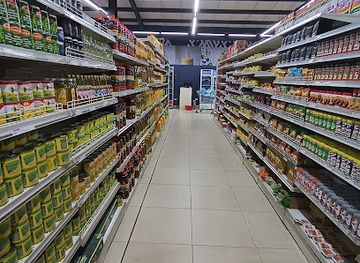
Shopping in Benin City ranges from open markets and neighbourhood stalls to craft workshops, hotel boutiques and modern commercial premises. Igun Street is the principal place associated with brass and bronze-style work, including contemporary plaques, figures, jewellery and decorative objects produced by local artisans. Buyers should ask whether an item is newly made, how it was produced and whether it is intended as a modern interpretation rather than an historic object. Markets offer fabrics, clothing, food ingredients, household goods and seasonal produce, while bookshops and galleries may provide more specialised cultural material when available. Nigerian textiles, carved objects and locally made accessories can make meaningful purchases, but quality and provenance vary. Bargaining may be expected in informal markets, yet it should remain courteous and proportionate. Keep receipts for higher-value items and check current Nigerian customs and airline rules before attempting to export metalwork, antiquities or objects that could be mistaken for historical material.
-
Shopping mall
Market Square
Discover the bustling Market Square in Benin City, a vibrant shopping destination offering diverse retail experiences and a taste of local culture.
-
Supermarket
Phil HallMark Supermarket
Discover a one-stop shopping experience at Phil HallMark Supermarket in Benin City, where variety meets vibrant culture.
-
Shopping mall
Shopempire Nigeria
Explore Shopempire Nigeria in Benin City for an unforgettable shopping experience blending local culture and modern retail.
-
Shopping mall
FORD MART BENIN
Discover the ultimate shopping experience in Edo, Nigeria at Ford Mart Benin, where retail meets entertainment and local culture.
Get your free copy of our complete guide to Benin Kingdom, delivered straight to you.
Everything on this page, from attractions and restaurants to essentials and local phrases, in one PDF you can read offline, print or share.
Already have an account? Sign in
Your Benin Kingdom guide is ready.
We'll send it to · Not you? Sign out

Getting your guide ready…
We are putting together a fresh copy of the Benin Kingdom guide. This can take up to a minute.
This can take a few moments. If your browser asks, choose Allow so the download can start. You'll find the guide in your Downloads folder.
Nothing happened? Download it again
Sorry, the guide is taking longer than usual. Please try again in a minute, or get it by email instead.
Benin Kingdom essentials
Currency and Payment
Safety
Emergency Situations
Do's and Don'ts
Local Tips
From Eve
Local phrases worth knowing
You don't need to get them perfect. A few words go a long way, and locals appreciate the effort.
Basics
| English | Local | Say it |
|---|---|---|
| Hello | Bawo | [Bah-woh] |
| Goodbye | O dabo | [Oh dah-boh] |
| Yes | Bẹẹni | [Beh-eh-nee] |
| No | Rara | [Rah-rah] |
| Please/You’re welcome | Jowo | [Joh-woh] |
| Thank you | Ese | [Eh-seh] |
| Excuse me/Sorry | E ma binu | [Eh mah bee-noo] |
| How are you? | Bawo ni? | [Bah-woh nee?] |
| Fine. And you? | Mo wa daadaa. Iwo nko? | [Moh wah dah-dah. Ee-woh n-koh?] |
| Do you speak English? | Se o le sọrọ Gẹ́gẹ́? | [Seh oh leh soh-roh Geh-geh?] |
| I don't understand | Mi o ye | [Mee oh yeh] |
Eating & Drinking
| English | Local | Say it |
|---|---|---|
| I’d like to see the menu, please | Mo fe ri akojọ, jowo | [Moh feh ree ah-koh-joh, joh-woh] |
| I don’t eat meat | Mi o jẹ ẹran | [Mee oh jeh eh-rahn] |
| Cheers! | Ire o! | [Ee-reh oh!] |
| I would like to pay, please | Mo fe sanwo, jowo | [Moh feh sahn-woh, joh-woh] |
Emergencies
| English | Local | Say it |
|---|---|---|
| Help! | Iranlọwọ! | [Ee-rahn-luh-oh!] |
| Go away! | Bẹ́ ẹ lọ! | [Beh eh loh!] |
| Call the Police! | Pe ọlọpa! | [Peh oh-loh-pah!] |
| Call a doctor! | Pe dọkita! | [Pe doh-kee-tah!] |
| I’m lost | Mo ti sọnu | [Moh tee soh-noo] |
| I’m ill | Mo ni arun | [Moh nee ah-roon] |
Shopping
| English | Local | Say it |
|---|---|---|
| I’d like to buy... | Mo fe ra... | [Moh feh rah...] |
| I’m just looking | Mo n wo nikan | [Moh n woh nee-kahn] |
| How much is it? | Elo ni? | [Eh-loh nee?] |
| That’s too expensive | Iyato naira | [Ee-yah-toh nah-irah] |
| Can you lower the price? | Se o le din owo? | [Seh oh leh deen oh-woh?] |
Time & Numbers
| English | Local | Say it |
|---|---|---|
| What time is it? | Kini wakati? | [Kee-nee wah-kah-tee?] |
| It’s one o’clock | O ti di wakati kan | [Oh tee dee wah-kah-tee kahn] |
| Half past (10) | Igbẹ̀ta (10) | [Ee-geh-tah (10)] |
| Morning | Ooru | [Oh-oh-roo] |
| Afternoon | Osan | [Oh-sahn] |
| Evening | Ireke | [Ee-reh-keh] |
| Yesterday | Ana | [Ah-nah] |
| Today | Loni | [Loh-nee] |
| Tomorrow | Ọla | [Oh-lah] |
| 1 | Ọkan | [Oh-kahn] |
| 2 | Meji | [Meh-jee] |
| 3 | Mẹta | [Meh-tah] |
| 4 | Mẹrin | [Meh-reen] |
| 5 | Marun | [Mah-roon] |
| 6 | Mẹfa | [Meh-fah] |
| 7 | Mẹjọ | [Meh-joh] |
| 8 | Mẹjọ | [Meh-joh] |
| 9 | Mẹsan | [Meh-sahn] |
| 10 | Mẹwa | [Meh-wah] |
Transport & Directions
| English | Local | Say it |
|---|---|---|
| Where's a/the...? | Nibo ni...? | [Nee-boh nee...?] |
| What's the address? | Kí ni adirẹsi? | [Kee nee ah-dee-reh-see?] |
| Can you show me (on the map)? | Se o le fi han mi (ni maapu)? | [Seh oh leh fee hahn mee (nee mah-poo)?] |
| When's the next (bus)? | Nigbawo ni (bus) ti n bọ? | [Nee-gbah-oh nee (bus) tee n boh?] |
| A ticket (to ....) | Tiket (si ....) | [Tee-ket (see ....)] |
History of Benin Kingdom
Early Edo Settlement and the Formation of Benin
The forested region around modern Benin City was occupied by communities whose political organisation developed over many centuries. Oral traditions and historical accounts describe the emergence of the Benin polity through the interaction of local rulers and the later dynastic line associated with the Ife-linked tradition of kingship. The Oba became the focal point of political, religious and artistic authority. Although early chronology is preserved through a mixture of archaeology, oral history and later written records, the central historical pattern is clear: Benin developed a sophisticated court culture and a highly organised kingdom in the forest zone of southern Nigeria.
The Oba Dynasty and Imperial Expansion
From the late medieval period, Benin's rulers consolidated authority around the royal city and extended influence across neighbouring territories. Oba Ewuare, who is generally associated with major fifteenth-century expansion and urban reorganisation, is remembered in Benin traditions as a particularly important ruler. The kingdom's power rested on the court, titled chiefs, military organisation, tribute and relationships with communities beyond the city. Its sphere of influence changed over time and should not be confused with the boundaries of present-day Edo State or with the modern city alone.
Court Art, Guilds and Historical Memory
Benin's royal court supported specialist guilds of brass casters, ivory carvers, woodworkers, leatherworkers and other artisans. Cast brass plaques, commemorative heads and other objects recorded courtly life, royal ancestry, military achievements and relationships with the spiritual world. Production was linked to palace institutions and inherited specialist knowledge rather than being simply a commercial craft. The traditions remain important in Benin City, especially around Igun Street, although contemporary makers work in a changed economic and cultural setting and their products should not automatically be treated as equivalent to historic court objects.
Portuguese Contact and Atlantic Exchange
Portuguese contact with the Benin court developed during the late fifteenth century, creating new channels of diplomacy, trade and artistic exchange along the West African coast. European accounts provide valuable but partial evidence about the kingdom and its rulers. Imported materials and objects entered existing systems of court culture, while Benin retained political autonomy and controlled its own relationships with outside powers for centuries. These contacts form part of a wider Atlantic history involving trade, diplomacy and coercion, rather than a simple story of European discovery.
The British Expedition of 1897
The British military expedition against Benin in 1897 marked a decisive rupture. Following a failed British expedition and escalating political tensions, British forces captured Benin City, deposed Oba Ovonramwen and burned or damaged parts of the royal city. Large quantities of royal and courtly objects were seized, many of which later entered museums and private collections outside Nigeria. The expedition ended the kingdom's political independence, but the institution of the Oba survived in a changed colonial framework. The event remains central to contemporary discussions of restitution, cultural ownership and historical justice.
Colonial Rule and the Modern Edo Capital
Under British colonial rule, Benin became part of changing administrative structures that eventually contributed to the formation of modern Nigeria. Roads, schools, Christian institutions, commercial networks and new forms of local government altered the city, while traditional authority continued to carry social and cultural significance. After Nigerian independence in 1960, Benin City developed as the capital of Edo State and as a major urban centre in southern Nigeria. Modern neighbourhoods now surround historical sites, making the city a place where royal memory, colonial legacies and contemporary Nigerian life exist together.
Benin Kingdom in Photos
Browse through our photo collection highlighting the charm and character of the destination.
Neighbouring regions of Benin Kingdom
The closest regions to Benin Kingdom, if you have time for more than one.
-

-

-

-

-


Swipe for more regions
Explore more

Explore more of Nigeria
Discover Nigeria: A Land of Vibrant Cultures, Stunning Landscapes, and Rich History in the Heart of Africa.
Explore Nigeria