

Free Fort Totten Indian Reservation Travel Guide & Mobile App
Explore Fort Totten Indian Reservation with free travel guides. Discover regional history, expert tips, proposed trips, and audio guides on web or mobile app.


Explore Fort Totten Indian Reservation in North Dakota for Dakota heritage, military history, Devils Lake landscapes and wildlife-rich prairie.
Read more about Fort Totten Indian Reservation
Getting to and around Fort Totten Indian Reservation
How to get there
Transportation
Top city travel guides in Fort Totten Indian Reservation
The cities of Fort Totten Indian Reservation, and the easiest places to base yourself.
Swipe for more cities
Best attractions in Fort Totten Indian Reservation
The reservation’s attractions centre on history, water and wildlife rather than a dense concentration of commercial tourism. Fort Totten State Historic Site is the essential historical visit, preserving the former army post and Fort Totten Indian Industrial School campus near Devils Lake. Its buildings and interpretation help visitors understand both nineteenth-century military expansion and the boarding-school experience imposed on Native children. Devils Lake provides a broad setting for fishing, boating, birdwatching and seasonal recreation, with changing shorelines and numerous bays shaping the landscape. Sullys Hill National Game Preserve, on a peninsula of the lake, combines wooded uplands and prairie habitat and is known for opportunities to observe bison, elk, deer and waterfowl from designated areas. Cankdeska Cikana Community College and Spirit Lake Nation institutions are important contemporary parts of the region, although access to educational and administrative facilities should not be assumed without prior arrangements. Rural roads, open prairie, wetlands and small communities add context to a visit, while the strongest experiences depend on weather, wildlife conditions and respect for tribal land and community boundaries.
-
Historical landmark
Fort Totten State Historic Site
Explore Fort Totten State Historic Site, a military post turned museum that reveals the layered history of North Dakota's past and its Native American heritage.
Best landmarks in Fort Totten Indian Reservation
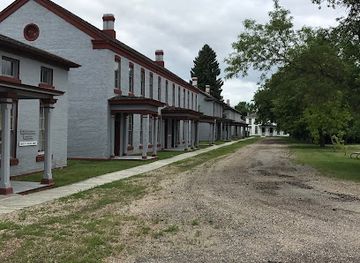
Fort Totten State Historic Site is the reservation’s principal built landmark, with preserved nineteenth-century military and school buildings arranged around the former post near Devils Lake. The ensemble is significant because the same site traces the transition from army installation to federal Indian boarding school, making its architecture inseparable from the complex history it represents. Devils Lake is the major natural landmark, a large closed-basin lake whose islands, bays, peninsulas and variable water levels shape the region’s geography and economy. Sullys Hill, a wooded rise on the lake peninsula, provides a marked contrast to the surrounding open prairie and is protected within the national game preserve. The landscape’s importance is also cultural: lake, wetlands and prairie form part of the living homeland of the Spirit Lake Nation. Smaller reservation communities and tribal institutions are contemporary landmarks of community continuity, but they should be experienced respectfully rather than treated as attractions to be entered without purpose or permission.
-
Historical landmark
Fort Totten State Historic Site
Explore the rich military and Native American history at Fort Totten State Historic Site, a captivating historical landmark in North Dakota.
Explore Fort Totten Indian Reservation on the map
Plan your trip on one map. See where the top cities, national parks and sights are, and book hotels and experiences in a few clicks.
Best hotels in Fort Totten Indian Reservation
Best restaurants in Fort Totten Indian Reservation
Dining on and around the reservation is practical and locally oriented, with options concentrated in community facilities, small-town businesses and the nearby city of Devils Lake rather than a large restaurant district. Visitors should expect American and northern plains cooking, café meals, takeaway food and family-style service, with menus influenced by the wider cuisine of North Dakota. The region’s lake environment supports recreational fishing, although visitors should distinguish legally caught local fish from restaurant supply and follow current regulations. Community gatherings and public cultural events may offer foods such as fry bread or other dishes associated with Native and regional traditions, but availability varies and recipes should not be treated as uniform across every Dakota community. Groceries, coolers and picnic supplies are useful for excursions to historic and wildlife sites, since food outlets are dispersed and rural opening arrangements can be limited. Coffee shops, diners and casual restaurants in Devils Lake provide the broadest choice outside the reservation.
-
Government office
Spirit Lake Food Distribution
Discover Spirit Lake Food Distribution: A vital hub for community support in Fort Totten, ND promoting food security for all.
-
Government office
Spirit Lake Tribe Tribal Offices
Explore governance and cultural heritage at Spirit Lake Tribe Tribal Offices in Fort Totten, North Dakota - a gateway to understanding Native American traditions.


Best bars in Fort Totten Indian Reservation
Evening life around Fort Totten Indian Reservation is quiet and community based, with socialising generally centred on family gatherings, casual restaurants and pubs in nearby Devils Lake rather than dedicated nightclub districts. On the reservation, visitors should not expect a large commercial nightlife scene or late-night entertainment infrastructure. Public powwows, cultural programmes and community events may create evening activity at particular times, but they are not nightlife products and should be approached according to the organisers’ guidance. Devils Lake, outside the reservation, offers the nearest broader choice of bars and casual evening venues, while rural communities tend to close earlier and have limited transport after dark. Visitors staying in remote accommodation should arrange a safe return journey in advance, avoid relying on rideshare availability and remember that alcohol is not a prerequisite for engaging with the area’s history or contemporary culture.
-
Federal government office
Bureau of Indian Affairs
Explore the Bureau of Indian Affairs in Fort Totten, ND, and connect with Native American heritage and community services.

Best nightclubs in Fort Totten Indian Reservation
-
Restaurant
Applebee's Grill + Bar
Delight in classic American cuisine at Applebee's Grill + Bar, the perfect family-friendly dining experience in Devils Lake.
-
Bar
Proz Sports Bar Grille & Caboose
Discover the heart of sports culture at Proz Sports Bar Grille & Caboose, where great food meets an electric atmosphere in Devils Lake.
-
Grill
Thirsty's Bar & Grill
Discover a vibrant dining experience with delicious grill fare and live music at Thirsty's Bar & Grill in Devils Lake, North Dakota.
-
Bar
Ye Olde Tavern AKA Lotta's
Experience the vibrant nightlife at Ye Olde Tavern in Devils Lake, North Dakota, where great drinks and lively entertainment await.


Best shops in Fort Totten Indian Reservation
Shopping on the reservation is limited and practical, with local services and community businesses serving residents rather than a concentrated tourist retail scene. Devils Lake, outside the reservation, provides the widest selection of supermarkets, outdoor supplies, pharmacies and general shopping for visitors preparing for rural excursions. Public powwows, community events and Native arts occasions may provide opportunities to purchase beadwork, clothing, artwork or other items directly from makers, but availability is seasonal and should never be assumed. Ask about the meaning and appropriate handling of cultural designs, and buy from artists or reputable sellers rather than treating sacred or ceremonial objects as souvenirs. Regional food supplies, fishing equipment, warm clothing and basic provisions are more dependable purchases than specialist gifts. Visitors may also find books and interpretive material connected with North Dakota history and the former Fort Totten site, while local crafts and produce can vary according to event schedules and community participation.
-
Historical landmark
Fort Totten State Historic Site
Explore the fascinating history of Fort Totten State Historic Site, where military heritage meets cultural significance in North Dakota.
-
Federal government office
Bureau of Indian Affairs
Discover the Bureau of Indian Affairs in Fort Totten, ND, and explore the vital services supporting Indigenous communities.

Get your free copy of our complete guide to Fort Totten Indian Reservation, delivered straight to you.
Everything on this page, from attractions and restaurants to essentials and local phrases, in one PDF you can read offline, print or share.
Already have an account? Sign in
Your Fort Totten Indian Reservation guide is ready.
We'll send it to · Not you? Sign out

Getting your guide ready…
We are putting together a fresh copy of the Fort Totten Indian Reservation guide. This can take up to a minute.
This can take a few moments. If your browser asks, choose Allow so the download can start. You'll find the guide in your Downloads folder.
Nothing happened? Download it again
Sorry, the guide is taking longer than usual. Please try again in a minute, or get it by email instead.
Fort Totten Indian Reservation essentials
Currency and Payment
Safety
Emergency Situations
Do's and Don'ts
Local Tips
From Eve
Local phrases worth knowing
You don't need to get them perfect. A few words go a long way, and locals appreciate the effort.
Basics
| English | Local | Say it |
|---|---|---|
| Hello | Hau | [Hau] |
| Goodbye | Hoh | [Hoh] |
| Yes | Eey | [Eey] |
| No | Kah | [Kah] |
| Please/You're welcome | T'ah wah | [T'ah wah] |
| Thank you | Miigwech | [Mee-gwech] |
| Excuse me/Sorry | Nigaawii | [Nih-gah-wee] |
| How are you? | Aaniin ezhi-ayaad? | [Ah-nee-ihn eh-zhi ah-yahd] |
| Fine. And you? | Niminwendam. Nawen? | [Nih-min-wen-dahm. Nah-wen?] |
| Do you speak English? | Ishkode waabanda? | [Ish-koh-deh wah-bahn-dah?] |
| I don't understand | Nimishoomisii | [Nih-mih-shoo-mih-see] |
Eating & Drinking
| English | Local | Say it |
|---|---|---|
| I'd like to see the menu, please | Nimishoomisii menu, t'ah wah | [Nih-mih-shoo-mih-see men-oo, t'ah wah] |
| I don't eat meat | Nimishoomisii minik | [Nih-mih-shoo-mih-see min-ik] |
| Cheers! | Naadama | [Nah-dah-mah] |
| I would like to pay, please | Nimishoomisii gii-dog, t'ah wah | [Nih-mih-shoo-mih-see ghee-dohg, t'ah wah] |
Emergencies
| English | Local | Say it |
|---|---|---|
| Help! | Nimishoomisii! | [Nih-mih-shoo-mih-see!] |
| Go away! | Gii-nagag! | [Ghee-nah-gahg!] |
| Call the Police! | Gii-bik Police! | [Ghee-beek Po-leese!] |
| Call a doctor! | Gii-bik daktari! | [Ghee-beek dahk-tah-ree!] |
| I'm lost | Nimishoomisii zhiigwan | [Nih-mih-shoo-mih-see zhee-gwan] |
| I'm ill | Nimishoomisii gii-zhawen | [Nih-mih-shoo-mih-see ghee-zhah-wen] |
Shopping
| English | Local | Say it |
|---|---|---|
| I'd like to buy... | Nimishoomisii ... gii-bik | [Nih-mih-shoo-mih-see ... ghee-beek] |
| I'm just looking | Nimishoomisii niijii | [Nih-mih-shoo-mih-see nee-jee] |
| How much is it? | Aaniin wenjiish? | [Ah-nee-ihn wen-jeesh?] |
| That's too expensive | Doo-zhii bimaadiziwin | [Doo-zhih bee-mah-dih-zee-win] |
| Can you lower the price? | Gii-biijik wenjiish? | [Ghee-bee-jik wen-jeesh?] |
Time & Numbers
| English | Local | Say it |
|---|---|---|
| What time is it? | Aaniin gii-zhawen? | [Ah-nee-ihn ghee-zhah-wen?] |
| It's one o'clock | Gii-zhawen niizhoosh | [Ghee-zhah-wen nee-zoosh] |
| Half past (10) | Niiwii gii-dag | [Nee-wi ghee-dahg] |
| Morning | Bimaadiziwin | [Bee-mah-dih-zee-win] |
| Afternoon | Niiwaak | [Nee-wahk] |
| Evening | Gii-zhawen | [Ghee-zhah-wen] |
| Yesterday | Ninagwak | [Nee-nah-gwahk] |
| Today | Ninagag | [Nee-nah-gahg] |
| Tomorrow | Ninawag | [Nee-nah-wahg] |
| 1 | Niizh | [Nee-zh] |
| 2 | Nii | [Nee] |
| 3 | Nis | [Nis] |
| 4 | Nii-zh | [Nee-zh] |
| 5 | Naan | [Naan] |
| 6 | Niswi | [Nis-wee] |
| 7 | Niswi-zh | [Nis-wee-zh] |
| 8 | Niswi-naan | [Nis-wee-naan] |
| 9 | Niswi-nis | [Nis-wee-nis] |
| 10 | Niswi-nii | [Nis-wee-nee] |
Transport & Directions
| English | Local | Say it |
|---|---|---|
| Where's a/the...? | Aaniin nindag? | [Ah-nee-ihn nin-dahg?] |
| What's the address? | Aaniin gii-bimaadiziwin? | [Ah-nee-ihn ghee-bee-mah-dih-zee-win?] |
| Can you show me (on the map)? | Gii-biijik nindag? | [Ghee-bee-jik nin-dahg?] |
| When's the next (bus)? | Aaniin gii-nagag ...? | [Ah-nee-ihn ghee-nah-gahg ...?] |
| A ticket (to ....) | Gii-bik ticket (to ...) | [Ghee-beek ticket (to ...)] |
History of Fort Totten Indian Reservation
Dakota Homelands and Lake Country
The lands around Devils Lake are part of the historic homeland of Dakota peoples, whose communities travelled, hunted, fished and maintained social and spiritual relationships across the northern prairie and its waterways. The lake and surrounding wetlands provided important resources, while seasonal movement connected the area with a much larger regional network. Dakota history here predates the creation of the reservation by centuries and remains central to the identity of the Spirit Lake Nation.
Treaty-Making and the Creation of the Reservation, 1867
Following intensified conflict and pressure on Indigenous lands during the 1860s, the United States established the reservation through the Treaty of Fort Totten in 1867. The agreement affected Dakota communities whose descendants form the Spirit Lake Nation. The reservation’s boundaries and federal relationship have subsequently been subject to legal and administrative change, but the treaty period marked the beginning of the reservation as a formally recognised political territory under United States law.
Fort Totten Military Post, 1867–1890
The United States Army established Fort Totten in 1867 near Devils Lake to maintain a military presence in the northern plains and to oversee federal relations with nearby Indigenous communities. The post operated until 1890. Its surviving buildings provide an unusually coherent example of a nineteenth-century frontier military installation, while the site’s wider history reflects the unequal power relationships and territorial pressures that shaped the reservation era.
Allotment and Reservation Transformation
Late nineteenth- and early twentieth-century federal policies sought to break up collectively held reservation lands through individual allotment, while opening remaining land to non-Native settlement and agriculture. These measures disrupted communal landholding and reduced tribal control over territory. The landscape around Spirit Lake still reflects this complicated history through its mixture of reservation land, trust holdings, private property, roads, farms and public sites.
The Fort Totten Indian Boarding School
After the military post closed, the buildings were used by the Fort Totten Indian Industrial School, which operated from 1891 until 1959. Like other federal boarding schools, it aimed to assimilate Native children by separating them from their families and suppressing languages and cultural practices. The school left a painful legacy for Spirit Lake families and descendants. The preserved campus is therefore important not only for its architecture but also for interpreting the lasting effects of federal boarding-school policy.
Tribal Self-Government and Community Institutions
The twentieth century brought gradual changes in federal Indian policy and renewed emphasis on tribal self-government. The Spirit Lake Nation developed contemporary governmental, educational and community institutions while maintaining cultural and political ties across the reservation. Cankdeska Cikana Community College, established in 1974, represents this continuing investment in education and local capacity. Tribal governance today is a defining part of the reservation’s present identity, not merely a historical legacy.
Fort Totten State Historic Site and Public Memory
North Dakota preserved the former fort and school complex as Fort Totten State Historic Site, creating a place where military history, boarding-school history and local Native experience can be interpreted together. The site’s purpose has expanded beyond celebrating frontier architecture to acknowledge the difficult histories associated with the buildings. Its preservation allows visitors to understand how federal military, educational and land policies affected the Spirit Lake community and the wider northern plains.
Fort Totten Indian Reservation in Photos
Browse through our photo collection highlighting the charm and character of the destination.
Neighbouring regions of Fort Totten Indian Reservation
The closest regions to Fort Totten Indian Reservation, if you have time for more than one.
-

-

-
 Devils Lake Basin
 combines walleye fishing, prairie wildlife, Indigenous history and open-water recreation in north-eastern North Dakota.
-

-


Swipe for more regions
Explore more
Explore more of North Dakota
Discover the rugged beauty, rich history, and warm hospitality of North Dakota, the untamed frontier of the United States.
Explore North Dakota