

Free Pembina Gorge Travel Guide & Mobile App
Explore Pembina Gorge with free travel guides. Discover regional history, expert tips, proposed trips, and audio guides on web or mobile app.


Pembina Gorge in North Dakota combines forested river valleys, trails, prairie scenery and Métis and fur-trade history near Walhalla.
Read more about Pembina Gorge
When is the best time to visit Pembina Gorge?
Best: June–August · 23–26°C| Month | High (°C) | Rainfall (mm) |
|---|---|---|
| January | -10 | 20 |
| February | -7 | 15 |
| March | 1 | 25 |
| April | 10 | 35 |
| May | 18 | 50 |
| June (best) | 23 | 65 |
| July (best) | 26 | 75 |
| August (best) | 25 | 70 |
| September | 19 | 55 |
| October | 12 | 35 |
| November | 2 | 25 |
| December | -6 | 20 |
Getting to and around Pembina Gorge
How to get there
Transportation
Best attractions in Pembina Gorge
Pembina Gorge’s attractions are centred on landscape and access rather than a dense collection of urban museums. The Pembina Gorge State Recreation Area offers hiking, mountain biking, equestrian trails, wildlife observation and scenic viewpoints across forested ravines, grassland and river country. Depending on conditions and regulations, the Pembina River also supports paddling opportunities, although visitors should assess water levels and arrange equipment independently. Frost Fire, near Walhalla, adds seasonal outdoor recreation, while the town provides a useful base for exploring the district. Heritage visitors can follow the region’s fur-trade and Métis history at the Gingras Trading Post State Historic Site and related historic places around Walhalla. The appeal changes with the seasons: summer favours long trail days, autumn brings colour to the wooded valley, and winter offers a quieter snow-covered setting. The broad attraction landscape is best suited to visitors who enjoy combining active outdoor time with small-town history and observation of the northern Plains environment.
-
State park
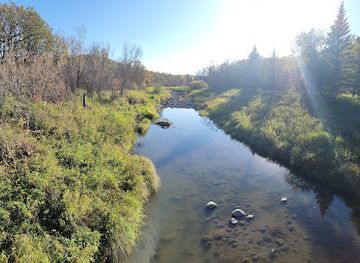
Pembina Gorge State Recreation Area
Explore Pembina Gorge State Recreation Area, North Dakota's stunning natural landscape perfect for outdoor adventures and picturesque views.
Best landmarks in Pembina Gorge
The defining natural landmark is the Pembina Gorge itself, a wooded river valley whose steep slopes and winding ravines form a strong contrast with northeastern North Dakota’s surrounding prairie. The Pembina River is the landscape’s organising feature, linking scenery, wildlife habitat, recreation and the historical routes that once carried traders through the district. Near Walhalla, the Gingras Trading Post State Historic Site is the region’s most important built landmark: its preserved and reconstructed trading-post buildings represent the mid-nineteenth-century Métis and fur-trade economy of the Red River borderland. Walhalla’s historic setting provides further context for settlement and commerce, while the forested hills and open viewpoints within the recreation area act as visual markers of the gorge’s unusual topography. Together these places express the area’s central themes—river, woodland, trade and travel—without separating natural history from human history.
-
Historical landmark
Fort Totten State Historic Site
Explore Fort Totten State Historic Site, a captivating historical landmark in North Dakota, rich with military history and cultural heritage.
-
Museum
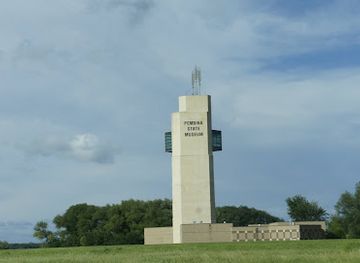
Pembina State Museum
Discover the captivating stories of North Dakota's past at Pembina State Museum, a premier destination for history enthusiasts and curious travelers alike.
-
Historical landmark
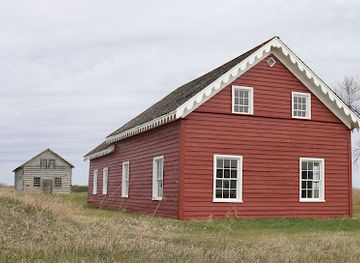
Gingras Trading Post State Historic Site
Explore the Gingras Trading Post State Historic Site, a premier historical landmark in North Dakota, revealing the rich fur trading history and cultural exchanges.
-
Museum
Pembina County Historical Museum
Uncover the fascinating history of Pembina County at the Historical Museum, showcasing unique artifacts and exhibits in Cavalier, North Dakota.
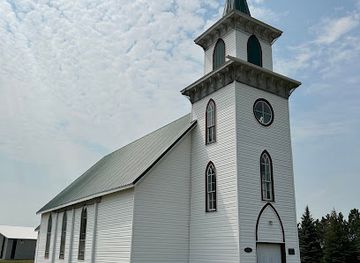
Explore Pembina Gorge on the map
Plan your trip on one map. See where the top cities, national parks and sights are, and book hotels and experiences in a few clicks.
Best hotels in Pembina Gorge
Best bars in Pembina Gorge
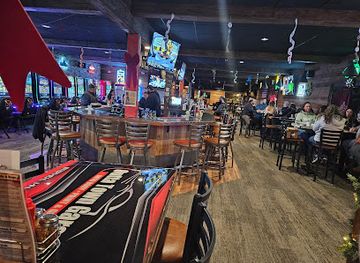
Evenings in the Pembina Gorge are shaped by small-town hospitality and the rural landscape rather than a nightclub scene. Walhalla and nearby communities have traditional bars, taverns and casual dining rooms where residents and visitors can meet, while some establishments may offer occasional music or community events. After dark, the gorge itself is better suited to quiet outdoor observation than organised entertainment, and rural roads require particular care if driving at night. Seasonal recreation can create busier periods around outdoor facilities, but nightlife remains modest and locally oriented. Visitors seeking extensive clubbing, late-night venues or a broad choice of cocktail bars will need to travel to a larger centre outside the immediate gorge area. Designated driving, advance planning and respect for small-community spaces are important parts of enjoying the region’s evening culture.
-
Bar
Bridgestone Bar &Grill
Discover the warmth of Pembina at Bridgestone Bar & Grill, where delicious food and friendly faces come together for an unforgettable dining experience.
Best shops in Pembina Gorge
Shopping in the Pembina Gorge region is practical and small-scale, with Walhalla serving as the main nearby place for everyday supplies, gifts and locally oriented businesses. Visitors may find independent shops, community retail, antiques, books, crafts and food products, although stock and opening arrangements vary and should not be assumed outside normal local business patterns. The most appropriate regional purchases are durable provisions for outdoor trips, locally made crafts, preserves, baked goods or products associated with North Dakota’s agricultural economy. Heritage sites and visitor facilities may offer interpretive souvenirs connected with the Pembina district, Métis history or the fur trade. This is not a destination for extensive department-store or luxury shopping; its retail character lies in small-town browsing, practical stops and finding locally produced items while travelling between trailheads and historic places.
-
Duty free store
Duty Free Americas
Explore Duty Free Americas in Pembina, ND for unbeatable deals on spirits, fragrances, and luxury items while traveling between the U.S. and Canada.

Get your free copy of our complete guide to Pembina Gorge, delivered straight to you.
Everything on this page, from attractions and restaurants to essentials and local phrases, in one PDF you can read offline, print or share.
Already have an account? Sign in
Your Pembina Gorge guide is ready.
We'll send it to · Not you? Sign out

Getting your guide ready…
We are putting together a fresh copy of the Pembina Gorge guide. This can take up to a minute.
This can take a few moments. If your browser asks, choose Allow so the download can start. You'll find the guide in your Downloads folder.
Nothing happened? Download it again
Sorry, the guide is taking longer than usual. Please try again in a minute, or get it by email instead.
Pembina Gorge essentials
Currency and Payment
Safety
Emergency Situations
Do's and Don'ts
Local Tips
From Eve
Local phrases worth knowing
You don't need to get them perfect. A few words go a long way, and locals appreciate the effort.
Basics
| English | Local | Say it |
|---|---|---|
| Hello | Howdy | [Hau-dee] |
| Goodbye | See you later | [See ya lay-ter] |
| Yes | Yep | [Yep] |
| No | Nope | [Nope] |
| Please/You're welcome | Sure thing | [Shur thing] |
| Thank you | Thanks a lot | [Thanks a lot] |
| Excuse me/Sorry | Pardon me | [Par-don mee] |
| How are you? | How's it going? | [How's it goin'?] |
| Fine. And you? | Good. And you? | [Good. An' you?] |
| Do you speak English? | Do ya know English? | [Doo ya no Eng-lish?] |
| I don't understand | I ain't followin' | [I ain't fol-lin'] |
Eating & Drinking
| English | Local | Say it |
|---|---|---|
| I'd like to see the menu, please | Can I see the menu? | [Can I see the men-oo?] |
| I don't eat meat | I ain't eatin' meat | [I ain't eatin' meet] |
| Cheers! | Cheers! | [Cheers!] |
| I would like to pay, please | Can I get the check? | [Can I get the chek?] |
Emergencies
| English | Local | Say it |
|---|---|---|
| Help! | Help! | [Help!] |
| Go away! | Leave me be! | [Leave me bee!] |
| Call the Police! | Call the cops! | [Call the cops!] |
| Call a doctor! | Get a doctor! | [Get a doc-tor!] |
| I'm lost | I'm turned around | [I'm turned aroun'] |
| I'm ill | I'm not feelin' good | [I'm not feelin' good] |
Shopping
| English | Local | Say it |
|---|---|---|
| I'd like to buy... | I wanna buy... | [I wanna buy...] |
| I'm just looking | Just browsin' | [Just brow-zin'] |
| How much is it? | What’s the price? | [What's the price?] |
| That's too expensive | That costs too much | [That costs too much] |
| Can you lower the price? | Can ya bring it down? | [Can ya bring it down?] |
Time & Numbers
| English | Local | Say it |
|---|---|---|
| What time is it? | What time ya got? | [What time ya got?] |
| It's one o'clock | It's one | [It's one] |
| Half past (10) | Half past ten | [Half past ten] |
| Morning | Mornin' | [Mornin'] |
| Afternoon | Afternoon | [Afternoon] |
| Evening | Evenin' | [Evenin'] |
| Yesterday | Yest'day | [Yest'day] |
| Today | Today | [Today] |
| Tomorrow | Tomorrah | [Tomor-rah] |
| 1 | One | [One] |
| 2 | Two | [Two] |
| 3 | Three | [Three] |
| 4 | Four | [Four] |
| 5 | Five | [Five] |
| 6 | Six | [Six] |
| 7 | Seven | [Seven] |
| 8 | Eight | [Eight] |
| 9 | Nine | [Nine] |
| 10 | Ten | [Ten] |
Transport & Directions
| English | Local | Say it |
|---|---|---|
| Where's a/the...? | Where's the...? | [Where's the...?] |
| What's the address? | What’s the address? | [What's the ad-dress?] |
| Can you show me (on the map)? | Can ya show me on the map? | [Can ya show me on the map?] |
| When's the next (bus)? | When's the next bus? | [When's the next bus?] |
| A ticket (to ....) | One ticket to... | [One ticket to...] |
History of Pembina Gorge
Glacial Formation and the Pembina River
The gorge’s physical character was shaped by Ice Age glaciation and the meltwater systems that followed it. As retreating ice altered drainage across the northern Plains, the Pembina River established a course through softer and more resistant layers of terrain, producing the valley’s steep wooded slopes and ravines. This geological history explains why the gorge appears so different from the flatter agricultural country around it. Today, the river corridor, exposed banks and forested hills provide the foundation for the region’s recreation, wildlife habitat and distinctive sense of place.
Indigenous and Red River Connections
Long before European settlement, Indigenous peoples travelled through and used the Pembina River country as part of the wider northern Plains and Red River region. Dakota and Ojibwe communities, among others, maintained established relationships with the land, waterways and seasonal resources. The area also became important to Métis communities whose culture developed through Indigenous and European ancestry, mobility, trade and family networks. The gorge should therefore be understood as part of a much older cultural landscape, not simply as a frontier wilderness encountered by later traders.
Fur Trade and the Pembina District
During the eighteenth and nineteenth centuries, the Pembina district formed part of the fur-trade world linking the Red River settlements with northern Plains routes. Traders moved goods, furs and information through a network that crossed the modern Canada–United States boundary, long before that boundary had its present practical meaning. The Pembina River valley offered woodland, water and access routes in a region otherwise dominated by open prairie. Trading posts and seasonal travel helped establish the commercial and political importance of the area.
Gingras Trading Post and Métis Commerce
Métis trader Antoine Blanc Gingras operated a trading post near present-day Walhalla in the mid-nineteenth century. The surviving Gingras Trading Post State Historic Site preserves an important reminder of the bilingual, multicultural and commercially mobile society that developed around the Red River. Its buildings and setting illustrate how trade depended on relationships among Indigenous communities, Métis families, European-descended merchants and transport networks. The site is among the clearest historical expressions of the Pembina Gorge region’s connection to the wider Red River economy.
Settlement, Agriculture and the Border
Following the establishment of the international boundary and the expansion of United States administration, permanent settlement and farming reshaped the Pembina district. New communities, roads and land-use patterns developed around agriculture, while older Indigenous and Métis connections continued under changed political circumstances. Walhalla grew as a local centre, and the surrounding countryside became part of the agricultural economy of northeastern North Dakota. The gorge’s wooded terrain remained less intensively cultivated than the surrounding prairie, helping preserve its present landscape.
Conservation and Outdoor Recreation
In the twentieth and twenty-first centuries, attention increasingly turned to protecting the gorge’s unusual combination of woodland, steep terrain, river habitat and open grassland. Public recreation planning and conservation created opportunities for hiking, cycling, equestrian use, paddling and wildlife observation while retaining the area’s rural character. The Pembina Gorge State Recreation Area now connects the landscape’s natural and cultural stories, demonstrating how a region once organised around travel and trade has become a destination for low-impact outdoor recreation and heritage tourism.
Pembina Gorge in Photos
Browse through our photo collection highlighting the charm and character of the destination.
Neighbouring regions of Pembina Gorge
The closest regions to Pembina Gorge, if you have time for more than one.
-

-
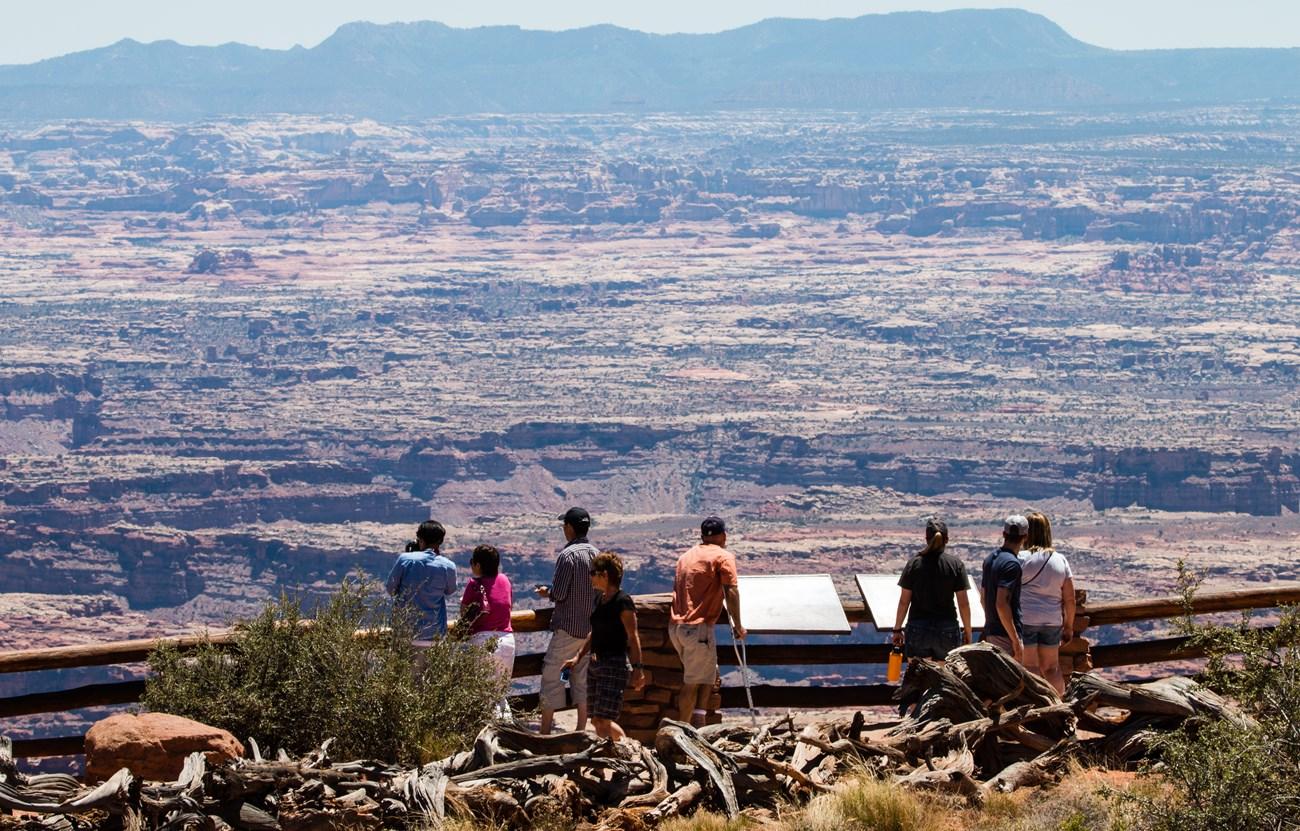 Devils Lake Basin
 combines walleye fishing, prairie wildlife, Indigenous history and open-water recreation in north-eastern North Dakota.
Devils Lake Basin
Devils Lake Basin combines walleye fishing, prairie wildlife, Indigenous history and open-water recreation in north-eastern North Dakota.
-

-

-


Swipe for more regions
Explore more
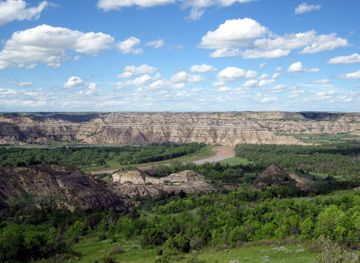
Explore more of North Dakota
Discover the rugged beauty, rich history, and warm hospitality of North Dakota, the untamed frontier of the United States.
Explore North Dakota