

Free Capital Hill Travel Guide & Mobile App
Plan your Capital Hill trip with Evendo. Get free guides to top attractions, restaurants, hotels, and bars. Web access or download the mobile app.


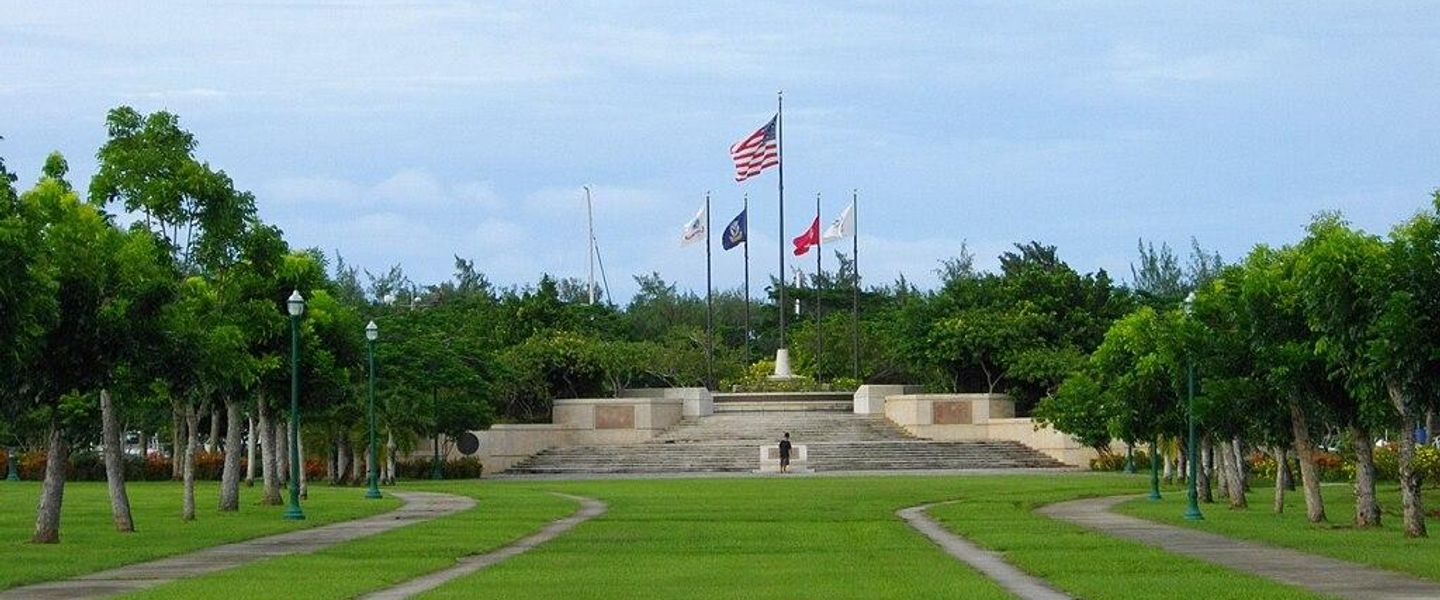


Capital Hill in the Northern Mariana Islands combines Saipan’s civic history with Chamorro culture, World War II heritage, tropical landscapes and Pacific excursions.
A Government District Above Saipan
Capital Hill is the administrative centre of the Commonwealth of the Northern Mariana Islands, occupying an inland position on Saipan rather than forming a conventional, densely built city. Government offices and public institutions sit among tropical hills, with roads leading towards the island’s western coast, northern headlands and southern villages. The district is quieter than Garapan, the island’s principal commercial and visitor quarter, and is best understood as a base for exploring Saipan’s wider history and landscapes rather than as a self-contained holiday resort.Read more about Capital Hill
History Shaped by the Island
Coasts, Culture and Excursions
When is the best time to visit Capital Hill?
Best: January–March · 30°C| Month | High (°C) | Rainfall (mm) |
|---|---|---|
| January (best) | 30 | 80 |
| February (best) | 30 | 80 |
| March (best) | 30 | 80 |
| April | 30 | 80 |
| May | 30 | 80 |
| June | 30 | 80 |
| July | 30 | 80 |
| August | 30 | 80 |
| September | 30 | 80 |
| October | 30 | 80 |
| November | 30 | 80 |
| December | 30 | 80 |
Getting to and around Capital Hill
How to get there
Transportation
Best attractions in Capital Hill
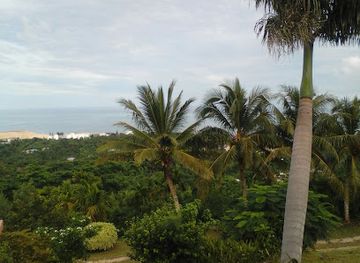
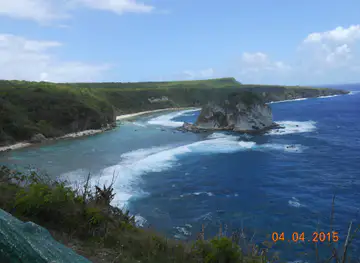
Capital Hill’s principal appeal lies in its position at the centre of Saipan’s civic and historical landscape. The government district provides context for the Northern Mariana Islands’ Commonwealth status, while nearby Mount Tapochau offers broad views across the island and surrounding Pacific waters. Travellers can follow the coast to American Memorial Park in Garapan, where trails, shoreline scenery and wartime interpretation occupy a former battle area, or continue north to the dramatic viewpoints of Banzai Cliff and Suicide Cliff. Bird Island is a scenic coastal stop known for its limestone setting and seabirds, while the Grotto presents a memorable natural limestone cavern connected to the sea. Offshore, Managaha Island adds white sand, clear water and snorkelling opportunities. These places combine Saipan’s volcanic and limestone geography with Chamorro, Carolinian, Japanese and Second World War histories rather than forming a compact urban sightseeing circuit.
-
Tourist attraction
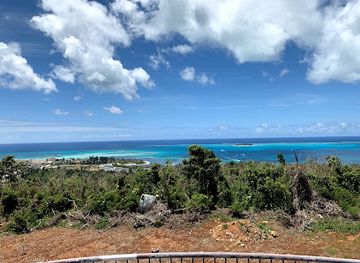
Japanese Lighthouse
Discover the historic Japanese Lighthouse in Saipan, a stunning landmark offering breathtaking ocean views and a glimpse into the past.
8 min drive · 2.6 km from city centre
Best landmarks in Capital Hill
The Commonwealth Government complex at Capital Hill is the clearest civic landmark, expressing Saipan’s role as the political centre of the Northern Mariana Islands. Its significance is constitutional and governmental rather than monumental, and public access to offices may be limited. Mount Tapochau, the island’s central high point, is a natural landmark with expansive views over Saipan and the surrounding sea. American Memorial Park in Garapan commemorates the people who died during the 1944 Battle of Saipan and forms part of the island’s most important wartime landscape. Farther north, Banzai Cliff and Suicide Cliff are powerful historical sites as well as dramatic limestone headlands, associated with the final days of the battle. Japanese and wartime ruins scattered across Saipan, including surviving bunkers and coastal structures, provide tangible evidence of the island’s strategic importance before and during the Pacific War.
-
Fast Food
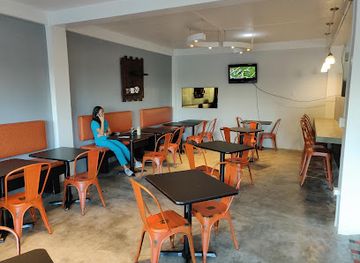
Inas Kitchen
Experience the best of Saipan at Inas Kitchen, where local flavors meet fast food favorites in a vibrant and welcoming atmosphere.
14 min walk · 1.1 km from city centre
-
Restaurant
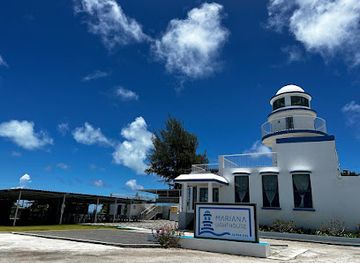
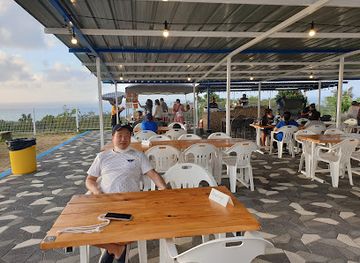
Mariana Lighthouse Saipan USA / 마리아나 라이트하우스 사이판
Discover the enchanting Mariana Lighthouse in Saipan, where exquisite cuisine meets breathtaking ocean views for an unforgettable dining experience.
8 min drive · 2.6 km from city centre
-
Grocery store
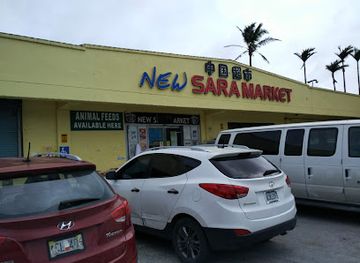
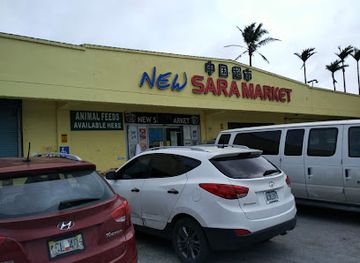
New Sara Market
Experience the vibrant culture and local flavors at New Sara Market, a must-visit grocery store in Saipan's Capitol Hill.
5 min drive · 1.6 km from city centre
-
Historical landmark
Japanese Lighthouse
Explore the Japanese Lighthouse in Saipan for breathtaking views and a deep dive into maritime history of the Northern Mariana Islands.
8 min drive · 2.6 km from city centre

Explore Capital Hill on the map
Plan your Capital Hill trip on one map. See where the top attractions, landmarks, restaurants, bars and hotels are, find what's near where you're staying, and book hotels and experiences in a few clicks.
Best hotels in Capital Hill
Best restaurants in Capital Hill
Dining around Capital Hill is modest and locally oriented, with the widest choice found a short drive away in Garapan and the larger settlements along Saipan’s western side. Chamorro cooking features grilled meats and seafood, rice, coconut, citrus and chilli, while kelaguen—seasoned chopped meat or seafood prepared with lemon, onion and chilli—is a familiar local speciality. Carolinian influences are also present in island cooking, alongside Japanese, Korean, Chinese and American traditions shaped by Saipan’s history and international connections. Visitors may encounter family-run eateries, bakeries, casual cafés, resort restaurants and food stalls rather than a concentrated restaurant quarter in Capital Hill itself. Street-side barbecue, fresh fish and local produce offer a useful contrast to hotel dining, while Garapan’s commercial area generally provides the greatest range of evening meals and international menus.
-
Thai
Spicy Thai Noodle Place
Experience authentic Thai flavors at Spicy Thai Noodle Place in Saipan – where every dish tells a story of culinary tradition.
6 min drive · 2.1 km from city centre
-
Fast Food
Inas Kitchen
Experience delicious fast food at Inas Kitchen in Saipan—where flavor meets convenience amidst stunning island scenery.
14 min walk · 1.1 km from city centre
-
Restaurant
Mariana Lighthouse Saipan USA / 마리아나 라이트하우스 사이판
Experience stunning views and delightful cuisine at Mariana Lighthouse in Saipan—a must-visit destination for every traveler.
8 min drive · 2.6 km from city centre
-
 Restaurant
Barneys pizza
Discover deliciousness at Barneys Pizza in Capitol Hill - where authentic flavors meet a vibrant dining experience in Saipan.
3 min walk · 0.2 km from city centre

Best bars in Capital Hill
Capital Hill is quiet after government offices close, and Saipan’s evening life is concentrated mainly in Garapan and the western resort corridor. There, visitors can find hotel lounges, casual bars, karaoke, sports-oriented venues and restaurants that stay active later than inland neighbourhoods. The atmosphere is generally relaxed rather than intensely club-focused, with social evenings shaped by the island’s resort economy, regional visitors and local gatherings. Live music and cultural performances may appear as part of hotel or community programming, although schedules vary. Beachfront settings and open-air seating are common features of the broader nightlife scene, while quieter evenings may centre on food, conversation or sunset views. Taxis or a pre-arranged driver are sensible when returning to Capital Hill, particularly after drinking, and visitors should observe local age and licensing rules rather than assuming every venue operates like a mainland American nightclub.
-
Law firm
Marianas Legal Strategy Group, LLC
Expert legal assistance in the Northern Mariana Islands, ensuring peace of mind for tourists and residents alike.
6 min walk · 0.5 km from city centre
Best shops in Capital Hill
Capital Hill has limited visitor-oriented retail, so most shopping takes place in Garapan and other developed parts of Saipan. Garapan’s shops and commercial streets offer convenience goods, clothing, souvenirs, snacks and locally themed gifts, while supermarkets and larger retailers serve residents as well as travellers. Souvenirs may include Chamorro and Carolinian designs, island foods, locally inspired handicrafts and products connected with Saipan’s Pacific identity, although authenticity and local production vary between sellers. Small markets and independent businesses provide a more personal experience than resort shops, and visitors may find packaged tropical produce, baked goods and regional ingredients worth taking home where permitted by customs regulations. Shopping is generally practical and low-key rather than centred on a large luxury or department-store district, with opening patterns and stock varying between businesses.
-
Grocery store
New Sara Market
Experience the local culture and flavors at New Sara Market, a vibrant grocery store in Saipan offering fresh produce and unique culinary delights.
5 min drive · 1.6 km from city centre
-
Store
I Mart
Discover I Mart in Tanapag, Saipan - your essential shopping destination for local goods and travel necessities.
6 min drive · 1.8 km from city centre
-
Grocery store
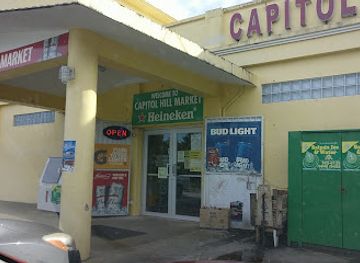
Capitol Hill Market
Discover the vibrant flavors of Saipan at Capitol Hill Market, your go-to grocery store for local produce and unique island snacks.
6 min drive · 1.9 km from city centre
-
Cannabis store
Saipan Select
Discover the best of Saipan's cannabis culture at Saipan Select, where quality meets exceptional service in the Northern Mariana Islands.
16 min walk · 1.3 km from city centre


Get your free copy of our complete guide to Capital Hill, delivered straight to you.
Everything on this page, from attractions and restaurants to essentials and local phrases, in one PDF you can read offline, print or share.
Already have an account? Sign in
Your Capital Hill guide is ready.
We'll send it to · Not you? Sign out

Getting your guide ready…
We are putting together a fresh copy of the Capital Hill guide. This can take up to a minute.
This can take a few moments. If your browser asks, choose Allow so the download can start. You'll find the guide in your Downloads folder.
Nothing happened? Download it again
Sorry, the guide is taking longer than usual. Please try again in a minute, or get it by email instead.
Capital Hill essentials
Currency and Payment
Safety
Emergency Situations
Do's and Don'ts
Local Tips
From Eve
Local phrases worth knowing
You don't need to get them perfect. A few words go a long way, and locals appreciate the effort.
Basics
| English | Local | Say it |
|---|---|---|
| Hello | Håfa Adai | [hah-fah ah-die] |
| Goodbye | Adios | [ah-dee-ohs] |
| Yes | Håo | [hah-oh] |
| No | Ti | [tee] |
| Please/You're welcome | Un tungo' / Kinu | [oon toong-go / kee-noo] |
| Thank you | Si Yu'os Ma'åse | [see yoo-oss mah-ah-seh] |
| Excuse me/Sorry | Kulu' / Dispensa | [koo-loo / dees-pehn-sah] |
| How are you? | Kao un binendisiyu? | [kah-oh oon bee-nen-dee-see-yoo] |
| Fine. And you? | Maolek. Hu guiya hao? | [mah-oh-lek. hoo gee-jah how] |
| Do you speak English? | Un bai hu prublema i masinahåla'? | [oon bai hoo proo-bleh-mah ee mah-see-nah-hah-lah] |
| I don't understand | Ti kuentendu | [tee kwehn-ten-doo] |
Eating & Drinking
| English | Local | Say it |
|---|---|---|
| I'd like to see the menu, please | Håfa na'manu menu, på'go'? | [hah-fah nah-mah-noo meh-noo, pah-go] |
| I don't eat meat | Ti manngenge karni | [tee mahn-gehn-geh kahr-nee] |
| Cheers! | Biba! | [bee-bah] |
| I would like to pay, please | Håfa na'fånnågu, på'go'? | [hah-fah nah-fahn-nah-goo, pah-go] |
Emergencies
| English | Local | Say it |
|---|---|---|
| Help! | Ayuda! | [ah-yoo-dah] |
| Go away! | Håyi! | [hah-yee] |
| Call the Police! | Kåntak i Pulis! | [kahn-tahk ee poo-lees] |
| Call a doctor! | Kåntak un doktå! | [kahn-tahk oon dohk-tah] |
| I'm lost | Ti manhuyong | [tee mahn-hoo-yohng] |
| I'm ill | Ti manmåta | [tee mahn-mah-tah] |
Shopping
| English | Local | Say it |
|---|---|---|
| I'd like to buy... | Håfa na'gåi... | [hah-fah nah-gah-ee] |
| I'm just looking | Put fabotåtå' gui' | [poot fah-bo-tah-tah-ee gee] |
| How much is it? | Kåntådu i prisu? | [kahn-tah-doo ee prees-oo] |
| That's too expensive | Munga' kareta | [moon-gah kah-reh-tah] |
| Can you lower the price? | Fåkåkå' i prisu? | [fah-kah-kah ee prees-oo] |
Time & Numbers
| English | Local | Say it |
|---|---|---|
| What time is it? | Kåntådu na ora? | [kahn-tah-doo nah oh-rah] |
| It's one o'clock | Uno na ora | [oo-no nah oh-rah] |
| Half past (10) | Machanao | [mah-chah-now] |
| Morning | Manana | [mah-nah-nah] |
| Afternoon | Kåntan tåno' | [kahn-tahn tahn-oh] |
| Evening | Kåntan chalan | [kahn-tahn chah-lahn] |
| Yesterday | Kåntan adlao | [kahn-tahn ahd-lah-oh] |
| Today | Kåntan pås | [kahn-tahn pahs] |
| Tomorrow | Kåntan mafånao | [kahn-tahn mah-fah-now] |
| 1 | Uno | [oo-no] |
| 2 | Dos | [dohs] |
| 3 | Tres | [trehs] |
| 4 | Kwåtro | [kwah-troh] |
| 5 | Singko | [seeng-koh] |
| 6 | Sais | [sah-ees] |
| 7 | Siete | [syeh-teh] |
| 8 | Ocho | [oh-choh] |
| 9 | Nuebi | [nweh-bee] |
| 10 | Djes | [dehss] |
Transport & Directions
| English | Local | Say it |
|---|---|---|
| Where's a/the...? | Åfamagu... | [ah-fah-mah-goo] |
| What's the address? | Kåntådu i direksion? | [kahn-tah-doo ee dee-rehk-syohn] |
| Can you show me (on the map)? | Fåkåkå' hu na'såti (såtba)? | [fah-kah-kah hoo nah-sah-tee saht-bah] |
| When's the next (bus)? | Kåntådu na proximo (bis)? | [kahn-tah-doo nah prohk-see-moh beess] |
| A ticket (to ....) | Un bisete (para ....) | [oon bee-seh-teh pah-rah] |
History of Capital Hill
Chamorro Settlement and Carolinian Migration
The history of Saipan begins with the Chamorro people, whose settlements, seafaring traditions and agricultural practices developed across the Mariana Islands long before European colonisation. Carolinian communities later arrived from the Caroline Islands, particularly during the nineteenth century, bringing their own navigational knowledge, languages and cultural traditions. These overlapping Pacific identities remain important to the Northern Mariana Islands, where family, church, food and ocean-based traditions continue to shape public life. Capital Hill itself is a modern administrative district, but its setting belongs to an island landscape formed by centuries of settlement, cultivation and movement across the western Pacific.
Spanish and German Colonial Rule
Spain claimed the Mariana Islands in the sixteenth century and gradually established Catholic missions and colonial administration. The Spanish period altered settlement patterns, religion and political authority, while epidemics and colonial disruption had severe effects on the Indigenous population. Following Spain’s sale of the islands north of Guam to Germany in 1899, German administration focused on commercial development and plantation agriculture. Saipan’s later political and cultural landscape therefore reflects several layers of Pacific, Iberian and European influence, although the built remains visible today are more strongly associated with the Japanese period, the Second World War and postwar American administration.
Japanese Administration and the Sugar Economy
Japan took control of the Northern Mariana Islands in 1914, and the League of Nations formalised its mandate after the First World War. On Saipan, Japanese companies developed a large sugar industry, bringing workers from Japan, Okinawa and other parts of the empire and transforming the island’s economy and population. Roads, plantations, processing facilities and settlements expanded, making Saipan an important Japanese outpost in the western Pacific. The period also brought profound demographic and social change for Chamorro and Carolinian communities. Remnants of this era, together with wartime ruins and museum collections, help explain why Saipan contains such concentrated layers of twentieth-century history.
The Battle of Saipan
In June and July 1944, United States forces invaded Saipan in one of the major campaigns of the Pacific War. Fighting devastated settlements and plantations and caused extensive military and civilian casualties. The island’s northern cliffs became associated with the final phase of the battle, when many Japanese civilians and soldiers died after retreating towards the coast. American Memorial Park, wartime memorials, bunkers and surviving occupation sites preserve different aspects of this traumatic history. The battle also brought Saipan decisively into the postwar strategic and political order administered by the United States.
Postwar Administration and Capital Hill
After the war, Saipan was administered within the United Nations Trust Territory of the Pacific Islands under United States authority. Reconstruction replaced much of the wartime plantation economy and gradually expanded roads, public services and civic institutions. Capital Hill developed as the seat of the Northern Mariana Islands’ government during the territory’s movement towards self-government. The Covenant to Establish a Commonwealth of the Northern Mariana Islands in Political Union with the United States took effect in 1976, and the Commonwealth government began operating in 1978. Capital Hill’s offices and public buildings consequently represent the island’s modern constitutional identity as much as its practical administrative role.
Capital Hill in Photos
Browse through our photo collection highlighting the charm and character of the destination.
Cities near Capital Hill
The closest cities to Capital Hill, if you have time for more than one stop.
-

-
-
-

-


Swipe for more cities
Explore more

Explore more of Northern Mariana Islands
Uncover the beauty of Northern Mariana Islands, a tropical paradise with stunning beaches, rich history, and diverse cultures, perfect for a serene and adventurous getaway.
Explore Northern Mariana Islands