

Tinian Beach Travel Guide - Free Web & App
Your ultimate guide to Tinian Beach. Discover top landmarks, proposed trips, and local tips. Free on the web or via the Evendo companion app.


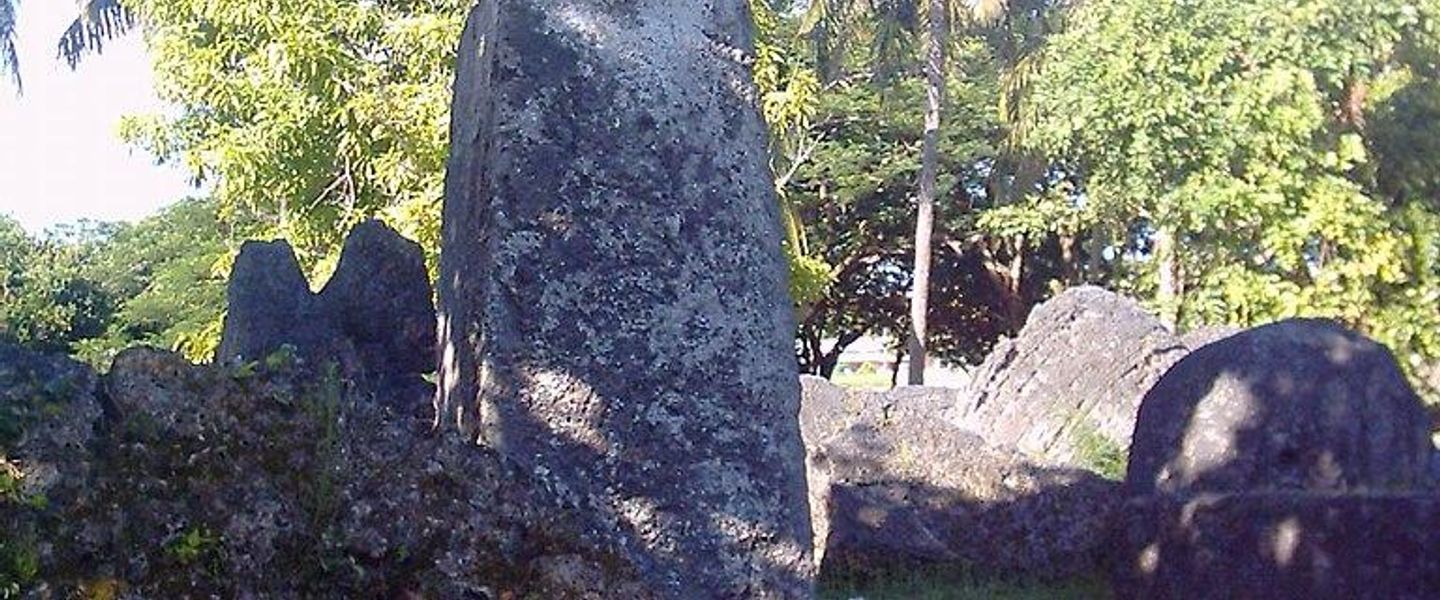


Tinian Beach in the Northern Mariana Islands offers turquoise water, coral reefs, Chamorro heritage, WWII history and quiet island exploration.
A Quiet Pacific Island Shore
Tinian Beach is best understood as a coastal destination on Tinian, a small island in the Northern Mariana Islands rather than a single, intensively developed resort frontage. Its appeal lies in warm Micronesian waters, pale limestone shores, offshore coral habitat and a relaxed island atmosphere shaped by Chamorro culture and a dramatic twentieth-century history. The island sits south of Saipan, across the Saipan Channel, and is reached chiefly by air from the regional capital.Read more about Tinian Beach
Beaches, Reefs and Limestone Landscapes
Island History and Local Character
Exploring Beyond the Sand
When is the best time to visit Tinian Beach?
Best: May–July · 31–32°C| Month | High (°C) | Rainfall (mm) |
|---|---|---|
| January | 30 | 110 |
| February | 30 | 100 |
| March | 31 | 90 |
| April | 31 | 80 |
| May (best) | 31 | 70 |
| June (best) | 31 | 60 |
| July (best) | 32 | 60 |
| August | 32 | 70 |
| September | 32 | 80 |
| October | 32 | 90 |
| November | 32 | 100 |
| December | 33 | 110 |
Getting to and around Tinian Beach
How to get there
Transportation
Explore Tinian Beach on the map
Plan your trip on one map. See where the top attractions, landmarks, restaurants and hotels are, and book hotels and experiences in a few clicks.
Best hotels in Tinian Beach
Get your free copy of our complete guide to Tinian Beach, delivered straight to you.
Everything on this page, from attractions and restaurants to essentials and local phrases, in one PDF you can read offline, print or share.
Already have an account? Sign in
Your Tinian Beach guide is ready.
We'll send it to · Not you? Sign out

Getting your guide ready…
We are putting together a fresh copy of the Tinian Beach guide. This can take up to a minute.
This can take a few moments. If your browser asks, choose Allow so the download can start. You'll find the guide in your Downloads folder.
Nothing happened? Download it again
Sorry, the guide is taking longer than usual. Please try again in a minute, or get it by email instead.
Tinian Beach essentials
Currency and Payment
Safety
Emergency Situations
Do's and Don'ts
Local Tips
From Eve
Local phrases worth knowing
You don't need to get them perfect. A few words go a long way, and locals appreciate the effort.
Basics
| English | Local | Say it |
|---|---|---|
| Hello | Håfa Adai | [HAH-fah ah-DYE] |
| Goodbye | Adios | [ah-DYOS] |
| Yes | Håo | [HOW] |
| No | Taya | [TYE-yah] |
| Please/You're welcome | Måolek | [mah-OH-lek] |
| Thank you | Si Yu'us Ma'åse | [see you-OOS mah-AH-seh] |
| Excuse me/Sorry | Dispensa | [dees-PEHN-sah] |
| How are you? | Cómo estás? | [KOH-moh EHS-tahs] |
| Fine. And you? | Ma'åse. Ya ki? | [mah-AH-seh. yah kee?] |
| Do you speak English? | Kåo fumino i inglés? | [KAH-oh foo-MEE-no ee een-GLEHS?] |
| I don't understand | Ti hu hupottura | [tee hoo hoo-pot-TOO-rah] |
Eating & Drinking
| English | Local | Say it |
|---|---|---|
| I'd like to see the menu, please | Ki manmatågui i menyu, maolek | [kee mahn-mah-tah-GEE ee MEHN-yoo, mah-OH-lek] |
| I don't eat meat | Ti hu manngåni karne | [tee hoo mahn-NGAH-nee KAR-neh] |
| Cheers! | ¡Biba! | [BEE-bah] |
| I would like to pay, please | Ki manhasso, maolek | [kee mahn-HAHSS-so, mah-OH-lek] |
Emergencies
| English | Local | Say it |
|---|---|---|
| Help! | Ayuda! | [ah-YOO-dah] |
| Go away! | Chao! | [CHOW] |
| Call the Police! | Kåo umångga i polisia! | [KAH-oh oo-MAHNG-gah ee poh-LEE-see-ah] |
| Call a doctor! | Kåo umångga i mediku! | [KAH-oh oo-MAHNG-gah ee meh-dee-KOO] |
| I'm lost | Ti hu hungge | [tee hoo HOONG-geh] |
| I'm ill | Ti hu manmålu | [tee hoo mahn-MAH-loo] |
Shopping
| English | Local | Say it |
|---|---|---|
| I'd like to buy... | Ki manmånna... | [kee mahn-MAHN-nah] |
| I'm just looking | Estague lang | [ehs-TAH-gweh lahng] |
| How much is it? | Kåo manhåhu hit? | [KAH-oh mahn-HAH-hoo heet?] |
| That's too expensive | Put fabot | [poot fah-BOTE] |
| Can you lower the price? | Måsåkkog yu'us i prisu? | [mah-SAHK-kog yoo-OOS ee PREE-soo?] |
Time & Numbers
| English | Local | Say it |
|---|---|---|
| What time is it? | Kiko i tiempo? | [KEE-koh ee TYEM-poh?] |
| It's one o'clock | Hit i manmano | [heet ee mahn-MAH-no] |
| Half past (10) | Mitkaff (10) | [meet-KAHF (10)] |
| Morning | Gof mañaina | [gohf mah-NYAH-ee-nah] |
| Afternoon | Gof matåno' | [gohf mah-TAHN-oh] |
| Evening | Gofkuentos | [gohf-KWEHN-tohs] |
| Yesterday | Kåhuguan | [KAH-hoo-gwahn] |
| Today | Kåhåna | [KAH-hah-nah] |
| Tomorrow | Kåmánnge | [KAH-mahn-NGEH] |
| 1 | Uno | [OO-no] |
| 2 | Dos | [dohs] |
| 3 | Tres | [trehs] |
| 4 | Kuåttro | [KWAT-troh] |
| 5 | Sinko | [SEEN-koh] |
| 6 | Seis | [says] |
| 7 | Siette | [SYE-teh] |
| 8 | Otsu | [OH-tsoo] |
| 9 | Nuebe | [NWEH-beh] |
| 10 | Dies | [dyehs] |
Transport & Directions
| English | Local | Say it |
|---|---|---|
| Where's a/the...? | Kiko i... | [KEE-koh ee] |
| What's the address? | Kiko i direksion? | [KEE-koh ee dee-rehk-SYON] |
| Can you show me (on the map)? | Mågof yu'us i mapan? | [mah-GOHF yoo-OOS ee mah-PAHN] |
| When's the next (bus)? | Kiko i sakun (bus)? | [KEE-koh ee sah-KOON (boos)] |
| A ticket (to ....) | Un boleto (para ....) | [oon boh-LEH-toh (PAH-rah)] |
History of Tinian Beach
A Chamorro Island Heritage
Tinian forms part of the Mariana Islands, where Chamorro communities developed seafaring, farming and trading traditions over many centuries. Archaeological evidence across the island includes latte-stone architecture, the distinctive stone pillars and capstones associated with ancestral Chamorro buildings. The House of Taga, near Taga Beach, preserves one of the island's best-known associations with this early cultural landscape, although its traditional stories and archaeological interpretation should not be reduced to a simple legend. Tinian's coast, reef resources and fertile interior supported a settled relationship between people and the island's limestone environment long before European colonial rule.
Spanish and Later Colonial Rule
Spanish rule brought Catholic institutions, new political structures and profound demographic change to the Marianas from the seventeenth century onwards. Tinian was affected by the wider disruption of Chamorro society, including relocation and population decline, while the island remained part of a maritime territory administered from the region's larger settlements. After Spain's defeat in the Spanish-American War, Germany acquired the Northern Mariana Islands in 1899, and Japan took control in 1914 during the First World War. These successive administrations altered land use, labour systems and connections between Tinian and the wider Pacific.
Japanese Agriculture and Settlement
Under Japanese administration, Tinian became an important agricultural island, particularly for sugar production. Japanese companies developed plantations, processing facilities and transport infrastructure, bringing substantial immigration from Japan and other parts of its empire. The island's population and built environment changed significantly, while Chamorro residents continued to form part of its social history. Remnants of this period, including altered landscapes and wartime-era structures, help explain why present-day Tinian contains traces of both an agricultural colonial economy and the military transformation that followed.
The Second World War on Tinian
In 1944, United States forces captured Tinian after intense fighting and converted much of the island into a major air base. The broad runways and hardstand areas of the former North Field were used by B-29 aircraft of the 509th Composite Group. Enola Gay departed from Tinian on 6 August 1945 for the bombing of Hiroshima, and Bockscar departed on 9 August for the bombing of Nagasaki. The events remain central to the island's global historical significance, while surviving pits, roads and structures also bear witness to the wider wartime occupation and military campaign.
From Military Landscape to Civilian Island
After the war, Tinian's strategic military role diminished, and civilian life gradually re-established itself around San Jose and other areas of the island. Tinian became part of the United States-administered Trust Territory of the Pacific Islands before the Northern Mariana Islands entered political union with the United States in 1978 as a commonwealth. Today, wartime sites and archaeological remains sit within a landscape used for community life, farming, fishing and tourism. Conservation, heritage interpretation and careful management are especially important because the island's historical resources are exposed to tropical weather, vegetation growth and limited maintenance capacity.
Tinian Beach in Photos
Browse through our photo collection highlighting the charm and character of the destination.
Neighbouring destination travel guides
The closest destinations to Tinian Beach, if you have time for more than one.
-
-

-

-

-


Swipe for more destinations
Explore more

Explore more of Tinian
Discover Tinian: A pristine paradise with historical significance, natural beauty, and rich cultural experiences in the Northern Mariana Islands.
Explore Tinian
Explore more of Northern Mariana Islands
Uncover the beauty of Northern Mariana Islands, a tropical paradise with stunning beaches, rich history, and diverse cultures, perfect for a serene and adventurous getaway.
Explore Northern Mariana Islands