

Free Bend Travel Guide & Mobile App
Plan your Bend trip with Evendo. Get free guides to top attractions, restaurants, hotels, and bars. Web access or download the mobile app.


Bend, Oregon pairs Cascade Mountain scenery with craft culture, river trails, high-desert history, galleries and year-round outdoor adventures in Central Oregon.
Between River and Mountains
Bend stands on the eastern side of Oregon’s Cascade Range, where the Deschutes River threads through a high-desert landscape of volcanic slopes, ponderosa pine and wide skies. The city is best understood through this geography: trails begin close to town, snow-covered peaks dominate the western horizon, and the river creates a natural corridor through neighbourhoods, parks and former industrial land. From Bend, the Cascade Lakes Scenic Byway leads towards alpine lakes and mountain passes, while the volcanic terrain around Newberry National Volcanic Monument reveals a landscape shaped by lava, fire and ice.Read more about Bend
Old Industry, New Energy
Outdoor Culture and High-Desert Heritage
When is the best time to visit Bend?
Best: June–July, September · 24–29°C| Month | High (°C) | Rainfall (mm) |
|---|---|---|
| January | 4 | 41 |
| February | 7 | 31 |
| March | 11 | 36 |
| April | 15 | 31 |
| May | 21 | 25 |
| June (best) | 25 | 15 |
| July (best) | 29 | 8 |
| August | 29 | 8 |
| September (best) | 24 | 15 |
| October | 17 | 25 |
| November | 9 | 31 |
| December | 4 | 41 |
Getting to and around Bend
How to get there
Transportation
Best attractions in Bend
Bend’s attractions combine riverfront recreation, industrial heritage and access to the high desert. Drake Park provides a calm starting point beside the Deschutes River, with paths leading towards footbridges and the central shopping streets. The Old Mill District interprets the city’s timber past through a redeveloped riverside setting of paths, public spaces and former mill structures. Bend Whitewater Park adds a more active dimension, with engineered river channels used for paddling and viewing. The High Desert Museum, south of central Bend, explores regional wildlife, Indigenous cultures and the environmental history of the interior Northwest. Art lovers can browse independent galleries and studios around downtown, while the Cascade Lakes Scenic Byway opens into a wider mountain landscape rather than a city attraction itself. Nearby lava fields and forest trails provide further sightseeing, although conditions, access and seasonal closures should be checked before setting out.
-
Tourist attraction
High Desert Museum
Discover the captivating culture and wildlife of the high desert at the High Desert Museum in Bend, Oregon - a family-friendly attraction for all ages.
30 min drive · 10 km from city centre
-
Tourist attraction
Drake Park
Explore the beauty and tranquility of Drake Park in Bend, Oregon, a perfect destination for nature lovers and event-goers alike.
3 min walk · 0.3 km from city centre
-
Tourist attraction
Drake Park
Discover the serene beauty of Drake Park in Bend, Oregon, a perfect spot for relaxation, bird watching, and community events.
3 min walk · 0.3 km from city centre
-
Live Music
Hayden Homes Amphitheater
Discover the Hayden Homes Amphitheater, a premier live music venue in Bend, Oregon, offering unforgettable concerts in a stunning outdoor setting.
16 min walk · 1.3 km from city centre


Best landmarks in Bend
The Deschutes River is Bend’s defining natural landmark, shaping the city’s settlement, industry and public life from the earliest commercial period. Drake Park, established beside the central river corridor, is one of the city’s best-known civic spaces, while the historic downtown streets preserve early commercial buildings from Bend’s growth during the timber era. The Old Mill District marks the location of the former Brooks-Scanlon and Shevlin-Hixon milling operations, with surviving industrial elements helping explain the city’s economic transformation. Bend Whitewater Park represents a newer form of civic infrastructure, turning a section of the river into a public recreation landscape. Outside the central streets, the volcanic terrain around Newberry National Volcanic Monument and Lava Lands Visitor Center provides a powerful geological context, though these sites lie south of the urban core rather than within downtown Bend.
-
Shopping mall
Old Mill District
Experience the vibrant shopping, dining, and entertainment at Bend's Old Mill District, nestled along the scenic Deschutes River.
18 min walk · 1.5 km from city centre
-
Hotel
McMenamins Old St. Francis School
Discover the historic charm and vibrant atmosphere of McMenamins Old St. Francis School in Bend, Oregon – a perfect blend of comfort, craft beer, and unique experiences.
2 min walk · 0.2 km from city centre
-
Park
Drake Park
Explore Drake Park in Bend, Oregon – a serene haven for relaxation, recreation, and stunning natural beauty along Mirror Pond.
3 min walk · 0.3 km from city centre
-
Pub
Deschutes Brewery Bend Public House
Discover Deschutes Brewery Bend Public House, where exceptional craft beers and delicious pub fare create an unforgettable culinary experience in Bend, Oregon.
4 min walk · 0.3 km from city centre


Explore Bend on the map
Plan your Bend trip on one map. See where the top attractions, landmarks, restaurants, bars and hotels are, find what's near where you're staying, and book hotels and experiences in a few clicks.
Best hotels in Bend
Best restaurants in Bend
Bend’s dining scene reflects Central Oregon’s combination of agricultural hinterland, craft production and outdoor culture. Restaurants and cafés in downtown, the Old Mill District and neighbourhoods such as the Old Farm District range from breakfast counters and bakeries to contemporary kitchens, pizza restaurants and casual places built around locally produced beer. Beer is central to the city’s identity, but the food culture extends beyond brewery fare, with menus shaped by Pacific Northwest ingredients, seasonal produce and regional agriculture. Coffee roasters, food carts and farmers’ markets add informal options, while newer restaurants bring broader American and international influences. The city’s dry climate and access to ranching and farming country support a strong interest in local ingredients, though availability changes with the season. Dining is generally relaxed, with table-service tipping customary in the United States.
-
Breakfast
McKay Cottage Restaurant
Discover delightful American breakfast and brunch at McKay Cottage Restaurant in Bend, Oregon - a culinary gem for every traveler.
9 min drive · 2.9 km from city centre
-
Thai
Wild Rose Northern Thai Eats
Savor authentic Northern Thai cuisine at Wild Rose Northern Thai Eats in Bend, Oregon—an unforgettable culinary journey awaits.
3 min walk · 0.3 km from city centre
-
Eclectic
Spork
Discover the eclectic flavors of Spork in Bend, Oregon - where culinary creativity meets local ingredients.
12 min walk · 1.0 km from city centre
-
Restaurant
Bangers & Brews - Westside
Discover the vibrant flavors of Bangers & Brews - where Argentinian brats meet British charm in the heart of Bend.
5 min drive · 1.6 km from city centre


Best bars in Bend
Bend’s evening scene is more associated with breweries, taprooms, cocktail bars, live music and relaxed socialising than with large nightclubs. Downtown has the greatest concentration of bars and late-evening venues, while the Old Mill District offers riverside restaurants and drinks in a redeveloped industrial setting. The city’s brewing culture creates opportunities to compare different interpretations of pale ales, porters, lagers and seasonal beers, with several venues also presenting food, trivia, acoustic music or small performances. Wine bars and cocktail-focused establishments provide quieter alternatives, and local theatres, concert spaces and community events broaden the cultural programme. Nightlife is spread across a relatively low-rise city rather than confined to one entertainment quarter, so taxis, rideshares or a designated driver may be useful when moving between districts.
-
American
Zydeco Kitchen & Cocktails
Experience the fusion of American and Cajun flavors at Zydeco Kitchen & Cocktails, a culinary gem in Bend, Oregon.
2 min walk · 0.2 km from city centre
-
Bar
900 Wall
Discover the exquisite flavors and vibrant atmosphere of 900 Wall, Bend's premier fine dining and bar experience.
2 min walk · 0.1 km from city centre
-
Sports bar
The Hideaway Tavern
Discover the vibrant atmosphere of The Hideaway Tavern in Bend, Oregon, where great food meets sports excitement and local brews.
6 min drive · 2.1 km from city centre
-
Sports bar
Cabin 22
Experience the best of Bend at Cabin 22, where great food, local brews, and sports come together in a lively gastropub atmosphere.
5 min drive · 1.6 km from city centre


Best nightclubs in Bend
Bend’s evening scene is more associated with breweries, taprooms, cocktail bars, live music and relaxed socialising than with large nightclubs. Downtown has the greatest concentration of bars and late-evening venues, while the Old Mill District offers riverside restaurants and drinks in a redeveloped industrial setting. The city’s brewing culture creates opportunities to compare different interpretations of pale ales, porters, lagers and seasonal beers, with several venues also presenting food, trivia, acoustic music or small performances. Wine bars and cocktail-focused establishments provide quieter alternatives, and local theatres, concert spaces and community events broaden the cultural programme. Nightlife is spread across a relatively low-rise city rather than confined to one entertainment quarter, so taxis, rideshares or a designated driver may be useful when moving between districts.
-
Bar
Velvet Lounge
Experience the eclectic vibe of Velvet Lounge in Bend, where art, live music, and gourmet cuisine converge for an unforgettable night out.
1 min walk · 0.1 km from city centre
-
Bar
M & J Tavern
Discover M & J Tavern in Bend, Oregon—a lively bar and grill offering delicious food, craft drinks, and a vibrant atmosphere for an unforgettable night out.
7 min walk · 0.6 km from city centre
-
Cocktail bar
The Capitol
Discover Bend's premier cocktail bar and dance club, The Capitol, where great drinks and vibrant nightlife come together for an unforgettable experience.
3 min walk · 0.2 km from city centre
-
Bar
Astro Lounge
Experience the vibrant nightlife and delicious American cuisine at Astro Lounge in Bend, Oregon, where every night is a celebration.
3 min walk · 0.2 km from city centre


Best shops in Bend
Shopping in Bend centres on the historic downtown streets, especially around Wall Street, Bond Street and Minnesota Avenue, where independent retailers, outdoor specialists, galleries, bookshops and cafés occupy a mix of older commercial buildings and newer premises. The Old Mill District provides a more concentrated retail setting beside the Deschutes River, with national and local businesses in a converted industrial environment. Visitors can find outdoor clothing and equipment, locally made artwork, ceramics, jewellery, books and regional food products, reflecting Bend’s relationship with both the mountains and its craft economy. Farmers’ markets and seasonal makers’ events offer changing selections of produce, baked goods and handmade items rather than a permanent traditional bazaar. Shopping hours and individual business patterns vary, particularly outside the central areas, so the compact downtown is often the most convenient place to browse independent shops on foot.
-
Shopping mall
Old Mill District
Explore unique shops, delicious dining, and vibrant events at the Old Mill District in Bend, Oregon, where shopping meets scenic beauty.
18 min walk · 1.5 km from city centre
-
Shopping mall
Cascade Village Shopping Center
Explore the Cascade Village Shopping Center in Bend, Oregon, for a unique shopping experience with local flair and stunning views.
15 min drive · 4.9 km from city centre
-
Shopping mall
Bend River Promenade
Experience shopping and dining like never before at Bend River Promenade, where the beauty of nature meets vibrant retail therapy.
9 min drive · 2.9 km from city centre
-
Outlet mall
Bend Factory Outlet Stores
Explore unbeatable deals at Bend Factory Outlet Stores, a top shopping destination in Bend, Oregon, featuring a variety of popular brands.
10 min drive · 3.5 km from city centre


Get your free copy of our complete guide to Bend, delivered straight to you.
Everything on this page, from attractions and restaurants to essentials and local phrases, in one PDF you can read offline, print or share.
Already have an account? Sign in
Your Bend guide is ready.
We'll send it to · Not you? Sign out

Getting your guide ready…
We are putting together a fresh copy of the Bend guide. This can take up to a minute.
This can take a few moments. If your browser asks, choose Allow so the download can start. You'll find the guide in your Downloads folder.
Nothing happened? Download it again
Sorry, the guide is taking longer than usual. Please try again in a minute, or get it by email instead.
Bend essentials
Currency and Payment
Safety
Emergency Situations
Do's and Don'ts
Local Tips
From Eve
Local phrases worth knowing
You don't need to get them perfect. A few words go a long way, and locals appreciate the effort.
Basics
| English | Local | Say it |
|---|---|---|
| Hello | Howdy | [haw-dee] |
| Goodbye | See ya later | [see yah lay-tur] |
| Yes | Yup | [yuhp] |
| No | Nah | [nuh] |
| Please/You're welcome | Please/No problem | [pleez/no proh-blem] |
| Thank you | Thanks | [thaynks] |
| Excuse me/Sorry | Pardon me/My bad | [par-dun me/my bad] |
| How are you? | Howdy | [haw-dee] |
| Fine. And you? | Just peachy. You? | [just pee-chee. yoo?] |
| Do you speak English? | Ya speak English? | [yah speek ing-glish?] |
| I don't understand | I ain't gettin' it | [I aint get-tin it] |
Eating & Drinking
| English | Local | Say it |
|---|---|---|
| I'd like to see the menu, please | Can I check out the menu? | [can eye chek out the men-yoo?] |
| I don't eat meat | I'm vegetarian | [I'm ve-juh-tear-ee-un] |
| Cheers! | Cheers! | [cheers] |
| I would like to pay, please | Ready to settle up | [red-ee too set-tul up] |
Emergencies
| English | Local | Say it |
|---|---|---|
| Help! | Help! | [help] |
| Go away! | Get lost! | [get lost] |
| Call the Police! | Call the cops! | [call the cops] |
| Call a doctor! | Need a doc! | [need uh doc] |
| I'm lost | I'm turned around | [I'm turned uh-round] |
| I'm ill | I'm feelin' under the weather | [I'm feel-in under the wea-ther] |
Shopping
| English | Local | Say it |
|---|---|---|
| I'd like to buy... | I'm lookin' to buy... | [I'm look-in too buy...] |
| I'm just looking | Just browsing | [just brow-zing] |
| How much is it? | How much does it cost? | [how much duz it cost?] |
| That's too expensive | That's a bit steep | [that's a bit steep] |
| Can you lower the price? | Can ya cut me a deal? | [can yah cut me uh deal?] |
Time & Numbers
| English | Local | Say it |
|---|---|---|
| What time is it? | What time ya got? | [what time yah got?] |
| It's one o'clock | It's one | [it's one] |
| Half past (10) | 10:30 | [ten-thur-tee] |
| Morning | Mornin' | [morn-in] |
| Afternoon | Afternoon | [after-noon] |
| Evening | Evenin' | [even-in] |
| Yesterday | Yest'day | [yest-day] |
| Today | Today | [to-day] |
| Tomorrow | Tomorrah | [to-mor-rah] |
| 1 | One | [wun] |
| 2 | Two | [too] |
| 3 | Three | [three] |
| 4 | Four | [four] |
| 5 | Five | [five] |
| 6 | Six | [six] |
| 7 | Seven | [seven] |
| 8 | Eight | [ate] |
| 9 | Nine | [nine] |
| 10 | Ten | [ten] |
Transport & Directions
| English | Local | Say it |
|---|---|---|
| Where's a/the...? | Where's the... at? | [where's the at?] |
| What's the address? | What's the addy? | [what's the addy?] |
| Can you show me (on the map)? | Can ya show me (on the map)? | [can yah show me (on the map)?] |
| When's the next (bus)? | When's the next bus comin'? | [when's the next bus come-in?] |
| A ticket (to ....) | A ticket (to ....) | [A ticket (to ....)] |
History of Bend
Native Lands and River Country
The Bend area lies within the traditional homelands of Indigenous peoples, including the Northern Paiute, Tenino and Wasco communities, whose relationships with the Deschutes River, surrounding forests and high desert long predate the modern city. The river corridor supported travel, fishing, hunting and the exchange of knowledge across Central Oregon. Later accounts often used the broad term “Warm Springs” for peoples connected with the region, though Indigenous histories are more specific and complex than that label suggests. The Confederated Tribes of Warm Springs, formed in the nineteenth century by the Warm Springs, Wasco and Paiute peoples, remain an important cultural presence in Oregon. The High Desert Museum south of Bend interprets aspects of this human and environmental history.
Settlement at the River Bend
Euro-American settlement increased in Central Oregon during the late nineteenth century as roads, ranching and commercial links connected the interior to other parts of Oregon. The name Bend refers to the pronounced curve in the Deschutes River that became a recognised stopping point. A post office was established in 1904, and Bend was incorporated in 1905. Its location near the river and at the eastern foot of the Cascades gave it importance as a service centre for ranches, freight routes and emerging timber interests. The settlement’s growth also reflected wider federal and commercial pressures that transformed Indigenous lands and altered long-established patterns of movement and resource use.
Railways and the Timber Economy
Bend’s decisive early expansion followed the arrival of railway connections in the first decades of the twentieth century. Rail transport made it easier to move timber and supplies, encouraging large-scale investment in sawmilling and drawing workers and businesses to the new town. The Shevlin-Hixon Company and the Brooks-Scanlon Company became major employers, and timber shaped Bend’s streets, housing, civic life and economic identity for much of the twentieth century. The mills stood along the Deschutes River, where logs and industrial infrastructure occupied land now associated with recreation and redevelopment. This period established the industrial framework that later generations would reinterpret rather than simply erase.
Civic Growth and a Changing Landscape
As the timber industry matured, Bend developed schools, churches, commercial buildings and civic institutions that gave the growing settlement a more defined urban form. The downtown area accumulated early twentieth-century buildings, while parks and river improvements created public spaces beside industrial land. Bend’s economy remained closely tied to forestry, but roads and rising car ownership gradually connected it more closely with Portland, the Willamette Valley and other parts of Central Oregon. The result was a city shaped by both resource extraction and a growing appreciation of its landscape. Surviving commercial architecture in the centre and the riverfront’s layered industrial history provide visible reminders of this transition.
From Mills to Recreation
The decline of large-scale timber milling in the late twentieth century forced Bend to diversify. Former industrial sites, especially along the Deschutes River, were gradually redeveloped for offices, retail, housing, recreation and cultural use. The Old Mill District is the clearest example, retaining elements of the former mill setting while presenting a very different economic purpose. At the same time, Bend’s access to skiing, climbing, fishing, hiking and mountain biking helped establish tourism and outdoor recreation as major parts of its identity. Population growth accelerated in the late twentieth and early twenty-first centuries, bringing investment and cultural energy but also pressure on housing, infrastructure, water resources and the fragile high-desert environment.
Bend in Photos
Browse through our photo collection highlighting the charm and character of the destination.
Cities near Bend
The closest cities to Bend, if you have time for more than one stop.
-

-

-
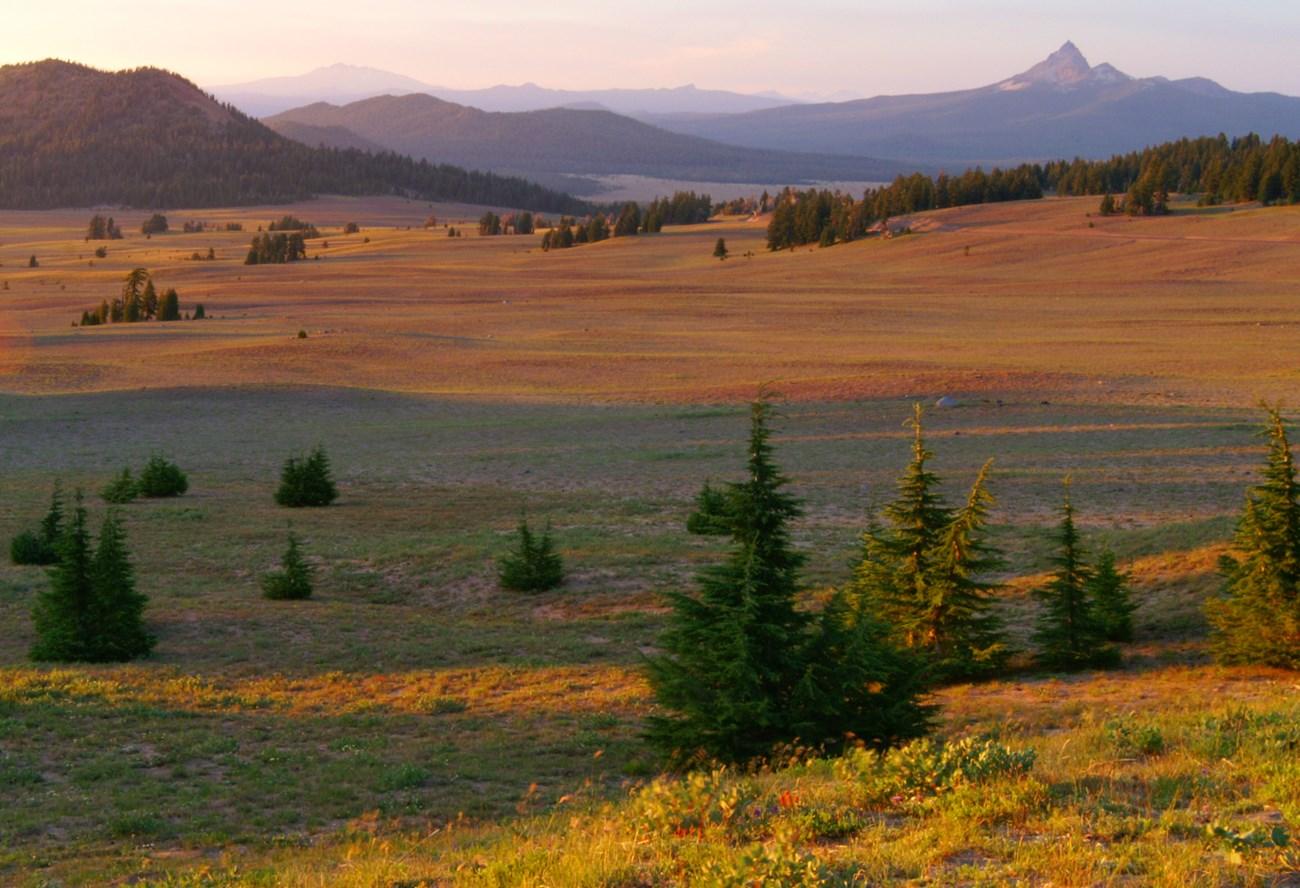 Klamath Falls
 blends high-desert scenery, Native heritage, wildlife refuges, outdoor adventure and small-city culture in southern Oregon, near Crater Lake.
3 h 47 min drive · 207 km from city centre
-


Swipe for more cities
Explore more

Explore more of Oregon
Discover Oregon's diverse landscapes, vibrant cities, and rich culture. From stunning coastlines to lush forests, this Pacific Northwest gem offers endless adventures.
Explore Oregon