

Free Linn County Travel Guide & Mobile App
Explore Linn County with free travel guides. Discover regional history, expert tips, proposed trips, and audio guides on web or mobile app.


Explore Linn County, Oregon, for Albany's historic streets, Willamette Valley farms, river recreation and forested Cascade foothills.
Read more about Linn County
Getting to and around Linn County
How to get there
Transportation
Destinations in Linn County
Resorts, valleys and scenic spots worth a trip of their own.

Swipe for more destinations
Best attractions in Linn County
Linn County's attractions range from historic valley streets to reservoirs, rivers and forest roads. Albany's preserved downtown and residential districts offer architecture from the Victorian and early twentieth-century periods, while the Monteith House and local museums provide context for settlement and civic development. Brownsville is valued for its historic townscape and local historical collections, and Thompson's Mills State Heritage Site near Shedd explains the county's agricultural and water-powered industrial past. Around Sweet Home, Foster Lake and the South Santiam River support boating, fishing, swimming in designated areas and lakeside recreation. The Quartzville corridor adds forest scenery, river access and reminders of the area's gold-mining and timber history. Walking, birdwatching, cycling, camping and scenic driving are central to the county's outdoor offer, although many sites are dispersed and services can be limited. Agricultural roads, covered bridges, small communities and seasonal farm activity add a quieter dimension to the better-known valley and forest destinations.
-
Historical landmark
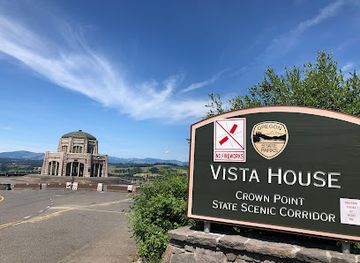
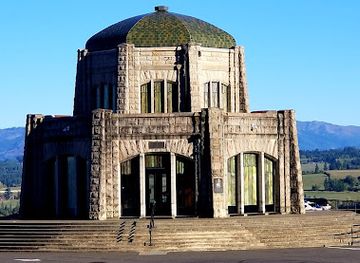
Vista House at Crown Point
Discover the breathtaking views and rich history at Vista House, a stunning landmark overlooking the Columbia River Gorge in Oregon.
-
State park
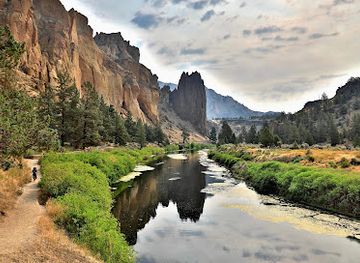
Smith Rock State Park
Discover the breathtaking landscapes and thrilling outdoor adventures at Smith Rock State Park, Oregon's premier destination for nature enthusiasts and rock climbers.
-
National forest
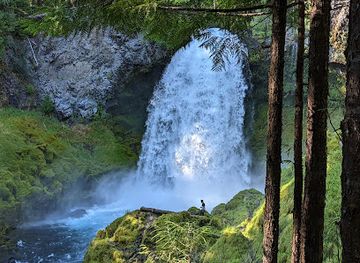
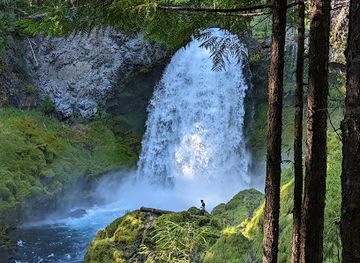
Willamette National Forest
Explore the breathtaking landscapes and diverse wildlife of Willamette National Forest, a must-visit destination for nature lovers and adventure seekers.
-
Ski resort
Mt. Bachelor Ski Resort
Experience year-round adventures at Mt. Bachelor Ski Resort - from thrilling winter sports to summer hiking trails, it's the ultimate outdoor playground.


Best landmarks in Linn County
Albany's historic districts are Linn County's most concentrated architectural landmark, with ornate commercial façades, churches, civic buildings and carefully preserved houses illustrating the town's nineteenth- and early twentieth-century prosperity. The Monteith House, one of the city's oldest surviving residences, represents the early settler period and the emergence of Albany as a river and commercial centre. Thompson's Mills near Shedd is a landmark of rural industry: its surviving water-powered flour-milling complex illustrates how Willamette Valley grain was processed before modern industrial systems replaced much of that technology. The Willamette and Calapooia rivers remain important geographical features in Albany, where their meeting influenced the town's original location. Farther east, Foster Dam and Foster Reservoir mark the twentieth-century transformation of the South Santiam watershed through flood control and hydroelectric development. The forested ridges, river corridors and cascades around Sweet Home and Quartzville are natural landmarks whose significance lies in their connection to timber history, recreation and the county's transition from valley agriculture to mountain country.
-
National park
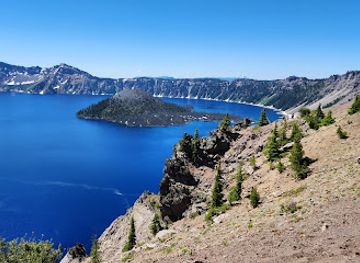
Crater Lake National Park
Explore Crater Lake National Park, Oregon's natural gem, known for its stunning blue waters, scenic views, and endless outdoor adventures.
-
Historical landmark
Vista House at Crown Point
Experience the stunning views and rich history at Vista House, a must-visit landmark in the Columbia River Gorge.
-
State park
Smith Rock State Park
Discover the breathtaking beauty and adventure of Smith Rock State Park, a premier destination for outdoor enthusiasts in Oregon.
-
National forest
Willamette National Forest
Explore the stunning landscapes and outdoor adventures at Willamette National Forest, a natural paradise in Oregon offering unforgettable experiences.
Explore Linn County on the map
Plan your trip on one map. See where the top cities, national parks and sights are, and book hotels and experiences in a few clicks.
Best hotels in Linn County
Best restaurants in Linn County
Dining in Linn County reflects Oregon's agricultural Willamette Valley and its timber-country communities. Albany, Lebanon and Sweet Home have the broadest choice, including cafés, bakeries, family restaurants, pubs and contemporary grills, while smaller settlements are more likely to offer a compact selection of locally run eateries. Seasonal produce, berries, vegetables, grass-fed meats and nursery-country products appear in farm shops, market stalls and changing menus, though individual availability depends on the time of year. Traditional American breakfasts, sandwiches, burgers and pies sit alongside Mexican, Asian and other cuisines brought by the wider Oregon community. Rural inns and casual restaurants are useful stops when travelling through the valley or towards the Cascades, but dining options become less predictable in remote recreation areas. Visitors interested in local food should combine town restaurants with farm stands, community markets and seasonal agricultural events rather than expect one defining county dish.
-
American
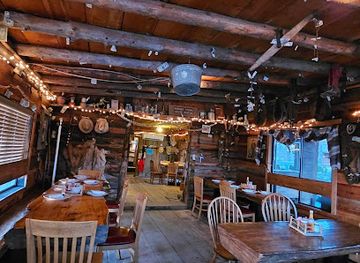
Cowboy Dinner Tree
Discover Cowboy Dinner Tree in Silver Lake, OR – where rustic charm meets hearty American cuisine for an unforgettable dining experience.
-
American
Takoda's Restaurant
Experience delicious American cuisine at Takoda's Restaurant in scenic Blue River, Oregon – where flavor meets rustic charm!
-
Steak
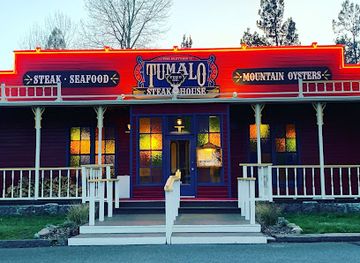
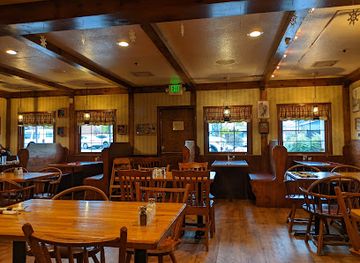
Tumalo Feed Co. Steakhouse
Experience the flavors of Oregon at Tumalo Feed Co. Steakhouse – where great steaks meet friendly service in a rustic setting.
-
Family-friendly
Tollgate Inn Restaurant & Saloon
Discover the charm of Tollgate Inn Restaurant & Saloon - where hearty meals meet rustic elegance in the heart of Oregon.
Best bars in Linn County
Evening life in Linn County is centred on pubs, breweries, restaurants and community venues rather than a large nightclub scene. Albany has the greatest concentration of bars and evening entertainment, with historic commercial streets and the riverfront providing a more urban setting than the smaller towns. Lebanon and Sweet Home offer local pubs, lounges and casual restaurants where residents and visitors gather, while rural communities tend towards taverns, social clubs and seasonal events. Live music and community performances may be more significant than late-night dancing, and schedules vary by venue and season. Some establishments serve Oregon beer and regional wines, but drinking is not the only way to experience the county after dark: an early dinner, a theatre or community event, or quiet accommodation near the foothills may suit travellers better. Plan transport in advance, particularly outside Albany, where taxis and ride-hailing coverage can be limited.
-
Grill
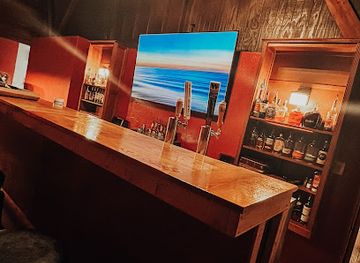
Idanha Bar&Grill
Experience the heart of Oregon's culinary scene at Idanha Bar & Grill, where delicious grilled dishes and local ingredients come together in a warm and inviting atmosphere.
-
Grill
Idanha Hideaway
Experience the flavors of Oregon at Idanha Hideaway, where mouth-watering grilled dishes meet a cozy atmosphere perfect for relaxation.

Best shops in Linn County
Shopping in Linn County is concentrated in Albany and Lebanon, where conventional high-street shops, supermarkets, services and independent retailers provide the practical choice for visitors. Albany's historic centre is particularly suited to browsing smaller businesses, antiques, books, gifts, galleries and locally made goods, while surrounding commercial areas serve everyday needs. Farm stands and seasonal roadside stalls are valuable for fruit, vegetables, flowers, nursery products and other Willamette Valley produce, although their locations and opening patterns change through the year. In Brownsville, Sweet Home and smaller communities, shopping is more local in scale, with general stores, craft sellers, antique interests and community markets rather than large retail complexes. Useful regional purchases include packaged food, locally produced beverages, artwork, handmade items and outdoor supplies. Visitors should distinguish durable local products from generic souvenirs and check whether small vendors accept cards before travelling into rural areas.
-
Gift shop
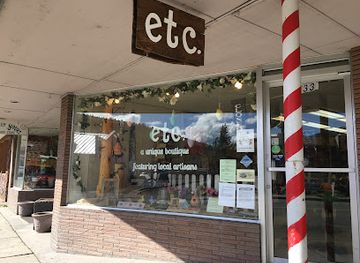
etc. a unique boutique
Explore Etc. A Unique Boutique in John Day, Oregon for artisan gifts and local crafts that capture the essence of the region.
-
Gift shop
McKenzie River Gifts
Discover unique local crafts and gifts at McKenzie River Gifts, a perfect stop to celebrate Oregon's natural beauty.

Get your free copy of our complete guide to Linn County, delivered straight to you.
Everything on this page, from attractions and restaurants to essentials and local phrases, in one PDF you can read offline, print or share.
Already have an account? Sign in
Your Linn County guide is ready.
We'll send it to · Not you? Sign out

Getting your guide ready…
We are putting together a fresh copy of the Linn County guide. This can take up to a minute.
This can take a few moments. If your browser asks, choose Allow so the download can start. You'll find the guide in your Downloads folder.
Nothing happened? Download it again
Sorry, the guide is taking longer than usual. Please try again in a minute, or get it by email instead.
Linn County essentials
Currency and Payment
Safety
Emergency Situations
Do's and Don'ts
Local Tips
From Eve
Local phrases worth knowing
You don't need to get them perfect. A few words go a long way, and locals appreciate the effort.
Basics
| English | Local | Say it |
|---|---|---|
| Hello | Hey there | [Hay ther] |
| Goodbye | See ya later | [See ya lay-ter] |
| Yes | Yep | [Yep] |
| No | Nope | [Nope] |
| Please/You’re welcome | Sure thing/No problem | [Shoor thing/No prob-lem] |
| Thank you | Thanks a lot | [Thanks a lot] |
| Excuse me/Sorry | Pardon me/Sorry about that | [Pardon me/Sorry about that] |
| How are you? | How's it going? | [How's it goin'?] |
| Fine. And you? | Good. You? | [Good. You?] |
| Do you speak English? | Do ya speak English? | [Do ya speak English?] |
| I don't understand | I don’t get it | [I don’t get it] |
Eating & Drinking
| English | Local | Say it |
|---|---|---|
| I’d like to see the menu, please | Can I see the menu? | [Can I see the menu?] |
| I don't eat meat | I’m vegetarian | [I’m vege-tarian] |
| Cheers! | Cheers! | [Cheers!] |
| I would like to pay, please | Can I get the check? | [Can I get the check?] |
Emergencies
| English | Local | Say it |
|---|---|---|
| Help! | Help! | [Help!] |
| Go away! | Leave me alone! | [Leave me alone!] |
| Call the Police! | Call 911! | [Call nine-one-one!] |
| Call a doctor! | Get a doctor! | [Get a doctor!] |
| I’m lost | I can’t find my way | [I can’t find my way] |
| I’m ill | I’m not feeling well | [I’m not feelin' well] |
Shopping
| English | Local | Say it |
|---|---|---|
| I’d like to buy... | I want to buy... | [I want to buy...] |
| I’m just looking | Just browsing | [Just browsing] |
| How much is it? | What’s the price? | [What’s the price?] |
| That’s too expensive | That costs too much | [That costs too much] |
| Can you lower the price? | Can you make it cheaper? | [Can you make it cheaper?] |
Time & Numbers
| English | Local | Say it |
|---|---|---|
| What time is it? | What time is it? | [What time is it?] |
| It’s one o’clock | It’s 1 PM | [It’s one P-M] |
| Half past (10) | Half past 10 | [Half past ten] |
| Morning | Morning | [Morning] |
| Afternoon | Afternoon | [Afternoon] |
| Evening | Evening | [Evening] |
| Yesterday | Yesterday | [Yesterday] |
| Today | Today | [Today] |
| Tomorrow | Tomorrow | [Tomorrow] |
| 1 | One | [One] |
| 2 | Two | [Two] |
| 3 | Three | [Three] |
| 4 | Four | [Four] |
| 5 | Five | [Five] |
| 6 | Six | [Six] |
| 7 | Seven | [Seven] |
| 8 | Eight | [Eight] |
| 9 | Nine | [Nine] |
| 10 | Ten | [Ten] |
Transport & Directions
| English | Local | Say it |
|---|---|---|
| Where's a/the...? | Where’s the nearest...? | [Where’s the nearest...?] |
| What’s the address? | What’s the address? | [What’s the address?] |
| Can you show me (on the map)? | Can you point it out? | [Can you point it out?] |
| When’s the next (bus)? | When’s the next bus? | [When’s the next bus?] |
| A ticket (to ....) | A ticket to... | [A ticket to...] |
History of Linn County
Kalapuya and Santiam Homelands
For thousands of years, the Willamette Valley and the foothills of the Cascades have been Indigenous homelands. Kalapuya peoples managed valley landscapes through seasonal movement, fishing, hunting, plant gathering and controlled burning, while Santiam communities lived along the river systems leading into the eastern foothills. Epidemics, displacement and treaty-era upheaval severely reduced Indigenous populations in the nineteenth century. Their history remains fundamental to understanding the landscape, even though much of the visible built heritage in Linn County dates from the later settler period.
Settlement and the Oregon Trail Era
American and European settlement expanded through the Willamette Valley during the 1840s, encouraged by the Oregon Trail and the promise of fertile agricultural land. Linn County was created by the Oregon territorial legislature in 1847 and named for Missouri senator Lewis F. Linn. Albany was established at the confluence of the Willamette and Calapooia rivers in the late 1840s, becoming a service, trading and transport centre for farms spreading across the valley.
Albany and the Growth of Valley Towns
During the second half of the nineteenth century, Albany, Lebanon and the smaller valley settlements developed as market towns linked to surrounding farms. Sawmills, flour mills, warehouses, general stores, banks and civic buildings served an increasingly organised agricultural economy. Albany's surviving historic neighbourhoods and commercial buildings reflect this period of expansion, when the town became an important regional centre rather than simply a river crossing.
Railways, Milling and Water Power
Rail connections transformed Linn County's economy in the nineteenth and early twentieth centuries by carrying agricultural goods, timber and manufactured products to Portland, the Willamette Valley and markets farther afield. Water power also shaped industry. Thompson's Mills near Shedd, developed in the nineteenth century, is a rare surviving example of a large water-powered flour mill in Oregon. Such enterprises linked the valley's grain production with local processing and trade.
Timber and the Eastern County
The forests and steep river valleys east of the Willamette supported logging, sawmilling and related employment, particularly around Sweet Home and the Santiam country. Roads and forest settlements expanded as timber became a major regional industry. Logging altered watersheds and landscapes, while the resulting communities developed a strong practical connection with the forests, rivers and reservoirs of the Cascades.
Hydroelectric Development and Reservoirs
Dams and reservoirs on the South Santiam system changed both the economy and geography of eastern Linn County during the twentieth century. Foster Reservoir became associated with flood control, electricity generation, irrigation and recreation, while other projects in the broader Santiam watershed supported growing communities and industry. These works brought major infrastructure to remote valleys but also reshaped river environments and displaced some earlier patterns of settlement and travel.
Modern Agricultural and Forest Landscapes
Linn County remains shaped by the combination of productive valley agriculture and managed forestland in the Cascades. Grass seed, nursery crops, berries, vegetables and livestock are important parts of the western economy, while timber and outdoor recreation continue to influence the east. Today, historic preservation in Albany and Brownsville stands alongside river restoration, forest management and recreation, making the county a place where older industries remain visible within a changing rural economy.
Linn County in Photos
Browse through our photo collection highlighting the charm and character of the destination.
Neighbouring regions of Linn County
The closest regions to Linn County, if you have time for more than one.
-

-

-

-

-


Swipe for more regions
Explore more

Explore more of Oregon
Discover Oregon's diverse landscapes, vibrant cities, and rich culture. From stunning coastlines to lush forests, this Pacific Northwest gem offers endless adventures.
Explore Oregon