

Free Multnomah County Travel Guide & Mobile App
Explore Multnomah County with free travel guides. Discover regional history, expert tips, proposed trips, and audio guides on web or mobile app.


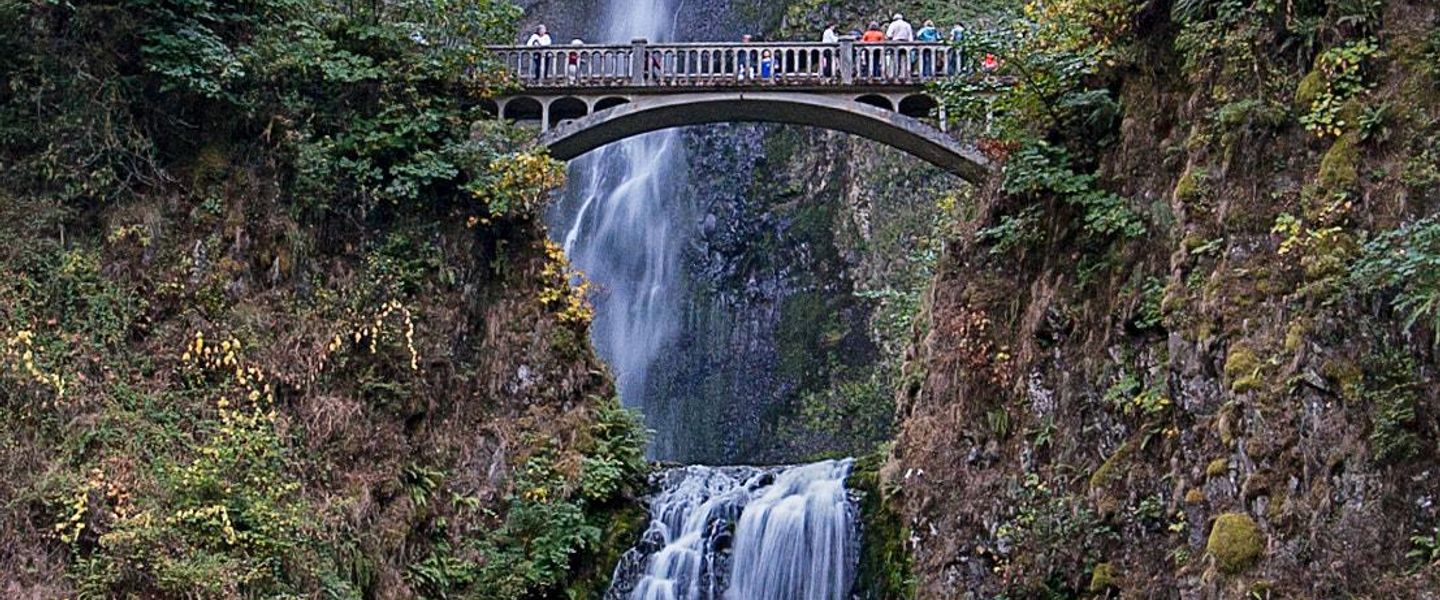


Explore Multnomah County for Portland’s food and culture, Forest Park, river towns, Sauvie Island farms and Columbia Gorge waterfalls.
Read more about Multnomah County
Getting to and around Multnomah County
How to get there
Transportation
Best attractions in Multnomah County
Multnomah County’s attractions range from Portland’s museums, galleries, theatres and gardens to forest trails, river viewpoints and working agricultural landscapes. Washington Park concentrates several major institutions, including the International Rose Test Garden, Portland Japanese Garden and Oregon Zoo, while Forest Park offers an extensive network of wooded paths within the metropolitan area. Along the eastern edge, Troutdale and the Historic Columbia River Highway provide access to the Columbia Gorge, where Multnomah Falls is joined by other waterfalls, creeks, viewpoints and hiking routes. Gresham and the surrounding foothills offer parks, community arts and gateways to outdoor recreation. Sauvie Island adds farms, seasonal produce, wetlands and wildlife habitat, although access and opening arrangements vary. The county’s appeal lies in this mixture: cultural attractions can be reached without abandoning the landscape, while natural sites remain subject to weather, conservation rules and traffic pressure.
-
Hiking area
Columbia River Gorge National Scenic Area
Experience the breathtaking beauty of the Columbia River Gorge National Scenic Area, a paradise for hiking, nature exploration, and scenic views.
-
Historical landmark
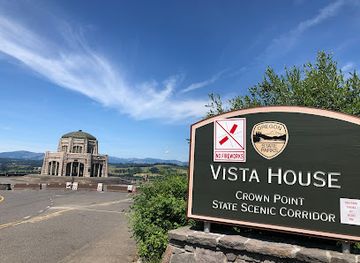
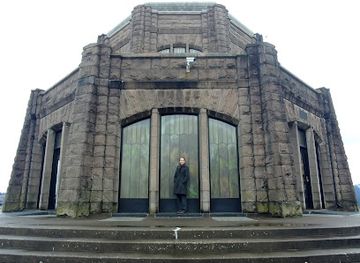
Vista House at Crown Point
Experience the breathtaking views from Vista House at Crown Point, a historical landmark offering a glimpse into Oregon's rich heritage.
-
Waterfall
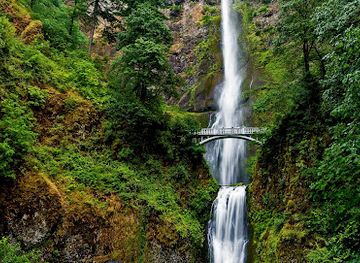
Multnomah Falls
Experience the breathtaking beauty of Multnomah Falls, Oregon's iconic waterfall in the stunning Columbia River Gorge.
-
State park
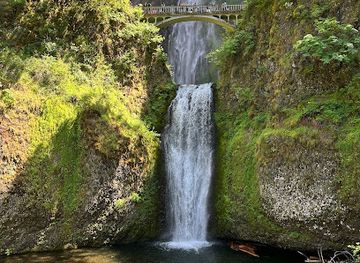
Bridal Veil Falls State Scenic Viewpoint
Explore the breathtaking Bridal Veil Falls State Scenic Viewpoint in Oregon, where nature's beauty and adventure await around every corner.


Best landmarks in Multnomah County
The county’s defining landmarks include the bridges and public spaces of Portland’s Willamette waterfront, where the river has shaped commerce, industry and civic life. Pittock Mansion, set in the West Hills, is a prominent early twentieth-century house with expansive views over Portland and the Cascade skyline. In Washington Park, the International Rose Test Garden and Portland Japanese Garden are important designed landscapes as well as visitor sites. Farther east, the Columbia River Gorge supplies the county’s most recognisable natural landmarks: Multnomah Falls descends in two principal stages beside the Historic Columbia River Highway, while the wooded cliffs and river corridor create a broader geographical identity. Crown Point and Vista House, although often combined with Gorge itineraries, are outside Multnomah County in neighbouring Clackamas County and should not be confused with county landmarks. Sauvie Island’s broad agricultural fields and river channels provide a quieter landscape landmark rather than a single monumental structure.
-
Tourist attraction
Multnomah Falls
Discover the breathtaking beauty of Multnomah Falls, Oregon's iconic natural wonder, featuring stunning waterfalls and picturesque hiking trails.
-
Historical landmark
Vista House at Crown Point
Discover the breathtaking views and rich history at Vista House, an iconic landmark in the Columbia River Gorge, Oregon.
-
Tourist attraction
Bridal Veil Falls
Experience the breathtaking beauty of Bridal Veil Falls, a serene oasis of cascading waters and lush hiking trails in Oregon.
-
History museum
Philip Foster Farm Historic Site on the Barlow Road/Oregon Trail
Explore the rich history of the Oregon Trail at Philip Foster Farm, a historic site with engaging exhibits and reenactments in beautiful Eagle Creek, Oregon.

Explore Multnomah County on the map
Plan your trip on one map. See where the top cities, national parks and sights are, and book hotels and experiences in a few clicks.
Best hotels in Multnomah County
Best restaurants in Multnomah County
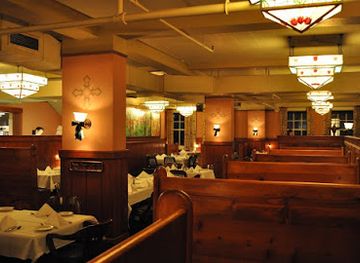
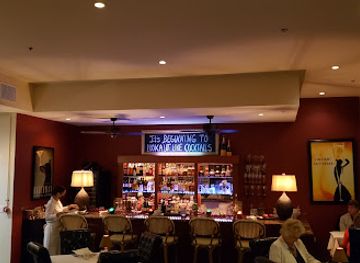
Portland gives Multnomah County its broadest dining range, from food carts, bakeries and coffee roasters to neighbourhood restaurants, wine bars and ambitious kitchens. The city’s culinary identity is closely linked to Oregon’s produce, including berries, apples, pears, mushrooms, hazelnuts, vegetables and locally raised meat, while the rivers and nearby Pacific coast influence the availability of salmon, shellfish and other seafood. Farm-to-table cooking is common but should be understood as part of a wider regional food economy rather than a single county tradition. Gresham, Troutdale and east-county communities offer cafés, breweries, family restaurants and international cuisines, while Sauvie Island is known for seasonal farm stands, u-pick produce and rural refreshments. Oregon wines, craft beer and cider are widely represented, and travellers should distinguish products made locally from those simply sold in the county.
-
Pacific Northwestern
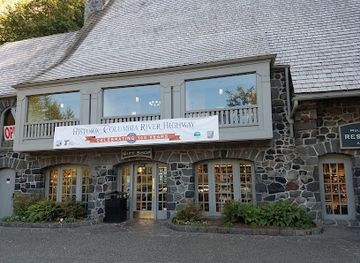
Multnomah Falls Lodge
Discover stunning vistas and culinary delights at Multnomah Falls Lodge in Oregon's breathtaking Columbia River Gorge.
-
Pacific Northwestern
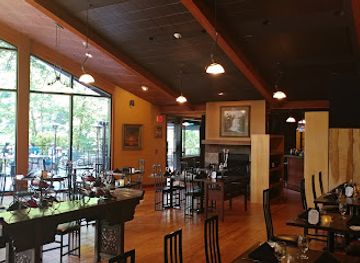
Riverview Restaurant
Experience exquisite Pacific Northwestern and Asian fusion cuisine at Riverview Restaurant in Troutdale, Oregon - where every meal is a celebration of flavor.
-
American
McMenamins Black Rabbit Restaurant
Discover McMenamins Black Rabbit Restaurant: A Unique American Dining Experience in Oregon's Scenic Edgefield Estate.
-
Restaurant
Bacari -- A Petit Restaurant
Experience exquisite Pacific Northwest cuisine at Bacari - Gresham's hidden gem for food lovers seeking local flavors.
Best shops in Multnomah County
Portland’s shopping character favours independent businesses, books, design, vintage clothing, locally made goods and food products rather than a single enclosed retail district. Downtown and the Pearl District contain established retail streets and galleries, while neighbourhoods such as Northwest, Nob Hill, Hawthorne and Alberta are known for smaller shops, cafés and creative businesses; their commercial mix changes over time. Portland Saturday Market is a long-running open-air marketplace associated with local arts and crafts, although dates and arrangements should be checked before visiting. Farmers’ markets across the county provide Oregon produce, preserves, baked goods and prepared food, with seasonal variation. Sauvie Island is useful for farm stands and autumn produce, while Gresham and Troutdale offer practical shopping, antiques and independent local businesses. Look for hazelnuts, berries, craft beverages, ceramics, books and regional food products, and avoid assuming that an item sold locally was necessarily made in Multnomah County.
-
Store
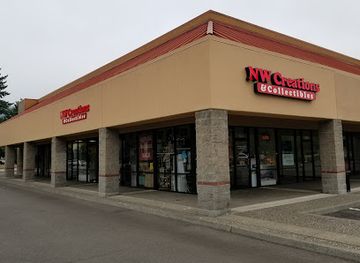
NW Creations & Collectibles
Explore NW Creations & Collectibles in Gresham, Oregon: A treasure trove of antiques, art, and unique collectibles awaits you!
-
Gift shop
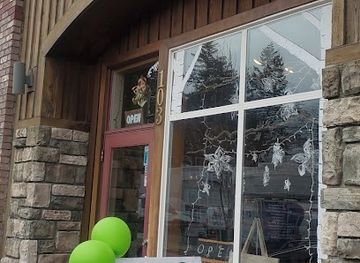
Artistree NW
Explore Artistree NW, a charming gift shop in Troutdale, Oregon, where local art and unique gifts come together to create lasting memories.
-
Home goods store
Self Indulgence Antiques & Interiors
Explore a treasure trove of unique antiques and home decor at Self Indulgence Antiques & Interiors in Troutdale, Oregon.

Get your free copy of our complete guide to Multnomah County, delivered straight to you.
Everything on this page, from attractions and restaurants to essentials and local phrases, in one PDF you can read offline, print or share.
Already have an account? Sign in
Your Multnomah County guide is ready.
We'll send it to · Not you? Sign out

Getting your guide ready…
We are putting together a fresh copy of the Multnomah County guide. This can take up to a minute.
This can take a few moments. If your browser asks, choose Allow so the download can start. You'll find the guide in your Downloads folder.
Nothing happened? Download it again
Sorry, the guide is taking longer than usual. Please try again in a minute, or get it by email instead.
Multnomah County essentials
Currency and Payment
Safety
Emergency Situations
Do's and Don'ts
Local Tips
From Eve
Local phrases worth knowing
You don't need to get them perfect. A few words go a long way, and locals appreciate the effort.
Basics
| English | Local | Say it |
|---|---|---|
| Hello | Hey | [hey] |
| Goodbye | See ya | [see yah] |
| Yes | Yeah | [yeah] |
| No | Nah | [nah] |
| Please/You're welcome | No problem | [no prob-lum] |
| Thank you | Thanks | [thanks] |
| Excuse me/Sorry | Sorry | [sorry] |
| How are you? | How's it going? | [how's it go-ing] |
| Fine. And you? | Good. You? | [good. you?] |
| Do you speak English? | Do you speak English? | [do you speak English?] |
| I don't understand | I don’t get it | [I don’t get it] |
Eating & Drinking
| English | Local | Say it |
|---|---|---|
| I'd like to see the menu, please | Can I see the menu? | [can I see the menu?] |
| I don't eat meat | I’m vegetarian | [I’m vegetarian] |
| Cheers! | Cheers! | [cheers] |
| I would like to pay, please | Can I get the check? | [can I get the check?] |
Emergencies
| English | Local | Say it |
|---|---|---|
| Help! | Help! | [help] |
| Go away! | Leave me alone! | [leave me a-lone] |
| Call the Police! | Call the cops! | [call the cops] |
| Call a doctor! | Get a doctor! | [get a doctor] |
| I'm lost | I’m lost | [I’m lost] |
| I'm ill | I’m not feeling well | [I’m not feeling well] |
Shopping
| English | Local | Say it |
|---|---|---|
| I'd like to buy... | I want to buy... | [I want to buy...] |
| I'm just looking | Just browsing | [just browsing] |
| How much is it? | What's the price? | [what's the price?] |
| That's too expensive | That’s pricey | [that’s pricey] |
| Can you lower the price? | Can you make it cheaper? | [can you make it cheaper?] |
Time & Numbers
| English | Local | Say it |
|---|---|---|
| What time is it? | What time is it? | [what time is it?] |
| It's one o'clock | It's one | [it's one] |
| Half past (10) | Ten thirty | [ten thirty] |
| Morning | Morning | [morning] |
| Afternoon | Afternoon | [afternoon] |
| Evening | Evening | [evening] |
| Yesterday | Yesterday | [yesterday] |
| Today | Today | [today] |
| Tomorrow | Tomorrow | [tomorrow] |
| 1 | One | [one] |
| 2 | Two | [two] |
| 3 | Three | [three] |
| 4 | Four | [four] |
| 5 | Five | [five] |
| 6 | Six | [six] |
| 7 | Seven | [seven] |
| 8 | Eight | [eight] |
| 9 | Nine | [nine] |
| 10 | Ten | [ten] |
Transport & Directions
| English | Local | Say it |
|---|---|---|
| Where's a/the...? | Where's the...? | [where's the...?] |
| What's the address? | What's the address? | [what's the address?] |
| Can you show me (on the map)? | Can you show me on the map? | [can you show me on the map?] |
| When's the next (bus)? | When's the next bus? | [when's the next bus?] |
| A ticket (to ....) | A ticket to... | [a ticket to...] |
History of Multnomah County
Chinookan Homelands and River Trade
Long before Portland was founded, the lower Willamette and Columbia river system was home to Chinookan peoples, including communities whose economies and travel routes were closely connected with fishing, gathering, trade and river transport. The rivers were not barriers but major corridors linking settlements and neighbouring peoples. Archaeological evidence and surviving cultural knowledge place the county within a much older landscape of managed resources and established exchange. Later settlement disrupted Indigenous communities through disease, land seizure and federal policy, but Native presence and cultural work remain part of the region’s contemporary identity.
Exploration and the Overland Migration Era
The Lewis and Clark Expedition travelled through the lower Columbia region in 1805–06, adding an American expansion narrative to a landscape already well known to Indigenous peoples and fur traders. During the nineteenth century, emigrants travelling the Oregon Trail increasingly reached the Willamette Valley, often completing the final difficult portage around the Columbia River rapids by road or boat. Missionaries, traders and land claimants followed, and the settlement that became Portland grew near the Willamette’s junction with the Columbia, benefiting from its strategic position.
Portland’s Foundation and River Economy
Portland was incorporated in 1851 and expanded through timber, grain, shipping and commerce. Its location on the Willamette, with access to the Columbia and the Pacific, encouraged deep-water trade and connections with inland Oregon. Railways later strengthened its role as a regional distribution centre, while docks, warehouses and industrial sites reshaped the riverfront. The city’s growth was accompanied by exclusionary laws, displacement and unequal access to housing and employment, realities that form an essential part of understanding Multnomah County’s development.
Farms, Orchards and Transportation Corridors
Outside Portland, the county’s lowlands and river islands supported farming, orchards, dairying and market gardening. Sauvie Island became particularly associated with agriculture because of its fertile soils and proximity to urban markets. Roads, electric interurban lines, railways and bridges linked rural districts to Portland and to communities along the Columbia. The Historic Columbia River Highway, completed in the early twentieth century, represented a new form of scenic infrastructure: it served transport while deliberately framing waterfalls, cliffs and river views as destinations for motorists.
Industrialisation, Migration and Vanport
The Second World War transformed the lower Columbia industrial region, bringing shipbuilding and large-scale employment that attracted workers from across the United States, including African American migrants who faced discrimination in housing and employment. Vanport, built rapidly north of Portland in what is now Multnomah County, became one of the country’s largest wartime housing projects. A catastrophic flood destroyed it in 1948, displacing tens of thousands of residents. Its short existence and the subsequent loss of housing helped shape Portland’s racial geography and remain central to local historical interpretation.
Parks, Urban Renewal and Environmental Awareness
During the twentieth century, Multnomah County expanded its system of public parks and protected landscapes, including Forest Park and sites along the Columbia Gorge. Portland’s waterfront was also rethought: parts of the former Harbor Drive were replaced by Tom McCall Waterfront Park in the 1970s, reflecting growing support for public river access and urban environmental planning. The opening of Portland’s light-rail system in 1986 and later investment in cycling and street improvements reinforced the county’s reputation for experimenting with alternative transport and urban design.
Contemporary Regional Identity
Today Multnomah County combines a substantial metropolitan economy with a strong public culture of food, books, gardens, cycling, craft production and environmental stewardship. Portland’s identity has been shaped by both civic experimentation and persistent debates over housing, homelessness, inequality, transport and land use. Eastern communities have distinct suburban and industrial histories, while the Gorge and agricultural districts face the pressures of recreation, conservation and climate-related wildfire risk. The county’s present character is therefore the result of continuing negotiation between urban growth, working landscapes and protected natural areas.
Multnomah County in Photos
Browse through our photo collection highlighting the charm and character of the destination.
Neighbouring regions of Multnomah County
The closest regions to Multnomah County, if you have time for more than one.
-

-

-

-

-


Swipe for more regions
Explore more

Explore more of Oregon
Discover Oregon's diverse landscapes, vibrant cities, and rich culture. From stunning coastlines to lush forests, this Pacific Northwest gem offers endless adventures.
Explore Oregon