

Free Ngemelis Travel Guide & Mobile App
Explore Ngemelis with free travel guides. Discover regional history, expert tips, proposed trips, and audio guides on web or mobile app.


Ngemelis in Palau offers world-class reef diving, limestone seascapes and current-rich marine encounters within the Rock Islands Southern Lagoon.
Read more about Ngemelis
When is the best time to visit Ngemelis?
Best: December–February · 31°C| Month | High (°C) | Rainfall (mm) |
|---|---|---|
| January (best) | 31 | 300 |
| February (best) | 31 | 270 |
| March | 31 | 330 |
| April | 31 | 360 |
| May | 32 | 390 |
| June | 32 | 420 |
| July | 31 | 450 |
| August | 31 | 480 |
| September | 31 | 510 |
| October | 31 | 540 |
| November | 31 | 570 |
| December (best) | 31 | 300 |
Getting to and around Ngemelis
How to get there
Transportation
Best attractions in Ngemelis
Ngemelis is defined by marine attractions rather than conventional land-based sightseeing. Divers come for Blue Corner, Blue Holes, the New Drop-Off and the Big Drop-Off, a group of celebrated sites associated with steep reef walls, clear water, coral communities and the possibility of encountering larger pelagic species. Conditions vary considerably, and some sites are suited only to divers with appropriate training and current experience. Snorkelling is possible in calmer parts of the wider Rock Islands itinerary, although the most dramatic drop-offs are fundamentally diving environments. Boat journeys through the limestone islands are an attraction in their own right, revealing sheltered lagoons, forested outcrops and narrow passages before reaching the more exposed western reefs. Ngemelis is commonly combined with other southern lagoon sites, so visitors may experience several different underwater habitats in one day, from shallow coral gardens to deep walls and current-swept channels. There are no museums, restaurants, beaches with facilities or family attractions on the island itself; its appeal lies in wilderness, marine biodiversity and the expertise of guides who interpret changing sea conditions.
-
Tourist attraction
Milky Way
Experience the breathtaking beauty of the Milky Way in Koror, Palau, where the stars shine brighter and the night sky captivates all who visit.
-
National museum
Belau National Museum
Explore the captivating history and vibrant culture of Palau at the Belau National Museum, a must-visit destination for every traveler.
-
Tourist attraction
Ngardmau Waterfalls
Experience the breathtaking beauty of Ngardmau Waterfalls in Ngiwal, Palau, where nature and adventure await every traveler.
-
Park
Long Island Park
Explore Long Island Park in Koror, Palau: A serene escape into nature with stunning views and recreational adventures for every traveler.


Best landmarks in Ngemelis
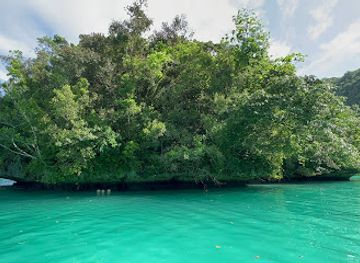
Ngemelis is marked less by architecture than by the dramatic forms of the Rock Islands and the underwater topography surrounding them. The limestone island itself, covered in tropical vegetation and edged by reef and lagoon water, is a notable element of the southern lagoon landscape. Below sea level, the steep walls associated with the Big Drop-Off and New Drop-Off are geological and visual landmarks for divers, where shallow reef can fall rapidly into deep blue water. Blue Holes, with their submerged openings and connection to the reef environment, is another recognised feature of the Ngemelis dive area, while Blue Corner is a prominent current-swept reef formation known throughout Palau’s diving community. The nearby German Channel is an important navigational feature of the wider Rock Islands seascape and reflects the area’s colonial history, although the channel should not be treated as a built monument. Together these places give Ngemelis its identity as a marine landmark landscape rather than a destination of churches, forts or civic buildings.
-
Aquarium
Dolphins Pacific
Discover the magic of marine life at Dolphins Pacific, an unforgettable aquarium experience with dolphin interactions and captivating exhibits in Koror, Palau.
-
Tourist attraction
German Channel
Explore the German Channel in Palau, a diver's paradise with rich marine life, stunning coral reefs, and unforgettable underwater adventures.
-
Aquarium
Palau Aquarium
Delve into the rich marine life of the Pacific at Palau Aquarium, a captivating destination for eco-conscious travelers and families alike.
-
Island
Peleliu
Discover the breathtaking beauty and historical depth of Peleliu, an island gem in Palau that offers adventure, relaxation, and a glimpse into the past.


Explore Ngemelis on the map
Plan your trip on one map. See where the top cities, national parks and sights are, and book hotels and experiences in a few clicks.
Best hotels in Ngemelis
Best restaurants in Ngemelis
Ngemelis has no restaurants, cafés or permanent food service because it is uninhabited. Meals and drinks are normally arranged through a Koror-based dive operator, private charter or liveaboard, with day boats often carrying packed lunches, fruit, snacks and water. The most practical dining preparation is therefore in Koror before departure, where visitors can explore Palauan food alongside broader Micronesian, Japanese, Filipino and American influences. Local dishes may include seafood, taro, cassava, rice and coconut, while fresh fish and shellfish are natural features of a country whose culture and economy are closely tied to the sea. Ask operators about dietary requirements in advance, particularly for full-day trips with limited storage and cooking facilities. Nothing should be collected from the reef or island to supplement a meal, and all rubbish must return to the vessel. Dining at Ngemelis is best understood as a boat-based part of a marine excursion, not as a restaurant experience on shore.
-
Indian
The Taj
Experience authentic Indian cuisine in Koror at The Taj - where rich flavors meet warm hospitality amidst stunning surroundings.
-
Fine Dining
Elilai Seaside Dining
Experience exquisite seafood and breathtaking views at Elilai Seaside Dining in Koror, Palau—where every meal tells a story.
-
Restaurant
The Canoe House
Experience exquisite dining at The Canoe House in Palau – where local flavors meet international cuisine amidst live music and vibrant nightlife.
-
Country food restaurant
Coffee Berry
Experience authentic Palauan cuisine at Coffee Berry - where local flavors meet cozy ambiance in Koror.


Best bars in Ngemelis
Ngemelis has no bars, nightclubs or evening entertainment. Excursions normally return to Koror, where the country’s modest nightlife is concentrated in hotel bars, restaurants and a small number of casual venues rather than a large club district. Evenings in the capital are generally more relevant to visitors staying on land, while liveaboard guests may spend the night aboard their vessel near an authorised anchorage. A day trip to Ngemelis is an early-start activity, and fatigue, dehydration or the effects of diving make rest more sensible than late-night drinking. Visitors planning several dive days should follow recognised guidance on alcohol and surface intervals, and should confirm any operator rules before boarding. The quiet after-dark character of the destination is part of its remoteness: there are no illuminated promenades or built nightlife facilities on the island.
-
Restaurant
Drop Off Bar and Grill
Experience the best of Palauan cuisine at Drop Off Bar and Grill, where fresh seafood meets breathtaking views in Koror.
-
Fine Dining
Elilai Seaside Dining
Experience exquisite seafood and breathtaking ocean views at Elilai Seaside Dining, Koror's premier fine dining destination.
-
Bar
The Canoe House
Discover the vibrant atmosphere of The Canoe House, where delicious food, refreshing drinks, and live entertainment await in the heart of Palau.
-
Japanese
Tori Tori
Discover Tori Tori in Koror, Palau, where authentic Japanese cuisine meets the beauty of island life, creating a unique dining experience for all.


Best nightclubs in Ngemelis
Ngemelis has no bars, nightclubs or evening entertainment. Excursions normally return to Koror, where the country’s modest nightlife is concentrated in hotel bars, restaurants and a small number of casual venues rather than a large club district. Evenings in the capital are generally more relevant to visitors staying on land, while liveaboard guests may spend the night aboard their vessel near an authorised anchorage. A day trip to Ngemelis is an early-start activity, and fatigue, dehydration or the effects of diving make rest more sensible than late-night drinking. Visitors planning several dive days should follow recognised guidance on alcohol and surface intervals, and should confirm any operator rules before boarding. The quiet after-dark character of the destination is part of its remoteness: there are no illuminated promenades or built nightlife facilities on the island.
-
Resort hotel
Island Paradise Resort Club
Discover the beauty of Palau at Island Paradise Resort Club, where luxury meets nature for an unforgettable tropical escape.
-
Lounge
Ocean View Lounge
Discover tranquility at Ocean View Lounge, a serene haven in Palau with breathtaking ocean views and a relaxing atmosphere.
-
Bar
Club Gorgeous
Discover the lively spirit of Koror at Club Gorgeous, the perfect bar for cocktails, camaraderie, and unforgettable nights.
-
 Bar
Zeus Bar
Discover the vibrant nightlife of Zeus Bar on Malakal Island, Koror, where delicious cocktails and a lively atmosphere await.

Best shops in Ngemelis
There is no shopping on Ngemelis: no shops, market, craft studio or visitor centre operates on the uninhabited island. Travellers should purchase essentials, reef-safe sun protection, snacks, water and any replacement equipment in Koror before boarding. Souvenirs and locally made goods are more appropriately sought in Palau’s capital, where visitors may find shell-free crafts, artwork, clothing, books, food products and other items connected with Palauan culture. Do not remove coral, shells, stones, living material or historic objects from the Rock Islands, and be cautious about buying marine products whose collection may damage protected ecosystems or breach regulations. A practical souvenir of a Ngemelis excursion is often a reputable operator’s image or dive log rather than a physical object taken from the environment. Retail provision in Koror is considerably more useful than anything available near the lagoon.
-
Ice Cream
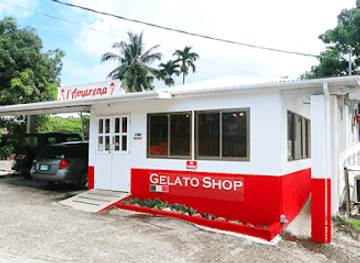
L'Amarena Gelato Shop (Gelateria Italiana)
Explore the delightful L'Amarena Gelato Shop in Airai, Palau, where authentic Italian gelato meets local charm for a sweet escape.
-
Shopping mall
WCTC Shopping Center
Discover the vibrant WCTC Shopping Center in Palau, where shopping, dining, and local culture come together in a delightful experience.
-
Shopping mall
Surangel and Sons Co. - Koror
Explore Palauan culture at Surangel and Sons Co., Koror's premier shopping mall with unique local crafts and delightful dining options.
-
Dive shop
Neco Marine Palau
Experience unparalleled underwater adventures at Neco Marine Palau, where vibrant reefs and rich marine life await every diving enthusiast.


Get your free copy of our complete guide to Ngemelis, delivered straight to you.
Everything on this page, from attractions and restaurants to essentials and local phrases, in one PDF you can read offline, print or share.
Already have an account? Sign in
Your Ngemelis guide is ready.
We'll send it to · Not you? Sign out

Getting your guide ready…
We are putting together a fresh copy of the Ngemelis guide. This can take up to a minute.
This can take a few moments. If your browser asks, choose Allow so the download can start. You'll find the guide in your Downloads folder.
Nothing happened? Download it again
Sorry, the guide is taking longer than usual. Please try again in a minute, or get it by email instead.
Ngemelis essentials
Currency and Payment
Safety
Emergency Situations
Do's and Don'ts
Local Tips
From Eve
Local phrases worth knowing
You don't need to get them perfect. A few words go a long way, and locals appreciate the effort.
Basics
| English | Local | Say it |
|---|---|---|
| Hello | Alii | [ah-lee] |
| Goodbye | Ked ra | [ked rah] |
| Yes | Ong | [ong] |
| No | Dengel | [deng-el] |
| Please/You're welcome | Mechad ra | [meh-chahd rah] |
| Thank you | Tia beluul | [tee-ah beh-lool] |
| Excuse me/Sorry | Mekera | [meh-keh-rah] |
| How are you? | Amechou? | [ah-meh-chou] |
| Fine. And you? | Ngara. Amechou? | [ngah-rah. ah-meh-chou] |
| Do you speak English? | Amechou a English? | [ah-meh-chou ah English] |
| I don't understand | Ngara se mecher | [ngah-rah seh meh-cher] |
Eating & Drinking
| English | Local | Say it |
|---|---|---|
| I'd like to see the menu, please | Ngara el mo chel, mechad ra | [ngah-rah el mo chel, meh-chahd rah] |
| I don't eat meat | Ngara se mo kora | [ngah-rah seh mo koh-rah] |
| Cheers! | Ked ra! | [ked rah!] |
| I would like to pay, please | Ngara el mo chel, mechad ra | [ngah-rah el mo chel, meh-chahd rah] |
Emergencies
| English | Local | Say it |
|---|---|---|
| Help! | Talang! | [tah-lahng!] |
| Go away! | Dadel! | [dah-del!] |
| Call the Police! | Ngara el mo a Police! | [ngah-rah el mo ah Police!] |
| Call a doctor! | Ngara el mo a doctor! | [ngah-rah el mo ah doctor!] |
| I'm lost | Ngara se mo meket | [ngah-rah seh mo meh-ket] |
| I'm ill | Ngara se mo ngara | [ngah-rah seh mo ngah-rah] |
Shopping
| English | Local | Say it |
|---|---|---|
| I'd like to buy... | Ngara el mo a... | [ngah-rah el mo ah...] |
| I'm just looking | Ngara se mo rael | [ngah-rah seh mo rah-el] |
| How much is it? | Amechou el mo a? | [ah-meh-chou el mo ah?] |
| That's too expensive | Amechou el mo so ngara | [ah-meh-chou el mo soh ngah-rah] |
| Can you lower the price? | Amechou a se ngara el mo a? | [ah-meh-chou ah seh ngah-rah el mo ah?] |
Time & Numbers
| English | Local | Say it |
|---|---|---|
| What time is it? | Amechou el ngii a? | [ah-meh-chou el ngee ah?] |
| It's one o'clock | El ngii a mlo | [el ngee ah mloh] |
| Half past (10) | Amechou el mo a (10) | [ah-meh-chou el mo ah (10)] |
| Morning | Mo | [moh] |
| Afternoon | Aum | [ah-oom] |
| Evening | Rael | [rah-el] |
| Yesterday | Amechedu | [ah-meh-cheh-doo] |
| Today | Ngara el mo chel | [ngah-rah el mo chel] |
| Tomorrow | Amechedu el mo chel | [ah-meh-cheh-doo el mo chel] |
| 1 | A | [ah] |
| 2 | Dua | [doo-ah] |
| 3 | Tor | [tor] |
| 4 | Pang | [pang] |
| 5 | Lima | [lee-mah] |
| 6 | Eno | [eh-no] |
| 7 | Malu | [mah-loo] |
| 8 | Walu | [wah-loo] |
| 9 | Kalu | [kah-loo] |
| 10 | Sia | [see-ah] |
Transport & Directions
| English | Local | Say it |
|---|---|---|
| Where's a/the...? | Amechou el mo a...? | [ah-meh-chou el mo ah...?] |
| What's the address? | Amechou el mo a address? | [ah-meh-chou el mo ah address?] |
| Can you show me (on the map)? | Amechou a se el mo (el map)? | [ah-meh-chou ah seh el mo (el map)?] |
| When's the next (bus)? | Amechou el mo a (bus)? | [ah-meh-chou el mo ah (bus)?] |
| A ticket (to ....) | El mo a ticket (el ...) | [el mo ah ticket (el ...)] |
History of Ngemelis
Palauan settlement and traditional marine use
The Rock Islands form part of the traditional cultural landscape of Palau, whose communities developed sophisticated knowledge of reefs, channels, weather and seasonal marine resources. Although Ngemelis has no permanent settlement today, its surrounding waters belong to a wider seascape shaped by Palauan navigation, fishing, customary relationships and oral traditions. The islands’ limestone formations, sheltered lagoons and outer reefs were not isolated natural curiosities but places understood through movement and use. That cultural context remains important when visiting Ngemelis, particularly because modern tourism takes place within waters that continue to carry significance for Palauan communities.
Spanish administration and European contact
European contact with the islands of Palau increased during the period of Spanish influence in the western Pacific. Spanish administration was limited in practical reach compared with later colonial powers, but it formed part of the sequence of external claims and missionary activity that changed Palau’s political setting. Ngemelis did not develop into a colonial town or port; its historical importance lies instead in its position within the Rock Islands and the sea routes connecting Palau’s communities. The islands’ relative lack of permanent structures today reflects both their difficult terrain and their continuing identity as a marine and customary landscape.
German colonial period, 1899–1914
Spain sold its remaining Micronesian possessions, including Palau, to Germany in 1899. German administration introduced new colonial systems and commercial interests, especially around copra production and maritime control. The name German Channel in the southern lagoon is associated with this colonial period and the alteration of a passage through the Rock Islands, although the channel’s present appearance is also part of a naturally complex reef and island environment. Ngemelis itself remained without the urban or industrial development seen in larger colonial centres, but the surrounding waters became part of a more formally administered maritime territory.
Japanese administration and wartime Palau
Japan took control of Palau during the First World War and later administered the islands under a League of Nations mandate. Koror became a major administrative and economic centre, and Japanese influence remains visible in parts of Palau’s language, foodways, infrastructure and historical memory. During the Second World War, Palau occupied a strategic position in the Pacific, although the best-known battlefield landscape lies elsewhere in the archipelago rather than on Ngemelis itself. The Rock Islands’ remoteness and marine character mean that visitors encounter this era mainly through wider regional history and the routes linking Koror with the southern lagoon.
American administration and the birth of modern tourism
After the Second World War, Palau was administered by the United States as part of the Trust Territory of the Pacific Islands. Improved transport, communications and international connections gradually made the Rock Islands more accessible to visitors. Diving became a central part of Palau’s tourism economy, and sites around Ngemelis gained international recognition for their walls, channels, visibility and marine life. The growth of tourism also encouraged stronger attention to conservation, permitting and responsible use of the lagoon, since the destination’s appeal depends on an ecosystem vulnerable to physical damage and poorly managed visitation.
Rock Islands Southern Lagoon World Heritage recognition
The Rock Islands Southern Lagoon was inscribed on the UNESCO World Heritage List in 2012 for its combination of exceptional natural features and cultural significance. The designation encompasses a broad marine and island landscape rather than a single monument, bringing international attention to its limestone formations, reefs, lagoons and archaeological evidence. Ngemelis is experienced within this larger protected setting. World Heritage recognition does not remove the need for local rules or operator guidance; it underlines the importance of protecting the lagoon’s ecological systems and respecting Palau’s cultural connections with the sea.
Ngemelis in Photos
Browse through our photo collection highlighting the charm and character of the destination.
Neighbouring regions of Ngemelis
The closest regions to Ngemelis, if you have time for more than one.
-

-

-

-

-


Swipe for more regions
Explore more

Explore more of Palau
Discover Palau's pristine beaches, vibrant marine life, and rich cultural heritage—an untouched paradise in the Pacific Ocean.
Explore Palau