

Rock Islands, Palau Travel Guide
Discover the magical Rock Islands of Palau, a UNESCO World Heritage site, where turquoise waters, hidden lagoons, and vibrant marine life await you.
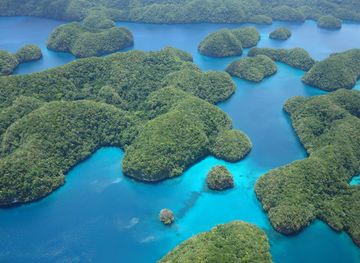
The Rock Islands of Palau are a mesmerizing cluster of limestone and coral formations, scattered across the turquoise waters of the Pacific Ocean. These islands are renowned for their breathtaking beauty, offering a unique blend of lush greenery, hidden lagoons, and pristine beaches. They are a UNESCO World Heritage site and serve as a testament to the natural wonders of the world. Tourists can explore the rich marine life through activities like snorkeling and diving. The waters around the Rock Islands are home to vibrant coral reefs, diverse fish species, and even the famous Jellyfish Lake, where you can swim among harmless jellyfish. The islands also offer opportunities for kayaking, allowing visitors to navigate through the serene lagoons and discover hidden caves and coves. For those who prefer to stay on land, the Rock Islands provide stunning hiking trails that lead to panoramic viewpoints. The islands are also steeped in cultural history, with ancient stone monoliths and traditional Palauan sites waiting to be explored. Whether you're an adventurer, a nature lover, or someone seeking tranquility, the Rock Islands of Palau promise an unforgettable experience.

Know before you go
Hi, I'm Eve. Here are a few practical things to know before exploring Rock Islands.
- Visit Jellyfish Lake early in the morning to avoid crowds and get the best experience.
- Bring reef-safe sunscreen to protect the delicate marine ecosystem.
- Hire a local guide for kayaking to explore hidden spots and learn about the islands' history.
- Pack light, breathable clothing and sturdy water shoes for hiking and water activities.
- Respect the local culture and traditions when visiting ancient sites.
Top City Travel Guides in Rock Islands
The cities of Rock Islands, and the easiest places to base yourself.


Destinations in Rock Islands
Resorts, valleys and scenic spots worth a trip of their own.


Explore Rock Islands: Things to Do, Places to Eat, Hotels & More
Handpicked recommendations for top attractions, local dining, accommodations, and more

Top Attractions & Sightseeing in Rock Islands
Top-rated picks
Best Attractions

Milky Way
Experience the mesmerizing beauty of Milky Way in Koror, Palau, where stunning landscapes and vibrant marine life await adventurers and nature lovers.

Belau National Museum
Explore the cultural and natural wonders of Palau at the Belau National Museum, where history and heritage come to life in vibrant exhibits.

Long Island Park
Experience the natural beauty and tranquility of Long Island Park, your serene escape in Koror, Palau, perfect for relaxation and exploration.

Jellyfish Lake
Discover the enchanting Jellyfish Lake in Palau, where thousands of harmless jellyfish create an unforgettable underwater experience surrounded by stunning natural beauty.

Best landmarks in Rock Islands
Top-rated picks
Best Landmarks

Milky Way
Discover the breathtaking beauty and vibrant marine life at the Milky Way, a premier tourist attraction in Koror, Palau, perfect for all adventure seekers.

Belau National Museum
Explore Palau's rich culture and heritage at Belau National Museum, a must-visit destination for travelers seeking to understand the islands' history.

Long Island Park
Experience the natural beauty and tranquility of Long Island Park in Koror, Palau, a perfect getaway for relaxation and adventure amidst stunning landscapes.

Palau Dive Adventures
Explore the vibrant underwater world with Palau Dive Adventures, your gateway to unforgettable diving experiences in the stunning waters of Palau.

Best restaurants in Rock Islands
Top-rated picks
Best Restaurants

Drop Off Bar and Grill
Discover authentic Palauan cuisine at Drop Off Bar and Grill in Koror - where culinary excellence meets stunning island views.

Palasia Hotel Palau
Discover unparalleled luxury at Palasia Hotel Palau – your gateway to tropical paradise with exquisite dining, relaxing spa treatments, and vibrant nightlife.

The Taj
Savor authentic Indian dishes at The Taj in Koror—where spices meet tradition for an unforgettable dining experience.

Elilai Seaside Dining
Experience exquisite fine dining with breathtaking ocean views at Elilai Seaside Dining in Koror, Palau.

Best bars in Rock Islands
Top-rated picks
Best Bars

Palau Royal Resort
Discover the serene beauty of Palau Royal Resort, where luxury meets nature in a tropical paradise.

Drop Off Bar and Grill
Discover the flavors of Palau at Drop Off Bar and Grill, where local ingredients meet a laid-back island atmosphere.

The Taj
Savor the authentic taste of India at The Taj, Koror - a vibrant dining experience amidst the beautiful landscapes of Palau.

Elilai Seaside Dining
Experience fine dining with breathtaking ocean views at Elilai Seaside Dining in Koror, Palau, where culinary excellence meets natural beauty.

Best nightclubs in Rock Islands
Top-rated picks
Best Nightclubs
Palau Royal Resort
Discover the ultimate tropical getaway at Palau Royal Resort, where luxury meets the breathtaking beauty of Palau's pristine landscapes.
Palau Pacific Resort
Experience the ultimate relaxation at Palau Pacific Resort, where luxury meets the stunning natural beauty of the Pacific Islands.

Drop Off Bar and Grill
Experience the flavors of Palau at Drop Off Bar and Grill, a lively restaurant offering a blend of local and international cuisine in Koror.

Palau Hotel
Discover the perfect blend of comfort and culinary delights at Palau Hotel, your gateway to the stunning landscapes of Palau.

Best shops in Rock Islands
Top-rated picks
Best Shops

L'Amarena Gelato Shop (Gelateria Italiana)
Discover the taste of Italy at L'Amarena Gelato Shop in Airai, Palau—where every scoop is a journey into deliciousness.

Belau National Museum
Delve into the captivating history and vibrant culture of Palau at the Belau National Museum, a must-visit for every traveler.

WCTC Shopping Center
Discover the WCTC Shopping Center in Palau for a vibrant shopping experience with diverse retail and dining options in a tropical paradise.

Fish 'n Fins Palau
Discover the underwater paradise of Palau with Fish 'n Fins, your premier SCUBA tour agency for unforgettable diving adventures.

Explore Rock Islands on the Map
A handpicked selection of must-see spots in Rock Islands, mapped for you.
Rock Islands Essentials
-
The Rock Islands are located in the southern lagoon of Palau, a country in the western Pacific Ocean. The primary gateway to Palau is Roman Tmetuchl International Airport (ROR) in Koror. From major cities such as Manila, Taipei, Seoul, and Tokyo, you can find direct flights to Palau. Once you arrive at the airport, you can take a taxi or arrange for a hotel transfer to Koror, the main city. From Koror, you can book a boat tour or hire a private boat to access the Rock Islands.
-
In Koror, taxis are readily available and are a convenient way to get around the city. Car rentals are also an option if you prefer to drive yourself. To explore the Rock Islands, you will need to book a boat tour or hire a private boat. These tours can be arranged through your hotel or local tour operators. Kayaking is another popular way to navigate the islands and enjoy their natural beauty up close.
-
The official currency of Palau is the United States Dollar (USD). Credit cards are widely accepted in hotels, restaurants, and larger stores in Koror. However, it is advisable to carry some cash for smaller establishments and when visiting remote areas like the Rock Islands. ATMs are available in Koror, but they may not always be reliable, so it's wise to have sufficient cash on hand.
-
Palau, including the Rock Islands, is generally a safe destination for tourists. Crime rates are low, but it's still important to take standard precautions. Avoid leaving your belongings unattended, especially on beaches and boats. There are no specific high-crime areas targeting tourists, but always stay vigilant and aware of your surroundings. Follow local guidelines and respect the natural environment to ensure a safe and enjoyable visit.
-
In case of an emergency, dial 911 for immediate assistance. Medical facilities are available in Koror, including the Belau National Hospital. It is recommended to have travel insurance that covers medical emergencies. For minor health issues, pharmacies in Koror provide over-the-counter medications. Ensure you have emergency contact numbers saved and know the location of the nearest medical facilities.
-
Fashion: Do wear lightweight, breathable clothing suitable for tropical weather. Swimwear is appropriate at the beach, but cover up when in public areas in Koror. Religion: Do respect local customs and traditions. If visiting any cultural or religious sites, dress modestly and remove hats. Public Transport: Do be courteous and respectful to drivers and fellow passengers. Don't expect extensive public transport options; taxis and rental vehicles are more common. Greetings: Do greet people with a friendly smile and a slight nod. A handshake is also customary. Eating & Drinking: Do try local dishes and fresh seafood. Don't litter; always dispose of your trash properly to protect the environment.
-
To experience the Rock Islands like a local, consider hiring a local guide who can share insights into the area's history and ecology. Visit the Milky Way Lagoon for a unique natural spa experience, where you can bathe in the white mud known for its soothing properties. Try spearfishing with locals for a sustainable fishing experience and enjoy a traditional Palauan meal. Engage with the community and learn about their efforts in conservation and preserving their natural heritage.
When is the best time to visit Rock Islands?
Useful Local Phrases for Rock Islands
You don't need to speak the language perfectly. Even learning a few simple words can make conversations warmer—and locals usually appreciate the effort.
— Eve

Here are the phrases I use most often in Rock Islands. Try a few—you'll be surprised how far they go! 😊
❤️
-
- HelloAlii
[Ah-lee] - GoodbyeAloha
[Ah-loh-ha] - YesOng
[Ong] - NoNgel
[Ngel] - Please/You're welcomeTia el ngii
[Tee-ah el ngee] - Thank youKemal
[Keh-mahl] - Excuse me/SorryMelek
[Meh-lek] - How are you?Ngemel a diak?
[Ngeh-mehl ah dee-ack] - Fine. And you?Diak. Oi a diak?
[Dee-ack. Oi ah dee-ack?] - Do you speak English?Ong a ngii rael bok?
[Ong ah ngee rah-el bok?] - I don't understandNgemel a diak el ngii
[Ngeh-mehl ah dee-ack el ngee]
- HelloAlii
-
- I'd like to see the menu, pleaseOng a ngii el menu, tia el ngii
[Ong ah ngee el meh-noo, tee-ah el ngee] - I don't eat meatNgemel a diak el mo
[Ngeh-mehl ah dee-ack el moh] - Cheers!Ong a mo ngii!
[Ong ah moh ngee!] - I would like to pay, pleaseOng a ngii el belu, tia el ngii
[Ong ah ngee el beh-loo, tee-ah el ngee]
- I'd like to see the menu, pleaseOng a ngii el menu, tia el ngii
-
- Help!Melek!
[Meh-lek!] - Go away!Melek a ngii!
[Meh-lek ah ngee!] - Call the Police!Ong a ngii el Police!
[Ong ah ngee el Poh-lees!] - Call a doctor!Ong a ngii el doctor!
[Ong ah ngee el dok-tor!] - I'm lostNgemel a diak el ngii
[Ngeh-mehl ah dee-ack el ngee] - I'm illNgemel a diak el mo
[Ngeh-mehl ah dee-ack el moh]
- Help!Melek!
-
- I'd like to buy...Ong a ngii el ngii...
[Ong ah ngee el ngee...] - I'm just lookingOng a ngii el ngii el
[Ong ah ngee el ngee el] - How much is it?Melek a diak el?
[Meh-lek ah dee-ack el?] - That's too expensiveEl ngii a kirel
[El ngee ah kee-rel] - Can you lower the price?Ong a ngii el kirel?
[Ong ah ngee el kee-rel?]
- I'd like to buy...Ong a ngii el ngii...
-
- What time is it?Melek a diak el?
[Meh-lek ah dee-ack el?] - It's one o'clockEl ngii el ches
[El ngee el ches] - Half past (10)El ngii el ches el ches
[El ngee el ches el ches] - MorningMelek
[Meh-lek] - AfternoonMelek el kirel
[Meh-lek el kee-rel] - EveningMelek el kirel
[Meh-lek el kee-rel] - YesterdayEl ngii el kirel
[El ngee el kee-rel] - TodayEl ngii el kirel
[El ngee el kee-rel] - TomorrowEl ngii el kirel
[El ngee el kee-rel] - 1Ches
[Ches] - 2Ches el kirel
[Ches el kee-rel] - 3Ches el kirel
[Ches el kee-rel] - 4Ches el kirel
[Ches el kee-rel] - 5Ches el kirel
[Ches el kee-rel] - 6Ches el kirel
[Ches el kee-rel] - 7Ches el kirel
[Ches el kee-rel] - 8Ches el kirel
[Ches el kee-rel] - 9Ches el kirel
[Ches el kee-rel] - 10Ches el kirel
[Ches el kee-rel]
- What time is it?Melek a diak el?
-
- Where's a/the...?Melek a diak el...?
[Meh-lek ah dee-ack el...?] - What's the address?Melek a diak el address?
[Meh-lek ah dee-ack el ad-dress?] - Can you show me (on the map)?Ong a ngii el ngii (el map)?
[Ong ah ngee el ngee (el map)?] - When's the next (bus)?Melek a diak el next (bus)?
[Meh-lek ah dee-ack el next (bus)?] - A ticket (to ....)El ngii el ticket (el ....)
[El ngee el tik-et (el ....)]
- Where's a/the...?Melek a diak el...?
History of Rock Islands
-
The Rock Islands hold evidence of ancient human habitation dating back over 3,000 years. Archaeological findings, including pottery shards and stone tools, suggest that early Micronesian settlers used these islands for fishing and settlement. The islands' caves and rock shelters provided natural protection and resources for these early communities.
-
The Rock Islands have long been an important navigational marker for Pacific Ocean voyagers. The distinctive shapes of the islands made them a crucial reference point for traditional Palauan navigators. Oral histories and legends passed down through generations highlight the islands' role in the broader seafaring culture of Micronesia.
-
During World War II, the Rock Islands were strategically significant. The Japanese used several of the islands as lookout points and defensive positions. Remnants of bunkers and other wartime structures can still be found, providing a stark reminder of the conflict that once touched this remote paradise.
-
In 2012, the Rock Islands Southern Lagoon was designated a UNESCO World Heritage Site. This recognition was due to the area's outstanding natural beauty, rich biodiversity, and cultural significance. The designation has helped to preserve the islands' unique ecosystems and promote sustainable tourism.
-
The Rock Islands are deeply embedded in Palauan culture and spirituality. Many of the islands are considered sacred, and traditional beliefs hold that they are inhabited by spirits. These cultural practices continue to play a vital role in community rituals and ceremonies, reflecting the enduring connection between the Palauan people and their natural environment.
-
The Rock Islands are a focal point for conservation efforts in Palau. Initiatives such as the Palau National Marine Sanctuary aim to protect the diverse marine life and delicate coral reefs that surround the islands. These efforts are crucial for maintaining the ecological balance and ensuring that future generations can enjoy the natural beauty of the Rock Islands.
Neighbouring Regions of Rock Islands
The closest regions to Rock Islands, if you have time for more than one.


Your all‑in‑one travel companion app
Explore expert travel guides, compare and book tours, experiences, hotels, and more—all from the palm of your hand. Download now for seamless trip planning wherever your wanderlust takes you.


Explore More of Palau

Looking beyond Rock Islands? Discover Palau for broader travel guides, local hot-spots, and regional highlights.
Explore PalauRock Islands in Photos
Browse through our photo collection highlighting the charm and character of the destination.


The Enchanting Rock Islands of Palau
The Rock Islands of Palau are a mesmerizing cluster of limestone and coral formations, scattered across the turquoise waters of the Pacific Ocean. These islands are renowned for their breathtaking beauty, offering a unique blend of lush greenery, hidden lagoons, and pristine beaches. They are a UNESCO World Heritage site and serve as a testament to the natural wonders of the world. Tourists can explore the rich marine life through activities like snorkeling and diving. The waters around the Rock Islands are home to vibrant coral reefs, diverse fish species, and even the famous Jellyfish Lake, where you can swim among harmless jellyfish. The islands also offer opportunities for kayaking, allowing visitors to navigate through the serene lagoons and discover hidden caves and coves. For those who prefer to stay on land, the Rock Islands provide stunning hiking trails that lead to panoramic viewpoints. The islands are also steeped in cultural history, with ancient stone monoliths and traditional Palauan sites waiting to be explored. Whether you're an adventurer, a nature lover, or someone seeking tranquility, the Rock Islands of Palau promise an unforgettable experience.