

Free Ngeruangel Travel Guide & Mobile App
Explore Ngeruangel with free travel guides. Discover regional history, expert tips, proposed trips, and audio guides on web or mobile app.


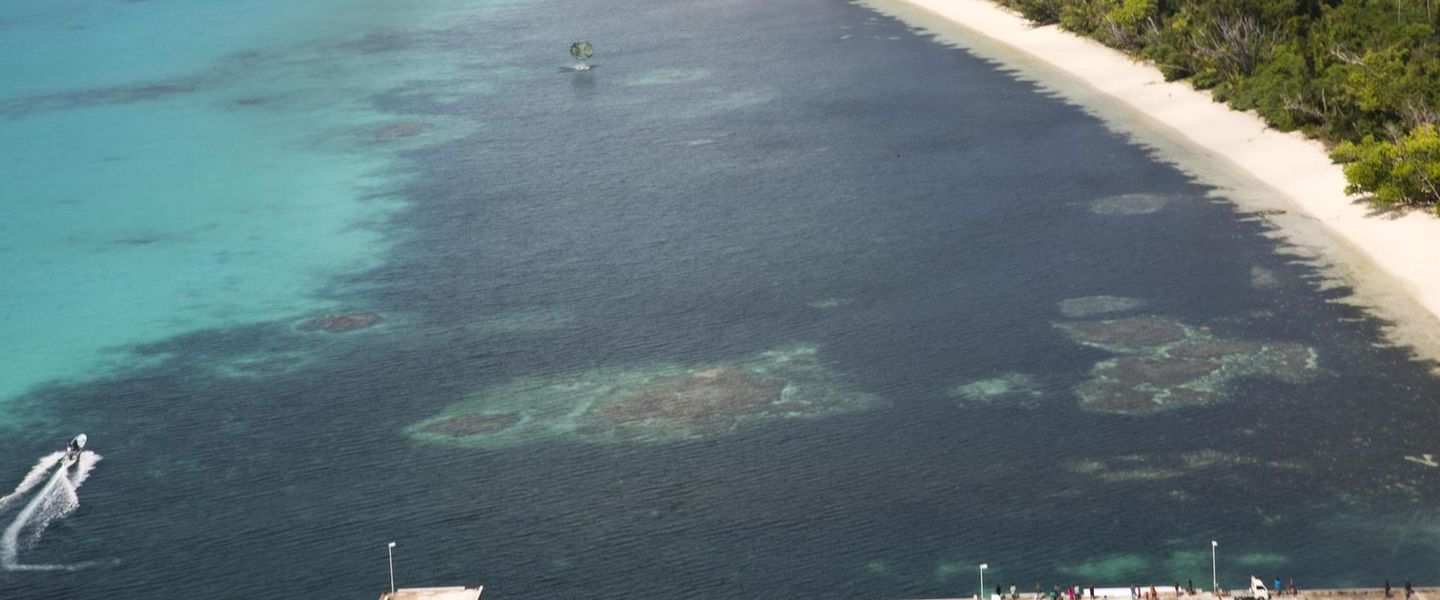


Ngeruangel in northern Palau offers protected reefs, clear lagoons, marine wildlife and boat-based exploration far from conventional resort development.
Read more about Ngeruangel
When is the best time to visit Ngeruangel?
Best: January–March · 30°C| Month | High (°C) | Rainfall (mm) |
|---|---|---|
| January (best) | 30 | 300 |
| February (best) | 30 | 230 |
| March (best) | 30 | 260 |
| April | 30 | 340 |
| May | 30 | 370 |
| June | 30 | 360 |
| July | 30 | 340 |
| August | 30 | 380 |
| September | 30 | 410 |
| October | 30 | 450 |
| November | 30 | 360 |
| December | 30 | 330 |
Getting to and around Ngeruangel
How to get there
Transportation
Destinations in Ngeruangel
Resorts, valleys and scenic spots worth a trip of their own.

Swipe for more destinations
Best attractions in Ngeruangel
Ngeruangel’s attractions are overwhelmingly marine and landscape-based. The protected reef is the focus, with clear shallows, coral communities, sandy areas and channels that can be explored by snorkelling or from a boat when conditions allow. The island itself offers a remote setting rather than a programmed attraction: there are no museums, entertainment venues or developed family facilities. Wildlife encounters may include reef fish, sea turtles, rays and seabirds, but sightings are never guaranteed and should be observed without pursuit or contact. Boat trips can also reveal the changing geography between northern Babeldaob and the outer reef, including open-water horizons and low islands shaped by tide and weather. The mainland approach through Ngarchelong State adds forested hills, village landscapes and Palauan cultural context, although these are outside the Ngeruangel reef destination itself. Visits are consequently best suited to travellers interested in marine conservation, photography, quiet beaches, snorkelling and the physical character of a protected Pacific seascape. Operators may vary their landing points and water activities according to conservation rules and conditions, so a detailed itinerary should be confirmed before departure.
-
Dive shop
Sam's Tours Palau
Discover unparalleled diving experiences and exquisite local flavors at Sam's Tours Palau, your gateway to the vibrant underwater world of Palau.
-
SCUBA tour agency
Fish 'n Fins Palau
Experience the thrill of diving in Palau's pristine waters with Fish 'n Fins, your gateway to vibrant marine life and unforgettable underwater adventures.
-
Park
Long Island Park
Explore the scenic beauty and tranquility of Long Island Park in Koror, Palau—a perfect getaway for nature lovers and adventure seekers.
-
Bridge
Japan-Palau Friendship Bridge
Experience the beauty and cultural significance of the Japan-Palau Friendship Bridge, a stunning connection between two vibrant cultures in a breathtaking setting.


Best landmarks in Ngeruangel
Ngeruangel’s defining landmark is not a monument but the broad reef system itself, a visible meeting point of pale shallows, coral structures and open Pacific water. Its low island and surrounding protected seascape create a strong geographical marker at the northern edge of Palau’s island world. The most significant features are therefore viewed from the boat or water: reef margins, channels, lagoon-like shallows and the contrast between sheltered and exposed water. There is little built architecture, and the absence of development is central to the site’s character. The northern Babeldaob coastline provides the mainland setting for the approach, while the wider Ngarchelong area contains Palauan cultural and stone-heritage sites that should be visited as separate mainland places rather than described as landmarks on Ngeruangel. Because reefs are fragile and some areas may be restricted, visitors should follow local anchoring, landing and wildlife instructions instead of treating every visually attractive beach or coral formation as freely accessible.
-
National museum
Belau National Museum
Explore the rich cultural heritage of Palau at the Belau National Museum, showcasing fascinating artifacts and exhibits that tell the island's story.
-
Tourist attraction
Ngardmau Waterfalls
Explore the stunning Ngardmau Waterfalls in Ngiwal, Palau, where nature's beauty meets adventure in a serene tropical paradise.
-
Dive shop
Palau Dive Adventures
Experience the thrill of diving in Palau's pristine waters with expert guides at Palau Dive Adventures, where your underwater journey begins.
-
Shopping mall
WCTC Shopping Center
Explore the vibrant WCTC Shopping Center in Koror, Palau, where shopping meets local culture and culinary delights await every visitor.


Explore Ngeruangel on the map
Plan your trip on one map. See where the top cities, national parks and sights are, and book hotels and experiences in a few clicks.
Best hotels in Ngeruangel
Best restaurants in Ngeruangel
There are no restaurants, cafés or food stalls on Ngeruangel. Visitors should arrange meals, snacks and drinking water with their boat operator or bring provisions from the mainland in secure, reusable containers. A trip may include a simple packed meal or picnic, but this depends on the operator and should not be assumed. The wider Palauan food culture is more accessible in Koror and on Babeldaob, where meals may draw on reef and ocean produce, taro, cassava, rice, fruit and standard Pacific and Asian influences. In northern rural areas, dining options are more limited and widely dispersed than in the capital area, so pre-arranged food is particularly sensible for a full-day excursion. Keep all waste on board, avoid single-use packaging where possible, and never leave food scraps on the island or reef. Eating should be treated as a logistical part of visiting a protected area rather than as one of Ngeruangel’s attractions.
-
Indian
The Taj
Discover authentic Indian flavors at The Taj in Koror, Palau – where culinary tradition meets modern dining.
-
Fine Dining
Elilai Seaside Dining
Experience fine dining with breathtaking ocean views at Elilai Seaside Dining in Koror, Palau – where every meal is a celebration of local flavors.
-
Restaurant
The Canoe House
Discover the vibrant flavors of Palau at The Canoe House – where fresh ingredients meet unforgettable dining experiences.
-
Japanese
Tori Tori
Discover the authentic flavors of Japan at Tori Tori in Koror, Palau - where every meal is a delightful culinary experience.


Best bars in Ngeruangel
Ngeruangel has no bars, nightclubs or evening entertainment. The destination is uninhabited and normally visited during daylight, with the boat journey, reef conditions and conservation rules determining the schedule. Evening activity is found elsewhere in Palau, especially in Koror, where visitors can choose from hotel bars, restaurants and a modest selection of relaxed drinking and live-music venues. Northern Babeldaob is quieter, with small-scale community life and limited late-night services rather than a concentrated nightlife district. Visitors staying in the north should not assume that drinks, ice, charging facilities or transport will be available after a boat excursion; arrangements should be made before travelling. Alcohol is not appropriate while snorkelling, boating or handling safety equipment, and respectful conduct matters in rural communities as it does throughout Palau.
-
Restaurant
Drop Off Bar and Grill
Experience the vibrant culinary scene of Palau at Drop Off Bar and Grill, where local flavors meet stunning views in Koror.
-
Indian
The Taj
Discover authentic Indian cuisine at The Taj in Koror, a culinary haven offering a delightful dining experience in the heart of Palau.
-
Fine Dining
Elilai Seaside Dining
Experience exquisite fine dining at Elilai Seaside Dining, where stunning ocean views meet a menu of fresh, local flavors in Koror, Palau.
-
Ice Cream
L'Amarena Gelato Shop (Gelateria Italiana)
Experience the finest Italian gelato and desserts at L'Amarena Gelato Shop in Palau, a must-visit for a sweet treat in paradise.



Best nightclubs in Ngeruangel
Ngeruangel has no bars, nightclubs or evening entertainment. The destination is uninhabited and normally visited during daylight, with the boat journey, reef conditions and conservation rules determining the schedule. Evening activity is found elsewhere in Palau, especially in Koror, where visitors can choose from hotel bars, restaurants and a modest selection of relaxed drinking and live-music venues. Northern Babeldaob is quieter, with small-scale community life and limited late-night services rather than a concentrated nightlife district. Visitors staying in the north should not assume that drinks, ice, charging facilities or transport will be available after a boat excursion; arrangements should be made before travelling. Alcohol is not appropriate while snorkelling, boating or handling safety equipment, and respectful conduct matters in rural communities as it does throughout Palau.
-
Restaurant
The Canoe House
Experience the vibrant flavors and lively atmosphere of The Canoe House, a premier dining destination in Koror, Palau.
-
Resort hotel
Island Paradise Resort Club
Discover ultimate relaxation and adventure at the Island Paradise Resort Club, where the beauty of Palau meets luxurious comfort.
-
Restaurant
Riptide Beach Bar & Grill
Experience the vibrant flavors and stunning views at Riptide Beach Bar & Grill in Koror, Palau, a top dining spot for tourists and locals alike.
-
Restaurant
Barracuda Restaurant
Experience the freshest seafood and local flavors at Barracuda Restaurant in Koror, Palau, a culinary gem for every traveler.


Best shops in Ngeruangel
Ngeruangel has no shops, markets, galleries or souvenir stalls. Shopping is limited to preparing for the excursion: water, food, sun protection, waterproof storage and any snorkelling equipment not supplied by the operator should be obtained before departure. Visitors seeking Palauan crafts, local food products or souvenirs will find a broader choice in Koror and, to a lesser extent, in mainland communities on Babeldaob. Look for responsibly made items and ask about materials, especially when a product appears to contain coral, shells, turtle material or other wildlife; protected species and natural reef materials should not be purchased or removed. Buying provisions from legitimate local businesses and booking locally guided transport offers a more direct way to support the communities that make access to Ngeruangel possible. Pack reusable containers and take all purchased goods and waste back from the reserve.
-
Shopping mall
WCTC Shopping Center
Explore the WCTC Shopping Center in Koror, Palau - a vibrant shopping destination with local crafts, international brands, and delicious dining options.
-
Shopping mall
Surangel and Sons Co. - Koror
Discover a unique shopping experience at Surangel and Sons Co. in Koror, blending local culture with global brands in a vibrant atmosphere.
-
Shopping mall
Surangel's Surpercenter Airai
Discover a vibrant shopping experience at Surangel's Supercenter in Airai, Palau, blending local culture with international brands.
-
Souvenir store
Rur Gift Shop & Cafe
Explore unique Palauan souvenirs and enjoy refreshing treats at Rur Gift Shop & Cafe in Koror, a perfect blend of shopping and relaxation.


Get your free copy of our complete guide to Ngeruangel, delivered straight to you.
Everything on this page, from attractions and restaurants to essentials and local phrases, in one PDF you can read offline, print or share.
Already have an account? Sign in
Your Ngeruangel guide is ready.
We'll send it to · Not you? Sign out

Getting your guide ready…
We are putting together a fresh copy of the Ngeruangel guide. This can take up to a minute.
This can take a few moments. If your browser asks, choose Allow so the download can start. You'll find the guide in your Downloads folder.
Nothing happened? Download it again
Sorry, the guide is taking longer than usual. Please try again in a minute, or get it by email instead.
Ngeruangel essentials
Currency and Payment
Safety
Emergency Situations
Do's and Don'ts
Local Tips
From Eve
Local phrases worth knowing
You don't need to get them perfect. A few words go a long way, and locals appreciate the effort.
Basics
| English | Local | Say it |
|---|---|---|
| Hello | Alii | [Ah-lee] |
| Goodbye | A dei | [Ah day] |
| Yes | O | [Oh] |
| No | Ng meru | [Ng meh-roo] |
| Please/You're welcome | Mesulang | [Meh-soo-lahng] |
| Thank you | Tia beluu | [Tee-ah beh-loo] |
| Excuse me/Sorry | Mekmek | [Mehk-mehk] |
| How are you? | Mechou? | [Meh-chow] |
| Fine. And you? | Ngara. Mechou? | [Ngah-rah. Meh-chow] |
| Do you speak English? | Ng meru mlaik a English? | [Ng meh-roo mlah-eek ah English] |
| I don't understand | Ng meru ngedek | [Ng meh-roo ngeh-dek] |
Eating & Drinking
| English | Local | Say it |
|---|---|---|
| I'd like to see the menu, please | Ongal a uldang a menu, mesulang | [Oh-ngahl ah ool-dahng ah meh-noo, meh-soo-lahng] |
| I don't eat meat | Ng meru mlaik a meri | [Ng meh-roo mlah-eek ah meh-ree] |
| Cheers! | Mekse! | [Mehk-seh] |
| I would like to pay, please | Ongal a uldang a ngeru, mesulang | [Oh-ngahl ah ool-dahng ah neh-roo, meh-soo-lahng] |
Emergencies
| English | Local | Say it |
|---|---|---|
| Help! | Mekse! | [Mehk-seh] |
| Go away! | Ongal a ngii! | [Oh-ngahl ah ngee] |
| Call the Police! | Koll a Police! | [Kohl ah Police] |
| Call a doctor! | Koll a doktor! | [Kohl ah dok-tor] |
| I'm lost | Ongal a ngedek a ngii | [Oh-ngahl ah ngeh-dek ah ngee] |
| I'm ill | Ongal a ngedek a beluu | [Oh-ngahl ah ngeh-dek ah beh-loo] |
Shopping
| English | Local | Say it |
|---|---|---|
| I'd like to buy... | Ongal a uldang a ngare... | [Oh-ngahl ah ool-dahng ah ngah-reh] |
| I'm just looking | Ongal a ngedek a uldang | [Oh-ngahl ah ngeh-dek ah ool-dahng] |
| How much is it? | Ongal a ngii a? | [Oh-ngahl ah ngee ah] |
| That's too expensive | A diak a mecheduch | [Ah dee-ack ah meh-cheh-dooch] |
| Can you lower the price? | Ng meru a ngedek a price? | [Ng meh-roo ah ngeh-dek ah price] |
Time & Numbers
| English | Local | Say it |
|---|---|---|
| What time is it? | Ngii a tial a? | [Ngee ah tee-ahl ah] |
| It's one o'clock | A kirel a tial | [Ah kee-rehl ah tee-ahl] |
| Half past (10) | Ongal a kirel a tial a (10) | [Oh-ngahl ah kee-rehl ah tee-ahl ah (10)] |
| Morning | Meleke | [Meh-leh-keh] |
| Afternoon | Meleke a ngii | [Meh-leh-keh ah ngee] |
| Evening | Meleke a ngara | [Meh-leh-keh ah ngah-rah] |
| Yesterday | A ngii | [Ah ngee] |
| Today | A ngii a tial | [Ah ngee ah tee-ahl] |
| Tomorrow | A ngii a tial a ngara | [Ah ngee ah tee-ahl ah ngah-rah] |
| 1 | Ongal | [Oh-ngahl] |
| 2 | Ongal a duu | [Oh-ngahl ah doo] |
| 3 | Ongal a toru | [Oh-ngahl ah toh-roo] |
| 4 | Ongal a foru | [Oh-ngahl ah fo-roo] |
| 5 | Ongal a lima | [Oh-ngahl ah lee-mah] |
| 6 | Ongal a ono | [Oh-ngahl ah oh-noh] |
| 7 | Ongal a hitu | [Oh-ngahl ah hee-too] |
| 8 | Ongal a waru | [Oh-ngahl ah wah-roo] |
| 9 | Ongal a siu | [Oh-ngahl ah see-oo] |
| 10 | Ongal a sang | [Oh-ngahl ah sahng] |
Transport & Directions
| English | Local | Say it |
|---|---|---|
| Where's a/the...? | Ngii a ...? | [Ngee ah ...?] |
| What's the address? | Ngii a address? | [Ngee ah address?] |
| Can you show me (on the map)? | Ng meru a ngedek a (a map)? | [Ng meh-roo ah ngeh-dek ah (ah map)?] |
| When's the next (bus)? | Ngii a next a (bus)? | [Ngee ah next ah (bus)?] |
| A ticket (to ....) | A ticket a (to ....) | [Ah ticket ah (to ....)] |
History of Ngeruangel
Palauan Maritime Settlement and Traditional Stewardship
Ngeruangel belongs to a seascape shaped by Palau’s long history of ocean travel, fishing and inter-island exchange. Communities on Babeldaob and nearby islands developed detailed knowledge of reefs, currents, seasons and marine species, while customary systems regulated access to many resources. The precise use of an uninhabited reef island has varied over time, but its importance is best understood within this broader Palauan culture of navigation and stewardship rather than as an isolated natural feature.
The Northern Babeldaob Chiefdoms
Before European colonial rule, northern Babeldaob was organised through networks of villages, chiefs and clan relationships. Ngarchelong, the state associated with Ngeruangel, retains important evidence of Palau’s traditional political and social landscape, including monumental stone features and oral histories. These traditions remain relevant to how land and sea are understood today. Ngeruangel’s modern conservation status therefore sits within an older cultural geography in which reefs and islands formed part of a living community territory.
Spanish, German and Japanese Colonial Eras
Palau passed through Spanish, German and Japanese administration before the Second World War. These periods brought new forms of government, Christianity, commercial extraction, mapping and infrastructure, although their effects were uneven across the islands. Ngeruangel’s remote position meant that its significance remained primarily environmental and maritime rather than urban or industrial. The wider history is nevertheless visible in northern Palau through changing land use, transport patterns and surviving traces of colonial and wartime activity.
Japanese Administration and the Second World War
Under the Japanese administration, Palau became part of a wider network of Pacific transport, agriculture and military activity. The main centres of development were elsewhere, and Ngeruangel is not primarily known as a major battlefield or built military site. Its surrounding waters should still be approached with care, as Palau’s reefs and channels can contain wartime remnants. Visitors should never handle suspected ordnance or underwater objects and should report concerns to local authorities or their operator.
Palau’s Post-war Political Development
After the Second World War, Palau was administered within the United States-led Trust Territory of the Pacific Islands. It later achieved independence in free association with the United States in 1994. This political transition gave Palau responsibility for managing its own territory and marine resources while maintaining close economic and security links with the United States. Ngeruangel’s contemporary identity as a protected destination belongs to this period of nation-building and environmental policy.
Marine Conservation and the Protected-area Era
Palau has become internationally recognised for placing marine conservation at the centre of national policy. Ngeruangel’s reef and surrounding waters are managed as a protected environment, reflecting concern for coral habitats, fish populations, seabirds and marine turtles. Regulations can change according to conservation needs, so visitors should follow current instructions from state authorities and local operators. The reserve demonstrates how Palau’s tourism economy is increasingly linked to careful stewardship of its ocean rather than intensive coastal construction.
Ngeruangel in Photos
Browse through our photo collection highlighting the charm and character of the destination.
Neighbouring regions of Ngeruangel
The closest regions to Ngeruangel, if you have time for more than one.
-

-
-

-

-


Swipe for more regions
Explore more

Explore more of Palau
Discover Palau's pristine beaches, vibrant marine life, and rich cultural heritage—an untouched paradise in the Pacific Ocean.
Explore Palau