

Free Huon Peninsula Travel Guide & Mobile App
Explore Huon Peninsula with free travel guides. Discover regional history, expert tips, proposed trips, and audio guides on web or mobile app.


Huon Peninsula travel combines Papua New Guinea's rainforest mountains, coastal villages, wartime history and carefully arranged outdoor journeys.
Read more about Huon Peninsula
When is the best time to visit Huon Peninsula?
Best: May–July · 30°C| Month | High (°C) | Rainfall (mm) |
|---|---|---|
| January | 29 | 250 |
| February | 29 | 230 |
| March | 30 | 210 |
| April | 30 | 190 |
| May (best) | 30 | 170 |
| June (best) | 30 | 150 |
| July (best) | 30 | 170 |
| August | 29 | 190 |
| September | 29 | 210 |
| October | 29 | 230 |
| November | 30 | 250 |
| December | 30 | 270 |
Getting to and around Huon Peninsula
How to get there
Transportation
Top city travel guides in Huon Peninsula
The cities of Huon Peninsula, and the easiest places to base yourself.

Swipe for more cities
Best attractions in Huon Peninsula
The Huon Peninsula's attractions are primarily landscapes, communities and historical places rather than a dense collection of developed visitor facilities. Finschhafen provides the most accessible focus for exploring the region's colonial and wartime associations, while Scarlet Beach is linked to the Allied landing of 1943. Along the coast, boat journeys and village visits can reveal mangroves, beaches, reefs and fishing environments, subject to local permission and weather. The interior rises rapidly into rainforest-covered mountains, including the rugged Sarawaget Range, where guided walking can offer encounters with forest habitats and birdlife. Routes vary in difficulty and may be little more than local tracks, so they should not be attempted without appropriate guidance. Wartime remnants, former airfield areas and scattered military debris are historically important but may be hazardous and are not necessarily maintained as formal museums or monuments. The strongest experiences come from combining a carefully arranged coastal journey with conversations about customary land, gardening, fishing and the peninsula's wartime past. Visitors should expect basic facilities, limited signage and considerable variation between locations rather than a standardised sightseeing circuit.
-
Tourist attraction
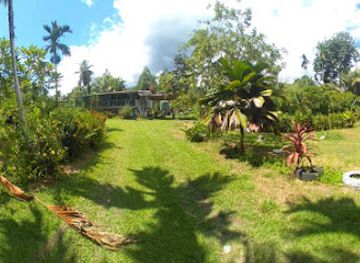
AluWe Estate
Experience the natural beauty and cultural richness of AluWe Estate in Morobe Province, Papua New Guinea, an unforgettable destination for all travelers.
-
 Tourist attraction
Foria River
Discover the pristine beauty of Foria River in Morobe Province, a serene escape for nature lovers and adventure seekers in Papua New Guinea.
-
Park
Kutumuluk Buai Garden
Experience the serene beauty of Kutumuluk Buai Garden, a peaceful park in Morobe Province perfect for relaxation and nature exploration.
-
Tourist attraction
Silemana Village (Joangeng Parish)
Experience the authentic culture and breathtaking landscapes of Silemana Village in Morobe Province, Papua New Guinea.
Best landmarks in Huon Peninsula
Scarlet Beach is the peninsula's most recognisable wartime landmark, associated with the Allied landing that began the Huon Peninsula campaign in September 1943. Its importance lies both in the military events that followed and in the experiences of local communities caught up in occupation, labour and displacement. Finschhafen forms another key historical landmark: the former colonial station became a strategic wartime base and remains the principal named settlement for understanding the region's external connections. The Sarawaget Range provides the peninsula's major natural visual feature, with steep forested mountains rising behind coastal communities and shaping routes, weather and settlement. Coastal headlands, river mouths, beaches and village landing places are also significant local reference points, although many are not formal monuments and access depends on customary permission. Wartime structures, airfield traces and military debris may survive in the wider area, but their locations are not always signposted or safe to investigate independently. A local guide is essential for interpreting these places responsibly.
-
Tourist attraction
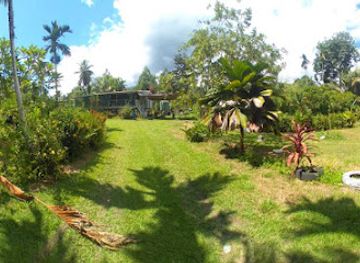
AluWe Estate
Explore AluWe Estate in Morobe Province for breathtaking landscapes and a rich cultural experience in Papua New Guinea.
Explore Huon Peninsula on the map
Plan your trip on one map. See where the top cities, national parks and sights are, and book hotels and experiences in a few clicks.
Best hotels in Huon Peninsula
Best restaurants in Huon Peninsula
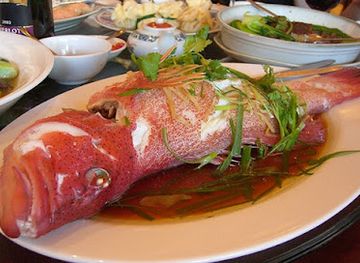
Dining on the Huon Peninsula is closely connected to household cooking, village hospitality and the supplies available in small settlements. Meals may include rice, root vegetables such as sweet potato and cassava, greens, tropical fruit, coconut and locally caught fish, with preparation varying between communities and households. Roadside stalls and small markets can provide seasonal produce, betel nut and simple snacks, but they should not be confused with a permanent restaurant scene. In Finschhafen and other established settlements, accommodation providers or local hosts are the most dependable source of organised meals, and advance discussion is wise for vegetarian, allergy-related or other dietary needs. Visitors may encounter food traditions associated with the wider coastal culture of Papua New Guinea rather than dishes exclusive to the Huon Peninsula. Carrying packaged provisions from Lae is sensible for long journeys, especially where boats, airstrips or mountain tracks are involved. Drinking water should come from a trusted treated or sealed supply.
-
Chinese
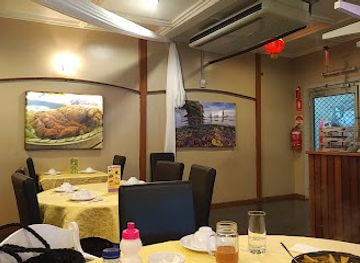
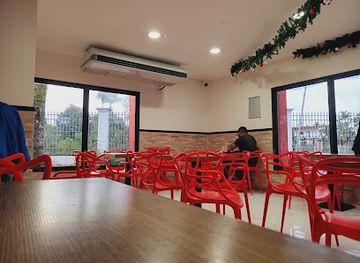
Bungaraya Restaurant
Discover authentic Chinese flavors at Bungaraya Restaurant in Lae—where every meal is a celebration of taste.
-
Restaurant
Ocean Restaurant
Experience authentic Asian cuisine at Ocean Restaurant in Lae - where fresh ingredients meet exquisite flavors.
-
Italian
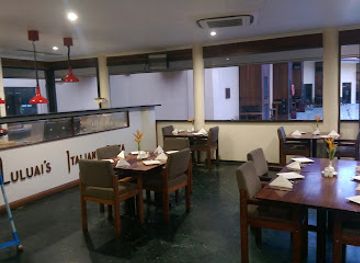
Luluai's Italian Restaurant
Experience authentic Italian flavors at Luluai's Italian Restaurant in Lae, where every dish is crafted with passion and fresh ingredients.
Best bars in Huon Peninsula
The Huon Peninsula does not have a substantial nightclub or late-night entertainment scene. Evening life is more likely to centre on family homes, community gatherings, accommodation compounds and small local drinking venues in or near established settlements. Finschhafen may offer the most developed social setting in the region, but visitors should not expect the range of bars, live-music venues or late transport found in Lae or Port Moresby. Alcohol availability, licensing and opening arrangements can change, and travellers should follow local advice rather than making assumptions about where it is appropriate to drink. In villages, evening activities may include conversation, church-related events or community occasions, but participation should be by invitation. Remote locations become very dark after sunset, so plan movements before nightfall and avoid walking unfamiliar roads, beaches or forest tracks alone.
-
Restaurant
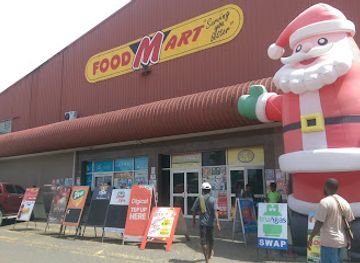
Foodmart
Experience the vibrant flavors of Lae at Foodmart, the ultimate culinary hub offering fresh produce, delicious meals, and delightful baked goods.
-
Bar
Jackson's Bar Restaurant & Gaming
Discover the lively atmosphere of Jackson's Bar Restaurant & Gaming, where delicious food, refreshing drinks, and gaming come together in Port Moresby.
-
Restaurant
Wickid Chicken
Discover the flavors of Lae at Wickid Chicken, where delicious chicken dishes and a cozy atmosphere await you.
-
Restaurant
Port Terrace Restaurant & Bar
Discover the best of Papua New Guinea's cuisine at Port Terrace Restaurant & Bar, featuring stunning views and a delightful atmosphere.

Best nightclubs in Huon Peninsula
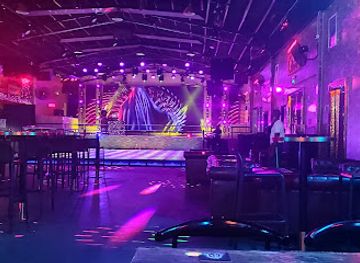
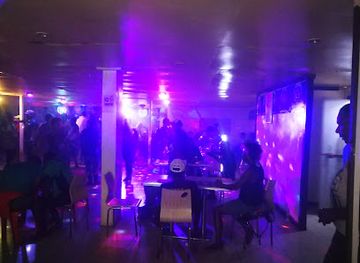
The Huon Peninsula does not have a substantial nightclub or late-night entertainment scene. Evening life is more likely to centre on family homes, community gatherings, accommodation compounds and small local drinking venues in or near established settlements. Finschhafen may offer the most developed social setting in the region, but visitors should not expect the range of bars, live-music venues or late transport found in Lae or Port Moresby. Alcohol availability, licensing and opening arrangements can change, and travellers should follow local advice rather than making assumptions about where it is appropriate to drink. In villages, evening activities may include conversation, church-related events or community occasions, but participation should be by invitation. Remote locations become very dark after sunset, so plan movements before nightfall and avoid walking unfamiliar roads, beaches or forest tracks alone.
-
Night club
Club 99
Discover the heartbeat of Lae's nightlife at Club 99, an electrifying night club offering pulsating music and vibrant atmosphere.
-
Night club
Muse Night Club
Dive into Lae's nightlife at Muse Night Club, where electrifying music and vibrant energy create unforgettable nights in Morobe Province.
-
Night club
Aviat Club
Discover nightlife at Aviat Club in Lae, a lively night club offering music, dance, and a vibrant atmosphere perfect for socializing.
-
Disco club
Radison club
Join the vibrant nightlife at Radison Club in Top Town, Morobe Province – where dancing and fun meet local culture.
Best shops in Huon Peninsula
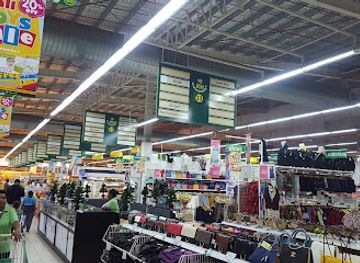
Shopping on the Huon Peninsula is modest and practical rather than centred on retail districts. Small local markets and roadside stalls may sell seasonal fruit, vegetables, greens, betel nut, fish and other everyday produce, while village-based makers may offer woven items, carvings or craftwork when available. Selection, market days and prices vary, and purchases should be made respectfully through agreed local arrangements. Finschhafen is more likely than remote coastal communities to have basic shops for food and household supplies, but it is not a destination for extensive fashion, luxury or souvenir shopping. Lae is the practical place to obtain specialist equipment, medicines, packaged provisions and replacement supplies before travelling onwards. Visitors interested in crafts should ask hosts about the maker, materials and customary permissions rather than treating cultural objects as anonymous commodities. Carrying kina in small notes is useful, as electronic payment is not dependable outside larger businesses.
-
Shopping mall
Vision City Mega Mall
Explore Vision City Mega Mall: Port Moresby's premier shopping destination with a mix of local culture and international brands, dining, and entertainment.
-
Grocery store
Foodmart
Explore the rich culinary landscape of Papua New Guinea at Foodmart, Lae's vibrant market for local produce, baked goods, and unique specialties.
-
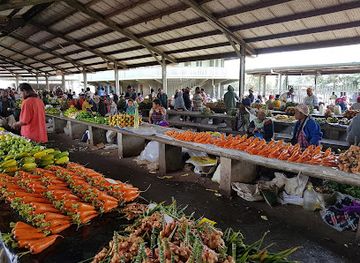
Fresh food market
Mount Hagen Market
Experience the vibrant culture and fresh flavors of Papua New Guinea at Mount Hagen Market, a lively hub in the heart of the Highlands.
-
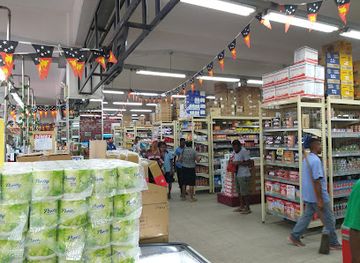
Shopping mall
Papindo Supermarket
Discover local flavors and global brands at Papindo Supermarket, Lae's top shopping destination for tourists and residents alike.
Get your free copy of our complete guide to Huon Peninsula, delivered straight to you.
Everything on this page, from attractions and restaurants to essentials and local phrases, in one PDF you can read offline, print or share.
Already have an account? Sign in
Your Huon Peninsula guide is ready.
We'll send it to · Not you? Sign out

Getting your guide ready…
We are putting together a fresh copy of the Huon Peninsula guide. This can take up to a minute.
This can take a few moments. If your browser asks, choose Allow so the download can start. You'll find the guide in your Downloads folder.
Nothing happened? Download it again
Sorry, the guide is taking longer than usual. Please try again in a minute, or get it by email instead.
Huon Peninsula essentials
Currency and Payment
Safety
Emergency Situations
Do's and Don'ts
Local Tips
From Eve
Local phrases worth knowing
You don't need to get them perfect. A few words go a long way, and locals appreciate the effort.
Basics
| English | Local | Say it |
|---|---|---|
| Hello | Gutnius | [goot-nee-us] |
| Goodbye | Lukim yu | [loo-keem yoo] |
| Yes | Yes | [yes] |
| No | No | [no] |
| Please/You’re welcome | Plis | [plees] |
| Thank you | Tenkyu | [ten-kyoo] |
| Excuse me/Sorry | Sori | [soh-ree] |
| How are you? | Yu orait? | [yoo oh-rait] |
| Fine. And you? | Orait. Yu? | [oh-rait. yoo] |
| Do you speak English? | Yu tokim Inglis? | [yoo toh-keem ing-lis] |
| I don't understand | Mi no save | [mee noh sah-veh] |
Eating & Drinking
| English | Local | Say it |
|---|---|---|
| I’d like to see the menu, please | Mi laik lukim menu, plis | [mee like loo-keem meh-noo, plees] |
| I don’t eat meat | Mi no kaikai mit | [mee noh kai-kai meet] |
| Cheers! | Saibai! | [sigh-bye] |
| I would like to pay, please | Mi laik payim, plis | [mee like pay-im, plees] |
Emergencies
| English | Local | Say it |
|---|---|---|
| Help! | Help! | [help] |
| Go away! | Go aut! | [go out] |
| Call the Police! | Kolim polis! | [koh-lim poh-lis] |
| Call a doctor! | Kolim dokta! | [koh-lim dok-tah] |
| I’m lost | Mi lus | [mee loos] |
| I’m ill | Mi sik | [mee seek] |
Shopping
| English | Local | Say it |
|---|---|---|
| I’d like to buy... | Mi laik baim... | [mee like bye-im] |
| I’m just looking | Mi soim luk | [mee so-im look] |
| How much is it? | Hamamas em? | [ha-mah-mahs em] |
| That’s too expensive | Dat em tu ekspensiv | [dat em too eks-pen-siv] |
| Can you lower the price? | Yu ken daunim prais? | [yoo ken dah-oo-nim prais] |
Time & Numbers
| English | Local | Say it |
|---|---|---|
| What time is it? | Wanem taim? | [wah-nem time] |
| It’s one o'clock | Em wan klok | [em wan clock] |
| Half past (10) | Halve past (10) | [halv past (ten)] |
| Morning | Mornin | [mor-ning] |
| Afternoon | Aftanun | [af-ta-noon] |
| Evening | Ivinin | [ee-vee-ning] |
| Yesterday | Yestede | [yes-teh-deh] |
| Today | Tude | [too-deh] |
| Tomorrow | Tumoro | [too-mor-oh] |
| 1 | Wan | [wan] |
| 2 | Tu | [too] |
| 3 | Thri | [three] |
| 4 | Foa | [foh-ah] |
| 5 | Faiv | [five] |
| 6 | Siks | [six] |
| 7 | Seven | [seven] |
| 8 | Eit | [eight] |
| 9 | Nain | [nine] |
| 10 | Ten | [ten] |
Transport & Directions
| English | Local | Say it |
|---|---|---|
| Where's a/the...? | Wea em...? | [weh em] |
| What's the address? | Wanem adires? | [wah-nem ah-de-res] |
| Can you show me (on the map)? | Yu ken soim mi (long map)? | [yoo ken so-im mee long map] |
| When's the next (bus)? | When em next (bus)? | [when em next bus] |
| A ticket (to ....) | Wan tiket (go....) | [wan ti-ket go] |
History of Huon Peninsula
Early settlement and coastal societies
The Huon Peninsula has been inhabited for millennia by communities adapted to steep forested country, river valleys and the coastal environment. Archaeological research in the wider Huon Gulf and northern Papua New Guinea has contributed to understanding early human movement, farming and maritime exchange in the region, although the peninsula's history is also preserved through living customary traditions rather than monuments alone. Communities developed distinctive languages, land relationships and systems of exchange between the coast and upland areas. Gardening, fishing, hunting and movement along coastal and inland tracks continued to shape daily life long before the arrival of European administrations.
German New Guinea and Finschhafen
The German colonial administration established Finschhafen as a station in the late nineteenth century, naming it after German naval officer Karl von Finsch. German New Guinea's presence remained limited by difficult terrain, disease and the practical challenges of governing scattered communities, but it introduced new administrative, commercial and missionary influences along the coast. Finschhafen later became one of the region's most important colonial reference points. The surviving settlement pattern and historical associations are part of a wider colonial legacy that affected land, labour, religion and relations between coastal communities and outside authorities.
Missionary and administrative change
Christian missions and colonial administration expanded their influence in Morobe during the late nineteenth and early twentieth centuries. Mission stations, schools and health services became important points of contact, while colonial officials and traders attempted to connect coastal settlements with wider systems of taxation, labour and commerce. The results were uneven and did not replace customary authority or local identity. Across the Huon Peninsula, new religious and educational institutions developed alongside established village structures, creating a layered cultural landscape in which local languages, customary obligations and Christian practices continue to coexist.
Japanese occupation during the Second World War
Japanese forces occupied parts of the Huon Peninsula and nearby Morobe coast after advancing through New Guinea in 1942. Finschhafen and surrounding coastal locations became strategically important because of their anchorages, airfields and position between Lae and the north coast. Military construction altered the landscape, while local people endured displacement, forced labour, shortages and the dangers of fighting. The peninsula's wartime history cannot be understood only through military movements: it also includes the service, courage and suffering of Papua New Guinean carriers, guides, labourers and village communities.
The Huon Peninsula campaign, 1943–1944
In September 1943, Allied forces landed at Scarlet Beach near Finschhafen, beginning a campaign to drive Japanese forces from the peninsula and secure routes towards the north coast. Fighting spread through difficult jungle, ridges and river crossings, with later operations around Finschhafen and towards Sio. Australian and United States forces relied heavily on local knowledge and the work of Papua New Guinean carriers. The campaign caused extensive disruption, casualties and displacement, and its traces include former airfields, roads, defensive positions and scattered wartime material.
Postwar reconstruction and provincial development
After 1945, Finschhafen and other coastal areas were rebuilt within the Australian administration of the Territory of New Guinea. Wartime facilities were adapted or abandoned, while missions, schools, government services and transport links gradually expanded. Papua New Guinea's path to self-government in 1972 and independence in 1975 brought national political change, but the Huon Peninsula remained a predominantly rural region with difficult terrain and dispersed settlements. Development has continued unevenly, with communities combining subsistence gardening, fishing, local trade and public-sector links with the wider Morobe economy.
Contemporary customary and community life
Modern Huon Peninsula communities continue to balance customary land ownership and local governance with national institutions, churches, education and changing economic opportunities. Coastal transport, small-scale commerce and village agriculture remain important, while roads, communications and public services can be affected by geography and weather. The region's contemporary identity is not simply a wartime landscape or a remote wilderness: it is a lived cultural area whose communities determine access to land, heritage and local experiences. Visitors who travel with local permission and guidance contribute to a more respectful understanding of this continuing history.
Huon Peninsula in Photos
Browse through our photo collection highlighting the charm and character of the destination.
Neighbouring regions of Huon Peninsula
The closest regions to Huon Peninsula, if you have time for more than one.
-

-

-

-

-


Swipe for more regions
Explore more

Explore more of Papua New Guinea
Discover Papua New Guinea, where ancient cultures meet untamed wilderness. From vibrant festivals to stunning natural landscapes, an adventure awaits in this Pacific gem.
Explore Papua New Guinea