

Free Eastern Highlands Travel Guide & Mobile App
Explore Eastern Highlands with free travel guides. Discover regional history, expert tips, proposed trips, and audio guides on web or mobile app.


Explore Eastern Highlands for Goroka’s cultural gatherings, cool mountain landscapes, coffee gardens, provincial parks and living traditions.
Read more about Eastern Highlands
When is the best time to visit Eastern Highlands?
Best: January–March · 25–26°C| Month | High (°C) | Rainfall (mm) |
|---|---|---|
| January (best) | 25 | 200 |
| February (best) | 26 | 180 |
| March (best) | 26 | 190 |
| April | 26 | 210 |
| May | 26 | 220 |
| June | 25 | 230 |
| July | 25 | 240 |
| August | 25 | 250 |
| September | 25 | 260 |
| October | 26 | 270 |
| November | 26 | 280 |
| December | 26 | 290 |
Getting to and around Eastern Highlands
How to get there
Transportation
Top city travel guides in Eastern Highlands
The cities of Eastern Highlands, and the easiest places to base yourself.

Swipe for more cities
Destinations in Eastern Highlands
Resorts, valleys and scenic spots worth a trip of their own.
-

-


Swipe for more destinations
Best attractions in Eastern Highlands
Eastern Highlands attractions are centred on cultural interpretation, highland landscapes and rural life rather than a dense collection of monumental sites. In Goroka, the J.K. McCarthy Museum offers a useful introduction to the province's archaeological, ethnographic and colonial histories, while the Goroka Show provides a major, highly organised display of music, dance and ceremonial dress when it is taking place. The Asaro Valley is associated with the Asaro Mudmen tradition, and arranged visits can explain the story, performance and community context behind the masks. Mount Gahavisuka Provincial Park, north of Goroka, offers montane vegetation, birdlife and walking opportunities in a protected upland setting. Around Kainantu and along the agricultural corridors, visitors can arrange encounters with coffee growers, craftspeople and village communities. These experiences require advance coordination and cultural sensitivity. The province also rewards simple observation: cultivated slopes, market gardens, misty ridges and roadside settlements reveal how people have adapted to a demanding highland environment. Outdoor activities should be planned with local guidance, as trails, road access and weather conditions are changeable.
-
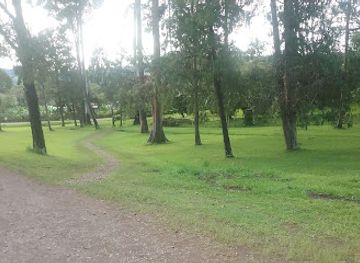
Park
Impact Park
Explore the serene beauty of Impact Park in Ukarumpa, Eastern Highlands, a perfect escape for nature lovers and those seeking tranquility.
-
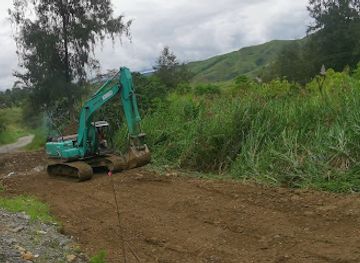
Park
Lutheran Hill Park
Experience the tranquil beauty of Lutheran Hill Park in Ukarumpa, a serene escape in Papua New Guinea's stunning Eastern Highlands.
-
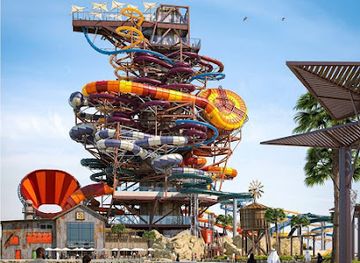
Park
Waterslide
Experience the excitement of the Waterslide in Ukarumpa, a family-friendly park in the Eastern Highlands featuring thrilling water attractions and beautiful scenery.
-
Hiking area
Kuru Mountain
Discover the breathtaking beauty of Kuru Mountain in Papua New Guinea, a premier hiking destination with stunning views and diverse wildlife.
Best landmarks in Eastern Highlands
Goroka's most recognisable cultural landmark is the setting of the Goroka Show, whose performances have made the town a prominent meeting point for Papua New Guinea's many cultural groups, although the event is periodic rather than a permanent monument. The J.K. McCarthy Museum is an important institutional landmark for understanding the Eastern Highlands and the wider Highlands region. Mount Gahavisuka Provincial Park provides a natural counterpoint, with protected upland forest and a prominent mountain setting close to Goroka. The Asaro Valley is closely associated with the masked Asaro Mudmen tradition, whose visual language has become one of the province's best-known cultural symbols. In the wider province, the Highlands Highway is a practical historic landscape: its bridges, cuttings, settlements and market activity express the transport transformation that connected the interior to the coast and national economy. The most meaningful landmarks here are therefore cultural and environmental as well as architectural, and many are best understood through local interpretation rather than viewed in isolation.
-
Island
New Guinea
Explore the untouched paradise of New Guinea, where breathtaking landscapes and rich cultures await every adventurous traveler.
-
National museum
Papua New Guinea National Museum and Art Gallery
Discover the rich cultural heritage and artistic expression of Papua New Guinea at the National Museum and Art Gallery in Port Moresby.
-
 Indoor lodging
Pacific Gardens Hotel
Experience the charm of Goroka at Pacific Gardens Hotel - your gateway to Papua New Guinea's stunning Eastern Highlands.
-
Theme park
Adventure Park PNG
Explore Adventure Park PNG, a captivating theme park in Central Province filled with exciting rides, delicious food, and family-friendly attractions.
Explore Eastern Highlands on the map
Plan your trip on one map. See where the top cities, national parks and sights are, and book hotels and experiences in a few clicks.
Best hotels in Eastern Highlands
Best restaurants in Eastern Highlands
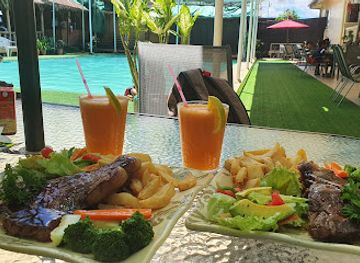
Dining in Eastern Highlands is shaped by food gardens, local markets, coffee production and the practical limitations of a highland province. Goroka has the broadest choice of hotel restaurants, cafés and modest local eateries, while smaller towns offer fewer formal options and rely more heavily on market food and simple meals. Sweet potato, taro, greens, bananas and other garden produce are common elements of local cooking, supplemented by rice, noodles and meat dishes influenced by wider Papua New Guinean tastes. Coffee is the province's signature agricultural product, and tastings or visits to a processing operation can provide more regional context than a standard café stop. Markets are useful for seeing seasonal produce, although visitors should choose food that is freshly cooked or properly washed. Rural hosts may serve food as part of a cultural visit; accept graciously when appropriate, ask about ingredients and avoid making assumptions about how local dishes should be prepared. International and Australian-influenced menus are most likely in larger hotels.
-
Steak
Goroka steak house
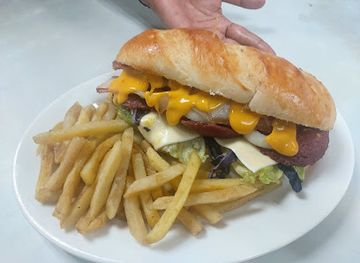
Savor mouthwatering steaks and authentic local dishes at Goroka Steak House – a culinary highlight in Papua New Guinea's Eastern Highlands.
-
Hotel
Bird of Paradise Hotel & Apartments
Experience comfort and local charm at Bird of Paradise Hotel & Apartments in Goroka - your gateway to Eastern Highlands adventures.
-
Restaurant
Paradise Grill
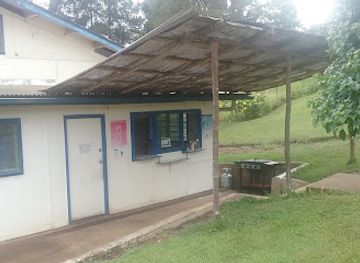
Experience authentic local cuisine at Paradise Grill in Ukarumpa, where every dish tells a story and nature enhances your dining experience.
-
Restaurant
Gold Bell Cafe
Experience authentic Papua New Guinean cuisine at Gold Bell Cafe in Goroka - where flavors meet tradition.
Best bars in Eastern Highlands
Eastern Highlands has a restrained evening scene, with nightlife concentrated in Goroka and centred on hotel bars, restaurants, social clubs and occasional live entertainment rather than a large nightclub circuit. In smaller towns and rural districts, evenings generally revolve around family, community, church and local social life, with limited late-night facilities for visitors. Hotel lounges can provide a practical setting for a drink or meal, but opening arrangements and security policies vary. Alcohol should be consumed discreetly and within the rules of the venue, particularly when travelling outside the main urban centre. Cultural performances and sing-sings are normally organised events rather than spontaneous nightlife, and visitors should not treat ceremonial gatherings as entertainment venues without invitation. Ask accommodation staff about current local options and use arranged transport after dark rather than walking unfamiliar roads.
-
Lodging
Kainantu Lodge
Experience the tranquility of Kainantu Lodge, a serene retreat in the breathtaking Eastern Highlands of Papua New Guinea.
-
Bar
Bird of Paradise Hotel & Apartments
Discover the charming Bird of Paradise Hotel & Apartments in Goroka, where comfort meets the rich culture of Papua New Guinea.
-
Bar
KUNDU CLUB
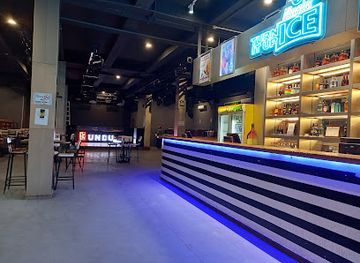
Experience the vibrant nightlife at Kundu Club in Port Moresby, featuring refreshing drinks, live entertainment, and a welcoming atmosphere.
-
Bar
Ramu Management Club
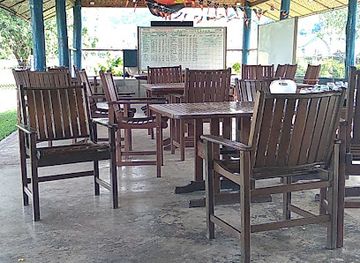
Experience the lively ambiance and cultural richness of Ramu Management Club in Kaigulan, a must-visit bar for tourists in Madang Province.
Best nightclubs in Eastern Highlands
Eastern Highlands has a restrained evening scene, with nightlife concentrated in Goroka and centred on hotel bars, restaurants, social clubs and occasional live entertainment rather than a large nightclub circuit. In smaller towns and rural districts, evenings generally revolve around family, community, church and local social life, with limited late-night facilities for visitors. Hotel lounges can provide a practical setting for a drink or meal, but opening arrangements and security policies vary. Alcohol should be consumed discreetly and within the rules of the venue, particularly when travelling outside the main urban centre. Cultural performances and sing-sings are normally organised events rather than spontaneous nightlife, and visitors should not treat ceremonial gatherings as entertainment venues without invitation. Ask accommodation staff about current local options and use arranged transport after dark rather than walking unfamiliar roads.
-
Bar
KUNDU CLUB
Experience the vibrant nightlife and local culture at Kundu Club in Port Moresby, a lively bar with great drinks and unforgettable moments.
-
Night club
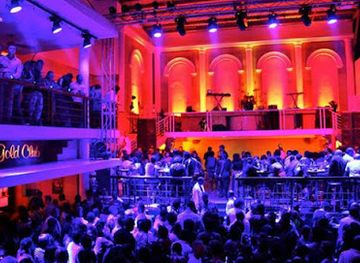
The Gold Club
Experience the vibrant nightlife of Port Moresby at The Gold Club, where music, dance, and unforgettable memories await.
-
Night club
Club Illusion PNG
Discover the nightlife of Port Moresby at Club Illusion PNG, where music, dance, and local culture collide for an unforgettable experience.
-
Night club
Club Regal
Discover the energetic nightlife at Club Regal in Port Moresby, a premier destination for music, dance, and unforgettable experiences.


Best shops in Eastern Highlands
Shopping in Eastern Highlands is concentrated in Goroka, Kainantu and the market places along the Highlands Highway. Goroka offers supermarkets, general shops, pharmacies, produce markets and small businesses selling practical goods, while roadside stalls provide seasonal garden produce and locally traded items. Visitors may find woven products, bilum bags, carvings, baskets and other crafts, but quality, materials and provenance vary; buy directly from makers or reputable community organisations where possible and avoid purchasing objects that may have cultural or conservation restrictions. Packaged Eastern Highlands coffee is the most straightforward regional product to take home, provided it is correctly labelled and permitted by the destination country's customs rules. Kainantu and smaller settlements have a more local, utilitarian retail character rather than a specialised souvenir scene. Bargaining is not necessarily expected everywhere, so establish the price politely and pay agreed amounts promptly, particularly when buying directly from artisans or market sellers.
-
Department store
Papindo Super Market
Discover the heartbeat of Kainantu at Papindo Super Market, where shopping meets local culture and convenience.
-
Shopping mall
Hagefii
Discover the vibrant shopping experience at Hagefii in Goroka, where local culture meets modern retail therapy.
-
Book store
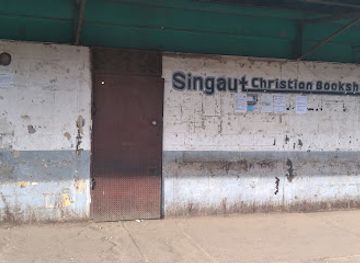
Kainantu Christian Book Store
Discover a spiritual oasis in Kainantu with a diverse collection of Christian literature and community events at the Kainantu Christian Book Store.
-
Clothing store
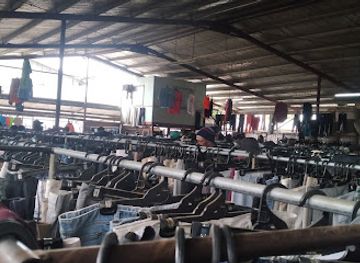
Second hand store
Explore sustainable fashion and unique local finds at Kainantu's charming second-hand store, a treasure trove for eco-conscious tourists.
Get your free copy of our complete guide to Eastern Highlands, delivered straight to you.
Everything on this page, from attractions and restaurants to essentials and local phrases, in one PDF you can read offline, print or share.
Already have an account? Sign in
Your Eastern Highlands guide is ready.
We'll send it to · Not you? Sign out

Getting your guide ready…
We are putting together a fresh copy of the Eastern Highlands guide. This can take up to a minute.
This can take a few moments. If your browser asks, choose Allow so the download can start. You'll find the guide in your Downloads folder.
Nothing happened? Download it again
Sorry, the guide is taking longer than usual. Please try again in a minute, or get it by email instead.
Eastern Highlands essentials
Currency and Payment
Safety
Emergency Situations
Do's and Don'ts
Local Tips
From Eve
Local phrases worth knowing
You don't need to get them perfect. A few words go a long way, and locals appreciate the effort.
Basics
| English | Local | Say it |
|---|---|---|
| Hello | Toksave | [Toksah-vay] |
| Goodbye | Bai likim yu | [Bye lee-keem yoo] |
| Yes | Yes | [Yes] |
| No | Nogat | [Noh-gaht] |
| Please/You're welcome | Plis | [Plees] |
| Thank you | Tenkyu | [Ten-kyoo] |
| Excuse me/Sorry | Sori | [Soh-ree] |
| How are you? | Yu orait? | [Yoo oh-rite?] |
| Fine. And you? | Orait. Na yu? | [Oh-rite. Nah yoo?] |
| Do you speak English? | Yu inap tokim Inglis? | [Yoo ee-nahp toh-keem In-glis?] |
| I don't understand | Mi no save | [Mee noh sah-veh] |
Eating & Drinking
| English | Local | Say it |
|---|---|---|
| I'd like to see the menu, please | Mi laik lukim menu, plis | [Mee liek loo-keem meh-noo, plees] |
| I don't eat meat | Mi no kaika mit | [Mee noh kai-kah meet] |
| Cheers! | Sokim! | [Soh-keem!] |
| I would like to pay, please | Mi laik payim, plis | [Mee liek pah-yim, plees] |
Emergencies
| English | Local | Say it |
|---|---|---|
| Help! | Help! | [Help!] |
| Go away! | Goway! | [Goh-way!] |
| Call the Police! | Kolim polis! | [Koh-lim poh-lis!] |
| Call a doctor! | Kolim dokta! | [Koh-lim dok-tah!] |
| I'm lost | Mi lus | [Mee looss] |
| I'm ill | Mi sik | [Mee seek] |
Shopping
| English | Local | Say it |
|---|---|---|
| I'd like to buy... | Mi laik bai... | [Mee liek bye...] |
| I'm just looking | Mi soim | [Mee so-im] |
| How much is it? | Em kostim hamas? | [Em koh-steem hah-mahs?] |
| That's too expensive | Dis em tu expensive | [Dis em too ex-pen-siv] |
| Can you lower the price? | Yu inap daunim price? | [Yoo ee-nahp down-im price?] |
Time & Numbers
| English | Local | Say it |
|---|---|---|
| What time is it? | Hamas taim em? | [Hah-mahs tah-im em?] |
| It's one o'clock | Em wan klok | [Em wahn klok] |
| Half past (10) | Haf past (10) | [Hahf pahst (10)] |
| Morning | Mornin | [Morn-in] |
| Afternoon | Aftanun | [Af-tah-noon] |
| Evening | Ivin | [Ee-vin] |
| Yesterday | Yestede | [Yes-teh-deh] |
| Today | Tude | [Too-deh] |
| Tomorrow | Tumoro | [Too-mo-roh] |
| 1 | Wan | [Wahn] |
| 2 | Tu | [Too] |
| 3 | Tri | [Tree] |
| 4 | Fo | [Fo] |
| 5 | Faiv | [Fahiv] |
| 6 | Siks | [Siks] |
| 7 | Sev | [Sev] |
| 8 | Eit | [Eit] |
| 9 | Nain | [Nain] |
| 10 | Ten | [Ten] |
Transport & Directions
| English | Local | Say it |
|---|---|---|
| Where's a/the...? | Wea em...? | [Weh em...?] |
| What's the address? | Wea address? | [Weh ad-dress?] |
| Can you show me (on the map)? | Yu inap soim mi (long map)? | [Yoo ee-nahp so-im mee (long map)?] |
| When's the next (bus)? | Wen em nekst (bus)? | [Wen em nekst (bus)?] |
| A ticket (to ....) | Wan tiket (go....) | [Wahn tee-ket (go....)] |
History of Eastern Highlands
Ancient Highland Settlement and Gardening
The valleys and uplands of Papua New Guinea's interior have supported settled communities and intensive gardening for many centuries. In the Eastern Highlands, cultivated plots, drainage practices, exchange networks and distinctive material traditions developed in response to the steep terrain and varied microclimates. Sweet potato later became a particularly important staple across the Highlands, supporting dense rural populations and shaping everyday food systems. Much of this history is preserved through archaeology, oral traditions, land-use patterns and the continuing importance of gardens rather than through large monumental sites.
First Contact and Highland Patrols
European knowledge of the interior expanded during the twentieth century, when Australian-administered patrols travelled into the Highlands and established new routes and government stations. The Goroka area became an important administrative centre as colonial officials, missionaries, traders and labour networks entered communities that had previously maintained their own political and economic systems. Contact brought schools, medical services and new markets, but also disease, coercive forms of labour and disruptive changes in authority. The legacy remains visible in the province's roads, institutions and settlement patterns.
The Highlands Highway and Wartime Infrastructure
Road building transformed access to the Eastern Highlands. During the Second World War, Papua New Guinea became a major theatre of conflict, and transport infrastructure in the wider Highlands and neighbouring regions acquired strategic importance. The route later developed into the Highlands Highway, linking inland provinces with Lae and the coast. For Eastern Highlands communities, the road brought more reliable movement of people and goods, while also exposing the region to changing markets, administrative control and migration. Today it remains the province's essential overland artery, though conditions can be difficult.
Coffee and the Rural Economy
Coffee expanded in the Eastern Highlands during the later colonial period and after independence, becoming one of the province's defining commercial crops. Smallholders, estates, processors and exporters created a rural economy connected to national and international markets. Coffee did not replace food gardening, which remains fundamental to household security, but it provided cash income for school fees, transport, tools and other necessities. The industry has also faced price fluctuations, ageing trees, transport costs and quality-control challenges. Its history is best understood through the people and communities who cultivate, harvest and process the crop.
Independence and Provincial Identity
Papua New Guinea became independent from Australia in 1975, and the Eastern Highlands subsequently developed within the country's provincial system and national political life. Goroka grew as an administrative, educational and commercial centre, while district towns and rural communities retained strong local identities. Independence encouraged renewed attention to Papua New Guinean cultural expression, including music, dance, dress and oral history. Public festivals such as the Goroka Show became important platforms for representing the country's cultural diversity, even as communities continue to debate how traditions should be presented to visitors and wider audiences.
Contemporary Cultural and Environmental Challenges
Modern Eastern Highlands life combines customary land relationships, Christian institutions, local government, education, commerce and global connections. Population growth and commercial agriculture place pressure on forests, water supplies and available land, while changing weather patterns affect roads and farming. Cultural groups continue to adapt performances and inherited practices without losing their local meaning. Conservation initiatives, provincial parks and responsible tourism can contribute to environmental awareness and rural income, but visitors should recognise that the province is a lived-in social landscape rather than a purpose-built tourism zone.
Eastern Highlands in Photos
Browse through our photo collection highlighting the charm and character of the destination.
Neighbouring regions of Eastern Highlands
The closest regions to Eastern Highlands, if you have time for more than one.
-

-

-

-

-


Swipe for more regions
Explore more

Explore more of Papua New Guinea
Discover Papua New Guinea, where ancient cultures meet untamed wilderness. From vibrant festivals to stunning natural landscapes, an adventure awaits in this Pacific gem.
Explore Papua New Guinea