

Adamstown, Pitcairn Islands Travel Guide
Discover Adamstown in the Pitcairn Islands – a remote haven with rich history, stunning landscapes, and a warm, welcoming community.
Adamstown, the only settlement in the Pitcairn Islands, is a secluded paradise waiting to be explored. Nestled in the South Pacific Ocean, this remote village offers an escape from the hustle and bustle of modern life. With a population of just around 50 residents, Adamstown provides a unique opportunity to experience a close-knit community and a slower pace of life. The rich history of Adamstown is deeply intertwined with the infamous mutiny on the HMS Bounty. Many of its inhabitants are descendants of the mutineers and their Tahitian companions. Visitors can delve into this captivating history at the Pitcairn Island Museum, which houses artifacts and stories from the island's past. Nature enthusiasts will be in awe of Adamstown's stunning landscapes. The island boasts rugged cliffs, lush greenery, and pristine beaches. Hiking trails lead to breathtaking viewpoints, while snorkeling and diving reveal vibrant marine life in the surrounding coral reefs. Despite its small size, Adamstown offers a wealth of natural beauty and adventure for those willing to make the journey.

Know before you go
Hi, I'm Eve. Here are a few practical things to know before exploring Adamstown.
- Plan your visit during the dry season, from May to October, for the best weather.
- Bring cash, as there are no ATMs on the island and credit card facilities are limited.
- Book your accommodation in advance, as options are limited and fill up quickly.
- Engage with the local community; they are friendly and love sharing their stories and traditions.
- Pack light, but bring essential supplies, as shops on the island have limited stock.
- Respect the local environment and wildlife; the island’s ecosystem is fragile.
Top City Travel Guides in Adamstown
The cities of Adamstown, and the easiest places to base yourself.

Explore Adamstown: Things to Do, Places to Eat, Hotels & More
Handpicked recommendations for top attractions, local dining, accommodations, and more

Top Attractions & Sightseeing in Adamstown

Best landmarks in Adamstown
Top-rated picks
Best Landmarks

The Bounty Anchor
Discover the rich maritime history and breathtaking views at The Bounty Anchor, a must-see historical landmark in Adamstown, Pitcairn Island.

St. Paul's Pool
Experience the tranquil beauty of St. Paul's Pool, a serene destination on the Pitcairn Islands perfect for swimming, snorkeling, and unwinding in nature.

Pitcairn Islands Museum
Explore the fascinating history and culture of the Pitcairn Islands at the captivating Pitcairn Islands Museum in Adamstown.

Christian's Cave
Discover the breathtaking beauty and rich history of Christian's Cave, a stunning landmark perfect for adventure seekers and nature lovers alike.

Best restaurants in Adamstown
Top-rated picks
Best Restaurants

Pitcairn Islands Museum
Discover the rich cultural tapestry and intriguing history at the Pitcairn Islands Museum in Adamstown.
Down Alwyn's
Discover warmth and authenticity at Down Alwyn's Guest House in Adamstown – your serene escape on Pitcairn Island.
Marco Boa's Cafe & Restaurant
Experience the essence of local cuisine at Marco Boa's Cafe & Restaurant - where every meal is a delightful journey.

Plas Pitcairn Chalet
Experience genuine island hospitality at Plas Pitcairn Chalet – your cozy retreat in Adamstown.

Best bars in Adamstown
Top-rated picks
Best Bars
The Bounty Anchor
Explore The Bounty Anchor in Adamstown, a historical landmark steeped in maritime lore with stunning coastal vistas, perfect for history lovers and nature enthusiasts.

St. Paul's Pool
Experience the tranquil beauty of St. Paul's Pool, a serene oasis perfect for relaxation and rejuvenation amidst stunning natural landscapes.

Pitcairn Islands Museum
Explore the captivating history and culture of the Pitcairn Islands at the iconic Pitcairn Islands Museum, a treasure trove of artifacts and stories.

Christian's Cave
Explore the captivating depths of Christian's Cave, a historical landmark showcasing stunning natural formations and rich local heritage.

Best shops in Adamstown
Top-rated picks
Best Shops

St. Paul's Pool
Unwind in the stunning beauty of St. Paul's Pool, a tropical paradise inviting you to swim, relax, and explore the rich marine life of Pitcairn Island.

Pitcairn Islands Museum
Uncover the remarkable history and culture of the Pitcairn Islands at the fascinating Pitcairn Islands Museum in Adamstown.

Christian's Cave
Explore the enchanting Christian's Cave, a historical landmark filled with stunning geological formations and rich stories of the past.
Marco Boa's Cafe & Restaurant
Experience the best of coffee culture and delicious cuisine at Marco Boa's Cafe & Restaurant, a local gem in the heart of the community.

Explore Adamstown on the Map
A handpicked selection of must-see spots in Adamstown, mapped for you.
Adamstown Essentials
-
Adamstown, the capital of the Pitcairn Islands, is one of the most remote settlements in the world. There are no airports on the island, so the only way to reach Adamstown is by sea. The main access point is via a supply ship that visits around four times a year from New Zealand. Alternatively, you can arrange a passage on private yachts or cruise ships that occasionally include Pitcairn in their itineraries. The journey typically starts from Mangareva in the Gambier Islands, French Polynesia, from where it takes about 32 hours by sea to reach Pitcairn.
-
Adamstown is a small settlement, and most places can be reached on foot. There are no public transportation services. For longer trips across the island, the locals use quad bikes or ATVs, which are the most common form of motorized transport. If you plan to explore beyond Adamstown, you might want to arrange transport with local residents.
-
The official currency of the Pitcairn Islands is the New Zealand Dollar (NZD). There are no ATMs or banks on the island, so it's crucial to bring enough cash to cover your expenses. Some local services may accept credit cards, but this is not guaranteed. It's advisable to confirm payment methods in advance and carry sufficient cash.
-
Adamstown is generally a very safe destination with a low crime rate. The close-knit community ensures a high level of security. However, as with any destination, it's advisable to take standard precautions. Keep an eye on your personal belongings and avoid leaving valuables unattended. There are no specific high-crime areas targeting tourists.
-
In case of emergency, the local emergency number is 112. The island has limited medical facilities, so it's essential to have travel insurance that covers medical evacuations. For minor health issues, basic medical supplies are available on the island. In the event of a serious medical emergency, evacuation to New Zealand or Tahiti would be necessary.
-
Fashion: Do dress modestly and comfortably. The climate is tropical, so lightweight clothing is recommended. Religion: Do respect local customs and attend community gatherings if invited. Public Transport: There is no public transport, so plan to walk or arrange transport with locals. Greetings: Do greet locals with a friendly 'hello' or 'kia ora'. The community is small and friendly. Eating & Drinking: Do accept food offerings graciously and try local dishes. Don't waste food, as supplies are limited and highly valued.
-
To experience Adamstown like a local, engage with the community and participate in local activities. Visit the museum to learn about the island's history and the Bounty mutineers. Try your hand at traditional crafts like wood carving or weaving. Join the locals for fishing trips or hikes around the island to discover its natural beauty. Don't miss the chance to sample local honey, which is renowned for its unique flavor.
When is the best time to visit Adamstown?
Useful Local Phrases for Adamstown
You don't need to speak the language perfectly. Even learning a few simple words can make conversations warmer—and locals usually appreciate the effort.
— Eve

Here are the phrases I use most often in Adamstown. Try a few—you'll be surprised how far they go! 😊
❤️
-
- HelloKia ora
[Kee-ah or-ah] - GoodbyeAroha
[Ah-roh-hah] - YesAe
[Eye] - NoKao
[Kow] - Please/You're welcomeTēnā koa
[Teh-nah koh-ah] - Thank youMeitaki
[May-tah-kee] - Excuse me/SorryKāore
[Kah-oh-reh] - How are you?Pehea koe?
[Pe-he-ah koh-eh] - Fine. And you?Pai. A koe?
[Pie. Ah koh-eh?] - Do you speak English?Ka kōrero koe i te Reo Pākehā?
[Kah koh-reh-roh koh-eh ee teh Reh-oh Pah-keh-hah?] - I don't understandKāore au e mōhio
[Kah-oh-reh ow eh mo-hee-oh]
- HelloKia ora
-
- I'd like to see the menu, pleaseKia hiahia au ki te kite i te rārangi kai, tēnā koa
[Kee-ah hee-ah-hee-ah ow kee teh kee-teh ee teh rah-rah-ngi kye, teh-nah koh-ah] - I don't eat meatKāore au e kai i te mīti
[Kah-oh-reh ow eh kye ee teh mee-tee] - Cheers!Kia ora!
[Kee-ah or-ah!] - I would like to pay, pleaseE hiahia ana au ki te utu, tēnā koa
[Eh hee-ah-hee ah-nah ow kee teh oo-too, teh-nah koh-ah]
- I'd like to see the menu, pleaseKia hiahia au ki te kite i te rārangi kai, tēnā koa
-
- Help!Tāutuhia!
[Tah-oo-too-hee-ah!] - Go away!Haere atu!
[High-reh ah-too!] - Call the Police!Tukua te Pāmore!
[Too-koo-ah teh Pah-more-eh!] - Call a doctor!Tukua he tāwera!
[Too-koo-ah he tah-weh-rah!] - I'm lostKāore au e mōhio
[Kah-oh-reh ow eh mo-hee-oh] - I'm illKei te pāngia au
[Kay teh pahng-ee-ah ow]
- Help!Tāutuhia!
-
- I'd like to buy...E hiahia ana au ki te hoko...
[Eh hee-ah-hee ah-nah ow kee teh ho-koh...] - I'm just lookingKei te tirohia noa au
[Kay teh tee-roh-hee-ah noh-ah ow] - How much is it?E hia te utu?
[Eh hee-ah teh oo-too?] - That's too expensiveHe tino utu nui
[He tee-noh oo-too noo-ee] - Can you lower the price?Ka taea e koe te whakaiti i te utu?
[Kah tah-eh ah-eh koh-eh teh fa-kah-ee-tee ee teh oo-too?]
- I'd like to buy...E hiahia ana au ki te hoko...
-
- What time is it?He aha te wā?
[Heh ah-hah teh wah?] - It's one o'clockKotahi te karaka
[Koh-tah-hee teh kah-rah-kah] - Half past (10)Hāwhe i pātea (10)
[Hah-fah ee pah-teh-ah (10)] - MorningAta
[Ah-tah] - AfternoonAhiahi
[Ah-hee-ah-hee] - EveningPō
[Poh] - YesterdayInā i tēra
[Ee-nah ee teh-rah] - TodayI tēnei rā
[Ee teh-neh rah] - TomorrowI āpōpō
[Ee ah-poh-poh] - 1Tahi
[Tah-hee] - 2Rua
[Rooh-ah] - 3Toru
[Toe-roo] - 4Whā
[Fah] - 5Rima
[Ree-mah] - 6Ono
[Oh-noh] - 7Whitu
[Fee-too] - 8Waru
[Wah-roo] - 9Iwa
[Ee-wah] - 10Tekau
[Teh-kow]
- What time is it?He aha te wā?
-
- Where's a/the...?Kei hea te...?
[Kay he-ah teh...?] - What's the address?He aha te wāhitau?
[Heh ah-hah teh wah-hee-tah-oo?] - Can you show me (on the map)?Ka taea e koe te whakaatu mai (i te mapi)?
[Kah tah-eh ah-eh koh-eh teh fa-kah-ah-too my (ee teh mah-pee)?] - When's the next (bus)?Kāinga te wā e whai ake nei (pahi)?
[Kah-ing-ah teh wah eh fye ah-kay nay (pah-hee)?] - A ticket (to ....)He tīkaetanga (ki ....)
[Heh tee-kah-eh-tah-nga (kee ....)]
- Where's a/the...?Kei hea te...?
History of Adamstown
-
Adamstown's origins are deeply tied to the infamous Mutiny on the Bounty in 1789. Led by Fletcher Christian, mutineers took control of HMS Bounty and eventually settled on Pitcairn Island. They burned the ship to avoid detection, the remains of which can still be seen underwater at Bounty Bay.
-
The initial settlers of Pitcairn Island included nine mutineers, six Tahitian men, and eleven Tahitian women. They established their community in what is now known as Adamstown, named after John Adams, the last surviving mutineer. The early years were fraught with conflict, leading to the deaths of many original settlers.
-
Pitcairn Island remained hidden from the world until 1808 when it was rediscovered by the American ship Topaz. By this time, John Adams and the remaining inhabitants had established a stable, albeit isolated, community. Their rediscovery brought intermittent contact with the outside world.
-
Under the influence of John Adams, who had found a Bible among the Bounty's remains, the Pitcairn community adopted Christianity. This religious transformation played a significant role in uniting the small population and shaping the cultural and moral framework of Adamstown.
-
In 1838, Pitcairn Island became a British colony. This official status provided the islanders with some protection and recognition, although their isolation continued to define much of their daily lives. The island's governance was formally organized, with John Adams recognized as a key leader.
-
In 1856, the entire population of Pitcairn Island was relocated to Norfolk Island due to overpopulation. However, several families found it difficult to adapt and returned to Pitcairn in 1858, re-establishing Adamstown. This migration and return reflect the deep connection the inhabitants felt to their unique home.
-
Today, Adamstown serves as the administrative and cultural heart of the Pitcairn Islands. The island's governance includes a Mayor and a Council, reflecting both its British colonial heritage and the unique needs of a small, isolated community. Modern-day Adamstown is a blend of its historical roots and contemporary influences.
-
Adamstown's culture is a unique blend of Polynesian and European influences. Traditional crafts, such as weaving and woodcarving, are practiced alongside the preservation of the island's history through oral storytelling and community events. The islanders celebrate their heritage through various festivals and communal activities.
Neighbouring Regions of Adamstown
The closest regions to Adamstown, if you have time for more than one.




Your all‑in‑one travel companion app
Explore expert travel guides, compare and book tours, experiences, hotels, and more—all from the palm of your hand. Download now for seamless trip planning wherever your wanderlust takes you.


Explore More of Pitcairn Islands

Looking beyond Adamstown? Discover Pitcairn Islands for broader travel guides, local hot-spots, and regional highlights.
Explore Pitcairn IslandsAdamstown in Photos
Browse through our photo collection highlighting the charm and character of the destination.


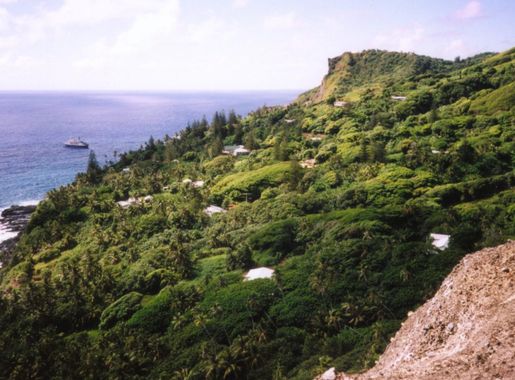


Enchanting Adamstown: The Heart of Pitcairn Islands
Adamstown, the only settlement in the Pitcairn Islands, is a secluded paradise waiting to be explored. Nestled in the South Pacific Ocean, this remote village offers an escape from the hustle and bustle of modern life. With a population of just around 50 residents, Adamstown provides a unique opportunity to experience a close-knit community and a slower pace of life. The rich history of Adamstown is deeply intertwined with the infamous mutiny on the HMS Bounty. Many of its inhabitants are descendants of the mutineers and their Tahitian companions. Visitors can delve into this captivating history at the Pitcairn Island Museum, which houses artifacts and stories from the island's past. Nature enthusiasts will be in awe of Adamstown's stunning landscapes. The island boasts rugged cliffs, lush greenery, and pristine beaches. Hiking trails lead to breathtaking viewpoints, while snorkeling and diving reveal vibrant marine life in the surrounding coral reefs. Despite its small size, Adamstown offers a wealth of natural beauty and adventure for those willing to make the journey.