

Free Christian's Cave Travel Guide & Mobile App
Explore Christian's Cave with free travel guides. Discover regional history, expert tips, proposed trips, and audio guides on web or mobile app.


Christian's Cave on remote Pitcairn Island combines Bounty history, steep volcanic trails and wide Pacific views for adventurous visitors.
Read more about Christian's Cave
When is the best time to visit Christian's Cave?
Best: June–August · 26–27°C| Month | High (°C) | Rainfall (mm) |
|---|---|---|
| January | 29 | 100 |
| February | 29 | 91 |
| March | 28 | 85 |
| April | 28 | 80 |
| May | 27 | 75 |
| June (best) | 27 | 70 |
| July (best) | 26 | 75 |
| August (best) | 26 | 80 |
| September | 27 | 85 |
| October | 28 | 90 |
| November | 28 | 95 |
| December | 29 | 100 |
Getting to and around Christian's Cave
How to get there
Transportation
Top city travel guides in Christian's Cave
The cities of Christian's Cave, and the easiest places to base yourself.
-

-


Swipe for more cities
Best attractions in Christian's Cave
-
Park
Ryerson Park
Experience the natural beauty and tranquility of Ryerson Park in Niagara-on-the-Lake, a peaceful retreat in Ontario's charming landscape.
-
Historical landmark
Christian's Cave
Explore Christian's Cave, a historical landmark on Pitcairn Island, rich in captivating stories and breathtaking natural beauty.
-
 Historical landmark
The Bounty Anchor
Explore The Bounty Anchor in Adamstown, an iconic historical landmark embodying Pitcairn Island's rich maritime history and adventure.
-
Museum
Pitcairn Islands Museum
Explore the captivating history and culture of the Pitcairn Islands at the Pitcairn Islands Museum, a must-visit for every traveler.


Best landmarks in Christian's Cave
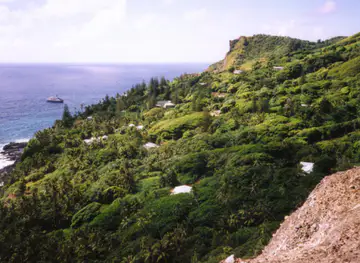
Christian's Cave is a natural landmark with an unusually strong historical association: local tradition connects it with Fletcher Christian and the period when the Bounty settlers lived in concealment on Pitcairn. Its significance is increased by its position above the island's precipitous coastline, where the cave and surrounding rock formations express the difficult geography that helped make Pitcairn a refuge. The view towards the open Pacific is part of the landmark's meaning, linking the secluded settlement with the sea routes that brought the mutineers and later visitors. Nearby Pitcairn landmarks include Bounty Bay, the principal landing place, Adamstown's church and community buildings, and places associated with the island's Bounty heritage. These are not monumental structures in the European sense; their importance lies in their connection with a continuing island society and a globally known maritime story. Access to natural and historic landmarks should be treated as conditional, with local guidance taking precedence where paths cross private land, unstable ground or conservation-sensitive areas.
-
Tourist attraction
St. Paul's Pool
Experience the tranquil beauty of St. Paul's Pool, a hidden natural gem perfect for relaxation, swimming, and connecting with nature.
-
Museum
Pitcairn Islands Museum
Explore the captivating history of the Pitcairn Islands at the Pitcairn Islands Museum, where the legacy of the Bounty mutineers comes to life.


Explore Christian's Cave on the map
Plan your trip on one map. See where the top cities, national parks and sights are, and book hotels and experiences in a few clicks.
Best hotels in Christian's Cave
Best restaurants in Christian's Cave
-
Museum
Pitcairn Islands Museum
Explore the captivating history and culture at Pitcairn Islands Museum - a gem in Adamstown showcasing unique artifacts and stories from this remote island.
-
Bay
Bounty Bay
Experience the tranquil beauty of Bounty Bay – where azure waters meet lush landscapes in an idyllic paradise.
-
Italian
Andy´s Pizzeria
Savor authentic Italian flavors at Andy's Pizzeria in Adamstown – where every pizza tells a story.


Best bars in Christian's Cave
There are no bars or nightclubs at Christian's Cave, and Pitcairn does not have a conventional nightlife district. Evening life is centred on private hospitality, community occasions, accommodation settings and quiet social gatherings in or around Adamstown. Visitors may encounter locally produced honey-based products, home cooking and informal conversation, but should not assume that alcohol is served or that venues operate to fixed public hours. Because the population is small and supplies arrive by sea, nightlife is limited and arrangements are often personal or event-based rather than commercial. The island's darkness, ocean sounds and clear night skies can be more characteristic than late-night entertainment, although cloud and moonlight affect conditions. Ask hosts about appropriate places and times for socialising, respect private homes and community routines, and arrange a safe way back after any evening gathering, especially on steep roads and unlit paths.
-
Historical landmark
The Bounty Anchor
Explore the historical significance of The Bounty Anchor in Adamstown, a stunning landmark steeped in maritime history and breathtaking views.
-
Tourist attraction
St. Paul's Pool
Explore St. Paul's Pool, a tranquil oasis surrounded by nature, perfect for relaxation, photography, and memorable experiences.
-
Tourist attraction
Pitcairn Islands Museum
Explore the captivating history and culture of the Pitcairn Islands at the Pitcairn Islands Museum, where stories of the past come to life.
-
Coffee shop
Marco Boa's Cafe & Restaurant
Experience the delightful ambiance and exquisite coffee at Marco Boa's Cafe & Restaurant, a perfect retreat for tourists seeking relaxation and flavor.


Best nightclubs in Christian's Cave
There are no bars or nightclubs at Christian's Cave, and Pitcairn does not have a conventional nightlife district. Evening life is centred on private hospitality, community occasions, accommodation settings and quiet social gatherings in or around Adamstown. Visitors may encounter locally produced honey-based products, home cooking and informal conversation, but should not assume that alcohol is served or that venues operate to fixed public hours. Because the population is small and supplies arrive by sea, nightlife is limited and arrangements are often personal or event-based rather than commercial. The island's darkness, ocean sounds and clear night skies can be more characteristic than late-night entertainment, although cloud and moonlight affect conditions. Ask hosts about appropriate places and times for socialising, respect private homes and community routines, and arrange a safe way back after any evening gathering, especially on steep roads and unlit paths.
-
Historical landmark
The Bounty Anchor
Experience the rich history and serene beauty of The Bounty Anchor, a captivating landmark in Adamstown, the heart of Polynesian heritage.
-
Coffee shop
Marco Boa's Cafe & Restaurant
Experience the charm of Marco Boa's Cafe & Restaurant, where exceptional coffee meets delightful cuisine in a cozy atmosphere.
Best shops in Christian's Cave
Christian's Cave has no shops, stalls or visitor centre. Shopping for a Pitcairn visit is concentrated in Adamstown, where small community and tourism outlets may offer locally made honey, preserves, woodwork, handicrafts, postcards, stamps and other products connected with the island's heritage. Availability is limited and can change when supply vessels are delayed, so visitors should not rely on finding particular souvenirs or specialist equipment after arrival. Pitcairn's postage stamps and locally produced goods are especially relevant to its identity as a remote British Overseas Territory, while handmade items often reflect the practical scale of island production rather than mass retail. Arrange purchases during locally indicated opening times, carry New Zealand dollars and confirm whether electronic payment is accepted. For the cave walk, buy or organise water, food and any essentials before leaving Adamstown; there is no retail provision along the trail.
-
Island
Pitcairn Island
Explore the enchanting Pitcairn Island, a hidden gem of history and breathtaking landscapes in the heart of the South Pacific.
-
Historical landmark
The Bounty Anchor
Discover the rich maritime heritage at The Bounty Anchor in Adamstown, a historical landmark that tells the story of the HMS Bounty and its legacy.
-
Tourist attraction
St. Paul's Pool
Experience the tranquility and natural beauty of St. Paul's Pool, a top tourist attraction perfect for relaxation and exploration.
-
Coffee shop
Marco Boa's Cafe & Restaurant
Experience the rich flavors and inviting atmosphere at Marco Boa's Cafe & Restaurant, a top choice for coffee lovers and food enthusiasts.


Get your free copy of our complete guide to Christian's Cave, delivered straight to you.
Everything on this page, from attractions and restaurants to essentials and local phrases, in one PDF you can read offline, print or share.
Already have an account? Sign in
Your Christian's Cave guide is ready.
We'll send it to · Not you? Sign out

Getting your guide ready…
We are putting together a fresh copy of the Christian's Cave guide. This can take up to a minute.
This can take a few moments. If your browser asks, choose Allow so the download can start. You'll find the guide in your Downloads folder.
Nothing happened? Download it again
Sorry, the guide is taking longer than usual. Please try again in a minute, or get it by email instead.
Christian's Cave essentials
Currency and Payment
Safety
Emergency Situations
Do's and Don'ts
Local Tips
From Eve
Local phrases worth knowing
You don't need to get them perfect. A few words go a long way, and locals appreciate the effort.
Basics
| English | Local | Say it |
|---|---|---|
| Hello | Talofa | [Tah-loh-fah] |
| Goodbye | Tofa | [Toh-fah] |
| Yes | Ioe | [Ee-oh-eh] |
| No | Leai | [Leh-ah-ee] |
| Please/You're welcome | Fa'amolemole | [Fah-ah-moh-leh-moh-leh] |
| Thank you | Fa'afetai | [Fah-ah-feh-tah-ee] |
| Excuse me/Sorry | Fa'amalie | [Fah-ah-mah-lee-eh] |
| How are you? | O a mai oe? | [Oh ah my oh-eh?] |
| Fine. And you? | Ua lelei. O oe? | [Oo-ah leh-leh-ee. Oh oh-eh?] |
| Do you speak English? | E te le fa'amalie i le Igilisi? | [Eh teh leh fah-ah-mah-lee eh leh Ee-gee-lee-see?] |
| I don't understand | Ou te le malamalama | [Oo teh leh mah-lah-mah-lah] |
Eating & Drinking
| English | Local | Say it |
|---|---|---|
| I'd like to see the menu, please | Ou te manaʻo e va'ai i le menu, fa'amolemole | [Oo teh mah-nah-oh eh vah-ee ee leh meh-noo, fah-ah-moh-leh-moh-leh] |
| I don't eat meat | Ou te le 'ai i le mea 'ai | [Oo teh leh eye ee leh meh-ah eye] |
| Cheers! | Fa'amanuia | [Fah-ah-mah-noo-ee-ah] |
| I would like to pay, please | Ou te manaʻo e totogi, fa'amolemole | [Oo teh mah-nah-oh eh toh-toh-gee, fah-ah-moh-leh-moh-leh] |
Emergencies
| English | Local | Say it |
|---|---|---|
| Help! | Faʻamolemole! | [Fah-ah-moh-leh-moh-leh!] |
| Go away! | Alofa atu! | [Ah-loh-fah ah-too!] |
| Call the Police! | Fa'apea leoleo! | [Fah-ah-peh-ah leh-oh-leh-oh!] |
| Call a doctor! | Fa'apea se foma'i! | [Fah-ah-peh-ah seh foh-mah-ee!] |
| I'm lost | Ua ou leiloa | [Oo-ah oh leh-ee-loh-ah] |
| I'm ill | Ua ou ma'i | [Oo-ah oh mah-ee] |
Shopping
| English | Local | Say it |
|---|---|---|
| I'd like to buy... | Ou te manaʻo e faʻatau... | [Oo teh mah-nah-oh eh fah-too...] |
| I'm just looking | Ou na'o va'ai | [Oo nah-oh vah-ee] |
| How much is it? | E fia le tau? | [Eh fee-ah leh tau?] |
| That's too expensive | O le tau o le fa'atau ese | [Oh leh tau oh leh fah-tau eh-seh] |
| Can you lower the price? | E mafai ona e fa'aitiiti le tau? | [Eh mah-fah-ee oh-nah eh fah-eye-tee-tee leh tau?] |
Time & Numbers
| English | Local | Say it |
|---|---|---|
| What time is it? | O le a le taimi? | [Oh leh ah leh tie-mee?] |
| It's one o'clock | O le itula e tasi | [Oh leh ee-too-lah eh tah-see] |
| Half past (10) | O le afa i le (10) | [Oh leh ah-fah ee leh (10)] |
| Morning | Vaveao | [Vah-veh-ah-oh] |
| Afternoon | Afiafi | [Ah-fee-ah-fee] |
| Evening | Po | [Poh] |
| Yesterday | Ieri | [Yeh-ree] |
| Today | I le aso | [Ee leh ah-so] |
| Tomorrow | I le aso e suia | [Ee leh ah-so eh soo-ee-ah] |
| 1 | Tasi | [Tah-see] |
| 2 | Lua | [Loo-ah] |
| 3 | Tolu | [Toh-loo] |
| 4 | Fa | [Fah] |
| 5 | Lima | [Lee-mah] |
| 6 | ONO | [Oh-noh] |
| 7 | Fitu | [Fee-too] |
| 8 | Valu | [Vah-loo] |
| 9 | Iva | [Ee-vah] |
| 10 | Sefulu | [Seh-foo-loo] |
Transport & Directions
| English | Local | Say it |
|---|---|---|
| Where's a/the...? | O fea le...? | [Oh feh-ah leh...?] |
| What's the address? | O le a le tuatusiga? | [Oh leh ah leh too-ah-too-see-gah?] |
| Can you show me (on the map)? | E mafai ona e fa'aalia mai (i le map)? | [Eh mah-fah-ee oh-nah eh fah-ah-lee-ah my (ee leh map)?] |
| When's the next (bus)? | O le taimi e sau ai le (bus)? | [Oh leh tie-mee eh sah-oo eye leh (bus)?] |
| A ticket (to ....) | Se tiketi (i ....) | [Seh tee-keh-tee (ee ....)] |
History of Christian's Cave
Polynesian Settlement and Early Archaeology
Pitcairn was settled by Polynesian voyagers before European contact, probably during the medieval period. Archaeological evidence, including stone tools, domestic remains and evidence of cultivation, shows that the island was part of a wider network linking the southeastern Pacific islands. The earlier settlement was later abandoned, and by the time European navigators began recording Pitcairn, the island was uninhabited. This pre-European history is an essential part of the island's identity, even though the best-known stories connected with Christian's Cave belong to a much later period.
European Sightings and the Naming of Pitcairn
The island was sighted by the English navigator Philip Carteret in 1767 and named for Midshipman Robert Pitcairn, who was among those who first observed it. Carteret's ship could not land, and the island remained difficult to reach and poorly charted. Its isolated position in the southeastern Pacific later made it a plausible refuge for people seeking to disappear from the reach of maritime authorities, although the island's rugged coastline and limited landing places made access hazardous.
The Bounty Mutiny and Settlement of 1790
On 28 April 1789, Fletcher Christian and other members of the crew of HMS Bounty mutinied against Lieutenant William Bligh. After separating from Bligh, Christian and a small group of followers eventually settled on Pitcairn in January 1790 with Tahitian companions and the ship's remaining supplies. The settlers probably used the island's caves and high viewpoints as part of their efforts to remain unseen. Christian's Cave became linked by tradition with Fletcher Christian, although the precise details of his use of the cave are not fully documented.
Discovery of the Bounty Settlement
For years the settlement remained unknown to European authorities. In 1808 the American sealing ship Topaz reached Pitcairn and found John Adams, the last surviving male mutineer, together with Polynesian women and children descended from the original community. The discovery brought the island into wider public consciousness and helped establish the enduring legend of the Bounty. Artefacts from the ship and traditions preserved by island families became important elements of Pitcairn's historical identity.
Adams's Christian Community
John Adams taught the community from the Bible that had been carried from the Bounty, and Christianity became central to social and religious life on Pitcairn. In 1838 the island adopted a written constitution and became associated with the British Empire. The community later moved temporarily to Norfolk Island in 1856, but several families returned to Pitcairn. Religious observance, family history and communal institutions continue to shape the island's culture, although contemporary life is less isolated than in the nineteenth century.
Modern Pitcairn and Heritage Tourism
During the twentieth and twenty-first centuries, Pitcairn remained one of the world's smallest permanently inhabited territories, with a population descended from Polynesian and European ancestors. Radio, satellite communications and maritime links reduced its isolation without eliminating the challenges of distance. The Bounty story, archaeological remains and landscapes such as Christian's Cave now support carefully managed tourism. Visitors encounter a living community rather than an open-air museum, so access to historic places depends on local conditions, conservation needs and respect for residents.
Christian's Cave in Photos
Browse through our photo collection highlighting the charm and character of the destination.
Neighbouring regions of Christian's Cave
The closest regions to Christian's Cave, if you have time for more than one.
-
-

-

-

-


Swipe for more regions
Explore more

Explore more of Pitcairn Islands
Discover the remote Pitcairn Islands, where history meets pristine natural beauty, offering a unique blend of adventure, culture, and tranquility in the South Pacific.
Explore Pitcairn Islands