

Highest Point, Pitcairn Islands Travel Guide
Discover the highest point in Pitcairn Islands for stunning views, challenging hikes, and a deep dive into the island's rich history and vibrant culture.
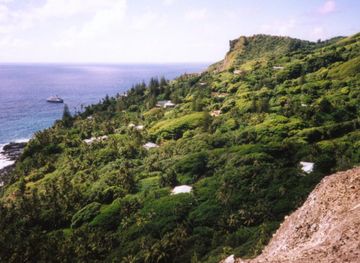
The highest point in the Pitcairn Islands offers breathtaking views and a unique experience for adventurous travelers. Nestled in the South Pacific Ocean, this remote location is known for its rugged beauty and unspoiled landscapes. Standing atop the highest point, you'll be able to see the vast expanse of the ocean and the island's lush greenery, making it a perfect spot for nature lovers and photographers alike. The journey to the highest point is an adventure in itself. The trails are well-marked, but they can be steep and challenging, so be prepared for a rewarding hike. Along the way, you'll encounter a variety of flora and fauna, some of which are endemic to the island. The climb is worth every effort as the summit provides a sense of accomplishment and serenity. Pitcairn Islands' highest point is not just about the views; it's also about the history and culture of the island. The islands are home to descendants of the Bounty mutineers, and you'll find historical markers and stories that add a rich layer of context to your visit. The locals are friendly and often share tales of the island's past, making your visit both educational and memorable.

Know before you go
Hi, I'm Eve. Here are a few practical things to know before exploring Highest Point.
- Bring sturdy hiking boots, as the trails can be steep and uneven.
- Carry enough water and snacks for the hike, as there are no facilities along the way.
- Visit during the dry season to avoid slippery trails and enjoy clearer views.
- Engage with the locals to learn about the island's history and get insider tips.
- Don't forget your camera to capture the stunning panoramic views from the top.
Top City Travel Guides in Highest Point
The cities of Highest Point, and the easiest places to base yourself.

Explore Highest Point: Things to Do, Places to Eat, Hotels & More
Handpicked recommendations for top attractions, local dining, accommodations, and more

Top Attractions & Sightseeing in Highest Point
Top-rated picks
Best Attractions

Henderson Island
Explore Henderson Island: A remote paradise of unique wildlife and stunning landscapes, perfect for nature lovers and adventure seekers.

Adams Seamount
Discover the beauty of Adams Seamount, an underwater volcano in the South Pacific, perfect for diving, snorkeling, and breathtaking ocean views.

Best landmarks in Highest Point
Top-rated picks
Best Landmarks

Henderson Island
Explore the unspoiled wilderness of Henderson Island, a UNESCO World Heritage Site, and discover its unique wildlife and breathtaking landscapes.

Ducie Island
Explore the serene and untouched beauty of Ducie Island, a hidden gem in the Pitcairn Islands, perfect for nature lovers and adventurers alike.

Pitcairn Island
Explore the remote beauty and rich history of Pitcairn Island, the home of the HMS Bounty mutineers and a perfect escape for adventurous travelers.
The Bounty Anchor
Explore the Bounty Anchor, a historical landmark on Pitcairn Island that unveils the rich maritime heritage and captivating stories of the HMS Bounty.

Best restaurants in Highest Point


Best bars in Highest Point
Top-rated picks
Best Bars

St. Paul's Pool
Explore St. Paul's Pool – a serene tourist attraction surrounded by nature's beauty, perfect for relaxation and rejuvenation.

Pitcairn Islands Museum
Explore the captivating history of the Pitcairn Islands at the local museum, where stories of the Bounty mutineers and their culture come alive.
Marco Boa's Cafe & Restaurant
Discover the charm and flavors of Marco Boa's Cafe & Restaurant, where every visit is a delightful culinary journey.

Pitcairn-Mangareva Boat Service
Discover the hidden treasures of the Pitcairn Islands with the essential Pitcairn-Mangareva Boat Service - your gateway to adventure.

Best nightclubs in Highest Point
Top-rated picks
Best Nightclubs

Pitcairn Islands Museum
Explore the Pitcairn Islands Museum, a captivating tribute to the islands' unique history and culture, showcasing artifacts and stories from an extraordinary heritage.
Marco Boa's Cafe & Restaurant
Experience the flavors of Marco Boa's Cafe & Restaurant, where cozy ambiance meets delightful coffee and pastries in a charming setting.

Best shops in Highest Point
Top-rated picks
Best Shops

Pitcairn Island
Explore the remote beauty and rich history of Pitcairn Island, a unique destination for adventurous travelers.
The Bounty Anchor
Explore The Bounty Anchor, a historical landmark in Adamstown, where history meets stunning views on the Hill of Difficulty.

St. Paul's Pool
Experience the tranquility of St. Paul's Pool, a serene swimming oasis that invites relaxation and adventure in a stunning natural setting.

Pitcairn Islands Museum
Explore the captivating history of the Pitcairn Islands at the Pitcairn Islands Museum, where culture and heritage come to life.

Explore Highest Point on the Map
A handpicked selection of must-see spots in Highest Point, mapped for you.
Highest Point Essentials
-
The Pitcairn Islands are one of the most remote locations in the world. The primary way to reach the Highest Point in Pitcairn Islands is by sea. You can catch a boat from Mangareva in French Polynesia, which is the closest airport with international connections. From Mangareva, you will need to take a 32-hour boat journey to reach Pitcairn Island. Make sure to plan your trip well in advance, as there are limited voyages available.
-
Once on Pitcairn Island, transportation options are limited. The island is small, and most places can be reached on foot. For exploring the island's rugged terrain, quad bikes and ATVs are available for rent from local operators. Note that there are no public buses or taxis on the island. Be prepared for a lot of walking or hiking, especially if you aim to reach the Highest Point.
-
The official currency of the Pitcairn Islands is the New Zealand Dollar (NZD). Credit card facilities are limited, so it is essential to bring enough cash to cover your expenses. There are no ATMs on the island, and banking facilities are limited to the Pitcairn Island Post Office, which offers some financial services. Plan accordingly to avoid any inconvenience.
-
Pitcairn Island is generally a safe destination with a very low crime rate. However, it is always wise to exercise standard precautions. Keep an eye on your belongings and avoid wandering alone at night in unfamiliar areas. The terrain can be rugged and challenging, so be cautious while hiking and exploring.
-
In case of an emergency, contact the island's medical officer or the local authorities. The island has a small medical clinic that can handle minor health issues. For more severe medical emergencies, evacuation to a larger hospital in Tahiti or New Zealand may be necessary. It is highly recommended to have travel insurance that covers medical evacuation due to the island's remote location.
-
Fashion: Do dress comfortably and wear sturdy footwear suitable for hiking. Avoid overly revealing clothing as the island community is conservative. Religion: Do respect local religious customs and take note of the Seventh-day Adventist practices that are observed by many islanders. Public Transport: Public transport is non-existent; be prepared to walk or rent an ATV. Greetings: Do greet locals with a friendly 'Hello' or 'Kia ora', the latter being a common greeting in Polynesia. Eating & Drinking: Do try local dishes and always ask for permission before taking photographs of people or their property.
-
To experience Highest Point like a local, engage with the community and participate in communal activities. The islanders are known for their hospitality and are often willing to share their unique history and way of life. Visit the local museum to learn about the island’s history, including the famous Bounty mutineers. Don't miss the opportunity to enjoy the breathtaking views from the Highest Point, also known as Pawala Valley Ridge, which offers panoramic views of the island and the surrounding ocean.
When is the best time to visit Highest Point?
Useful Local Phrases for Highest Point
You don't need to speak the language perfectly. Even learning a few simple words can make conversations warmer—and locals usually appreciate the effort.
— Eve

Here are the phrases I use most often in Highest Point. Try a few—you'll be surprised how far they go! 😊
❤️
-
- HelloHello
[Hello] - GoodbyeGoodbye
[Goodbye] - YesYes
[Yes] - NoNo
[No] - Please/You’re welcomePlease
[Please] - Thank youThank you
[Thank you] - Excuse me/SorryExcuse me
[Excuse me] - How are you?How are you?
[How are you?] - Fine. And you?Fine. And you?
[Fine. And you?] - Do you speak English?Do you speak English?
[Do you speak English?] - I don't understandI don't understand
[I don't understand]
- HelloHello
-
- I'd like to see the menu, pleaseI'd like to see the menu, please
[I'd like to see the menu, please] - I don't eat meatI don't eat meat
[I don't eat meat] - Cheers!Cheers!
[Cheers!] - I would like to pay, pleaseI would like to pay, please
[I would like to pay, please]
- I'd like to see the menu, pleaseI'd like to see the menu, please
-
- Help!Help!
[Help!] - Go away!Go away!
[Go away!] - Call the Police!Call the Police!
[Call the Police!] - Call a doctor!Call a doctor!
[Call a doctor!] - I'm lostI'm lost
[I'm lost] - I'm illI'm ill
[I'm ill]
- Help!Help!
-
- I'd like to buy...I'd like to buy...
[I'd like to buy...] - I'm just lookingI'm just looking
[I'm just looking] - How much is it?How much is it?
[How much is it?] - That's too expensiveThat's too expensive
[That's too expensive] - Can you lower the price?Can you lower the price?
[Can you lower the price?]
- I'd like to buy...I'd like to buy...
-
- What time is it?What time is it?
[What time is it?] - It's one o'clockIt's one o'clock
[It's one o'clock] - Half past (10)Half past (10)
[Half past (10)] - MorningMorning
[Morning] - AfternoonAfternoon
[Afternoon] - EveningEvening
[Evening] - YesterdayYesterday
[Yesterday] - TodayToday
[Today] - TomorrowTomorrow
[Tomorrow] - 11
[1] - 22
[2] - 33
[3] - 44
[4] - 55
[5] - 66
[6] - 77
[7] - 88
[8] - 99
[9] - 1010
[10]
- What time is it?What time is it?
-
- Where's a/the...?Where's a/the...?
[Where's a/the...?] - What's the address?What's the address?
[What's the address?] - Can you show me (on the map)?Can you show me (on the map)?
[Can you show me (on the map)?] - When's the next (bus)?When's the next (bus)?
[When's the next (bus)?] - A ticket (to ....)A ticket (to ....)
[A ticket (to ....)]
- Where's a/the...?Where's a/the...?
History of Highest Point
-
The highest point on Pitcairn Island, commonly known as Pawala Valley Ridge, is steeped in the history of early settlement. The island was first discovered by Europeans in 1767 by the British ship HMS Swallow, commanded by Captain Philip Carteret. However, it wasn’t until 1790 that the island gained its first settlers, the mutineers of HMS Bounty and their Tahitian companions. The rugged terrain and the elevated vantage points of the ridge provided a strategic lookout for these early inhabitants.
-
The infamous Mutiny on the Bounty is intrinsically linked to Pitcairn Island's history. Led by Fletcher Christian, the mutineers sought refuge on Pitcairn Island, and the highest point served as an essential lookout. It is said that the mutineers used this vantage point to watch for approaching ships, ensuring their isolation and safety. This historical event has left an indelible mark on the island, with remnants and stories passed down through generations.
-
Among the cultural practices of the Pitcairn settlers, the making of Tapa cloth stands out. This tradition, brought by the Tahitian women who settled on the island, thrived in the early years. The highest point of the island often served as a drying ground for the Tapa cloth, utilizing the constant breeze and sun exposure. This practice not only highlights the cultural fusion but also the ingenuity of the islanders in using their environment.
-
During World War II, the strategic significance of Pitcairn Island's highest point was recognized. The island, though remote, was considered an important lookout for any enemy naval activity in the Pacific. Allied forces set up a lookout post at the highest point, utilizing its panoramic views to monitor the surrounding ocean. Though no significant military engagements occurred here, the post remains a testament to the island's wartime vigilance.
-
In contemporary times, the highest point of Pitcairn Island has been utilized for scientific and environmental studies. Observatories and weather stations have been established to monitor climate patterns and study the unique flora and fauna of the island. This ongoing research continues to highlight the importance of this elevated location, not only historically but also for its contribution to modern science.
Neighbouring Regions of Highest Point
The closest regions to Highest Point, if you have time for more than one.



Your all‑in‑one travel companion app
Explore expert travel guides, compare and book tours, experiences, hotels, and more—all from the palm of your hand. Download now for seamless trip planning wherever your wanderlust takes you.


Explore More of Pitcairn Islands

Looking beyond Highest Point? Discover Pitcairn Islands for broader travel guides, local hot-spots, and regional highlights.
Explore Pitcairn IslandsHighest Point in Photos
Browse through our photo collection highlighting the charm and character of the destination.


Majestic Heights of Pitcairn Islands
The highest point in the Pitcairn Islands offers breathtaking views and a unique experience for adventurous travelers. Nestled in the South Pacific Ocean, this remote location is known for its rugged beauty and unspoiled landscapes. Standing atop the highest point, you'll be able to see the vast expanse of the ocean and the island's lush greenery, making it a perfect spot for nature lovers and photographers alike. The journey to the highest point is an adventure in itself. The trails are well-marked, but they can be steep and challenging, so be prepared for a rewarding hike. Along the way, you'll encounter a variety of flora and fauna, some of which are endemic to the island. The climb is worth every effort as the summit provides a sense of accomplishment and serenity. Pitcairn Islands' highest point is not just about the views; it's also about the history and culture of the island. The islands are home to descendants of the Bounty mutineers, and you'll find historical markers and stories that add a rich layer of context to your visit. The locals are friendly and often share tales of the island's past, making your visit both educational and memorable.