

John Adams' Grave, Pitcairn Islands Travel Guide
Explore the profound history of John Adams' Grave in the Pitcairn Islands, where the legacy of the HMS Bounty mutineers lives on in a serene and captivating setting.
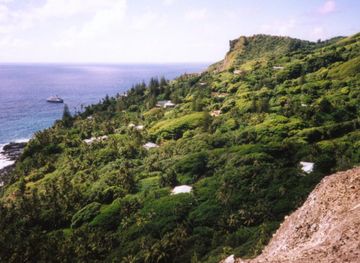
Nestled in the remote and tranquil Pitcairn Islands, John Adams' Grave stands as a poignant reminder of the islands' rich history. John Adams, the last surviving mutineer of the infamous HMS Bounty, played a pivotal role in shaping the community that thrives on Pitcairn today. His grave, situated in the quaint Adamstown, is not just a burial site but a testament to his legacy and the unique story of the Bounty mutineers who found refuge on this secluded island. Visiting John Adams' Grave offers a unique opportunity to walk through history. The site is well-preserved, reflecting the respect and reverence the locals have for their past. As you stand by the grave, surrounded by the lush greenery and the serene environment of Pitcairn, you'll likely feel a deep connection to the island's storied past. The grave itself is modest, yet it speaks volumes about the man who helped establish a new society in one of the most isolated places on Earth. A trip to John Adams' Grave is more than just a visit to a historical site; it's an immersive experience that allows you to delve into the fascinating narrative of the Bounty mutineers. The island's residents are known for their hospitality and are often eager to share tales and insights about their ancestors. This enriching cultural exchange complements the visit, making it a memorable and enlightening experience for any history enthusiast or curious traveler.

Know before you go
Hi, I'm Eve. Here are a few practical things to know before exploring John Adams' Grave.
- Respect local customs and traditions when visiting the grave site.
- Wear comfortable walking shoes as the terrain can be uneven.
- Bring water and snacks, as there are limited facilities on the island.
- Engage with the locals for an enriched experience of the island's history.
- Plan your visit during the dry season, from May to October, for the best weather conditions.
Top City Travel Guides in John Adams' Grave
The cities of John Adams' Grave, and the easiest places to base yourself.


Best landmarks in John Adams' Grave
Top-rated picks
Best Landmarks

St. Paul's Pool
Experience the serene beauty of St. Paul's Pool, a tranquil oasis perfect for relaxation, swimming, and exploring breathtaking natural landscapes.

Pitcairn Islands Museum
Explore the Pitcairn Islands Museum and uncover the fascinating stories of the island's unique history and culture.

Christian's Cave
Discover the captivating beauty and rich history of Christian's Cave, a must-visit historical landmark teeming with natural wonders and intriguing stories.

Pitcairn Island's Western Point
Experience the remote beauty and rich history of Pitcairn Island's Western Point, a paradise for adventurous travelers and nature enthusiasts alike.

Best restaurants in John Adams' Grave


Best bars in John Adams' Grave
Top-rated picks
Best Bars
The Bounty Anchor
Discover the historical significance and breathtaking views at The Bounty Anchor, Adamstown's iconic landmark celebrating maritime heritage.

St. Paul's Pool
Experience the serene beauty of St. Paul's Pool, a tranquil oasis perfect for relaxation and nature appreciation in a stunning natural setting.

Pitcairn Islands Museum
Explore the rich history of the Pitcairn Islands at the captivating museum, where tales of adventure and culture come to life.

Christian's Cave
Discover the enchanting history and geological wonders of Christian's Cave, a must-visit landmark for adventurous spirits and history lovers alike.

Best nightclubs in John Adams' Grave
Top-rated picks
Best Nightclubs
The Bounty Anchor
Discover the maritime history of Adamstown at The Bounty Anchor, a captivating historical landmark with stunning views and rich storytelling.

St. Paul's Pool
Experience tranquility and natural beauty at St. Paul's Pool, a serene tourist attraction perfect for relaxation and rejuvenation.

Pitcairn Islands Museum
Explore the captivating history of the Pitcairn Islands at the Pitcairn Islands Museum, where the legacy of the Bounty mutineers comes to life.

Christian's Cave
Explore Christian's Cave, a historical landmark rich in natural beauty and captivating stories waiting to be discovered.

Best shops in John Adams' Grave
Top-rated picks
Best Shops

St. Paul's Pool
Experience the serene waters and natural beauty of St. Paul's Pool, a hidden gem perfect for relaxation and a refreshing swim in paradise.

Pitcairn Islands Museum
Discover the captivating history and culture of the Pitcairn Islands at the Pitcairn Islands Museum in Adamstown, an unmissable destination for curious travelers.

Christian's Cave
Discover the enchanting beauty and rich history of Christian's Cave, a captivating historical landmark perfect for adventurers and nature lovers.

Explore John Adams' Grave on the Map
A handpicked selection of must-see spots in John Adams' Grave, mapped for you.
John Adams' Grave Essentials
-
John Adams' Grave is located on Pitcairn Island, which is part of the Pitcairn Islands group in the Pacific Ocean. The primary way to reach Pitcairn Island is by sea. Visitors typically fly into Tahiti (Faa'a International Airport) or Auckland, New Zealand. From there, you can take a flight to Mangareva in the Gambier Islands, followed by a 32-hour boat journey to Pitcairn Island. The Oeno, a supply ship, makes regular trips to Pitcairn, but schedules can vary, so it is essential to check in advance.
-
Once on Pitcairn Island, the primary mode of transportation is by foot or quad bike, as the island is small and rugged. There are no rental cars available. The island's terrain is quite hilly, so be prepared for some steep walks, especially if you want to explore different parts of the island.
-
The official currency on Pitcairn Island is the New Zealand Dollar (NZD). It is advisable to carry cash, as there are no ATMs on the island, and most places do not accept credit cards. It is recommended to bring enough cash to cover all your expenses during your stay.
-
Pitcairn Island is generally very safe for tourists, with a low crime rate. However, it is still wise to take basic precautions such as not leaving personal belongings unattended. The island's rugged terrain can pose risks, so always be cautious when hiking and exploring. There are no specific high-crime areas targeting tourists.
-
In case of an emergency, the island has a small clinic with limited medical facilities. For serious medical emergencies, evacuation to New Zealand or Tahiti may be necessary, so it is crucial to have comprehensive travel insurance that covers medical evacuation. The island also has a police officer who can assist in emergencies.
-
Fashion: Do dress comfortably and practically for hiking and rugged terrain. Avoid overly revealing clothing out of respect for the local community. Religion: Do respect local Christian traditions and customs, especially on Sundays. Public Transport: There is no public transport, so plan to walk or use a quad bike. Greetings: Do greet locals with a friendly 'hello' or 'kia ora,' the Polynesian greeting. Eating & Drinking: Do try local specialties, and don't be afraid to share a meal with locals if invited. Always show appreciation for their hospitality.
-
To experience John Adams' Grave like a local, engage with the islanders and listen to their stories about the island's history and the Bounty mutineers. Visit the local museum to learn more about the island's unique heritage. Be sure to try some of the local honey, a prized product of the island. Respect the island's pace of life, which is slow and relaxed, and take the opportunity to disconnect from the hustle and bustle of daily life.
When is the best time to visit John Adams' Grave?
Useful Local Phrases for John Adams' Grave
You don't need to speak the language perfectly. Even learning a few simple words can make conversations warmer—and locals usually appreciate the effort.
— Eve

Here are the phrases I use most often in John Adams' Grave. Try a few—you'll be surprised how far they go! 😊
❤️
-
- HelloMālo
[mah-lo] - GoodbyeMālo 'aupito
[mah-lo ow-pee-toh] - YesĀe
[ah-eh] - NoIā
[ee-ah] - Please/You’re welcomeTēnā
[teh-nah] - Thank youFa'afetai
[fah-ah-feh-tah-ee] - Excuse me/SorryFa'amolemole
[fah-ah-moh-leh-moh-leh] - How are you?O a mai oe?
[oh ah my oh-eh] - Fine. And you?Sai. O oe?
[sah-ee. oh oh-eh?] - Do you speak English?E te faigaluega i le Gagana Peretania?
[eh teh fah-ee-gwah-leh-ah ee leh gah-gah-nah peh-reh-tah-nee-ah?] - I don’t understandOu te le malamalama
[oh-oo teh leh mah-lah-mah-lah]
- HelloMālo
-
- I’d like to see the menu, pleaseO le a ou iloa le menu, fa'amolemole
[oh leh ah oh-ee-loh leh meh-noo, fah-ah-moh-leh-moh-leh] - I don’t eat meatOu te le 'ai i mea'ai
[oh-oo teh leh eye ee meh-ah-eye] - Cheers!Tūto'ā!
[too-toh-ah] - I would like to pay, pleaseO le a ou totogi, fa'amolemole
[oh leh ah oh toh-toh-gee, fah-ah-moh-leh-moh-leh]
- I’d like to see the menu, pleaseO le a ou iloa le menu, fa'amolemole
-
- Help!Fa'amolemole!
[fah-ah-moh-leh-moh-leh] - Go away!Alu i fafo!
[ah-loo ee fah-foh] - Call the Police!Fa'afeso'ota'i leoleo!
[fah-ah-feh-soh-tah-ee leh-oh-leh-oh] - Call a doctor!Fa'afeso'ota'i se foma'i!
[fah-ah-feh-soh-tah-ee seh fo-mah-ee] - I’m lostOu te le iloa
[oh-oo teh leh ee-loh-ah] - I’m illOu te ma'i
[oh-oo teh mah-ee]
- Help!Fa'amolemole!
-
- I’d like to buy...O le a ou fa'atau...
[oh leh ah oh fah-tah-oo] - I’m just lookingO le a ou va'aiga
[oh leh ah oh vah-eye-gah] - How much is it?E fia le tau?
[eh fee-ah leh tah-oo?] - That’s too expensiveO le tau e maualuga
[oh leh tah-oo eh mah-oo-lah-gee-ah] - Can you lower the price?E mafai ona e fa'aitiitia le tau?
[eh mah-fah-ee oh-nah eh fah-ee-tee-tee-ah leh tah-oo?]
- I’d like to buy...O le a ou fa'atau...
-
- What time is it?O le ā le taimi?
[oh leh ah leh tah-ee-mee?] - It’s one o'clockO le ō le tasi
[oh leh oh leh tah-see] - Half past (10)O le afa i le (10)
[oh leh ah-fah ee leh (10)] - MorningVaveao
[vah-veh-ah-oh] - AfternoonAfiafi
[ah-fee-ah-fee] - EveningPo
[poh] - YesterdayAso nei
[ah-soh nay] - TodayAso lenei
[ah-soh leh-neh] - TomorrowAso taeao
[ah-soh tah-eh-ah-oh] - 1Tasi
[tah-see] - 2Lua
[loo-ah] - 3Tolu
[toh-loo] - 4Fa
[fah] - 5Lima
[lee-mah] - 6Ono
[oh-noh] - 7Fitu
[fee-too] - 8Valu
[vah-loo] - 9Iva
[ee-vah] - 10Sefulu
[seh-foo-loo]
- What time is it?O le ā le taimi?
-
- Where's a/the...?O fea le...?
[oh feh-ah leh...?] - What’s the address?O le ā le adiresi?
[oh leh ah leh ah-dee-reh-see?] - Can you show me (on the map)?E mafai ona e fa'aalia mai ia te a'u (i le mapi)?
[eh mah-fah-ee oh-nah eh fah-ah-lee-ah my ee-ah teh ah-oo (ee leh mah-pee)?] - When's the next (bus)?O le a le taimi e sosoo ai (i le bus)?
[oh leh ah leh tah-ee-mee eh so-soo ah-ee (ee leh bus)?] - A ticket (to ....)O se tiketi (i le....)
[oh seh tee-keh-tee (ee leh....)]
- Where's a/the...?O fea le...?
History of John Adams' Grave
-
The story of John Adams' Grave begins with the infamous mutiny on the HMS Bounty in 1789. Led by Fletcher Christian, the mutineers seized the ship from Captain William Bligh and set him adrift. Seeking refuge and a place to start anew, the mutineers, including John Adams, eventually settled on Pitcairn Island in 1790.
-
After arriving on Pitcairn Island, the mutineers, along with their Tahitian companions, established a small community. John Adams, originally known as Alexander Smith, was one of the few mutineers to survive the tumultuous early years marked by internal conflict and clashes with the Tahitians.
-
Following the deaths of most of the mutineers, John Adams underwent a significant transformation. He embraced Christianity and became the moral and spiritual leader of the Pitcairn community. His guidance helped the remaining settlers establish a more stable and harmonious society.
-
In 1808, the American ship Topaz rediscovered Pitcairn Island and its inhabitants. The British government, upon learning of the island's settlement, granted a pardon to the remaining mutineers, including John Adams, in 1829. This marked a turning point in the island's history and legitimized its community.
-
John Adams passed away on March 5, 1829. He was buried on Pitcairn Island, and his grave remains a significant historical site. Adams' legacy as a leader who helped transform a turbulent settlement into a cohesive community continues to be honored by the island’s residents and visitors.
-
John Adams' Grave is not just a burial site but a symbol of the island's unique history. It represents the resilience and transformation of the Pitcairn community. Visitors to the grave often reflect on the extraordinary journey of the mutineers and the enduring legacy of John Adams’ leadership.
Neighbouring Regions of John Adams' Grave
The closest regions to John Adams' Grave, if you have time for more than one.




Your all‑in‑one travel companion app
Explore expert travel guides, compare and book tours, experiences, hotels, and more—all from the palm of your hand. Download now for seamless trip planning wherever your wanderlust takes you.


Explore More of Pitcairn Islands

Looking beyond John Adams' Grave? Discover Pitcairn Islands for broader travel guides, local hot-spots, and regional highlights.
Explore Pitcairn IslandsJohn Adams' Grave in Photos
Browse through our photo collection highlighting the charm and character of the destination.


John Adams' Grave: A Historical Gem in the Pitcairn Islands
Nestled in the remote and tranquil Pitcairn Islands, John Adams' Grave stands as a poignant reminder of the islands' rich history. John Adams, the last surviving mutineer of the infamous HMS Bounty, played a pivotal role in shaping the community that thrives on Pitcairn today. His grave, situated in the quaint Adamstown, is not just a burial site but a testament to his legacy and the unique story of the Bounty mutineers who found refuge on this secluded island. Visiting John Adams' Grave offers a unique opportunity to walk through history. The site is well-preserved, reflecting the respect and reverence the locals have for their past. As you stand by the grave, surrounded by the lush greenery and the serene environment of Pitcairn, you'll likely feel a deep connection to the island's storied past. The grave itself is modest, yet it speaks volumes about the man who helped establish a new society in one of the most isolated places on Earth. A trip to John Adams' Grave is more than just a visit to a historical site; it's an immersive experience that allows you to delve into the fascinating narrative of the Bounty mutineers. The island's residents are known for their hospitality and are often eager to share tales and insights about their ancestors. This enriching cultural exchange complements the visit, making it a memorable and enlightening experience for any history enthusiast or curious traveler.