

Free Pulau Travel Guide & Mobile App
Explore Pulau with free travel guides. Discover regional history, expert tips, proposed trips, and audio guides on web or mobile app.


Pulau is not a recognised Pitcairn destination; use this guide to clarify travel to remote Pitcairn Island and its protected outer islands.
Read more about Pulau
When is the best time to visit Pulau?
Best: June–August · 25°C| Month | High (°C) | Rainfall (mm) |
|---|---|---|
| January | 27 | 100 |
| February | 27 | 90 |
| March | 27 | 85 |
| April | 26 | 80 |
| May | 26 | 75 |
| June (best) | 25 | 70 |
| July (best) | 25 | 65 |
| August (best) | 25 | 70 |
| September | 26 | 75 |
| October | 26 | 80 |
| November | 27 | 90 |
| December | 27 | 95 |
Getting to and around Pulau
How to get there
Transportation
Top city travel guides in Pulau
The cities of Pulau, and the easiest places to base yourself.
-

-


Swipe for more cities
Best attractions in Pulau
-
Park
Ryerson Park
Experience the natural beauty and tranquility of Ryerson Park in Niagara-on-the-Lake, a peaceful retreat in Ontario's charming landscape.
-
Historical landmark
Christian's Cave
Explore Christian's Cave, a historical landmark on Pitcairn Island, rich in captivating stories and breathtaking natural beauty.
-
 Historical landmark
The Bounty Anchor
Explore The Bounty Anchor in Adamstown, an iconic historical landmark embodying Pitcairn Island's rich maritime history and adventure.
-
Museum
Pitcairn Islands Museum
Explore the captivating history and culture of the Pitcairn Islands at the Pitcairn Islands Museum, a must-visit for every traveler.


Best landmarks in Pulau
There are no verified landmarks belonging to a place called Pulau in the Pitcairn Islands. For visitors to Pitcairn Island, the most recognisable historic setting is Adamstown, whose church, public buildings and community landscape express the island’s continuing settlement and religious history. Bounty-related places and memorial associations are important because the 1789 mutiny and subsequent settlement shaped Pitcairn’s international identity, although the island’s history is broader than that episode alone. Pitcairn’s volcanic ridges, steep valleys and exposed coastline are natural landmarks that explain both its isolation and the difficulty of reaching its shore. Beyond Pitcairn, Henderson Island is the territory’s most internationally significant natural landmark: a raised coral island with exceptional ecological and archaeological importance and UNESCO World Heritage status. Oeno and Ducie are remote atolls rather than developed visitor landmarks, and access should never be assumed without environmental and logistical approval.
-
Historical landmark
The Bounty Anchor
Explore The Bounty Anchor in Adamstown, a historical landmark showcasing maritime heritage and stunning views, perfect for all curious travelers.
-
Tourist attraction
St. Paul's Pool
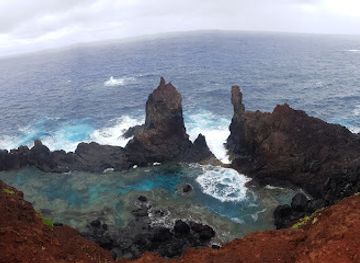
Discover the tranquil beauty of St. Paul's Pool, a serene paradise in the Pitcairn Islands perfect for relaxation and nature exploration.
-
Museum
Pitcairn Islands Museum
Explore the Pitcairn Islands Museum, a captivating destination revealing the rich history and culture of this remote island paradise.
-
Historical landmark
Christian's Cave
Uncover the natural wonders and historical significance of Christian's Cave, a must-visit landmark for every traveler exploring the intriguing landscapes of this region.


Explore Pulau on the map
Plan your trip on one map. See where the top cities, national parks and sights are, and book hotels and experiences in a few clicks.
Best hotels in Pulau
Best restaurants in Pulau
No established restaurant scene can be attributed to Pulau because it is not a recognised destination in the Pitcairn Islands. On Pitcairn Island, meals are generally connected with local accommodation and community hospitality rather than a choice of independent restaurants. Cooking reflects the practical realities of an isolated Pacific settlement, with imported provisions supplemented where available by locally grown produce, fish and home-prepared foods. Visitors should not assume that familiar ingredients, dietary substitutes or late meals can be obtained after arrival; dietary requirements need to be discussed in advance. Local honey is one of Pitcairn’s best-known products, while seafood and garden produce may feature according to season and supply. The emphasis is on shared, pre-arranged meals and local island hospitality, not on a developed dining district or formal fine-dining culture.
-
Guest house
Down Alwyn's
Discover the charm of Pitcairn Island at Down Alwyn's Guest House - where comfort meets local culture in Adamstown.
-
Bed & breakfast
Plas Pitcairn Chalet
Discover tranquility at Plas Pitcairn Chalet - your cozy bed & breakfast getaway in Adamstown's stunning landscape.
-
Italian
Andy´s Pizzeria
Experience authentic Italian flavors at Andy's Pizzeria in Adamstown – home to delicious pizzas and pastas made from traditional recipes.

Best bars in Pulau
Pulau has no identifiable nightlife scene within the Pitcairn Islands. Pitcairn Island’s evenings are quiet and community-based, with socialising generally taking place through hosted meals, informal gatherings and conversation rather than nightclubs or a late-opening entertainment district. Visitors should expect limited commercial facilities, modest evening infrastructure and an early rhythm shaped by remoteness and local life. Alcohol consumption is not central to the destination experience, and guests should follow local guidance regarding private homes, community spaces and public behaviour. Any evening activity may depend on the accommodation arrangement and the weather, so travellers should not plan around a conventional bar or club itinerary.
-
Tourist attraction
St. Paul's Pool
Discover the tranquil beauty of St. Paul's Pool, a serene oasis perfect for relaxation and nature exploration.
-
Museum
Pitcairn Islands Museum
Explore the fascinating history and culture of the Pitcairn Islands at the charming Pitcairn Islands Museum, a unique tourist attraction.
-
Historical landmark
Christian's Cave
Discover the allure of Christian's Cave, a historical landmark offering breathtaking views, rich history, and unforgettable adventures in nature.
-
Coffee shop
Marco Boa's Cafe & Restaurant
Experience the warm ambiance and exquisite flavors at Marco Boa's Cafe & Restaurant, where every sip and bite tells a story.


Best nightclubs in Pulau
Pulau has no identifiable nightlife scene within the Pitcairn Islands. Pitcairn Island’s evenings are quiet and community-based, with socialising generally taking place through hosted meals, informal gatherings and conversation rather than nightclubs or a late-opening entertainment district. Visitors should expect limited commercial facilities, modest evening infrastructure and an early rhythm shaped by remoteness and local life. Alcohol consumption is not central to the destination experience, and guests should follow local guidance regarding private homes, community spaces and public behaviour. Any evening activity may depend on the accommodation arrangement and the weather, so travellers should not plan around a conventional bar or club itinerary.
-
Museum
Pitcairn Islands Museum
Explore the rich history and culture of the Pitcairn Islands at the captivating museum in Adamstown, a gem of the Pacific.
-
Coffee shop
Marco Boa's Cafe & Restaurant
Discover the tranquil charm of Marco Boa's Cafe & Restaurant, where local flavors and cozy ambiance create the perfect retreat for travelers.
Best shops in Pulau
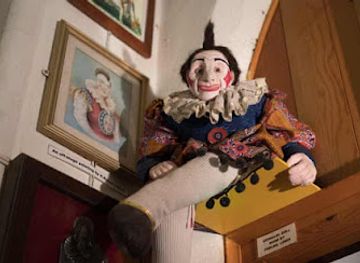
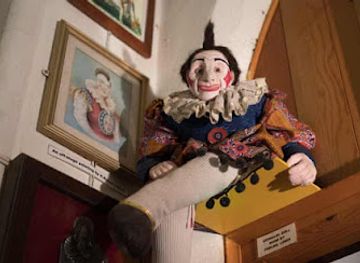
Pulau has no verifiable shopping area or market because it is not a recognised destination within the Pitcairn Islands. Shopping on Pitcairn Island is limited and community-based, with visitors sometimes seeking locally made handicrafts, island-themed products, honey and small souvenirs connected with Pitcairn’s history. Availability can vary according to production, visiting vessels and supply conditions, so these items should not be treated as a permanent retail range. There is no conventional high street, shopping centre or extensive craft district. Purchases should be made respectfully and with an understanding that a small island community has limited stock and limited opportunities to replace goods. If “Pulau” refers to another island or region outside the Pitcairn Islands, its shopping traditions and local products will require a separate guide based on the correct geographic location.
-
Island
Pitcairn Island
Explore the untouched wilderness of Pitcairn Island, where adventure meets rich history in a breathtaking Pacific paradise.
-
Tourist attraction
St. Paul's Pool
Discover tranquility at St. Paul's Pool, a breathtaking natural oasis perfect for swimming and relaxation in a stunning tropical setting.
-
Museum
Pitcairn Islands Museum
Explore the Pitcairn Islands Museum: A deep dive into maritime history and the legacy of the Bounty mutineers in a remote paradise.
-
Bay
Bounty Bay
Discover the untouched beauty of Bounty Bay, where crystal-clear waters meet breathtaking landscapes, creating a perfect escape for every traveler.


Get your free copy of our complete guide to Pulau, delivered straight to you.
Everything on this page, from attractions and restaurants to essentials and local phrases, in one PDF you can read offline, print or share.
Already have an account? Sign in
Your Pulau guide is ready.
We'll send it to · Not you? Sign out

Getting your guide ready…
We are putting together a fresh copy of the Pulau guide. This can take up to a minute.
This can take a few moments. If your browser asks, choose Allow so the download can start. You'll find the guide in your Downloads folder.
Nothing happened? Download it again
Sorry, the guide is taking longer than usual. Please try again in a minute, or get it by email instead.
Pulau essentials
Currency and Payment
Safety
Emergency Situations
Do's and Don'ts
Local Tips
From Eve
Local phrases worth knowing
You don't need to get them perfect. A few words go a long way, and locals appreciate the effort.
Basics
| English | Local | Say it |
|---|---|---|
| Hello | Bula | [boo-lah] |
| Goodbye | Moce | [mo-theh] |
| Yes | Io | [ee-oh] |
| No | Sega | [seh-ngah] |
| Please/You're welcome | Kerekere | [keh-reh-keh-reh] |
| Thank you | Vinaka | [vee-nah-kah] |
| Excuse me/Sorry | Mafai | [mah-fai] |
| How are you? | O cei? | [oh seh-ee] |
| Fine. And you? | Vinaka. O cei iko? | [vee-nah-kah. oh seh-ee ee-koh] |
| Do you speak English? | O tukuna na vosa beka? | [oh too-kuna nah voh-sah beh-kah] |
| I don't understand | Au sega ni taura | [ow seh-ngah nee tah-oo-rah] |
Eating & Drinking
| English | Local | Say it |
|---|---|---|
| I'd like to see the menu, please | Au via raica na menu, kerekere | [ow vee-ah rah-ee-kah nah meh-noo, keh-reh-keh-reh] |
| I don't eat meat | Au sega ni kana na gogo | [ow seh-ngah nee kah-nah nah ngo-go] |
| Cheers! | Bula! | [boo-lah] |
| I would like to pay, please | Au via saumi, kerekere | [ow vee-ah sow-mee, keh-reh-keh-reh] |
Emergencies
| English | Local | Say it |
|---|---|---|
| Help! | Vakararawataki! | [vah-kah-rah-rah-wah-tah-kee] |
| Go away! | Tukuna mai! | [too-koo-nah my] |
| Call the Police! | Tukuna na Poli! | [too-koo-nah nah poh-lee] |
| Call a doctor! | Tukuna na dokita! | [too-koo-nah nah doh-kee-tah] |
| I'm lost | Au sa leqa | [ow sah leh-ngah] |
| I'm ill | Au sa mate | [ow sah mah-teh] |
Shopping
| English | Local | Say it |
|---|---|---|
| I'd like to buy... | Au via volia... | [ow vee-ah voh-lee-ah] |
| I'm just looking | Au sa raica ga | [ow sah rah-ee-kah gah] |
| How much is it? | E costi talei? | [eh koh-stee tah-lay] |
| That's too expensive | Oya e levu duidui | [oh-yah eh leh-voo doo-ee-doo-ee] |
| Can you lower the price? | E rawa beka mo kauti na i lavo? | [eh rah-wah beh-kah moh kah-oo-tee nah ee lah-voh] |
Time & Numbers
| English | Local | Say it |
|---|---|---|
| What time is it? | Na gauna cava e tiko? | [nah gah-oo-nah thah-vah eh tee-koh] |
| It's one o'clock | E dua na hora | [eh doo-ah nah ho-rah] |
| Half past (10) | Tolu na minuta o (10) | [toh-loo nah mee-noo-tah oh (ten)] |
| Morning | Vakarau | [vah-kah-rah-oo] |
| Afternoon | Vakasakiti | [vah-kah-sah-kee-tee] |
| Evening | Vakarau ni bogi | [vah-kah-rah-oo nee bo-gee] |
| Yesterday | E liu | [eh lee-oo] |
| Today | E na siga | [eh nah see-ngah] |
| Tomorrow | E na siga e tarava | [eh nah see-ngah eh tah-rah-vah] |
| 1 | Dua | [doo-ah] |
| 2 | Rua | [roo-ah] |
| 3 | Tolu | [toh-loo] |
| 4 | Vaka | [vah-kah] |
| 5 | Vitu | [vee-too] |
| 6 | Tolu | [toh-loo] |
| 7 | Vitu | [vee-too] |
| 8 | Toru | [toh-roo] |
| 9 | Sota | [so-tah] |
| 10 | Talu | [tah-loo] |
Transport & Directions
| English | Local | Say it |
|---|---|---|
| Where's a/the...? | E na vanua cava? | [eh nah vah-noo-ah thah-vah] |
| What's the address? | Na adiresi cava? | [nah ah-deh-reh-see thah-vah] |
| Can you show me (on the map)? | O rawa beka mo vakaraitaka vei au (ena mapa)? | [oh rah-wah beh-kah moh vah-kah-rai-tah-kah veh-ee ow (eh-nah mah-pah)] |
| When's the next (bus)? | Na gauna cava na (busi) e tarava? | [nah gah-oo-nah thah-vah nah (boo-see) eh tah-rah-vah] |
| A ticket (to ....) | Na tiketi (ki ....) | [nah tee-keh-tee (kee ....)] |
History of Pulau
Polynesian Settlement of Pitcairn and Henderson
Archaeological evidence shows that Polynesian voyagers settled Pitcairn and Henderson during the wider period of Polynesian expansion across the eastern Pacific. The settlement on Pitcairn was later abandoned before European contact, while Henderson retained evidence of habitation and resource use. Archaeological remains, including tools, shell material and other traces, demonstrate that the islands formed part of historic Polynesian voyaging networks rather than being untouched before European arrival.
European Exploration in the South Pacific
European navigators encountered the islands during the expansion of Pacific exploration in the seventeenth and eighteenth centuries. Pitcairn was named after midshipman Robert Pitcairn, who is traditionally associated with its European sighting in 1767. Henderson and the smaller atolls were also charted during this era. These encounters placed remote islands that had previously been known through Polynesian voyaging within European maritime maps and imperial competition.
The Bounty Mutiny and Settlement, 1789–1790
Pitcairn’s modern history is closely associated with the mutiny on HMS Bounty in 1789. Fletcher Christian and other mutineers, together with Polynesian companions, eventually settled on Pitcairn in 1790 after seeking a remote refuge. The community developed in isolation, and the events later became the subject of extensive historical writing, legal controversy and popular literature. The island’s present cultural identity remains strongly connected with this settlement, although its history also includes Polynesian and later Pacific influences.
Christian Mission and British Administration
In the early nineteenth century, the Pitcairn community underwent a major religious transformation under the influence of the missionary John Adams, who helped establish Christianity among the islanders. Britain formally annexed Pitcairn in 1838, making it one of the United Kingdom’s remaining overseas territories. Religious practice, local governance and British administrative links subsequently shaped public life, while the community continued to develop on an exceptionally small and isolated island.
Migration to Norfolk Island in 1856
Population pressure and limited resources led the Pitcairn community to move to Norfolk Island in 1856, which had recently ceased to function as a penal settlement. Most of the islanders later returned to Pitcairn, but the migration created enduring family, cultural and linguistic links between the two islands. Descendants of Pitcairn families remain associated with Norfolk Island, making the 1856 relocation an important episode in the territory’s demographic history.
Modern Island Life and Environmental Protection
During the twentieth and twenty-first centuries, Pitcairn’s economy and population reflected the challenges of small-island life, including limited transport, outward migration and dependence on visiting vessels and external support. Henderson Island, Oeno and Ducie remained uninhabited and environmentally important. Henderson was designated a UNESCO World Heritage Site in 1988 for its exceptional natural environment and archaeological evidence. Conservation and carefully managed access are now central to the territory’s future.
Pulau in Photos
Browse through our photo collection highlighting the charm and character of the destination.
Neighbouring regions of Pulau
The closest regions to Pulau, if you have time for more than one.
-

-

-

-

-


Swipe for more regions
Explore more

Explore more of Pitcairn Islands
Discover the remote Pitcairn Islands, where history meets pristine natural beauty, offering a unique blend of adventure, culture, and tranquility in the South Pacific.
Explore Pitcairn Islands