

Stolowe Mountains, Poland Travel Guide
Discover the Stolowe Mountains in Poland: A natural marvel with unique rock formations, breathtaking landscapes, and rich history, perfect for nature lovers and adventure seekers.
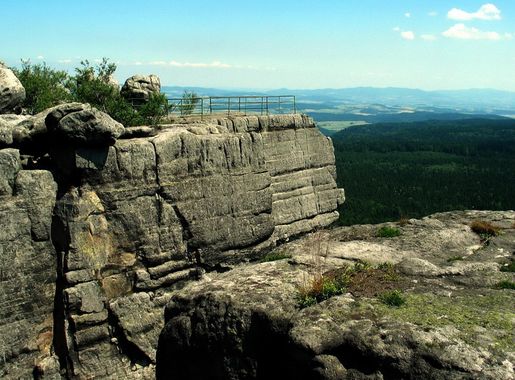
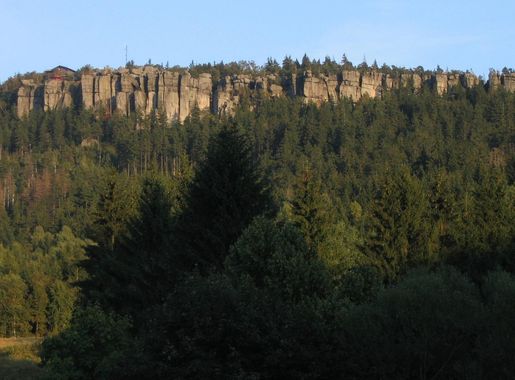
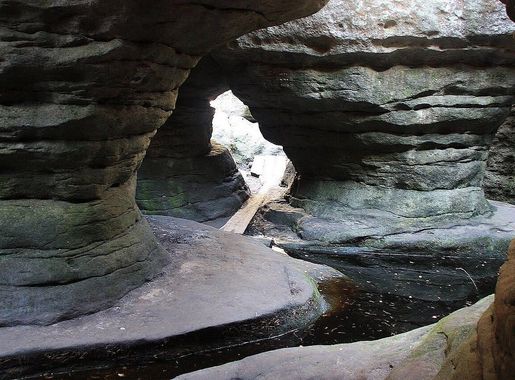
Nestled in the heart of Poland, the Stolowe Mountains, or Table Mountains, are a geological wonder that captivates visitors with its unique rock formations and breathtaking landscapes. The mountains get their name from their flat-topped peaks, which resemble a series of tables. This natural phenomenon is a result of millions of years of erosion, creating a landscape that is both striking and serene. The Stolowe Mountains are part of the Table Mountains National Park, which is home to a diverse range of flora and fauna. The park offers numerous hiking trails that cater to all levels of fitness, making it an ideal destination for nature lovers and adventure seekers alike. One of the most popular trails leads to Szczeliniec Wielki, the highest peak in the range, offering panoramic views of the surrounding countryside. Aside from its natural beauty, the Stolowe Mountains are steeped in history and legend. The area is dotted with charming villages and historic sites, including the mysterious Błędne Skały (Errant Rocks), a labyrinth of narrow passages and towering rock formations. Visitors can also explore the nearby town of Kudowa-Zdrój, known for its spa resorts and healing waters.

Know before you go
Hi, I'm Eve. Here are a few practical things to know before exploring Stolowe Mountains.
- Wear sturdy hiking boots as the trails can be rocky and uneven.
- Visit during the spring or fall for the best weather and fewer crowds.
- Bring a map or download a GPS trail app, as some paths can be tricky to navigate.
- Don't miss the Szczeliniec Wielki trail for stunning panoramic views.
- Explore the Błędne Skały (Errant Rocks) for an adventurous experience.
- Visit the spa town of Kudowa-Zdrój for a relaxing end to your trip.
Explore Stolowe Mountains: Things to Do, Places to Eat, Hotels & More
Handpicked recommendations for top attractions, local dining, accommodations, and more

Best attractions in Stolowe Mountains
Top-rated picks
Best Attractions

Park Zdrojowy
Discover the natural beauty and historical charm of Park Zdrojowy in Kudowa-Zdrój, a perfect retreat for nature lovers and history enthusiasts.

Szczeliniec Wielki
Explore Szczeliniec Wielki, a breathtaking natural gem in Poland, featuring stunning rock formations and panoramic mountain views for every adventurous traveler.

Pijalnia Wód Mineralnych Kudowa-Zdrój
Discover the rejuvenating powers of nature at Pijalnia Wód Mineralnych Kudowa-Zdrój, a premier mineral water spa in Poland's stunning landscape.

Trail of Vanishing Trades
Discover the rich cultural heritage along the Trail of Vanishing Trades in Kudowa-Zdrój, Poland, where history and nature intertwine beautifully.

Best landmarks in Stolowe Mountains
Top-rated picks
Best Landmarks

Stołowe Mountains National Park
Explore the stunning rock formations and lush landscapes of Stołowe Mountains National Park, a top tourist attraction in Poland.

Błędne Skały Wejście na trasę turystyczną
Discover the enchanting Blędne Skały, a stunning ecological park in Bukowina Kłodzka, home to unique rock formations and breathtaking views.

Szczeliniec Wielki
Explore Szczeliniec Wielki, Poland's highest peak, where breathtaking views and unique geological wonders await every nature enthusiast.

Errant Rocks
Experience the captivating beauty of the Errant Rocks in Kudowa-Zdrój, Poland, where nature's artistry meets adventure amidst stunning landscapes.

Best restaurants in Stolowe Mountains
Top-rated picks
Best Restaurants

Restauracja Cafe Domek
Experience the rich flavors of Poland and beyond at Restauracja Cafe Domek in Kudowa-Zdrój - a culinary gem offering diverse dining options.

Cech. Restauracja
Discover culinary excellence at Cech. Restauracja in Kudowa-Zdrój—where traditional flavors meet modern flair.

Dobre Smaki
Discover authentic Polish cuisine at Dobre Smaki in Duszniki-Zdrój—where local flavors meet warm hospitality.

Czeska Restauracja Zdrojowa
Discover the authentic taste of Czech cuisine at Czeska Restauracja Zdrojowa in Kudowa-Zdrój – where tradition meets flavor.

Best bars in Stolowe Mountains
Top-rated picks
Best Bars

Smażalnia ryb u Andrzeja
Experience the best of Polish fish cuisine at Smażalnia ryb u Andrzeja in Kudowa-Zdrój, where freshness and flavor meet in a delightful setting.

Carlsberg Inn Karlow
Experience the delightful blend of local cuisine and cozy accommodations at Carlsberg Inn Karlow, your gateway to the beauty of Kudowa-Zdrój.
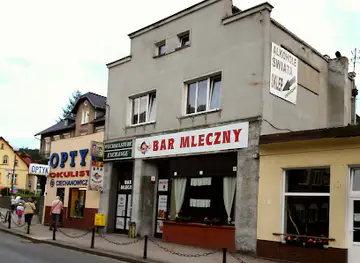
Bar Mleczny
Savor authentic Polish cuisine at Bar Mleczny in Kudowa-Zdrój, where tradition meets affordability in a warm and welcoming atmosphere.

Wypoczęty Wół Restauracja - Steakhouse - Kudowa Zdrój
Experience the best of Polish cuisine at Wypoczęty Wół, a distinguished steakhouse and brewery in the heart of Kudowa Zdrój.

Best nightclubs in Stolowe Mountains
Top-rated picks
Best Nightclubs

Colombina Club
Discover the electrifying atmosphere of Colombina Club in Polanica-Zdrój, where unforgettable nights of dancing and socializing await you.

Infinity club
Experience the vibrant nightlife at Infinity Club in Wałbrzych, where electrifying music and a lively atmosphere create unforgettable nights.

Kurnik Bimbrowników
Experience the vibrant nightlife at Kurnik Bimbrowników, Walim's premier night club offering electrifying music and a lively ambiance.

Bar Dinuś
Discover the charming Bar Dinuś in Karłów, a perfect spot for relaxation with delightful drinks and a cozy atmosphere.

Best shops in Stolowe Mountains
Top-rated picks
Best Shops

Błędne Skały Wejście na trasę turystyczną
Explore Błędne Skały, a breathtaking ecological park in Bukowina Kłodzka, renowned for its unique rock formations and stunning natural landscapes.

Schronisko PTTK na Szczelińcu
Experience the natural beauty and cozy charm of Schronisko PTTK na Szczelińcu, the perfect base for hiking adventures in Poland.

Radkowskie/Skalne Bastiony
Explore the breathtaking landscapes of Radkowskie/Skalne Bastiony in Poland – a natural wonder in the heart of Stołowe Mountains National Park.

Stołowe Mountains
Experience the breathtaking beauty of the Stołowe Mountains, Poland's natural wonder featuring unique rock formations, diverse wildlife, and serene hiking trails.

Explore Stolowe Mountains on the Map
A handpicked selection of must-see spots in Stolowe Mountains, mapped for you.
Stolowe Mountains Essentials
-
The Stolowe Mountains, also known as the Table Mountains, are located in southwestern Poland near the border with the Czech Republic. The nearest international airports are Wroclaw Copernicus Airport and Prague's Václav Havel Airport. From Wroclaw, which is about 100 kilometers away, you can rent a car or take a train to Kudowa-Zdrój, the closest town to the mountains. From Prague, you can take a bus or train to Nachod and then cross the border into Poland to reach the Stolowe Mountains.
-
Getting around the Stolowe Mountains is best done by car, as it offers the most flexibility to explore the region. However, there are also local buses that connect major towns like Kudowa-Zdrój, Duszniki-Zdrój, and Polanica-Zdrój. Taxis are available but can be expensive for longer distances. For those who enjoy cycling, bike rentals are available in some towns, and there are numerous trails throughout the mountains.
-
The official currency in Poland is the Polish Zloty (PLN). Credit cards are widely accepted in hotels, restaurants, and larger shops, but it is a good idea to carry some cash for smaller establishments, local markets, and rural areas. ATMs are available in towns like Kudowa-Zdrój and Polanica-Zdrój, so withdrawing cash should not be a problem.
-
The Stolowe Mountains are generally safe for tourists. However, it is advisable to take standard precautions such as avoiding walking alone at night in secluded areas and keeping an eye on personal belongings in crowded places. There are no specific high-crime areas targeting tourists, but it's always best to stay vigilant and aware of your surroundings.
-
In case of emergency, dial 112 for immediate assistance. This number works for medical emergencies, police, and fire services. The nearest hospitals are in Kudowa-Zdrój and Polanica-Zdrój. It is recommended to have travel insurance that covers medical emergencies. Pharmacies are available in most towns for minor health issues and over-the-counter medications.
-
Fashion: Do dress in layers, as mountain weather can be unpredictable. Sturdy hiking shoes are recommended for exploring trails. Religion: Do respect local customs and traditions, especially when visiting churches and religious sites. Public Transport: Do be respectful and offer your seat to elderly passengers. Don’t eat or drink on public transport. Greetings: Do greet people with a handshake. A friendly nod or 'Dzień dobry' (Good day) is also appreciated. Eating & Drinking: Do try local dishes like pierogi and bigos. Don’t refuse hospitality, as it is considered impolite.
-
To experience the Stolowe Mountains like a local, visit the local markets in Kudowa-Zdrój and Polanica-Zdrój, where you can buy fresh produce and traditional Polish goods. Engage with locals, as they are often friendly and willing to share stories about the region’s history and culture. Don’t miss the Szczeliniec Wielki, the highest peak, which offers stunning panoramic views. For a unique experience, explore the labyrinthine rock formations at Błędne Skały.
When is the best time to visit Stolowe Mountains?
Useful Local Phrases for Stolowe Mountains
You don't need to speak the language perfectly. Even learning a few simple words can make conversations warmer—and locals usually appreciate the effort.
— Eve

Here are the phrases I use most often in Stolowe Mountains. Try a few—you'll be surprised how far they go! 😊
❤️
-
- HelloCześć
[Cheshch] - GoodbyeDo widzenia
[Do veedzenya] - YesTak
[Tak] - NoNie
[Nyeh] - Please/You're welcomeProszę
[Prosheh] - Thank youDziękuję
[Jen-koo-yeh] - Excuse me/SorryPrzepraszam
[Pzheh-prah-sham] - How are you?Jak się masz?
[Yak shyeh mahsh?] - Fine. And you?Dobrze. A ty?
[Doh-bzheh. Ah tih?] - Do you speak English?Czy mówisz po angielsku?
[Chih moo-vish poh ahn-gyehl-skoo?] - I don't understandNie rozumiem
[Nyeh roh-zoo-myehm]
- HelloCześć
-
- I'd like to see the menu, pleaseChciałbym zobaczyć menu, proszę
[Hchiah-bim zoh-bah-chich meh-noo, pro-sheh] - I don't eat meatNie jem mięsa
[Nyeh yem myen-sah] - Cheers!Na zdrowie!
[Nah zdroh-vyeh] - I would like to pay, pleaseChciałbym zapłacić, proszę
[Hchiah-bim zah-plah-cheech, pro-sheh]
- I'd like to see the menu, pleaseChciałbym zobaczyć menu, proszę
-
- Help!Pomoc!
[Poh-mohts] - Go away!Idź precz!
[Eedz prech] - Call the Police!Zadzwoń po policję!
[Zahdz-vohn poh po-lee-tsyeh] - Call a doctor!Zadzwoń po lekarza!
[Zahdz-vohn poh leh-kahr-zah] - I'm lostZgubiłem się
[Zgoo-bee-wem shyeh] - I'm illJestem chory
[Yeh-stem khoh-ri]
- Help!Pomoc!
-
- I'd like to buy...Chciałbym kupić...
[Hchiah-bim koo-peech] - I'm just lookingTylko się rozglądam
[Tsil-ko shcheh rohz-gwah-dam] - How much is it?Ile to kosztuje?
[Ee-leh toh kohs-too-yeh?] - That's too expensiveTo jest za drogie
[Toh yest zah droh-gyeh] - Can you lower the price?Czy możesz obniżyć cenę?
[Chih moo-zhesh ohb-nee-zhoo-ch cheh-neh?]
- I'd like to buy...Chciałbym kupić...
-
- What time is it?Która jest godzina?
[Ktoo-rah yest goh-dzee-nah] - It's one o'clockJest pierwsza
[Yest pyeh-rv-shah] - Half past (10)Pół do dziesiątej
[Pool doh dzyeh-shon-tey] - MorningRano
[Rah-no] - AfternoonPopołudnie
[Poh-poo-wood-nyeh] - EveningWieczór
[Vyeh-choor] - YesterdayWczoraj
[Vchoh-rye] - TodayDziś
[Jee-sh] - TomorrowJutro
[Yoo-troh] - 1Jeden
[Yeh-den] - 2Dwa
[Dvah] - 3Trzy
[Tzhi] - 4Cztery
[Ch-teh-ri] - 5Pięć
[Pyench] - 6Sześć
[Sheshch] - 7Siedem
[Syeh-dem] - 8Osiem
[Oh-shem] - 9Dziewięć
[Dzyev-nyench] - 10Dziesięć
[Dzyeh-shon-tyech]
- What time is it?Która jest godzina?
-
- Where's a/the...?Gdzie jest...
[Gdzyeh yest] - What's the address?Jaka jest adres?
[Yah-kah yest ah-dres] - Can you show me (on the map)?Czy możesz mi pokazać (na mapie)?
[Chih moo-zhesh mee poh-kah-zahch (nah mah-pyeh)] - When's the next (bus)?Kiedy jest następny (autobus)?
[Kye-dy yest nah-stemp-neh (ow-toh-boos)] - A ticket (to ....)Bilet (do ....)
[Bee-leht (doh)]
- Where's a/the...?Gdzie jest...
History of Stolowe Mountains
-
The Stolowe Mountains, also known as the Table Mountains, are renowned for their unique shape and geological formation. They are part of the larger Sudetes mountain range and are characterized by their distinctive flat-topped summits. These formations date back to the Cretaceous period, approximately 100 million years ago, when the area was submerged under a shallow sea. Over time, the forces of erosion sculpted the sandstone into its present-day table-like shapes, creating the stunning rock labyrinths and cliffs that attract visitors today.
-
During the medieval period, the Stolowe Mountains were dotted with small settlements and fortresses. One of the most notable is the homestead of Radków, which dates back to the 13th century. The region was strategically important due to its rugged terrain and natural fortifications provided by the mountains. Various castles and fortifications were built, such as the Ratno Castle, to protect the local populace and trade routes.
-
The Stolowe Mountains have a rich history of mining, particularly during the Renaissance period. Miners extracted valuable resources such as coal, iron, and various minerals. This era saw the establishment of numerous mining towns and the development of local infrastructure to support the burgeoning industry. The remnants of old mines and mining equipment can still be found scattered throughout the region, offering a glimpse into the area's industrious past.
-
In the 20th century, the environmental importance of the Stolowe Mountains was recognized, leading to efforts to preserve its unique landscapes and biodiversity. In 1993, the Stołowe Mountains National Park was established, covering an area of 63.39 square kilometers. The park aims to protect the region's unique geological formations, diverse ecosystems, and endemic species. Conservation efforts have helped maintain the natural beauty of the area, making it a popular destination for nature enthusiasts and hikers.
-
The 20th century saw significant development in tourism infrastructure in the Stolowe Mountains. The construction of hotels, guesthouses, and recreational facilities catered to the growing number of visitors. The region's natural beauty, coupled with its historical and cultural significance, attracted tourists from all over the world. The establishment of well-marked trails and educational centers has also contributed to making the Stolowe Mountains a hub for outdoor activities and historical exploration.
Neighbouring destination travel guides
Browse our curated selection of top destinations, scenic points, and must-visit spots in the area.


Your all‑in‑one travel companion app
Explore expert travel guides, compare and book tours, experiences, hotels, and more—all from the palm of your hand. Download now for seamless trip planning wherever your wanderlust takes you.


Explore More of Sudetes

Looking beyond Stolowe Mountains? Discover Sudetes for broader travel guides, local hot-spots, and regional highlights.
Explore SudetesExplore More of Poland

Looking beyond Stolowe Mountains? Discover Poland for broader travel guides, local hot-spots, and regional highlights.
Explore PolandStolowe Mountains in Photos
Browse through our photo collection highlighting the charm and character of the destination.




The Enigmatic Stolowe Mountains: Poland's Natural Marvel
Nestled in the heart of Poland, the Stolowe Mountains, or Table Mountains, are a geological wonder that captivates visitors with its unique rock formations and breathtaking landscapes. The mountains get their name from their flat-topped peaks, which resemble a series of tables. This natural phenomenon is a result of millions of years of erosion, creating a landscape that is both striking and serene. The Stolowe Mountains are part of the Table Mountains National Park, which is home to a diverse range of flora and fauna. The park offers numerous hiking trails that cater to all levels of fitness, making it an ideal destination for nature lovers and adventure seekers alike. One of the most popular trails leads to Szczeliniec Wielki, the highest peak in the range, offering panoramic views of the surrounding countryside. Aside from its natural beauty, the Stolowe Mountains are steeped in history and legend. The area is dotted with charming villages and historic sites, including the mysterious Błędne Skały (Errant Rocks), a labyrinth of narrow passages and towering rock formations. Visitors can also explore the nearby town of Kudowa-Zdrój, known for its spa resorts and healing waters.