
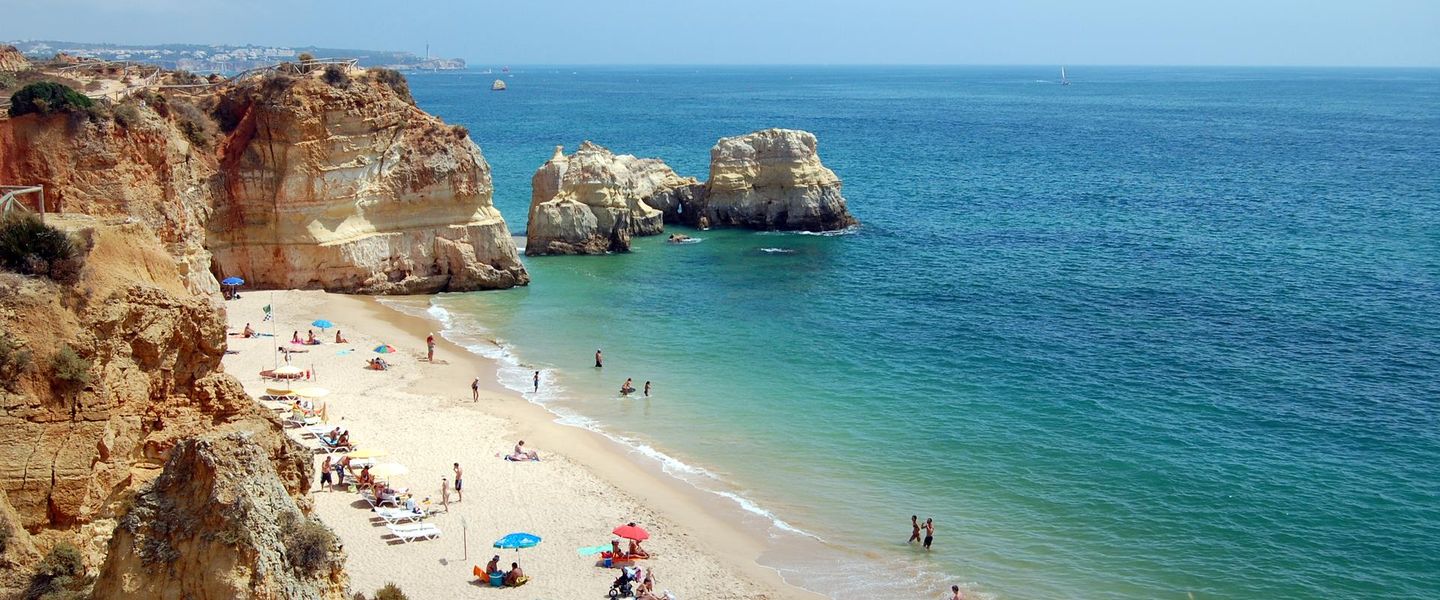
Portimão, Portugal Travel Guide
Discover Portimão: A blend of sun-soaked beaches, rich history, and thrilling water sports in Portugal's stunning Algarve region.
Portimão, nestled in the heart of Portugal's Algarve region, is a captivating blend of sun, sea, and history. Known for its stunning beaches, this coastal town offers a perfect escape for those seeking both relaxation and adventure. Praia da Rocha, one of the most famous beaches in the area, boasts golden sands and crystal-clear waters, making it an idyllic spot for sunbathing and swimming. The nearby cliffs provide breathtaking views, ideal for photography enthusiasts. For history buffs, Portimão's old town is a treasure trove of cultural gems. The Museu de Portimão, housed in a former fish cannery, offers fascinating insights into the town's maritime heritage. Stroll through the charming streets and discover traditional Portuguese architecture, vibrant markets, and quaint cafés where you can savor local delicacies like grilled sardines and pastel de nata. Portimão also caters to adventure seekers with a variety of water sports, including jet-skiing, windsurfing, and dolphin-watching tours. The Arade River, which flows through the town, is perfect for a leisurely boat trip, offering a unique perspective of the region's natural beauty. With its warm climate, friendly locals, and diverse attractions, Portimão is a must-visit destination for any traveler exploring Portugal.

Know before you go
Hi, I'm Eve. Here are a few practical things to know before exploring Portimão.
- Visit Praia da Rocha early in the morning to avoid crowds and enjoy a peaceful experience.
- Try local seafood at the riverside restaurants for an authentic taste of Portimão.
- Wear comfortable shoes for exploring the cobbled streets of the old town.
- Book dolphin-watching tours in advance, especially during peak tourist season.
- Don't miss the sunset views from the cliffs overlooking the beach.
Explore Portimão: Things to Do, Places to Eat, Hotels & More
Handpicked recommendations for top attractions, local dining, accommodations, and more

Best attractions in Portimão
Top-rated picks
Best Attractions

Praia da Rocha
Discover the beauty of Praia da Rocha, where golden sands meet vibrant nightlife and stunning coastal views in Portugal's Algarve region.

Praia dos Três Irmãos
Experience the stunning beauty of Praia dos Três Irmãos, a must-visit public beach in Alvor, Portugal, perfect for relaxation and adventure.
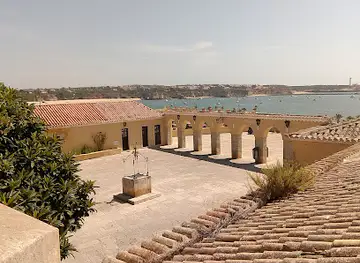
Fortaleza de Santa Catarina
Explore the majestic Fortaleza de Santa Catarina in Portimão, a historical fortress offering stunning views and rich maritime heritage.

Praia do Beliche
Explore the tranquil shores of Praia do Beliche, where golden sands meet dramatic cliffs in Sagres, Portugal's hidden beach paradise.

Best landmarks in Portimão
Top-rated picks
Best Landmarks

Ponta da Piedade
Explore the stunning natural beauty of Ponta da Piedade, a coastal gem in Lagos known for its dramatic cliffs, azure waters, and enchanting caves.

Praia dos Três Irmãos
Experience the breathtaking beauty of Praia dos Três Irmãos, a stunning public beach in Alvor, Portugal, known for its golden sands and unique rock formations.

Fortaleza de Santa Catarina
Explore the historic Fortaleza de Santa Catarina, a captivating fortress in Portimão, Portugal, offering stunning ocean views and a glimpse into the past.

Marina de Portimão
Experience the vibrant atmosphere of Marina de Portimão, a stunning harbor in Algarve offering breathtaking views, delicious dining, and maritime adventures.

Best restaurants in Portimão
Top-rated picks
Best Restaurants

Nosolo Itália - Portimão
Experience authentic Italian cuisine at Nosolo Itália in Portimão – where every meal is a celebration of flavor and tradition.

Dona Barca
Experience the best of Portuguese cuisine at Dona Barca in Portimão, where fresh seafood meets charming ambiance.

Restaurante Mistral
Experience authentic Portuguese cuisine at Restaurante Mistral in Portimão - where tradition meets modern dining.

Três Palmeiras - Praia da Rocha
Discover Três Palmeiras: A delightful restaurant near Praia da Rocha offering authentic Portuguese cuisine and stunning ocean views.

Best bars in Portimão
Top-rated picks
Best Bars

Moonlight Bar
Experience the vibrant atmosphere of Moonlight Bar in Portimão, where coastal charm meets lively nightlife and delightful drinks.

the irish rover
Experience the vibrant flavors of The Irish Rover, a top grill restaurant in Portimão, offering delicious meals and a lively atmosphere for all tourists.

Outro Bar
Experience Portimão's vibrant nightlife at Outro Bar, a local hotspot known for its lively atmosphere and extensive drink menu.

Rock Sports Bar
Experience the thrill of sports at Rock Sports Bar in Portimão, where great food, drinks, and a lively atmosphere await every fan.

Best nightclubs in Portimão
Top-rated picks
Best Nightclubs

Boogie Bar
Experience the vibrant nightlife at Boogie Bar in Portimão, where great cocktails and live music create an unforgettable evening atmosphere.

Bar Diagonal
Experience the vibrant nightlife at Bar Diagonal, the perfect bar in Portimão for cocktails, music, and great company.

Oceans Club
Experience the vibrant nightlife of Portimão at Oceans Club, where cocktails flow and the dance floor never sleeps.

Royal Teaser
Discover Royal Teaser, the vibrant bar in Portimão offering exquisite cocktails, live music, and an unforgettable nightlife experience.

Best shops in Portimão
Top-rated picks
Best Shops

Aqua Portimão Shopping Centre
Discover the vibrant Aqua Portimão Shopping Centre, where shopping, dining, and entertainment come together in a unique Algarve experience.

Centro Comercial Continente Portimão
Discover shopping, dining, and entertainment at Centro Comercial Continente Portimão, a premier shopping destination in the heart of the Algarve.

Primark
Discover affordable fashion at Primark in Portimão, where trendy styles meet unbeatable prices for a delightful shopping experience.

Portimão Retail Center
Explore the vibrant Portimão Retail Center, a premier shopping destination offering a unique blend of fashion, dining, and entertainment in the heart of Algarve.

Explore Portimão on the Map
A handpicked selection of must-see spots in Portimão, mapped for you.
Portimão Essentials
-
Portimão is located in the Algarve region of Portugal. The nearest international airport is Faro Airport (FAO), approximately 70 kilometers away. From Faro, you can take a shuttle bus, taxi, or rent a car to reach Portimão. Alternatively, you can also fly into Lisbon Portela Airport (LIS) and take a train or bus to Portimão, which takes around 3 to 4 hours.
-
Portimão offers a variety of transportation options. The town is well-connected by public buses, which can take you to nearby beaches and attractions. Taxis and ride-sharing services like Uber are also available. For a more flexible experience, consider renting a car. Bicycles can be rented for those who prefer a more eco-friendly way to explore the town.
-
The official currency in Portugal is the Euro (EUR). Credit and debit cards are widely accepted in hotels, restaurants, and shops. ATMs are readily available throughout Portimão for cash withdrawals. It's advisable to carry some cash, especially if you plan to visit smaller establishments or markets.
-
Portimão is generally a safe destination for tourists. However, as with any travel destination, it's important to take standard precautions. Avoid carrying large amounts of cash and keep your valuables secure. Be cautious in crowded areas to prevent pickpocketing. Areas like Praia da Rocha can get crowded, especially during peak tourist season, so stay vigilant.
-
In case of emergency, dial 112 for immediate assistance. Portimão has a local police station and several medical facilities, including the Centro Hospitalar Universitário do Algarve. Pharmacies are also available for minor health issues. Ensure you have travel insurance that covers medical emergencies.
-
Fashion: Do dress comfortably but avoid overly revealing clothing, especially when visiting religious sites. Religion: Do respect local customs and traditions; dress modestly in churches and avoid loud behavior. Public Transport: Do use public transport respectfully; offer seats to elderly passengers and avoid eating or drinking on buses and trains. Greetings: Do greet people with a handshake; a friendly 'Olá' (Hello) is common. Eating & Drinking: Do try local dishes such as cataplana and grilled sardines. Don’t rush through meals; dining is a leisurely experience in Portugal.
-
To experience Portimão like a local, visit the Mercado Municipal de Portimão for fresh produce and local delicacies. Take a stroll along the Arade River and enjoy the local cafes. Engage with locals, who are generally friendly and willing to share insights about their town. Don't miss the local festivals, such as the Sardine Festival, which offer a glimpse into the local culture and traditions.
When is the best time to visit Portimão?
Useful Local Phrases for Portimão
You don't need to speak the language perfectly. Even learning a few simple words can make conversations warmer—and locals usually appreciate the effort.
— Eve

Here are the phrases I use most often in Portimão. Try a few—you'll be surprised how far they go! 😊
❤️
-
- HelloOlá
[oh-lah] - GoodbyeAdeus
[ah-deh-oosh] - YesSim
[seem] - NoNão
[now] - Please/You're welcomePor favor/De nada
[pohr fah-vohr/dee nah-dah] - Thank youObrigado/a
[oh-bree-gah-doh/dah] - Excuse me/SorryCom licença/Desculpe
[kohm lee-sehn-sah/deh-skool-peh] - How are you?Como está?
[koh-moh ehs-tah] - Fine. And you?Bem. E você?
[behn/eh voh-seh] - Do you speak English?Fala inglês?
[fah-lah een-glehsh] - I don't understandNão entendo
[now ehn-tehn-doh]
- HelloOlá
-
- I'd like to see the menu, pleaseGostaria de ver o menu, por favor
[gohs-tah-ree-ah deh vehr oo meh-noo/pohr fah-vohr] - I don't eat meatNão como carne
[now koh-moh kahr-neh] - Cheers!Saúde!
[sow-deh] - I would like to pay, pleaseGostaria de pagar, por favor
[gohs-tah-ree-ah deh pah-gahr/pohr fah-vohr]
- I'd like to see the menu, pleaseGostaria de ver o menu, por favor
-
- Help!Ajuda!
[ah-joo-dah] - Go away!Vai embora!
[vah-ee ehm-boh-rah] - Call the Police!Chame a polícia!
[shah-meh ah poh-lee-see-ah] - Call a doctor!Chame um médico!
[shah-meh oom meh-dee-koo] - I'm lostEstou perdido
[ehs-toh pehr-dee-doo] - I'm illEstou doente
[ehs-toh doo-ehn-teh]
- Help!Ajuda!
-
- I'd like to buy...Gostaria de comprar...
[gohs-tah-ree-ah deh kohm-prahr] - I'm just lookingEstou só a ver
[ehs-toh soh ah vehr] - How much is it?Quanto custa?
[kwahn-toh koos-tah] - That's too expensiveIsso é muito caro
[ee-soh eh moo-ee-toh kah-roo] - Can you lower the price?Pode baixar o preço?
[poh-deh bahy-shahr oo preh-soo]
- I'd like to buy...Gostaria de comprar...
-
- What time is it?Que horas são?
[keh oh-rahs sao] - It's one o'clockÉ uma hora
[eh oo-mah oh-rah] - Half past (10)Meia hora (10)
[may-ah oh-rah (dez)] - MorningManhã
[mah-nyah] - AfternoonTarde
[tahr-deh] - EveningNoite
[noy-teh] - YesterdayOntem
[ohn-tehm] - TodayHoje
[oh-zheh] - TomorrowAmanhã
[ah-mahn-yah] - 1Um
[oom] - 2Dois
[doh-ees] - 3Três
[trehs] - 4Quatro
[kwah-troh] - 5Cinco
[seen-koh] - 6Seis
[saysh] - 7Sete
[seh-teh] - 8Oito
[oy-toh] - 9Nove
[noh-veh] - 10Dez
[dehz]
- What time is it?Que horas são?
-
- Where's a/the...?Onde fica o/a...?
[ohn-deh fee-kah oo/ah] - What's the address?Qual é o endereço?
[kwahl eh oo ehn-deh-reh-soo] - Can you show me (on the map)?Pode mostrar-me (no mapa)?
[poh-deh moh-shtr-meh (noo mah-pah)] - When's the next (bus)?Quando é o próximo (autocarro)?
[kwahn-doo eh oo proh-kssee-moh (ow-toh-kah-roo)] - A ticket (to ....)Um bilhete (para ....)
[oom beel-yeh-teh (pah-rah)]
- Where's a/the...?Onde fica o/a...?
History of Portimão
-
Portimão's history dates back to the Phoenicians, who established a trading port in the area. The region later came under Roman control, becoming an important part of the Roman province of Lusitania. Archaeological findings, such as the ruins of villas and mosaics, highlight the significance of Portimão during this period.
-
During the Middle Ages, Portimão flourished under the rule of the Moors, who called it Burj Munt. The town's strategic location along the Arade River made it a vital commerce hub. The Christian Reconquista in the 13th century saw Portimão integrated into the Kingdom of Portugal, further boosting its economic importance.
-
The 15th and 16th centuries marked Portimão's Golden Age. It played a crucial role during the Age of Discoveries, with its shipyards producing vessels that explored new worlds. The town's prosperity was evident in the construction of significant buildings, including churches and fortifications, reflecting the wealth brought by maritime trade.
-
The catastrophic earthquake of 1755 severely damaged Portimão, leading to a period of decline. However, the town gradually rebuilt itself with a focus on fishing and agriculture. The 19th century witnessed the rise of the sardine canning industry, which revitalized the local economy and shaped Portimão's identity.
-
The 20th century brought significant changes to Portimão, transforming it into a major tourist destination. The development of infrastructure, including the construction of the Arade Bridge in 1991, facilitated access to the region. Today, Portimão is known for its beautiful beaches, vibrant cultural scene, and historic charm, attracting visitors from around the world.
-
Portimão's rich cultural heritage is evident in its architecture, festivals, and traditions. The Igreja de Nossa Senhora da Conceição, a Gothic church rebuilt after the 1755 earthquake, stands as a testament to the town's resilience. The annual Sardine Festival celebrates the region's fishing legacy, while the Portimão Museum, housed in a former canning factory, offers insights into the town's industrial past.
Neighbouring destination travel guides
Browse our curated selection of top destinations, scenic points, and must-visit spots in the area.




Your all‑in‑one travel companion app
Explore expert travel guides, compare and book tours, experiences, hotels, and more—all from the palm of your hand. Download now for seamless trip planning wherever your wanderlust takes you.


Explore More of Algarve
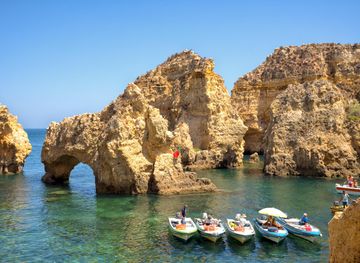
Looking beyond Portimão? Discover Algarve for broader travel guides, local hot-spots, and regional highlights.
Explore AlgarveExplore More of Portugal
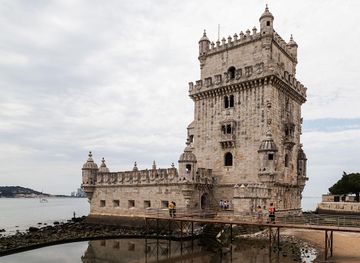
Looking beyond Portimão? Discover Portugal for broader travel guides, local hot-spots, and regional highlights.
Explore PortugalPortimão in Photos
Browse through our photo collection highlighting the charm and character of the destination.


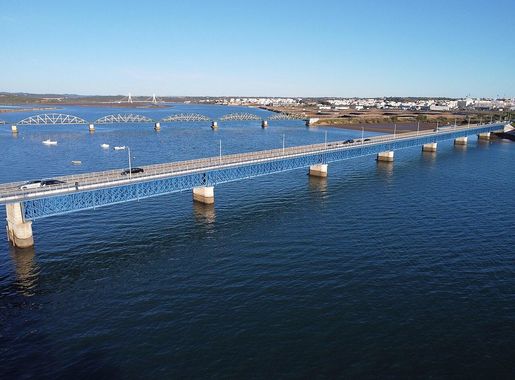

Portimão: The Jewel of the Algarve Coast
Portimão, nestled in the heart of Portugal's Algarve region, is a captivating blend of sun, sea, and history. Known for its stunning beaches, this coastal town offers a perfect escape for those seeking both relaxation and adventure. Praia da Rocha, one of the most famous beaches in the area, boasts golden sands and crystal-clear waters, making it an idyllic spot for sunbathing and swimming. The nearby cliffs provide breathtaking views, ideal for photography enthusiasts. For history buffs, Portimão's old town is a treasure trove of cultural gems. The Museu de Portimão, housed in a former fish cannery, offers fascinating insights into the town's maritime heritage. Stroll through the charming streets and discover traditional Portuguese architecture, vibrant markets, and quaint cafés where you can savor local delicacies like grilled sardines and pastel de nata. Portimão also caters to adventure seekers with a variety of water sports, including jet-skiing, windsurfing, and dolphin-watching tours. The Arade River, which flows through the town, is perfect for a leisurely boat trip, offering a unique perspective of the region's natural beauty. With its warm climate, friendly locals, and diverse attractions, Portimão is a must-visit destination for any traveler exploring Portugal.