

Bran Castle Area Travel Guide - Free Web & App
Your ultimate guide to Bran Castle Area. Discover top landmarks, proposed trips, and local tips. Free on the web or via the Evendo companion app.


Bran Castle Area in Romania blends medieval legend, Carpathian mountain scenery, village traditions, hiking trails and gateway access to Transylvania's pastoral landscapes.
Castle and Mountain Setting
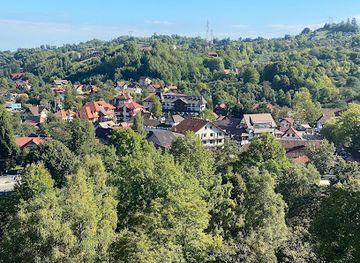
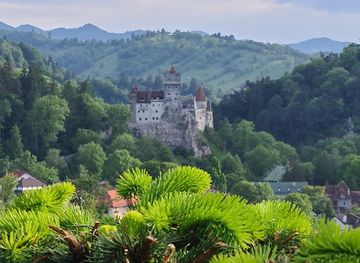
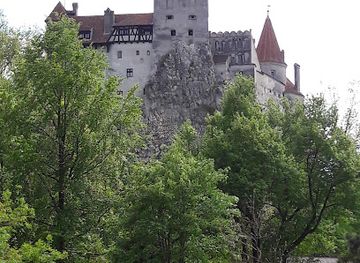
The Bran Castle Area lies in central Romania, where the historic Rucăr–Bran Pass crosses the Carpathians between the historic regions of Transylvania and Wallachia. Its centre is the village of Bran, dominated by a stone fortress dramatically positioned above the valley. Although the castle is popularly associated with Bram Stoker’s Dracula, its documented history is rooted in medieval border defence, trade and the later royal history of Romania rather than in the fictional character. Around it, a broad rural landscape extends through Bran, Șimon, Moieciu and the upland villages towards Șirnea and Fundata, with hay meadows, beech and conifer woodland, limestone ridges and long views towards the Bucegi and Piatra Craiului mountains.Read more about Bran Castle Area
Villages, Valleys and Rural Traditions
Outdoor Gateway
When is the best time to visit Bran Castle Area?
Best: May–June, September · 23–27°C| Month | High (°C) | Rainfall (mm) |
|---|---|---|
| January | 3 | 30 |
| February | 4 | 30 |
| March | 9 | 40 |
| April | 17 | 50 |
| May (best) | 23 | 60 |
| June (best) | 27 | 60 |
| July | 29 | 50 |
| August | 29 | 50 |
| September (best) | 24 | 40 |
| October | 17 | 40 |
| November | 10 | 40 |
| December | 5 | 30 |
Getting to and around Bran Castle Area
How to get there
Transportation
Best attractions in Bran Castle Area
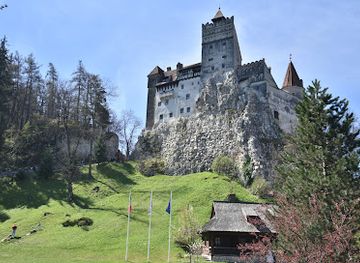
Bran Castle is the area’s central attraction, a medieval fortress whose towers, courtyards and museum interiors overlook the pass and the village below. Nearby, the open-air Village Museum presents traditional rural buildings and domestic life associated with the Bran region. The surrounding settlements offer contrasting experiences: Moieciu de Sus follows a long mountain valley, while Șimon, Peștera, Măgura, Șirnea and Fundata open into meadows and upland landscapes with broad views towards the Bucegi and Piatra Craiului ranges. The approaches to Piatra Craiului National Park provide access to one of Romania’s most distinctive limestone mountain environments, although the park lies beyond the immediate castle precinct and routes require planning. Zărnești, outside the core Bran area, is an important gateway for the park and for the Libearty Bear Sanctuary, a separate organised attraction. Rural roads, hay meadows and small farmsteads are attractions in their own right, best appreciated respectfully and without treating working land as a formal visitor site.
-
Historical landmark
The Casino of Sinaia
Experience the grandeur of the Casino of Sinaia, a historical landmark blending rich heritage with modern entertainment amidst stunning mountain scenery.
-
Monastery
Cheia Monastery
Discover the tranquil beauty and spiritual heritage of Cheia Monastery, a must-visit destination in Romania's stunning Carpathian Mountains.
-
Tour operator
Active Travel
Discover the breathtaking landscapes and vibrant culture of Brașov with Active Travel, where adventure meets exploration in Romania's heart.
-
Party planner
Halloween party at Dracula's Castle in Transylvania
Celebrate Halloween in legendary style at Bran Castle—Romania’s Dracula’s Castle—where history, myth, and thrilling festivities collide for an unforgettable night.



Best landmarks in Bran Castle Area
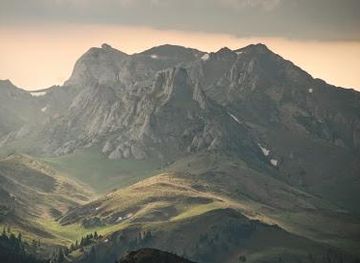
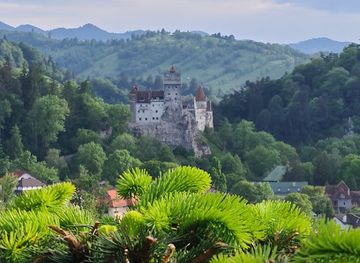
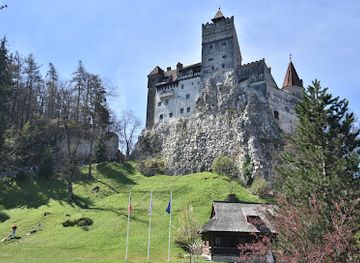
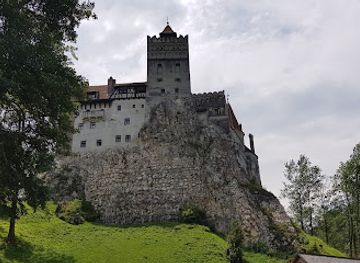
Bran Castle is the defining landmark, its crenellated stone mass occupying a rocky position above the historic pass between Transylvania and Wallachia. Its importance is both strategic and cultural: the fortress guarded movement through a medieval mountain corridor before becoming associated with Romania’s royal history and the modern Dracula myth. The Rucăr–Bran Pass remains the area’s principal geographical landmark, framed by the Bucegi Mountains to the east and the limestone ridges of Piatra Craiului to the west and south. The open meadows and scattered farmsteads around Șirnea, Fundata, Peștera and Măgura are characteristic cultural landscapes shaped by pastoral life rather than formal monuments. In the wider vicinity, the gorges, forests and limestone formations of Piatra Craiului National Park form a major natural reference point, although individual features and access routes lie outside Bran village and should be treated as separate excursions.
-
Castle
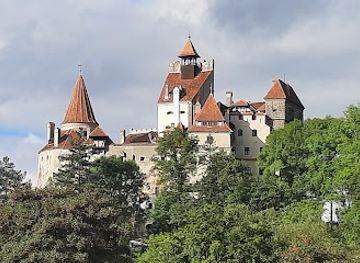
Bran Castle
Explore the breathtaking Bran Castle, a historical gem in Transylvania, rich in folklore and stunning architecture, perfect for every traveler’s itinerary.
-
Monastery
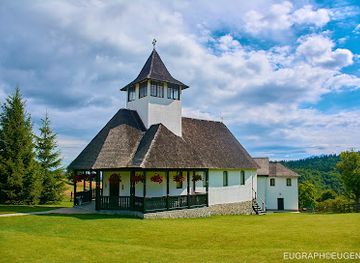
Mănăstirea Bran
Experience the serenity and spiritual heritage of Mănăstirea Bran, a stunning monastery nestled in the beautiful landscapes of Șimon, Romania.
-
Hotel
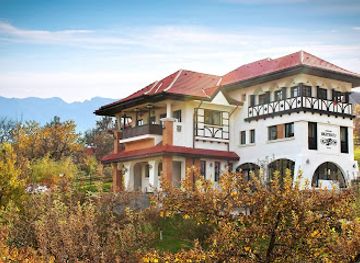
Brătescu Mansion
Discover the enchanting Brătescu Mansion, a luxurious retreat in Bran, Romania, blending history, culinary delights, and breathtaking landscapes.
-
Amusement park ride
The Castle Of Horror
Experience the thrill of The Castle of Horror in Bran, Romania – where history meets spine-tingling fun in a stunning landscape.
Explore Bran Castle Area on the map
Plan your trip on one map. See where the top attractions, landmarks, restaurants and hotels are, and book hotels and experiences in a few clicks.
Best hotels in Bran Castle Area
Best restaurants in Bran Castle Area
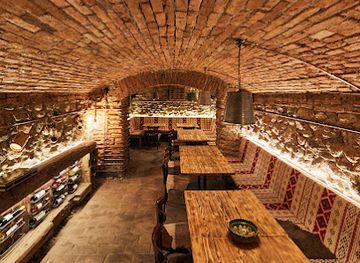
Dining in the Bran area reflects the mountain cuisine of Transylvania and the wider Carpathian region. Restaurants attached to guesthouses, rural pensions and tourist properties commonly serve ciorbă soups, mămăligă, grilled or smoked meats, local cheeses, sarmale and papanăși, while dishes such as bulz combine cornmeal with sheep’s cheese in a characteristically pastoral tradition. Bran and Moieciu contain the greatest concentration of places aimed at visitors, with further options scattered along the main road and in accommodation areas; smaller upland villages have fewer independent establishments and may rely on guesthouse meals arranged in advance. Farm shops and roadside sellers can provide cheese, honey and preserves, though the range and opening arrangements vary. Romanian beer, wine and țuică may accompany meals, but visitors should ask about ingredients and availability rather than assume every rural kitchen offers the same menu.
-
Restaurant
Restaurant Stână Club Vila Bran
Experience exquisite Romanian cuisine amidst stunning mountain views at Restaurant Stână Club Vila Bran, near Dracula's Castle.
-
Restaurant
Hanul Bran
Experience authentic Romanian cuisine at Hanul Bran - where tradition meets comfort in picturesque surroundings.
-
Restaurant
Restaurant Bran Parc
Experience authentic Romanian cuisine at Restaurant Bran Parc near iconic Bran Castle in the heart of Transylvania.
-
Restaurant
Popasul Drumețului
Discover authentic Romanian flavors at Popasul Drumețului in Bran – where every meal tells a story amidst stunning landscapes.
Best bars in Bran Castle Area
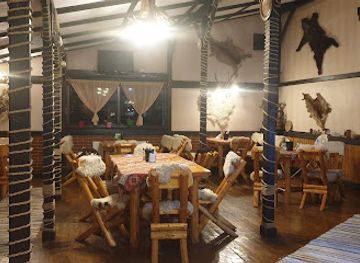
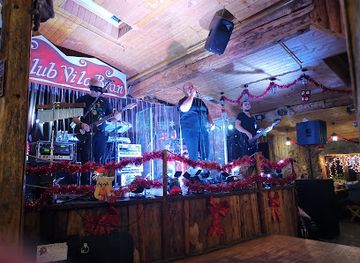
The Bran Castle Area is a quiet rural destination rather than a nightlife centre. Evening life is concentrated in guesthouse dining rooms, traditional inns and restaurants in Bran and Moieciu, where visitors may find a drink, regional food and occasional local music or seasonal gatherings rather than a dedicated club scene. The atmosphere generally becomes calm after sightseeing hours, particularly in the smaller villages and upland settlements. Brașov, outside the destination, offers the region’s broadest choice of bars, cultural venues and late-evening entertainment, while nearby Râșnov provides a smaller urban alternative. Visitors staying in remote villages should expect limited spontaneous evening transport and should arrange taxis or designated driving before travelling away from their accommodation.
-
Restaurant
Restaurant Stână Club Vila Bran
Experience the best of Romanian cuisine at Restaurant Stână Club Vila Bran, where stunning views meet exquisite flavors in a cozy ambiance.
-
Restaurant
Hanul Bran
Discover the heart of Romanian cuisine and hospitality at Hanul Bran, a charming restaurant and hotel near the iconic Bran Castle.
-
Restaurant
Restaurant Bran Parc
Experience the taste of Romania at Restaurant Bran Parc, a culinary gem near the legendary Bran Castle, renowned for its local dishes and warm hospitality.
-
 Italian
Casa Thomas Bran
Discover the authentic flavors of Italy at Casa Thomas Bran, an inviting restaurant offering delicious pizzas and Italian specialties in a charming setting.
Best nightclubs in Bran Castle Area
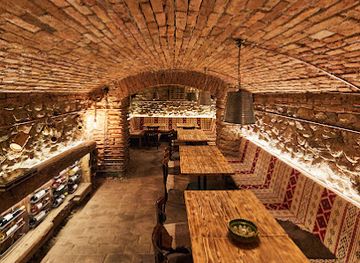
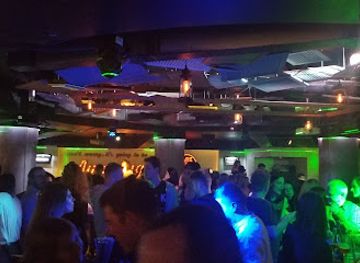
The Bran Castle Area is a quiet rural destination rather than a nightlife centre. Evening life is concentrated in guesthouse dining rooms, traditional inns and restaurants in Bran and Moieciu, where visitors may find a drink, regional food and occasional local music or seasonal gatherings rather than a dedicated club scene. The atmosphere generally becomes calm after sightseeing hours, particularly in the smaller villages and upland settlements. Brașov, outside the destination, offers the region’s broadest choice of bars, cultural venues and late-evening entertainment, while nearby Râșnov provides a smaller urban alternative. Visitors staying in remote villages should expect limited spontaneous evening transport and should arrange taxis or designated driving before travelling away from their accommodation.
-
Castle
Bran Castle
Discover the enchanting Bran Castle, a stunning fortress steeped in history and legend, known as Dracula's Castle in the heart of Transylvania.
-
Tourist attraction
Club Vila Bran
Experience the magic of Romanian culture and breathtaking landscapes at Club Vila Bran, a unique destination for adventure and relaxation.
-
Restaurant
Restaurant Stână Club Vila Bran
Discover the rich flavors of Romania at Restaurant Stână Club Vila Bran, where tradition meets culinary excellence in a breathtaking setting.
-
Night club
Times
Discover the electric atmosphere of Times Night Club in Brașov, where nightlife meets unforgettable experiences in a stylish setting.


Best shops in Bran Castle Area
Shopping in the Bran area is modest and centred on the castle approach, Bran village, Moieciu and the larger settlements along the main road rather than on a formal retail district. Visitors can look for Romanian food products such as honey, jams, cheeses and cured specialities, together with woollen goods, embroidered textiles, wood items and locally made souvenirs, although quality and provenance vary between sellers. Small supermarkets and village shops provide basic supplies, while farmers and roadside stalls may offer seasonal produce when available. Brașov has a substantially wider selection of craft shops, food retailers and conventional stores and is outside the destination itself. Travellers interested in regional crafts should favour identifiable local makers or established cultural venues, and should remember that many rural businesses operate with limited hours and may accept cash more readily than cards.
-
Amusement park ride
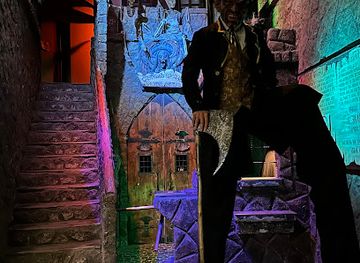
The Castle Of Horror
Experience the spine-chilling thrills of The Castle Of Horror, where legends of the supernatural come alive in an unforgettable amusement park ride.
-
Museum
Bran Village Museum
Explore the rich heritage of Romania at Bran Village Museum, where culture and history come alive amidst stunning mountain views.
-
Crêperie
Clătita Regală Bran
Discover the exquisite flavors of Clătita Regală Bran, a charming creperie near Bran Castle, offering sweet and savory pancake delights.
-
Supermarket
Nansy
Explore Nansy in Bran, Romania: Your one-stop supermarket for fresh produce, local delicacies, and all your shopping needs.
Get your free copy of our complete guide to Bran Castle Area, delivered straight to you.
Everything on this page, from attractions and restaurants to essentials and local phrases, in one PDF you can read offline, print or share.
Already have an account? Sign in
Your Bran Castle Area guide is ready.
We'll send it to · Not you? Sign out

Getting your guide ready…
We are putting together a fresh copy of the Bran Castle Area guide. This can take up to a minute.
This can take a few moments. If your browser asks, choose Allow so the download can start. You'll find the guide in your Downloads folder.
Nothing happened? Download it again
Sorry, the guide is taking longer than usual. Please try again in a minute, or get it by email instead.
Bran Castle Area essentials
Currency and Payment
Safety
Emergency Situations
Do's and Don'ts
Local Tips
From Eve
Local phrases worth knowing
You don't need to get them perfect. A few words go a long way, and locals appreciate the effort.
Basics
| English | Local | Say it |
|---|---|---|
| Hello | Salut | [sah-loot] |
| Goodbye | La revedere | [lah reh-veh-deh-reh] |
| Yes | Da | [dah] |
| No | Nu | [noo] |
| Please/You're welcome | Te rog | [teh rohg] |
| Thank you | Mulțumesc | [mool-tzoo-mesk] |
| Excuse me/Sorry | Scuzați-mă | [skoo-zah-tzuh mah] |
| How are you? | Ce mai faci? | [cheh my fahch?] |
| Fine. And you? | Bine. Și tu? | [bee-neh, shi too?] |
| Do you speak English? | Vorbiți engleză? | [vor-beetz en-glez-uh?] |
| I don't understand | Nu înțeleg | [noo uhn-tzeh-leg] |
Eating & Drinking
| English | Local | Say it |
|---|---|---|
| I'd like to see the menu, please | Aș dori să văd meniul, vă rog | [ahsh doh-ree suh vad meh-nyool, vuh rohg] |
| I don't eat meat | Nu mănânc carne | [noo muh-nuhnk kahr-neh] |
| Cheers! | Noroc! | [noh-rohk] |
| I would like to pay, please | Aș dori să plătesc, vă rog | [ahsh doh-ree suh pla-tesk, vuh rohg] |
Emergencies
| English | Local | Say it |
|---|---|---|
| Help! | Ajutor! | [ah-yoo-tor] |
| Go away! | Du-te! | [doo-teh] |
| Call the Police! | Sună la Poliție! | [soo-nuh lah po-leet-see-eh] |
| Call a doctor! | Sună la doctor! | [soo-nuh lah dohk-tohr] |
| I'm lost | M-am rătăcit | [mahm ruh-tuh-cheet] |
| I'm ill | Sunt bolnav | [soont bohl-nav] |
Shopping
| English | Local | Say it |
|---|---|---|
| I'd like to buy... | Aș dori să cumpăr... | [ahsh doh-ree suh koom-puhr] |
| I'm just looking | Doar mă uit | [doh-ar muh ooit] |
| How much is it? | Cât costă? | [kaht koh-stuh?] |
| That's too expensive | Este prea scump | [ehs-teh preh-ah skoomp] |
| Can you lower the price? | Puteți să scădeți prețul? | [poo-tehts suh skuh-dehts preh-tsool?] |
Time & Numbers
| English | Local | Say it |
|---|---|---|
| What time is it? | Cât este ceasul? | [kaht ye-steh chah-sool?] |
| It's one o'clock | Este ora unu | [ehs-teh oh-rah oo-noo] |
| Half past (10) | O jumătate după (10) | [oh joo-muh-tah-teh doo-puh (doh-zehs-eh)] |
| Morning | Dimineața | [dee-my-neh-tsa] |
| Afternoon | După-amiază | [doo-puh ah-mee-ah-zuh] |
| Evening | Seara | [seh-ah-rah] |
| Yesterday | Ieri | [yeh-ree] |
| Today | Astăzi | [ah-stuhz] |
| Tomorrow | Mâine | [muh-yeh-neh] |
| 1 | unu | [oo-noo] |
| 2 | doi | [doy] |
| 3 | trei | [treh-ee] |
| 4 | patru | [paht-roo] |
| 5 | cinci | [cheench] |
| 6 | șase | [shah-seh] |
| 7 | șapte | [shahp-teh] |
| 8 | opt | [ohpt] |
| 9 | nouă | [noo-wuh] |
| 10 | zece | [zeh-cheh] |
Transport & Directions
| English | Local | Say it |
|---|---|---|
| Where's a/the...? | Unde este unul/una...? | [oon-deh ye-steh oon-ool/oo-nah] |
| What's the address? | Care este adresa? | [cah-reh ye-steh ah-dreh-sah] |
| Can you show me (on the map)? | Puteți să-mi arătați (pe hartă)? | [poo-tehts suh-mee ah-rah-tahts (peh hahr-tuh)] |
| When's the next (bus)? | Când este următorul (autobuz)? | [kahnd ye-steh oor-muh-toh-rool (ow-toh-booz)] |
| A ticket (to ....) | Un bilet (spre ....) | [oon bee-let (spreh ....)] |
History of Bran Castle Area
A Carpathian Pass and Medieval Frontier
The Bran area developed around a mountain passage linking Transylvania with the lands south of the Carpathians. In the medieval period, this route carried trade and also marked a politically important frontier. Saxon communities established in southern Transylvania were involved in the economic life and defence of the region, while the pass connected Brașov with routes towards Câmpulung and Wallachia. The steep terrain made the corridor strategically valuable: whoever controlled the passage could monitor movement through one of the principal crossings of the mountains.
The Construction of Bran Castle
The stone fortress now known as Bran Castle was commissioned in the late fourteenth century by the Hungarian crown and associated with the Saxon community of Kronstadt, modern Brașov. A royal charter of 1377 granted the people of Brașov authority to build a stronghold at Bran, and the completed castle served as a defensive and customs point on the pass. Its position above the valley reflects the practical demands of medieval fortification rather than a connection with the vampire legend later attached to it.
Trade, Customs and Local Settlement
For centuries, Bran’s importance rested on movement through the pass. Merchants, livestock owners and travellers used the route between Transylvania and Wallachia, while customs administration and military oversight gave the castle continuing regional significance. Villages in the surrounding valleys developed through pastoral farming, haymaking, forestry and small-scale trade. The landscape that visitors see today, with open meadows interspersed with woodland and scattered farmsteads, reflects this long interaction between mountain communities and their environment.
Royal Bran and Queen Marie
After the First World War and the creation of Greater Romania, Bran Castle entered a new phase when it was presented to Queen Marie in 1920. She and her family used it as a residence, and the castle was adapted as a royal retreat rather than simply maintained as a military monument. Queen Marie’s association gave Bran a prominent place in Romania’s modern cultural history. Interior furnishings, gardens and memories of the royal household helped transform the fortress into a landmark connected with national identity as well as medieval heritage.
Dracula, Tourism and Conservation
Bran’s international fame grew through the castle’s association with Dracula, despite the fictional nature of the connection. Bram Stoker did not visit Romania, and the novel does not identify Bran Castle as Dracula’s home; the association developed through later tourism and popular culture. During the twentieth century, the castle became an important visitor attraction, while the surrounding valleys experienced increasing tourism and second-home development. Today, heritage management, rural character and access to nearby mountain landscapes remain central to the area’s tourism identity.
Bran Castle Area in Photos
Browse through our photo collection highlighting the charm and character of the destination.
Cities in Bran Castle Area
The towns and cities of Bran Castle Area, and the easiest places to base yourself.
-

-

-

-


Swipe for more cities
Neighbouring destination travel guides
The closest destinations to Bran Castle Area, if you have time for more than one.
-

-

-

-

-


Swipe for more destinations
Explore more
Explore more of Brașov
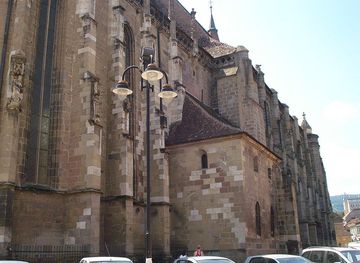
Discover Brașov, a charming medieval city in Transylvania, Romania, known for its Gothic Black Church, vibrant old town, and stunning views from Tampa Mountain.
Explore Brașov
Explore more of Romania
Discover Romania's blend of mystical castles, enchanting landscapes, and vibrant culture. Experience the rich history and natural beauty that make Romania a unique travel destination.
Explore Romania