

Bran-Moieciu Travel Guide - Free Web & App
Your ultimate guide to Bran-Moieciu. Discover top landmarks, proposed trips, and local tips. Free on the web or via the Evendo companion app.


Bran-Moieciu, Romania, combines Bran Castle, Carpathian villages, hay meadows and mountain trails near Piatra Craiului and Bucegi National Parks.
Mountain Landscapes and Rural Character
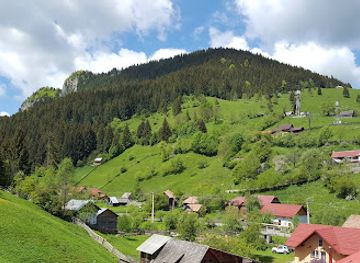
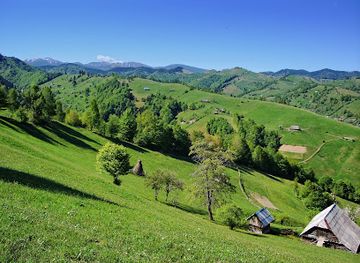
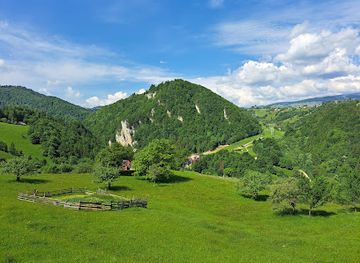
Bran-Moieciu occupies a broad upland corridor in Romania’s Brașov County, where the Bran Pass separates the forested mass of the Bucegi Mountains from the limestone ridges of Piatra Craiului. The area includes Bran and the villages of Moieciu de Jos, Moieciu de Sus, Peștera and Șimon, with scattered farmsteads, hay meadows and wooded slopes giving the landscape its distinctly rural appearance. Roads climb gradually from Bran towards quieter valleys and high villages, where views open towards jagged ridges, rounded pastures and heavily wooded mountains.Read more about Bran-Moieciu
History, Heritage and Local Life
Exploring the Area
When is the best time to visit Bran-Moieciu?
Best: June, August–September · 22–26°C| Month | High (°C) | Rainfall (mm) |
|---|---|---|
| January | 1 | 34 |
| February | 1 | 31 |
| March | 6 | 37 |
| April | 14 | 50 |
| May | 22 | 74 |
| June (best) | 25 | 80 |
| July | 27 | 82 |
| August (best) | 26 | 70 |
| September (best) | 22 | 54 |
| October | 15 | 41 |
| November | 8 | 44 |
| December | 4 | 39 |
Getting to and around Bran-Moieciu
How to get there
Transportation
Best attractions in Bran-Moieciu
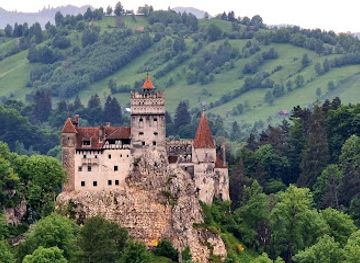
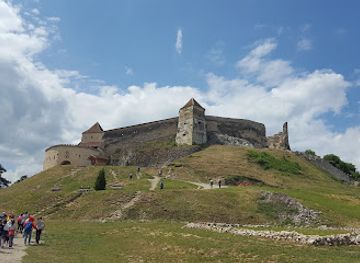
Bran Castle is the defining visitor attraction, rising above the Bran Pass with exhibitions and interiors associated with medieval defence, Queen Marie and the later Dracula legend. Around it, Bran’s village streets and small local displays provide context for the castle’s relationship with the surrounding communities. The wider Moieciu area is valued for its open hay meadows, scattered farmsteads and mountain roads leading towards Peștera and Șimon. Walkers can use the region as an approach to trails in Piatra Craiului National Park, while routes towards the Bucegi Mountains reveal different views and terrain. Traditional villages such as Fundata and Șirnea lie beyond the immediate Bran-Moieciu core and make useful scenic excursions. Râșnov and its hilltop fortress are nearby but belong to the surrounding region rather than Bran-Moieciu itself. The principal attraction is the contrast between accessible cultural heritage in Bran and the quieter pastoral landscape of the upland settlements.
-
Tourist attraction
Waterfall At Chisatoare
Discover the breathtaking Chisatoare Waterfall, a tranquil escape in Romania's stunning wilderness, perfect for nature lovers and adventure seekers alike.
-
Tourist attraction
Mănăstirea Bran
Explore the serene beauty and spiritual essence of Mănăstirea Bran, a captivating monastery set in Romania's stunning countryside.
-
Park
Parcul Regal
Explore the serene beauty and royal heritage of Parcul Regal in Bran, a perfect escape for nature lovers and history enthusiasts alike.
-
Tourist attraction
Traseu Ecoturistic T8
Explore Traseu Ecoturistic T8: A breathtaking eco-tourism trail in Moieciu de Sus, blending nature and adventure for every traveler.
Best landmarks in Bran-Moieciu
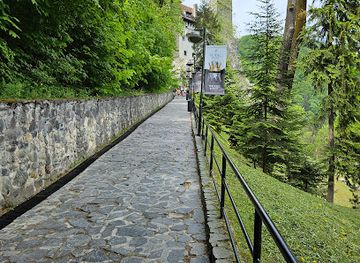
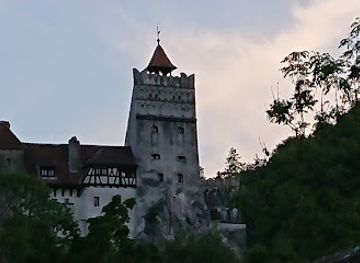
Bran Castle is both the area’s principal architectural landmark and its most powerful historical symbol, occupying a rocky position above the pass used between Transylvania and Wallachia. Its medieval defensive setting, later royal associations and connection with Dracula narratives have made it internationally recognisable, although the fictional castle in Bram Stoker’s novel was not named as Bran. The surrounding Carpathian skyline supplies the region’s major natural landmarks: the limestone crest of Piatra Craiului to the west and the high mass of the Bucegi to the east and south. Within the Bran-Moieciu landscape, the open meadows and scattered farmsteads of Moieciu, Peștera and Șimon are cultural landmarks in their own right, recording generations of haymaking and pastoral use. Small village churches, wayside crosses and traditional timber houses add a human scale to the mountain setting.
-
 Castle
Bran Castle
Explore the majestic Bran Castle, a historic fortress in Romania, rich with Dracula legends and surrounded by breathtaking landscapes.
-
Tourist attraction
Club Vila Bran
Experience the rustic charm and natural beauty of Club Vila Bran, a unique tourist attraction offering adventure and relaxation in the heart of Romania.
-
Hotel
Amfiteatrul Transilvania
Escape to Amfiteatrul Transilvania, where serene landscapes meet exceptional hospitality in the heart of Romania's Carpathian Mountains.
-
Tourist attraction
Valea Cetatii Cave
Explore Valea Cetatii Cave in Râșnov, Romania—a stunning natural attraction with breathtaking formations and rich history, perfect for adventure lovers.
Explore Bran-Moieciu on the map
Plan your trip on one map. See where the top attractions, landmarks, restaurants and hotels are, and book hotels and experiences in a few clicks.
Best hotels in Bran-Moieciu
Best restaurants in Bran-Moieciu
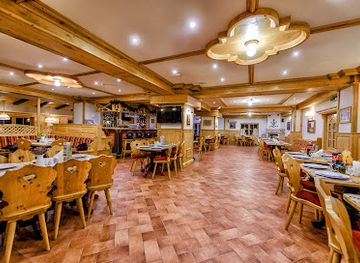
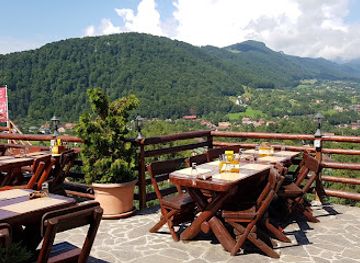
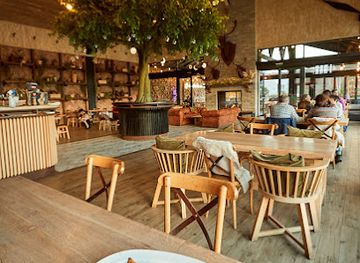
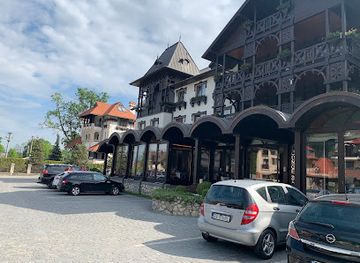
Dining in Bran-Moieciu is closely connected with guesthouses, family-run pensions, village restaurants and traditional inns rather than a concentrated restaurant district. Menus commonly draw on Transylvanian and Romanian cooking, with dishes such as ciorbă, sarmale, mămăligă, grilled meats, trout where available, and sheep’s cheeses reflecting the area’s pastoral economy. Local producers may also offer honey, jams, smoked products and seasonal fruit preparations. Bran has the broadest choice for visitors visiting the castle, while Moieciu de Jos and Moieciu de Sus provide dining linked to rural accommodation; options become more limited in high villages such as Peștera and Șimon. Brașov, Râșnov and other larger nearby towns offer a wider range of cuisines and shopping for provisions. Meal arrangements at guesthouses often need to be checked in advance, especially outside the main tourist periods.
-
Restaurant
Brandeberg
Experience authentic German cuisine and warm hospitality at Brandeberg - a unique restaurant and hotel in beautiful Șimon.
-
Restaurant
Restaurant Stână Club Vila Bran
Experience authentic Romanian cuisine amidst breathtaking mountain views at Restaurant Stână Club Vila Bran.
-
Restaurant
DOR Restaurant D.O.R.
Experience the fusion of traditional Romanian flavors with modern culinary artistry at DOR Restaurant.
-
Restaurant
Hanul Bran
Discover the heart of Romania at Hanul Bran - where traditional cuisine meets stunning mountain views.
Best bars in Bran-Moieciu
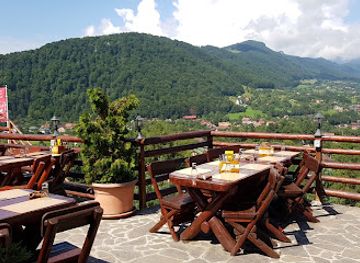
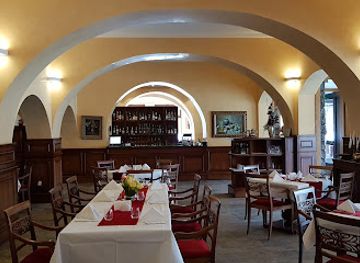
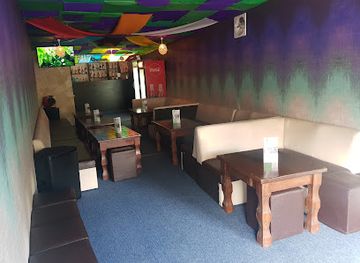
Bran-Moieciu is a quiet rural destination rather than a nightlife centre. Evening entertainment is generally found in the bars, dining rooms and terraces attached to guesthouses, hotels and restaurants, with traditional village pubs providing a more local setting for a drink than purpose-built clubs. In Bran, visitors may find a livelier atmosphere around the castle and main road during busy holiday periods, but opening patterns and seasonal activity vary. Moieciu’s evenings tend to centre on meals, conversation, local spirits and views across the valleys rather than late-night venues. Travellers seeking theatres, live music or a broader choice of bars should plan an excursion to Brașov, while Râșnov provides a closer but more limited urban alternative outside the destination.
-
Restaurant
Restaurant Stână Club Vila Bran
Experience the rich flavors of Romanian cuisine amidst the breathtaking Carpathian Mountains at Restaurant Stână Club Vila Bran.
-
Restaurant
Hanul Bran
Discover the culinary delights and warm hospitality at Hanul Bran, your perfect getaway in the heart of Romania's enchanting landscapes.
-
Indoor lodging
Turnul
Discover the perfect blend of comfort and local flavor at Turnul, your cozy retreat in Moieciu de Jos, Romania.
-
Restaurant
Conacul Törzburg
Experience the culinary charm of Conacul Törzburg, where exquisite dining meets warm hospitality in the heart of Bran, Romania.

Best nightclubs in Bran-Moieciu
Bran-Moieciu is a quiet rural destination rather than a nightlife centre. Evening entertainment is generally found in the bars, dining rooms and terraces attached to guesthouses, hotels and restaurants, with traditional village pubs providing a more local setting for a drink than purpose-built clubs. In Bran, visitors may find a livelier atmosphere around the castle and main road during busy holiday periods, but opening patterns and seasonal activity vary. Moieciu’s evenings tend to centre on meals, conversation, local spirits and views across the valleys rather than late-night venues. Travellers seeking theatres, live music or a broader choice of bars should plan an excursion to Brașov, while Râșnov provides a closer but more limited urban alternative outside the destination.
-
Lounge
Castel View
Discover the enchanting Castel View Lounge in Bran, Romania - a perfect spot to unwind with stunning views and local delights.
-
Bar
Caffè bar Non Stopp
Experience the cozy charm of Caffè bar Non Stopp in Bran, where exceptional drinks and a welcoming atmosphere await every visitor.
-
Bar
OSMAN Shisha Bar
Discover OSMAN Shisha Bar in Moieciu de Jos, a perfect blend of relaxation and local culture with diverse shisha flavors and a cozy atmosphere.
-
Bar
Albu manuel calin
Discover the vibrant nightlife of Bran at Albu Manuel Calin, where local charm meets lively atmosphere and delightful drinks.
Best shops in Bran-Moieciu
Shopping in Bran-Moieciu is modest and locally focused, with opportunities concentrated in Bran, Moieciu de Jos and the larger settlements along the main road. Castle-area stalls and small shops may offer Romanian souvenirs, carved wooden goods, woven textiles, woollen items, ceramics and regional food products, although merchandise and opening patterns vary. Guesthouses and farm producers are useful places to ask about locally made cheese, honey, preserves, smoked foods and seasonal products from nearby households. The rural villages themselves are not retail centres, and visitors staying in Peștera, Șimon or other high settlements should obtain provisions before travelling uphill. Brașov has the widest choice of shops, specialist food retailers and crafts in the surrounding region, while Râșnov can cover everyday requirements without the breadth of the county capital.
-
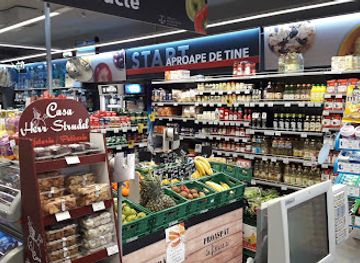
Supermarket
Mega Image Shop&Go
Explore local flavors at Mega Image Shop&Go, your go-to supermarket in Moieciu de Jos for fresh produce and everyday essentials.
-
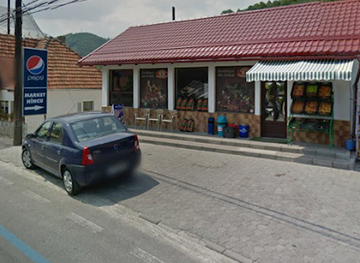
Supermarket
Market Hîncu
Discover the flavors of Romania at Market Hîncu, your go-to supermarket in Moieciu de Jos for local produce and authentic snacks.
-
Grocery store
DFG Mini Market
Discover DFG Mini Market in Cheia, Romania: A delightful grocery store offering local flavors and essentials for every traveler.
-
Donuts
Rulota cu delicii calde
Discover the sweet flavors of Rulota cu Delicii Calde in Moieciu de Sus, where every donut is a delicious treat crafted with care.
Get your free copy of our complete guide to Bran-Moieciu, delivered straight to you.
Everything on this page, from attractions and restaurants to essentials and local phrases, in one PDF you can read offline, print or share.
Already have an account? Sign in
Your Bran-Moieciu guide is ready.
We'll send it to · Not you? Sign out

Getting your guide ready…
We are putting together a fresh copy of the Bran-Moieciu guide. This can take up to a minute.
This can take a few moments. If your browser asks, choose Allow so the download can start. You'll find the guide in your Downloads folder.
Nothing happened? Download it again
Sorry, the guide is taking longer than usual. Please try again in a minute, or get it by email instead.
Bran-Moieciu essentials
Currency and Payment
Safety
Emergency Situations
Do's and Don'ts
Local Tips
From Eve
Local phrases worth knowing
You don't need to get them perfect. A few words go a long way, and locals appreciate the effort.
Basics
| English | Local | Say it |
|---|---|---|
| Hello | Salut | [sah-loot] |
| Goodbye | La revedere | [lah reh-ve-deh-reh] |
| Yes | Da | [dah] |
| No | Nu | [noo] |
| Please/You're welcome | Te rog/Cu plăcere | [teh rohg/koo pluh-cheh-reh] |
| Thank you | Mulțumesc | [mool-tsoo-mesk] |
| Excuse me/Sorry | Scuzați-mă/Regret | [skoo-zahtsuh-muh/reh-gret] |
| How are you? | Ce mai faci? | [cheh my fahch?] |
| Fine. And you? | Bine. Și tu? | [bee-neh shee too?] |
| Do you speak English? | Vorbiți engleză? | [vor-beets eng-leh-zuh?] |
| I don't understand | Nu înțeleg | [noo in-tseh-leg] |
Eating & Drinking
| English | Local | Say it |
|---|---|---|
| I'd like to see the menu, please | Aș dori să văd meniul, vă rog | [ahsh doh-ree sah vuhd meh-nyool, vuh rohg] |
| I don't eat meat | Nu mănânc carne | [noo muh-nuhnk kahr-neh] |
| Cheers! | Noroc! | [noh-rok] |
| I would like to pay, please | Aș dori să plătesc, vă rog | [ahsh doh-ree sah pluh-tesk, vuh rohg] |
Emergencies
| English | Local | Say it |
|---|---|---|
| Help! | Ajutor! | [ah-yoo-tor] |
| Go away! | Du-te! | [doo-teh] |
| Call the Police! | Sunați Poliția! | [soo-nuhts poh-lee-tsiah] |
| Call a doctor! | Sunați un doctor! | [soo-nuhts oon dohk-tohr] |
| I'm lost | M-am pierdut | [mahm pyehr-dooot] |
| I'm ill | Sunt bolnav | [soont bohl-nav] |
Shopping
| English | Local | Say it |
|---|---|---|
| I'd like to buy... | Aș dori să cumpăr... | [ahsh doh-ree sah koom-puhr] |
| I'm just looking | Doar mă uit | [do-ar muh oow-eet] |
| How much is it? | Cât costă? | [kaht koh-stuh?] |
| That's too expensive | Este prea scump | [ehs-teh preh-ah skoomp] |
| Can you lower the price? | Puteți să scădeți prețul? | [poo-tehts sah skuh-dehts preh-tsul?] |
Time & Numbers
| English | Local | Say it |
|---|---|---|
| What time is it? | Cât e ceasul? | [kaht eh cheh-ah-sool] |
| It's one o'clock | Este ora unu | [ehs-teh oh-rah oon-oo] |
| Half past (10) | Zece și jumătate | [zeh-cheh shee joo-muh-tah-teh] |
| Morning | Dimineața | [dee-mee-neh-tsa] |
| Afternoon | După-amiază | [doo-puh ah-mee-ah-zuh] |
| Evening | Seara | [seh-ah-rah] |
| Yesterday | Ieri | [yehr] |
| Today | Astăzi | [ahs-tuh-zee] |
| Tomorrow | Mâine | [muh-ee-neh] |
| 1 | Unu | [oo-noo] |
| 2 | Doi | [doy] |
| 3 | Trei | [treh-ee] |
| 4 | Patru | [paht-roo] |
| 5 | Cinci | [cheen-chee] |
| 6 | Șase | [shah-seh] |
| 7 | Șapte | [shahp-teh] |
| 8 | Opt | [opt] |
| 9 | Nouă | [noo-uh] |
| 10 | Zece | [zeh-che] |
Transport & Directions
| English | Local | Say it |
|---|---|---|
| Where's a/the...? | Unde este unul/o... | [oon-deh eh-steh oon-ool/oh] |
| What's the address? | Care este adresa? | [ka-reh eh-steh ah-dre-sah] |
| Can you show me (on the map)? | Puteți să-mi arătați (pe hartă)? | [poo-tehts sah-mee ah-rah-tsahts (peh hahr-tuh)] |
| When's the next (bus)? | Când este următorul (autobuz)? | [kuhnd eh-steh oor-muh-toh-rool (ow-toh-boo-z)] |
| A ticket (to ....) | Un bilet (spre ....) | [oon bee-let (spreh)] |
History of Bran-Moieciu
The Bran Pass and Its Geological Setting
The landscape around Bran-Moieciu developed within the Southern Carpathians, where faulting, erosion and uplift shaped a passage between the Bucegi and Piatra Craiului mountain groups. The limestone ridges and karst features of Piatra Craiului contrast with the more massive, plateau-like forms of the Bucegi, while valleys and glacially influenced uplands have long provided routes through the mountains. This geography gave the Bran Pass significance well before modern tourism: it offered a comparatively practical connection between the historic regions of Transylvania and Wallachia, while the surrounding slopes supported forests, grazing and small-scale agriculture.
A Medieval Mountain Passage
Bran’s importance grew during the medieval period because the pass carried movement and trade across the Carpathians. The Teutonic Knights established a fortified presence in the wider area in the early thirteenth century, although their rule was brief. A later stone castle at Bran developed under the authority of the kings of Hungary, with the fortress associated with the defence and administration of the passage and with the collection of customs. The settlement and route remained tied to the political boundary between Transylvania and Wallachia, making Bran more than a remote mountain village.
Farming, Pastoralism and Village Landscapes
For centuries, communities in Bran and Moieciu combined small-scale cultivation with animal husbandry, forestry and seasonal movement between lower settlements and mountain grazing grounds. Haymaking created the open meadows that remain one of the area’s most recognisable landscape features, while sheep farming encouraged the production of cheeses and other preserved foods. Villages developed as dispersed groups of homes, barns, orchards and pasture rather than as dense urban settlements. Traditional building forms and religious life survived alongside gradual improvements in roads, schooling and local trade, linking the highland communities with markets in Brașov and neighbouring valleys.
Bran Castle and the Romanian Royal Family
After the First World War and the creation of Greater Romania, Bran Castle was presented to Queen Marie of Romania in 1920 by the city of Brașov. Marie used the castle as a residence and retreat, and its interiors became associated with her personal taste, collecting and court life. The royal connection gave Bran a new cultural prominence beyond its earlier military and customs functions. After the monarchy was abolished in 1947, the castle passed into state ownership. Its royal history is an important counterpoint to the later international association with Bram Stoker’s fictional Dracula, whose castle was not identified with Bran in the novel.
Tourism and Protected Landscapes
Tourism expanded during the twentieth century as road access improved and visitors were drawn by Bran Castle, mountain scenery and the traditional character of the surrounding villages. Guesthouses and rural tourism became increasingly important after the end of communism, particularly in Bran and Moieciu. Modern visitors also use the area to reach Piatra Craiului National Park, established in 1990, and the nearby Bucegi protected landscape. Conservation has brought greater attention to alpine habitats, forests, karst formations and traditional meadows, while local communities continue to balance tourism, farming, construction and the protection of mountain scenery.
Bran-Moieciu in Photos
Browse through our photo collection highlighting the charm and character of the destination.
Neighbouring destination travel guides
The closest destinations to Bran-Moieciu, if you have time for more than one.
-

-

-

-

-


Swipe for more destinations
Explore more
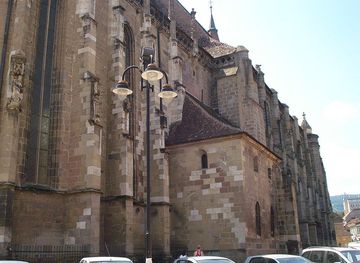
Explore more of Brașov
Discover Brașov, a charming medieval city in Transylvania, Romania, known for its Gothic Black Church, vibrant old town, and stunning views from Tampa Mountain.
Explore Brașov
Explore more of Romania
Discover Romania's blend of mystical castles, enchanting landscapes, and vibrant culture. Experience the rich history and natural beauty that make Romania a unique travel destination.
Explore Romania