

Free Gisenyi Travel Guide & Mobile App
Plan your Gisenyi trip with Evendo. Get free guides to top attractions, restaurants, hotels, and bars. Web access or download the mobile app.


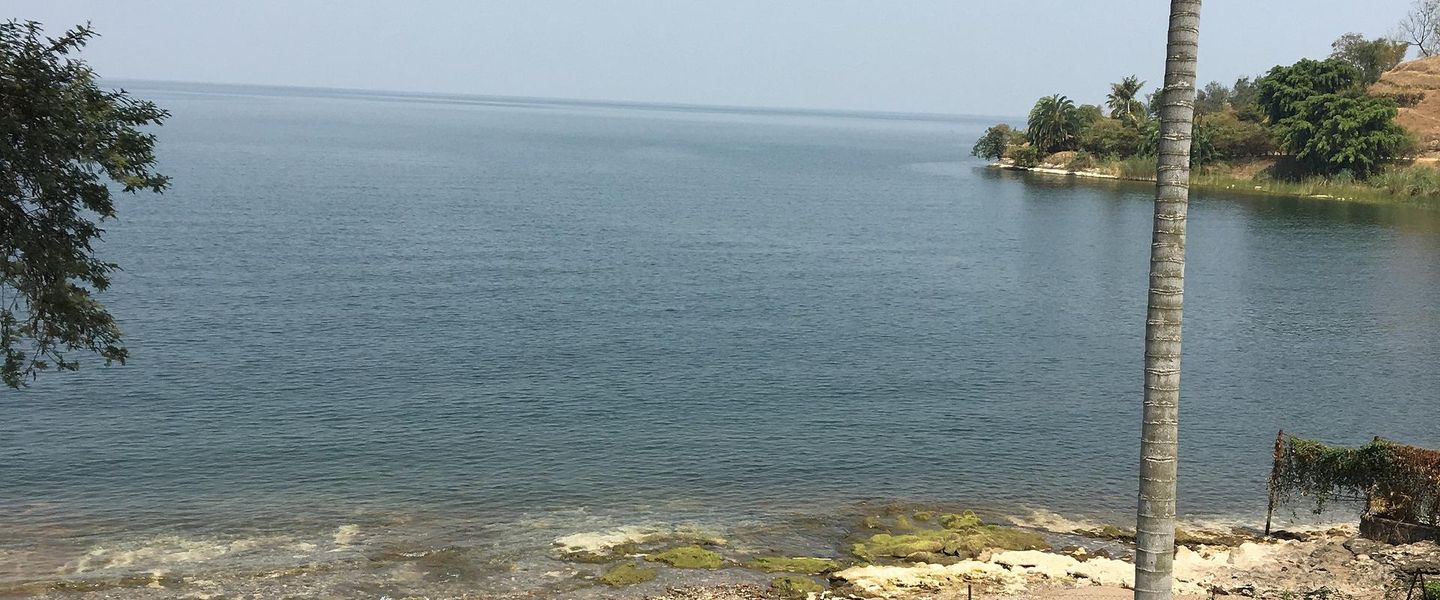


Gisenyi, Rwanda, offers Lake Kivu beaches, volcanic scenery, border-city culture, scenic walks and access to the Congo Nile Trail and hot springs.
Lake Kivu and the Western Frontier
Gisenyi lies on Rwanda’s western edge, where the hills descend towards the broad waters of Lake Kivu and the Congolese city of Goma begins across the border. Officially part of Rubavu District, the city is still widely known by its historical name, Gisenyi. Its setting gives it a character unlike Rwanda’s inland highland towns: lakeside promenades, volcanic scenery and a busy international crossing shape everyday life, while the water brings a slower rhythm to the city’s western edge.Read more about Gisenyi
A City of Water, Trade and Volcanoes
Cross-Border Energy
When is the best time to visit Gisenyi?
Best: January, July–August · 26°C| Month | High (°C) | Rainfall (mm) |
|---|---|---|
| January (best) | 26 | 84 |
| February | 26 | 105 |
| March | 26 | 135 |
| April | 26 | 168 |
| May | 26 | 170 |
| June | 26 | 97 |
| July (best) | 26 | 58 |
| August (best) | 26 | 66 |
| September | 27 | 101 |
| October | 27 | 132 |
| November | 26 | 161 |
| December | 26 | 139 |
Getting to and around Gisenyi
How to get there
Transportation
Best attractions in Gisenyi
Lake Kivu is Gisenyi’s defining attraction, with a shoreline of small beaches, lakeside walks and viewpoints towards the volcanic country around Goma. Gisenyi Public Beach provides a simple place to experience the water and observe local leisure life, while hotel waterfronts and cafés offer calmer perspectives across the lake. The city is also an important starting point for the Congo Nile Trail, whose routes follow the eastern shore through cultivated hills, fishing communities and rural scenery; individual sections can be arranged according to time and ability. Nearby Nyamyumba Hot Springs, outside the urban centre, provide a warm-water outing in the wider Rubavu area. The Grande Barrière border crossing is significant as a geographical and commercial point, though it is an operational frontier rather than a conventional tourist attraction. In the surrounding district, tea-growing landscapes and views towards the Virunga region broaden the experience beyond the immediate lakeshore.
-
Tourist attraction
Nyamyumba Hot Springs
Experience the healing waters of Nyamyumba Hot Springs in Rubavu, Rwanda, where relaxation meets stunning views of Lake Kivu and lush nature.
14 min drive · 4.6 km from city centre
-
Tourist attraction
Guide near you
Explore Rubavu: A stunning blend of nature, culture, and adventure by the shores of Lake Kivu.
10 min drive · 3.3 km from city centre
-
Hiking area
Nengo Mountain
Explore the breathtaking Nengo Mountain near Rubavu, Rwanda, a must-visit hiking area for nature lovers and adventure seekers.
5 min drive · 1.7 km from city centre
-
 Hiking area
Amani Boat & tours ( Guide)
Explore the breathtaking hiking trails and serene boat rides at Amani Boat & Tours in Rubavu, Rwanda - a perfect nature escape.
13 min drive · 4.2 km from city centre


Best landmarks in Gisenyi
Lake Kivu is Gisenyi’s principal natural landmark, its broad surface forming the city’s western horizon and giving the urban area much of its character. The shoreline and public beach mark the transition between the built-up town and the lake, while views towards Goma and the volcanic landscape create a powerful sense of the city’s border geography. The Grande Barrière is another defining landmark: a formal international crossing that connects Gisenyi with Goma and embodies the commercial and political importance of the frontier. Around the centre, administrative buildings, churches, commercial streets and older urban structures reflect the town’s development as a regional colonial-era and postcolonial centre, although they are less monumental than landmarks in Rwanda’s historic royal sites. Nyamyumba Hot Springs, located outside the urban core in the wider Rubavu area, are a notable natural feature rather than a city-centre monument.
-
Hotel
Lake Kivu Serena Hotel/Gisenyi
Discover luxury and tranquility at Lake Kivu Serena Hotel, a perfect retreat for tourists exploring the beauty and culture of Gisenyi, Rwanda.
6 min walk · 0.5 km from city centre
-
Hotel
The Palm Beach Resort Lake Kivu
Discover the serene beauty of Lake Kivu at The Palm Beach Resort, where relaxation meets adventure in Gisenyi, Rwanda.
10 min drive · 3.4 km from city centre
-
Lodging
Gorillas Lake Kivu Hotel
Discover comfort and adventure at Gorillas Lake Kivu Hotel, a scenic retreat on the shores of Lake Kivu in Gisenyi, Rwanda.
5 min walk · 0.4 km from city centre
-
Hotel
La Corniche Hotel
Discover the perfect blend of comfort and scenic beauty at La Corniche Hotel, your gateway to the enchanting shores of Lake Kivu in Gisenyi, Rwanda.
12 min walk · 1.0 km from city centre


Explore Gisenyi on the map
Plan your Gisenyi trip on one map. See where the top attractions, landmarks, restaurants, bars and hotels are, find what's near where you're staying, and book hotels and experiences in a few clicks.
Best hotels in Gisenyi
Best restaurants in Gisenyi
Gisenyi’s food scene reflects western Rwanda’s lakeside setting and its position on a busy regional frontier. Local restaurants and informal eateries commonly serve staples such as grilled or fried fish, brochettes, beans, rice, plantain and ugali, with fresh produce arriving from the surrounding hills. Lake Kivu fish, where locally sourced and available, is a characteristic choice, while cafés and hotel restaurants provide more familiar international dishes for travellers. The central market area is useful for observing everyday food commerce and finding snacks, fruit and simple meals, although facilities are informal rather than designed for leisurely dining. Along the waterfront, restaurants and hotel terraces place more emphasis on views and relaxed meals. Dining customs are generally straightforward, but preparation can take time, particularly in smaller establishments, and card payments should not be assumed outside larger hotels and restaurants.
-
Restaurant
Lakeside Bar Beach & Restaurant
Discover tranquility at Lakeside Bar Beach & Restaurant in Gisenyi – where delicious food meets stunning lake views.
12 min walk · 1.0 km from city centre
-
Restaurant
New Tam-Tam Bikini
Discover the flavors of Rwanda at New Tam-Tam Bikini - where traditional meets contemporary in an unforgettable dining experience.
9 min walk · 0.7 km from city centre
-
Restaurant
Sagabay Restaurant
Experience exquisite dining at Sagabay Restaurant in Gisenyi - where local flavors meet stunning lake views.
11 min walk · 0.9 km from city centre
-
Grill
Peace Corner
Experience the authentic taste of Rwanda at Peace Corner Grill in Gisenyi – where local flavors meet warm hospitality.
5 min drive · 1.8 km from city centre


Best bars in Gisenyi
Gisenyi’s evening scene is modest and sociable, centred more on hotel bars, lakeside terraces, cafés and neighbourhood establishments than on a large concentration of nightclubs. After sunset, the waterfront can be appealing for a quiet drink or meal, while central venues often draw residents, business travellers and visitors moving through the border city. Local beer is widely available, alongside soft drinks and spirits, but nightlife varies according to the day and season. Music may be provided by recorded playlists or occasional live entertainment rather than a fixed programme of concerts. The city is not known for an extensive late-night entertainment district, and quieter streets should be approached carefully after dark. Visitors should respect local licensing rules, keep valuables secure and arrange a motorcycle taxi or other transport when returning to accommodation outside the central area.
-
Bar
Lakeside Bar Beach & Restaurant
Discover tranquility at Lakeside Bar Beach & Restaurant, where stunning lake views meet delicious local cuisine in Gisenyi, Rwanda.
12 min walk · 1.0 km from city centre
-
Grill
Peace Corner
Savor the vibrant flavors of grilled cuisine at Peace Corner, a culinary gem in Gisenyi, perfect for a delightful dining experience.
5 min drive · 1.8 km from city centre
-
Restaurant
Roxy Bar and Restaurant (anciennement White Rock)
Experience the authentic taste of Rwanda at Roxy Bar and Restaurant, where local flavors meet a vibrant atmosphere in Gisenyi.
11 min walk · 0.9 km from city centre
-
Bar
Saba Lounge & Restaurant
Experience the vibrant flavors of Rwanda at Saba Lounge & Restaurant, Gisenyi's top destination for dining and relaxation.
5 min drive · 1.7 km from city centre


Best nightclubs in Gisenyi
Gisenyi’s evening scene is modest and sociable, centred more on hotel bars, lakeside terraces, cafés and neighbourhood establishments than on a large concentration of nightclubs. After sunset, the waterfront can be appealing for a quiet drink or meal, while central venues often draw residents, business travellers and visitors moving through the border city. Local beer is widely available, alongside soft drinks and spirits, but nightlife varies according to the day and season. Music may be provided by recorded playlists or occasional live entertainment rather than a fixed programme of concerts. The city is not known for an extensive late-night entertainment district, and quieter streets should be approached carefully after dark. Visitors should respect local licensing rules, keep valuables secure and arrange a motorcycle taxi or other transport when returning to accommodation outside the central area.
-
Bar
Lakeside Bar Beach & Restaurant
Discover the vibrant atmosphere and stunning views at Lakeside Bar Beach & Restaurant, Gisenyi's top spot for relaxation and delicious cuisine by Lake Kivu.
12 min walk · 1.0 km from city centre
-
Bar
Sagabay Restaurant
Experience the vibrant flavors of Rwanda at Sagabay Restaurant, where local cuisine meets stunning lakeside views in Gisenyi.
11 min walk · 0.9 km from city centre
-
Restaurant
OK Pili Pili Night Club
Immerse yourself in Goma's vibrant nightlife at OK Pili Pili Night Club, where music, dance, and culture come alive in an unforgettable experience.
6 min drive · 2.1 km from city centre
-
Restaurant
Roxy Bar and Restaurant (anciennement White Rock)
Experience the vibrant flavors of Rwanda at Roxy Bar and Restaurant in Gisenyi, where local cuisine meets lively entertainment.
11 min walk · 0.9 km from city centre


Best shops in Gisenyi
Shopping in Gisenyi is shaped by everyday trade rather than a heavily developed tourist retail scene. Central markets and roadside stalls sell fruit, vegetables, clothing, household goods and locally produced food, while small shops cater to residents and cross-border commerce. Visitors may find Rwandan coffee, tea, woven goods, baskets and modest craft items, although quality and availability vary and products are not always displayed in dedicated souvenir outlets. The market area offers a more authentic impression of the city’s commercial rhythm than formal shopping spaces, but photography should be handled discreetly and bargaining kept polite. Tea and coffee from Rwanda’s western growing areas are practical gifts when purchased from reputable retailers. Larger hotels and established shops are more likely to accept cards, whereas market vendors generally expect payment in Rwandan francs and may not have change for large notes.
-
Shopping mall
Stand Up Shop
Explore the Stand Up Shop in Gisenyi for a unique shopping experience, blending local crafts and modern retail against the backdrop of Rwanda's vibrant culture.
15 min walk · 1.2 km from city centre
-
Wine store
Plan B
Discover exquisite wines and local flavors at Plan B, Gisenyi's premier wine store, perfect for enthusiasts and casual drinkers alike.
14 min walk · 1.1 km from city centre
-
Bakery
Boulangerie de gisenyi chez Habib moussa
Experience the flavors of Gisenyi at Boulangerie de Gisenyi chez Habib Moussa, where freshly baked treats meet Rwandan culinary traditions.
13 min walk · 1.1 km from city centre
-
Grocery store
Favorite Shop Ltd.
Explore the vibrant flavors of Gisenyi at Favorite Shop Ltd., your local grocery store for fresh produce and unique Rwandan products.
5 min drive · 1.7 km from city centre


Get your free copy of our complete guide to Gisenyi, delivered straight to you.
Everything on this page, from attractions and restaurants to essentials and local phrases, in one PDF you can read offline, print or share.
Already have an account? Sign in
Your Gisenyi guide is ready.
We'll send it to · Not you? Sign out

Getting your guide ready…
We are putting together a fresh copy of the Gisenyi guide. This can take up to a minute.
This can take a few moments. If your browser asks, choose Allow so the download can start. You'll find the guide in your Downloads folder.
Nothing happened? Download it again
Sorry, the guide is taking longer than usual. Please try again in a minute, or get it by email instead.
Gisenyi essentials
Currency and Payment
Safety
Emergency Situations
Do's and Don'ts
Local Tips
From Eve
Local phrases worth knowing
You don't need to get them perfect. A few words go a long way, and locals appreciate the effort.
Basics
| English | Local | Say it |
|---|---|---|
| Hello | Muraho | [moo-rah-ho] |
| Goodbye | Murabeho | [moo-rah-beh-ho] |
| Yes | Yego | [ye-go] |
| No | Oya | [oy-ah] |
| Please/You're welcome | Amasuhuko | [ah-mah-soo-hoo-ko] |
| Thank you | Murakoze | [moo-rah-koh-zeh] |
| Excuse me/Sorry | Igisobanuro | [ee-gee-soh-bah-noo-ro] |
| How are you? | Amakuru? | [ah-mah-koo-roh?] |
| Fine. And you? | Ni meza. Nawe? | [nee meh-zah. nah-weh?] |
| Do you speak English? | Wandika Kinyarwanda? | [wahn-dee-kah kee-nyah-rwahn-dah?] |
| I don't understand | Ntawumva | [ntah-woom-vah] |
Eating & Drinking
| English | Local | Say it |
|---|---|---|
| I'd like to see the menu, please | Nifashishije inyongera, komeza | [nee-fah-shee-shee-jeh ee-nyong-geh-rah, koh-meh-zah] |
| I don't eat meat | Siyintwari | [see-yin-twa-ree] |
| Cheers! | Amahoro! | [ah-mah-hoh-roh] |
| I would like to pay, please | Nifite ibyo gusaba, komeza | [nee-fee-teeb-yoh goo-sah-bah, koh-meh-zah] |
Emergencies
| English | Local | Say it |
|---|---|---|
| Help! | Umworo! | [oom-wor-roh] |
| Go away! | Shyira ku mihoro! | [shee-rah koo mee-hor-roh] |
| Call the Police! | Andika Polisi! | [ahn-dee-kah poh-lee-see] |
| Call a doctor! | Andika dokotora! | [ahn-dee-kah doh-koh-toh-rah] |
| I'm lost | Ntashoboye gutaha | [ntah-shoh-boy-eh goo-tah-hah] |
| I'm ill | Nzira | [n-zee-rah] |
Shopping
| English | Local | Say it |
|---|---|---|
| I'd like to buy... | Nifite gusura... | [nee-fee-teh goo-soo-rah] |
| I'm just looking | Ndabura | [n-dah-boo-rah] |
| How much is it? | Ni iki cyatumye? | [nee ee-kee chah-too-m-yeh?] |
| That's too expensive | Ni byiza cyane | [nee bee-ee-zah ch-yah-neh] |
| Can you lower the price? | Wifuza kwihagarika ishilingi? | [wee-foo-zah kwee-hah-gah-ree-kah ee-shee-leen-gee] |
Time & Numbers
| English | Local | Say it |
|---|---|---|
| What time is it? | Saa ngapi? | [sah-ah ngah-pee?] |
| It's one o'clock | Saa y'umwe | [sah-ah y'oom-weh] |
| Half past (10) | Saa tanu | [sah-ah tah-noo] |
| Morning | Igisibo | [ee-gee-see-bo] |
| Afternoon | Icyo saa | [ee-cho sah-ah] |
| Evening | Igihe cy'umugoroba | [ee-gee-hee chee-oo-moo-go-roh-bah] |
| Yesterday | Ejo | [eh-joh] |
| Today | Ejo | [eh-joh] |
| Tomorrow | Ejo | [eh-joh] |
| 1 | Rimwe | [ree-mweh] |
| 2 | Kabiri | [kah-bee-ree] |
| 3 | Gatatu | [gah-tah-too] |
| 4 | Kane | [kah-neh] |
| 5 | Gatanu | [gah-tah-noo] |
| 6 | Gatandatu | [gah-tahn-dah-too] |
| 7 | Kumwe | [koom-weh] |
| 8 | Ruhoko | [roo-ho-koh] |
| 9 | Rwanda | [roo-wahn-dah] |
| 10 | Munani | [moo-nah-nee] |
Transport & Directions
| English | Local | Say it |
|---|---|---|
| Where's a/the...? | Ejo hehe? | [eh-joh heh-heh?] |
| What's the address? | Ibyo bisaba aho? | [ee-byoh bee-sah-bah ah-hoh?] |
| Can you show me (on the map)? | Wafite ukoze iki kuri kare? | [wah-fee-teh oo-koh-zeh ee-kee koo-ree kah-reh?] |
| When's the next (bus)? | Kurihehe iyo ibusatsi iri? | [koo-ree-heh-heh ee-yoh ee-boo-saht-see ee-ree?] |
| A ticket (to ....) | Igihembo (ku ....) | [ee-ghee-hem-bo (koo ....)] |
History of Gisenyi
Lake Kivu Communities Before Colonial Rule
The area around present-day Gisenyi was shaped long before the modern town emerged by communities living beside Lake Kivu and cultivating the fertile volcanic soils of the western highlands. The lakeshore formed part of a wider region of exchange linking settlements around the lake with the kingdoms and chiefdoms of the interior and with communities west of the present international boundary. Fishing, farming and local trade connected the shoreline to the surrounding hills, while the lake itself remained a geographical feature rather than a sharply divided frontier. Rwanda’s precolonial political history is often described through the Kingdom of Rwanda, whose authority expanded and changed over time, but control and influence were not uniform across every locality. This layered local history remains important to understanding Gisenyi as a meeting place between highland Rwanda and the wider Lake Kivu basin.
Colonial Borders and the Growth of Gisenyi
German and later Belgian rule altered the political geography of the Lake Kivu region, imposing administrative borders that eventually separated Rwanda from the territory that became the Democratic Republic of the Congo. Under Belgian administration, Gisenyi developed as an administrative and commercial centre on the Rwandan side of the lake, with roads and public institutions strengthening its connection to the interior. The nearby Congolese settlement of Goma grew on the other side of the frontier, creating a paired urban landscape divided by an international boundary but linked by trade and movement. Colonial economic policies also encouraged cash-crop production and reinforced social and administrative structures whose effects continued after independence. The town’s lakeside setting and border position therefore became central to its identity during the twentieth century.
Independence and Postcolonial Change
Rwanda became independent in 1962, and Gisenyi continued to function as an important western regional centre connected to Lake Kivu, Goma and the national capital by road. The city’s economy combined public administration, commerce, agriculture from the surrounding hills and fishing-related activity along the lake. Political upheavals elsewhere in Rwanda and the Great Lakes region affected the movement of people and goods across the border. Gisenyi’s proximity to Goma also gave it strategic importance during periods of regional instability, when the frontier became both a route for commerce and a point of humanitarian movement. The town’s modern character consequently developed through a mixture of local economic life, national political change and its position within a much larger cross-border region.
The 1994 Genocide and Regional Displacement
The 1994 Genocide against the Tutsi transformed Rwanda, including the western borderlands around Gisenyi. Violence, flight and the collapse of state institutions caused large movements of people towards the Congolese side of the frontier, while the aftermath brought further population movements and severe regional instability. Goma and the surrounding area became associated with major refugee concentrations, and Gisenyi remained directly affected by the political and humanitarian consequences of conflict in the eastern Democratic Republic of the Congo. The history of this period is painful and complex, encompassing genocide, displacement, armed conflict and the rebuilding of communities. Visitors should approach memorial and historical subjects with respect; the city’s present-day commercial and leisure atmosphere exists alongside this still-vital regional memory.
Rebuilding a Western Gateway
Since the late 1990s, Gisenyi has developed within Rwanda’s wider programme of reconstruction, urban improvement and economic growth. Its role as a border city has expanded through trade and transport, while the Lake Kivu shoreline has attracted hotels, restaurants and recreational activity. Administrative reforms placed the city within Rubavu District, but Gisenyi remains the name most commonly used by visitors and residents for the urban area. Improved roads have strengthened connections with Kigali and other western destinations, and the Congo Nile Trail has helped present the Lake Kivu shore as a landscape for walking, cycling and community-based tourism. Today the city’s identity rests on several overlapping histories: a lakeshore settlement, a colonial-era frontier town, a regional commercial centre and a gateway to Rwanda’s volcanic west.
Gisenyi in Photos
Browse through our photo collection highlighting the charm and character of the destination.
Cities near Gisenyi
The closest cities to Gisenyi, if you have time for more than one stop.
-

-

-

-

-


Swipe for more cities
Explore more

Explore more of Rwanda
Discover Rwanda: A land of rolling hills, rich culture, and unforgettable wildlife experiences. From mountain gorillas to serene lakes, adventure awaits in every corner.
Explore Rwanda