

Free Ruhengeri Travel Guide & Mobile App
Plan your Ruhengeri trip with Evendo. Get free guides to top attractions, restaurants, hotels, and bars. Web access or download the mobile app.


Ruhengeri, also called Musanze, offers volcanic landscapes, gorilla trekking access, Musanze Caves and an engaging introduction to northern Rwanda.
At the Foot of the Volcanoes
\n\nRuhengeri, more commonly known today as Musanze, lies in north-western Rwanda beneath the dramatic chain of the Virunga Volcanoes. The city is the principal urban base for exploring Volcanoes National Park, whose forested slopes shelter mountain gorillas and golden monkeys. Its setting is immediately distinctive: dark volcanic soils support intensively cultivated fields, while the high peaks of Mount Karisimbi, Mount Bisoke and Mount Muhabura form a serrated horizon beyond the streets.\n\nA Lively Regional Centre
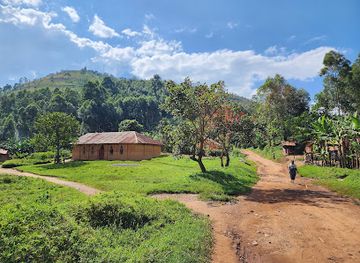
\n\nAlthough many visitors use Ruhengeri as a starting point for gorilla trekking, the city has an identity separate from the park. Its centre contains busy markets, small shops, cafés, guesthouses and restaurants serving residents from Musanze District and surrounding farming communities. The city’s cool highland climate, broad views and comparatively relaxed pace provide a useful contrast with Rwanda’s capital, Kigali. Musanze Caves, formed by ancient volcanic activity, offer another local perspective on the landscape, while the nearby Iby'Iwacu Cultural Village presents performances and demonstrations connected with Rwandan traditions.\n\nLandscape, Conservation and Community
\n\nRuhengeri’s appeal rests on the close relationship between people, agriculture and protected mountain habitats. Conservation has created important tourism opportunities, but it also sits within a densely settled region where land, livelihoods and wildlife protection must coexist. Guided nature experiences, community-led cultural activities and visits to local markets reveal a destination shaped as much by everyday life as by its famous primates and volcanoes.When is the best time to visit Ruhengeri?
Best: February, July–August · 21°C| Month | High (°C) | Rainfall (mm) |
|---|---|---|
| January | 21 | 100 |
| February (best) | 21 | 102 |
| March | 22 | 143 |
| April | 22 | 220 |
| May | 21 | 226 |
| June | 21 | 130 |
| July (best) | 21 | 71 |
| August (best) | 21 | 79 |
| September | 21 | 126 |
| October | 22 | 186 |
| November | 21 | 176 |
| December | 21 | 122 |
Getting to and around Ruhengeri
How to get there
Transportation
Best attractions in Ruhengeri
Ruhengeri, generally known as Musanze, is the principal gateway to Volcanoes National Park, where guided treks enter the bamboo and montane forest habitat of mountain gorillas and golden monkeys. The park lies outside the urban centre, but its presence defines the city’s visitor culture. Closer to town, Musanze Caves reveal chambers and passages created by ancient volcanic activity, with guided visits explaining their geology and local history. The Iby'Iwacu Cultural Village, in the wider Kinigi area, offers organised demonstrations of music, dance, crafts, cooking and village traditions, presented through a community-tourism model. In the city itself, the central market provides a window onto daily commerce, from produce grown in the fertile volcanic soils to household goods and clothing. Views towards the Virunga volcanoes are a constant attraction, particularly on clear mornings, while walks through surrounding farming areas offer a quieter encounter with northern Rwanda’s highland landscape.
-
Bed & breakfast
Red Rocks Rwanda
Explore the beauty of Rwanda at Red Rocks, a unique bed & breakfast and camping farm offering cultural experiences and serene landscapes.
20 min drive · 6.7 km from city centre
-
Corporate office
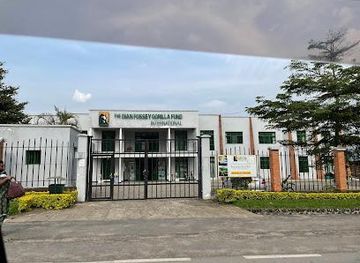
The Dian Fossey Gorilla Fund International, Musanze
Discover the inspiring legacy of Dian Fossey and contribute to gorilla conservation at the Dian Fossey Gorilla Fund International in Musanze, Rwanda.
7 min walk · 0.6 km from city centre
-
Hiking area
HIKE OF RWANDA HISTORICAL ADVENTURES
Experience the breathtaking beauty and rich history of Rwanda while hiking along the scenic Mukungwa River in Ruhengeri.
19 min drive · 6.4 km from city centre
-
Tourist attraction
MASHARIKI AFRICA TOURS AND SAFARIS
Discover the breathtaking landscapes and rich culture of Rwanda with Mashariki Africa Tours and Safaris, your gateway to adventure in Ruhengeri.
17 min walk · 1.4 km from city centre

Best landmarks in Ruhengeri
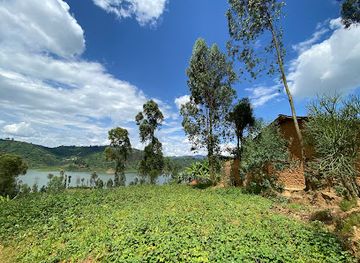
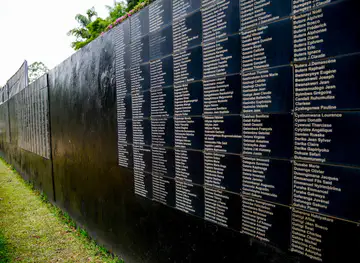
The most powerful landmarks around Ruhengeri are created by the landscape itself. The Virunga volcanoes, including Mount Karisimbi, Mount Bisoke and Mount Muhabura, rise beyond the city and define its geographical and cultural identity. Musanze Caves are a significant geological landmark, their volcanic chambers offering evidence of the region’s ancient lava flows and the ways local people have understood and used the formations. In the wider Kinigi area, the entrance region of Volcanoes National Park represents Rwanda’s modern conservation story and its protection of mountain-gorilla habitat. The town’s churches, market streets and civic buildings are less monumental but reveal its role as a regional administrative and commercial centre. Memorial places in the wider district carry solemn significance within Rwanda’s history of the 1994 Genocide against the Tutsi and should be approached with respect and without intrusive photography.
-
Cafe
Migano Cafe
Experience the warmth of Rwandan hospitality at Migano Cafe, where local flavors and cozy ambiance create unforgettable moments.
13 min walk · 1.1 km from city centre
-
 Hotel
HotelClassic Lodge
Discover the charm of Classic Lodge in Ruhengeri, your cozy retreat for exploring Rwanda's stunning landscapes and rich culture.
19 min drive · 6.5 km from city centre
-
Hotel
Fatima Hotel
Discover comfort and local charm at Fatima Hotel in Ruhengeri, your gateway to the stunning landscapes and rich culture of Rwanda.
3 min walk · 0.2 km from city centre
-
Hotel
Hotel Muhabura
Discover the perfect blend of comfort and adventure at Hotel Muhabura, your gateway to Rwanda's breathtaking landscapes and rich cultural heritage.
4 min walk · 0.3 km from city centre

Explore Ruhengeri on the map
Plan your Ruhengeri trip on one map. See where the top attractions, landmarks, restaurants, bars and hotels are, find what's near where you're staying, and book hotels and experiences in a few clicks.
Best hotels in Ruhengeri
Best restaurants in Ruhengeri
Musanze’s dining scene reflects northern Rwanda’s agricultural setting and the needs of a busy regional centre. Local restaurants and small eateries commonly serve staples such as beans, rice, potatoes, plantain, cassava and maize alongside vegetables and meat, while brochettes and grilled dishes are familiar informal choices. The fertile volcanic soils around the city support intensive cultivation, so market produce and seasonal cooking are central to everyday food culture. Cafés and guesthouse restaurants cater to visitors preparing for Volcanoes National Park, often adding coffee, pastries, sandwiches and international dishes to Rwandan meals. The central market is more useful for observing local trade than for a formal street-food circuit, and dining is generally relaxed rather than late-night. Visitors should expect simple, filling cooking in many local establishments, with more varied menus concentrated in established hotels, lodges and restaurants serving the trekking community.
-
Restaurant
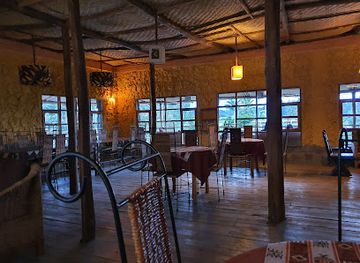
Volcana Lounge
Experience exquisite dining at Volcana Lounge in Musanze - where local flavors meet modern cuisine amidst stunning landscapes.
4 min walk · 0.3 km from city centre
-
Diner
Traveling Roots Ltd
Discover delightful dining at Traveling Roots Ltd – where Rwandan flavors meet modern cuisine in a vibrant atmosphere.
10 min walk · 0.8 km from city centre
-
Restaurant
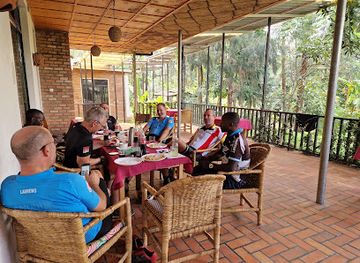
Susa Gardens
Discover authentic Rwandan cuisine amidst lush landscapes at Susa Gardens - where every meal is a journey into local culture.
5 min drive · 1.8 km from city centre
-
Restaurant
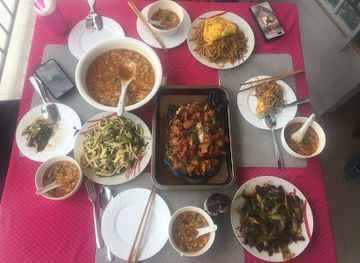
The Delicious Chinese Restaurant
Savor authentic Chinese cuisine in Ruhengeri at The Delicious Chinese Restaurant – where each dish celebrates flavor and tradition.
8 min walk · 0.7 km from city centre
Best bars in Ruhengeri
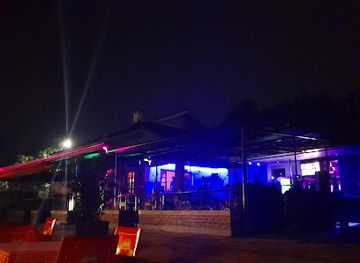
Evenings in Ruhengeri are generally sociable and low-key rather than dominated by a large club scene. Bars and hotel lounges around the town centre provide places for residents, drivers, guides and visitors to meet over Rwandan beer, soft drinks or coffee, while music may become more noticeable at weekends. Restaurants and guesthouses often offer the most convenient evening settings for travellers, especially before early departures into Volcanoes National Park. Nightlife is concentrated around central commercial streets rather than a single entertainment district, and many businesses close earlier than venues in Kigali. Cultural performances connected with community tourism can provide a more distinctive evening experience than conventional clubbing, although scheduling depends on the organised programme. Visitors should take a recognised taxi or arranged transfer after dark and respect local neighbourhoods, particularly in quieter residential areas.
-
Restaurant
Volcana Lounge
Discover a culinary oasis at Volcana Lounge, where Rwandan flavors meet international cuisine in the heart of Musanze.
4 min walk · 0.3 km from city centre
-
Bar
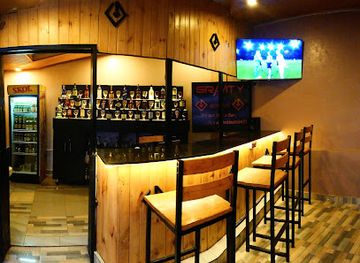
Gravity
Experience the vibrant nightlife and refreshing drinks at Gravity, the premier bar in Ruhengeri, Rwanda's stunning gateway to natural beauty.
16 min walk · 1.3 km from city centre
-
Bar
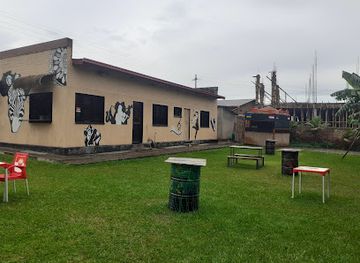
THE TANK HOUSE
Discover the vibrant nightlife of Ruhengeri at The Tank House, a lively bar offering a rich selection of local and international drinks.
6 min walk · 0.5 km from city centre
-
Grill
Afro Bistro Musanze
Discover the essence of Rwandan cuisine at Afro Bistro Musanze, where every dish is a celebration of local flavors and culinary artistry.
7 min walk · 0.6 km from city centre
Best nightclubs in Ruhengeri
Evenings in Ruhengeri are generally sociable and low-key rather than dominated by a large club scene. Bars and hotel lounges around the town centre provide places for residents, drivers, guides and visitors to meet over Rwandan beer, soft drinks or coffee, while music may become more noticeable at weekends. Restaurants and guesthouses often offer the most convenient evening settings for travellers, especially before early departures into Volcanoes National Park. Nightlife is concentrated around central commercial streets rather than a single entertainment district, and many businesses close earlier than venues in Kigali. Cultural performances connected with community tourism can provide a more distinctive evening experience than conventional clubbing, although scheduling depends on the organised programme. Visitors should take a recognised taxi or arranged transfer after dark and respect local neighbourhoods, particularly in quieter residential areas.
-
Restaurant
Volcana Lounge
Experience the fusion of local flavors and a vibrant atmosphere at Volcana Lounge in Musanze, the perfect dining destination for travelers.
4 min walk · 0.3 km from city centre
-
Bar
Twist Bar & Restaurant
Experience the vibrant nightlife at Twist Bar & Restaurant, where delicious food, refreshing drinks, and lively entertainment come together in an unforgettable atmosphere.
5 min drive · 1.6 km from city centre
-
Grill
Afro Bistro Musanze
Experience the rich flavors of Rwandan cuisine at Afro Bistro Musanze, where every meal is a celebration of local traditions and culinary artistry.
7 min walk · 0.6 km from city centre
-
Grill
Star lounge
Discover the vibrant flavors of grill dining at Star Lounge in Ruhengeri, where every meal is a celebration of taste and culture.
16 min walk · 1.3 km from city centre


Best shops in Ruhengeri
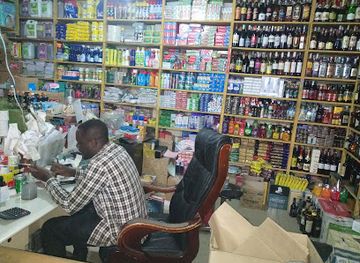
Shopping in Ruhengeri is centred on everyday commerce rather than a specialist luxury retail district. Musanze’s central market and surrounding streets connect the city with the productive farms of the volcanic highlands, offering produce, clothing, household goods and practical supplies used by local residents. Small shops and craft sellers cater to visitors heading towards Volcanoes National Park, with baskets, woven articles, carvings, textiles and locally made souvenirs appearing alongside ordinary merchandise. Community-tourism projects may provide more direct opportunities to buy crafts or learn about their production, while cafés and specialist outlets sometimes sell Rwandan coffee and other regional products. Bargaining is not equally appropriate everywhere: ask politely in informal markets, but expect fixed prices in established shops and organised cultural centres. Purchases should be made thoughtfully, avoiding wildlife products and antiquities whose legality or provenance is unclear.
-
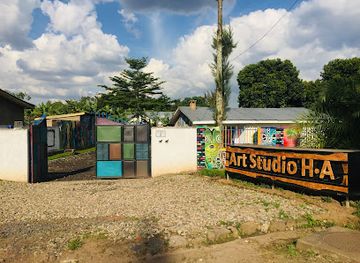
Art studio
MASHA ARTS GALLERY INN
Experience the unique blend of art and comfort at Masha Arts Gallery Inn in Ruhengeri, Rwanda, where creativity meets hospitality.
6 min walk · 0.5 km from city centre
-
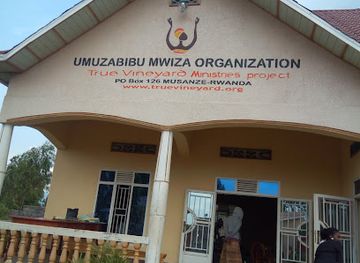
Boutique
Umuzabibu Mwiza - Handspun Hope
Explore Umuzabibu Mwiza - Handspun Hope in Ruhengeri for unique handcrafted treasures that empower local artisans and celebrate Rwandan culture.
7 min drive · 2.3 km from city centre
-
Shopping mall
Mothers Union
Discover the vibrant shopping scene and local culture at Mothers Union, Ruhengeri's premier shopping mall offering unique Rwandan crafts and delicious cuisine.
12 min walk · 0.9 km from city centre
-
Home goods store
Rukara Supermarket
Explore Rukara Supermarket in Ruhengeri for a unique shopping experience blending local culture and home goods.
16 min walk · 1.3 km from city centre
Get your free copy of our complete guide to Ruhengeri, delivered straight to you.
Everything on this page, from attractions and restaurants to essentials and local phrases, in one PDF you can read offline, print or share.
Already have an account? Sign in
Your Ruhengeri guide is ready.
We'll send it to · Not you? Sign out

Getting your guide ready…
We are putting together a fresh copy of the Ruhengeri guide. This can take up to a minute.
This can take a few moments. If your browser asks, choose Allow so the download can start. You'll find the guide in your Downloads folder.
Nothing happened? Download it again
Sorry, the guide is taking longer than usual. Please try again in a minute, or get it by email instead.
Ruhengeri essentials
Currency and Payment
Safety
Emergency Situations
Do's and Don'ts
Local Tips
From Eve
Local phrases worth knowing
You don't need to get them perfect. A few words go a long way, and locals appreciate the effort.
Basics
| English | Local | Say it |
|---|---|---|
| Hello | Muraho | [moo-rah-ho] |
| Goodbye | Murabeho | [moo-rah-beh-ho] |
| Yes | Yego | [yeah-go] |
| No | Oya | [oh-ya] |
| Please/You're welcome | Ndagukunda | [n-dah-goo-koon-dah] |
| Thank you | Murakoze | [moo-rah-koh-zay] |
| Excuse me/Sorry | Nshuti | [n-shoo-tee] |
| How are you? | Amakuru | [ah-mah-koo-roo] |
| Fine. And you? | Ni meza. Na wewe? | [nee may-zah. nah way-way] |
| Do you speak English? | Wavuga iki mu kirundi? | [wah-voo-gah ee-kee moo kee-roon-dee] |
| I don't understand | Ntazi | [n-tah-zee] |
Eating & Drinking
| English | Local | Say it |
|---|---|---|
| I'd like to see the menu, please | Nifuza kureba menyu, cyane | [nee-foo-zah koo-reh-bah may-nyoo, ch-yah-nay] |
| I don't eat meat | Si kuryama nyama | [see koo-ryah-mah nyah-mah] |
| Cheers! | Mwaramutse! | [mwa-rah-moot-say] |
| I would like to pay, please | Nifuza gufata inyongera, cyane | [nee-foo-zah goo-fah-tah ee-nyong-eh-rah, ch-yah-nay] |
Emergencies
| English | Local | Say it |
|---|---|---|
| Help! | Ubutware! | [oo-boo-twa-reh] |
| Go away! | Uzabaye! | [oo-zah-ba-yeah] |
| Call the Police! | Siba polisi! | [see-bah poh-lee-see] |
| Call a doctor! | Siba daktari! | [see-bah dahk-tah-ree] |
| I'm lost | Ndamenyerewe | [n-dah-men-yeah-reh-weh] |
| I'm ill | Ndi mu byaha | [n-dee moo bee-yah-ha] |
Shopping
| English | Local | Say it |
|---|---|---|
| I'd like to buy... | Nifuza kugura... | [nee-foo-zah koo-goo-rah] |
| I'm just looking | Nifuza kubona cyane | [nee-foo-zah koo-boh-nah ch-yah-nay] |
| How much is it? | Ni iki cyane? | [nee ee-kee ch-yah-nay] |
| That's too expensive | Iyo ni byiza cyane | [ee-yoh nee bee-zah ch-yah-nay] |
| Can you lower the price? | Wibagirwe cyane? | [wee-bah-gi-rweh ch-yah-nay] |
Time & Numbers
| English | Local | Say it |
|---|---|---|
| What time is it? | Saa ngapi? | [sah ngah-pee] |
| It's one o'clock | Ni saa kumi | [nee sah koo-mee] |
| Half past (10) | Ku munani | [koo moo-nah-nee] |
| Morning | Mwaramutse | [mwa-rah-moot-say] |
| Afternoon | Mugitondo | [moo-gee-ton-doh] |
| Evening | Magana | [mah-gah-nah] |
| Yesterday | Ejo | [eh-joh] |
| Today | Ejo | [eh-joh] |
| Tomorrow | Ejo | [eh-joh] |
| 1 | Rimwe | [ree-mweh] |
| 2 | Kabiri | [kah-bee-ree] |
| 3 | Gatatu | [gah-tah-too] |
| 4 | Kane | [kah-nay] |
| 5 | Gatanu | [gah-tah-noo] |
| 6 | Gatandatu | [gah-tan-dah-too] |
| 7 | Kumwe | [koo-mweh] |
| 8 | Ruba | [roo-bah] |
| 9 | Ruhenda | [roo-hen-dah] |
| 10 | Ruhakana | [roo-hah-kah-nah] |
Transport & Directions
| English | Local | Say it |
|---|---|---|
| Where's a/the...? | Ehehe...? | [eh-heh] |
| What's the address? | Icyihe...? | [ee-ch-yee-heh] |
| Can you show me (on the map)? | Wibaza iyi ya...? | [wee-bah-zah ee-yee yah] |
| When's the next (bus)? | Igihe bariya...? | [ee-ghee-heh bah-ree-yah] |
| A ticket (to ....) | Igitike (ku...) | [ee-gee-tee-kay koo] |
History of Ruhengeri
The Northern Highlands Before Colonial Rule
The area around present-day Ruhengeri formed part of the northern highlands associated with the Kingdom of Rwanda and its agricultural communities. Fertile volcanic soils supported intensive cultivation, while cattle keeping, local trade and relations between neighbouring communities shaped life around the Virunga ranges. The region was also influenced by the political and cultural networks of the Rwandan court, although authority in the northern borderlands developed through a mixture of royal administration and local leadership. Its proximity to the volcanoes and the wider Great Lakes region gave the area a distinctive frontier character, with movement and exchange continuing across what are now the borders of Rwanda, Uganda and the Democratic Republic of the Congo.
Colonial Administration and Mission Influence
European colonial rule reached Rwanda at the end of the nineteenth century, initially under Germany and later under Belgium after the First World War. Colonial administrators and Catholic missions expanded systems of taxation, administration and education, while reshaping existing political relationships. The northern region became increasingly connected to roads, trading centres and mission institutions serving the surrounding countryside. These changes did not replace older social structures entirely, but they altered land administration, labour patterns and access to education. The urban centre that developed as Ruhengeri gained importance as an administrative and commercial point in the densely populated volcanic highlands.
Independence and Regional Change
Rwanda became independent in 1962, and Ruhengeri continued to function as an important town in the north-west. Agriculture remained central to the local economy, with productive volcanic soils supporting crops for both households and regional markets. The wider region also experienced political tensions and periodic displacement that affected communities across northern Rwanda and the neighbouring borderlands. As roads and administrative services expanded, the town’s role as a regional centre strengthened. The name Musanze is now widely used for the district and city, while Ruhengeri remains deeply familiar in historical and everyday usage.
The 1994 Genocide against the Tutsi
The 1994 Genocide against the Tutsi devastated Rwanda, including communities in the former Ruhengeri prefecture. The violence destroyed families, institutions and social trust, while the aftermath brought displacement, trials, reconciliation efforts and the difficult reconstruction of public life. The history of the period is part of the wider national story and should be approached with respect rather than reduced to a tourism theme. Contemporary Rwanda’s emphasis on remembrance, civic reconstruction and community responsibility has shaped the country’s public identity. Visitors encountering memorial spaces or conversations about the genocide should follow local guidance and observe the seriousness of the subject.
Conservation and the Rise of Musanze Tourism
In the decades after the genocide, the northern highlands became increasingly associated with conservation and carefully managed tourism in Volcanoes National Park. Protection of the mountain gorilla population, research into the Virunga ecosystem and regulated trekking brought international attention and new employment opportunities. Musanze developed as the main service centre for visitors travelling to the park, while community tourism initiatives sought to connect local livelihoods with cultural interpretation and conservation. Today, the city’s identity combines regional commerce and highland agriculture with its role as a gateway to one of Africa’s best-known protected mountain landscapes.
Travel experiences inspired by this city
-
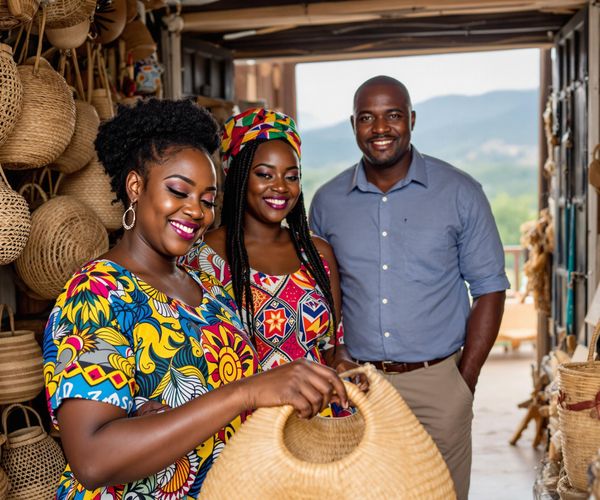 7 Day Trip
Family Adventure to Lake Bunyonyi, Uganda
Discover Lake Bunyonyi's beauty and culture with family, enjoying boat rides and local experiences in Uganda's stunning landscapes.
7 Day Trip
Family Adventure to Lake Bunyonyi, Uganda
Discover Lake Bunyonyi's beauty and culture with family, enjoying boat rides and local experiences in Uganda's stunning landscapes.
 15 Jun 2025
By Florence Nalubega -
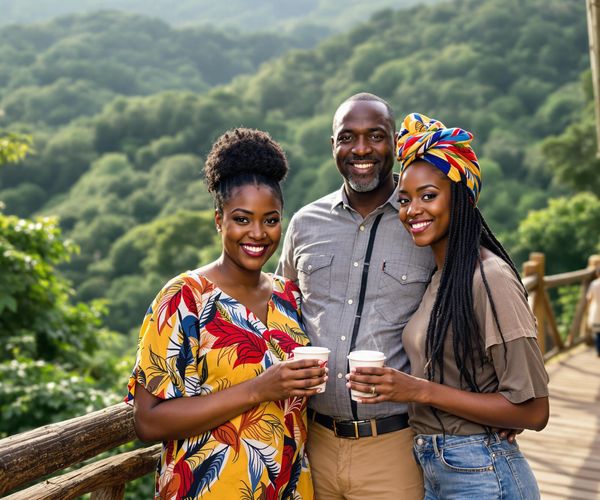 10 Day Trip
Family Adventure in Bwindi: Discovering Uganda's Gorillas
Join us on a family adventure to Bwindi Impenetrable National Park, Uganda, to experience the thrill of encountering mountain gorillas in their natural habitat.
10 May 2025
10 Day Trip
Family Adventure in Bwindi: Discovering Uganda's Gorillas
Join us on a family adventure to Bwindi Impenetrable National Park, Uganda, to experience the thrill of encountering mountain gorillas in their natural habitat.
10 May 2025
By Florence Nalubega
Swipe for more travel diaries
Ruhengeri in Photos
Browse through our photo collection highlighting the charm and character of the destination.
Cities near Ruhengeri
The closest cities to Ruhengeri, if you have time for more than one stop.
-

-

-

-

-


Swipe for more cities
Explore more

Explore more of Rwanda
Discover Rwanda: A land of rolling hills, rich culture, and unforgettable wildlife experiences. From mountain gorillas to serene lakes, adventure awaits in every corner.
Explore Rwanda