

Free Salelologa Travel Guide & Mobile App
Plan your Salelologa trip with Evendo. Get free guides to top attractions, restaurants, hotels, and bars. Web access or download the mobile app.


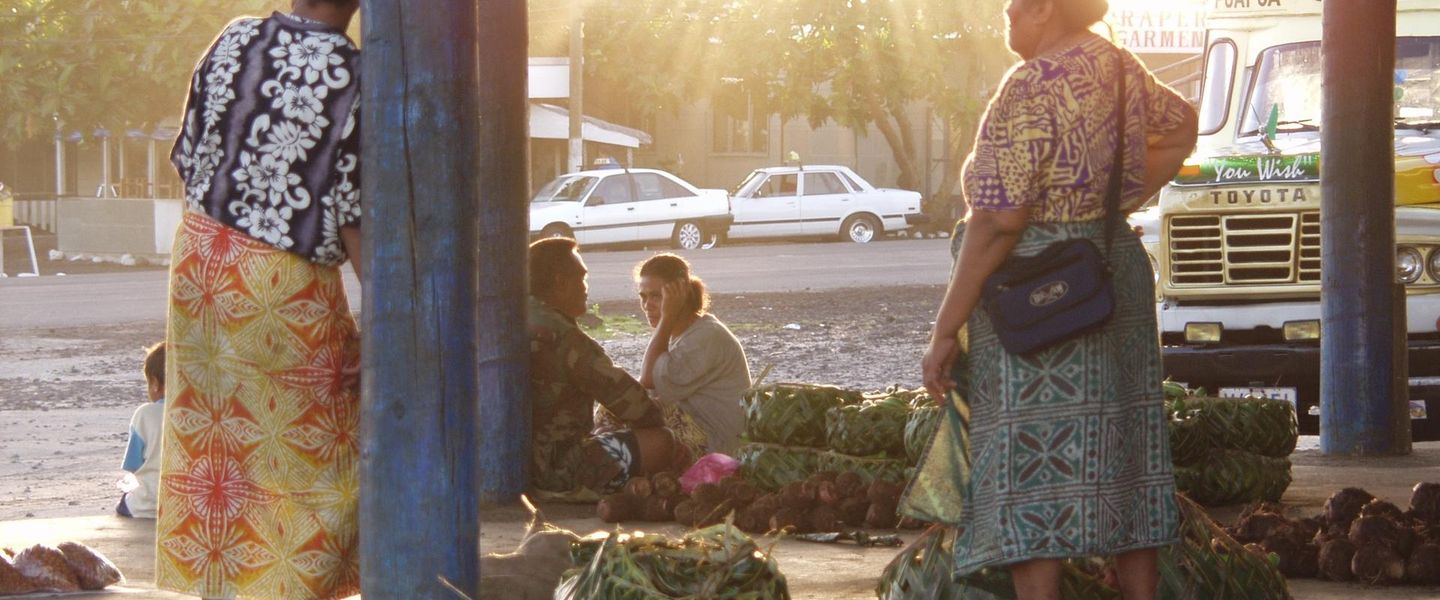


Salelologa, Samoa’s Savai‘i gateway, combines ferry-port life, village markets, Pacific traditions and easy access to volcanic landscapes and beaches.
A Harbour Town on Savai‘i
Salelologa is the principal arrival point on Savai‘i, Samoa’s largest island, where ferries from Upolu reach the southern shore. The town is less a conventional resort centre than a practical coastal settlement shaped by the rhythms of transport, village life and the sea. Travellers commonly encounter Salelologa at the start or end of a journey around Savai‘i, with buses, taxis, rental vehicles and local services gathered near the ferry terminal and market area.Read more about Salelologa
Markets and Village Culture
A Base for Savai‘i
When is the best time to visit Salelologa?
Best: July–September · 30°C| Month | High (°C) | Rainfall (mm) |
|---|---|---|
| January | 31 | 386 |
| February | 31 | 359 |
| March | 31 | 339 |
| April | 31 | 292 |
| May | 31 | 242 |
| June | 30 | 169 |
| July (best) | 30 | 150 |
| August (best) | 30 | 145 |
| September (best) | 30 | 157 |
| October | 31 | 192 |
| November | 31 | 247 |
| December | 31 | 323 |
Getting to and around Salelologa
How to get there
Transportation
Best attractions in Salelologa
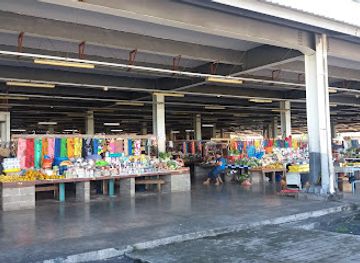
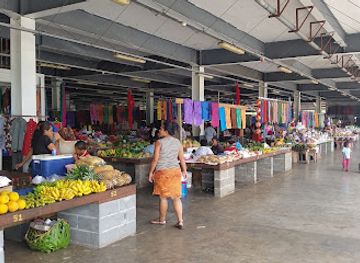
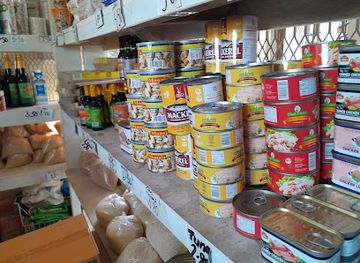
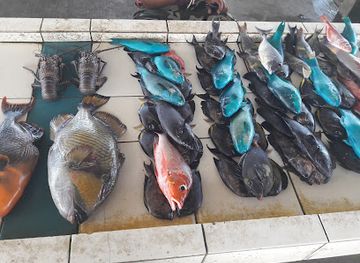
Salelologa’s principal attraction is its everyday island setting rather than a concentration of formal museums or monuments. Salelologa Market offers an immediate introduction to Savai‘i through displays of taro, breadfruit, bananas, coconuts, fish and prepared local food, while the ferry terminal and waterfront reveal the practical importance of sea travel between Samoa’s two main islands. The settlement is also a convenient starting point for exploring Savai‘i’s wider sights, including the Saleaula Lava Fields, the Alofaaga Blowholes, Papase‘ea Sliding Rocks near Apia on Upolu only as a separate excursion, and forested coastal areas farther around Savai‘i; these should not be mistaken for attractions within Salelologa itself. The nearby villages provide opportunities to observe traditional meeting houses, churches, cultivated gardens and community life, provided visits are made respectfully. Travellers using the town as a base can combine market visits and coastal walks with organised or independent journeys to the island’s volcanic landscapes and waterfalls.
-
Market
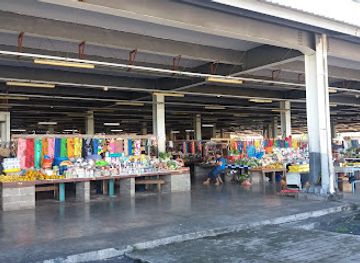
Salelologa New Market
Explore the vibrant Salelologa New Market, a cultural gem of Samoa filled with fresh produce, local crafts, and authentic flavors of the island.
16 min walk · 1.3 km from city centre
Best landmarks in Salelologa
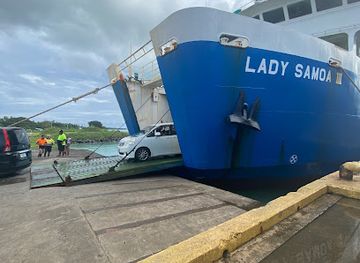
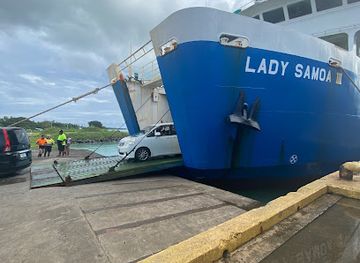
Salelologa’s most significant built landmarks are functional and communal rather than monumental. The ferry wharf represents the town’s role as Savai‘i’s principal link with Upolu, carrying people, vehicles and supplies across the strait and shaping the settlement’s modern identity. Salelologa Market is another defining structure, its stalls reflecting the island’s agricultural economy and the social importance of regular trading. Churches in Salelologa and surrounding villages stand as enduring symbols of the nineteenth-century Christian transformation of Samoa, while open-sided fales, or traditional meeting houses, express the continuing importance of family, chiefly authority and communal decision-making. The town’s modest streetscape is best understood alongside the wider island landscape: coastal roads, cultivated land and village compounds show how settlement remains organised around customary land and community life rather than dense urban development. These places carry significance through use and continuity as much as through architectural scale.
-
Cafe
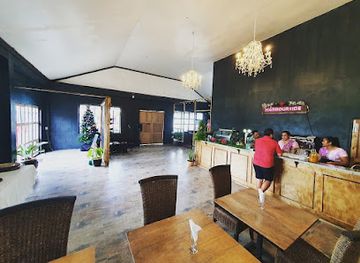
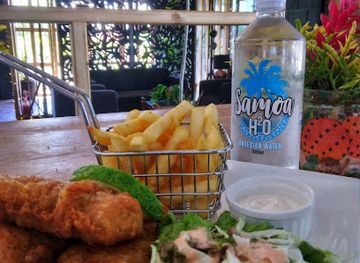
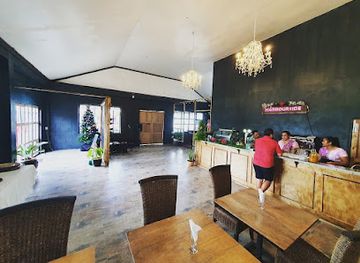
Savai'i Harbourside Café & Pizza Bar
Experience the culinary delights of Savai'i at the Harbourside Café & Pizza Bar, where local flavors blend with beautiful waterfront views.
1 min walk · 0.1 km from city centre
-
Port
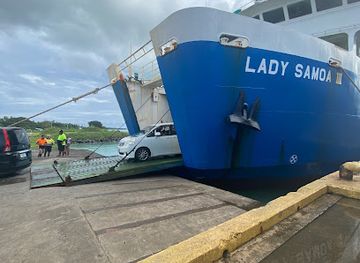
Salelologa Wharf
Experience the vibrant culture and stunning views at Salelologa Wharf, the heart of Samoa's island adventures.
3 min walk · 0.2 km from city centre
-
Market
Salelologa New Market
Discover the heart of Salelologa at the New Market, where local produce, crafts, and Samoan culture come together in a vibrant atmosphere.
16 min walk · 1.3 km from city centre
-
 Hotel
HotelLusia's Lagoon Chalets
Experience the charm of Lusia's Lagoon Chalets, a serene retreat on Salelologa's South Coast, blending comfort with authentic Samoan culture.
13 min walk · 1.0 km from city centre
Explore Salelologa on the map
Plan your Salelologa trip on one map. See where the top attractions, landmarks, restaurants, bars and hotels are, find what's near where you're staying, and book hotels and experiences in a few clicks.
Best hotels in Salelologa
Best restaurants in Salelologa
Salelologa’s food scene is modest and closely connected to local households, market trading and the ferry economy rather than a large restaurant district. At the market and small roadside stalls, visitors may find cooked taro, breadfruit, bananas, coconut-based dishes, fresh fish and simple meals influenced by Samoan home cooking. Palusami, made with taro leaves and coconut cream, is a familiar Samoan speciality, while oka combines raw fish with coconut cream and citrus-style flavours; availability varies according to the day and the individual cook. Bakeries, cafés, takeaway counters and accommodation restaurants provide additional choices, often mixing Samoan staples with familiar international dishes. Food purchased in villages or markets should be eaten with sensitivity to local customs, and visitors should ask before photographing stalls or people. Dining is generally relaxed and community-oriented, with the greatest range of options found in larger settlements and resorts around the island.
-
Cafe
Savai'i Harbourside Café & Pizza Bar
Experience authentic Samoan flavors at Savai'i Harbourside Café & Pizza Bar, where delicious pizza meets breathtaking views.
1 min walk · 0.1 km from city centre
-
Restaurant
Lusia's Lagoon Chalets
Experience exquisite dining and serene accommodations at Lusia's Lagoon Chalets, where stunning lagoon views meet authentic Samoan hospitality.
13 min walk · 1.0 km from city centre
-
Restaurant
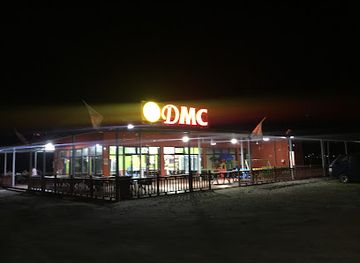
DMC
Experience authentic Samoan cuisine at DMC in Salelologa – a culinary journey filled with flavor and warmth.
3 min walk · 0.2 km from city centre
-
Family-friendly
RTV
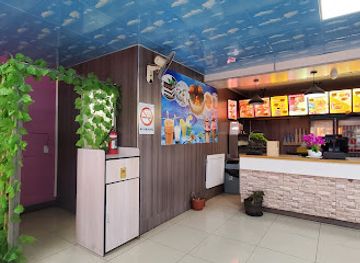
Experience family-friendly dining at RTV in Salelologa - where delicious food meets warm hospitality.
11 min walk · 0.9 km from city centre
Best bars in Salelologa
Salelologa does not have a large nightlife quarter or a dense collection of nightclubs. Evenings are more commonly spent at accommodation restaurants, modest bars, family gatherings or community events, with conversation and the coastal setting taking precedence over late-night entertainment. Some visitor properties may offer drinks and occasional evening activities, but opening arrangements and atmosphere vary. Traditional Samoan music, church gatherings, village celebrations and cultural performances can provide more meaningful evening experiences than commercial nightlife, although these are community occasions rather than entertainment products to be observed casually. Sunday evenings are especially shaped by religious and family life. Visitors should avoid loud behaviour near villages, ask permission before attending or photographing performances, and arrange transport in advance because roads are quieter and services more limited after dark.
-
Cafe
Savai'i Harbourside Café & Pizza Bar
Experience the flavors of Savai'i at the Harbourside Café & Pizza Bar, where delicious cuisine meets breathtaking coastal views in Salelologa.
1 min walk · 0.1 km from city centre
-
Port
Salelologa Wharf
Experience the vibrant culture, fresh seafood, and stunning views at Salelologa Wharf, the gateway to Samoa's enchanting islands.
3 min walk · 0.2 km from city centre
-
Restaurant
Lusia's Lagoon Chalets
Experience the charm and tranquility of Lusia's Lagoon Chalets, where comfort meets the stunning beauty of Samoa's South Coast.
13 min walk · 1.0 km from city centre
-
Hotel
Jet Over Hotel
Experience tranquility at Jet Over Hotel, a charming escape in Salelologa with stunning views, a refreshing pool, and authentic local cuisine.
8 min walk · 0.6 km from city centre
Best nightclubs in Salelologa
Salelologa does not have a large nightlife quarter or a dense collection of nightclubs. Evenings are more commonly spent at accommodation restaurants, modest bars, family gatherings or community events, with conversation and the coastal setting taking precedence over late-night entertainment. Some visitor properties may offer drinks and occasional evening activities, but opening arrangements and atmosphere vary. Traditional Samoan music, church gatherings, village celebrations and cultural performances can provide more meaningful evening experiences than commercial nightlife, although these are community occasions rather than entertainment products to be observed casually. Sunday evenings are especially shaped by religious and family life. Visitors should avoid loud behaviour near villages, ask permission before attending or photographing performances, and arrange transport in advance because roads are quieter and services more limited after dark.
-
Hotel
Lusia's Lagoon Chalets
Discover tranquility at Lusia's Lagoon Chalets, a serene hotel offering stunning lagoon views, local cuisine, and a refreshing swimming experience in Salelologa.
13 min walk · 1.0 km from city centre
Best shops in Salelologa
Shopping in Salelologa centres on practical local trade rather than a large retail district. Salelologa Market is the main place to browse island-grown produce, including taro, breadfruit, bananas, coconuts and other seasonal foods, while small shops and stalls serve everyday needs for residents and travellers. Visitors may also encounter prepared food, woven items, shell jewellery, printed garments and other locally made goods, though selection varies and not every item sold in a market is necessarily produced on Savai‘i. Some accommodation businesses and craft sellers offer Samoan handicrafts or souvenirs, and larger retail choices are available in Samoa’s main urban centres rather than in the port town. Ask about materials and provenance when buying traditional-style crafts, bargain politely only where it is customary, and carry cash in smaller tala denominations for market purchases and informal stalls.
-
Port
Salelologa Wharf
Explore the vibrant Salelologa Wharf, a bustling port filled with local culture, shopping, and breathtaking views in the heart of Samoa.
3 min walk · 0.2 km from city centre
-
Market
Salelologa New Market
Discover the heart of local culture at Salelologa New Market, a vibrant marketplace filled with fresh produce, crafts, and Samoan delicacies.
16 min walk · 1.3 km from city centre
-
Bakery
Kirahitto's Convenience Store/ Chicken & Chips
Discover the delicious fusion of fresh bakery treats and local favorites at Kirahitto's Convenience Store in Iva.
11 min drive · 3.7 km from city centre
-
Supermarket
Frankie Supermarket Salelologa
Discover the heart of Samoan shopping at Frankie Supermarket, where local flavors and everyday essentials come together.
17 min walk · 1.4 km from city centre
Get your free copy of our complete guide to Salelologa, delivered straight to you.
Everything on this page, from attractions and restaurants to essentials and local phrases, in one PDF you can read offline, print or share.
Already have an account? Sign in
Your Salelologa guide is ready.
We'll send it to · Not you? Sign out

Getting your guide ready…
We are putting together a fresh copy of the Salelologa guide. This can take up to a minute.
This can take a few moments. If your browser asks, choose Allow so the download can start. You'll find the guide in your Downloads folder.
Nothing happened? Download it again
Sorry, the guide is taking longer than usual. Please try again in a minute, or get it by email instead.
Salelologa essentials
Currency and Payment
Safety
Emergency Situations
Do's and Don'ts
Local Tips
From Eve
Local phrases worth knowing
You don't need to get them perfect. A few words go a long way, and locals appreciate the effort.
Basics
| English | Local | Say it |
|---|---|---|
| Hello | Talofa | [Tah-loh-fah] |
| Goodbye | Fa | [Fah] |
| Yes | Ioe | [Ee-oh-eh] |
| No | Leai | [Leh-eye] |
| Please/You're welcome | Fa'amalie | [Fah-ah-mah-lee-eh] |
| Thank you | Fa'afetai | [Fah-ah-feh-tie] |
| Excuse me/Sorry | Tulou | [Too-low] |
| How are you? | O ai oe? | [Oh-ah-ee oh-eh] |
| Fine. And you? | Lelei. O a oe? | [Leh-leh-ee. Oh-ah oh-eh] |
| Do you speak English? | O lea oe faa leai le gagana Peretania? | [Oh leh-ah oh-eh fah-ah leh-eye leh gah-gah-nah Peh-reh-tah-nee-ah] |
| I don't understand | Leai au malamalama | [Leh-eye ow mah-lah-mah-lah-mah] |
Eating & Drinking
| English | Local | Say it |
|---|---|---|
| I'd like to see the menu, please | Fa'amalie, ou te fia vaai i le teuga | [Fah-ah-mah-lee, oh-oo teh fee-ah vah-eye ee leh teh-oo-gah] |
| I don't eat meat | Leai ou fia ai laulau | [Leh-eye oh-oo fee-ah eye lah-oo-lah-oo] |
| Cheers! | Manuia! | [Mah-noo-ee-ah] |
| I would like to pay, please | Fa'amalie, ou te fia totogi | [Fah-ah-mah-lee, oh-oo teh fee-ah toe-toh-gee] |
Emergencies
| English | Local | Say it |
|---|---|---|
| Help! | Tulou! | [Too-low] |
| Go away! | Alu iai! | [Ah-loo ee-ah-ee] |
| Call the Police! | Fa'afesootai le fa'amasinoga! | [Fah-ah-feh-soh-oh-tie leh fah-ah-mah-see-noh-gah] |
| Call a doctor! | Fa'afesootai le foma'i! | [Fah-ah-feh-soh-oh-tie leh foh-mah-ee] |
| I'm lost | Ua ou maliu | [Oo-ah oh-oo mah-lee-oo] |
| I'm ill | Ua ou mate | [Oo-ah oh-oo mah-teh] |
Shopping
| English | Local | Say it |
|---|---|---|
| I'd like to buy... | Ou te fia fa'atau... | [Oh-oo teh fee-ah fah-ah-tah-oo] |
| I'm just looking | Ou te vaavaai lava | [Oh-oo teh vah-ah-vah-eye lah-vah] |
| How much is it? | E fia le totogi? | [Eh fee-ah leh toe-toh-gee] |
| That's too expensive | E lelei tele | [Eh leh-leh-ee teh-leh] |
| Can you lower the price? | E te faaleleia le totogi? | [Eh teh fah-ah-leh-lay-ee-ah leh toe-toh-gee] |
Time & Numbers
| English | Local | Say it |
|---|---|---|
| What time is it? | O le a le taimi? | [Oh leh ah leh tah-ee-mee] |
| It's one o'clock | Ua le tasi | [Oo-ah leh tah-see] |
| Half past (10) | I le itu i le sefulu | [Ee leh ee-too ee leh seh-foo-loo] |
| Morning | Aso | [Ah-soh] |
| Afternoon | Asoafi | [Ah-soh-ah-fee] |
| Evening | Afiafi | [Ah-fee-ah-fee] |
| Yesterday | Ananafi | [Ah-nah-nah-fee] |
| Today | Lenei | [Leh-neh-ee] |
| Tomorrow | Aso taeao | [Ah-soh tah-eh-ow] |
| 1 | Tasi | [Tah-see] |
| 2 | Lua | [Loo-ah] |
| 3 | Tolu | [Toh-loo] |
| 4 | Fa | [Fah] |
| 5 | Lima | [Lee-mah] |
| 6 | Ono | [Oh-no] |
| 7 | Fitu | [Fee-too] |
| 8 | Valu | [Vah-loo] |
| 9 | Iva | [Ee-vah] |
| 10 | Sefulu | [Sey-foo-loo] |
Transport & Directions
| English | Local | Say it |
|---|---|---|
| Where's a/the...? | O fea le... | [Oh feh-ah leh] |
| What's the address? | O le a le tuatusi? | [Oh leh ah leh twah-too-see] |
| Can you show me (on the map)? | E te fa'ailoa mai (i le mapa)? | [Eh teh fah-ah-ee-loh-ah mah-ee (ee leh mah-pah)] |
| When's the next (bus)? | O le a le lautele (autalavou)? | [Oh leh ah leh la-oo-teh-leh (ow-tah-lah-voh-oo)] |
| A ticket (to ....) | Tiketi (i le ...) | [Tee-keh-tee (ee leh)] |
History of Salelologa
An Ancient Savai‘i Settlement
Salelologa forms part of the long-settled southern coast of Savai‘i, an island regarded in Samoan tradition as a place of deep ancestral importance. As elsewhere in Samoa, community life historically centred on extended families, customary land, chiefly titles and village obligations rather than on a single urban administration. The coast’s landing places linked communities by sea, while inland gardens supplied food such as taro, breadfruit, bananas and coconuts. Although the modern town is strongly associated with transport, its foundations lie in the older settlement pattern of villages, family land and maritime connections that continues to shape life around the harbour.
Missionaries and Christian Communities
Christianity became a major force in Samoan society during the nineteenth century, following the arrival of Protestant and Catholic missionaries and the conversion of many communities. Churches became prominent institutions in village life, and Christian observance became closely interwoven with Samoan customs rather than replacing every existing social structure. Around Salelologa, as across Savai‘i, church buildings, Sunday worship and communal gatherings remain visible expressions of this transformation. The period also increased Samoa’s links with European traders, ships and political interests, bringing new goods, religious practices and outside forms of authority to coastal settlements.
Colonial Rule in Samoa
Samoa’s nineteenth-century political rivalries culminated in the partition of the islands in 1899. Germany administered the western islands, including Savai‘i, until the First World War, when New Zealand took control. The resulting colonial period introduced new administrative systems and commercial patterns while leaving customary land tenure and chiefly structures central to Samoan society. The 1918 influenza pandemic, brought to Western Samoa under New Zealand administration, caused devastating loss of life across the country. These wider national events affected island communities and remain part of the historical context in which Salelologa developed.
The Rise of the Ferry Gateway
Salelologa’s modern importance grew from its role as Savai‘i’s principal maritime connection with Upolu. Regular inter-island ferry services made the southern coast an important point of arrival for residents, produce, vehicles and visitors, linking the island more closely with Apia and national institutions. The harbour also supported the movement of goods between villages and the capital, reinforcing Salelologa’s position as a service centre. Rather than developing into a dense city, it retained the scale of a small island town whose commercial activity follows ferry movements, market trading and the needs of surrounding communities.
Contemporary Island Life
Modern Salelologa reflects the continuing balance between national connections and local community life. Improved roads, mobile communications, transport services and tourism have made Savai‘i more accessible, while customary practices, churches and village authority remain influential. The town’s market and ferry terminal provide its most recognisable public spaces, but much of the island’s identity is encountered beyond the centre—in family villages, cultivated land, coastal settlements and natural areas. Today Salelologa functions as both a practical gateway and a meeting point between Samoa’s contemporary transport network and the enduring social traditions of Savai‘i.
Salelologa in Photos
Browse through our photo collection highlighting the charm and character of the destination.
Cities near Salelologa
The closest cities to Salelologa, if you have time for more than one stop.
-

-

-

-

-


Swipe for more cities
Explore more

Explore more of Samoa
Discover Samoa: Immerse in Polynesian culture, explore pristine beaches, and enjoy lush landscapes. Experience the unique blend of tradition and natural beauty.
Explore Samoa