

Monte Titano, San Marino Travel Guide
Explore the majestic Monte Titano in San Marino, where history, nature, and culture blend seamlessly in a stunning mountain landscape.
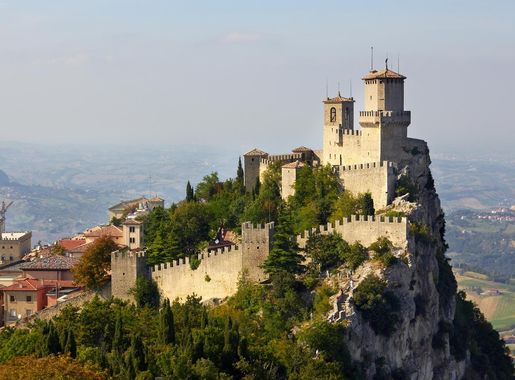
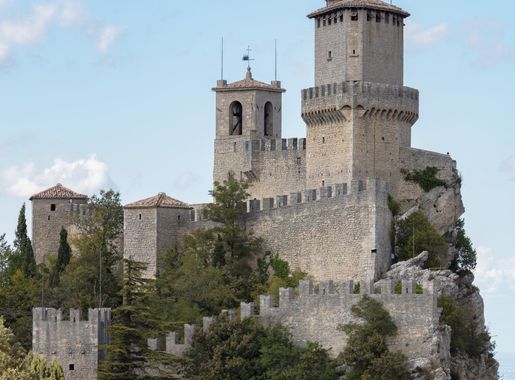
Monte Titano, the highest peak in San Marino, offers a breathtaking panorama of the surrounding landscape. The mountain stands tall at 739 meters and is part of the Apennine Mountains. Its three peaks are capped with medieval towers that are an iconic symbol of the Republic of San Marino. Visitors can explore the historic center of San Marino City, which is a UNESCO World Heritage site. The cobbled streets, ancient buildings, and quaint shops make it feel like a step back in time. The First Tower, or Guaita, is the oldest and most famous tower, providing stunning views and a glimpse into the region’s rich history. Monte Titano is also a haven for nature lovers. Numerous hiking trails wind through lush forests and meadows, offering opportunities for bird watching and photography. The pathways are well-marked, making it suitable for both casual walkers and experienced hikers. For those interested in culture, the mountain and its surroundings host a variety of museums, including the State Museum and the Museum of Ancient Arms. These institutions offer insights into the art, history, and traditions of San Marino. Don’t miss the chance to dine in local eateries that serve traditional Sammarinese cuisine. From hearty pasta dishes to delectable pastries, the food here is a treat for the taste buds. The vibrant local markets are also worth a visit, where you can buy unique souvenirs and local crafts.

Know before you go
Hi, I'm Eve. Here are a few practical things to know before exploring Monte Titano.
- Wear comfortable shoes for walking through the cobblestone streets and hiking trails.
- Visit early in the morning or late afternoon to avoid the crowds and enjoy the best light for photography.
- Check the weather forecast before heading out, as the mountain weather can change unexpectedly.
- Bring a refillable water bottle; there are several fountains with fresh water along the hiking trails.
- Explore local eateries and try traditional Sammarinese dishes for an authentic culinary experience.
Explore Monte Titano: Things to Do, Places to Eat, Hotels & More
Handpicked recommendations for top attractions, local dining, accommodations, and more

Best attractions in Monte Titano
Top-rated picks
Best Attractions

Aquafan
Dive into fun at Aquafan, Italy's largest water park in Riccione, featuring thrilling slides, wave pools, and family-friendly attractions for all ages.

Fiabilandia
Experience the magic of childhood at Fiabilandia, Italy's enchanting amusement park filled with rides, shows, and whimsical adventures for the whole family.

Fortress of San Leo
Discover the rich history and stunning views of the Fortress of San Leo, a captivating blend of medieval architecture and breathtaking landscapes in Italy.

Ròseo Euroterme Wellness Resort
Discover tranquility at Ròseo Euroterme Wellness Resort, where thermal baths and wellness treatments rejuvenate body and soul in the heart of Bagno di Romagna.

Best landmarks in Monte Titano
Top-rated picks
Best Landmarks
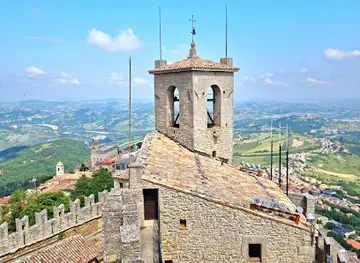
Guaita Tower
Explore the breathtaking Guaita Tower in San Marino, a historic fortress offering stunning views and rich cultural heritage.
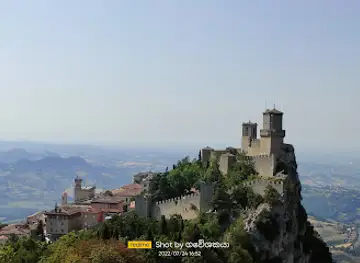
Falesia Second Tower
Explore the breathtaking Falesia Second Tower in San Marino, a historical landmark with stunning views and rich military heritage.

Basilica of Saint Marinus
Discover the Basilica of Saint Marinus, an architectural gem and spiritual heart of San Marino, offering breathtaking views and rich cultural experiences.

Liberty Square
Discover the historic charm and breathtaking views at Liberty Square, the heart of San Marino, where freedom and culture meet.

Best restaurants in Monte Titano
Top-rated picks
Best Restaurants

Ristorante Bolognese
Experience authentic Italian cuisine at Ristorante Bolognese in San Marino - where tradition meets flavor in a charming setting.

Ritrovo Dei Lavoratori XXVIII Luglio
Experience authentic Italian cuisine at Ritrovo Dei Lavoratori XXVIII Luglio in San Marino - where every meal is a celebration of flavor and tradition.

Ristorante Pizzeria Spingarda
Discover authentic Italian cuisine at Ristorante Pizzeria Spingarda in San Marino—where delicious pizzas and fresh seafood await.

La Terrazza
Experience exquisite Italian cuisine and breathtaking views at La Terrazza in San Marino - a true culinary delight.

Best bars in Monte Titano
Top-rated picks
Best Bars
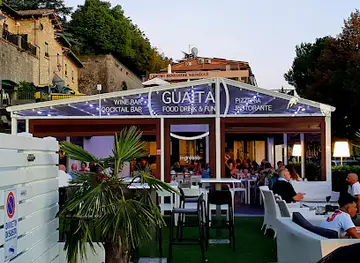
GUAITA food, drink & fun
Discover GUAITA in San Marino: A vibrant bar and restaurant offering a delightful blend of Italian cuisine and lively cocktails in a welcoming atmosphere.

Giulietti Km0
Experience gourmet hamburgers and artisanal drinks in a vibrant gastropub atmosphere at Giulietti Km0 in San Marino.
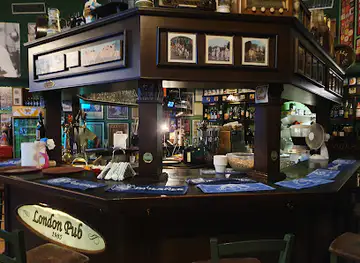
London Pub
Discover the warmth and charm of London Pub in San Marino, where local culture meets delightful cuisine and a cozy atmosphere.
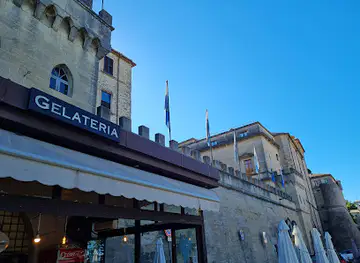
Bar La Torretta
Discover the vibrant atmosphere and local flavors at Bar La Torretta, a charming bar in the heart of San Marino.

Best nightclubs in Monte Titano
Top-rated picks
Best Nightclubs

GUAITA food, drink & fun
Experience the vibrant flavors and lively ambiance at GUAITA, San Marino's top destination for Italian cuisine and nightlife.

London Pub
Discover the perfect blend of traditional and modern pub culture at London Pub in San Marino, where great drinks and warm hospitality await.

Bar Casa Rossa
Experience the vibrant ambiance and delightful drinks at Bar Casa Rossa, a must-visit bar in the heart of Murata.

Il Foro Srl
Discover the charm of Il Foro Srl in Valdragone, San Marino—a cozy bar perfect for relaxing and savoring local flavors.

Best shops in Monte Titano
Top-rated picks
Best Shops

La Saponeria del Titano
Explore La Saponeria del Titano in Città di San Marino for exquisite natural cosmetics and artisanal skincare products crafted with care.

San Marino Duck Store
Explore the whimsical San Marino Duck Store for unique souvenirs and toys that embody the spirit of San Marino. A must-visit for all tourists!

Emporium Italy by Chiaroscuro - San Marino, Borse & Accessori In Vera Pelle Italiana
Discover exquisite Italian leather goods at Emporium Italy in San Marino, where quality meets timeless elegance.

Titano Store Centro Storico
Discover top-tier airsoft supplies and sportswear in the heart of Città di San Marino at Titano Store, a hub for enthusiasts and adventurers.

Explore Monte Titano on the Map
A handpicked selection of must-see spots in Monte Titano, mapped for you.
Monte Titano Essentials
-
Monte Titano is located in the Republic of San Marino. The closest international airport is Federico Fellini International Airport in Rimini, Italy, approximately 25 kilometers away. From Rimini, you can take a bus directly to San Marino, with the journey taking about an hour. Alternatively, you can drive or take a taxi. Another option is to fly into Bologna Guglielmo Marconi Airport, about 130 kilometers away, and then travel to San Marino by train and bus or car.
-
San Marino is small, and many attractions on Monte Titano are within walking distance. Public buses operate within San Marino and connect to nearby Italian towns like Rimini. Taxis are available but can be somewhat expensive. Renting a car offers flexibility, especially if you plan to explore the surrounding areas.
-
San Marino uses the Euro (EUR) as its official currency. Credit and debit cards are widely accepted in hotels, restaurants, and shops. However, it's advisable to carry some cash for smaller establishments and street vendors. ATMs are readily available throughout San Marino, including on Monte Titano.
-
San Marino is generally very safe for tourists. The crime rate is low, and there are no specific high-crime areas targeting tourists. Nevertheless, standard precautions are recommended: keep an eye on your belongings, avoid poorly lit areas at night, and be aware of your surroundings, especially in crowded places.
-
In case of emergency, dial 112 for immediate assistance. Medical facilities are available, and pharmacies are well-stocked for minor health issues. It is advisable to have travel insurance that covers medical emergencies. The local police are helpful and responsive.
-
Fashion: Do dress modestly, particularly when visiting religious sites. Avoid overly revealing clothing. Religion: Do show respect for local customs and traditions. Always cover your shoulders and knees when entering churches. Public Transport: Do be courteous and offer your seat to elderly passengers. Don’t eat or drink on public transport. Greetings: Do greet people with a handshake. A friendly 'Buongiorno' (Good Day) is well received. Eating & Drinking: Do try local dishes and wines. Do not refuse hospitality, as it might be considered impolite.
-
To experience Monte Titano like a local, visit during one of San Marino’s many festivals, such as the Medieval Days in July. Explore the local markets for unique crafts and souvenirs. Engage with locals, who are often friendly and willing to share insights about their history and culture. Don’t miss the walking trails that offer stunning views of the surrounding landscape.
When is the best time to visit Monte Titano?
Useful Local Phrases for Monte Titano
You don't need to speak the language perfectly. Even learning a few simple words can make conversations warmer—and locals usually appreciate the effort.
— Eve

Here are the phrases I use most often in Monte Titano. Try a few—you'll be surprised how far they go! 😊
❤️
-
- HelloCiao
[chow] - GoodbyeArrivederci
[ah-ree-veh-der-chee] - YesSì
[see] - NoNo
[noh] - Please/You're welcomePer favore/Prego
[pair fah-vor-eh/pray-go] - Thank youGrazie
[grah-tzee-eh] - Excuse me/SorryMi scusi/Scusa
[mee skoo-zee/skoo-zah] - How are you?Come stai?
[koh-meh sty] - Fine. And you?Bene. E tu?
[beh-neh. eh too] - Do you speak English?Parli inglese?
[pahr-lee een-gleh-zeh] - I don't understandNon capisco
[nohn kah-pee-skoh]
- HelloCiao
-
- I'd like to see the menu, pleaseVorrei vedere il menu, per favore
[vohr-ray veh-deh-reh eel men-oo, pair fah-vor-eh] - I don't eat meatNon mangio carne
[nohn mahn-joh kahr-neh] - Cheers!Salute!
[sah-loo-teh] - I would like to pay, pleaseVorrei pagare, per favore
[vohr-ray pah-gah-reh, pair fah-vor-eh]
- I'd like to see the menu, pleaseVorrei vedere il menu, per favore
-
- Help!Aiuto!
[ah-yoo-toh] - Go away!Vai via!
[vah-ee vee-ah] - Call the Police!Chiama la polizia!
[kee-ah-mah lah poh-lee-tsya] - Call a doctor!Chiama un dottore!
[kee-ah-mah oon doh-toh-reh] - I'm lostMi sono perso
[mee soh-noh pehr-soh] - I'm illSto male
[stoh mah-leh]
- Help!Aiuto!
-
- I'd like to buy...Vorrei comprare...
[vohr-ray kohm-prah-reh] - I'm just lookingSto solo guardando
[stoh soh-loh gwar-dahn-doh] - How much is it?Quanto costa?
[kwan-toh koh-stah] - That's too expensiveÈ troppo caro
[eh troh-poh kah-roh] - Can you lower the price?Puoi abbassare il prezzo?
[pwoy ahb-bah-sah-reh eel preh-tsoh]
- I'd like to buy...Vorrei comprare...
-
- What time is it?Che ora è?
[keh oh-rah eh] - It's one o'clockÈ l'una
[eh loo-nah] - Half past (10)Sono le dieci e mezza
[soh-noh leh dee-eh-chee eh meh-tzah] - MorningMattina
[maht-tee-nah] - AfternoonPomeriggio
[poh-meh-ree-joh] - EveningSera
[seh-rah] - YesterdayIeri
[yeh-ree] - TodayOggi
[oh-jee] - TomorrowDomani
[doh-mah-nee] - 1Uno
[oo-noh] - 2Due
[dweh] - 3Tre
[treh] - 4Quattro
[kwah-troh] - 5Cinque
[cheen-kweh] - 6Sei
[say] - 7Sette
[seh-tay] - 8Otto
[oh-toh] - 9Nove
[noh-veh] - 10Dieci
[dee-eh-chee]
- What time is it?Che ora è?
-
- Where's a/the...?Dov'è...?
[doh-veh] - What's the address?Qual è l'indirizzo?
[kwahl eh leen-dee-ree-tsoh] - Can you show me (on the map)?Puoi farmi vedere (sulla mappa)?
[pwoy fahr-mee veh-deh-reh (sool-lah mahp-pah)] - When's the next (bus)?Quando passa il prossimo (autobus)?
[kwan-doh pahs-sah eel prohs-see-moh (ow-toh-boos)] - A ticket (to ....)Un biglietto (per ...)
[oon beel-yet-toh (pair)]
- Where's a/the...?Dov'è...?
History of Monte Titano
-
According to legend, San Marino was founded in 301 AD by a Christian stonemason named Marinus the Dalmatian. Seeking refuge from religious persecution, Marinus fled from the island of Rab in modern-day Croatia and took refuge on Monte Titano, where he established a small Christian community. This act is considered the foundational moment of the Republic of San Marino, making it one of the world's oldest republics.
-
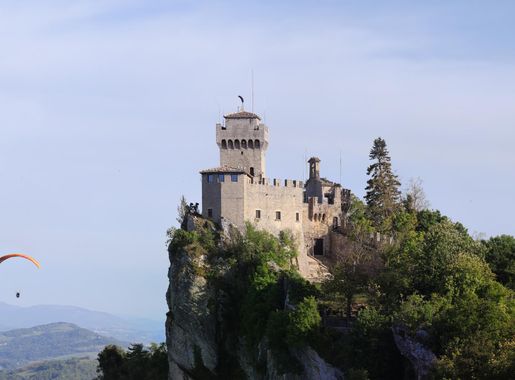
Monte Titano is crowned by three imposing towers: Guaita, Cesta, and Montale. These fortresses were constructed during the early medieval period as defensive structures to protect the nascent Republic from invaders. Guaita, the oldest and most famous, dates back to the 11th century and served as a prison. Cesta, located on the highest peak, was built in the 13th century and now houses a museum of ancient weapons. Montale, the smallest and least accessible, was constructed in the 14th century and is distinguished by its pentagonal base.
-
Throughout its history, San Marino has fiercely defended its independence, even as neighboring territories were absorbed into larger states. The Republic maintained its sovereignty through strategic alliances and diplomacy, most notably with the Papal States. In 1463, San Marino expanded its territory by allying with Pope Pius II in a conflict against Sigismondo Pandolfo Malatesta, gaining the castles of Fiorentino, Montegiardino, and Serravalle as a reward.
-
During the Napoleonic Wars, San Marino managed to preserve its independence despite the widespread upheaval in Europe. In 1797, Napoleon Bonaparte offered to extend the territory of San Marino, but the Republic wisely declined, choosing to maintain its traditional boundaries and neutrality. This decision helped San Marino avoid the conflicts that plagued the Italian Peninsula during that period.
-
During World War II, San Marino declared its neutrality and became a refuge for over 100,000 Italians fleeing the conflict. Despite its small size, the Republic provided shelter and aid to those displaced by the war. In September 1944, San Marino was briefly occupied by German forces during the Battle of San Marino, but it was soon liberated by Allied troops. The Republic's humanitarian efforts during this time are a testament to its enduring principles of independence and compassion.
-
Monte Titano and the historic center of San Marino were inscribed as a UNESCO World Heritage Site in 2008. This recognition highlights the cultural and historical significance of the area, which boasts well-preserved medieval architecture, narrow winding streets, and panoramic views of the surrounding landscape. The site is celebrated for its continuity as a living historic center that has maintained its traditions and governance structures for over 1,700 years.
Cities in Monte Titano
Browse our curated selection of top destinations, scenic points, and must-visit spots in the area.

Neighbouring destination travel guides
Browse our curated selection of top destinations, scenic points, and must-visit spots in the area.


Your all‑in‑one travel companion app
Explore expert travel guides, compare and book tours, experiences, hotels, and more—all from the palm of your hand. Download now for seamless trip planning wherever your wanderlust takes you.


Explore More of San Marino

Looking beyond Monte Titano? Discover San Marino for broader travel guides, local hot-spots, and regional highlights.
Explore San MarinoMonte Titano in Photos
Browse through our photo collection highlighting the charm and character of the destination.




Monte Titano: The Crown Jewel of San Marino
Monte Titano, the highest peak in San Marino, offers a breathtaking panorama of the surrounding landscape. The mountain stands tall at 739 meters and is part of the Apennine Mountains. Its three peaks are capped with medieval towers that are an iconic symbol of the Republic of San Marino. Visitors can explore the historic center of San Marino City, which is a UNESCO World Heritage site. The cobbled streets, ancient buildings, and quaint shops make it feel like a step back in time. The First Tower, or Guaita, is the oldest and most famous tower, providing stunning views and a glimpse into the region’s rich history. Monte Titano is also a haven for nature lovers. Numerous hiking trails wind through lush forests and meadows, offering opportunities for bird watching and photography. The pathways are well-marked, making it suitable for both casual walkers and experienced hikers. For those interested in culture, the mountain and its surroundings host a variety of museums, including the State Museum and the Museum of Ancient Arms. These institutions offer insights into the art, history, and traditions of San Marino. Don’t miss the chance to dine in local eateries that serve traditional Sammarinese cuisine. From hearty pasta dishes to delectable pastries, the food here is a treat for the taste buds. The vibrant local markets are also worth a visit, where you can buy unique souvenirs and local crafts.