

Free Faetano Travel Guide & Mobile App
Plan your Faetano trip with Evendo. Get free guides to top attractions, restaurants, hotels, and bars. Web access or download the mobile app.


Faetano, San Marino, pairs a quiet medieval village atmosphere with the parish church, Lake Faetano and easy access to the republic’s hilltop heritage.
A Small Castello with a Rural Character
Faetano is one of the nine castelli of the Republic of San Marino, occupying a green, gently rolling area in the country’s east near the Italian border. Smaller and quieter than the capital on Monte Titano, it offers a glimpse of everyday Sammarinese life: a compact settlement, scattered farmsteads, wooded slopes and roads that open towards the Romagna countryside. The village is centred on its parish church and modest civic spaces rather than a dense concentration of monuments, making it a useful place to appreciate the republic beyond its celebrated historic capital.Read more about Faetano
Church, Countryside and Lake
A Different View of San Marino
When is the best time to visit Faetano?
Best: May–June, September · 23–28°C| Month | High (°C) | Rainfall (mm) |
|---|---|---|
| January | 8 | 71 |
| February | 8 | 69 |
| March | 12 | 90 |
| April | 17 | 101 |
| May (best) | 23 | 116 |
| June (best) | 28 | 97 |
| July | 32 | 74 |
| August | 31 | 78 |
| September (best) | 26 | 85 |
| October | 20 | 96 |
| November | 13 | 78 |
| December | 9 | 74 |
Getting to and around Faetano
How to get there
Transportation
Best attractions in Faetano
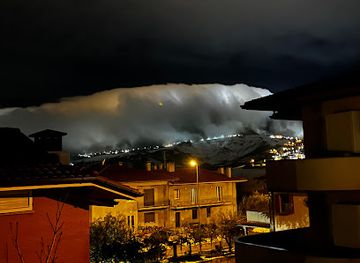
Faetano’s attractions are modest in scale but rewarding for visitors interested in the quieter side of San Marino. The village centre and the parish church of San Paolo Apostolo provide a natural starting point, with local streets revealing the castello’s residential character rather than a concentration of grand monuments. Lake Faetano, a reservoir set among green hills, is the area’s most distinctive landscape feature and offers opportunities for a peaceful walk, photography and informal outdoor time. The surrounding roads and paths open towards cultivated slopes and views across the eastern part of the republic and the neighbouring Italian countryside. Faetano is also useful as a base for understanding San Marino’s network of castelli: nearby Montegiardino and Fiorentino offer further small-scale village landscapes, while the fortified historic centre on Monte Titano can be reached as part of a wider itinerary. The appeal lies in combining parish heritage, water and countryside rather than expecting a large museum or entertainment district.
-
 Tourist attraction
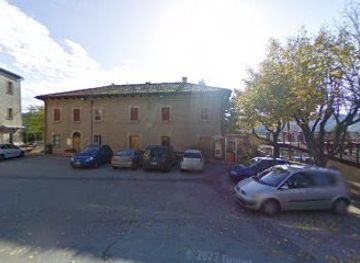
Casa del “Maruchen”
Discover the charm and history of Casa del 'Maruchen' in Montescudo-Monte Colombo, a delightful tourist attraction nestled in Italy's scenic countryside.
5 min drive · 1.6 km from city centre
Best landmarks in Faetano
Faetano’s principal landmark is the parish church of San Paolo Apostolo, whose presence gives the village a clear religious and communal focus. Its significance is less a matter of monumental scale than of continuity within a small castello whose identity has long been connected with parish life. Lake Faetano forms a second defining feature, not as a historic monument but as a recognisable element of the territory and a reminder of the relationship between settlement, water management and the surrounding countryside. The village itself, together with its modest civic spaces and rural lanes, represents the dispersed character of San Marino beyond Monte Titano. In a wider interpretation of the castello’s heritage, Faetano’s inclusion in the republic in 1463 is central: the landscape is part of the territorial expansion that shaped modern San Marino. These are understated landmarks, best understood through their setting and local significance.
-
Historical landmark
Piazza of Massaro
Discover the rich history and vibrant culture of San Marino at the enchanting Piazza of Massaro in Faetano, a historical landmark full of charm.
4 min walk · 0.3 km from city centre
-
City or town hall
Casa del Castello di Faetano - Giunta di Castello
Explore the charming Casa del Castello di Faetano, a historic city hall in the picturesque town of Faetano, San Marino.
4 min walk · 0.3 km from city centre
-
Hiking area
Montepulito
Explore the serene hiking paradise of Montepulito in Corianino, where stunning landscapes and tranquil trails await outdoor enthusiasts.
16 min walk · 1.3 km from city centre

Explore Faetano on the map
Plan your Faetano trip on one map. See where the top attractions, landmarks, restaurants, bars and hotels are, find what's near where you're staying, and book hotels and experiences in a few clicks.
Best hotels in Faetano
Best restaurants in Faetano
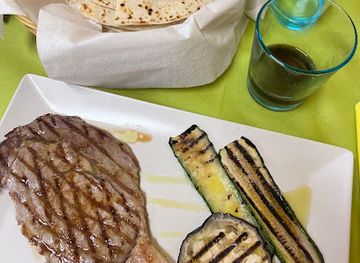
Faetano’s dining scene is small and locally oriented, reflecting its rural setting rather than the restaurant concentration found around San Marino’s capital. Traditional Sammarinese cooking shares the culinary vocabulary of nearby Romagna: handmade pasta, filled pasta, grilled meats, seasonal vegetables, piadina and rustic breads are common regional reference points. Torta Tre Monti, the republic’s best-known layered wafer and chocolate confection, is associated with San Marino as a whole and is widely encountered beyond Faetano. Local meals may be accompanied by wines from the surrounding hills or neighbouring Emilia-Romagna, while cafés provide a simpler setting for coffee and pastries. Visitors should expect fewer late-night and specialist dining options in the castello itself, with a broader choice in larger Sammarinese settlements. Food shopping and casual eating are practical reasons to include Serravalle or the capital in a wider itinerary.
-
Restaurant
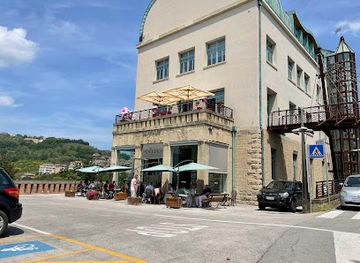
Imperiale Bar Ristorante
Experience Mediterranean flavors at Imperiale Bar Ristorante in Faetano – where every meal tells a story.
4 min walk · 0.3 km from city centre
Best bars in Faetano
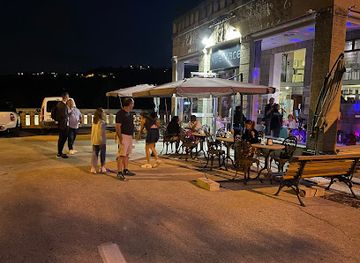
Faetano has a quiet evening character rather than a dedicated nightlife quarter. Social life centres on local cafés, restaurants and community spaces, where an evening may unfold over conversation, coffee or a regional meal rather than in a nightclub. There is little reason to expect a concentration of cocktail bars, live-music venues or late-opening clubs in the village. The wider Republic of San Marino offers more choice, particularly around the capital and larger commercial settlements, while Rimini across the Italian border has a much broader nightlife scene. Evening drives require care on winding roads, and public transport can be less convenient later in the day. Cultural events, seasonal celebrations and local community programmes may provide more characteristic evening experiences than clubbing, although dates and venues vary.
-
Bar
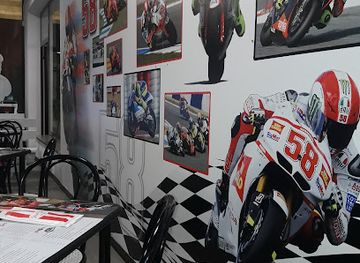
Street Bar
Discover the charm of Street Bar in Faetano – a cozy haven for refreshing drinks and friendly conversation.
8 min walk · 0.6 km from city centre
-
Restaurant
Imperiale Bar Ristorante
Discover the taste of Mediterranean cuisine at Imperiale Bar Ristorante in Faetano, a perfect blend of local flavors and welcoming atmosphere.
4 min walk · 0.3 km from city centre
-
Bar
Bar Del Lago Di Tosi Michela
Discover the charm of Bar Del Lago Di Tosi Michela in Città di San Marino, where local flavors meet breathtaking views in a cozy bar atmosphere.
6 min drive · 2.0 km from city centre

Best nightclubs in Faetano
Faetano has a quiet evening character rather than a dedicated nightlife quarter. Social life centres on local cafés, restaurants and community spaces, where an evening may unfold over conversation, coffee or a regional meal rather than in a nightclub. There is little reason to expect a concentration of cocktail bars, live-music venues or late-opening clubs in the village. The wider Republic of San Marino offers more choice, particularly around the capital and larger commercial settlements, while Rimini across the Italian border has a much broader nightlife scene. Evening drives require care on winding roads, and public transport can be less convenient later in the day. Cultural events, seasonal celebrations and local community programmes may provide more characteristic evening experiences than clubbing, although dates and venues vary.
-
Bar
Street Bar
Discover the vibrant nightlife at Street Bar, offering delicious drinks and a lively atmosphere for an unforgettable evening out.
8 min walk · 0.6 km from city centre
-
Restaurant
Imperiale Bar Ristorante
Experience the best of Mediterranean dining at Imperiale Bar Ristorante in Faetano, where delicious cuisine meets stunning views.
4 min walk · 0.3 km from city centre
Best shops in Faetano
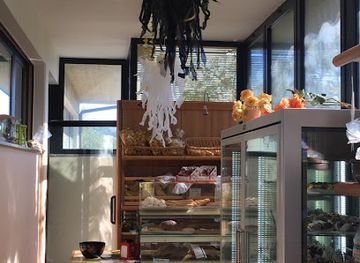
Shopping in Faetano is limited and practical, with small local services rather than a concentrated retail district. The castello is not known for a large traditional market or a specialised artisan quarter, so visitors seeking San Marino souvenirs, local food products, ceramics, crafts and commemorative goods will usually find a broader selection in the capital and the republic’s larger commercial areas. Regional products associated with the wider territory include Sammarinese wines, olive oil, honey, baked goods and Torta Tre Monti, while Italian Romagna specialities are also widely available nearby. Small shops and cafés in the surrounding settlements offer a more everyday view of local commerce. Shopping is therefore best treated as part of a wider San Marino itinerary, with Faetano providing the quieter setting and larger centres supplying the greatest choice.
-
Bakery
Panificio Zanotti
Experience the rich traditions of Italian baking at Panificio Zanotti in Faetano, savoring fresh bread and pastries that embody San Marino's culinary heritage.
5 min walk · 0.4 km from city centre
-
Restaurant
Imperiale Bar Ristorante
Explore the culinary delights of Imperiale Bar Ristorante, where Mediterranean flavors and warm hospitality come together in Faetano, San Marino.
4 min walk · 0.3 km from city centre
-
Pottery store
Ceramica Faetano S.p.A. - Del Conca Showroom
Explore the artistry of Ceramica Faetano S.p.A. - Del Conca Showroom in San Marino, where exquisite pottery meets rich tradition and modern design.
7 min walk · 0.6 km from city centre
-
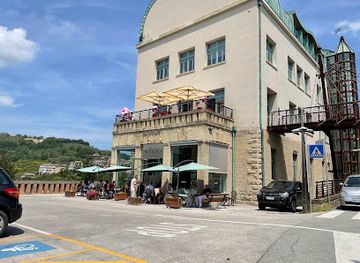
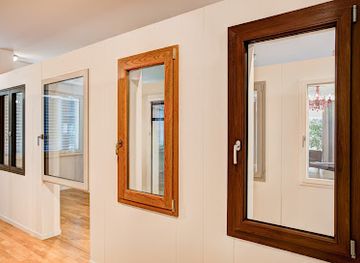
Plast window store
Euroserramenti - San Marino
Explore Euroserramenti in San Marino for premium plastic windows and expert service amidst stunning historical surroundings.
19 min walk · 1.5 km from city centre

Get your free copy of our complete guide to Faetano, delivered straight to you.
Everything on this page, from attractions and restaurants to essentials and local phrases, in one PDF you can read offline, print or share.
Already have an account? Sign in
Your Faetano guide is ready.
We'll send it to · Not you? Sign out

Getting your guide ready…
We are putting together a fresh copy of the Faetano guide. This can take up to a minute.
This can take a few moments. If your browser asks, choose Allow so the download can start. You'll find the guide in your Downloads folder.
Nothing happened? Download it again
Sorry, the guide is taking longer than usual. Please try again in a minute, or get it by email instead.
Faetano essentials
Currency and Payment
Safety
Emergency Situations
Do's and Don'ts
Local Tips
From Eve
Local phrases worth knowing
You don't need to get them perfect. A few words go a long way, and locals appreciate the effort.
Basics
| English | Local | Say it |
|---|---|---|
| Hello | Ciao | [chow] |
| Goodbye | Addio | [ad-dee-oh] |
| Yes | Sì | [see] |
| No | No | [noh] |
| Please/You're welcome | Per favore/Prego | [pair fah-voh-reh/preh-goh] |
| Thank you | Grazie | [grah-tsyeh] |
| Excuse me/Sorry | Scusami/Scusa | [skoo-sah-mee/skoo-sah] |
| How are you? | Come stai? | [koh-meh sty] |
| Fine. And you? | Bene. E tu? | [beh-neh. eh too] |
| Do you speak English? | Parli inglese? | [pahr-lee een-gleh-seh] |
| I don't understand | Non capisco | [nohn kah-pee-skoh] |
Eating & Drinking
| English | Local | Say it |
|---|---|---|
| I'd like to see the menu, please | Vorrei vedere il menu, per favore | [vor-ray veh-deh-reh eel meh-noo, pair fah-voh-reh] |
| I don't eat meat | Non mangio carne | [nohn mahn-joh kahr-neh] |
| Cheers! | Salute! | [sah-loo-teh] |
| I would like to pay, please | Vorrei pagare, per favore | [vor-ray pah-gah-reh, pair fah-voh-reh] |
Emergencies
| English | Local | Say it |
|---|---|---|
| Help! | Aiuto! | [ah-yoo-toh] |
| Go away! | Vai via! | [vah-ee vyah] |
| Call the Police! | Chiama la polizia! | [kyah-mah lah poh-lee-ts-yah] |
| Call a doctor! | Chiama un dottore! | [kyah-mah oon doh-toh-reh] |
| I'm lost | Mi sono perso | [mee soh-no pehr-soh] |
| I'm ill | Sto male | [stoh mah-leh] |
Shopping
| English | Local | Say it |
|---|---|---|
| I'd like to buy... | Vorrei comprare... | [vor-ray kohm-prah-reh] |
| I'm just looking | Sto solo guardando | [stoh soh-loh gwar-dahn-doh] |
| How much is it? | Quanto costa? | [kwan-toh koh-stah] |
| That's too expensive | È troppo caro | [eh troh-poh kah-roh] |
| Can you lower the price? | Puoi abbassare il prezzo? | [pwah-ee ahb-bahs-sah-reh eel preh-tsoh] |
Time & Numbers
| English | Local | Say it |
|---|---|---|
| What time is it? | Che ora è? | [keh oh-rah eh] |
| It's one o'clock | È l'una | [eh loo-nah] |
| Half past (10) | Sono le dieci e mezza | [soh-no leh dyeh-chee eh meh-tzah] |
| Morning | Mattina | [maht-tee-nah] |
| Afternoon | Pomeriggio | [poh-meh-ree-joh] |
| Evening | Sera | [seh-rah] |
| Yesterday | Ieri | [yeh-ree] |
| Today | Oggi | [oh-jee] |
| Tomorrow | Domani | [doh-mah-nee] |
| 1 | Uno | [oo-noh] |
| 2 | Due | [doo-eh] |
| 3 | Tre | [treh] |
| 4 | Quattro | [kwah-troh] |
| 5 | Cinque | [cheen-kweh] |
| 6 | Sei | [say] |
| 7 | Sette | [seh-tteh] |
| 8 | Otto | [oh-ttoh] |
| 9 | Nove | [noh-veh] |
| 10 | Dieci | [dyeh-chee] |
Transport & Directions
| English | Local | Say it |
|---|---|---|
| Where's a/the...? | Dov'è un/il...? | [doh-veh oon/eel] |
| What's the address? | Qual è l'indirizzo? | [kwal eh leen-dee-ree-tsoh] |
| Can you show me (on the map)? | Puoi mostrarmi (sulla mappa)? | [pwah-ee mohs-trar-mee (sool-lah mahp-pah)] |
| When's the next (bus)? | Quando passa il prossimo (autobus)? | [kwan-doh pahs-sah eel prohs-see-moh (ow-toh-boos)] |
| A ticket (to ....) | Un biglietto (per ....) | [oon beel-lyet-toh (pair)] |
History of Faetano
A Rural Settlement in the Apennine Foothills
Faetano developed as a rural settlement in the hills between the Apennines and the Adriatic plain, an area shaped for centuries by agriculture, woodland and links between inland communities and the Romagna lowlands. Its early history is less extensively documented in popular accounts than that of San Marino’s capital, but the territory formed part of the network of small communities that gave the region its distinctive parish-based social structure. The landscape visible today, with cultivated slopes and scattered homes, reflects this long rural continuity. Faetano’s identity was therefore grounded less in monumental urban development than in farming, local religious life and the management of a small hill territory.
The Expansion of San Marino
Faetano became part of the Republic of San Marino in 1463, during the final territorial expansion of the small republic. San Marino’s war with Sigismondo Pandolfo Malatesta, lord of Rimini, ended with the acquisition of several territories, including Faetano, Fiorentino, Montegiardino and Serravalle. This enlargement transformed San Marino from a compact community centred on Monte Titano into a more extensive state with agricultural settlements and strategic approaches on its eastern and southern sides. Faetano’s incorporation linked its rural population and land to San Marino’s institutions, a political relationship that has continued through the republic’s subsequent development.
Parish Life and Community Identity
Following its incorporation, Faetano retained the character of a distinct local community within the republic. The parish church became an important focus of religious and social life, while agricultural work organised the rhythms of the surrounding territory. As in many small settlements of the central Italian region, church observance, family networks and seasonal labour helped preserve a strong sense of local identity. Faetano was not transformed into a large commercial centre; instead, its history remained closely connected with the countryside and with the practical administration of a small castello. That continuity helps explain the village’s quieter appearance compared with San Marino’s fortified capital.
From Agricultural Territory to Modern Castello
The nineteenth and twentieth centuries brought wider changes to San Marino and the surrounding Romagna region, including improved roads, modern public administration, migration and the gradual diversification of employment beyond agriculture. Faetano participated in these changes while retaining a small-scale settlement pattern. Modern homes and infrastructure appeared alongside older village structures and fields, and improved connections made it easier for residents to work or study elsewhere in San Marino and Italy. The castello’s development was therefore one of adaptation rather than dramatic urban expansion, with community institutions and the parish remaining visible markers of local continuity.
Faetano in Contemporary San Marino
Today Faetano forms one of San Marino’s administrative castelli and contributes to the republic’s varied geographic identity. Its territory combines a village centre, residential streets, cultivated land and the waters of Lake Faetano, creating a setting distinct from the crowded historic core on Monte Titano. Contemporary Faetano reflects the wider republic’s balance between independent state institutions, close ties with Italy and a highly localised civic structure. Visitors encounter a living community rather than an open-air historical reconstruction: the surrounding landscape, parish traditions and ordinary residential life are as important to understanding the castello as its limited collection of formal monuments.
Travel experiences inspired by this city
-
 8 Day Trip
Exploring the Renaissance Charm of Urbino with My Spouse
Join us on a journey to Urbino, Italy, where history, art, and romance await amidst breathtaking landscapes and cultural treasures.
8 Day Trip
Exploring the Renaissance Charm of Urbino with My Spouse
Join us on a journey to Urbino, Italy, where history, art, and romance await amidst breathtaking landscapes and cultural treasures.
 15 Jun 2025
By Abimbola Hassan -
 9 Day Trip
Solo Renaissance Adventure in Urbino
Explore Urbino's rich Renaissance history and culture on a solo journey, enjoying art, architecture, and local cuisine.
9 Day Trip
Solo Renaissance Adventure in Urbino
Explore Urbino's rich Renaissance history and culture on a solo journey, enjoying art, architecture, and local cuisine.
 10 Jun 2025
By Yael Cohen-Levi -
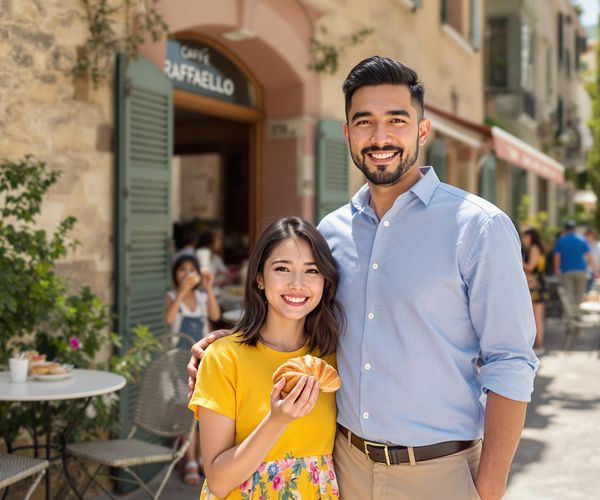 15 Day Trip
Exploring the Renaissance Charm of Urbino with Family
Discover the artistic and cultural treasures of Urbino, Italy, on a 15-day family adventure, staying at the charming Hotel Raffaello.
15 Day Trip
Exploring the Renaissance Charm of Urbino with Family
Discover the artistic and cultural treasures of Urbino, Italy, on a 15-day family adventure, staying at the charming Hotel Raffaello.
 10 Jun 2025
By Chih-Ming Huang -
 8 Day Trip
Family Adventure in the Heart of Renaissance Italy: Exploring Urbino
Discover the rich Renaissance history and culture of Urbino, Italy, with Jose Silva's family adventure, exploring architecture, cuisine, and local charm.
8 Day Trip
Family Adventure in the Heart of Renaissance Italy: Exploring Urbino
Discover the rich Renaissance history and culture of Urbino, Italy, with Jose Silva's family adventure, exploring architecture, cuisine, and local charm.
 5 Jun 2025
By Jose Silva -
 8 Day Trip
Exploring the Renaissance Charm of Urbino, Italy
Discover Urbino, Italy's Renaissance treasure, with Valentina and Maximilian. Immerse in culture, history, and breathtaking landscapes.
8 Day Trip
Exploring the Renaissance Charm of Urbino, Italy
Discover Urbino, Italy's Renaissance treasure, with Valentina and Maximilian. Immerse in culture, history, and breathtaking landscapes.
 5 Jun 2025
By Valentina Santiago -
 11 Day Trip
A Romantic Renaissance Getaway in Urbino
Discover the Renaissance charm of Urbino, Italy, on a romantic 11-day getaway, steeped in history and culture. Perfect for curious couples.
11 Day Trip
A Romantic Renaissance Getaway in Urbino
Discover the Renaissance charm of Urbino, Italy, on a romantic 11-day getaway, steeped in history and culture. Perfect for curious couples.
 10 May 2025
By Claire Taylor
Swipe for more travel diaries
Faetano in Photos
Browse through our photo collection highlighting the charm and character of the destination.
Cities near Faetano
The closest cities to Faetano, if you have time for more than one stop.
-

-

-

-

-


Swipe for more cities
Explore more

Explore more of San Marino
Discover San Marino: A charming microstate with medieval towers, scenic vistas, rich history, and delightful cuisine. Perfect for a unique cultural escape.
Explore San Marino