

Free Rimini Travel Guide & Mobile App
Plan your Rimini trip with Evendo. Get free guides to top attractions, restaurants, hotels, and bars. Web access or download the mobile app.


Discover the perfect blend of history, culture, and seaside fun in Rimini, Italy's vibrant coastal gem on the Adriatic Sea.
Read more about Rimini
When is the best time to visit Rimini?
Best: May–June, October · 24–31°C| Month | High (°C) | Rainfall (mm) |
|---|---|---|
| January | 13 | 48 |
| February | 13 | 44 |
| March | 16 | 61 |
| April | 21 | 68 |
| May (best) | 26 | 62 |
| June (best) | 31 | 45 |
| July | 34 | 34 |
| August | 34 | 44 |
| September | 30 | 56 |
| October (best) | 24 | 66 |
| November | 18 | 74 |
| December | 14 | 49 |
Getting to and around Rimini
How to get there
Transportation
Best attractions in Rimini
Rimini, a coastal town in Italy, offers a perfect blend of history, culture, and relaxation for visitors. Explore the ancient ruins of the Roman amphitheater, visit the iconic Tiberius Bridge, or stroll through the charming streets of the old town. Relax on the sandy beaches along the Adriatic Sea, indulge in delicious Italian cuisine at local restaurants, or immerse yourself in the vibrant nightlife. From historical sites to beautiful beaches, Rimini has something for everyone to enjoy.
-
Tourist attraction
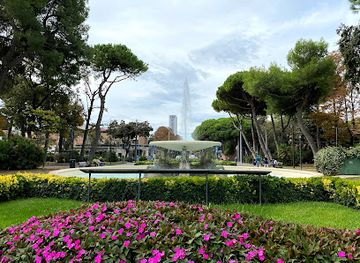
Parco Federico Fellini
Explore the serene beauty of Parco Federico Fellini, an enchanting park in Rimini honoring the legendary filmmaker with art, nature, and relaxation.
5 min drive · 1.8 km from city centre
-
Water park
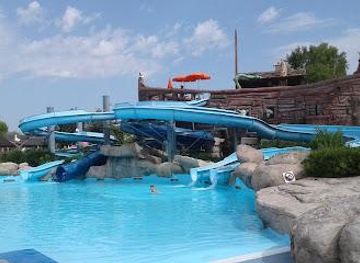
Aquafan
Experience the ultimate water adventure at Aquafan in Riccione, Italy—an exciting water park with thrilling slides, wave pools, and family fun!
30 min drive · 10 km from city centre
-
Amusement park
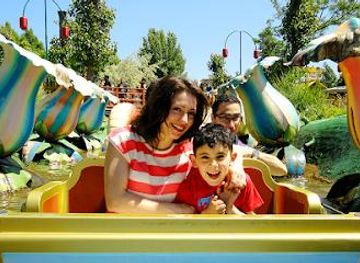
Fiabilandia
Discover the enchanting charm of Fiabilandia, Italy's beloved amusement park, where fairy tales come to life and adventure awaits every visitor.
13 min drive · 4.4 km from city centre
-
Tourist attraction
La Ruota Panoramica
Experience breathtaking views of Rimini and the Adriatic coast from La Ruota Panoramica, an iconic Ferris wheel that lights up the night.
7 min drive · 2.3 km from city centre

Best landmarks in Rimini
In Rimini, visitors can explore the ancient Roman ruins of the Tiberius Bridge and the Arch of Augustus, providing a glimpse into the city's rich history. The iconic Malatesta Temple, a beautiful example of Renaissance architecture, stands as a testament to Rimini's cultural heritage. Beach lovers can enjoy the sandy shores of Rimini Beach, lined with vibrant beach clubs and restaurants offering delicious seafood. For a taste of local life, the bustling market at Piazza Cavour offers a variety of goods and locally made products. From historical landmarks to lively beaches, Rimini has something for every type of traveler.
-
Theme park
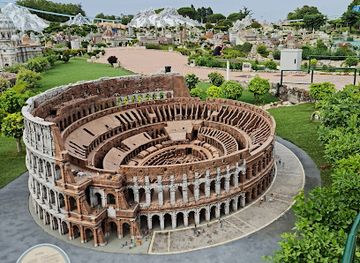
Italia in Miniatura
Discover Italy in miniature at Italia in Miniatura, a unique theme park showcasing the country’s most iconic landmarks and attractions.
16 min drive · 5.5 km from city centre
-
Historical landmark
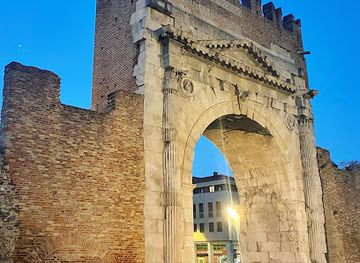
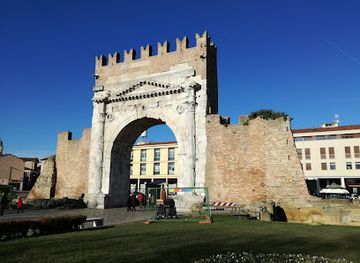
Arco di Augusto
Discover the Arco di Augusto in Rimini, an ancient Roman arch symbolizing the city's rich history and architectural marvels.
6 min walk · 0.5 km from city centre
-
City park
Parco Federico Fellini
Explore Parco Federico Fellini, a serene city park in Rimini, where nature meets art in a tranquil escape perfect for relaxation and cultural appreciation.
5 min drive · 1.8 km from city centre
-
Association / Organization
Marinando. In barca tra le arcate del ponte
Explore the historic Marinando at Ponte di Tiberio, a breathtaking blend of culture, architecture, and picturesque views in the heart of Rimini.
9 min walk · 0.7 km from city centre
Explore Rimini on the map
Plan your Rimini trip on one map. See where the top attractions, landmarks, restaurants, bars and hotels are, find what's near where you're staying, and book hotels and experiences in a few clicks.
Best hotels in Rimini
Best restaurants in Rimini
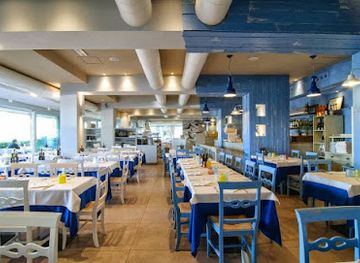
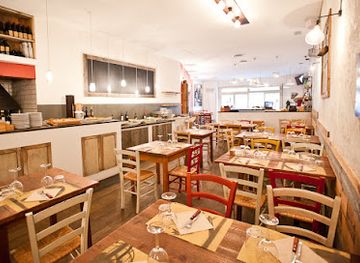
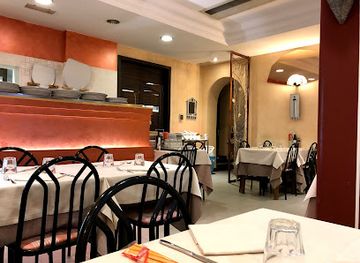
Rimini offers a diverse and vibrant dining scene that caters to all tastes and budgets. From charming family-run trattorias serving authentic Italian cuisine to trendy beachfront restaurants offering fresh seafood dishes, visitors can indulge in a culinary journey like no other. The city is known for its traditional piadina, a delicious flatbread sandwich filled with various ingredients, as well as its gelaterias serving up creamy gelato in a multitude of flavors. With an abundance of outdoor cafes and bustling pizzerias, Rimini truly has something for everyone looking to savor the flavors of Italy.
-
Restaurant
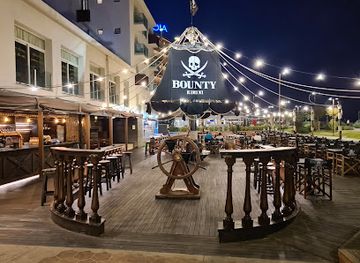
Bounty Rimini
Experience the vibrant flavors of Italy at Bounty Rimini - where delicious seafood meets live music in an inviting coastal atmosphere.
5 min drive · 1.8 km from city centre
-
Seafood
Ristorante Lo Zodiaco Rimini
Discover the finest seafood and authentic pizza at Ristorante Lo Zodiaco in Rimini - a seaside dining experience not to be missed!
14 min drive · 4.6 km from city centre
-
Italian
La Mi Mama
Discover the authentic flavors of Italy at La Mi Mama in Rimini – where seafood meets vegetarian delights in a charming setting.
3 min walk · 0.2 km from city centre
-
Restaurant
Sabbioni Pizza & Restaurant
Experience authentic Italian cuisine with delicious pizzas and pastas at Sabbioni Pizza & Restaurant in the heart of Rimini.
5 min drive · 1.8 km from city centre
Best bars in Rimini
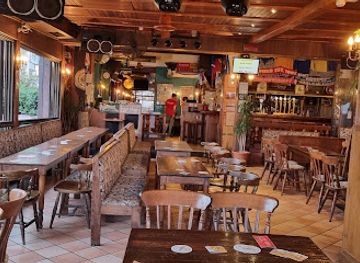
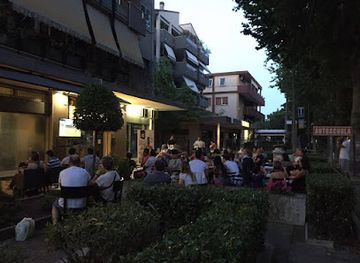
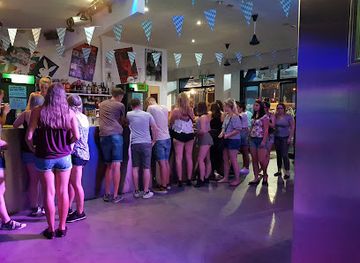
Rimini's nightlife scene is vibrant and diverse, offering something for everyone. From trendy cocktail bars to lively nightclubs, visitors can enjoy a mix of international DJs, live music, and themed parties. The beachfront promenade comes alive at night with beach clubs and open-air bars, creating a buzzing atmosphere that continues into the early hours of the morning. For a more relaxed evening, visitors can explore the historic center and discover cozy wine bars and traditional taverns serving local specialties. Whether you're looking to dance the night away or enjoy a quiet drink with friends, Rimini has plenty to offer in terms of nightlife entertainment.
-
Pub
Rose&Crown pub
Discover the lively Rose&Crown Pub in Rimini, where locals and tourists gather for great drinks, live music, and unforgettable memories.
5 min drive · 1.8 km from city centre
-
Bar
Darsena Sunset Bar
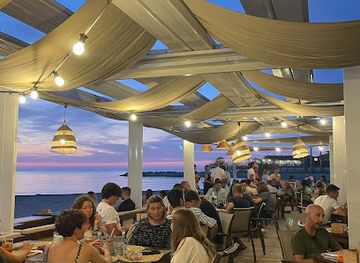
Experience the vibrant atmosphere and stunning sunset views at Darsena Sunset Bar, a perfect destination for relaxation and delicious tapas in Rimini.
6 min drive · 2.1 km from city centre
-
Small Plates
Bar Charlie Brown
Experience the vibrant flavors of Italy at Bar Charlie Brown, where small plates, breakfast delights, and cocktails create unforgettable moments in Rimini.
6 min drive · 1.8 km from city centre
-
Bar
Primo Miglio di Conti Mirco
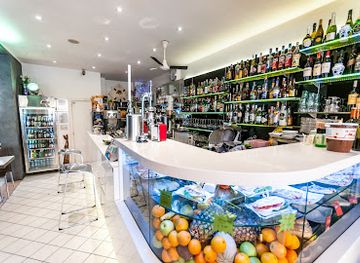
Discover the vibrant flavors of Rimini at Primo Miglio di Conti Mirco, your go-to bar and café for coffee, cocktails, and culinary delights.
5 min drive · 1.8 km from city centre
Best nightclubs in Rimini
Rimini's nightlife scene is vibrant and diverse, offering something for everyone. From trendy cocktail bars to lively nightclubs, visitors can enjoy a mix of international DJs, live music, and themed parties. The beachfront promenade comes alive at night with beach clubs and open-air bars, creating a buzzing atmosphere that continues into the early hours of the morning. For a more relaxed evening, visitors can explore the historic center and discover cozy wine bars and traditional taverns serving local specialties. Whether you're looking to dance the night away or enjoy a quiet drink with friends, Rimini has plenty to offer in terms of nightlife entertainment.
-
Disco club
Coconuts
Experience the vibrant nightlife and exquisite dining at Coconuts, Rimini's ultimate disco club and restaurant along the stunning coastline.
6 min drive · 2.2 km from city centre
-
Disco club
Carnaby Club
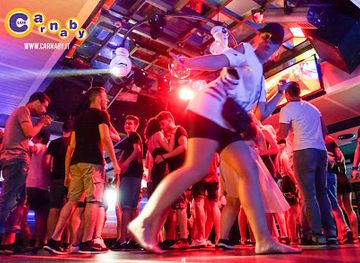
Dive into the heart of Rimini's nightlife at Carnaby Club, where music, dancing, and unforgettable moments await.
12 min drive · 4.1 km from city centre
-
Disco club
Life Club Rimini
Experience the vibrant nightlife at Life Club Rimini, where music and dance create unforgettable memories in the heart of Italy's seaside paradise.
9 min drive · 3.1 km from city centre
-
Adult entertainment club
Pepenero
Discover the nightlife at Pepenero, Rimini's vibrant adult entertainment club featuring comedy, live music, and a pulsating disco atmosphere.
6 min drive · 1.9 km from city centre


Best shops in Rimini
Rimini offers a vibrant shopping scene that caters to every taste and budget. From trendy boutiques and designer stores in the historic town center to bustling markets and quaint artisan shops in the old fisherman's village of Borgo San Giuliano, visitors will find a treasure trove of unique souvenirs, fashion items, and local products. The city's lively street markets, such as the weekly Mercato Coperto, are perfect for bargain hunters looking for fresh produce, clothing, and household goods. Whether you're looking for high-end fashion brands or one-of-a-kind handmade crafts, Rimini has something for everyone to discover and enjoy while exploring the city's charming streets and alleys.
-
Shopping mall
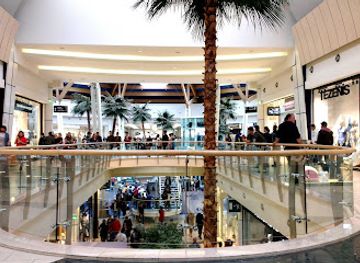
Le Befane Centro Commerciale
Discover a shopping haven at Le Befane Centro Commerciale in Rimini, where style, variety, and family fun come together.
8 min drive · 2.6 km from city centre
-
Market
Mercato Coperto di Rimini
Explore the Mercato Coperto di Rimini for fresh local produce, delicious delicacies, and a taste of the vibrant Italian market culture.
7 min walk · 0.5 km from city centre
-
Gift shop
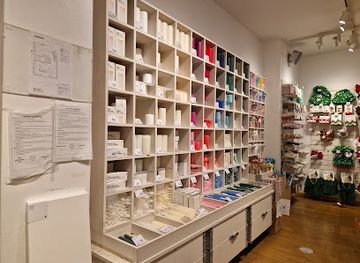
Flying Tiger Copenhagen
Explore the vibrant and quirky assortment of gifts, toys, and home goods at Flying Tiger Copenhagen in Rimini, a must-visit for every tourist.
4 min walk · 0.4 km from city centre
-
Clothing store
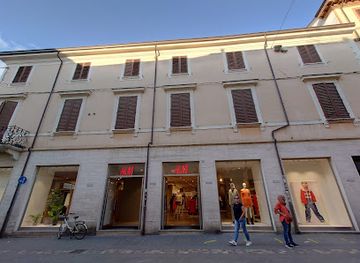
H&M
Shop stylish clothing and accessories for the whole family at H&M in Rimini, where modern fashion meets affordability.
4 min walk · 0.4 km from city centre

Get your free copy of our complete guide to Rimini, delivered straight to you.
Everything on this page, from attractions and restaurants to essentials and local phrases, in one PDF you can read offline, print or share.
Already have an account? Sign in
Your Rimini guide is ready.
We'll send it to · Not you? Sign out

Getting your guide ready…
We are putting together a fresh copy of the Rimini guide. This can take up to a minute.
This can take a few moments. If your browser asks, choose Allow so the download can start. You'll find the guide in your Downloads folder.
Nothing happened? Download it again
Sorry, the guide is taking longer than usual. Please try again in a minute, or get it by email instead.
Rimini essentials
Currency and Payment
Safety
Emergency Situations
Do's and Don'ts
Local Tips
From Eve
Local phrases worth knowing
You don't need to get them perfect. A few words go a long way, and locals appreciate the effort.
Basics
| English | Local | Say it |
|---|---|---|
| Hello | Ciao | [chow] |
| Goodbye | Arrivederci | [ah-ree-veh-dehr-chee] |
| Yes | Sì | [see] |
| No | No | [noh] |
| Please/You're welcome | Per favore/Prego | [pehr fah-voh-reh/preh-goh] |
| Thank you | Grazie | [graht-zee-eh] |
| Excuse me/Sorry | Mi scusi/Scusa | [mee skoo-zee/skoo-zah] |
| How are you? | Come stai? | [koh-meh stai] |
| Fine. And you? | Bene. E tu? | [beh-neh/eh too] |
| Do you speak English? | Parli inglese? | [pahr-lee een-gleh-zeh] |
| I don't understand | Non capisco | [nohn kah-pee-skoh] |
Eating & Drinking
| English | Local | Say it |
|---|---|---|
| I'd like to see the menu, please | Vorrei vedere il menu, per favore | [vor-ray veh-deh-reh eel meh-noo, pehr fah-voh-reh] |
| I don't eat meat | Non mangio carne | [nohn mahn-joh kahr-neh] |
| Cheers! | Salute! | [sah-loo-teh] |
| I would like to pay, please | Vorrei pagare, per favore | [vor-ray pah-gah-reh, pehr fah-voh-reh] |
Emergencies
| English | Local | Say it |
|---|---|---|
| Help! | Aiuto! | [ah-yoo-toh] |
| Go away! | Vai via! | [vah-ee vee-ah] |
| Call the Police! | Chiama la polizia! | [kee-ah-mah lah poh-lee-tsya] |
| Call a doctor! | Chiama un dottore! | [kee-ah-mah oon doh-toh-reh] |
| I'm lost | Mi sono perso | [mee soh-no pehr-soh] |
| I'm ill | Sono malato | [soh-no mah-lah-toh] |
Shopping
| English | Local | Say it |
|---|---|---|
| I'd like to buy... | Vorrei comprare... | [vor-ray kohm-prah-reh] |
| I'm just looking | Sto solo guardando | [stoh soh-loh gwar-dahn-doh] |
| How much is it? | Quanto costa? | [kwahn-toh koh-stah] |
| That's too expensive | È troppo caro | [eh troh-poh kah-roh] |
| Can you lower the price? | Puoi abbassare il prezzo? | [pwoy ahb-bahs-sah-reh eel preh-tsoh] |
Time & Numbers
| English | Local | Say it |
|---|---|---|
| What time is it? | Che ora è? | [keh oh-rah eh] |
| It's one o'clock | È l'una | [eh loo-nah] |
| Half past (10) | Sono le dieci e mezza | [soh-no leh dee-eh-chee eh meh-tzah] |
| Morning | Mattina | [maht-tee-nah] |
| Afternoon | Pomeriggio | [poh-meh-ree-joh] |
| Evening | Sera | [seh-rah] |
| Yesterday | Ieri | [yeh-ree] |
| Today | Oggi | [oh-jee] |
| Tomorrow | Domani | [doh-mah-nee] |
| 1 | Uno | [oo-noh] |
| 2 | Due | [doo-eh] |
| 3 | Tre | [treh] |
| 4 | Quattro | [kwah-troh] |
| 5 | Cinque | [cheen-kweh] |
| 6 | Sei | [say] |
| 7 | Sette | [set-teh] |
| 8 | Otto | [oh-ttoh] |
| 9 | Nove | [noh-veh] |
| 10 | Dieci | [dee-eh-chee] |
Transport & Directions
| English | Local | Say it |
|---|---|---|
| Where's a/the...? | Dov'è...? | [doh-veh] |
| What's the address? | Qual è l'indirizzo? | [kwahl eh leen-dee-ree-tsoh] |
| Can you show me (on the map)? | Puoi farmi vedere (sulla mappa)? | [pwoy fahr-mee veh-deh-reh (sool-lah mahp-pah)] |
| When's the next (bus)? | Quando passa il prossimo (autobus)? | [kwahn-doh pahs-sah eel prohs-see-moh (ow-toh-boo-s)] |
| A ticket (to ....) | Un biglietto (per ....) | [oon bee-lyet-toh (pehr)] |
History of Rimini
Foundation and Ancient Origins
Rimini, known in ancient times as Ariminum, was founded by the Romans in 268 BC as a colony. It was strategically established at the junction of the Via Flaminia, which connected it to Rome, and the Via Aemilia, which led to Piacenza. This prime location made Rimini an essential hub for trade and military operations.
The Arch of Augustus
One of Rimini's most significant historical landmarks is the Arch of Augustus, erected in 27 BC. It is the oldest surviving Roman triumphal arch and was built to honor Emperor Augustus. The arch served as the gateway to the city and symbolized the peace and stability brought by Augustus after years of civil war.
Medieval and Renaissance Periods
During the Middle Ages, Rimini became an important cultural and political center. The city's fortunes were closely tied to the Malatesta family, who ruled Rimini from the late 13th century until the mid-16th century. Sigismondo Pandolfo Malatesta, one of the most renowned lords, commissioned the construction of the Tempio Malatestiano, a masterpiece of Renaissance architecture designed by Leon Battista Alberti.
The Tempio Malatestiano
The Tempio Malatestiano, also known as the Cathedral of Rimini, is a testament to the city's Renaissance glory. Originally a Gothic church, it was transformed into a Renaissance temple by Sigismondo Pandolfo Malatesta in the mid-15th century. The cathedral is adorned with exquisite sculptures and frescoes by renowned artists such as Piero della Francesca and Agostino di Duccio.
Rimini in the Modern Era
Rimini faced significant challenges during the modern era, including devastation during World War II. The city was heavily bombed, but post-war reconstruction efforts helped restore its historical landmarks and modernize its infrastructure. Today, Rimini is a vibrant blend of ancient history and contemporary culture, attracting millions of tourists annually.
Cultural Festivals and Traditions
Rimini hosts numerous cultural festivals and events throughout the year, celebrating its rich heritage. The most notable is the 'La Notte Rosa' (The Pink Night), an all-night summer festival that transforms the city with music, performances, and fireworks. Additionally, Rimini's traditional cuisine, featuring dishes like piadina and fresh seafood, reflects its coastal and historical influences.
Travel experiences inspired by this city
-
 8 Day Trip
Exploring the Renaissance Charm of Urbino with My Spouse
Join us on a journey to Urbino, Italy, where history, art, and romance await amidst breathtaking landscapes and cultural treasures.
8 Day Trip
Exploring the Renaissance Charm of Urbino with My Spouse
Join us on a journey to Urbino, Italy, where history, art, and romance await amidst breathtaking landscapes and cultural treasures.
 15 Jun 2025
By Abimbola Hassan -
 9 Day Trip
Solo Renaissance Adventure in Urbino
Explore Urbino's rich Renaissance history and culture on a solo journey, enjoying art, architecture, and local cuisine.
9 Day Trip
Solo Renaissance Adventure in Urbino
Explore Urbino's rich Renaissance history and culture on a solo journey, enjoying art, architecture, and local cuisine.
 10 Jun 2025
By Yael Cohen-Levi -
 8 Day Trip
Family Adventure in the Heart of Renaissance Italy: Exploring Urbino
Discover the rich Renaissance history and culture of Urbino, Italy, with Jose Silva's family adventure, exploring architecture, cuisine, and local charm.
8 Day Trip
Family Adventure in the Heart of Renaissance Italy: Exploring Urbino
Discover the rich Renaissance history and culture of Urbino, Italy, with Jose Silva's family adventure, exploring architecture, cuisine, and local charm.
 5 Jun 2025
By Jose Silva -
 8 Day Trip
Exploring the Renaissance Charm of Urbino, Italy
Discover Urbino, Italy's Renaissance treasure, with Valentina and Maximilian. Immerse in culture, history, and breathtaking landscapes.
8 Day Trip
Exploring the Renaissance Charm of Urbino, Italy
Discover Urbino, Italy's Renaissance treasure, with Valentina and Maximilian. Immerse in culture, history, and breathtaking landscapes.
 5 Jun 2025
By Valentina Santiago -
 11 Day Trip
A Romantic Renaissance Getaway in Urbino
Discover the Renaissance charm of Urbino, Italy, on a romantic 11-day getaway, steeped in history and culture. Perfect for curious couples.
11 Day Trip
A Romantic Renaissance Getaway in Urbino
Discover the Renaissance charm of Urbino, Italy, on a romantic 11-day getaway, steeped in history and culture. Perfect for curious couples.
 10 May 2025
By Claire Taylor -
 8 Day Trip
Historical and Cultural Journey in Ravenna, Italy
Explore the rich history and stunning mosaics of Ravenna, Italy, with Mali and Hans, as they immerse themselves in local culture and cuisine.
8 Day Trip
Historical and Cultural Journey in Ravenna, Italy
Explore the rich history and stunning mosaics of Ravenna, Italy, with Mali and Hans, as they immerse themselves in local culture and cuisine.
 10 May 2025
By Mali Suwannarat
Swipe for more travel diaries
Rimini in Photos
Browse through our photo collection highlighting the charm and character of the destination.
Cities near Rimini
The closest cities to Rimini, if you have time for more than one stop.
-

-

-

-

-


Swipe for more cities
Explore more

Explore more of Italy
Discover Italy: A land of ancient history, artistic marvels, and culinary delights; where every corner reveals a new story and every meal is a celebration.
Explore Italy