

Praia Jale Travel Guide - Free Web & App
Your ultimate guide to Praia Jale. Discover top landmarks, proposed trips, and local tips. Free on the web or via the Evendo companion app.


Praia Jalé, São Tomé and Príncipe, offers a remote volcanic beach, sea-turtle nesting, rainforest landscapes and authentic southern-island experiences.
A Remote Southern Shore
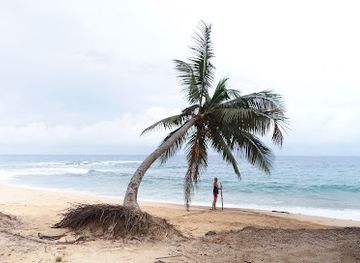
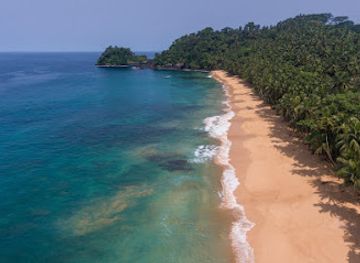
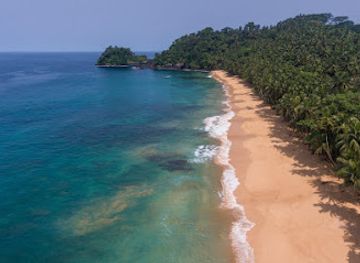
Praia Jalé lies on the southern coast of São Tomé, in the remote Caué district, within a region of rainforest, volcanic slopes and small coastal communities. Reached by travelling south from the island’s capital and then continuing towards Porto Alegre, the beach feels far removed from the more populated north. Dense vegetation approaches the shore, while dark volcanic sand and warm Atlantic water create a simple, expansive setting shaped more by tides and wildlife than by built development. Facilities are limited, and the destination is best understood as a nature-focused coastal retreat rather than a conventional resort.Read more about Praia Jale
Turtles, Forest and Conservation
Experiencing the Region
When is the best time to visit Praia Jale?
Best: July–September · 29–30°C| Month | High (°C) | Rainfall (mm) |
|---|---|---|
| January | 31 | 120 |
| February | 31 | 110 |
| March | 31 | 110 |
| April | 31 | 110 |
| May | 31 | 100 |
| June | 30 | 80 |
| July (best) | 29 | 60 |
| August (best) | 29 | 60 |
| September (best) | 30 | 60 |
| October | 30 | 80 |
| November | 30 | 100 |
| December | 31 | 110 |
Getting to and around Praia Jale
How to get there
Transportation
Best attractions in Praia Jale
Praia Jalé itself is the principal attraction: a broad, dark-sand Atlantic beach backed by tropical vegetation and valued as a sea-turtle nesting site. The experience is primarily natural, with beach walks, coastal observation and carefully managed night visits during the nesting season rather than a programme of built развлечments or resort activities. The nearby settlement and fishing community of Porto Alegre provide a useful base for understanding the southern coast, while the road south passes through changing landscapes of plantations, forest and rural villages. Further excursions may include the Boca do Inferno blowhole, where waves surge into a coastal opening, and the dramatic shoreline around Ponta do Sol, subject to road conditions and local access. Inland and north-west of this coast, São Tomé’s humid southern landscapes lead towards forested protected areas associated with the island’s Obô environment. Attractions are widely dispersed, so journeys should be planned with a local driver rather than treated as a walkable circuit.
-
Island
Rolas Island
Explore the stunning natural beauty and vibrant marine life of Rolas Island in São Tomé and Príncipe, a perfect getaway for relaxation and adventure.
-
Beach
Praia Piscina
Discover the serene beauty of Praia Piscina, a breathtaking beach in São Tomé and Príncipe, perfect for relaxation, swimming, and stunning sunset views.
-
Beach
Praia dos Tamarindos
Experience the idyllic beauty of Praia dos Tamarindos, a tranquil beach paradise in São Tomé and Príncipe, perfect for relaxation and exploration.
-
Hotel
VANHA - Turismo Rural, Plantação e Destilaria
Discover the serene beauty and rich cultural heritage of Porto Alegre at VANHA - a unique rural tourism experience with organic farming and distillation.
Best landmarks in Praia Jale
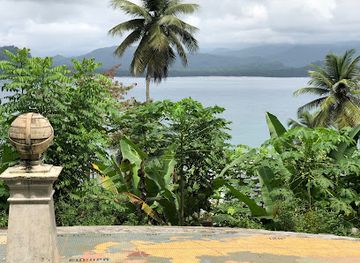
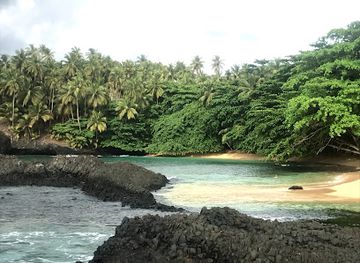
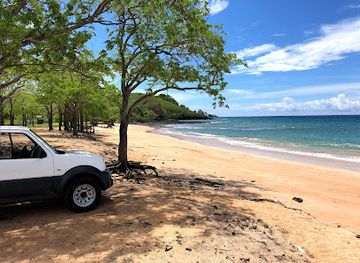
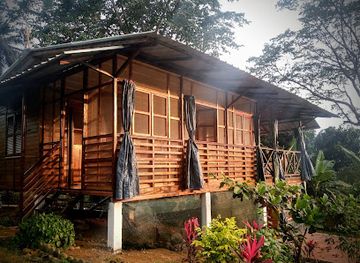
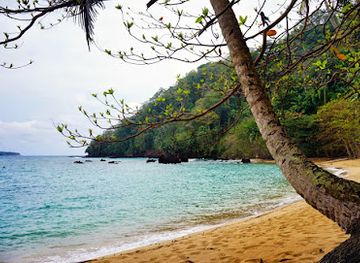
Praia Jalé’s defining landmark is its volcanic, dark-sand shoreline, where the open Atlantic, coastal vegetation and turtle-nesting habitat create a landscape of environmental rather than architectural importance. The beach belongs to the rugged southern coast of São Tomé, a region marked by forested slopes, humid ravines and small settlements. Around Porto Alegre, the coastline becomes increasingly dramatic, with features such as the Boca do Inferno blowhole illustrating the force of Atlantic waves acting on volcanic rock. The wider southern landscape also contains the remains and cultural imprint of São Tomé’s plantation system, although individual roça buildings and access conditions vary and should be visited with local guidance. Inland, the forested Obô landscapes represent the island’s principal natural heritage, linking the coast to a much larger ecological setting. These landmarks are best understood as parts of a connected coastal, forest and plantation landscape rather than as isolated monuments.
Explore Praia Jale on the map
Plan your trip on one map. See where the top attractions, landmarks, restaurants and hotels are, and book hotels and experiences in a few clicks.
Best hotels in Praia Jale
Best restaurants in Praia Jale
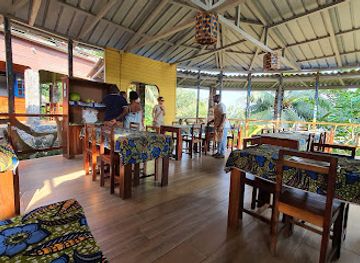
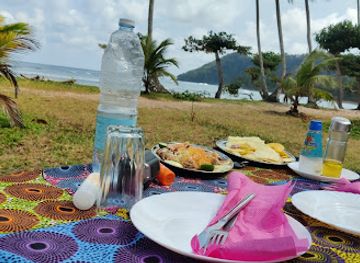
Dining around Praia Jalé is limited and closely linked to accommodation and local community life rather than a formal restaurant scene. Guests staying at Jalé Ecolodge or similar locally arranged accommodation should confirm meal arrangements in advance, especially because there are few nearby alternatives and supplies are not concentrated in a commercial centre. Meals in the south commonly draw on São Tomé’s coastal and tropical larder, including fresh fish where available, locally grown fruit, vegetables, rice and other simple island staples. Porto Alegre is the principal nearby settlement for local food connections, though visitors should not expect a choice of restaurants comparable with São Tomé city. Carrying snacks and drinking water from the capital or a larger stop is practical, while buying directly from community members should be done respectfully and with cash in dobra.
-
Restaurant
Miónga
Discover the flavors of São Tomé at Miónga: where local cuisine meets warm hospitality in São João dos Angolares.
-
Restaurant
Restaurant Salutar (Casa Do Ney)
Discover authentic Brazilian cuisine at Restaurant Salutar (Casa Do Ney) in Porto Alegre – where every dish tells a flavorful story.
-
Restaurant
Restaurante Salutar (Ney) Praia Cabana
Discover authentic São Tomé cuisine at Restaurante Salutar (Ney) Praia Cabana in Porto Alegre - where every dish tells a story.
-
 Restaurant
7 Pedras Restaurant
Discover culinary delights at 7 Pedras Restaurant on Ilhéu das Rolas - where stunning views meet authentic local flavors.
Best bars in Praia Jale
Praia Jalé has no established nightlife district or club scene, and evenings are generally quiet, shaped by the ecolodge, village life, the sound of the sea and the dark southern sky. A drink or informal social time may be available through accommodation or a locally hosted meal, but visitors should confirm arrangements rather than expect a bar to be open independently. The most distinctive evening activity is seasonal sea-turtle observation, undertaken only through appropriate local conservation guidance and with strict controls on light, noise and distance. Porto Alegre may offer modest informal hospitality, but it is not a conventional entertainment centre. São Tomé city is the place to seek a broader choice of bars, music and restaurants, although it lies a considerable journey from Praia Jalé.
-
Bar
Pico Mocambo
Experience the lively atmosphere and diverse drink selection at Pico Mocambo, a must-visit bar in São Tomé for an authentic local experience.
-
Restaurant
Zima restaurante Bar
Experience the vibrant flavors and lively atmosphere at Zima Restaurante Bar, the perfect dining destination in São Tomé.
-
Bar
BBC/Abaya da Bôo
Experience the lively atmosphere and local flavors at BBC/Abaya da Bôo, the perfect bar to unwind in São Tomé.
-
Restaurant
Restaurante Salutar (Ney) Praia Cabana
Discover the best of Porto Alegre's local cuisine at Restaurante Salutar (Ney) Praia Cabana, where flavors and hospitality blend seamlessly.

Best nightclubs in Praia Jale
Praia Jalé has no established nightlife district or club scene, and evenings are generally quiet, shaped by the ecolodge, village life, the sound of the sea and the dark southern sky. A drink or informal social time may be available through accommodation or a locally hosted meal, but visitors should confirm arrangements rather than expect a bar to be open independently. The most distinctive evening activity is seasonal sea-turtle observation, undertaken only through appropriate local conservation guidance and with strict controls on light, noise and distance. Porto Alegre may offer modest informal hospitality, but it is not a conventional entertainment centre. São Tomé city is the place to seek a broader choice of bars, music and restaurants, although it lies a considerable journey from Praia Jalé.
-
Beach
Praia Jale
Praia Jale: A picturesque beach paradise in São Tomé and Príncipe, perfect for relaxation, adventure, and breathtaking sunsets.
-
Disco club
Discoteca Beach Club
Discover the electrifying nightlife at Discoteca Beach Club in São Tomé, where vibrant music and stunning beach views create an unforgettable experience.
-
Disco club
Discoteca Kizomba
Discover the vibrant nightlife of São Tomé at Discoteca Kizomba, where music, dance, and culture blend for an unforgettable evening.
-
Disco club
DJ Cabelo
Experience the vibrant nightlife of São Tomé at DJ Cabelo, a lively disco club where music and dance come together for an unforgettable night out.

Best shops in Praia Jale
Shopping at Praia Jalé is minimal, with no conventional high street or extensive collection of souvenir shops. Small purchases may be possible through accommodation or local communities, and visitors may encounter locally produced food, fruit, fish or simple handmade items depending on the day and season. Porto Alegre is the nearest meaningful settlement for basic provisions, but supplies remain limited compared with São Tomé city. The most appropriate souvenirs are locally made products that can be bought directly and responsibly, such as small crafts or packaged São Toméan food products, rather than natural materials taken from the beach or forest. Purchase essentials, cash and gifts before travelling south, and ask permission before photographing or describing community-made goods. Avoid collecting shells, coral, plants or other objects from the coastal environment.
-
Lodge
Praia Jalé Ecolodge
Discover the serene beauty of Praia Jalé Ecolodge, where eco-friendly accommodations meet nature's tranquility in Porto Alegre.
-
Beach
Praia Jale
Experience the enchanting beauty of Praia Jale, a stunning beach destination in São Tomé and Príncipe, perfect for relaxation and adventure.
-
Bed & breakfast
Domus Praia Jalé
Experience the tranquility of Domus Praia Jalé, a charming bed and breakfast in Porto Alegre, close to nature and local culture.
-
Grocery store
Epicerie Vadoo
Explore gourmet delights and local flavors at Epicerie Vadoo, Porto Alegre's premier grocery store offering a unique culinary experience.
Get your free copy of our complete guide to Praia Jale, delivered straight to you.
Everything on this page, from attractions and restaurants to essentials and local phrases, in one PDF you can read offline, print or share.
Already have an account? Sign in
Your Praia Jale guide is ready.
We'll send it to · Not you? Sign out

Getting your guide ready…
We are putting together a fresh copy of the Praia Jale guide. This can take up to a minute.
This can take a few moments. If your browser asks, choose Allow so the download can start. You'll find the guide in your Downloads folder.
Nothing happened? Download it again
Sorry, the guide is taking longer than usual. Please try again in a minute, or get it by email instead.
Praia Jale essentials
Currency and Payment
Safety
Emergency Situations
Do's and Don'ts
Local Tips
From Eve
Local phrases worth knowing
You don't need to get them perfect. A few words go a long way, and locals appreciate the effort.
Basics
| English | Local | Say it |
|---|---|---|
| Hello | Olá | [Oh-lah] |
| Goodbye | Adeus | [Ah-deh-oos] |
| Yes | Sim | [Seem] |
| No | Não | [Nown] |
| Please/You're welcome | Por favor/De nada | [Pour fah-vor/Deh nah-dah] |
| Thank you | Obrigado | [Oh-bree-gah-doh] |
| Excuse me/Sorry | Com licença/Desculpe | [Kohm lee-sen-sah/Deh-skool-peh] |
| How are you? | Como está? | [Koh-moh ehs-tah] |
| Fine. And you? | Estou bem. E você? | [Ehs-toh-ooh behn. Eh voh-seh] |
| Do you speak English? | Fala inglês? | [Fah-lah een-glehs] |
| I don't understand | Não entendo | [Nown ehn-tehn-doo] |
Eating & Drinking
| English | Local | Say it |
|---|---|---|
| I'd like to see the menu, please | Queria ver o menu, por favor | [Keh-ree-ah vehr oo meh-noo, pour fah-vor] |
| I don't eat meat | Não como carne | [Nown koh-moh kahr-neh] |
| Cheers! | Saúde! | [Sah-oo-deh] |
| I would like to pay, please | Queria pagar, por favor | [Keh-ree-ah pah-gahr, pour fah-vor] |
Emergencies
| English | Local | Say it |
|---|---|---|
| Help! | Socorro! | [Soh-koh-roh] |
| Go away! | Vá embora! | [Vah ehm-boh-rah] |
| Call the Police! | Chame a Polícia! | [Shah-meh ah Poh-lee-see-ah] |
| Call a doctor! | Chame um médico! | [Shah-meh oong meh-dee-koo] |
| I'm lost | Estou perdido | [Ehs-toh peh-rdee-doo] |
| I'm ill | Estou doente | [Ehs-toh doo-ehn-teh] |
Shopping
| English | Local | Say it |
|---|---|---|
| I'd like to buy... | Queria comprar... | [Keh-ree-ah kohm-prahr] |
| I'm just looking | Estou só a ver | [Ehs-toh soh ah vehr] |
| How much is it? | Quanto custa? | [Kwahn-toh koos-tah] |
| That's too expensive | Isso é muito caro | [Ee-soh eh moo-ee-toh kah-roo] |
| Can you lower the price? | Pode baixar o preço? | [Poh-deh bahy-shahr oo preh-soo] |
Time & Numbers
| English | Local | Say it |
|---|---|---|
| What time is it? | Que horas são? | [Keh oh-rahz sah-oo] |
| It's one o'clock | É uma hora | [Eh oo-mah oh-rah] |
| Half past (10) | Meia hora (10) | [Meh-ee-ah oh-rah (djee-ehs)] |
| Morning | Manhã | [Mah-nyah] |
| Afternoon | Tarde | [Tahr-deh] |
| Evening | Noite | [Noy-teh] |
| Yesterday | Ontem | [Ohn-tehm] |
| Today | Hoje | [Oh-zheh] |
| Tomorrow | Amanhã | [Ah-mah-nyah] |
| 1 | Um | [Oom] |
| 2 | Dois | [Doh-eesh] |
| 3 | Três | [Trehsh] |
| 4 | Quatro | [Kwah-troh] |
| 5 | Cinco | [Seeng-koh] |
| 6 | Seis | [Seh-eesh] |
| 7 | Sete | [Seh-teh] |
| 8 | Oito | [Oy-toh] |
| 9 | Nove | [No-veh] |
| 10 | Dez | [Dehz] |
Transport & Directions
| English | Local | Say it |
|---|---|---|
| Where's a/the...? | Onde fica o/a...? | [Ohn-deh fee-kah oo/ah] |
| What's the address? | Qual é o endereço? | [Kwah-leh oh ehn-deh-reh-soo] |
| Can you show me (on the map)? | Pode mostrar-me (no mapa)? | [Poh-deh moh-strahr-meh (noo mah-pah)] |
| When's the next (bus)? | Quando é o próximo (autocarro)? | [Kwahn-doo eh oo proh-kssee-moh (ow-toh-kah-roo)] |
| A ticket (to ....) | Um bilhete (para ....) | [Oom beel-yeh-teh (pah-rah)] |
History of Praia Jale
A Volcanic Island in the Gulf of Guinea
São Tomé is a volcanic island created by geological activity in the Gulf of Guinea, and its steep southern terrain, black-sand beaches and deeply incised coastline reflect that origin. Praia Jalé belongs to this young, humid island landscape, where forested uplands descend towards the Atlantic and streams cut through the coastal zone. Geological time predates human history by millions of years, but it explains the dark shorelines, rugged coast and fertile soils that later supported settlement and plantation agriculture. The southern coast remains less urbanised than the island’s north, allowing the relationship between volcanic landforms, tropical vegetation and the sea to remain especially apparent around Jalé.
Portuguese Settlement and Plantation Society
The Portuguese began settling São Tomé in the late fifteenth century, and the island subsequently developed a plantation economy based first on sugar and later, most significantly, on cocoa and coffee. Enslaved Africans were brought to work the plantations, creating a painful social and economic history that shaped the island’s communities and landholding patterns. Across southern São Tomé, plantations, smallholdings and coastal settlements developed alongside forest and fishing areas. The roça system left a lasting mark on the wider region, even where individual plantation buildings have decayed or been absorbed into later patterns of settlement. Praia Jalé is therefore part of a broader cultural landscape shaped by colonial agriculture, forced labour and African island societies.
Roças, Coastal Communities and Independence
During the nineteenth and early twentieth centuries, cocoa made São Tomé one of the world’s important producers, while large agricultural estates connected inland plantations with ports and coastal settlements. The plantation economy declined through labour conflict, changing markets and political transformation. São Tomé and Príncipe became independent from Portugal in 1975, after which many plantations were nationalised and gradually fragmented or abandoned. In the south, communities such as Porto Alegre continued to depend on a combination of fishing, farming, forest resources and local trade. The quiet character of Praia Jalé reflects this comparatively sparse settlement pattern rather than the absence of history.
From Plantation Economy to Conservation
In recent decades, southern São Tomé has become increasingly associated with environmental protection, community-based tourism and the safeguarding of sea turtles. Praia Jalé’s importance comes especially from its nesting beach, where conservation initiatives have encouraged monitoring, nest protection and greater public awareness. The wider south also connects coastal habitats with rainforest and the landscapes around the island’s Obô protected areas, although local boundaries and access arrangements should be confirmed on arrival. Small-scale ecolodge accommodation and guided observation have provided an alternative to intensive coastal development, linking visitor income with the protection of a fragile shoreline while keeping the area’s tourism infrastructure deliberately modest.
Praia Jale in Photos
Browse through our photo collection highlighting the charm and character of the destination.
Cities in Praia Jale
The towns and cities of Praia Jale, and the easiest places to base yourself.
-

-

-

-
-

-


Swipe for more cities
Neighbouring destination travel guides
The closest destinations to Praia Jale, if you have time for more than one.
-

-

-

-

-


Swipe for more destinations

