

Free Jeddah Travel Guide & Mobile App
Plan your Jeddah trip with Evendo. Get free guides to top attractions, restaurants, hotels, and bars. Web access or download the mobile app.


Jeddah blends Red Sea beaches, Al-Balad heritage, Hijazi cuisine and contemporary culture, with architecture and coastal experiences for curious travellers.
A Historic Red Sea Port
Jeddah stretches along Saudi Arabia’s western coast, where the urban landscape meets the warm waters and coral ecosystems of the Red Sea. For centuries, its harbour connected the Arabian Peninsula with Africa, Egypt, India and the wider Indian Ocean world, while its position as the maritime gateway to Makkah brought pilgrims, merchants and scholars from across the globe. That cosmopolitan inheritance remains visible in the city’s architecture, food and social life.Read more about Jeddah
Al-Balad and the Modern City
Coast, Culture and Evening Life
When is the best time to visit Jeddah?
Best: December–February · 26–27°C| Month | High (°C) | Rainfall (mm) |
|---|---|---|
| January (best) | 26 | 5 |
| February (best) | 26 | 8 |
| March | 27 | 5 |
| April | 32 | 0 |
| May | 37 | 0 |
| June | 40 | 0 |
| July | 41 | 0 |
| August | 41 | 0 |
| September | 39 | 0 |
| October | 35 | 0 |
| November | 30 | 0 |
| December (best) | 27 | 2 |
Getting to and around Jeddah
How to get there
Transportation
Best attractions in Jeddah
Jeddah’s attractions range from the lanes of Al-Balad to the open sweep of the Red Sea waterfront. In the historic district, visitors can explore restored coral-stone houses, old souqs and the atmospheric surroundings of Al-Sham and Al-Yemen quarters, with the Nassif House offering insight into merchant life and the city’s political history. The Corniche provides long promenades, public art and views across the water, while the Floating Mosque, formally the Al-Rahma Mosque, is a notable coastal landmark. The Abdul Raouf Khalil Museum presents aspects of Islamic, Saudi and international heritage in a distinctive complex, and the King Fahd Fountain can be seen from parts of the waterfront when operating. Contemporary galleries, cafés and cultural spaces add a modern layer, while organised Red Sea excursions offer access to marine landscapes beyond the urban shoreline.
-
 Aquarium
Fakieh Aquarium
Delve into the aquatic wonders of Fakieh Aquarium in Jeddah, a must-visit tourist attraction showcasing marine life diversity in an engaging and educational setting.
22 min drive · 7.3 km from city centre
-
Amusement park
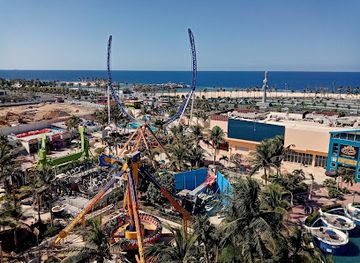
Atallah Happy Land Park
Discover endless joy and excitement at Atallah Happy Land Park, Jeddah's top amusement destination for families and thrill-seekers alike.
31 min drive · 11 km from city centre
-
Tourist attraction
King Fahad's Fountain
Experience the breathtaking beauty of King Fahad's Fountain, an iconic symbol of Jeddah and one of the tallest fountains in the world, with stunning light displays.
12 min drive · 4.1 km from city centre
-
Tourist attraction
Jeddah Waterfront Harbor
Explore Jeddah Waterfront Harbor: A Scenic Gem by the Red Sea, Offering Culture, Recreation, and Breathtaking Views in Saudi Arabia.
31 min drive · 11 km from city centre

Best landmarks in Jeddah
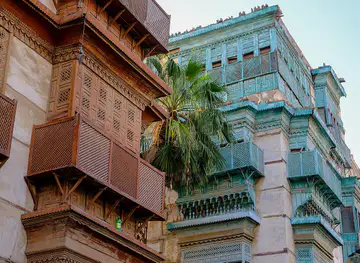
Jeddah’s landmarks express its roles as a pilgrimage gateway, fortified port and modern Red Sea city. Historic Jeddah, or Al-Balad, is defined by coral-stone merchant houses, timber rawasheen and the remnants of an urban pattern shaped by trade and pilgrimage. Nassif House is among the district’s best-known buildings, while Al-Shafi’i Mosque is associated with one of the oldest surviving religious sites in the historic quarter, despite layers of later alteration. On the coast, the Al-Rahma Mosque, commonly called the Floating Mosque, appears to stand over the sea and has become a recognisable waterfront symbol. King Fahd Fountain provides another prominent element of the skyline, and the Corniche’s public sculptures and open spaces show how the city’s civic identity expanded beyond its historic walls.
-
Beach pavillion
Roshn Waterfront
Explore the beauty of Jeddah at Roshn Waterfront, a stunning beach pavilion offering relaxation, recreation, and breathtaking views of the Red Sea.
29 min drive · 9.5 km from city centre
-
Aquarium
Fakieh Aquarium
Discover the wonders of marine life at Fakieh Aquarium in Jeddah, a top family-friendly tourist attraction filled with vibrant sea creatures and interactive exhibits.
22 min drive · 7.3 km from city centre
-
Park
Middle Corniche Park
Explore the lush landscapes and stunning coastal views at Middle Corniche Park, Jeddah's premier destination for relaxation and recreation.
7 min drive · 2.3 km from city centre
-
Amusement park
Atallah Happy Land Park
Experience endless fun at Atallah Happy Land Park, Jeddah's top amusement park featuring thrilling rides, games, and delightful dining options for all ages.
31 min drive · 11 km from city centre
Explore Jeddah on the map
Plan your Jeddah trip on one map. See where the top attractions, landmarks, restaurants, bars and hotels are, find what's near where you're staying, and book hotels and experiences in a few clicks.
Neighbourhoods in Jeddah
-

-
-
-

-


Swipe for more neighbourhoods
Best hotels in Jeddah
Best restaurants in Jeddah
Jeddah’s food culture reflects its history as a port and pilgrimage city, combining Hijazi traditions with influences carried by visitors and trading communities from across the Red Sea and Indian Ocean. Local specialities include foul served with bread, mutabbaq, tamees, saleeg, a creamy rice dish associated with the Hijaz, and hearty rice and meat preparations found throughout Saudi Arabia. Al-Balad contains traditional eateries, juice stalls, bakeries and small shops where food is often informal and atmospheric, while newer districts offer Saudi interpretations alongside Middle Eastern, Asian and international cuisines. Seafood is a natural part of the coastal dining scene, and cafés are central to evening social life. Markets and neighbourhood restaurants reward interest in regional ingredients, spiced rice, grilled meats, dates and cardamom-scented drinks without requiring the formality of hotel dining rooms.
-
Turkish
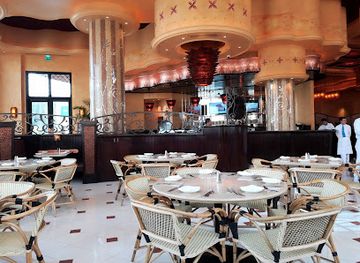
Khayal Restaurant | مطعم خيال
Experience authentic Turkish and Middle Eastern cuisine at Khayal Restaurant in Jeddah, where every dish tells a story.
25 min drive · 8.2 km from city centre
-
Seafood
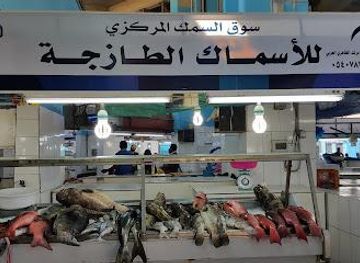
Central Fish Market
Dive into Jeddah's freshest seafood spectacle at the Central Fish Market, where Red Sea bounty meets lively auctions, on-site cooking, and authentic coastal energy.
18 min drive · 5.9 km from city centre
-
American
The Cheesecake Factory
Experience the ultimate American dining adventure at The Cheesecake Factory in Jeddah—where delicious meals meet decadent desserts.
17 min walk · 1.4 km from city centre
-
American
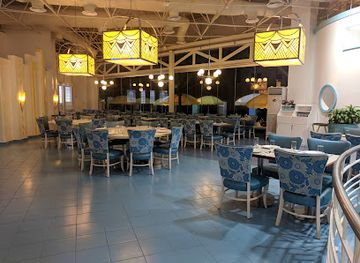
Blue Ocean Restaurant
Experience culinary excellence at Blue Ocean Restaurant in Jeddah with its exquisite seafood and American dishes complemented by stunning ocean views.
22 min drive · 7.4 km from city centre
Best bars in Jeddah
Jeddah has no legal alcohol-based bar or nightclub scene, so evening social life centres on cafés, restaurants, dessert shops, hotel lounges without alcohol, cultural programmes and the Corniche. In Al-Balad, restored buildings and narrow streets can take on a lively atmosphere after sunset, with heritage events, independent cafés and occasional exhibitions adding to the district’s appeal. The waterfront attracts families and groups for promenades, sea views and informal gatherings, while modern areas such as Al-Hamra and the northern districts contain coffee shops and restaurants open into the evening. Live performances, art events and seasonal festivals may take place at cultural venues, though programmes change. Visitors should check current arrangements and observe local expectations concerning dress, public behaviour, prayer times and the separation of licensed cultural activity from prohibited alcohol service.
-
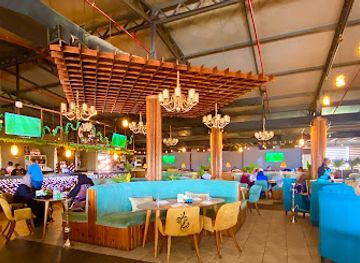
Lounge
Ariba Lounge
Discover the vibrant ambiance of Ariba Lounge in Jeddah, a perfect spot for relaxation and social gatherings with delicious food and drinks.
16 min drive · 5.3 km from city centre
-
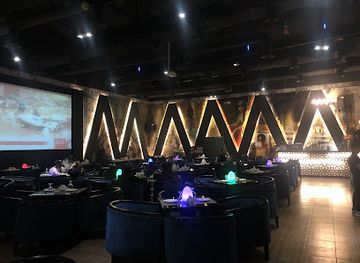
Lounge
Chill Lounge
Discover the luxurious Chill Lounge in Jeddah, a vibrant oasis for relaxation, exquisite dining, and exceptional hookah experiences.
16 min drive · 5.3 km from city centre
-
Restaurant
ADANI BAR
Discover the vibrant atmosphere and unique drink offerings at Adani Bar in Jeddah, where every sip is a celebration of flavor.
12 min drive · 3.9 km from city centre
-
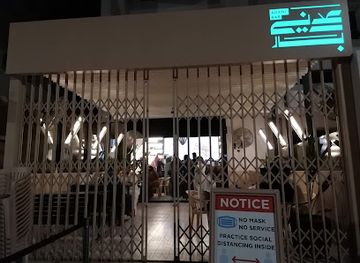
Lounge
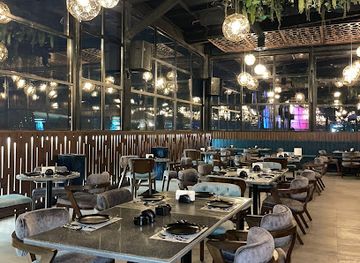
ويكند لاونج
Discover the elegance of ويكند لاونج, a chic lounge blending café and restaurant vibes in the heart of Jeddah, perfect for relaxation and fine dining.
17 min walk · 1.4 km from city centre
Best nightclubs in Jeddah
Jeddah has no legal alcohol-based bar or nightclub scene, so evening social life centres on cafés, restaurants, dessert shops, hotel lounges without alcohol, cultural programmes and the Corniche. In Al-Balad, restored buildings and narrow streets can take on a lively atmosphere after sunset, with heritage events, independent cafés and occasional exhibitions adding to the district’s appeal. The waterfront attracts families and groups for promenades, sea views and informal gatherings, while modern areas such as Al-Hamra and the northern districts contain coffee shops and restaurants open into the evening. Live performances, art events and seasonal festivals may take place at cultural venues, though programmes change. Visitors should check current arrangements and observe local expectations concerning dress, public behaviour, prayer times and the separation of licensed cultural activity from prohibited alcohol service.
-
Travel lounge
Alfursan Lounge
Experience luxury and comfort at the Alfursan Lounge, King Abdulaziz International Airport, redefining your travel experience.
33 min drive · 13 km from city centre
-
Restaurant
Castana lounge كستنا لاونج
Explore the vibrant ambiance and authentic Lebanese flavors at Castana Lounge in Jeddah, a culinary gem for food lovers.
13 min drive · 4.4 km from city centre
-
Pool hall
Iron Camel Bar الجمل الحديدي
Experience the vibrant nightlife of Jeddah at Iron Camel Bar, where leisure meets entertainment in a stylish setting.
25 min drive · 8.4 km from city centre
-
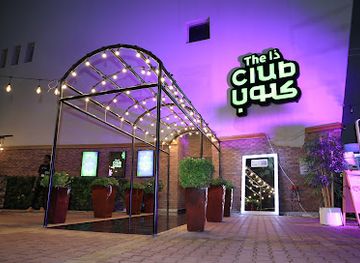
Entertainer
TheClub
Experience laughter and culture at TheClub, Jeddah's premier destination for comedy, theater, and vibrant nightlife.
21 min drive · 7.0 km from city centre

Best shops in Jeddah
Shopping in Jeddah moves between the traditional commerce of Al-Balad and the large modern malls of the newer city. The historic district’s souqs and small shops sell perfumes, prayer items, textiles, jewellery, spices, dates and everyday goods, while its older commercial streets retain the close, negotiable atmosphere of a port market. Visitors may also find Saudi and Hijazi food products, incense and decorative objects suited to compact luggage, although provenance and quality vary between sellers. Contemporary shopping centres in districts such as Al-Hamra and northern Jeddah combine international brands, cafés and family-oriented leisure spaces. Independent boutiques and design-led retailers reflect the city’s younger creative culture, while the best purchases connected to local identity are often modest, practical items rather than mass-produced souvenirs.
-
Shopping mall
Red Sea Mall
Experience the ultimate shopping and entertainment adventure at Red Sea Mall, Jeddah's premier destination for retail therapy and culinary delights.
31 min drive · 11 km from city centre
-
Shopping mall
Cenomi Mall of Arabia
Explore the bustling Cenomi Mall of Arabia in Jeddah, a shopping haven featuring hundreds of stores, diverse dining, and family-friendly attractions.
30 min drive · 10 km from city centre
-
Shopping mall
Al Andalus Mall
Experience shopping like never before at Al Andalus Mall in Jeddah, where style meets entertainment and delicious dining awaits.
18 min drive · 6.1 km from city centre
-
Shopping mall
Aziz Mall
Experience the ultimate shopping and dining destination at Aziz Mall in Jeddah, where style meets leisure in a vibrant atmosphere.
14 min drive · 4.6 km from city centre
Get your free copy of our complete guide to Jeddah, delivered straight to you.
Everything on this page, from attractions and restaurants to essentials and local phrases, in one PDF you can read offline, print or share.
Already have an account? Sign in
Your Jeddah guide is ready.
We'll send it to · Not you? Sign out

Getting your guide ready…
We are putting together a fresh copy of the Jeddah guide. This can take up to a minute.
This can take a few moments. If your browser asks, choose Allow so the download can start. You'll find the guide in your Downloads folder.
Nothing happened? Download it again
Sorry, the guide is taking longer than usual. Please try again in a minute, or get it by email instead.
Jeddah essentials
Currency and Payment
Safety
Emergency Situations
Do's and Don'ts
Local Tips
From Eve
Local phrases worth knowing
You don't need to get them perfect. A few words go a long way, and locals appreciate the effort.
Basics
| English | Local | Say it |
|---|---|---|
| Hello | Marhaba | [mar-ha-ba] |
| Goodbye | Ma'a as-salama | [ma-a as-sa-la-ma] |
| Yes | Na'am | [na-am] |
| No | La | [la] |
| Please/You're welcome | Min fadlik | [min fa-dlak] |
| Thank you | Shukran | [shuk-ran] |
| Excuse me/Sorry | Aasif | [aa-sif] |
| How are you? | Kaif halak? | [ka-if ha-lak] |
| Fine. And you? | Zayn. Wa ant? | [zayn. wa ant] |
| Do you speak English? | Hal tatakallam al-ingliziya? | [hal ta-ta-kal-lam al-in-gli-zi-ya] |
| I don't understand | Ana la afham | [a-na la af-ham] |
Eating & Drinking
| English | Local | Say it |
|---|---|---|
| I'd like to see the menu, please | Aurid an ara al-qeemat, min fadlik | [au-rid an a-ra al-ke-mat, min fa-dlak] |
| I don't eat meat | Ana la akul lahman | [a-na la a-kul la-hman] |
| Cheers! | Saha | [sa-ha] |
| I would like to pay, please | Aurid an adfa', min fadlik | [au-rid an ad-fa', min fa-dlak] |
Emergencies
| English | Local | Say it |
|---|---|---|
| Help! | Musaid | [mu-said] |
| Go away! | Irhal! | [ir-hal] |
| Call the Police! | Ittasal bil-shurta! | [it-ta-sal bil-shur-ta] |
| Call a doctor! | Ittasal bil-tabib! | [it-ta-sal bil-ta-bib] |
| I'm lost | Dha'ayt | [dha-ayt] |
| I'm ill | Ana mareed | [a-na ma-reed] |
Shopping
| English | Local | Say it |
|---|---|---|
| I'd like to buy... | Aurid an ashtar... | [au-rid an ash-tar] |
| I'm just looking | Ana faqat atadabbar | [a-na fa-qat a-ta-dab-bar] |
| How much is it? | Kam thamanuhu? | [kam tha-ma-nu-hu] |
| That's too expensive | Hatha ghali jiddan | [ha-tha gha-li jid-dan] |
| Can you lower the price? | Hal tastaqdir tanzil al-si'ar? | [hal tas-taq-dir tan-zil al-si-ar] |
Time & Numbers
| English | Local | Say it |
|---|---|---|
| What time is it? | Kam al-waqt? | [kam al-waqt] |
| It's one o'clock | Huwa al-wahid | [hu-wa al-wa-hid] |
| Half past (10) | Nisf al-ashir | [nisf al-a-shir] |
| Morning | Sabaah | [sa-baah] |
| Afternoon | Duhur | [du-hur] |
| Evening | Masaa | [ma-saa] |
| Yesterday | Ams | [ams] |
| Today | Al-yawm | [al-yawm] |
| Tomorrow | Ghadan | [gha-dan] |
| 1 | Wahid | [wa-hid] |
| 2 | Ithnayn | [ith-nayn] |
| 3 | Thalatha | [tha-la-tha] |
| 4 | Arba'a | [ar-ba-a] |
| 5 | Khamsa | [kham-sa] |
| 6 | Sitta | [sit-ta] |
| 7 | Saba'a | [sa-ba-a] |
| 8 | Thamania | [tha-ma-nia] |
| 9 | Tis'a | [tis-a] |
| 10 | Ashara | [a-sha-ra] |
Transport & Directions
| English | Local | Say it |
|---|---|---|
| Where's a/the...? | Ein huwa al...? | [ein hu-wa al] |
| What's the address? | Ma huwa al-`unwan? | [ma hu-wa al-un-wan] |
| Can you show me (on the map)? | Hal tastaqdir an tureeni (ala al-khari-ta)? | [hal tas-taq-dir an tu-ree-ni ala al-ka-ri-ta] |
| When's the next (bus)? | Mati al-safir al-qadim? | [ma-ti al-sa-fir al-ka-dim] |
| A ticket (to ....) | Takat (ila ....) | [ta-kat ila] |
History of Jeddah
An Ancient Red Sea Harbour
Jeddah’s origins lie in its advantageous position on the Red Sea coast, where maritime routes linked western Arabia with Egypt, the Horn of Africa and the Indian Ocean. The settlement developed as a port serving communities in the Hijaz, a western Arabian region whose importance was shaped by the pilgrimage routes to Makkah and Madinah. Evidence of earlier occupation and long-distance trade reflects the wider history of Red Sea navigation, although the city’s early development was gradual rather than the result of a single foundation event. Its shoreline, wells and harbour made it a practical stopping place for merchants and travellers, establishing the maritime character that has remained central to Jeddah’s identity.
Jeddah Becomes Makkah’s Port
In the seventh century, traditionally dated to the caliphate of Uthman ibn Affan, Jeddah was designated as the port for Makkah. This decision strengthened the city’s role in the Hajj, as pilgrims arriving by sea could continue overland towards Islam’s holiest city. Trade and pilgrimage brought together Arabic-speaking communities with travellers from Africa, Persia, India and Southeast Asia, leaving a lasting imprint on local customs and cuisine. Jeddah’s prosperity depended on its ability to supply, receive and protect these flows of people and goods. The city’s religious significance therefore grew alongside its commercial role, rather than replacing it.
Walls, Merchants and Ottoman Rule
From the medieval period into the early modern era, Jeddah remained a fortified port and an important centre of commerce in the Hijaz. Ottoman authority became established in the sixteenth century, and the city’s walls, gates and defensive structures reflected the strategic value of its harbour and its proximity to Makkah. Merchant families built substantial houses using locally available coral stone, timber and plaster, adapting their architecture to the hot, humid coastal climate. The tall rawasheen screens of historic Jeddah combined privacy with ventilation and became one of the district’s defining features. These houses and lanes preserve the physical memory of a trading society shaped by pilgrimage and maritime exchange.
The Hashemite Hijaz and Changing Trade
After the First World War, Jeddah formed part of the Hashemite Kingdom of the Hijaz, a short-lived political state centred on the region’s holy cities. The port continued to serve pilgrims and merchants, though new political boundaries and changing transport systems altered established trading patterns. Steamships, improved roads and the gradual development of modern communications connected Jeddah more directly with the wider Arabian Peninsula. The old walled city remained densely occupied, while pressure for better roads, services and housing began to encourage expansion beyond its historic core. This period marked the transition between a compact port organised around walls and a larger modern city.
Incorporation into Saudi Arabia
Jeddah was incorporated into the expanding Saudi state in 1925 after the conquest of the Hijaz by Abdulaziz Ibn Saud. It subsequently became an important administrative, commercial and diplomatic centre for the newly unified kingdom. The arrival of modern government institutions, improved infrastructure and growing international trade accelerated urban change. Jeddah’s population expanded as people from across Saudi Arabia and other parts of the region settled in the city, reinforcing its long-standing multicultural character. Although the historic district lost some of its former economic prominence, its houses, mosques and souqs remained essential evidence of Jeddah’s coastal and pilgrimage heritage.
Oil-Era Expansion and the Corniche
The second half of the twentieth century brought rapid growth as oil revenues transformed Saudi Arabia’s infrastructure and economy. Jeddah expanded far beyond its old walls, developing new residential areas, commercial districts, roads and public services. The waterfront was reshaped into the Corniche, creating a long public zone of promenades, open spaces and civic landmarks along the Red Sea. Modern architecture appeared beside surviving historic quarters, while the port and King Abdulaziz International Airport strengthened Jeddah’s role as a gateway for pilgrims, business travellers and international visitors. The city visible today is therefore the product of both deep maritime history and accelerated modernisation.
Preserving Historic Jeddah
Increasing recognition of Al-Balad’s architectural and cultural value led to conservation efforts focused on its coral-stone houses, mosques, markets and street pattern. Historic Jeddah was inscribed on the UNESCO World Heritage List in 2014 under the title Historic Jeddah, the Gate to Makkah. Restoration has encouraged cultural events, galleries, cafés and heritage interpretation while also raising difficult questions about maintaining residents, local commerce and everyday urban life within a protected district. Today, Al-Balad stands not as an isolated monument but as a surviving urban record of pilgrimage, trade, migration and adaptation to the Red Sea climate.
Jeddah in Photos
Browse through our photo collection highlighting the charm and character of the destination.
Cities near Jeddah
The closest cities to Jeddah, if you have time for more than one stop.
-

-

-

-

-


Swipe for more cities

