

Telep (Novi Sad) Travel Guide - Free
Explore Telep in Novi Sad with Evendo's free guide. Find the best shops, historic streets, restaurants, and gems on web or mobile.


Telep in Novi Sad offers quiet garden streets, Hungarian heritage, local cafés, everyday markets and an authentic view of southern urban life in Serbia.
A Southern Quarter with Local Character
Telep occupies a broad residential area south-west of Novi Sad’s historic centre, extending between the city’s busier arterial roads and the quieter streets leading towards the Danube. It is not a district of grand monuments or concentrated visitor attractions; its appeal lies in the texture of everyday life. Low houses, front gardens, workshops, small shops and newer apartment buildings sit alongside one another, giving the area a more domestic character than central Novi Sad.Read more about Telep
Hungarian Roots and Family Streets
Exploring at a Slower Pace
Best attractions in Telep
Telep’s attractions are primarily atmospheric and local rather than monumental. Visitors can explore a broad network of residential streets where single-storey homes, planted front gardens, workshops and recently built apartment blocks reveal the neighbourhood’s successive phases of growth. Feješ Klare and Ćirila i Metodija are useful examples of the quieter street environment, while Futoški put and Bulevar patrijarha Pavla show how the area connects to Novi Sad’s wider southern expansion. Small cafés, bakeries and independent shops provide pauses during a walk, and the changing building scale offers a more grounded view of the city than the historic centre. Telep also works as a starting point for longer journeys towards Liman, the Danube and other southern districts, although those destinations should be understood as outside the neighbourhood rather than local attractions.
-
Tourist attraction
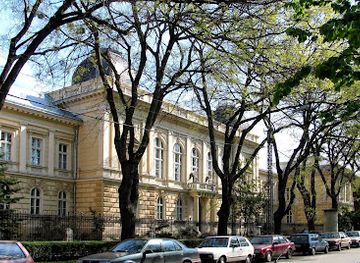
Muzej Vojvodine
Discover the cultural heritage of Vojvodina at Muzej Vojvodine, showcasing history, art, and local traditions in the heart of Novi Sad.
8 min drive · 2.6 km from neighbourhood centre
Best landmarks in Telep
Telep has few monumental landmarks in the conventional tourist sense, but its built environment is significant as a record of Novi Sad’s outward growth. The neighbourhood’s older detached houses, garden plots, workshops and modest façades preserve the scale of the settlement that developed beyond the historic centre, while newer apartment buildings and commercial frontages show the pressure of contemporary urban expansion. Streets such as Feješ Klare and Ćirila i Metodija are valuable less for one celebrated building than for the continuity of domestic architecture and everyday life they represent. Futoški put and Bulevar patrijarha Pavla function as important urban landmarks in practical terms, marking the routes by which Telep connects with central Novi Sad and neighbouring districts. The area’s cultural significance lies in this layered, lived-in character rather than in a single protected monument.
-
Tourist attraction
Petrovaradin Fortress Clock
Discover the rich history and breathtaking views from the Petrovaradin Fortress Clock, a must-visit tourist attraction in Petrovaradin.
7 min drive · 2.3 km from neighbourhood centre
-
Museum
Muzej Vojvodine
Explore the cultural heritage of Vojvodina at Muzej Vojvodine, a captivating museum in the heart of Novi Sad showcasing diverse exhibits.
8 min drive · 2.6 km from neighbourhood centre
-
History museum
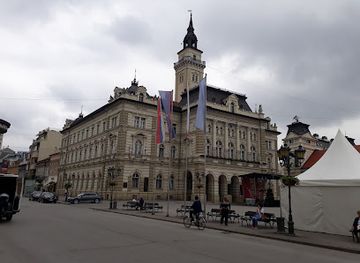
City Museum of Novi Sad
Explore the fascinating history of Novi Sad at the City Museum, where ancient artifacts and rich narratives bring the past to life.
7 min drive · 2.4 km from neighbourhood centre

Explore Telep on the map
A handpicked selection of must-see spots in Telep, mapped for you.
Best hotels in Telep
Best nightclubs in Telep
Telep is not one of Novi Sad’s principal nightlife districts, and its evening life is generally quieter and more local than the concentrated bar scene around the historic centre. After dark, visitors will find cafés, casual bars and neighbourhood restaurants where residents meet for coffee, conversation or a drink, particularly along the more heavily used roads. The area’s residential layout means that nightlife is scattered rather than organised around a pedestrian entertainment quarter, and there is little reason to expect a continuous sequence of clubs. Those seeking live music, late bars or larger venues will usually find a wider choice elsewhere in Novi Sad, while Telep suits an unhurried evening close to residential streets. Visitors should keep noise low when leaving venues and remember that many surrounding buildings are private homes.
-
Night club
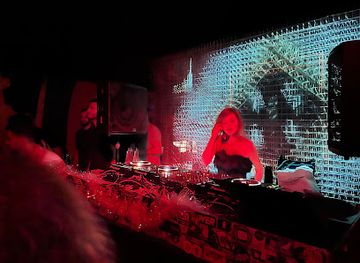
Club Tunnel
Dive into the electrifying nightlife at Club Tunnel in Petrovaradin, where unforgettable music and vibrant energy await every night.
7 min drive · 2.5 km from neighbourhood centre
Telep essentials
Getting There
Getting Around
Safety
Emergency Situations
Do's and Don'ts
Local Tips

From Eve
Local phrases worth knowing
You don't need to get them perfect. A few words go a long way, and locals appreciate the effort.
Basics
| English | Local | Say it |
|---|---|---|
| Hello | Zdravo | [Zdrah-voh] |
| Goodbye | Doviđenja | [Doh-vee-jen-ya] |
| Yes | Da | [Dah] |
| No | Ne | [Neh] |
| Please/You're welcome | Molim | [Moh-leem] |
| Thank you | Hvala | [Hvah-lah] |
| Excuse me/Sorry | Izvinite | [Eez-vee-nee-teh] |
| How are you? | Kako si? | [Kah-koh see?] |
| Fine. And you? | Dobro. A ti? | [Doh-broh. Ah tee?] |
| Do you speak English? | Da li govorite engleski? | [Dah lee goh-voh-ree-teh eng-lehs-kee?] |
| I don't understand | Ne razumem | [Neh rah-zoo-mehm] |
Eating & Drinking
| English | Local | Say it |
|---|---|---|
| I'd like to see the menu, please | Molim vas da vidim meni | [Moh-leem vahs dah vee-deem meh-nee] |
| I don't eat meat | Ne jedem meso | [Neh yeh-dem meh-so] |
| Cheers! | Živeli! | [Zhee-veh-lee] |
| I would like to pay, please | Želim da platim, molim | [Zheh-leem dah plah-teem, moh-leem] |
Emergencies
| English | Local | Say it |
|---|---|---|
| Help! | Pomoć! | [Poh-moh-ch!] |
| Go away! | Idite odavde! | [Ee-dee-teh oh-dahv-deh!] |
| Call the Police! | Pozovite policiju! | [Poh-zoh-vee-teh po-lee-tsee-yoo!] |
| Call a doctor! | Pozovite doktora! | [Poh-zoh-vee-teh dohk-toh-rah!] |
| I'm lost | Izgubio/la sam se | [Eez-goo-bioh/lah sahm seh] |
| I'm ill | Bolestan/sna sam | [Boh-leh-stahn/snah sahm] |
Shopping
| English | Local | Say it |
|---|---|---|
| I'd like to buy... | Želim da kupim... | [Zheh-leem dah koo-peem...] |
| I'm just looking | Samo gledam | [Sah-moh gleh-dahm] |
| How much is it? | Koliko košta? | [Koh-lee-koh kohs-tah?] |
| That's too expensive | To je previše skupo | [Toh yeh preh-vee-sheh skoo-poh] |
| Can you lower the price? | Možete li spustiti cenu? | [Moh-zheh-teh lee spoo-stee-tee tseh-noo?] |
Time & Numbers
| English | Local | Say it |
|---|---|---|
| What time is it? | Koliko je sati? | [Koh-lee-koh yeh sah-tee?] |
| It's one o'clock | Jedan je sat | [Yeh-dahn yeh saht] |
| Half past (10) | Pola (deset) | [Poh-lah (deh-set)] |
| Morning | Jutro | [Yoo-troh] |
| Afternoon | Popodne | [Poh-pohd-neh] |
| Evening | Veče | [Veh-cheh] |
| Yesterday | Juče | [Yoo-cheh] |
| Today | Danas | [Dah-nahs] |
| Tomorrow | Sutra | [Soo-trah] |
| 1 | Jedan | [Yeh-dahn] |
| 2 | Dva | [Dvah] |
| 3 | Tri | [Tree] |
| 4 | Četiri | [Cheh-tee-ree] |
| 5 | Pet | [Peh-t] |
| 6 | Šest | [Shehst] |
| 7 | Sedam | [Seh-dahm] |
| 8 | Osam | [Oh-sahm] |
| 9 | Devet | [Deh-veht] |
| 10 | Deset | [Deh-set] |
Transport & Directions
| English | Local | Say it |
|---|---|---|
| Where's a/the...? | Gde je...? | [Gdeh yeh...?] |
| What's the address? | Koja je adresa? | [Koh-yah yeh ah-deh-sah?] |
| Can you show me (on the map)? | Možete li da mi pokažete (na mapi)? | [Moh-zheh-teh lee dah mee poh-kah-zheh-teh (nah mah-pee)?] |
| When's the next (bus)? | Kada je sledeći (autobus)? | [Kah-dah yeh sleh-deh-chee (ow-toh-boos)?] |
| A ticket (to ....) | Jednu kartu (do ....) | [Yehd-noo kahr-too (doh ....)] |
History of Telep
A Settlement Beyond the Old City
Telep developed outside Novi Sad’s historic urban core as the city expanded southwards across land that was less densely settled than the old centre. Its name derives from the Hungarian telep, meaning a settlement or colony, and reflects the terminology used during the period when new residential areas were forming around the established city. Rather than growing around a single monumental institution, Telep took shape through houses, gardens, smallholdings and practical local roads. This origin helps explain its enduring low-rise character and its contrast with the more formal blocks and civic spaces of central Novi Sad.
Working Homes and Mixed Heritage
During the late nineteenth and early twentieth centuries, Telep became associated with modest family housing and the practical life of Novi Sad’s expanding urban population. Its cultural background was shaped by the city’s long Serbian, Hungarian and wider Central European connections, visible in older domestic architecture, street names and local patterns of settlement rather than in a single preserved historic ensemble. The quarter’s development was gradual, with homes and workshops occupying a landscape that retained a semi-rural quality for longer than the compact centre. This mixture of urban and village-like features remains central to Telep’s identity.
Post-War Expansion and Urban Change
After the Second World War, Novi Sad grew rapidly and Telep was increasingly absorbed into the continuous urban area. Existing houses were adapted or replaced, streets gained better infrastructure, and the neighbourhood became more closely connected to the city’s transport and employment networks. Later development introduced larger apartment buildings and denser construction, particularly along major roads, while many interior streets remained dominated by detached or semi-detached homes. The result is a visibly layered neighbourhood in which older residential fabric, post-war improvements and contemporary construction stand close together.
A Changing Southern Neighbourhood
In recent decades, Telep has continued to change as Novi Sad’s population and housing demand have expanded towards the south and west. New buildings have appeared beside established homes, altering the scale of some streets and bringing additional services, while long-standing residents and local businesses continue to give the area its everyday rhythm. The neighbourhood is not defined by a single regeneration project or tourism identity; its contemporary significance lies in showing how Novi Sad grows through gradual infill and the conversion of former peripheral settlements into established urban districts.
Telep in Photos
Browse through our photo collection highlighting the charm and character of the destination.
Neighbourhoods near Telep
The closest neighbourhoods to Telep, if you have time for more than one stop.
-

-


Swipe for more neighbourhoods
Explore more

Explore more of Novi Sad
Novi Sad blends Petrovaradin Fortress, Danube views, Serbian culture and lively cafés with museums, festivals and easy access to Fruška Gora.
Explore Novi Sad