

Free Kenema District Travel Guide & Mobile App
Explore Kenema District with free travel guides. Discover regional history, expert tips, proposed trips, and audio guides on web or mobile app.


Explore Kenema District in eastern Sierra Leone for Mende culture, rainforest, Kambui Hills, diamond heritage and lively regional markets.
Read more about Kenema District
When is the best time to visit Kenema District?
Best: December–February · 30–31°C| Month | High (°C) | Rainfall (mm) |
|---|---|---|
| January (best) | 30 | 20 |
| February (best) | 31 | 20 |
| March | 32 | 40 |
| April | 32 | 80 |
| May | 32 | 120 |
| June | 32 | 200 |
| July | 32 | 300 |
| August | 31 | 300 |
| September | 31 | 200 |
| October | 31 | 120 |
| November | 30 | 60 |
| December (best) | 30 | 20 |
Getting to and around Kenema District
How to get there
Transportation
Top city travel guides in Kenema District
The cities of Kenema District, and the easiest places to base yourself.

Swipe for more cities
Best attractions in Kenema District
Kenema’s attractions begin with the life of the district capital: markets, transport yards, churches, mosques, small businesses and streets where agricultural produce and manufactured goods circulate between town and countryside. The city is also the practical starting point for exploring surrounding chiefdoms and for arranging guides, vehicles and permission for nature visits. Near Kenema, Kambui Hills Forest Reserve offers forested slopes, streams and wildlife habitat, but it is a working conservation landscape rather than a developed national-park facility, so guided access and realistic expectations are important. The southern and eastern parts of the district connect with the wider Gola rainforest landscape, where carefully organised visits can focus on forest ecology, community conservation and birdlife. Tongo provides a different experience, introducing visitors to the history and continuing realities of diamond mining in eastern Sierra Leone. Rural journeys reveal rice fields, cocoa and coffee farms, oil-palm landscapes and market communities, while cultural encounters are best arranged through local contacts and approached with respect for private traditions. The district’s appeal lies less in a dense collection of formal attractions than in the relationship between forest, farming, mining and the commercial life of Kenema.
-
Wildlife rescue service
Tacugama Chimpanzee Sanctuary
Explore Tacugama Chimpanzee Sanctuary, a wildlife haven in Sierra Leone dedicated to rescuing chimpanzees and promoting conservation.
-
Tourist attraction
Makeni Clock Tower
Discover the Makeni Clock Tower, a historical landmark in the heart of Sierra Leone, where culture, community, and stunning architecture come together.
-
National park
Kangari Hills Forest Reserve
Explore the tranquil beauty and diverse wildlife of Kangari Hills Forest Reserve, a must-visit national park in Sierra Leone.
-
National park
Gola Rainforest National Park
Discover the breathtaking beauty and rich biodiversity of Gola Rainforest National Park in Sierra Leone, a must-visit for nature lovers and adventure seekers.


Best landmarks in Kenema District
Kenema’s most significant landmark is the town itself as an eastern Sierra Leonean commercial and administrative centre, where busy market areas and older civic streets reflect its growth during the colonial transport era. The Kambui Hills form a recognisable natural backdrop near the city and are important both visually and environmentally, protecting forested uplands, streams and wildlife habitat. Farther east, Tongo is a landmark of industrial and social history rather than conventional architecture: its diamond fields represent the mineral economy that transformed the district and influenced Sierra Leone’s twentieth-century history. The forested landscapes associated with Gola are equally important landmarks in ecological terms, preserving part of the Upper Guinean forest and illustrating the contrast between conservation, farming and mining. Across the district, mosques, churches, chiefdom centres, market grounds and road junctions often function as practical community landmarks, although many are living places rather than formal heritage monuments. Visitors should avoid treating sacred sites, government buildings or active mining installations as photographic attractions without permission.
-
National park
Gola Rainforest National Park
Explore Gola Rainforest National Park, a biodiversity hotspot in Sierra Leone, showcasing stunning landscapes and rich wildlife.
-
National forest
Gola Forest Reserve
Discover the enchanting biodiversity of Gola Forest Reserve, a national treasure in Sierra Leone, where adventure meets conservation.
-
 Nature preserve
Kambui Hills Forest Reserve
Explore Kambui Hills Forest Reserve, Sierra Leone's hidden gem, where nature thrives and adventure awaits amidst stunning landscapes.


Explore Kenema District on the map
Plan your trip on one map. See where the top cities, national parks and sights are, and book hotels and experiences in a few clicks.
Best hotels in Kenema District
Best restaurants in Kenema District
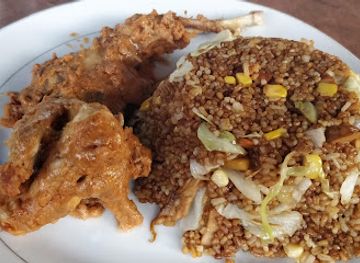
Dining in Kenema is centred on informal local restaurants, cookshops, hotel dining rooms, cafés and market-side food stalls rather than a large formal restaurant scene. Common meals may include rice served with palm-oil sauces, groundnut-based stews, cassava leaf or potato leaf preparations, beans, fried plantain, fish and chicken, with recipes varying between households and communities. Pepper sauces are often available, and visitors should ask about ingredients if they have dietary restrictions. The district’s agricultural economy supports access to rice, cassava, plantain, palm products, cocoa, coffee and seasonal fruit, although availability changes with harvests and supply routes. Kenema’s better-established eateries cater to business travellers and residents, while rural meals are usually simpler and should be arranged with trusted hosts. Markets are useful for fruit, snacks and drinks, but hygiene standards vary; choose busy stalls where food is cooked thoroughly and served hot. Sierra Leonean dishes overlap with wider national cuisine, so it is more accurate to view Kenema as an eastern setting for these traditions than to assign every recipe a specifically district origin.
-
Restaurant
Mamba Point Hotel Restaurant Lagoonda
Discover exquisite dining at Mamba Point Hotel Restaurant Lagoonda - where local flavors meet stunning views in Freetown.
-
Hotel
PALOMA GUEST HOUSE
Discover comfort and local charm at Paloma Guest House in Kenema, Sierra Leone - your perfect travel retreat.
-
Bar
The Clubhouse
Experience vibrant nightlife at The Clubhouse in Makeni - your go-to bar for local brews and cocktails amidst friendly vibes.
-
Restaurant
Ruri's Restaurant
Discover authentic Sierra Leonean cuisine at Ruri's Restaurant in Bo—where every dish tells a story.


Best bars in Kenema District
Evening life in Kenema is modest and concentrated around local bars, hotel lounges, restaurants and neighbourhood gathering places rather than a prominent nightclub circuit. Music, televised football and conversation are common features of urban evenings, while some venues may offer dancing or occasional live entertainment without a fixed programme that visitors can rely on. Bars may serve Sierra Leonean lagers, soft drinks and spirits, and locally made palm wine can be encountered outside formal hotel settings, though quality and availability vary. Nightlife becomes quieter beyond Kenema, where evening social life is more likely to centre on family compounds, community events or small local drinking places. Use reputable transport after dark, keep valuables out of sight and follow local advice about which areas are appropriate to walk through. The district’s evening culture is best approached as part of its everyday urban life, not as a destination built around clubs or late-night tourism.
-
Hotel
PALOMA GUEST HOUSE
Experience comfort and local charm at Paloma Guest House, your cozy retreat in the heart of Kenema, Sierra Leone.
-
Hotel
DORWAILA INN & SUITE
Experience the warmth and hospitality of Dorwaila Inn & Suite, your ideal hotel in Kenema, Sierra Leone for comfort and cultural exploration.
-
Bar
The Clubhouse
Experience the vibrant nightlife of Makeni at The Clubhouse—a perfect spot for drinks, food, and unforgettable memories in Sierra Leone.
-
Hotel
Capitol Hotel
Experience the charm of Kenema at Capitol Hotel, where comfort meets culture in the heart of Sierra Leone.



Best nightclubs in Kenema District
Evening life in Kenema is modest and concentrated around local bars, hotel lounges, restaurants and neighbourhood gathering places rather than a prominent nightclub circuit. Music, televised football and conversation are common features of urban evenings, while some venues may offer dancing or occasional live entertainment without a fixed programme that visitors can rely on. Bars may serve Sierra Leonean lagers, soft drinks and spirits, and locally made palm wine can be encountered outside formal hotel settings, though quality and availability vary. Nightlife becomes quieter beyond Kenema, where evening social life is more likely to centre on family compounds, community events or small local drinking places. Use reputable transport after dark, keep valuables out of sight and follow local advice about which areas are appropriate to walk through. The district’s evening culture is best approached as part of its everyday urban life, not as a destination built around clubs or late-night tourism.
-
Club
Karima night club
Immerse yourself in the vibrant nightlife of Kenema at Karima Night Club, where music and energy create unforgettable moments.
Best shops in Kenema District
Shopping in Kenema is primarily practical and market-based, with stalls and small shops selling clothing, household goods, mobile-phone credit, toiletries, fresh produce and prepared food. The town’s markets are useful for seeing how rice, cassava, plantain, palm products, fruit and other goods move between farming communities and urban consumers. Small traders may offer locally produced cocoa and coffee, while crafts and fabrics can sometimes be found through personal recommendations rather than in a dedicated tourist district. Purchases of minerals, especially diamonds, require extreme caution: visitors should never buy stones from informal sellers, and should use only fully legal, documented channels if dealing in precious materials. There is no need to expect large shopping centres or luxury retail in the district. Bargaining may be part of informal market transactions, but it should remain courteous and proportionate. Cash in smaller Leone denominations is useful, and visitors should compare goods carefully, check quality and ask before photographing stalls or sellers.
-
Shopping mall
Kenema Shopping Plaza
Discover a vibrant shopping experience at Kenema Shopping Plaza, where local culture meets modern retail in Sierra Leone.
-
Shopping mall
Choithram Super Market
Explore the vibrant Choithram Super Market in Kenema, where shopping meets the rich culture of Sierra Leone.
-
National forest
Gola Forest Reserve
Explore the Gola Forest Reserve, a national forest in Sierra Leone, rich in biodiversity and a paradise for nature lovers and adventurers.
-
Shopping mall
Kenema Super Market
Discover the vibrant shopping experience at Kenema Super Market, where local culture meets diverse retail options in Sierra Leone.


Get your free copy of our complete guide to Kenema District, delivered straight to you.
Everything on this page, from attractions and restaurants to essentials and local phrases, in one PDF you can read offline, print or share.
Already have an account? Sign in
Your Kenema District guide is ready.
We'll send it to · Not you? Sign out

Getting your guide ready…
We are putting together a fresh copy of the Kenema District guide. This can take up to a minute.
This can take a few moments. If your browser asks, choose Allow so the download can start. You'll find the guide in your Downloads folder.
Nothing happened? Download it again
Sorry, the guide is taking longer than usual. Please try again in a minute, or get it by email instead.
Kenema District essentials
Currency and Payment
Safety
Emergency Situations
Do's and Don'ts
Local Tips
From Eve
Local phrases worth knowing
You don't need to get them perfect. A few words go a long way, and locals appreciate the effort.
Basics
| English | Local | Say it |
|---|---|---|
| Hello | Salone | [sah-loh-neh] |
| Goodbye | Bye-bye | [bye-bye] |
| Yes | Yah | [yah] |
| No | No | [noh] |
| Please/You're welcome | Pliz | [pleez] |
| Thank you | Tenki | [ten-kee] |
| Excuse me/Sorry | Sori | [soh-ree] |
| How are you? | Ow di body? | [ow dee boh-dee] |
| Fine. And you? | I fine. Ow bout you? | [I fine. ow bowt yoo?] |
| Do you speak English? | Yuh sabi English? | [yoo sah-bee ing-glish] |
| I don't understand | A no sabi | [ah noh sah-bee] |
Eating & Drinking
| English | Local | Say it |
|---|---|---|
| I'd like to see the menu, please | A wan fo si di menu, pliz | [ah wan fo see dee men-oo, pleez] |
| I don't eat meat | A no deit mit | [ah noh dayt meet] |
| Cheers! | Salone! | [sah-loh-neh] |
| I would like to pay, please | A wan fo pe, pliz | [ah wan fo pay, pleez] |
Emergencies
| English | Local | Say it |
|---|---|---|
| Help! | Help! | [help] |
| Go away! | Go way! | [go way] |
| Call the Police! | Call di Police! | [call dee po-lees] |
| Call a doctor! | Call wan doktor! | [call wan dok-tor] |
| I'm lost | A don lost | [ah don lost] |
| I'm ill | A de sik | [ah dee seek] |
Shopping
| English | Local | Say it |
|---|---|---|
| I'd like to buy... | A wan fo bai... | [ah wan fo bye] |
| I'm just looking | A de just luk | [ah dee just look] |
| How much is it? | Ow much e be? | [ow much eh beh] |
| That's too expensive | Dat to expensif | [daht too expen-sif] |
| Can you lower the price? | Yuh fit lower di prais? | [yoo fit loh-er dee price] |
Time & Numbers
| English | Local | Say it |
|---|---|---|
| What time is it? | Ow far di time? | [ow far dee time] |
| It's one o'clock | E na wan o'clock | [eh nah wan oh-clock] |
| Half past (10) | Half past ten | [half past ten] |
| Morning | Mornin | [mor-ning] |
| Afternoon | Aftanun | [af-ta-noon] |
| Evening | Ivinin | [ee-vee-ning] |
| Yesterday | Yestide | [yes-ti-day] |
| Today | Tude | [too-day] |
| Tomorrow | Tomo | [toh-mo] |
| 1 | Wan | [wan] |
| 2 | Tu | [too] |
| 3 | Tri | [tree] |
| 4 | Fou | [foh] |
| 5 | Fiv | [fiv] |
| 6 | Siks | [siks] |
| 7 | Sef | [sehv] |
| 8 | Eit | [eight] |
| 9 | Nain | [nine] |
| 10 | Ten | [ten] |
Transport & Directions
| English | Local | Say it |
|---|---|---|
| Where's a/the...? | Wey di...? | [wey dee] |
| What's the address? | Ow di adress? | [ow dee ah-dress] |
| Can you show me (on the map)? | Yuh fit show me (pan di map)? | [yoo fit show mee (pan dee map)] |
| When's the next (bus)? | Wen di next (bus)? | [wen dee next (bus)] |
| A ticket (to ....) | Wan tiket (fo ...) | [wan tee-ket (fo ...)] |
History of Kenema District
Early Mende settlement and forest societies
The territory that is now Kenema District developed within the wider cultural world of Mende-speaking communities, whose settlements, farming systems and chiefly institutions shaped the forest and savannah margins of eastern Sierra Leone. Rice cultivation, hunting, forest use and regional exchange supported communities long before the creation of modern districts. Social organisations, including Poro for men and Sande for women, have had important educational, ethical and communal roles in many Mende areas, although their rites and inner practices are not matters for public display.
The British Protectorate and chiefly administration
Britain declared a Protectorate over the Sierra Leone interior in 1896, extending colonial administration beyond the coastal Colony. Governance relied heavily on recognised paramount chiefs and local authorities, while taxation, labour demands and new legal structures altered existing political relationships. In the Kenema area, colonial rule also redirected trade towards administrative stations and transport corridors. The legacy remains visible in chiefly institutions, town planning, official boundaries and the continuing importance of Kenema as an eastern administrative centre.
Railways, trade and the growth of Kenema
The development of Sierra Leone’s railway network in the early twentieth century connected the interior more closely with Freetown and other commercial centres. Kenema grew as a station town and market centre, handling agricultural produce and imported goods from surrounding chiefdoms. Transport encouraged the expansion of commerce, schools, missions and administrative services, while also making the district more closely integrated into the colonial economy. Although the railway is no longer the region’s principal transport system, its role helps explain Kenema’s enduring position as a hub for eastern Sierra Leone.
The Tongo diamond fields
Diamonds became a major force in the economy and modern history of eastern Sierra Leone during the twentieth century. The Tongo fields, located in Kenema District, attracted miners, traders and workers and linked local communities to national and international markets. Diamond wealth brought commercial opportunity but also environmental pressure, uneven development and disputes over control and benefit. The fields later became entangled in the wider conflict economy of Sierra Leone’s civil war. Today, Tongo’s name remains central to the district’s industrial and social history.
Agriculture, migration and urban change
Alongside mining, agriculture has remained fundamental to Kenema District. Rice, cocoa, coffee, oil palm and food crops support households and supply local markets, while Kenema’s growth has drawn people from rural chiefdoms and other parts of Sierra Leone. Roads, schools, health services and trading networks have gradually strengthened the town’s regional role. These changes have produced a district where urban commerce, small-scale farming and customary authority continue to coexist, sometimes uneasily, within a rapidly changing economy.
Civil war, peacebuilding and recovery
Sierra Leone’s civil war, which lasted from 1991 to 2002, deeply affected the Eastern Province, including communities connected to Kenema and the diamond areas. Displacement, insecurity and disruption to farming and public services left a long social legacy. Since the war, recovery has involved rebuilding roads and institutions, restoring schools and health services, and strengthening local governance. Kenema also became associated with public health efforts during later national crises, illustrating the district’s importance as a service and coordination centre for the east.
Forest conservation and sustainable development
The protection of remaining Upper Guinean forest has become an increasingly important chapter in Kenema District’s modern history. Kambui Hills and the wider Gola forest landscape represent habitats that have been reduced across West Africa by farming, logging, mining and settlement. Conservation programmes now seek to protect biodiversity while recognising the needs of communities that depend on land and forest resources. This has created new forms of local employment and environmental advocacy, but also requires careful negotiation over access, benefits and land rights.
Kenema District in Photos
Browse through our photo collection highlighting the charm and character of the destination.
Neighbouring regions of Kenema District
The closest regions to Kenema District, if you have time for more than one.
-

-
-

-

-


Swipe for more regions
Explore more

Explore more of Sierra Leone
Discover Sierra Leone, a West African treasure with pristine beaches, lush rainforests, rich history, and vibrant cultures, offering unforgettable adventures and warm hospitality.
Explore Sierra Leone