
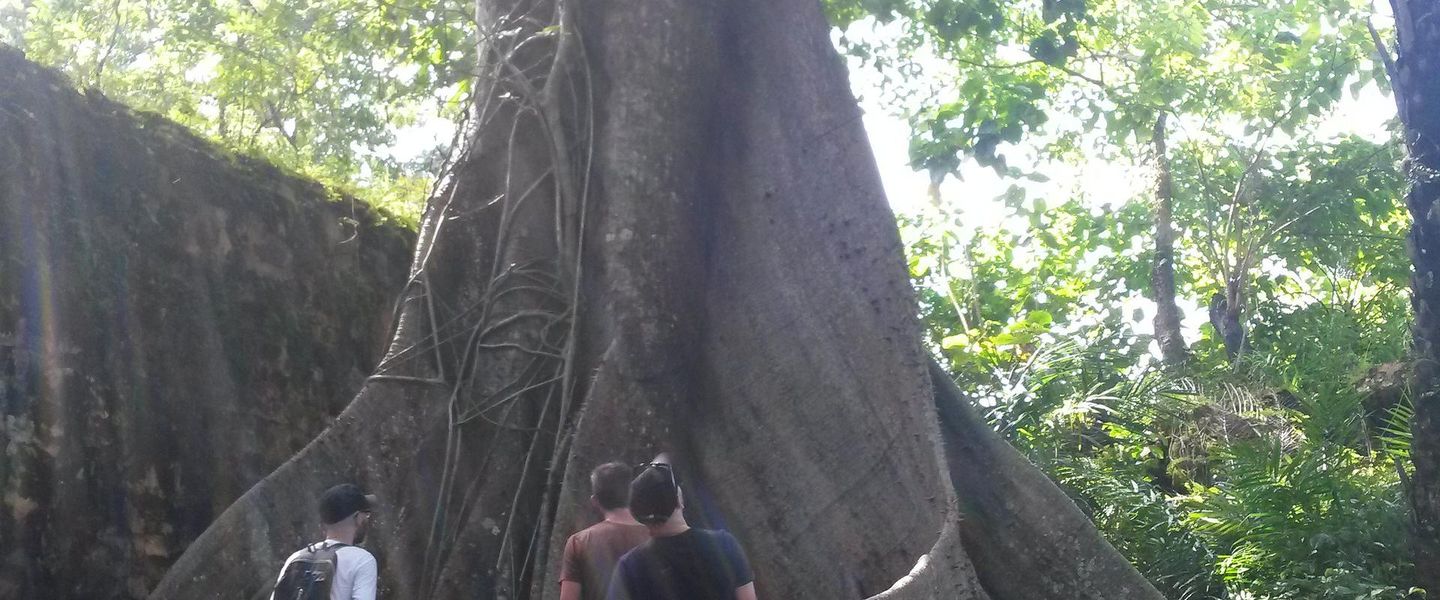
Moyamba District, Sierra Leone Travel Guide
Discover the serene beauty and rich cultural heritage of Moyamba District, Sierra Leone's hidden gem, perfect for nature lovers and cultural enthusiasts alike.
Welcome to Moyamba District, a serene and picturesque region in the heart of Sierra Leone. Known for its lush landscapes, friendly locals, and rich cultural heritage, Moyamba District offers a peaceful retreat away from the hustle and bustle of the city. This district is a haven for nature lovers, with its rolling hills, dense forests, and scenic riverbanks. Explore the many small villages that dot the district, each with its unique traditions and warm hospitality. The district is also home to several historical sites, including the ancient stone circles of Tiwai Island, which are a testament to the region's deep-rooted history. Visitors can also enjoy the vibrant local markets, where you can find handmade crafts, fresh produce, and delicious local cuisine. Moyamba District is also an excellent destination for eco-tourism. The lush rainforests and diverse wildlife provide ample opportunities for hiking, bird watching, and other outdoor activities. Whether you're looking to immerse yourself in nature, learn about the local culture, or simply relax, Moyamba District has something to offer for everyone.

Know before you go
Hi, I'm Eve. Here are a few practical things to know before exploring Moyamba District.
- Visit the local markets early in the morning for the freshest produce and the best selection of handmade crafts.
- Bring a good pair of walking shoes for exploring the scenic trails and historical sites.
- Hire a local guide for a more in-depth understanding of the region's history and culture.
- Carry insect repellent, especially if you plan on spending time in the forests or near water bodies.
- Respect local customs and traditions; always ask for permission before taking photos of people.
Top City Travel Guides in Moyamba District
The cities of Moyamba District, and the easiest places to base yourself.


Destinations in Moyamba District
Resorts, valleys and scenic spots worth a trip of their own.


Explore Moyamba District: Things to Do, Places to Eat, Hotels & More
Handpicked recommendations for top attractions, local dining, accommodations, and more

Top Attractions & Sightseeing in Moyamba District
Top-rated picks
Best Attractions

Bamba Beach (Mugomeh Investment)
Discover the serene beauty of Bamba Beach in Moriba Town, a perfect getaway for sun lovers and cultural explorers alike.

Nyangei
Explore the untouched beauty of Nyangei Island, a serene escape in Sierra Leone boasting stunning beaches and vibrant wildlife experiences.

Kasewe Forest Reserve
Experience the lush tranquility and rich biodiversity of Kasewe Forest Reserve in Gibina, a perfect getaway for nature lovers and eco-tourists.

Mathorie Retreat
Discover tranquility and natural beauty at Mathorie Retreat, a serene haven in Rotifunk, Sierra Leone, perfect for relaxation and rejuvenation.

Best landmarks in Moyamba District
Top-rated picks
Best Landmarks

Sierra Leone Peace Museum
Explore the Sierra Leone Peace Museum to understand the nation’s journey from conflict to reconciliation, showcasing resilience and hope for future generations.

Sierra Leone National Museum
Discover Sierra Leone's rich heritage and vibrant culture at the Sierra Leone National Museum in Freetown, a must-visit for every traveler.

Moyamba Boys Secondary School (M.B.S.S) Moyamba
Discover the rich educational heritage and community spirit at Moyamba Boys Secondary School in Sierra Leone.

Town Center Tower
Explore the artistic design and cultural significance of Town Center Tower, a historical landmark in Moyamba that embodies the spirit of Sierra Leone.

Best restaurants in Moyamba District
Top-rated picks
Best Restaurants

Bliss Restaurant
Experience exquisite dining at Bliss Restaurant in Freetown – where local flavors meet international cuisine.

Olba Restaurant
Discover the essence of Mediterranean dining at Olba Restaurant in Freetown, where stunning views meet exquisite flavors.

Roof Garden Bar & Restaurant
Experience exquisite dining at The Roof Garden Bar & Restaurant in Freetown - where stunning views meet exceptional cuisine.

Mango Peak
Discover authentic Sierra Leonean barbecue at Mango Peak – where every bite tells a story of flavor and tradition.

Best bars in Moyamba District
Top-rated picks
Best Bars

Roof Garden Bar & Restaurant
Discover the perfect blend of breathtaking views and exquisite dining at Roof Garden Bar & Restaurant in Freetown.

Whatsapp Restaurant
Discover the best local and international flavors at Whatsapp Restaurant in Bassa Town, Waterloo, where every meal is a delightful adventure.

Eddies Bar and Grill
Experience the vibrant flavors and welcoming atmosphere of Eddie's Bar and Grill, a top dining destination in Freetown, Sierra Leone.

Summer Times Special (STS)
Experience the vibrant culture and stunning views at Summer Times Special, the ultimate beachside bar and restaurant in Freetown, Sierra Leone.

Best nightclubs in Moyamba District
Top-rated picks
Best Nightclubs

DeCode Lounge
Experience the vibrant nightlife at DeCode Lounge, a premier night club on Lumley Beach, Freetown, where every night is an unforgettable celebration.

Day 1 Lounge
Discover the nightlife of Bo at Day 1 Lounge, where great music, lively atmosphere, and unforgettable moments await every visitor.

Ransim Night club
Discover the pulse of Freetown's nightlife at Ransim Night Club, where music, dancing, and fun come together in a vibrant atmosphere.
Liberia Bar and Night Club
Discover the vibrant nightlife at Liberia Bar and Night Club in Freetown, where music, dancing, and local culture come together for an unforgettable experience.

Best shops in Moyamba District
Top-rated picks
Best Shops

Moyamba Junction market
Experience the vibrant culture and flavors at Moyamba Junction Market, where local crafts and delicious food come together in a lively atmosphere.

Bo Mini Market
Explore local flavors at Bo Mini Market, the go-to grocery store for tourists seeking an authentic taste of Sierra Leonean culture.

R.Reddy Enterprises India
Discover the rich flavors of Moriba Town at R.Reddy Enterprises India, your go-to grocery store for local produce and snacks.

Smart Market SL
Discover the best mobile devices and accessories at Smart Market SL in Bo, Sierra Leone - your trusted cell phone store.

Explore Moyamba District on the Map
A handpicked selection of must-see spots in Moyamba District, mapped for you.
Moyamba District Essentials
-
Moyamba District is accessible via Freetown, the capital of Sierra Leone. The nearest international airport is Lungi International Airport in Freetown. From Freetown, you can take a taxi or a public minibus to Moyamba District, which typically takes about 3 to 4 hours by road. Alternatively, you can hire a private car for a more comfortable journey. While there are no direct flights to Moyamba District, the road trip from Freetown offers a scenic view of Sierra Leone's lush landscapes.
-
Within Moyamba District, transportation options include taxis, motorbikes (okadas), and public minibuses (poda-podas). Taxis and okadas are readily available and can be hired for both short and long distances. Public minibuses operate between major towns and villages within the district. If you prefer more flexibility, renting a car is also an option, though driving conditions can be challenging due to unpaved roads in some areas.
-
The official currency in Sierra Leone is the Leone (SLL). It is advisable to carry cash, as credit cards are not widely accepted in Moyamba District. ATMs are limited, so it is prudent to withdraw sufficient cash while in Freetown. Larger towns in the district may have currency exchange facilities, but it is best to exchange money before departing for Moyamba.
-
Moyamba District is generally safe for tourists, but it is important to take standard precautions. Avoid walking alone at night, especially in unfamiliar areas. Pickpocketing can occur in crowded places, so keep your belongings secure. Some areas may have higher crime rates; it is advisable to stay informed about local conditions and follow the guidance of local authorities and tour guides.
-
In case of emergency, dial 999 for police assistance or 994 for medical emergencies. Moyamba District has local police stations and medical facilities, but they may be limited in resources. For serious medical issues, you may need to travel to Freetown. It is highly recommended to have travel insurance that covers medical emergencies and evacuation. Pharmacies are available in larger towns for minor health concerns.
-
Fashion: Do dress modestly, especially in rural areas and religious sites. Avoid wearing revealing clothing. Religion: Do respect local customs and traditions. Remove your shoes before entering religious buildings. Public Transport: Do be respectful and give up your seat to elderly passengers. Don't eat or drink on public transport. Greetings: Do greet people with a handshake and a smile. Using local greetings in Krio is appreciated. Eating & Drinking: Do try local dishes and accept food offerings graciously. Don't refuse hospitality, as it is considered impolite.
-
To experience Moyamba District like a local, visit the bustling markets where you can buy fresh produce and local crafts. Engage with locals, as they are often friendly and eager to share stories about their culture and history. Don't miss the opportunity to visit historical sites such as the Moyamba Boys Secondary School, which has a rich history. For a unique experience, participate in local festivals and ceremonies to immerse yourself in the vibrant culture of the district.
When is the best time to visit Moyamba District?
Useful Local Phrases for Moyamba District
You don't need to speak the language perfectly. Even learning a few simple words can make conversations warmer—and locals usually appreciate the effort.
— Eve

Here are the phrases I use most often in Moyamba District. Try a few—you'll be surprised how far they go! 😊
❤️
-
- HelloSalone
[sah-loh-neh] - GoodbyeDah-dah
[dah-dah] - YesAye
[ah-yeh] - NoNo
[noh] - Please/You're welcomePlis
[plees] - Thank youTenki
[ten-kee] - Excuse me/SorrySori
[soh-ree] - How are you?Ow yu de?
[ow yuh day?] - Fine. And you?Fain. An yu?
[fain. an yuh?] - Do you speak English?Yu sabi Inglis?
[yoo sah-bee een-glis?] - I don't understandA no sabi
[ah noh sah-bee]
- HelloSalone
-
- I'd like to see the menu, pleaseA wan for si di menu, plis
[ah wahn for see dee meh-noo, plees] - I don't eat meatA no deet meat
[ah noh deet meet] - Cheers!Salute!
[sah-loo-teh] - I would like to pay, pleaseA wan for pay, plis
[ah wahn for pay, plees]
- I'd like to see the menu, pleaseA wan for si di menu, plis
-
- Help!Help!
[help] - Go away!Goh wey!
[goh weh!] - Call the Police!Kol di police!
[kohl dee poh-lees!] - Call a doctor!Kol a dokta!
[kohl ah doh-kta!] - I'm lostA don lost
[ah don lost] - I'm illA don sick
[ah don sik]
- Help!Help!
-
- I'd like to buy...A wan for buy...
[ah wahn for buy...] - I'm just lookingA jus de luk
[ah jus day look] - How much is it?How much e be?
[how much eh beh?] - That's too expensiveDat too much
[dat too mooch] - Can you lower the price?Yu fit for reduce di price?
[yoo fit for ree-dooce dee prahys?]
- I'd like to buy...A wan for buy...
-
- What time is it?Wetin time e be?
[weh-tin tahym eh beh?] - It's one o'clockE don one o'clock
[eh don wahn oh-clock] - Half past (10)Half past ten
[half pahst ten] - MorningMornin
[maw-ning] - AfternoonAftanoon
[af-tah-noon] - EveningIvin
[ee-vin] - YesterdayYestiday
[yes-ti-day] - TodayTudeh
[too-deh] - TomorrowTomoro
[toh-moh-roh] - 1Wan
[wahn] - 2Tu
[too] - 3Tri
[tree] - 4Foh
[foh] - 5Faiv
[fahyv] - 6Siks
[siks] - 7Sev
[sev] - 8Eit
[eyt] - 9Nain
[nayn] - 10Ten
[ten]
- What time is it?Wetin time e be?
-
- Where's a/the...?Weh na di...?
[weh nah dee...?] - What's the address?Wet in di address?
[wet in dee ah-dress?] - Can you show me (on the map)?Yu fit for show me (na di map)?
[yoo fit for shoh mee (nah dee map)?] - When's the next (bus)?Wen na di next (bus)?
[wen nah dee next (bus)?] - A ticket (to ....)Wan ticket (to ...)
[wahn tee-ket (to ...)]
- Where's a/the...?Weh na di...?
History of Moyamba District
-
Moyamba District, located in the Southern Province of Sierra Leone, was officially established during the colonial period. The district was formed as part of the British colonial administration's efforts to organize and manage the territory more effectively. It became a significant location due to its rich natural resources and strategic position.
-
In 1898, Moyamba District was a notable battleground during the Hut Tax War, a rebellion against British colonial rule. The imposition of a tax on dwellings by the British sparked widespread resistance among the local population. The Mende people, the predominant ethnic group in Moyamba, played a crucial role in this rebellion, which ultimately led to significant changes in colonial policy.
-
In the early 20th century, the introduction of the Sierra Leone Government Railway significantly boosted Moyamba District's economic development. The railway connected Moyamba to other parts of the country, facilitating the transport of agricultural produce, especially palm oil and rubber, to larger markets. This period marked a significant transformation in the district's economic landscape.
-
Moyamba District is a vibrant cultural hub, known for its rich traditions and festivals. The Mende people celebrate various traditional events such as the Poro and Sande secret societies' ceremonies. These societies play a vital role in the community, focusing on the initiation and education of young men and women, and preserving the district's cultural heritage.
-
The Sierra Leone Civil War (1991-2002) had a profound effect on Moyamba District. The conflict caused widespread displacement and destruction. Many villages and towns in the district were severely affected, leading to a significant humanitarian crisis. Post-war recovery efforts included rebuilding infrastructure and restoring social services, which were crucial in helping the district regain stability.
-
Today, Moyamba District is known for its efforts towards sustainable development and education. The district hosts several educational institutions, including the Njala University, which is a center for agricultural research and higher learning. Moyamba continues to thrive as a region that balances its rich cultural heritage with modern advancements.
Neighbouring Regions of Moyamba District
The closest regions to Moyamba District, if you have time for more than one.



Your all‑in‑one travel companion app
Explore expert travel guides, compare and book tours, experiences, hotels, and more—all from the palm of your hand. Download now for seamless trip planning wherever your wanderlust takes you.


Explore More of Sierra Leone

Looking beyond Moyamba District? Discover Sierra Leone for broader travel guides, local hot-spots, and regional highlights.
Explore Sierra LeoneMoyamba District in Photos
Browse through our photo collection highlighting the charm and character of the destination.
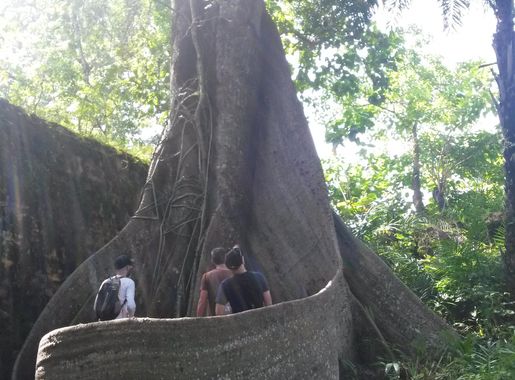


Moyamba District: Sierra Leone's Hidden Gem
Welcome to Moyamba District, a serene and picturesque region in the heart of Sierra Leone. Known for its lush landscapes, friendly locals, and rich cultural heritage, Moyamba District offers a peaceful retreat away from the hustle and bustle of the city. This district is a haven for nature lovers, with its rolling hills, dense forests, and scenic riverbanks. Explore the many small villages that dot the district, each with its unique traditions and warm hospitality. The district is also home to several historical sites, including the ancient stone circles of Tiwai Island, which are a testament to the region's deep-rooted history. Visitors can also enjoy the vibrant local markets, where you can find handmade crafts, fresh produce, and delicious local cuisine. Moyamba District is also an excellent destination for eco-tourism. The lush rainforests and diverse wildlife provide ample opportunities for hiking, bird watching, and other outdoor activities. Whether you're looking to immerse yourself in nature, learn about the local culture, or simply relax, Moyamba District has something to offer for everyone.