

Le Galion Beach Travel Guide - Free Web & App
Your ultimate guide to Le Galion Beach. Discover top landmarks, proposed trips, and local tips. Free on the web or via the Evendo companion app.


Le Galion Beach in Sint Maarten offers calm Caribbean waters, reef-fringed swimming, family-friendly shores and easy access to French-side island life.
A Sheltered Caribbean Bay
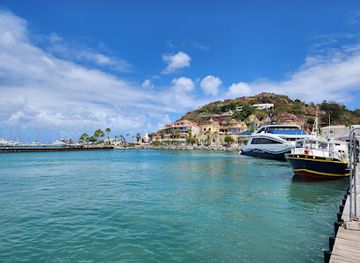
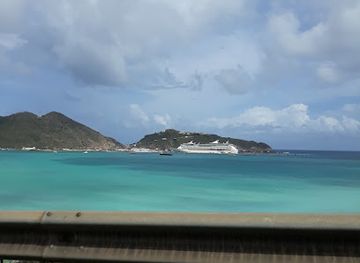
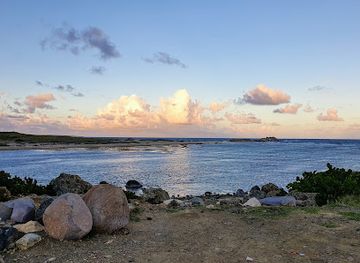
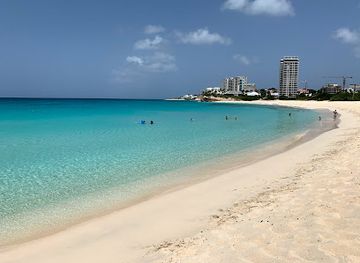
Le Galion Beach lies on the French side of Sint Maarten, on the island’s quieter eastern coast near Quartier-d’Orléans and the larger resort area of Orient Bay. Its broad curve of pale sand opens onto a shallow, reef-sheltered bay where the water is often calmer than along more exposed Atlantic-facing beaches. The setting is relatively low-key: palms, scrub-covered slopes and the wide horizon give the beach a spacious, natural character, while the shallow seabed makes it especially appealing to families and visitors who prefer gentle swimming.Read more about Le Galion Beach
Nature and Water
Exploring the Area
When is the best time to visit Le Galion Beach?
Best: April–June · 30–31°C| Month | High (°C) | Rainfall (mm) |
|---|---|---|
| January | 29 | 60 |
| February | 29 | 50 |
| March | 30 | 40 |
| April (best) | 30 | 30 |
| May (best) | 31 | 20 |
| June (best) | 31 | 20 |
| July | 31 | 20 |
| August | 31 | 20 |
| September | 31 | 30 |
| October | 31 | 40 |
| November | 30 | 50 |
| December | 30 | 60 |
Getting to and around Le Galion Beach
How to get there
Transportation
Best attractions in Le Galion Beach
The principal attraction is Le Galion’s broad sandy bay, where shallow, reef-protected water creates a gentler setting for wading and swimming than many more exposed eastern beaches, subject to daily conditions. The beach itself has an open, relatively natural outlook rather than a dense resort frontage. Inland and along the coast, the eastern landscape leads towards the ponds, low hills and settlements around Quartier-d’Orléans, while nearby Orient Bay provides a busier contrast with a larger beach and more developed visitor infrastructure. The French side’s protected coastal environments, including lagoons, reefs and sensitive shoreline habitats, add ecological interest even where formal facilities are limited. Le Galion is also well placed for combining a beach visit with the villages and restaurants of the north-eastern part of the island, although these are separate destinations rather than attractions on the sand. Visitors should confirm current access after storms, as tropical weather can alter beaches, roads and coastal facilities.
-
Park
Parotte Ville Bird Park
Explore the vibrant Parotte Ville Bird Park in Sint Maarten, a unique haven for over 200 exotic bird species and a must-see for nature lovers.
-
Tourist attraction
Cruise Pier St Maarten
Discover the vibrant atmosphere, stunning views, and local treasures at the Cruise Pier in St Maarten, your gateway to an unforgettable Caribbean adventure.
-
Historical landmark
Emilio Wilson Park
Explore Emilio Wilson Park, a serene historical landmark in Sint Maarten, blending nature, history, and tranquility for an unforgettable experience.
-
Car rental agency
Electric Adventures Buggy Rental
Explore Sint Maarten's stunning landscapes with Electric Adventures Buggy Rental, offering ATVs, buggies, and motorcycles for an unforgettable island experience.
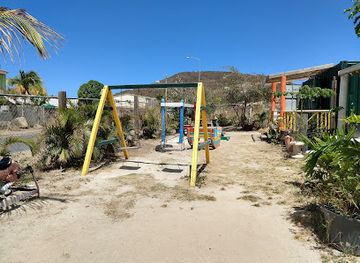
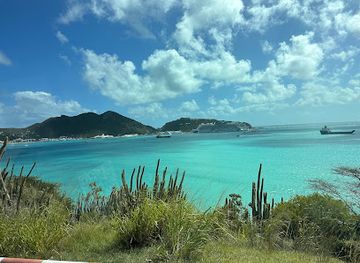
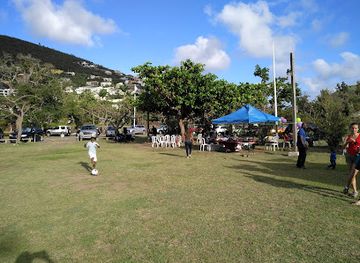
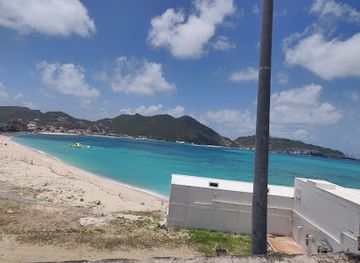
Best landmarks in Le Galion Beach
Le Galion’s defining landmark is geographical rather than architectural: a sheltered curve of sand opening towards the Caribbean and protected by shallow reef and near-shore formations. The contrast between the open eastern horizon, low coastal vegetation and calm-looking inner bay gives the beach its recognisable character. The surrounding eastern shoreline is also marked by ponds, wetlands and reef habitats that help explain the area’s environmental importance. Quartier-d’Orléans, nearby on the French side, provides a cultural and settlement reference point, while the international boundary with Dutch Sint Maarten remains a distinctive political landmark of the island as a whole, not a feature at the beach. There are no major historic monuments on Le Galion’s sands; its significance lies in the relationship between coastal ecology, local access and the wider history of a divided Caribbean island.
-
Market
Marigot Market
Experience the vibrant Marigot Market in St. Martin, where local culture, delicious food, and unique crafts come together in a colorful atmosphere.
-
Tourist attraction
Topper's Rhum Distillery
Discover the flavors of Sint Maarten at Topper's Rhum Distillery - where tradition meets taste in every bottle.
-
Park
Parotte Ville Bird Park
Discover the vibrant world of exotic birds at Parotte Ville Bird Park in Sint Maarten, a unique blend of park and museum dedicated to avian conservation.
-
Beach
Mullet Bay Beach
Experience paradise at Mullet Bay Beach in Sint Maarten, where pristine sands and clear waters create the ultimate beach getaway.
Explore Le Galion Beach on the map
Plan your trip on one map. See where the top attractions, landmarks, restaurants and hotels are, and book hotels and experiences in a few clicks.
Best hotels in Le Galion Beach
Best restaurants in Le Galion Beach
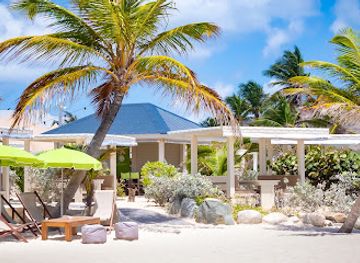
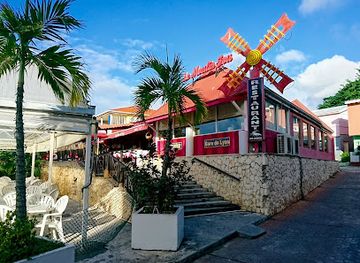
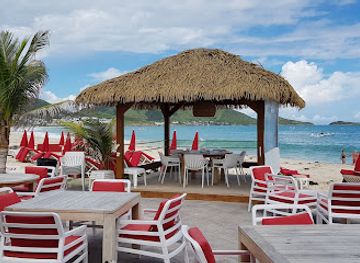
Le Galion itself is not a major dining centre, so visitors usually arrange food before arriving or eat in nearby settlements. Quartier-d’Orléans offers the closest local context, while Orient Bay has a broader selection of cafés and restaurants, and Grand Case is the island’s best-known destination for French-Caribbean dining and a longer evening meal. Across the French side, menus commonly draw on seafood, grilled meats, Creole seasonings, French techniques, fresh produce and island-influenced casual dishes, with bakeries and takeaway options useful for beach picnics. Restaurants and small businesses can vary seasonally, and a quiet beach setting should not be mistaken for a guarantee of on-site refreshments. Carry water, check opening arrangements locally and avoid leaving food waste on the shore, where it can attract animals and damage the coastal environment.
-
Grill
Sunset Bar and Grill
Experience delicious grilled dishes and breathtaking sunsets at Sunset Bar and Grill in beautiful Simpson Bay.
-
Restaurant
Bikini Beach
Experience vibrant Caribbean flavors at Bikini Beach on Orient Beach in Saint Martin – where every meal feels like a tropical getaway.
-
French
Le moulin fou sxm
Experience the exquisite flavors of France at Le Moulin Fou in Sint Maarten's vibrant Maho Plaza.
-
Restaurant
Kontiki Beach
Discover culinary bliss at Kontiki Beach in St. Martin, where exquisite flavors meet stunning ocean views in an unforgettable dining experience.

Best bars in Le Galion Beach
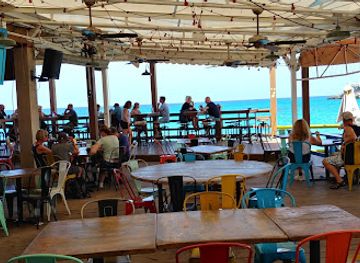
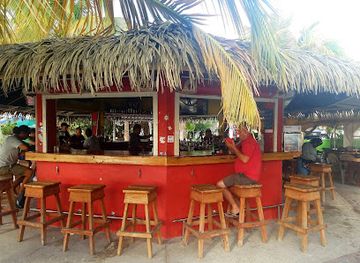
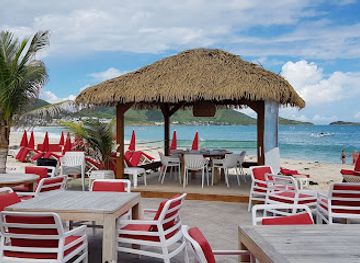
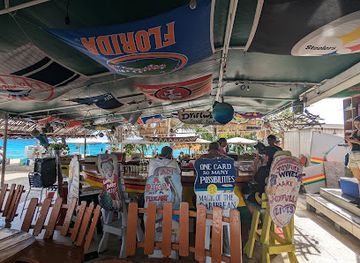
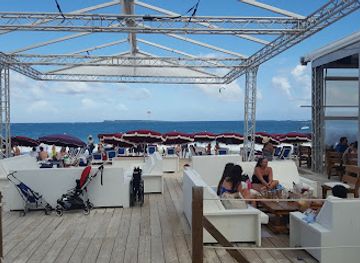
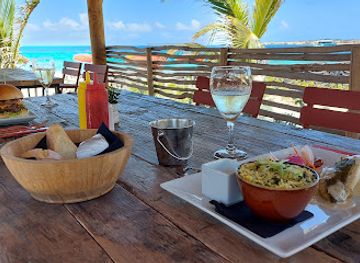
Le Galion has a daytime, nature-oriented atmosphere rather than a dedicated nightlife scene, and there is no reason to expect a concentration of bars or nightclubs directly on the beach. For a relaxed drink or meal, visitors generally head to nearby Orient Bay, Quartier-d’Orléans or Grand Case, where evening hospitality is more established and the choice depends on the season and individual businesses. Grand Case is particularly associated with restaurants and a sociable dining atmosphere, while Orient Bay provides the nearest developed resort setting. After dark, roads around quieter eastern beaches can be poorly suited to aimless walking, so taxis or a pre-arranged return journey are sensible. Evening events should be checked locally rather than assumed to operate throughout the year.
-
Grill
Sunset Bar and Grill
Discover Sunset Bar and Grill in Simpson Bay, a perfect blend of delicious cuisine and breathtaking ocean views, ideal for a relaxing getaway.
-
Grill
Buccaneer Beach Bar
Discover the vibrant flavor of Buccaneer Beach Bar, where Caribbean cuisine meets stunning ocean views in Simpson Bay, Sint Maarten.
-
Restaurant
Kontiki Beach
Discover the flavors of the Caribbean at Kontiki Beach, a culinary gem in Saint Martin with breathtaking ocean views and a vibrant atmosphere.
-
Bar
Driftwood Boat Bar
Discover the charm and vibrant atmosphere of Driftwood Boat Bar in Simpson Bay, where refreshing cocktails meet stunning beachfront views.
Best nightclubs in Le Galion Beach
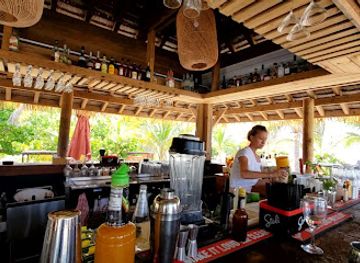
Le Galion has a daytime, nature-oriented atmosphere rather than a dedicated nightlife scene, and there is no reason to expect a concentration of bars or nightclubs directly on the beach. For a relaxed drink or meal, visitors generally head to nearby Orient Bay, Quartier-d’Orléans or Grand Case, where evening hospitality is more established and the choice depends on the season and individual businesses. Grand Case is particularly associated with restaurants and a sociable dining atmosphere, while Orient Bay provides the nearest developed resort setting. After dark, roads around quieter eastern beaches can be poorly suited to aimless walking, so taxis or a pre-arranged return journey are sensible. Evening events should be checked locally rather than assumed to operate throughout the year.
-
Restaurant
Kakao
Discover the vibrant flavors of St. Martin at Kakao, a beachfront restaurant and sports club offering delicious cuisine and breathtaking views.
-
Bar
Waikiki Beach
Experience paradise at Waikiki Beach, where golden sands, vibrant nightlife, and rich Hawaiian culture await every tourist.
-
 Nudist club
Club Orient
Discover the ultimate nudist experience at Club Orient in St. Martin, where freedom, relaxation, and natural beauty await.
-
Bar
Waï Plage
Experience the ultimate beach getaway at Waï Plage, St. Martin's premier bar for relaxation, tropical drinks, and stunning ocean views.
Best shops in Le Galion Beach
Shopping at Le Galion is limited, with no substantial retail district on the beach. Visitors should obtain beach supplies, snacks, sun protection and any equipment they need in nearby settlements or larger commercial areas before travelling to the coast. Quartier-d’Orléans and Orient Bay provide practical services, while Grand Case and other French-side villages offer more opportunities to browse food products, island-themed gifts, art and small independent businesses, subject to current opening arrangements. Regional purchases may include spices, sauces, rum-based products, French-Caribbean foods, craft items and locally inspired artwork, although not every product is made on Saint-Martin. Markets and small stalls can be seasonal or intermittent, so visitors should avoid assuming that a permanent market operates near Le Galion and should carry purchases responsibly without adding packaging waste to the shoreline.
-
Party store
Shop-4-Less
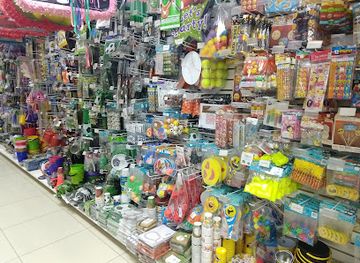
Discover vibrant party supplies, toys, and festive decorations at Shop-4-Less, your ultimate shopping destination in Sint Maarten.
-
Craft store
Shop-4-Less Plus
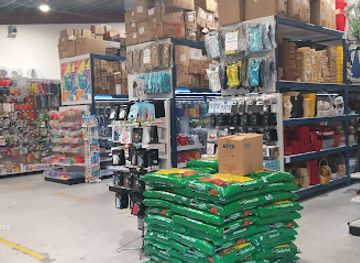
Discover creativity at Shop-4-Less Plus, your ultimate craft and baking supply haven in the heart of Sint Maarten!
-
Clothing store
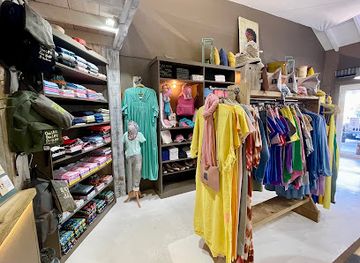
One by K
Explore One by K in St. Martin for a unique blend of local fashion, trendy styles, and an unforgettable shopping experience.
-
Perfume store
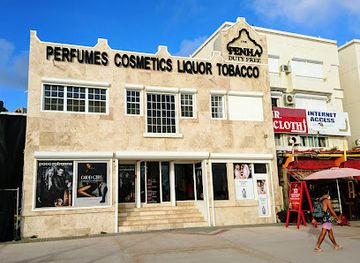
Penha Duty Free St. Maarten at Frontstreet
Shop high-quality perfumes, cosmetics, liquor, and more at Penha Duty Free in Philipsburg, St. Maarten – a paradise for savvy shoppers.
Get your free copy of our complete guide to Le Galion Beach, delivered straight to you.
Everything on this page, from attractions and restaurants to essentials and local phrases, in one PDF you can read offline, print or share.
Already have an account? Sign in
Your Le Galion Beach guide is ready.
We'll send it to · Not you? Sign out

Getting your guide ready…
We are putting together a fresh copy of the Le Galion Beach guide. This can take up to a minute.
This can take a few moments. If your browser asks, choose Allow so the download can start. You'll find the guide in your Downloads folder.
Nothing happened? Download it again
Sorry, the guide is taking longer than usual. Please try again in a minute, or get it by email instead.
Le Galion Beach essentials
Currency and Payment
Safety
Emergency Situations
Do's and Don'ts
Local Tips
From Eve
Local phrases worth knowing
You don't need to get them perfect. A few words go a long way, and locals appreciate the effort.
Basics
| English | Local | Say it |
|---|---|---|
| Hello | Bonjour | [bon-zhoor] |
| Goodbye | Au revoir | [oh re-vwar] |
| Yes | Wi | [wee] |
| No | Non | [nohn] |
| Please/You're welcome | S'il vous plaît/De rien | [seel voo pleh/duh ryen] |
| Thank you | Merci | [mehr-see] |
| Excuse me/Sorry | Excusez-moi/Désolé | [ex-kew-zay mwah/dey-soh-lay] |
| How are you? | Comment ça va? | [koh-mohn sah vah?] |
| Fine. And you? | Bien. Et toi? | [byen. ey twah?] |
| Do you speak English? | Parlez-vous anglais? | [par-lay voo ahn-glay?] |
| I don't understand | Je ne comprends pas | [zhuh nuh kohm-prahnd pah] |
Eating & Drinking
| English | Local | Say it |
|---|---|---|
| I'd like to see the menu, please | Je voudrais voir le menu, s'il vous plaît | [zhuh voo-dray vwahr luh muh-nyoo, seel voo pleh] |
| I don't eat meat | Je ne mange pas de viande | [zhuh nuh mahnj pah duh vyand] |
| Cheers! | Santé! | [sahn-tay] |
| I would like to pay, please | Je voudrais payer, s'il vous plaît | [zhuh voo-dray pay-ay, seel voo pleh] |
Emergencies
| English | Local | Say it |
|---|---|---|
| Help! | Au secours! | [oh seh-koor!] |
| Go away! | Allez-vous-en! | [ah-lay voo zahn!] |
| Call the Police! | Appelez la police! | [ah-peh-lay lah poh-lees!] |
| Call a doctor! | Appelez un médecin! | [ah-peh-lay uh may-deh-sahn!] |
| I'm lost | Je suis perdu(e) | [zhuh swee pair-doo(eh)] |
| I'm ill | Je suis malade | [zhuh swee mah-lahd] |
Shopping
| English | Local | Say it |
|---|---|---|
| I'd like to buy... | Je voudrais acheter... | [zhuh voo-dray ash-tey...] |
| I'm just looking | Je regarde juste | [zhuh ruh-gahrd zhoost] |
| How much is it? | Combien ça coûte? | [kohm-byen sah koot?] |
| That's too expensive | C'est trop cher | [say troh shehr] |
| Can you lower the price? | Pouvez-vous baisser le prix? | [poo-vey voo beh-say luh pree?] |
Time & Numbers
| English | Local | Say it |
|---|---|---|
| What time is it? | Quelle heure est-il? | [kehl er ay-teel?] |
| It's one o'clock | Il est une heure | [eel ay tun er] |
| Half past (10) | Dix heures et demie | [dees er ay dem-ee] |
| Morning | Matin | [ma-tahn] |
| Afternoon | Après-midi | [ah-pray mee-dee] |
| Evening | Soir | [swahr] |
| Yesterday | Hier | [yehr] |
| Today | Aujourd'hui | [oh-zhoor-dwee] |
| Tomorrow | Demain | [duh-mahn] |
| 1 | Un | [uhn] |
| 2 | Deux | [duh] |
| 3 | Trois | [twah] |
| 4 | Quatre | [kah-truh] |
| 5 | Cinq | [sank] |
| 6 | Six | [sees] |
| 7 | Sept | [sept] |
| 8 | Huit | [weet] |
| 9 | Neuf | [nurf] |
| 10 | Dix | [dees] |
Transport & Directions
| English | Local | Say it |
|---|---|---|
| Where's a/the...? | Où est...? | [oo ay...?] |
| What's the address? | Quelle est l'adresse? | [kehl ay lah-dress?] |
| Can you show me (on the map)? | Pouvez-vous me montrer (sur la carte)? | [poo-vey voo muh mohn-tray (soor lah kart)?] |
| When's the next (bus)? | Quand est le prochain (bus)? | [kahnd ay luh proh-shahn (bus)?] |
| A ticket (to ....) | Un billet (pour...) | [uhn bee-yay (poor...)] |
History of Le Galion Beach
An Island Shaped by Sea and Salt
Le Galion occupies a coastal setting formed by the interaction of beaches, shallow marine waters, reef structures and the low hills of eastern Saint-Martin. The island’s natural history is written in its limestone terrain, sheltered bays and salt ponds, which have long influenced where people could settle and work. Around the eastern shoreline, lagoons and wetlands created productive environments but also demanded careful adaptation to storms, drought and changing coastal conditions. The beach’s present appearance is therefore part of a much older process of sediment movement, reef growth and tropical weather rather than a purely modern recreational creation.
Early Island Communities
Before European colonisation, Saint-Martin was occupied by Indigenous Caribbean peoples, including communities associated with Arawakan-speaking traditions and later Kalinago presence in the Lesser Antilles. Coastal bays such as those around the island’s eastern side offered access to marine resources, although the documentary record for Le Galion itself is limited. European accounts from the early colonial period describe an island valued for salt, timber, agriculture and its strategic position in the northern Lesser Antilles. The shallow coastal environment around Le Galion formed part of this wider island landscape of beaches, ponds and maritime resources.
The French-Dutch Division
Saint-Martin’s political identity developed through European rivalry and settlement. France and the Dutch Republic divided the island in 1648, creating the boundary that still separates French Saint-Martin from Dutch Sint Maarten. Le Galion lies on the French side, whose eastern districts developed through a mixture of plantation agriculture, small-scale farming, fishing and coastal trade. The area was never transformed into a large historic port, and much of its character remained rural. Nearby Quartier-d’Orléans reflects this French-side settlement history more directly than the beach itself, which has remained primarily a coastal landscape.
From Rural Coast to Beach Destination
During the twentieth century, improved roads, aviation and the growth of tourism changed the relationship between Saint-Martin’s villages and its beaches. Eastern shores that had once been reached mainly for fishing, farming or local recreation became accessible to visitors seeking swimming and sea views. Le Galion retained a quieter profile than heavily developed resort areas, while environmental attention increasingly focused on protecting coral reefs, lagoons, mangroves and other coastal habitats. Today, its significance rests less on surviving buildings than on the way a relatively natural bay remains part of the island’s tourism landscape and conservation concerns.
Le Galion Beach in Photos
Browse through our photo collection highlighting the charm and character of the destination.
Cities in Le Galion Beach
The towns and cities of Le Galion Beach, and the easiest places to base yourself.
-

-

-

-


Swipe for more cities
Neighbouring destination travel guides
The closest destinations to Le Galion Beach, if you have time for more than one.
-

-

-

-

-


Swipe for more destinations
Explore more

Explore more of Oyster Pond
Oyster Pond in Sint Maarten pairs a sheltered lagoon, boating, coastal scenery and a distinctive Dutch-French island border.
Explore Oyster Pond
Explore more of Sint Maarten
Discover Sint Maarten: A Caribbean paradise with a blend of Dutch and French cultures, stunning beaches, vibrant nightlife, and unforgettable experiences.
Explore Sint Maarten