

Free Nggela Islands Travel Guide & Mobile App
Explore Nggela Islands with free travel guides. Discover regional history, expert tips, proposed trips, and audio guides on web or mobile app.


Explore the Nggela Islands of the Solomon Islands for Pacific War history, reef waters, village life and boat journeys across forested lagoons.
Read more about Nggela Islands
When is the best time to visit Nggela Islands?
Best: June–August · 28°C| Month | High (°C) | Rainfall (mm) |
|---|---|---|
| January | 29 | 350 |
| February | 29 | 300 |
| March | 29 | 250 |
| April | 29 | 200 |
| May | 28 | 150 |
| June (best) | 28 | 100 |
| July (best) | 28 | 100 |
| August (best) | 28 | 150 |
| September | 28 | 200 |
| October | 29 | 250 |
| November | 29 | 300 |
| December | 29 | 350 |
Getting to and around Nggela Islands
How to get there
Transportation
Top city travel guides in Nggela Islands
The cities of Nggela Islands, and the easiest places to base yourself.

Swipe for more cities
Best attractions in Nggela Islands
The Nggela Islands' attractions are closely tied to the sea, local communities and the history of the Pacific War. Tulagi provides the most accessible introduction, with a harbour setting, provincial-town atmosphere and wartime traces that reward exploration with a knowledgeable local guide. Nearby Gavutu and Tanambogo are associated with the Japanese naval seaplane base and the United States landings of August 1942; surviving concrete works, foundations and defensive positions may be overgrown, damaged or on private or difficult-to-reach land. The islands' reefs, passages and sheltered coastal waters offer opportunities for snorkelling, fishing, boating and informal marine observation when sea conditions are suitable. Forested shorelines and village landscapes provide a quieter alternative to Honiara, while community visits can introduce visitors to local food, gardening, craft and customary life. There is no large concentration of museums, family attractions or formal visitor infrastructure, so the quality of a visit depends on advance arrangements, local interpretation and flexibility. Nearby Guadalcanal attractions should not be confused with the Nggela Islands, even though Honiara is their principal gateway.
-
Historical landmark
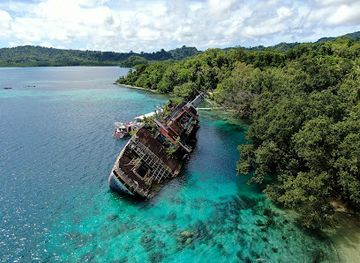
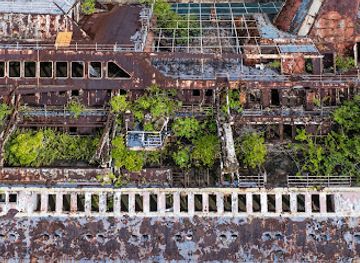
MS World Discoverer
Discover the maritime history of the Solomon Islands at the MS World Discoverer, a historic shipwreck in the picturesque Iron Bottom Sound.
-
Tourist attraction
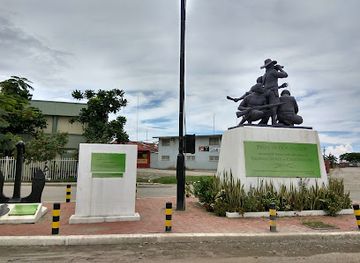
Solomon Scouts & Coastwatchers Monument
Explore the Solomon Scouts & Coastwatchers Monument in Honiara, a historical landmark honoring World War II heroes while enjoying breathtaking views.
-
History museum
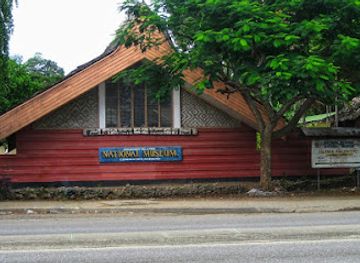
Solomon Islands National Museum
Discover the rich history and vibrant culture of the Solomon Islands at the National Museum, a treasure trove for curious travelers.
-
Tourist attraction
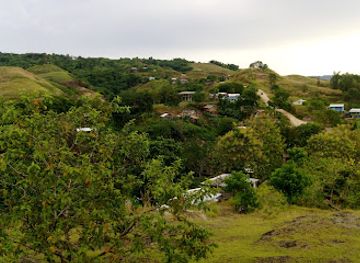
Solomon Peace Memorial Park (Japanese war memorial)
Explore the serene Solomon Peace Memorial Park, a poignant tribute to World War II history nestled in the heart of Honiara, offering tranquility and reflection.
Best landmarks in Nggela Islands
Tulagi's harbour is the region's most recognisable historic landscape, reflecting the island's former role as the colonial capital and its position on important wartime sea routes. The town's surviving administrative traces are modest, since war damage, post-war change and tropical weather have altered much of the built environment, but the setting explains why Tulagi became the administrative centre of the protectorate. Gavutu and Tanambogo are significant Pacific War landmarks because Japanese forces developed them as a naval seaplane and support base before the United States landings on 7 August 1942. Concrete structures, foundations, defensive works and other fragments can remain visible, although access and condition vary and some sites may lie on community or private land. The channels, reefs and forested coastlines around Nggela Sule and Nggela Pile are landmarks of a different kind: they express the geography that has shaped settlement, transport and subsistence for generations. A local guide is essential for interpreting both the wartime remains and the customary significance of particular places.
-
Market
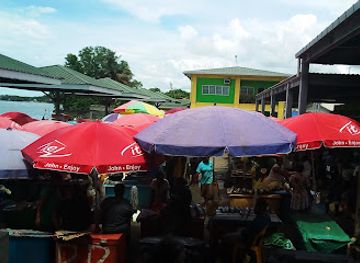
Honiara Central Market
Discover the vibrant Honiara Central Market, a true reflection of Solomon Islands culture with fresh produce, local crafts, and culinary delights.
-
 Hotel
HotelKing Solomon Hotel
Discover the perfect blend of comfort and culture at King Solomon Hotel in Honiara, a unique retreat in the heart of the Solomon Islands.
-
Memorial park
Guadalcanal Memorial
Explore the profound history of World War II at the Guadalcanal Memorial, a serene tribute in Honiara, Solomon Islands, dedicated to honoring fallen heroes.
-
Lodging
Agnes Lodge
Discover tranquility and adventure at Agnes Lodge in Munda, a serene retreat in the stunning Solomon Islands, perfect for nature lovers and explorers alike.
Explore Nggela Islands on the map
Plan your trip on one map. See where the top cities, national parks and sights are, and book hotels and experiences in a few clicks.
Best hotels in Nggela Islands
Best restaurants in Nggela Islands
Dining in the Nggela Islands is generally simple, local and arranged through guesthouses, community contacts or small food sellers rather than a developed restaurant sector. Meals may draw on fish, shellfish, root crops such as cassava and taro, sweet potato, bananas, breadfruit, rice and seasonal greens, with preparation varying between households and settlements. Coconut is an important ingredient in many Pacific Island kitchens, while fresh catches can be served grilled, fried or cooked with local accompaniments when supplies allow. Visitors should not expect a wide choice of cafés, supermarkets or evening restaurants, particularly on smaller islands, and should confirm whether accommodation includes meals. Carrying sealed snacks and drinking water is sensible for boat trips. Honiara, outside the region on Guadalcanal, offers the broadest range of restaurants and supplies before departure, but food brought into the islands should be packed responsibly and local community arrangements respected.
-
Restaurant
Coral Sea Resort & Casino
Experience luxury and excitement at Coral Sea Resort & Casino in Honiara—where stunning views meet exceptional hospitality.
-
Vietnamese
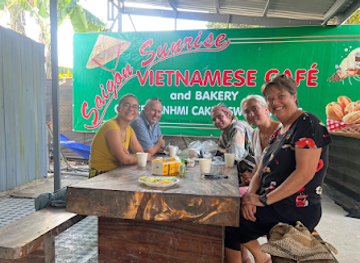
Saigon Sunrise - Honiara Bakery & Vietnamese Restaurant
Discover the rich flavors of Vietnam at Saigon Sunrise - Honiara's premier bakery and Vietnamese restaurant offering fresh delicacies daily.
-
Restaurant
Tenkai Sushi Cafe
Experience authentic Japanese cuisine at Tenkai Sushi Cafe in Honiara - where fresh ingredients meet traditional flavors.
-
Restaurant
Mr Grill Fast Food & Noodle Haus
Experience delicious fast food and authentic noodle dishes at Mr Grill Fast Food & Noodle Haus in Honiara – a must-visit culinary destination!

Best bars in Nggela Islands
The Nggela Islands do not have a substantial nightclub scene. Evening life is more likely to centre on guesthouse meals, conversation, church or community activities, and informal socialising in villages and the small administrative centre of Tulagi. Alcohol should not be assumed to be available in every settlement, and visitors should follow the guidance of hosts about where and when drinking is appropriate. There are no established entertainment districts comparable with Honiara's urban venues, and electricity, lighting and mobile connectivity may be limited. For many travellers, the evening experience is shaped by the sea, darkness, local hospitality and an early start for boat travel rather than late-night entertainment. Visitors seeking a larger choice of bars, live music or clubs should use Honiara, outside the Nggela Islands, before or after their island stay.
-
Cafe
The Coffee Bar
Discover the essence of Honiara at The Coffee Bar, where rich coffee blends meet local flavors in a cozy atmosphere.
-
Cafe
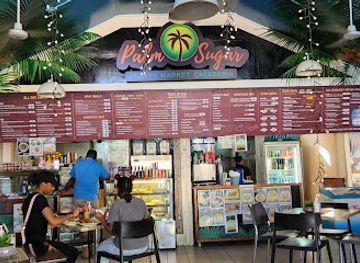
Palm Sugar
Discover the vibrant atmosphere of Palm Sugar in Honiara, where delicious coffee and tropical flavors create a perfect getaway.
-
Bar
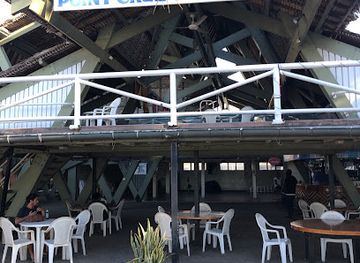
Point Cruz Yacht Club
Discover the vibrant atmosphere and stunning views at Point Cruz Yacht Club, a premier destination for relaxation and local culture in Honiara.
-
Homestay
Roderick Bay Bungalows
Experience island living at Roderick Bay Bungalows on Nggela Sule Island, a tranquil homestay with breathtaking views and local charm.

Best nightclubs in Nggela Islands
The Nggela Islands do not have a substantial nightclub scene. Evening life is more likely to centre on guesthouse meals, conversation, church or community activities, and informal socialising in villages and the small administrative centre of Tulagi. Alcohol should not be assumed to be available in every settlement, and visitors should follow the guidance of hosts about where and when drinking is appropriate. There are no established entertainment districts comparable with Honiara's urban venues, and electricity, lighting and mobile connectivity may be limited. For many travellers, the evening experience is shaped by the sea, darkness, local hospitality and an early start for boat travel rather than late-night entertainment. Visitors seeking a larger choice of bars, live music or clubs should use Honiara, outside the Nggela Islands, before or after their island stay.
-
Bar
Point Cruz Yacht Club
Discover the lively atmosphere and stunning views at Point Cruz Yacht Club, a favorite spot in Honiara for relaxation and entertainment.
-
Grill
Monarch
Experience the best of Honiara's culinary scene at Monarch, where grilled delights meet stunning ocean views and live music.
-
Bar
Chillers Bar
Experience the vibrant atmosphere of Chillers Bar in Honiara, where refreshing drinks and local culture come together for an unforgettable evening.
-
Travel lounge
The Belama Club
Experience the tranquil charm of The Belama Club, a perfect travel lounge in Honiara for relaxation and cultural immersion.


Best shops in Nggela Islands
Shopping in the Nggela Islands is limited and practical rather than centred on a formal retail district. Small stores and local sellers may offer basic food, drinks and household necessities, but stocks, payment options and opening arrangements can be unpredictable. Visitors should buy specialist equipment, medicines, toiletries and substantial provisions in Honiara before travelling. Locally produced fish, garden crops and prepared food may be available through community networks, subject to season and supply. Handicrafts, woven items or carvings may sometimes be obtained directly from makers or through local contacts, but purchases should be arranged respectfully and visitors should ask about materials and permission before photographing or handling cultural objects. Avoid buying shells, coral, archaeological material or wartime artefacts. Tulagi may provide a few more everyday supplies than smaller islands, while Honiara, outside the region, is the practical place for wider retail choice and regional souvenirs.
-
Homestay
Roderick Bay Bungalows
Experience the tranquility of Roderick Bay Bungalows on Nggela Sule Island, where local culture meets breathtaking natural beauty.
-
Store
Capital Park
Explore Capital Park in Honiara for an authentic shopping experience and delightful local cuisine in the heart of the Solomon Islands.
-
Grocery store
Bulk Shop
Explore the vibrant flavors of Honiara at Bulk Shop, a well-stocked grocery store offering local delicacies and everyday essentials.
-
Grocery store
Bulk Shop - KGVI Branch
Discover local flavors and essentials at the Bulk Shop - KGVI Branch, your go-to grocery store in Honiara.

Get your free copy of our complete guide to Nggela Islands, delivered straight to you.
Everything on this page, from attractions and restaurants to essentials and local phrases, in one PDF you can read offline, print or share.
Already have an account? Sign in
Your Nggela Islands guide is ready.
We'll send it to · Not you? Sign out

Getting your guide ready…
We are putting together a fresh copy of the Nggela Islands guide. This can take up to a minute.
This can take a few moments. If your browser asks, choose Allow so the download can start. You'll find the guide in your Downloads folder.
Nothing happened? Download it again
Sorry, the guide is taking longer than usual. Please try again in a minute, or get it by email instead.
Nggela Islands essentials
Currency and Payment
Safety
Emergency Situations
Do's and Don'ts
Local Tips
From Eve
Local phrases worth knowing
You don't need to get them perfect. A few words go a long way, and locals appreciate the effort.
Basics
| English | Local | Say it |
|---|---|---|
| Hello | Kira | [kee-rah] |
| Goodbye | Sakau | [sah-kow] |
| Yes | Aye | [eye] |
| No | Nai | [nai] |
| Please/You're welcome | Tukuna | [too-koo-nah] |
| Thank you | Tamaso | [tah-mah-so] |
| Excuse me/Sorry | Fakawaka | [fah-kah-wah-kah] |
| How are you? | Ola u? | [oh-lah oo] |
| Fine. And you? | Masi. U? | [mah-see. oo] |
| Do you speak English? | U tolo ingeles? | [oo toh-loh een-geh-les] |
| I don't understand | Nai tolo | [nai toh-lo] |
Eating & Drinking
| English | Local | Say it |
|---|---|---|
| I'd like to see the menu, please | Mi wantem lukim menu, tukuna | [mee wan-tem loo-keem meh-noo, too-koo-nah] |
| I don't eat meat | Nai mi kat meat | [nai mee kaht meet] |
| Cheers! | Sosi! | [soh-see] |
| I would like to pay, please | Mi wantem pe, tukuna | [mee wan-tem pay, too-koo-nah] |
Emergencies
| English | Local | Say it |
|---|---|---|
| Help! | Help! | [help] |
| Go away! | Go awai! | [go ah-wai] |
| Call the Police! | Kol Polisa! | [kohl poh-lee-sah] |
| Call a doctor! | Kol dokta! | [kohl dok-tah] |
| I'm lost | Mi los | [mee los] |
| I'm ill | Mi sik | [mee seek] |
Shopping
| English | Local | Say it |
|---|---|---|
| I'd like to buy... | Mi wantem bai... | [mee wan-tem bye] |
| I'm just looking | Mi jast lukim | [mee jahst loo-keem] |
| How much is it? | Hao makit? | [how mah-kit] |
| That's too expensive | Dat i tu expensiv | [daht ee too eks-pen-siv] |
| Can you lower the price? | U ken laowa price? | [oo ken lao-wah pryce] |
Time & Numbers
| English | Local | Say it |
|---|---|---|
| What time is it? | Wat taim? | [waht time] |
| It's one o'clock | I wan o'clock | [ee wahn oh-clock] |
| Half past (10) | Half past ten | [half past ten] |
| Morning | Mornin | [mor-ning] |
| Afternoon | Aftanoon | [af-ter-noon] |
| Evening | Ivening | [ee-ven-ing] |
| Yesterday | Yestide | [yes-ti-day] |
| Today | Tude | [too-day] |
| Tomorrow | Tumoro | [too-moh-roh] |
| 1 | Wani | [wah-nee] |
| 2 | Tu | [too] |
| 3 | Tri | [tree] |
| 4 | Foa | [foh-ah] |
| 5 | Faiv | [fahiv] |
| 6 | Siks | [siks] |
| 7 | Seven | [seh-ven] |
| 8 | Eit | [eight] |
| 9 | Nain | [nine] |
| 10 | Ten | [ten] |
Transport & Directions
| English | Local | Say it |
|---|---|---|
| Where's a/the...? | Wea a/the...? | [weh ah/the] |
| What's the address? | Wat i address? | [waht ee ah-dress] |
| Can you show me (on the map)? | U ken sho mi (on di map)? | [oo ken show mee (on dee map)] |
| When's the next (bus)? | Wen i next (bus)? | [wen ee next (bus)] |
| A ticket (to ....) | Wan tiket (to....) | [wahn tee-ket (to....)] |
History of Nggela Islands
Early Island Settlement and Maritime Communities
The Nggela Islands have long been inhabited by Pacific Island communities whose lives developed around gardening, fishing, reef resources and movement by canoe between neighbouring islands. Archaeological evidence and the wider history of the Solomon Islands indicate successive waves of settlement and exchange across the archipelago, although the surviving historical record for individual Nggela communities is uneven. Languages, kinship networks, customary land and sea tenure, and village traditions remain important parts of the islands' identity. Their geography encouraged connections across water rather than isolation, linking Nggela with Guadalcanal, Ngella Pile, Nggela Sule and other nearby island groups.
European Exploration and the Name Florida Islands
Spanish navigator Álvaro de Mendaña reached the Solomon Islands in 1568 and applied names associated with the biblical Solomon tradition to parts of the archipelago. The Nggela group later became widely known in European usage as the Florida Islands, a name that remained prominent on colonial maps and in wartime accounts. European contact did not immediately create a permanent settlement, and outside influence developed gradually through trade, mission activity, labour recruitment and later colonial administration. The coexistence of Nggela and Florida Islands in modern references reflects this layered history of local and foreign naming.
The British Protectorate and Tulagi's Colonial Role
Britain established a protectorate over the Solomon Islands in the late nineteenth century, and Tulagi became the administrative capital of the British Solomon Islands Protectorate in 1896. Its harbour made it a practical base for government, shipping and communications, despite the small island's limited physical scale. Colonial administration introduced new institutions and commercial links while also reshaping local authority, labour patterns and mission activity. Tulagi's governmental importance explains why the town appears so prominently in the region's history, even though the national administrative centre was later transferred to Honiara on Guadalcanal.
Tulagi and the Second World War
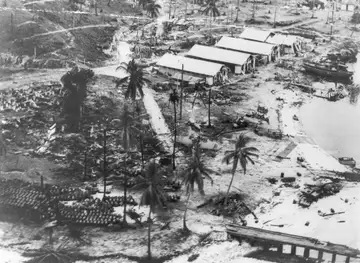
Japanese forces occupied Tulagi, Gavutu and Tanambogo in 1942 and developed the area as part of their naval network, including a seaplane facility and associated communications and support installations. On 7 August 1942, United States Marines landed in the Nggela Islands as part of the opening operations of the Guadalcanal campaign. Fighting around Tulagi and the nearby islands was intense, and the area changed hands during the campaign's first days. Concrete fragments, defensive positions and other wartime traces remain reminders of the islands' strategic importance in the Pacific War.
From the Colonial Capital to Honiara
The Second World War severely disrupted Tulagi and the wider colonial administrative system. After the war, Honiara on Guadalcanal developed into the principal urban and governmental centre, while Tulagi lost its role as capital but remained the administrative centre of Central Province. This transition shifted investment, employment and transport patterns towards Guadalcanal. The Nggela Islands consequently became less associated with national government and more with provincial administration, maritime communities and their own local economies, although their proximity to Honiara continues to give them practical importance.
Independence and Contemporary Provincial Life
The Solomon Islands became independent from Britain in 1978, and the Nggela Islands continued as part of the country's Central Province. Contemporary life combines customary community structures with provincial government, churches, schools, small-scale commerce, fishing, gardening and boat-based transport. The islands' wartime heritage attracts specialist visitors, while their reefs and coastal landscapes support locally organised marine activities. Limited infrastructure remains part of the travel reality: access, accommodation and guiding are often arranged through personal or community networks rather than a large formal tourism industry.
Nggela Islands in Photos
Browse through our photo collection highlighting the charm and character of the destination.
Neighbouring regions of Nggela Islands
The closest regions to Nggela Islands, if you have time for more than one.
-
-

-

-

-


Swipe for more regions
Explore more
Explore more of Solomon Islands
Discover the Solomon Islands: An unspoiled tropical paradise with pristine beaches, vibrant coral reefs, rich history, and unique cultural experiences.
Explore Solomon Islands