

Free Guadalcanal Travel Guide & Mobile App
Explore Guadalcanal with free travel guides. Discover regional history, expert tips, proposed trips, and audio guides on web or mobile app.


Explore Guadalcanal’s wartime sites, rainforest waterfalls, coral reefs and village landscapes from Honiara and the island’s rural coast.
Read more about Guadalcanal
When is the best time to visit Guadalcanal?
Best: June–August · 29°C| Month | High (°C) | Rainfall (mm) |
|---|---|---|
| January | 30 | 250 |
| February | 30 | 230 |
| March | 30 | 230 |
| April | 30 | 200 |
| May | 30 | 200 |
| June (best) | 29 | 190 |
| July (best) | 29 | 190 |
| August (best) | 29 | 200 |
| September | 29 | 230 |
| October | 29 | 230 |
| November | 30 | 250 |
| December | 30 | 250 |
Getting to and around Guadalcanal
How to get there
Transportation
Top city travel guides in Guadalcanal
The cities of Guadalcanal, and the easiest places to base yourself.
-

-


Swipe for more cities
Destinations in Guadalcanal
Resorts, valleys and scenic spots worth a trip of their own.
-

-


Swipe for more destinations
Best attractions in Guadalcanal
Guadalcanal’s attractions combine one of the Pacific’s most important Second World War landscapes with rainforest, reefs and living communities. Around Honiara, the American Memorial offers broad views over the coast and battlefield area, while the Guadalcanal American Memorial, Japanese memorial sites and nearby wartime locations help visitors understand the campaign from different national perspectives. Vilu War Museum displays military equipment and aircraft remnants in a forest setting, and coastal areas contain beaches, wrecks and sites associated with the fighting. Natural excursions lead inland to waterfalls such as Tenaru Falls and Mataniko Falls, although access normally requires local advice, transport and suitable footwear. Snorkelling and diving are major draws, particularly where coral, tropical fish and wartime wrecks occur together, but conditions and access change seasonally. Beyond the capital, rural Guadalcanal offers village visits, agricultural landscapes, rivers and coastal scenery rather than a dense concentration of formal attractions. The most rewarding itineraries balance museums and memorials with time outdoors, allowing the island’s present-day communities and environment to stand alongside its military history.
-
 Resort hotel
Coral Sea Resort & Casino
Experience luxury, entertainment, and local flavors at Coral Sea Resort & Casino, the ultimate destination in Honiara, Solomon Islands.
-
Honiara Central Market
Explore Honiara Central Market: The Heartbeat of Culture and Commerce in the Solomon Islands
-
Memorial park
Guadalcanal Memorial
Explore the Guadalcanal Memorial in Honiara, a serene tribute to World War II heroes amidst stunning natural beauty.
-
Museum
Vilu Military Museum
Discover the rich military history of the Solomon Islands at the Vilu Military Museum - a captivating journey through time and culture.


Best landmarks in Guadalcanal
The most recognisable landmarks on Guadalcanal are closely tied to the island’s wartime and political history. The American Memorial above Honiara is a prominent hilltop monument commemorating the Allied campaign and the people who took part in it, while the Japanese memorial near the former battlefield landscape reflects Japan’s remembrance of the dead. Bloody Ridge, now also known as Edson’s Ridge, is significant for the September 1942 fighting that helped secure the Allied position around Henderson Field. Vilu War Museum has become a distinctive landmark through its outdoor collection of aircraft and military remnants among tropical vegetation. Henderson Field itself remains an important place-name and transport site, though the modern airport sits within a changed landscape. Away from wartime history, the forested interior and river valleys create natural landmarks rather than monumental architecture; Tenaru Falls and Mataniko Falls are valued for their scenery and local importance. Visitors should remember that some sites stand on customary land and may require permission or a guide.
-
Hotel
Heritage Park Hotel
Experience unparalleled comfort and local charm at Heritage Park Hotel in Honiara, the gateway to the stunning Solomon Islands.
-
Resort hotel
Coral Sea Resort & Casino
Discover the Coral Sea Resort & Casino, where relaxation meets excitement in the heart of Honiara, Solomon Islands.
-
Market
Honiara Central Market
Experience the vibrant local culture, fresh produce, and unique crafts at Honiara Central Market, the heart of Solomon Islands' capital.
-
Memorial park
Guadalcanal Memorial
Discover the profound history and serene beauty of the Guadalcanal Memorial, a tribute to those who served during the Pacific War.


Explore Guadalcanal on the map
Plan your trip on one map. See where the top cities, national parks and sights are, and book hotels and experiences in a few clicks.
Best hotels in Guadalcanal
Best restaurants in Guadalcanal
Dining on Guadalcanal ranges from Honiara restaurants and hotel dining rooms to roadside stalls, markets and family-run eateries. Local meals commonly draw on fish, shellfish, taro, cassava, sweet potato, breadfruit, greens, coconut and tropical fruit, with rice and imported foods also widely available in the capital. Fresh seafood is a natural feature of a coastal island, although availability depends on weather, supply and refrigeration. Markets provide a glimpse of the ingredients used in household cooking, while simple eateries can be useful for inexpensive local plates and snacks. Honiara has the country’s broadest choice of international and contemporary food, but visitors should not expect the restaurant variety or reliable opening patterns of a large regional capital. Outside the city, meals may need to be arranged in advance through accommodation or guides. Bottled or treated drinking water is a sensible precaution, and travellers should use care with unrefrigerated food, particularly in hot weather.
-
Cafe
Breakwater Cafe
Discover Breakwater Cafe: A waterfront oasis in Honiara offering delightful cuisine and stunning views for an unforgettable dining experience.
-
Restaurant
Coral Sea Resort & Casino
Experience luxury and excitement at Coral Sea Resort & Casino in Honiara – where relaxation meets adventure amidst stunning ocean views.
-
Hotel
King Solomon Hotel
Experience comfort and culture at King Solomon Hotel in Honiara - your perfect base for exploring the beauty of Solomon Islands.
-
Vietnamese
Saigon Sunrise - Honiara Bakery & Vietnamese Restaurant
Experience authentic Vietnamese cuisine at Saigon Sunrise in Honiara - where every dish tells a story through rich flavors and fresh ingredients.


Best bars in Guadalcanal
Evening life on Guadalcanal is concentrated in Honiara, where hotel bars, restaurants, casual pubs and occasional live-music venues provide the main choices. The city’s nightlife is modest rather than dominated by a large club scene, and venues, security arrangements and closing practices can change. Outside Honiara, evenings generally centre on accommodation, community gatherings, church-related activities or quiet socialising rather than formal nightlife. Some resorts and hotels offer drinks with views over the coast, but visitors should arrange transport in advance and avoid walking alone at night. Alcohol is not necessary to experience Guadalcanal’s culture, and respectful behaviour matters in communities where social and religious life are closely connected. Ask local accommodation staff about current venues and safe transport rather than relying on outdated listings or assuming that a place remains open.
-
Hotel
Heritage Park Hotel
Experience luxurious comfort and cultural richness at Heritage Park Hotel, the ideal retreat in Honiara, Solomon Islands, blending modern amenities with local charm.
-
Cafe
Breakwater Cafe
Discover Breakwater Cafe: A serene haven offering exquisite local cuisine and stunning ocean views in the heart of Honiara.
-
Restaurant
Coral Sea Resort & Casino
Discover the Coral Sea Resort & Casino: A captivating blend of luxury, entertainment, and tropical charm in Honiara.
-
Hotel
Solomon Kitano Mendana Hotel
Experience the charm and beauty of Honiara at the Solomon Kitano Mendana Hotel, your gateway to the Solomon Islands' rich culture and stunning landscapes.


Best nightclubs in Guadalcanal
Evening life on Guadalcanal is concentrated in Honiara, where hotel bars, restaurants, casual pubs and occasional live-music venues provide the main choices. The city’s nightlife is modest rather than dominated by a large club scene, and venues, security arrangements and closing practices can change. Outside Honiara, evenings generally centre on accommodation, community gatherings, church-related activities or quiet socialising rather than formal nightlife. Some resorts and hotels offer drinks with views over the coast, but visitors should arrange transport in advance and avoid walking alone at night. Alcohol is not necessary to experience Guadalcanal’s culture, and respectful behaviour matters in communities where social and religious life are closely connected. Ask local accommodation staff about current venues and safe transport rather than relying on outdated listings or assuming that a place remains open.
-
Hotel
Heritage Park Hotel
Heritage Park Hotel: Luxurious accommodations, exceptional dining, and vibrant nightlife in the heart of Honiara, Solomon Islands.
-
Resort hotel
Coral Sea Resort & Casino
Discover the Coral Sea Resort & Casino, where tropical charm meets modern luxury in Honiara with unforgettable dining and entertainment experiences.
-
Hotel
Solomon Kitano Mendana Hotel
Discover Solomon Kitano Mendana Hotel: a blend of comfort and local culture in Honiara, perfect for your island adventure.
-
Hotel
Pacific Casino Hotel
Experience comfort and entertainment at Pacific Casino Hotel in Honiara, where vibrant nightlife meets tropical relaxation.

Best shops in Guadalcanal
Shopping on Guadalcanal is centred on Honiara, where central markets, small shops, supermarkets and roadside stalls serve both residents and visitors. The markets are the best places to see the island’s everyday produce, including fruit, vegetables, coconuts, root crops and, when available, fish. Small souvenirs may include woven baskets, mats, shell jewellery, carvings and other locally made craftwork, although quality, materials and provenance vary. Visitors should ask whether an item is locally produced and avoid buying archaeological or military fragments from battlefield areas. Honiara also has shops selling practical supplies, clothing and imported goods, while rural settlements offer far fewer retail options. Prices and card facilities are less predictable away from the capital, making Solomon Islands dollar cash useful for markets and small purchases. Regional products such as dried or packaged foods can be convenient gifts, but check customs rules in the destination country before carrying plant, animal or food items internationally.
-
Hotel
Heritage Park Hotel
Experience tranquility and comfort at Heritage Park Hotel in Honiara, where lush gardens meet exceptional hospitality in the Solomon Islands.
-
Market
Honiara Central Market
Explore the vibrant Honiara Central Market for fresh produce, local crafts, and authentic Solomon Islands culture.
-
Hotel
Solomon Kitano Mendana Hotel
Discover comfort and local charm at Solomon Kitano Mendana Hotel, your perfect base in Honiara for an unforgettable Solomon Islands adventure.
-
International airport
Honiara International Airport
Discover the beauty of the Solomon Islands through Honiara International Airport, your gateway to tropical adventures and rich cultural experiences.


Get your free copy of our complete guide to Guadalcanal, delivered straight to you.
Everything on this page, from attractions and restaurants to essentials and local phrases, in one PDF you can read offline, print or share.
Already have an account? Sign in
Your Guadalcanal guide is ready.
We'll send it to · Not you? Sign out

Getting your guide ready…
We are putting together a fresh copy of the Guadalcanal guide. This can take up to a minute.
This can take a few moments. If your browser asks, choose Allow so the download can start. You'll find the guide in your Downloads folder.
Nothing happened? Download it again
Sorry, the guide is taking longer than usual. Please try again in a minute, or get it by email instead.
Guadalcanal essentials
Currency and Payment
Safety
Emergency Situations
Do's and Don'ts
Local Tips
From Eve
Local phrases worth knowing
You don't need to get them perfect. A few words go a long way, and locals appreciate the effort.
Basics
| English | Local | Say it |
|---|---|---|
| Hello | Halo | [ha-lo] |
| Goodbye | Tata | [ta-ta] |
| Yes | Yes | [yes] |
| No | No | [no] |
| Please/You're welcome | Tumas | [too-mas] |
| Thank you | Tenk yu | [tenk yu] |
| Excuse me/Sorry | Sori | [so-ree] |
| How are you? | Olo iumi? | [oh-lo ee-oo-mee] |
| Fine. And you? | Iumi gud. Olo iumi? | [ee-oo-mee good. oh-lo ee-oo-mee] |
| Do you speak English? | Yu save toktok Inglis? | [you sah-veh tok-tok in-glis] |
| I don't understand | Mi no save | [mee no sah-veh] |
Eating & Drinking
| English | Local | Say it |
|---|---|---|
| I'd like to see the menu, please | Mi wan lukim menu, plis | [mee wan loo-keem meh-noo, pleas] |
| I don't eat meat | Mi no kakae mit | [mee no kah-kai meet] |
| Cheers! | Bai | [bye] |
| I would like to pay, please | Mi wan pay, plis | [mee wan pay, pleas] |
Emergencies
| English | Local | Say it |
|---|---|---|
| Help! | Help! | [help] |
| Go away! | Go we! | [go weh] |
| Call the Police! | Kolim Polisi! | [koh-leem poh-lee-see] |
| Call a doctor! | Kolim doktah! | [koh-leem dok-tah] |
| I'm lost | Mi los | [mee los] |
| I'm ill | Mi sik | [mee seek] |
Shopping
| English | Local | Say it |
|---|---|---|
| I'd like to buy... | Mi wan buy... | [mee wan bye] |
| I'm just looking | Mi jus lukim | [mee jus loo-keem] |
| How much is it? | Hao maket? | [how mah-ket] |
| That's too expensive | Dat i tu ekspensiv | [dat ee too eks-pen-siv] |
| Can you lower the price? | Yu save lukim da price? | [you sah-veh loo-keem da price] |
Time & Numbers
| English | Local | Say it |
|---|---|---|
| What time is it? | Hao taem i? | [how time ee] |
| It's one o'clock | I i wan o'clock | [ee ee wan oh-clock] |
| Half past (10) | Half pas (10) | [half pas ten] |
| Morning | Mornin | [mor-ning] |
| Afternoon | Aftanun | [af-ta-noon] |
| Evening | Ivenin | [ee-ven-ing] |
| Yesterday | Yestide | [yes-ti-day] |
| Today | Tude | [too-day] |
| Tomorrow | Tumoro | [too-mo-ro] |
| 1 | Wan | [wan] |
| 2 | Tu | [too] |
| 3 | Tri | [tree] |
| 4 | Foa | [foh-ah] |
| 5 | Faiv | [five] |
| 6 | Siks | [six] |
| 7 | Sev | [sev] |
| 8 | Eit | [eight] |
| 9 | Nain | [nine] |
| 10 | Ten | [ten] |
Transport & Directions
| English | Local | Say it |
|---|---|---|
| Where's a/the...? | Wea a da...? | [weh a dah] |
| What's the address? | Hao de adres? | [how de ah-dress] |
| Can you show me (on the map)? | Yu save sho mi (pan de map)? | [you sah-veh show mee (pan de map)] |
| When's the next (bus)? | Wen i de next (bas)? | [wen ee de next (bus)] |
| A ticket (to ....) | Wan tiket (to ...) | [wan tee-ket (to ...)] |
History of Guadalcanal
Early Settlement and Customary Societies
Guadalcanal has been inhabited for many centuries by Melanesian communities whose languages, kinship systems, customary land rights and gardening practices continue to shape life on the island. Archaeological evidence across the Solomon Islands points to long histories of settlement, movement and exchange in the western Pacific, although much of Guadalcanal’s past is preserved through oral traditions rather than large monumental sites. Taro, cassava, sweet potato, coconut, fishing and forest resources have supported communities in different ecological zones. Customary authority remains important, particularly when visitors seek access to land, rivers, villages or sites outside established public facilities.
Spanish Contact and the Naming of Guadalcanal
Spanish navigator Álvaro de Mendaña reached the Solomon Islands in 1568 and named one of the islands Guadalcanal after his birthplace in Andalusia. European contact did not lead to continuous settlement, and the island remained governed through its own communities and customary structures for centuries afterwards. Later European charts and trading interests gradually incorporated the Solomons into wider Pacific networks. The Spanish name survived, while local people continued to use their own languages and place names. This layered naming history is part of a broader pattern in the Pacific, where European mapping imposed new labels on long-inhabited landscapes.
Missionaries, Labour and Colonial Rule
From the nineteenth century, missionaries, traders and colonial officials increased their presence in the Solomon Islands. Christianity became an important influence on Guadalcanal, alongside new forms of education, commerce and administration. The islands were incorporated into the British Solomon Islands Protectorate in 1893, although colonial control was uneven and customary authority remained influential away from administrative centres. Labour recruitment, sometimes coercive and known across the region as blackbirding, connected Solomon Islanders with plantations and commercial enterprises elsewhere in the Pacific. These encounters brought profound social changes while also producing resistance, adaptation and new forms of community leadership.
The Guadalcanal Campaign, 1942–43
The Second World War transformed Guadalcanal into a major Pacific battlefield. Allied forces landed in August 1942 to seize the partly constructed airfield later named Henderson Field, while Japanese forces attempted to retake it. Fighting spread across the island, the surrounding waters and the skies above it, involving major land battles, naval actions and intense aerial combat. Places such as Bloody Ridge, the Matanikau area and the Tenaru became associated with particularly heavy fighting. The campaign ended with the Japanese withdrawal in February 1943. Remains of bunkers, aircraft, ships, roads and memorials still mark the island, but the sites also represent the loss of many Solomon Islander civilians and labourers.
Honiara and the Road to Independence
Honiara developed around the wartime military infrastructure on Guadalcanal’s north coast and became the administrative centre of the British Solomon Islands Protectorate after the war. Its growth brought government offices, schools, commerce, a port and an increasingly urban population drawn from across the archipelago. The capital became the political centre of the Solomon Islands when the country achieved independence from Britain in 1978. This history explains the contrast between Honiara’s crowded urban landscape and the rural communities, customary land and agricultural areas that surround it on Guadalcanal.
The Guadalcanal Conflict and the Townsville Peace Agreement
Tensions over land, employment, migration and political influence contributed to armed conflict on Guadalcanal from 1998. The conflict, often referred to as the tensions, involved Guadalcanal militants and groups representing settlers from other islands, with Honiara and parts of Guadalcanal heavily affected. The Townsville Peace Agreement of 2000 helped establish a framework for reconciliation, although instability continued. The Regional Assistance Mission to Solomon Islands, led by Australia and supported by other Pacific countries, arrived in 2003 at the government’s request. The period left an important legacy in discussions about land, representation, reconciliation and the responsibilities of the state.
Guadalcanal in Photos
Browse through our photo collection highlighting the charm and character of the destination.
Neighbouring regions of Guadalcanal
The closest regions to Guadalcanal, if you have time for more than one.
-
-

-
-

-


Swipe for more regions
Explore more
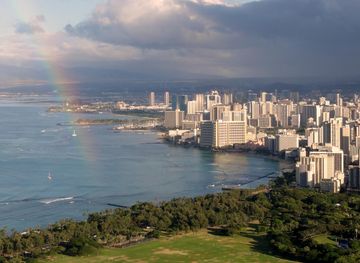
Explore more of Solomon Islands
Discover the Solomon Islands: An unspoiled tropical paradise with pristine beaches, vibrant coral reefs, rich history, and unique cultural experiences.
Explore Solomon Islands