

Free Lower Juba Travel Guide & Mobile App
Explore Lower Juba with free travel guides. Discover regional history, expert tips, proposed trips, and audio guides on web or mobile app.


Lower Juba combines Kismayo’s Indian Ocean port, the Juba River valley and southern Somali coastal landscapes, but requires specialist security planning.
Read more about Lower Juba
When is the best time to visit Lower Juba?
Best: December–February · 30–31°C| Month | High (°C) | Rainfall (mm) |
|---|---|---|
| January (best) | 30 | 2 |
| February (best) | 30 | 3 |
| March | 31 | 7 |
| April | 32 | 10 |
| May | 33 | 15 |
| June | 33 | 12 |
| July | 32 | 10 |
| August | 31 | 9 |
| September | 32 | 8 |
| October | 32 | 7 |
| November | 32 | 5 |
| December (best) | 31 | 4 |
Getting to and around Lower Juba
How to get there
Transportation
Explore Lower Juba on the map
Plan your trip on one map. See where the top cities, national parks and sights are, and book hotels and experiences in a few clicks.
Best hotels in Lower Juba
Best restaurants in Lower Juba
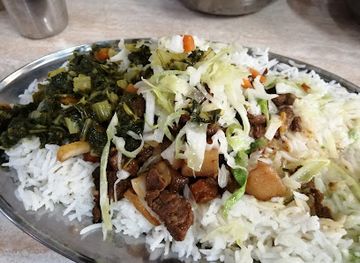
Lower Juba’s food culture reflects Somali pastoral traditions, the produce of the Juba valley and Kismayo’s Indian Ocean setting. In Kismayo, meals may include rice, pasta, flatbreads, stewed meat, grilled fish and spiced sauces, with bananas and other agricultural produce associated with southern river farming. Tea flavoured with cardamom, ginger or cinnamon is a common social drink, while sweet snacks and simple café food are widely encountered. Coastal communities have stronger access to fish and seafood than inland pastoral areas, although supply and quality can vary with security, weather and infrastructure. Small restaurants, tea shops and family-run eateries are more relevant than a formal fine-dining scene, and standards of refrigeration, water and food hygiene may differ considerably. Visitors should eat through trusted arrangements, use treated or sealed water, and carry suitable dietary supplies if travelling beyond Kismayo. Tipping practices are not uniform, so ask discreetly rather than assuming a fixed custom.
-
Restaurant
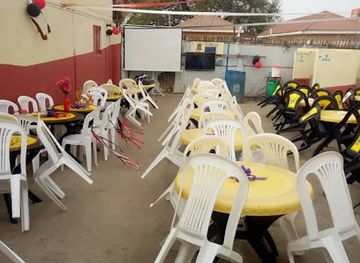
Harwanaag Hotel
Experience authentic Somali flavors at Harwanaag Hotel in Kismayo - where culinary tradition meets contemporary dining.
-
Restaurant
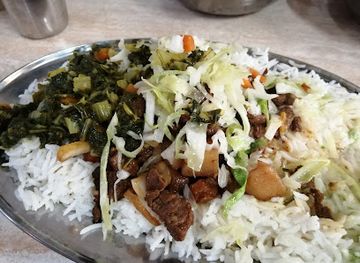
Tawakal Hotel
Experience authentic Somali cuisine at Tawakal Hotel in Kismayo – where every dish tells a story.
-
Restaurant
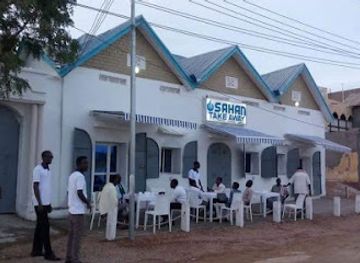
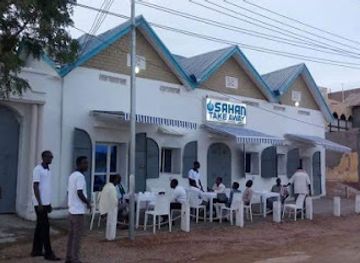
SAHAN TAKE AWAY
Experience authentic Somali cuisine at Sahan Take Away, where every dish tells a story of rich flavors and cultural heritage.
-
Restaurant
Hotel Danwaa
Experience the authentic flavors of Somalia at Hotel Danwaa in Jilib—where every meal tells a story.
Best bars in Lower Juba
Lower Juba does not have a conventional bar or nightclub scene. Somalia is predominantly Muslim, alcohol is socially and legally sensitive, and public drinking venues should not be expected. In Kismayo, evening social life is more likely to centre on tea shops, cafés, restaurants, family compounds and informal gatherings than on entertainment districts. Security restrictions can result in early closures, controlled movement after dark and limited public activity. Some accommodation or international compounds may have private recreational arrangements, but these are not public nightlife venues and should never be assumed to be available. Live music, poetry and conversation are important elements of Somali cultural life, yet attending gatherings requires local introductions and careful permission. Visitors should avoid photographing or advertising social events and should follow host-organisation curfews and movement instructions.
-
Bar
Standard Bar and Restaurant
Experience the vibrant atmosphere and local flavors at Standard Bar and Restaurant in Juba, South Sudan.
-
Restaurant
Harwanaag Hotel
Experience the authentic flavors of Somali cuisine at Harwanaag Hotel in Kismayo, a culinary gem blending tradition and hospitality.
-
Restaurant
Tawakal Hotel
Experience authentic Somali flavors at Tawakal Hotel, a culinary gem in Kismayo offering delightful local cuisine in a welcoming atmosphere.
-
Restaurant
SAHAN TAKE AWAY
Savor the authentic flavors of Somali cuisine at Sahan Take Away in Kismayo, a local favorite for delicious meals and warm hospitality.
Best nightclubs in Lower Juba
Lower Juba does not have a conventional bar or nightclub scene. Somalia is predominantly Muslim, alcohol is socially and legally sensitive, and public drinking venues should not be expected. In Kismayo, evening social life is more likely to centre on tea shops, cafés, restaurants, family compounds and informal gatherings than on entertainment districts. Security restrictions can result in early closures, controlled movement after dark and limited public activity. Some accommodation or international compounds may have private recreational arrangements, but these are not public nightlife venues and should never be assumed to be available. Live music, poetry and conversation are important elements of Somali cultural life, yet attending gatherings requires local introductions and careful permission. Visitors should avoid photographing or advertising social events and should follow host-organisation curfews and movement instructions.
-
 Bar
Barabdijabar mohamed
Experience the essence of Somali hospitality at Abdijabar Mohamed, the perfect bar for relaxation and local flavors.
Best shops in Lower Juba
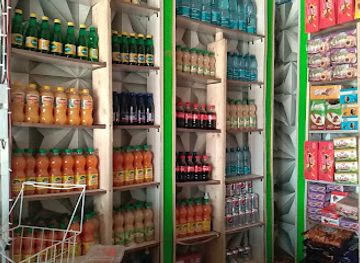
Shopping in Lower Juba is concentrated in Kismayo and serves local households, traders and passing commercial networks rather than international visitors. Markets and small shops commonly sell clothing, household goods, mobile-phone services, tea, spices, rice and other staple foods, while the port contributes to the city’s role as a trading centre. Produce from southern farming areas, livestock products and fish may appear in local commerce, although availability changes with season, transport and security. Traditional Somali clothing and locally prepared foods can be purchased when introduced by a trusted resident, but visitors should not treat markets as photographic attractions or bargain aggressively with people whose livelihoods are under pressure. Outside Kismayo, retail facilities are sparse and supply chains can be disrupted. Carry essential personal items with you, check whether US dollars or Somali shillings are preferred, and avoid buying antiquities, wildlife products or objects whose ownership and export status are unclear.
-
Home goods store
KAKUMA SOMALI MARKET
Discover the vibrant Kakuma Somali Market in Juba, where culture, community, and unique local goods come together in a memorable shopping experience.
-
General store
Quraca lowska
Experience the vibrant local culture at Quraca Lowska, Kismayo's charming general store, where authentic Somali goods await your discovery.
-
Grocery store
Horseed Fruits & Sweets
Discover the vibrant flavors of Dhoobley at Horseed Fruits & Sweets, where fresh fruits and traditional sweets await every traveler.
-
Store
AZAAD SHOP
Experience the vibrant local culture at Azaad Shop in Kismayo, offering unique souvenirs and traditional Somali products.
Get your free copy of our complete guide to Lower Juba, delivered straight to you.
Everything on this page, from attractions and restaurants to essentials and local phrases, in one PDF you can read offline, print or share.
Already have an account? Sign in
Your Lower Juba guide is ready.
We'll send it to · Not you? Sign out

Getting your guide ready…
We are putting together a fresh copy of the Lower Juba guide. This can take up to a minute.
This can take a few moments. If your browser asks, choose Allow so the download can start. You'll find the guide in your Downloads folder.
Nothing happened? Download it again
Sorry, the guide is taking longer than usual. Please try again in a minute, or get it by email instead.
Lower Juba essentials
Currency and Payment
Safety
Emergency Situations
Do's and Don'ts
Local Tips
From Eve
Local phrases worth knowing
You don't need to get them perfect. A few words go a long way, and locals appreciate the effort.
Basics
| English | Local | Say it |
|---|---|---|
| Hello | Nabad | [Nah-bahd] |
| Goodbye | Nabad gelyo | [Nah-bahd gel-yoh] |
| Yes | Haa | [Hah] |
| No | Maya | [Mah-yah] |
| Please/You're welcome | Fadlan | [Fahd-lahn] |
| Thank you | Mahadsanid | [Mah-hahd-sah-nid] |
| Excuse me/Sorry | Iga raali ahow | [Ee-gah rah-lee ah-oh] |
| How are you? | Sidee tahay? | [See-dee tah-hah?] |
| Fine. And you? | Waa fiican. Adiguna? | [Wah fee-ahn. Ah-dee-goo-nah?] |
| Do you speak English? | Ma ku hadashaa Ingiriis? | [Mah koo hah-dah-shah In-gee-rees?] |
| I don't understand | Ma fahmin | [Mah fah-min] |
Eating & Drinking
| English | Local | Say it |
|---|---|---|
| I'd like to see the menu, please | Fadlan ii soo bandhig menu-ga | [Fahd-lahn ee soo ban-dhig men-oo-gah] |
| I don't eat meat | Ma cuno hilib | [Mah koo-no hee-lib] |
| Cheers! | Nabad iyo caafimaad! | [Nah-bahd ee-yoh tsah-ee-mahd!] |
| I would like to pay, please | Fadlan waxaan rabaa inaan bixiyo | [Fahd-lahn wa-hee-an rah-bah ee-nan bee-kee-yoh] |
Emergencies
| English | Local | Say it |
|---|---|---|
| Help! | Caawimaad! | [Cah-wee-mahd!] |
| Go away! | Ka tag! | [Kah tahg!] |
| Call the Police! | Wac booliiska! | [Wahk boh-lee-ska!] |
| Call a doctor! | Wac dhakhtar! | [Wahk dahkhtar!] |
| I'm lost | Waan lumay | [Wahn loo-may] |
| I'm ill | Waan xanuunsanahay | [Wahn khah-noon-sah-na-hah] |
Shopping
| English | Local | Say it |
|---|---|---|
| I'd like to buy... | Waxaan rabaa inaan iibsado... | [Wah-an rah-bah ee-nan eeb-sah-doh...] |
| I'm just looking | Waxaan kaliya eegayaa | [Wah-an kah-lee-yah eh-gah-yah] |
| How much is it? | Imisa ayay tahay? | [Ee-mee-sah ah-yay tah-hah?] |
| That's too expensive | Taasi waa qaali | [Tah-see wah kah-lee] |
| Can you lower the price? | Ma hoos u dhigaysaa qiimaha? | [Mah hohs oo dhee-gah-y-sah kee-mah?] |
Time & Numbers
| English | Local | Say it |
|---|---|---|
| What time is it? | Waa imisa saac? | [Wah ee-mee-sah sah-ahc?] |
| It's one o'clock | Waa saacad kowaad | [Wah sah-ahc koh-wahd] |
| Half past (10) | Baraf (10) | [Bah-rahf (10)] |
| Morning | Subax | [Soo-bahx] |
| Afternoon | Duhur | [Doo-hoor] |
| Evening | Fiidnimo | [Fee-dni-mo] |
| Yesterday | Shalay | [Sha-lay] |
| Today | Maanta | [Maan-tah] |
| Tomorrow | Berri | [Ber-ree] |
| 1 | Kow | [Koh] |
| 2 | Laba | [Lah-bah] |
| 3 | Saddex | [Sahd-dex] |
| 4 | Afar | [Ah-far] |
| 5 | Shan | [Shahn] |
| 6 | Lix | [Leex] |
| 7 | Toddoba | [Taw-doh-bah] |
| 8 | Siddeed | [Sid-deed] |
| 9 | Sagaal | [Sah-gahl] |
| 10 | Toban | [Toh-bahn] |
Transport & Directions
| English | Local | Say it |
|---|---|---|
| Where's a/the...? | Xagee ku yaal...? | [Hah-geh koo yaal...?] |
| What's the address? | Waa maxay cinwaanka? | [Wah mah-hay chin-wan-kah?] |
| Can you show me (on the map)? | Ma ii muujin kartaa (khariidadda)? | [Mah ee moo-jin kar-tah (khah-ree-dah)?] |
| When's the next (bus)? | Goormee imaaneysa (baska)? | [Goor-mee ee-mah-ney-sah (bask-ah)?] |
| A ticket (to ....) | Tigid (u ...) | [Tee-gid (oo ...)] |
History of Lower Juba
Indian Ocean trade and early Islamic connections
The southern Somali coast formed part of the wider western Indian Ocean trading world, whose merchants connected East Africa with Arabia, Persia and the Indian subcontinent. Coastal communities exchanged livestock, hides, aromatics and other regional products for imported goods, while Islam became an important influence on social and political life. The lower Juba coast was less urbanised than some northern Somali ports, but its maritime position and access to the river hinterland gave it continuing commercial significance. Archaeological knowledge of individual sites remains uneven, partly because research and preservation have been difficult in recent decades.
Sultanates and the lower Juba hinterland
Before European colonial rule, authority in the lower Juba area was shaped by overlapping Somali clan structures, coastal communities and regional sultanates. Political influence from states such as the Ajuran Sultanate and later southern Somali sultanates extended unevenly through river valleys, pasturelands and trading settlements rather than through modern-style fixed borders. The Juba River supported farming and movement, while pastoral networks connected the interior with the coast. This history helps explain why present-day social and economic geography cannot be understood solely through contemporary administrative boundaries.
Colonial Jubaland and the creation of Kismayo’s modern port role
European colonial boundaries transformed the lower Juba region during the late nineteenth and early twentieth centuries. The territory was associated with the British East Africa sphere before being transferred to Italy in 1925 and incorporated into Italian Somaliland. Italian administration developed Kismayo as a port and encouraged plantation agriculture in parts of the Juba valley, including schemes relying on imported labour and colonial commercial interests. Roads, administrative buildings and port facilities altered the region’s economic orientation, although colonial development remained uneven and coercive.
The Second World War and independence
During the Second World War, British forces occupied Italian Somaliland, including the southern coastal zone, after Italy entered the conflict. The post-war period brought international trusteeship under Italian administration and growing Somali nationalism. Somalia became independent in 1960 through the union of the former British Somaliland protectorate and the former Italian Trust Territory. Kismayo remained an important southern port, while the Juba valley continued to combine farming, livestock production and riverine settlement within the new republic.
State collapse, conflict and displacement
The fall of Siad Barre’s government in 1991 triggered prolonged conflict across Somalia, including Lower Juba. Kismayo and surrounding territory changed hands among armed factions, and fighting disrupted trade, farming, public services and movement. The region also experienced major displacement and humanitarian crises, particularly during droughts and periods of insecurity. International interventions and peace initiatives produced limited and fluctuating results. The legacy remains visible in damaged infrastructure, fragmented authority and the caution required when travelling between urban and rural areas.
Jubaland and contemporary Lower Juba
Jubaland’s modern political administration developed during the 2010s amid negotiations among local actors, Somalia’s federal government and neighbouring states. Kismayo became the administrative centre of Jubaland and an important political and commercial hub, while Al-Shabaab retained or contested influence in parts of the wider region. The lower Juba economy continues to depend on the port, livestock, farming, fishing and cross-border trade, but insecurity and limited infrastructure constrain development. Current conditions can change rapidly, making recent local information essential.
Lower Juba in Photos
Browse through our photo collection highlighting the charm and character of the destination.
Neighbouring regions of Lower Juba
The closest regions to Lower Juba, if you have time for more than one.
-

-

-

-

-


Swipe for more regions
Explore more

Explore more of Somalia
Explore Somalia: Discover its untouched beaches, ancient ruins, and rich cultural heritage in a land of resilient people and breathtaking landscapes.
Explore Somalia