
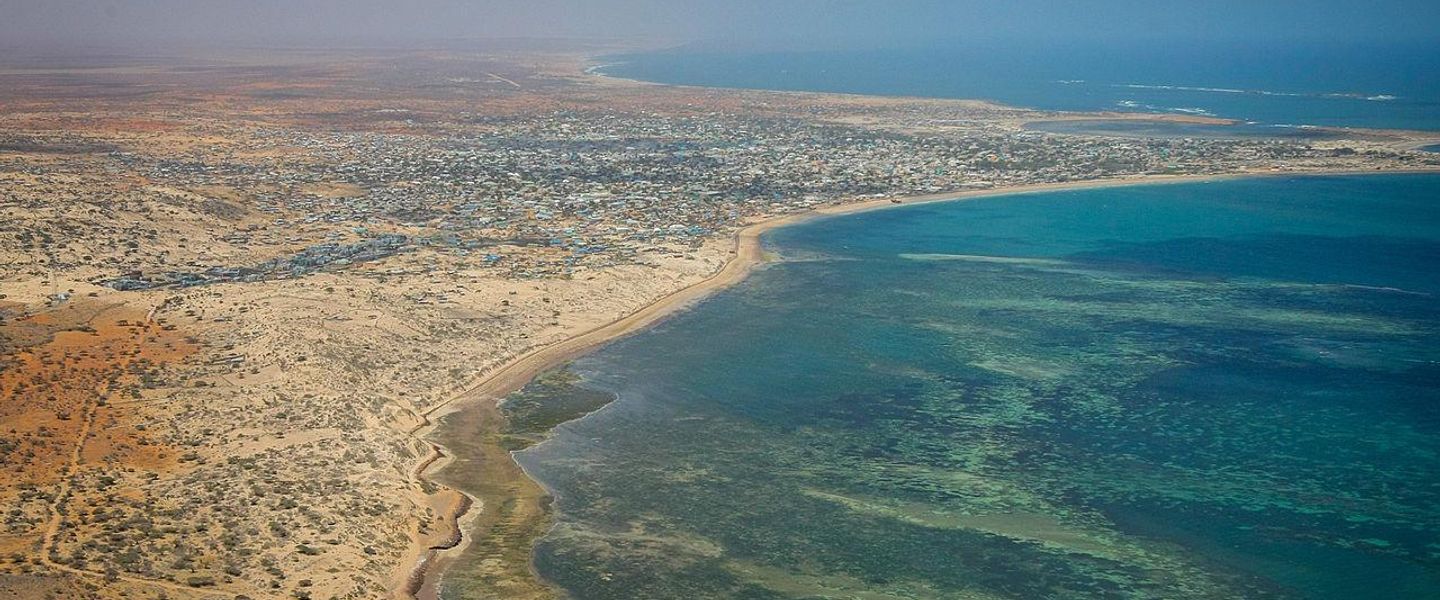
Middle Juba, Somalia Travel Guide
Discover the untouched beauty and rich culture of Middle Juba, Somalia's hidden paradise along the majestic Juba River.
Middle Juba, nestled in southern Somalia, is a hidden gem brimming with natural beauty and cultural richness. This region, named after the Juba River that flows through it, offers visitors a unique and immersive experience in one of Africa's lesser-known destinations. The river is the lifeline of the area, providing lush landscapes and fertile grounds amidst the typical arid Somali environment. Nature enthusiasts will appreciate the diverse fauna and flora that thrive here. From bird watching to spotting rare wildlife, Middle Juba is a paradise for those who love the outdoors. The region's landscapes are varied, ranging from riverine forests to savannahs, making it a picturesque location for photography and exploration. Culturally, Middle Juba is home to various Somali clans, each with its own traditions and lifestyles. Visitors can engage with local communities, gaining insights into their ways of life and experiencing authentic Somali hospitality. The traditional markets, known as 'souks,' offer a vibrant array of goods, from handmade crafts to local delicacies, providing a sensory-rich experience. Despite its remote location, Middle Juba’s charm lies in its untouched and unspoiled nature. It is a place where one can disconnect from the hustle and bustle of modern life and reconnect with nature and culture in their purest forms. This serene and captivating destination awaits the adventurous traveler ready to explore the heart of Somalia.

Know before you go
Hi, I'm Eve. Here are a few practical things to know before exploring Middle Juba.
- Hire a local guide to navigate the area and communicate with local communities.
- Visit during the dry season from December to March for the best weather conditions.
- Carry sufficient cash as ATM facilities are scarce in the region.
- Respect local customs and dress modestly, especially when visiting villages.
- Stay updated on travel advisories and ensure you have necessary permits for travel.


Best bars in Middle Juba
Top-rated picks
Best Bars

Café Laasgeel
Experience the essence of Hargeisa at Café Laasgeel, where local flavors meet a cozy atmosphere, perfect for every traveler.

Acacia Village
Experience the best of Juba at Acacia Village, where delightful cuisine meets cozy accommodations in a welcoming atmosphere.

Yam Hotel
Experience comfort and vibrant nightlife at Yam Hotel, your ideal retreat in Juba, South Sudan with a lively cocktail bar and welcoming atmosphere.

Ngamia Club
Discover Ngamia Club in Wajir - A serene bar offering a welcoming ambience and a diverse drink selection perfect for relaxation.

Best shops in Middle Juba
Top-rated picks
Best Shops

Konyo Konyo Market
Experience the colorful Konyo Konyo Market in Juba, where local culture meets vibrant commerce and authentic South Sudanese flavors.

Bakaara Market
Discover the lively Bakaara Market in Mogadishu, a cultural treasure trove of commerce, food, and vibrant Somali life.

Dahabshiil Business Centre
Explore the Dahabshiil Business Centre: Hargeisa's premier shopping mall with a mix of local and international brands, dining, and vibrant culture.

Juba Hypermarket
Discover the bustling Juba Hypermarket in Mogadishu, a vibrant hub for shopping, dining, and local culture.

Explore Middle Juba on the Map
A handpicked selection of must-see spots in Middle Juba, mapped for you.
Middle Juba Essentials
-
Middle Juba is located in southern Somalia. The most convenient way to reach Middle Juba is to fly into Aden Adde International Airport in Mogadishu. From Mogadishu, you can take a domestic flight to Kismayo Airport, followed by a road trip to Middle Juba. The road journey can be challenging due to varying road conditions, so it is advisable to hire a local guide or use a reputable transport service.
-
Transportation within Middle Juba is primarily by road. Public transport options include minibuses and shared taxis, which connect the main towns and villages. It is recommended to hire a private car with a driver for convenience and safety. Local guides are also available and can provide valuable insights and assistance in navigating the region.
-
The official currency in Somalia is the Somali Shilling (SOS). U.S. dollars are also widely accepted. Credit card facilities are limited, so it is essential to carry sufficient cash. Currency exchange services are available in major towns, but it is advisable to exchange money in Mogadishu or Kismayo before traveling to Middle Juba.
-
Safety is a critical concern when traveling in Middle Juba. Travelers should avoid areas with high crime rates and potential conflict zones. It is essential to stay updated on the security situation and follow advice from local authorities and travel advisories. Avoid traveling at night and keep valuables secure. Consider hiring a local guide who is familiar with the region.
-
In case of emergency, contact local authorities or the nearest police station. Emergency numbers may vary, so it is advisable to obtain these details upon arrival. Medical facilities are limited, so travelers should have travel insurance that covers medical emergencies and consider carrying a basic first aid kit. For serious medical issues, evacuation to a larger city or abroad may be necessary.
-
Fashion: Do dress modestly, covering shoulders and knees. Avoid wearing revealing clothing. Religion: Do respect local customs and Islamic traditions. Public Transport: Do be respectful and patient when using public transport. Avoid loud conversations and keep personal belongings secure. Greetings: Do greet people with a polite 'As-Salaam-Alaikum' and a handshake. Eating & Drinking: Do try local dishes and accept food offerings graciously. Avoid eating or drinking in public during Ramadan.
-
To experience Middle Juba like a local, visit the bustling markets where you can purchase fresh produce and traditional Somali goods. Engage with locals who are often hospitable and willing to share stories about the region's history and culture. Don't miss exploring the scenic Jubba River and the ancient ruins of the Bardhere mosque. Hiring a local guide can enhance your experience and provide deeper insights into the area's heritage.
When is the best time to visit Middle Juba?
Useful Local Phrases for Middle Juba
You don't need to speak the language perfectly. Even learning a few simple words can make conversations warmer—and locals usually appreciate the effort.
— Eve

Here are the phrases I use most often in Middle Juba. Try a few—you'll be surprised how far they go! 😊
❤️
-
- HelloIska warran
[Iska warran] - GoodbyeNabad gelyo
[Nabad gelyo] - YesHaa
[Haa] - NoMaya
[Maya] - Please/You're welcomeFadlan
[Fadlan] - Thank youMahadsanid
[Mahadsanid] - Excuse me/SorryIga raali ahow
[Iga raali ahow] - How are you?Sidee tahay?
[Sidee tahay?] - Fine. And you?Wanaagsan. Adiguna?
[Wanaagsan. Adiguna?] - Do you speak English?Ma ku hadashaa Ingiriis?
[Ma ku hadashaa Ingiriis?] - I don't understandMa fahmin
[Ma fahmin]
- HelloIska warran
-
- I'd like to see the menu, pleaseFadlan ii soo bandhig menu-ga
[Fadlan ii soo bandhig menu-ga] - I don't eat meatMa cunno hilib
[Ma cunno hilib] - Cheers!Nabad
[Nabad] - I would like to pay, pleaseFadlan, waxaan rabaa inaan bixin
[Fadlan, waxaan rabaa inaan bixin]
- I'd like to see the menu, pleaseFadlan ii soo bandhig menu-ga
-
- Help!Caawimaad!
[Caawimaad!] - Go away!Ka tag!
[Ka tag!] - Call the Police!Wac booliiska!
[Wac booliiska!] - Call a doctor!Wac dhakhtar!
[Wac dhakhtar!] - I'm lostWaan lumay
[Waan lumay] - I'm illWaan jiran
[Waan jiran]
- Help!Caawimaad!
-
- I'd like to buy...Waxaan rabaa inaan iibsado...
[Waxaan rabaa inaan iibsado...] - I'm just lookingWaxaan kaliya daawanayaa
[Waxaan kaliya daawanayaa] - How much is it?Immisa ayay tahay?
[Immisa ayay tahay?] - That's too expensiveTaasi waa qaali
[Taasi waa qaali] - Can you lower the price?Ma dhimi kartaa qiimaha?
[Ma dhimi kartaa qiimaha?]
- I'd like to buy...Waxaan rabaa inaan iibsado...
-
- What time is it?Waa maxay saacadda?
[Waa maxay saacadda?] - It's one o'clockWaa hal saac
[Waa hal saac] - Half past (10)Nafaqada (10)
[Nafaqada (10)] - MorningSubax
[Subax] - AfternoonDuhur
[Duhur] - EveningHabeen
[Habeen] - YesterdayShalay
[Shalay] - TodayMaanta
[Maanta] - TomorrowBerri
[Berri] - 1Kow
[Kow] - 2Laba
[Laba] - 3Saddex
[Saddex] - 4Afar
[Afar] - 5Shan
[Shan] - 6Lix
[Lix] - 7Toddoba
[Toddoba] - 8Siddeed
[Siddeed] - 9Sagaal
[Sagaal] - 10Toban
[Toban]
- What time is it?Waa maxay saacadda?
-
- Where's a/the...?Xagee ku yaal...?
[Xagee ku yaal...?] - What's the address?Waa maxay ciwaanka?
[Waa maxay ciwaanka?] - Can you show me (on the map)?Ma ii muujin kartaa (khariidada)?
[Ma ii muujin kartaa (khariidada)?] - When's the next (bus)?Goormee tahay (baska) xiga?
[Goormee tahay (baska) xiga?] - A ticket (to ....)Tigid (u) ....
[Tigid (u) ....]
- Where's a/the...?Xagee ku yaal...?
History of Middle Juba
-
Middle Juba has been an integral part of ancient trade routes that connected the interior of Africa to the Indian Ocean. These routes facilitated the exchange of goods such as ivory, gold, and spices. The region's rivers, particularly the Juba River, played a crucial role in these trading activities, serving as natural highways for merchants and traders.
-
During the medieval period, Middle Juba was under the influence of the Ajuran Sultanate, a powerful Somali empire that controlled much of the Horn of Africa. The Ajuran Sultanate was known for its advanced hydraulic engineering, which included sophisticated systems of wells and cisterns that supported agriculture and sustained local communities.
-
In the late 19th and early 20th centuries, Middle Juba came under colonial rule, first by the Italians and later by the British. The colonial powers were interested in the region for its agricultural potential, particularly for growing bananas and sugarcane. This period saw the establishment of plantations and the construction of infrastructure such as roads and ports to facilitate export.
-
Somalia gained independence in 1960, and Middle Juba became part of the newly formed nation. However, the region has faced significant challenges, including periods of conflict and instability. The Somali Civil War, which began in the early 1990s, had a profound impact on Middle Juba, leading to disruptions in daily life and displacement of many residents.
-
Middle Juba is home to a rich cultural heritage, with traditions that have been passed down through generations. The region is known for its oral storytelling, traditional music, and dance. The local communities celebrate various festivals and events, which often feature elaborate ceremonies and performances that reflect their history and way of life.
-
The natural environment of Middle Juba is characterized by its diverse landscapes, including riverine forests, savannas, and wetlands. The Juba River, one of the longest rivers in Somalia, is a vital lifeline for the region, supporting agriculture and providing water for both people and wildlife. The area's biodiversity includes a variety of plant and animal species, some of which are unique to the region.
-
In recent years, Middle Juba has seen efforts towards reconstruction and development. Various initiatives have been aimed at improving infrastructure, healthcare, and education. These developments are part of broader efforts to enhance the quality of life for residents and to create opportunities for economic growth and stability in the region.
Neighbouring Regions of Middle Juba
The closest regions to Middle Juba, if you have time for more than one.


Your all‑in‑one travel companion app
Explore expert travel guides, compare and book tours, experiences, hotels, and more—all from the palm of your hand. Download now for seamless trip planning wherever your wanderlust takes you.


Explore More of Somalia

Looking beyond Middle Juba? Discover Somalia for broader travel guides, local hot-spots, and regional highlights.
Explore SomaliaMiddle Juba in Photos
Browse through our photo collection highlighting the charm and character of the destination.


The Enchanting Wilderness of Middle Juba
Middle Juba, nestled in southern Somalia, is a hidden gem brimming with natural beauty and cultural richness. This region, named after the Juba River that flows through it, offers visitors a unique and immersive experience in one of Africa's lesser-known destinations. The river is the lifeline of the area, providing lush landscapes and fertile grounds amidst the typical arid Somali environment. Nature enthusiasts will appreciate the diverse fauna and flora that thrive here. From bird watching to spotting rare wildlife, Middle Juba is a paradise for those who love the outdoors. The region's landscapes are varied, ranging from riverine forests to savannahs, making it a picturesque location for photography and exploration. Culturally, Middle Juba is home to various Somali clans, each with its own traditions and lifestyles. Visitors can engage with local communities, gaining insights into their ways of life and experiencing authentic Somali hospitality. The traditional markets, known as 'souks,' offer a vibrant array of goods, from handmade crafts to local delicacies, providing a sensory-rich experience. Despite its remote location, Middle Juba’s charm lies in its untouched and unspoiled nature. It is a place where one can disconnect from the hustle and bustle of modern life and reconnect with nature and culture in their purest forms. This serene and captivating destination awaits the adventurous traveler ready to explore the heart of Somalia.