

Free Blue Ridge Mountains Travel Guide & Mobile App
Explore Blue Ridge Mountains with free travel guides. Discover regional history, expert tips, proposed trips, and audio guides on web or mobile app.


Explore South Carolina’s Blue Ridge Mountains for waterfalls, forest trails, lakes, Cherokee heritage, mountain towns and Appalachian scenery.
Read more about Blue Ridge Mountains
When is the best time to visit Blue Ridge Mountains?
Best: May, September–October · 21–27°C| Month | High (°C) | Rainfall (mm) |
|---|---|---|
| January | 9 | 100 |
| February | 12 | 95 |
| March | 16 | 110 |
| April | 21 | 105 |
| May (best) | 26 | 120 |
| June | 29 | 130 |
| July | 31 | 135 |
| August | 30 | 130 |
| September (best) | 27 | 120 |
| October (best) | 21 | 100 |
| November | 15 | 105 |
| December | 11 | 110 |
Getting to and around Blue Ridge Mountains
How to get there
Transportation
Destinations in Blue Ridge Mountains
Resorts, valleys and scenic spots worth a trip of their own.
-

-

-


Swipe for more destinations
Best attractions in Blue Ridge Mountains
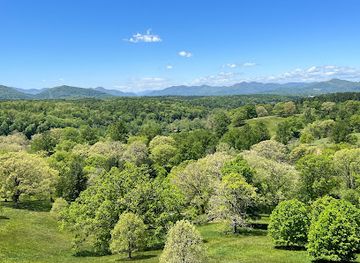
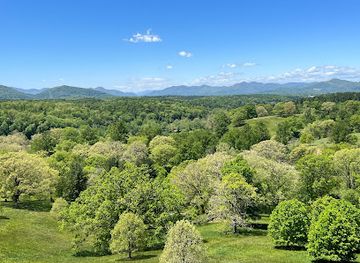
The Blue Ridge Mountains’ attractions are primarily landscape-based, with each section offering a different experience. Table Rock State Park combines a large granite outcrop, mountain trails, lakes and camping, while Caesars Head and Jones Gap protect steep escarpment country, forested valleys and prominent waterfalls. Oconee State Park provides a quieter base for hiking, swimming and exploring the western mountains. Lake Jocassee and Devil’s Fork State Park are suited to boating, paddling, fishing and lakeside recreation, although access and conditions vary by season. The Chattooga River is known for white-water rafting and wild river scenery, while the Foothills Trail offers a demanding long-distance route through several major landscapes. Shorter walks lead to features such as Raven Cliff Falls and Yellow Branch Falls. Stumphouse Tunnel adds a tangible link to nineteenth-century railway history, and the towns of Walhalla and Pickens offer museums, local history and community events. Scenic drives, birdwatching, photography and autumn foliage are important attractions, but many viewpoints and trailheads are reached by winding roads rather than by a single park loop.
-
Historical place
Biltmore
Explore the historic Biltmore Estate in Asheville, NC, a stunning blend of architecture, gardens, and culture that brings America's Gilded Age to life.
-
State park
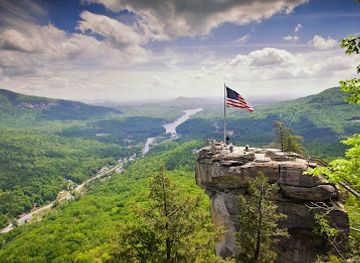
Chimney Rock State Park
Discover breathtaking views and adventurous trails at Chimney Rock State Park, North Carolina's hidden gem nestled in the Blue Ridge Mountains.
-
Park
Chimney Rock at Chimney Rock State Park
Experience the breathtaking views and adventurous trails at Chimney Rock State Park, a must-visit destination in North Carolina's stunning landscape.
-
Garden
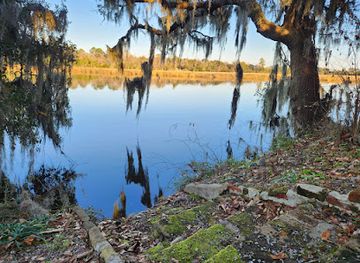
Magnolia Plantation and Gardens
Discover the enchanting gardens and rich history of Magnolia Plantation, a serene escape in Charleston's picturesque landscape.

Best landmarks in Blue Ridge Mountains
Table Rock is the region’s most recognisable natural landmark, a prominent granite summit rising above the foothills and giving its name to the surrounding state park. Sassafras Mountain, in Pickens County near the North Carolina line, marks South Carolina’s highest elevation and has broad views across the Appalachian ridges. Caesars Head is another important escarpment landmark, with a rock formation and overlook above the steep drop towards the Piedmont. The Chattooga River forms a powerful geographical and cultural feature along the western border area, cutting through a largely wooded gorge before continuing into neighbouring Georgia. Lake Jocassee’s clear reservoir and enclosing mountain slopes create one of the region’s defining modern landscapes, while Lake Keowee reflects the transformation brought by twentieth-century dam building. Stumphouse Tunnel near Walhalla is a significant human landmark: its unfinished railway passage records an ambitious nineteenth-century attempt to cross the Blue Ridge. Together these places express the region’s geology, watersheds, transport history and changing relationship with conservation.
-
Historical place
Biltmore
Discover the grandeur of Biltmore, America's largest home, nestled in the scenic beauty of Asheville, NC, offering rich history and stunning gardens.
-
Fortress
Fort Sumter National Monument
Explore the historic Fort Sumter National Monument, the site where the Civil War began, surrounded by breathtaking views of Charleston Harbor.
-
Garden
Magnolia Plantation and Gardens
Experience the enchanting blend of history and nature at Magnolia Plantation and Gardens, a must-visit destination in Charleston, SC.
-
Tourist attraction
The Blowing Rock
Explore The Blowing Rock, a stunning natural overlook in North Carolina, where breathtaking mountain views and rich legends await every visitor.

Explore Blue Ridge Mountains on the map
Plan your trip on one map. See where the top cities, national parks and sights are, and book hotels and experiences in a few clicks.
Best hotels in Blue Ridge Mountains
Best restaurants in Blue Ridge Mountains
Dining in the Blue Ridge Mountains and surrounding Upstate communities is informal, varied and closely connected to Southern food traditions. Barbecue, fried chicken, biscuits, country vegetables, catfish and sweet desserts appear widely, while mountain farms and roadside stands contribute peaches, apples, seasonal vegetables and preserves. Walhalla, Pickens, Seneca and the communities along the mountain approaches have cafés, diners, breweries, pizza restaurants and family-run establishments, with Greenville providing a broader contemporary dining scene outside the mountain area. Around the lakes and major parks, provisions for picnics and self-catering can be more practical than expecting extensive restaurant choice. Visitors may also encounter Appalachian-influenced cooking, local honey, craft beer and produce sold directly by growers. Tipping is customary in full-service restaurants, and menus often indicate whether service charges or gratuity have already been added.
-
American
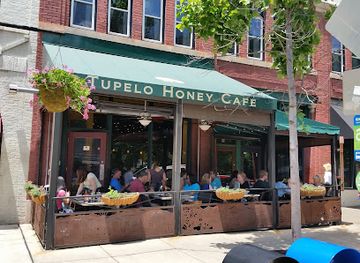
Tupelo Honey Southern Kitchen & Bar
Experience authentic Southern comfort food at Tupelo Honey Southern Kitchen & Bar in Asheville - perfect for families and brunch lovers alike.
-
American
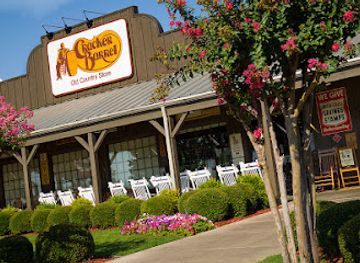
Cracker Barrel Old Country Store
Savor traditional Southern cuisine at Cracker Barrel Old Country Store in Flat Rock – where every meal feels like home.
-
Southern
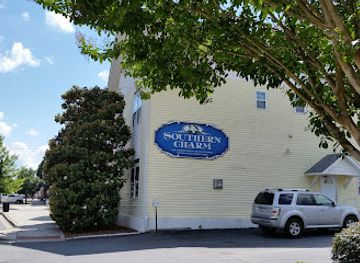
Southern Charm
Discover the heartwarming flavors of traditional Southern cuisine at Southern Charm in Blue Ridge - where every meal feels like home.
-
 Inn
InnPisgah Inn
Experience breathtaking views and cozy comfort at Pisgah Inn along North Carolina's scenic Blue Ridge Parkway.
Best bars in Blue Ridge Mountains
Evening life in the Blue Ridge Mountains is centred on relaxed restaurants, breweries, traditional bars and live music rather than a concentrated nightclub district. Walhalla, Pickens, Seneca and nearby Upstate towns provide the most dependable choice of places for a drink or casual meal, while rural communities generally become quiet after dinner. Craft breweries and taprooms are part of the wider Upstate scene, and local venues may host acoustic, bluegrass or country performances, though schedules change frequently. Greenville, outside the mountain region, has the area’s largest concentration of cocktail bars, music venues and late-night options and can serve as an urban base or evening excursion. Visitors staying near parks and lakes should plan transport in advance, particularly on winding roads after dark, and should not treat drinking and driving as compatible with mountain travel.
-
Live music bar
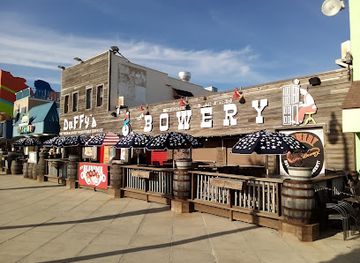
The Bowery
Discover the vibrant nightlife at The Bowery, Myrtle Beach's premier live music bar and restaurant, serving great food and unforgettable entertainment.
-
American
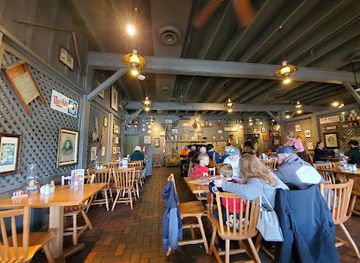
Cracker Barrel Old Country Store
Discover the taste of authentic Southern cuisine and shop local crafts at Cracker Barrel Old Country Store in Flat Rock, NC.
-
American
Trailhead Restaurant & Bar
Discover the flavors of American cuisine at Trailhead Restaurant & Bar in Black Mountain, where local ingredients and cozy ambiance await your visit.
-
Grill
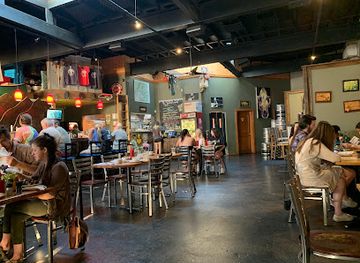
Liberty Tap Room & Grill
Experience the vibrant flavors of American cuisine and craft beer at Liberty Tap Room & Grill in Irmo, South Carolina.
Best nightclubs in Blue Ridge Mountains
Evening life in the Blue Ridge Mountains is centred on relaxed restaurants, breweries, traditional bars and live music rather than a concentrated nightclub district. Walhalla, Pickens, Seneca and nearby Upstate towns provide the most dependable choice of places for a drink or casual meal, while rural communities generally become quiet after dinner. Craft breweries and taprooms are part of the wider Upstate scene, and local venues may host acoustic, bluegrass or country performances, though schedules change frequently. Greenville, outside the mountain region, has the area’s largest concentration of cocktail bars, music venues and late-night options and can serve as an urban base or evening excursion. Visitors staying near parks and lakes should plan transport in advance, particularly on winding roads after dark, and should not treat drinking and driving as compatible with mountain travel.
-
Bar
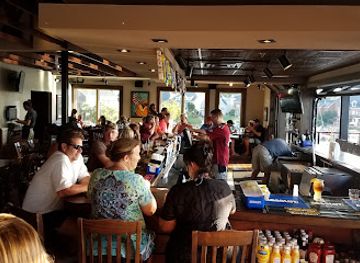
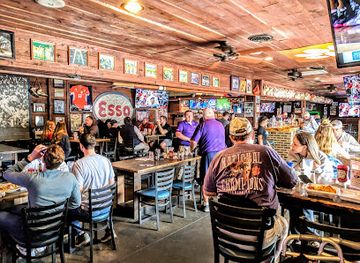
The Esso Club
Experience the vibrant nightlife of Clemson at The Esso Club, a lively bar and club known for its great drinks and live entertainment.
-
Bar
Art Bar
Experience the vibrant fusion of art, music, and nightlife at Art Bar in Columbia, SC, where creativity comes alive every night.
-
Hotel
Super 8 by Wyndham Black Mountain
Experience comfort and convenience at Super 8 by Wyndham Black Mountain, your gateway to the beauty of North Carolina's Blue Ridge Mountains.
-
Restaurant
Timberlake's Restaurant and Headwater's Pub
Experience the best of traditional American dining with live music in the heart of Blowing Rock at Timberlake's Restaurant and Headwater's Pub.
Best shops in Blue Ridge Mountains
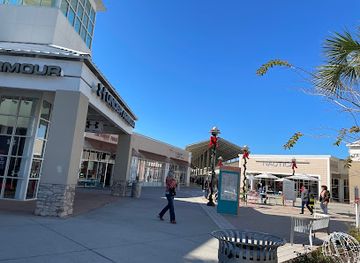
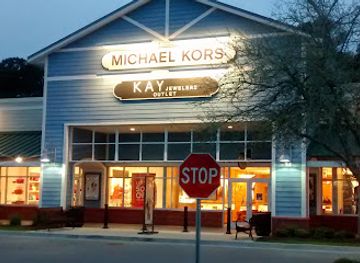
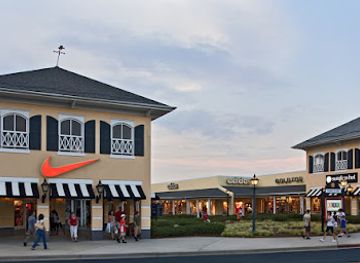
Shopping in the Blue Ridge Mountains is dispersed through small towns rather than concentrated in a large retail district. Walhalla has the strongest historic-town setting for browsing independent shops, galleries, antiques and locally made goods, while Pickens and nearby communities offer small retailers, cafés and seasonal produce. Farmers’ markets and farm stands are useful for peaches, apples, vegetables, honey, jams, baked goods and other South Carolina products, although dates and locations vary. Outdoor shops near the major recreation areas sell or hire practical equipment, but visitors should not assume that remote parks provide a full range of supplies. Appalachian-influenced crafts, pottery, woodwork, paintings and handmade gifts make more regionally appropriate souvenirs than generic mountain merchandise. For extensive brand shopping, department stores and larger commercial centres, Greenville and other Upstate cities outside the mountain zone offer considerably more choice.
-
Outlet mall
Tanger Outlets Myrtle Beach Hwy 17
Discover unbeatable deals and a fantastic shopping experience at Tanger Outlets Myrtle Beach Hwy 17, your ultimate outlet mall destination.
-
Outlet mall
Tanger Outlets Myrtle Beach Hwy 501
Discover unbeatable deals and a fantastic shopping experience at Tanger Outlets Myrtle Beach Hwy 501, your ultimate retail destination.
-
Outlet mall
Tanger Outlets Hilton Head
Discover outstanding deals and a variety of brand-name stores at Tanger Outlets Hilton Head, your ultimate shopping destination in South Carolina.
-
Outlet mall
Gaffney Outlet Marketplace
Discover unbeatable deals at Gaffney Outlet Marketplace, your ultimate shopping haven in South Carolina with a variety of brand-name stores.

Get your free copy of our complete guide to Blue Ridge Mountains, delivered straight to you.
Everything on this page, from attractions and restaurants to essentials and local phrases, in one PDF you can read offline, print or share.
Already have an account? Sign in
Your Blue Ridge Mountains guide is ready.
We'll send it to · Not you? Sign out

Getting your guide ready…
We are putting together a fresh copy of the Blue Ridge Mountains guide. This can take up to a minute.
This can take a few moments. If your browser asks, choose Allow so the download can start. You'll find the guide in your Downloads folder.
Nothing happened? Download it again
Sorry, the guide is taking longer than usual. Please try again in a minute, or get it by email instead.
Blue Ridge Mountains essentials
Currency and Payment
Safety
Emergency Situations
Do's and Don'ts
Local Tips
From Eve
Local phrases worth knowing
You don't need to get them perfect. A few words go a long way, and locals appreciate the effort.
Basics
| English | Local | Say it |
|---|---|---|
| Hello | Howdy | [Hau-dee] |
| Goodbye | See ya later | [See ya lay-ter] |
| Yes | Yep | [Yep] |
| No | Naw | [Naw] |
| Please/You're welcome | Please/No problem | [Please/No prob-lum] |
| Thank you | Thank ya | [Thank ya] |
| Excuse me/Sorry | Pardon me/Sorry | [Pardon me/Sor-ree] |
| How are you? | How ya doin'? | [How ya doin'?] |
| Fine. And you? | I’m good. And you? | [I’m good. An' you?] |
| Do you speak English? | You speakin' English? | [You speakin' English?] |
| I don't understand | I don’t get it | [I don’t git it] |
Eating & Drinking
| English | Local | Say it |
|---|---|---|
| I'd like to see the menu, please | Can I see the menu, please? | [Can I see the menu, please?] |
| I don't eat meat | I don’t eat no meat | [I don’t eat no meat] |
| Cheers! | Cheers! | [Cheers!] |
| I would like to pay, please | I reckon it's time to pay up | [I reckon it's time to pay up] |
Emergencies
| English | Local | Say it |
|---|---|---|
| Help! | Help! | [Help!] |
| Go away! | Leave me be! | [Leave me be!] |
| Call the Police! | Call the cops! | [Call the cops!] |
| Call a doctor! | Get a doctor! | [Get a doctor!] |
| I'm lost | I’m lost | [I’m lost] |
| I'm ill | I ain't feelin' good | [I ain't feelin' good] |
Shopping
| English | Local | Say it |
|---|---|---|
| I'd like to buy... | I wanna buy... | [I wanna buy...] |
| I'm just looking | Just browsin' | [Just browsin'] |
| How much is it? | How much that cost? | [How much that cost?] |
| That's too expensive | That’s too high | [That’s too high] |
| Can you lower the price? | Can ya knock down the price? | [Can ya knock down the price?] |
Time & Numbers
| English | Local | Say it |
|---|---|---|
| What time is it? | What time ya got? | [What time ya got?] |
| It's one o'clock | It's one o'clock | [It's one o'clock] |
| Half past (10) | Half past ten | [Half past ten] |
| Morning | Mornin' | [Mornin'] |
| Afternoon | Afternoon | [Afternoon] |
| Evening | Evenin' | [Evenin'] |
| Yesterday | Yestiddy | [Yestiddy] |
| Today | Today | [Today] |
| Tomorrow | Tomorrah | [Tomorrah] |
| 1 | One | [One] |
| 2 | Two | [Two] |
| 3 | Three | [Three] |
| 4 | Four | [Four] |
| 5 | Five | [Five] |
| 6 | Six | [Six] |
| 7 | Seven | [Seven] |
| 8 | Eight | [Eight] |
| 9 | Nine | [Nine] |
| 10 | Ten | [Ten] |
Transport & Directions
| English | Local | Say it |
|---|---|---|
| Where's a/the...? | Where's the...? | [Where's the...?] |
| What's the address? | What's the address? | [What's the address?] |
| Can you show me (on the map)? | Can ya show me on the map? | [Can ya show me on the map?] |
| When's the next (bus)? | When’s the next bus? | [When’s the next bus?] |
| A ticket (to ....) | A ticket to... | [A ticket to...] |
History of Blue Ridge Mountains
Cherokee Homeland and Keowee Country
Before European colonisation, the southern Blue Ridge and its foothills formed part of the homeland of the Cherokee people. The Keowee River valley and surrounding mountains supported settlements, farming, hunting and extensive travel routes, while rivers and ridges connected communities across what is now South Carolina, Georgia, North Carolina and Tennessee. Cherokee place names remain visible in the regional landscape, including Jocassee and Chattooga. Archaeological and historical interpretation in the Upstate helps explain a landscape shaped by Indigenous stewardship long before the arrival of colonial roads and towns.
Colonial Frontier and the Cherokee Wars
During the eighteenth century, British colonial expansion brought traders, settlers and military campaigns into the foothills and mountain approaches. Forts and trading paths reflected the strategic importance of the Keowee region, which stood between colonial settlements and Cherokee communities farther west. Conflict during the Anglo-Cherokee War of 1758–1761 altered political relationships and intensified pressure on Cherokee territory. Later treaties transferred additional land to the United States, opening the area to expanding settlement while undermining Cherokee sovereignty.
Removal and the Transformation of Cherokee Lands
The nineteenth-century seizure of Cherokee land culminated in the forced removal commonly known as the Trail of Tears. Although routes varied, Cherokee people from the wider Southeast were displaced westward in the 1830s after the Indian Removal Act and subsequent treaties. The historic Cherokee presence in north-western South Carolina was therefore sharply disrupted, though Cherokee history remains an essential part of the region’s identity. The Eastern Band of Cherokee Indians, based in western North Carolina, preserves related cultural traditions and community life across the broader southern Appalachian world.
Frontier Farming, Timber and Mountain Communities
After removal, settlers established farms, mills and small communities in the valleys and coves, while the steepest slopes remained relatively difficult to develop. Corn, livestock and orchards formed part of the agricultural economy, and timber became increasingly important as roads and railways improved. Walhalla, founded in the mid-nineteenth century by German immigrants, developed as a significant local centre. The surviving town fabric and surrounding farms reflect the mixture of European settlement, Appalachian practices and earlier Indigenous geography that shaped the Upstate.
Railways, Stumphouse Tunnel and Regional Ambition
Nineteenth-century plans to connect Charleston with the Ohio Valley encouraged railway construction through the Blue Ridge foothills. The unfinished Stumphouse Tunnel near Walhalla was begun in the 1850s as an ambitious attempt to carry the Blue Ridge Railroad through the mountain. Work stopped during the Civil War and the tunnel was never completed, but the surviving stone-lined passage remains a powerful reminder of the region’s difficult terrain and the commercial importance attached to crossing the Appalachians. Later rail connections helped move timber, agricultural goods and manufactured products.
Hydroelectric Development and the Lakes
Twentieth-century dam construction transformed several mountain valleys and river systems. Lake Keowee was created in connection with Duke Energy’s Oconee Nuclear Station, while Lake Jocassee was formed by the Jocassee Dam and became a major recreational landscape. These reservoirs submerged valleys and altered river ecology, bringing economic and recreational benefits alongside permanent changes to older communities and natural systems. Today, boating, fishing, paddling and lakeside recreation form an important part of the Blue Ridge visitor economy.
State Parks, Forest Conservation and Outdoor Recreation
Growing concern about erosion, deforestation and the loss of mountain landscapes encouraged public conservation during the twentieth century. Table Rock, Oconee, Jones Gap and Caesars Head became focal points for protecting forests, waterfalls and watersheds, while the Jocassee Gorges later received extensive conservation attention. The development of trails, campgrounds and scenic roads created the modern recreational landscape. The region now combines working communities and private land with protected public areas, making responsible access and respect for local regulations particularly important.
Blue Ridge Mountains in Photos
Browse through our photo collection highlighting the charm and character of the destination.
Neighbouring regions of Blue Ridge Mountains
The closest regions to Blue Ridge Mountains, if you have time for more than one.
-

-

-

-

-


Swipe for more regions
Explore more

Explore more of South Carolina
Explore South Carolina: A blend of historic charm, natural beauty, and southern hospitality. From Charleston's cobblestone streets to Myrtle Beach's sandy shores, adventure awaits.
Explore South Carolina