

Caesars Head State Park Travel Guide - Free Web & App
Your ultimate guide to Caesars Head State Park. Discover top landmarks, proposed trips, and local tips. Free on the web or via the Evendo companion app.


Caesars Head State Park in South Carolina pairs Blue Ridge overlooks, Raven Cliff Falls, forest trails and Mountain Bridge scenery near Greenville.
Mountain Edge and Forest
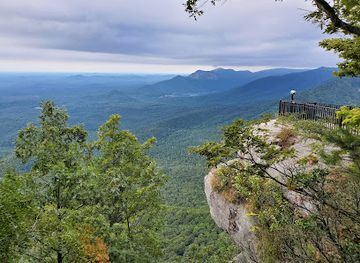
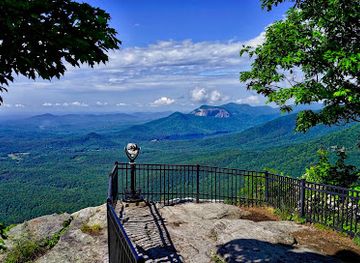
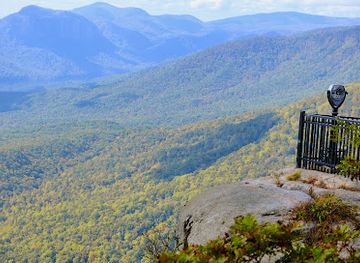
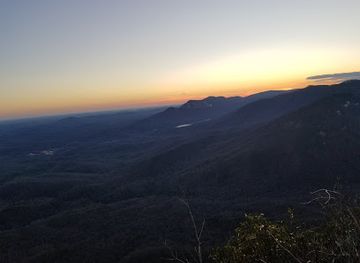
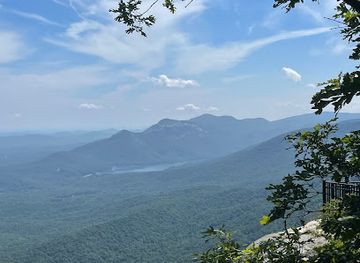
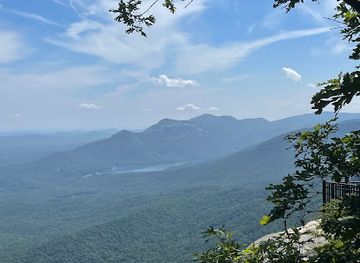
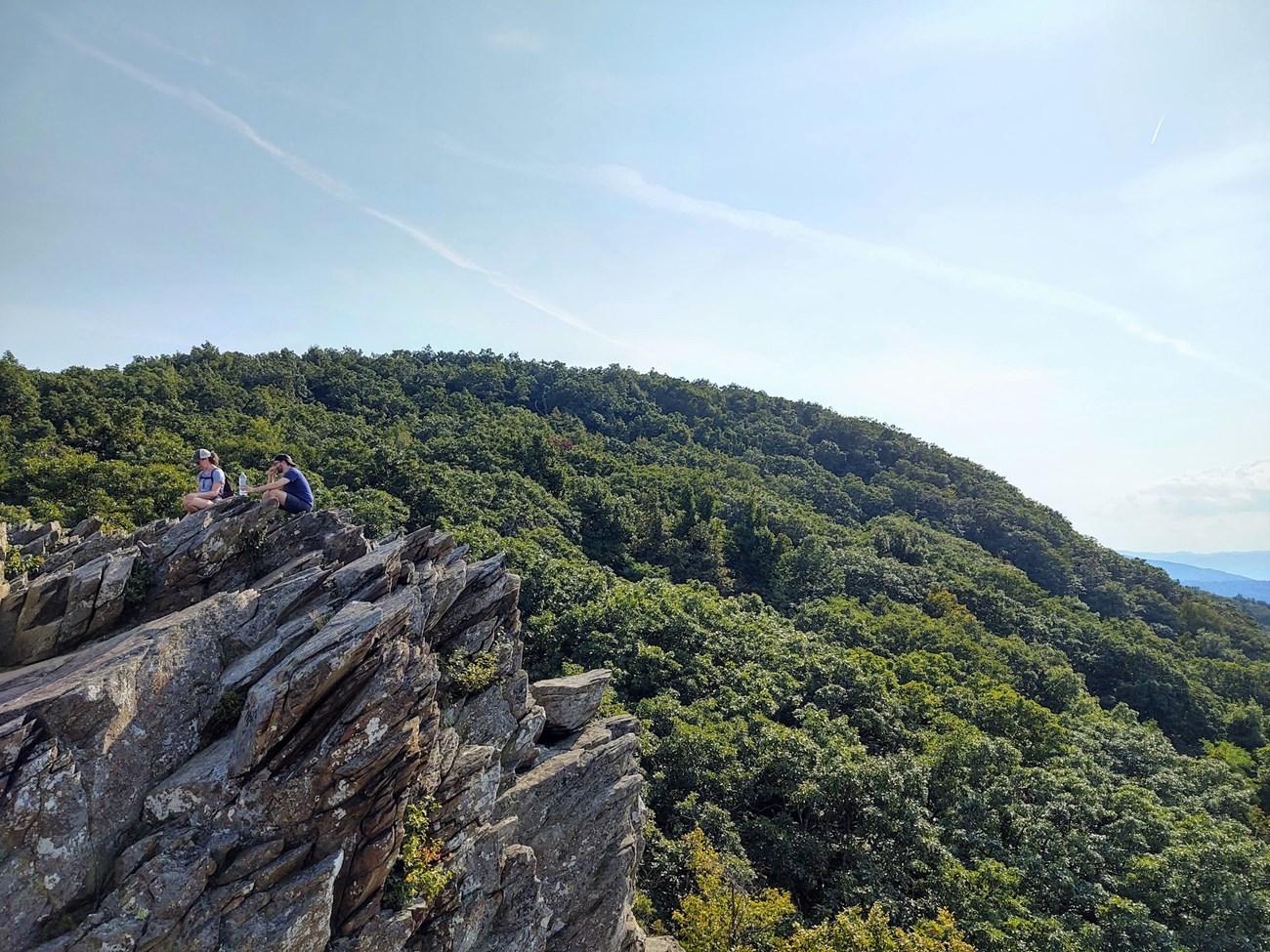
Caesars Head State Park occupies a dramatic section of South Carolina's Blue Ridge Escarpment, where the elevated Southern Blue Ridge drops towards the Piedmont. The park is best known for Caesars Head overlook, a broad granite outcrop with far-reaching views across forested ridges and the valleys below. Roads, trails and viewpoints reveal a landscape shaped by steep slopes, exposed rock, rushing streams and extensive deciduous forest rather than by a traditional town centre or built-up resort.Read more about Caesars Head State Park
Trails, Waterfalls and Wilderness
Gateway Communities and Local Character
When is the best time to visit Caesars Head State Park?
Best: May–June, September · 25–28°C| Month | High (°C) | Rainfall (mm) |
|---|---|---|
| January | 10 | 113 |
| February | 11 | 115 |
| March | 15 | 123 |
| April | 20 | 112 |
| May (best) | 25 | 104 |
| June (best) | 28 | 114 |
| July | 29 | 135 |
| August | 29 | 126 |
| September (best) | 26 | 115 |
| October | 20 | 111 |
| November | 15 | 110 |
| December | 9 | 113 |
Getting to and around Caesars Head State Park
How to get there
Transportation
Best attractions in Caesars Head State Park
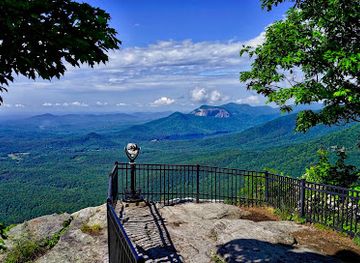
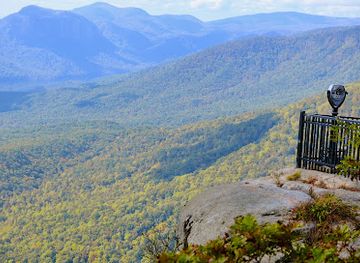
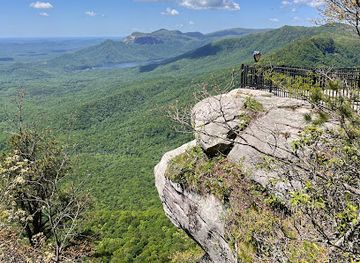
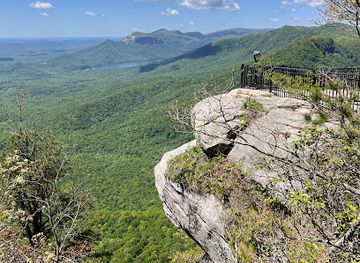
The principal attraction is Caesars Head overlook, where a prominent rock outcrop provides expansive views over the Blue Ridge Escarpment and the South Carolina foothills. From the park's upland setting, marked trails lead through hardwood forest, along ridges and into steep stream valleys. Raven Cliff Falls is the best-known waterfall excursion associated with the park, reached by a forest trail to a dramatic cascade and viewing area; route conditions and access should be checked before departure. The wider Mountain Bridge Wilderness Area adds further opportunities for hiking between Caesars Head and Jones Gap, although these are separate park areas with their own access arrangements. Seasonal interest ranges from spring wildflowers and summer greenery to autumn foliage, while birds and other woodland wildlife may be seen without being guaranteed. Nearby Bald Rock Heritage Preserve, outside Caesars Head State Park, provides another recognised escarpment viewpoint for visitors touring the surrounding region.
-
Tourist attraction
Caesar's Head Overlook
Discover the spectacular views and scenic trails at Caesar's Head Overlook, a top destination for outdoor enthusiasts in South Carolina's Blue Ridge Mountains.
-
Tourist attraction
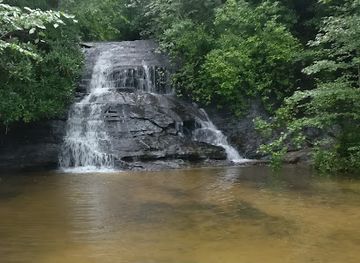
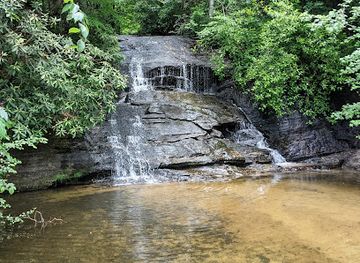
Wildcat Branch Falls
Explore Wildcat Branch Falls, a stunning waterfall in South Carolina, perfect for hiking and soaking in nature's tranquility in a picturesque setting.
-
Tourist attraction
Wildcat Wayside
Discover the enchanting landscapes and hiking trails of Wildcat Wayside, a serene escape in South Carolina's natural beauty.
-
Mountain peak
Caesars Head
Discover the breathtaking views and outdoor adventures at Caesars Head, a mountain peak in South Carolina's stunning Blue Ridge Mountains.
Best landmarks in Caesars Head State Park
Caesars Head itself is the defining natural landmark: a prominent exposed rock formation on the escarpment whose elevated position gives it a commanding outlook over the Piedmont. Raven Cliff Falls is another major feature, where water descends through a forested ravine in a setting shaped by the area's steep topography. The Blue Ridge Escarpment, rather than one isolated summit, forms the larger geological landmark, marked by abrupt changes in elevation, rocky outcrops, narrow valleys and numerous streams. The protected forests and waterways of the Mountain Bridge Wilderness Area are equally significant because they preserve a connected mountain landscape beside the growing Upstate region. Nearby Bald Rock, in a separate heritage preserve, is an additional granite viewpoint associated with the same escarpment scenery, but it should not be described as part of Caesars Head State Park itself.
-
Visitor center
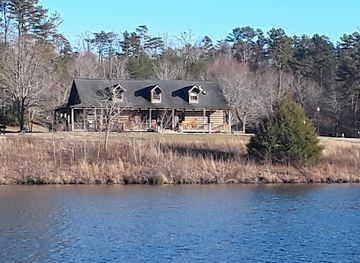
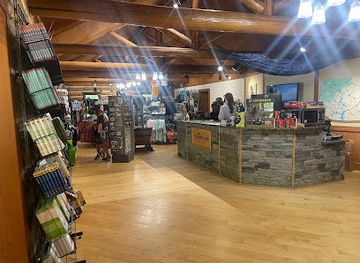
Caesars Head State Park Visitor Center
Explore the breathtaking views and diverse wildlife at Caesars Head State Park Visitor Center, a must-visit destination in South Carolina's scenic Blue Ridge Mountains.
-
Scenic spot
Caesar's Head Overlook
Explore the breathtaking views and serene landscapes at Caesar's Head Overlook, a must-visit destination in South Carolina's scenic Blue Ridge Mountains.
-
Mountain peak
Caesars Head
Discover the breathtaking beauty of Caesars Head in South Carolina; a mountain peak offering stunning views, hiking trails, and unforgettable nature experiences.
-
Historical landmark
Caesar's Head Spring
Explore Caesar's Head Spring, a historical landmark nestled in South Carolina's scenic landscapes, perfect for nature lovers and history enthusiasts alike.
Explore Caesars Head State Park on the map
Plan your trip on one map. See where the top attractions, landmarks, restaurants and hotels are, and book hotels and experiences in a few clicks.
Best hotels in Caesars Head State Park
Best bars in Caesars Head State Park
Evening entertainment around Caesars Head is understated and concentrated outside the park. Cleveland and Travelers Rest offer the most relevant small-town options for a relaxed drink or meal, including established restaurants and local gathering places rather than a concentrated nightlife district. Greenville, beyond the immediate mountain setting, has a much larger choice of bars, breweries, live music and late-evening venues. Within the park and its nearby rural communities, darkness, forest surroundings and early trail starts make quiet evenings more typical than club-oriented nightlife. Seasonal community events and performances may take place in gateway towns, but visitors should check current local listings rather than assume a programme. Alcohol should never be combined with driving on the winding mountain roads, and park rules continue to apply after sunset.
-
Visitor center
Caesars Head State Park Visitor Center
Explore the majestic landscapes and rich wildlife at Caesars Head State Park Visitor Center, your gateway to the Blue Ridge Mountains.
-
Scenic spot
Caesar's Head Overlook
Experience the stunning vistas at Caesar's Head Overlook, a picturesque destination in South Carolina's Blue Ridge Mountains, perfect for outdoor enthusiasts.
-
Coffee shop
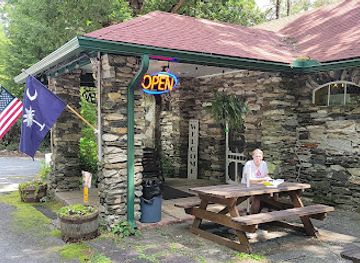
Mountain House At Caesars Head
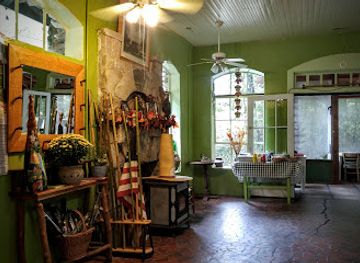
Experience the serene charm of Mountain House At Caesars Head, a perfect coffee escape amidst the beauty of the Blue Ridge Mountains.
-
Mountain peak
Caesars Head
Discover the breathtaking beauty of Caesars Head, a majestic mountain peak in South Carolina, perfect for hiking, picnicking, and enjoying nature's wonders.
Best shops in Caesars Head State Park
Shopping within Caesars Head State Park is limited and focused on visitor necessities rather than retail districts. For provisions, outdoor equipment and everyday supplies, visitors generally use Cleveland, Travelers Rest or Greenville before travelling into the mountains. The wider Upstate offers independent food producers, farm shops, craft businesses, galleries and specialist outdoor retailers, with the greatest concentration in Greenville and larger nearby communities. Regional purchases may include locally produced food, South Carolina-made crafts, artwork and practical hiking equipment, although exact stock and opening arrangements vary. Small rural shops can be useful but should not be relied upon for a full range of supplies, especially outside normal trading periods. Buying local produce where it is legitimately sold supports the surrounding communities while reducing the need to carry unnecessary packaging into a protected landscape.
-
Visitor center
Caesars Head State Park Visitor Center
Explore the natural beauty and adventures at Caesars Head State Park Visitor Center, your gateway to the scenic Blue Ridge Mountains.
-
Scenic spot
Caesar's Head Overlook
Experience breathtaking panoramic views of the Blue Ridge Mountains at Caesar's Head Overlook, a must-visit scenic spot in South Carolina.
-
Coffee shop
Mountain House At Caesars Head
Discover the perfect blend of coffee and nature at Mountain House At Caesars Head, a must-visit destination for coffee lovers in South Carolina.
-
Mountain peak
Caesars Head
Discover the breathtaking views and serene trails of Caesars Head, a premier mountain peak in South Carolina for nature enthusiasts and adventurers alike.
Get your free copy of our complete guide to Caesars Head State Park, delivered straight to you.
Everything on this page, from attractions and restaurants to essentials and local phrases, in one PDF you can read offline, print or share.
Already have an account? Sign in
Your Caesars Head State Park guide is ready.
We'll send it to · Not you? Sign out

Getting your guide ready…
We are putting together a fresh copy of the Caesars Head State Park guide. This can take up to a minute.
This can take a few moments. If your browser asks, choose Allow so the download can start. You'll find the guide in your Downloads folder.
Nothing happened? Download it again
Sorry, the guide is taking longer than usual. Please try again in a minute, or get it by email instead.
Caesars Head State Park essentials
Currency and Payment
Safety
Emergency Situations
Do's and Don'ts
Local Tips
From Eve
Local phrases worth knowing
You don't need to get them perfect. A few words go a long way, and locals appreciate the effort.
Basics
| English | Local | Say it |
|---|---|---|
| Hello | Howdy | [h-ow-dee] |
| Goodbye | See ya | [see-yah] |
| Yes | Yessir | [yes-sir] |
| No | Naw | [n-aw] |
| Please/You're welcome | Please and thank ya | [plee-z and th-ank y-ah] |
| Thank you | Much obliged | [m-uch o-blaiged] |
| Excuse me/Sorry | Pardon me | [p-ah-rd-n m-ee] |
| How are you? | How y'all doin'? | [h-ow y-awl doin] |
| Fine. And you? | Fine as frog hair. And you? | [f-ine as fr-og h-air. And y-ou] |
| Do you speak English? | Y'all speak English? | [y-awl speak ing-lish] |
| I don't understand | I ain't catchin' on | [I a-nt c-atch-in on] |
Eating & Drinking
| English | Local | Say it |
|---|---|---|
| I'd like to see the menu, please | Let me take a gander at the menu, if you please | [let m-e t-ake a g-and-er at the m-enu if y-ou plee-z] |
| I don't eat meat | I don't eat critters | [I d-on-t eat critt-ers] |
| Cheers! | Here's to ya! | [h-ere-s t-oo y-ah] |
| I would like to pay, please | I reckon it's time to settle up, if you don't mind | [I r-ekk-on its t-ime t-o s-ettle up if y-ou d-ont m-ind] |
Emergencies
| English | Local | Say it |
|---|---|---|
| Help! | Lord have mercy! | [l-ord h-ave m-er-cy] |
| Go away! | Git! | [g-it] |
| Call the Police! | Get the law! | [g-et the law] |
| Call a doctor! | Fetch a healer! | [f-etch a h-eal-er] |
| I'm lost | Done gone and lost | [d-one g-one and l-ost] |
| I'm ill | Feelin' poorly | [f-eel-in p-oor-ly] |
Shopping
| English | Local | Say it |
|---|---|---|
| I'd like to buy... | I reckon I'll take... | [I r-ekk-on I'll t-ake] |
| I'm just looking | Just browsin' | [j-ust br-ow-sin] |
| How much is it? | How much for it? | [h-ow m-uch f-or it] |
| That's too expensive | That's a mite pricey | [th-ats a m-ite pr-ice-y] |
| Can you lower the price? | Can you do better on the price? | [c-an y-ou d-o b-ett-er on the pr-ice] |
Time & Numbers
| English | Local | Say it |
|---|---|---|
| What time is it? | What's the hour? | [wh-ats the h-our] |
| It's one o'clock | It's one of the clock | [its one of the cl-ock] |
| Half past (10) | Halfway to (10) | [halfway to (10)] |
| Morning | Mornin' | [m-orn-in] |
| Afternoon | Afternoon | [aftern-oon] |
| Evening | Evenin' | [ev-en-in] |
| Yesterday | Yest'day | [y-est-d-ay] |
| Today | Today | [t-oday] |
| Tomorrow | Tomorrer | [t-om-orr-er] |
| 1 | One | [w-un] |
| 2 | Two | [t-oo] |
| 3 | Three | [thr-ee] |
| 4 | Four | [f-our] |
| 5 | Five | [f-ive] |
| 6 | Six | [s-ix] |
| 7 | Seven | [s-ev-en] |
| 8 | Eight | [ai-t] |
| 9 | Nine | [n-ine] |
| 10 | Ten | [t-en] |
Transport & Directions
| English | Local | Say it |
|---|---|---|
| Where's a/the...? | Where's the... | [wh-eres the] |
| What's the address? | Where's it at? | [wh-eres it at] |
| Can you show me (on the map)? | Can you point me in the right direction? | [c-an y-ou p-oint m-e in the r-ight d-irection] |
| When's the next (bus)? | When's the next ride? | [wh-ens the n-ext r-ide] |
| A ticket (to ....) | A ride (to ....) | [a r-ide to] |
History of Caesars Head State Park
Geology of the Blue Ridge Escarpment
Caesars Head stands on the Blue Ridge Escarpment, a major geological transition where the higher Southern Blue Ridge meets the lower Piedmont. Its exposed rock, steep slopes and deeply cut stream valleys reflect the long erosion of ancient mountain rocks rather than a recent volcanic or glacial event. Water moving through the escarpment helped create the falls and ravines that now define the area's scenery. This physical setting shaped later settlement, transport and conservation, since the slopes were more difficult to cultivate and cross than the gentler country below.
Cherokee Country and Early Settlement
Before the creation of modern state parks, the wider Upstate landscape was part of the homeland and travel territory of the Cherokee. European-American settlement expanded in the surrounding region during the eighteenth and nineteenth centuries, with farms, roads and small communities developing below and around the mountains. The name Caesars Head is commonly linked to a local resemblance between the prominent rock formation and the profile of Julius Caesar, although its exact naming story is presented in varying forms. The escarpment's streams, forests and upland clearings remained closely connected to agriculture and rural livelihoods.
Timber, Farms and Mountain Roads
During the nineteenth and early twentieth centuries, the mountains around Caesars Head were used for farming, hunting, timber and other small-scale rural activities. Steep terrain limited intensive agriculture, while streams and ridges influenced the routes connecting communities on the plateau and in the foothills. Improved roads eventually made the overlooks more accessible to visitors from the Upstate. As motor travel expanded, scenic appreciation began to complement the area's older working landscape, helping establish the escarpment as a destination for day visits and outdoor recreation.
State Park Protection
South Carolina's state-park system gradually secured important mountain landscapes for public recreation and conservation, including Caesars Head and the neighbouring Jones Gap area. The two parks are linked through the Mountain Bridge Wilderness Area, where forest, streams and steep terrain are managed as a connected landscape rather than as isolated viewpoints. This approach protects watersheds and habitats while allowing carefully managed hiking and scenic access. Park facilities and trails reflect the modern balance between public enjoyment and the need to limit disturbance in a rugged environment.
A Conservation Landscape Today
Caesars Head is now part of a broader protected network in the South Carolina mountains, with state management, adjacent conservation lands and nearby heritage preserves contributing to the area's ecological importance. Recreation has grown around hiking, waterfalls, birdwatching, photography and seasonal scenery, but the landscape remains vulnerable to erosion, storm damage and visitor pressure. Contemporary management therefore emphasises designated routes, responsible access and protection of streams, forests and wildlife. The park's significance lies not only in its overlook but also in preserving a substantial section of the Blue Ridge Escarpment for future visitors.
Caesars Head State Park in Photos
Browse through our photo collection highlighting the charm and character of the destination.
Neighbouring destination travel guides
The closest destinations to Caesars Head State Park, if you have time for more than one.
-

-

-
 Blue Ridge Parkway
 in Virginia links mountain overlooks, historic farms, forest trails and gateway towns, revealing Appalachian landscapes and heritage.
Blue Ridge Parkway
Blue Ridge Parkway in Virginia links mountain overlooks, historic farms, forest trails and gateway towns, revealing Appalachian landscapes and heritage.
-

-


Swipe for more destinations
Explore more

Explore more of Blue Ridge Mountains
Explore South Carolina’s Blue Ridge Mountains for waterfalls, forest trails, lakes, Cherokee heritage, mountain towns and Appalachian scenery.
Explore Blue Ridge Mountains
Explore more of South Carolina
Explore South Carolina: A blend of historic charm, natural beauty, and southern hospitality. From Charleston's cobblestone streets to Myrtle Beach's sandy shores, adventure awaits.
Explore South Carolina