

Free Andalusia Travel Guide & Mobile App
Explore Andalusia with free travel guides. Discover regional history, expert tips, proposed trips, and audio guides on web or mobile app.


Explore Andalusia for Moorish architecture, flamenco, olive groves, Atlantic beaches, mountain villages and distinctive southern Spanish cuisine.
Read more about Andalusia
When is the best time to visit Andalusia?
Best: April–May, October · 23–27°C| Month | High (°C) | Rainfall (mm) |
|---|---|---|
| January | 15 | 70 |
| February | 17 | 60 |
| March | 20 | 50 |
| April (best) | 23 | 40 |
| May (best) | 27 | 20 |
| June | 32 | 10 |
| July | 36 | 5 |
| August | 36 | 10 |
| September | 32 | 20 |
| October (best) | 25 | 40 |
| November | 19 | 50 |
| December | 16 | 60 |
Getting to and around Andalusia
How to get there
Transportation
Top city travel guides in Andalusia
The cities of Andalusia, and the easiest places to base yourself.
-

-

-

-

-

-


Swipe for more cities
Destinations in Andalusia
Resorts, valleys and scenic spots worth a trip of their own.
-

-

-

-

-

-


Swipe for more destinations
Best attractions in Andalusia
Andalusia’s attractions range from major Islamic, Roman and Christian monuments to beaches, wetlands, mountain landscapes and living cultural traditions. The Alhambra and Generalife in Granada, the Mezquita-Catedral in Córdoba and Seville’s cathedral and Royal Alcázar reward detailed visits, while Italica near Seville offers an important Roman perspective. Historic towns such as Úbeda, Baeza, Ronda, Carmona and Antequera broaden the architectural picture beyond the major capitals. Outdoor experiences include hiking in Sierra Nevada, the Sierra de Grazalema and the Alpujarras, birdwatching in the wetlands of Doñana and coastal exploration along the Costa de la Luz and the Cabo de Gata-Níjar area. Málaga’s museums, Cádiz’s maritime setting, the sherry cellars around Jerez and flamenco performances in Seville, Jerez and Granada add cultural depth. The region is best approached as a collection of contrasting districts rather than a single sightseeing circuit, since distances between Atlantic marshes, inland olive country, high mountains and Mediterranean coves can be considerable.
-
Tourist attraction
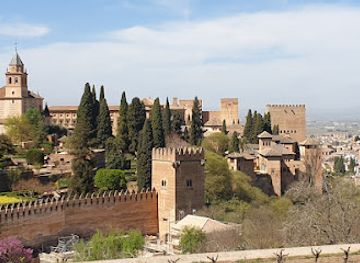
Alhambra
Explore the Alhambra, a breathtaking fortress and palace in Granada, Spain, showcasing stunning Islamic architecture and lush gardens.
-
Tourist attraction
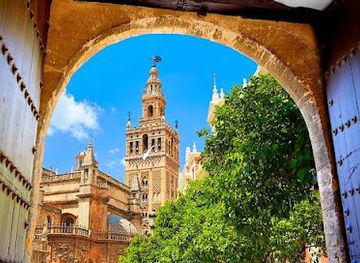
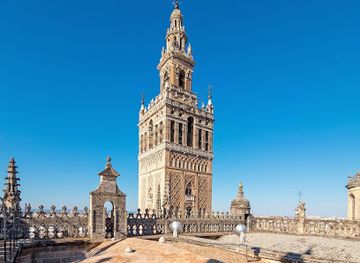
La Giralda
Discover the breathtaking La Giralda in Seville, a stunning bell tower rich in history and architectural splendor, offering panoramic views of the city.
-
Hiking area
Caminito del Rey . North Access
Experience the breathtaking beauty of Caminito del Rey, a thrilling hiking adventure in Málaga, Spain, surrounded by stunning landscapes and rich history.
-
Tourist attraction
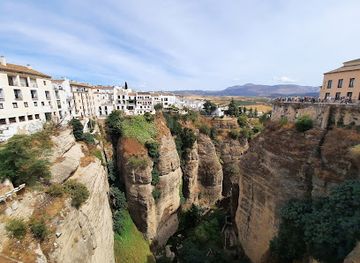
Centro de Interpretación del Puente Nuevo
Explore the historical wonders of Ronda at the Centro de Interpretación del Puente Nuevo, where architecture and culture come alive.


Best landmarks in Andalusia
The Alhambra and Generalife above Granada are Andalusia’s most recognisable architectural symbols, their courtyards, gardens and water channels representing the sophistication of the Nasrid court. In Córdoba, the forest of red-and-white arches inside the Mezquita-Catedral and the surviving Roman Bridge across the Guadalquivir express the city’s layered history. Seville’s Giralda, originally the minaret of the Almohad mosque, rises beside the cathedral, while the Royal Alcázar preserves successive Islamic, Mudéjar and Christian building campaigns. Antequera’s massive prehistoric dolmens provide an older landmark tradition, and the nearby Peña de los Enamorados gives the surrounding landscape a distinctive profile. Ronda’s Puente Nuevo spans the El Tajo gorge, linking the historic city with dramatic mountain scenery. Along the Atlantic, Cádiz’s sea-facing fortifications and compact peninsula reflect centuries of maritime defence, while the hill towns of the Alpujarras and the dry volcanic landscapes of Cabo de Gata-Níjar show how strongly Andalusian landmarks can be geographical as well as architectural.
-
Historical landmark
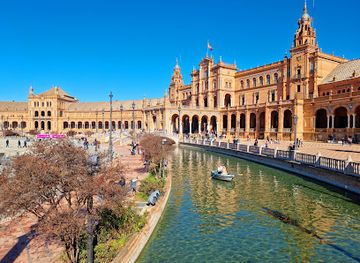
Plaza de España
Experience the breathtaking beauty of Plaza de España, an iconic landmark in Seville showcasing exquisite architecture and rich Spanish heritage.
-
Tourist attraction
Alhambra
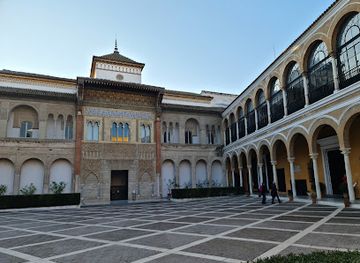
Explore the Alhambra in Granada, a breathtaking UNESCO World Heritage Site showcasing Moorish architecture and lush gardens, perfect for history enthusiasts.
-
Castle
Royal Alcázar of Seville
Discover the Royal Alcázar of Seville: a stunning blend of history, culture, and breathtaking gardens in the heart of Andalusia.
-
Tourist attraction
La Giralda
Explore La Giralda, Seville's iconic bell tower, a stunning blend of Moorish and Gothic architecture offering breathtaking views and rich history.
Explore Andalusia on the map
Plan your trip on one map. See where the top cities, national parks and sights are, and book hotels and experiences in a few clicks.
Best hotels in Andalusia
Best restaurants in Andalusia
Andalusian food is built around olive oil, seasonal vegetables, preserved meats, seafood and simple dishes adapted to a hot climate. Córdoba is associated with salmorejo, a thick chilled tomato soup, while Seville and Málaga offer varied tapas traditions and the Atlantic provinces are known for pescaíto frito, shellfish and other seafood. Jamón and cured meats are prominent in mountain areas, especially around the Sierra de Aracena and other upland districts, while the provinces of Jaén and Córdoba produce internationally important olive oils. Jerez and the surrounding Marco de Jerez are known for sherry and related fortified wines, and Cádiz has a strong tradition of fish, shellfish and salt-marsh produce. Dining ranges from busy market counters and neighbourhood bars to rural ventas, family-run restaurants and sophisticated kitchens in the larger cities. Meal times are often late, and regional menus may include gazpacho, aubergines, stews, local cheeses, almond sweets and seasonal fruit.
-
Spanish
La Auténtica Carmela
Discover the essence of Spanish cuisine at La Auténtica Carmela - where tradition meets innovation in every dish.
-
Moroccan
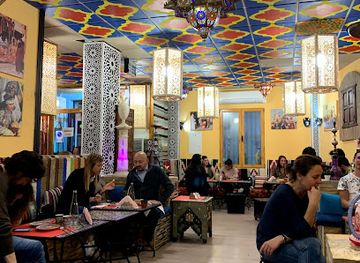
Restaurante Palacio Andaluz Almona
Experience authentic Moroccan flavors at Restaurante Palacio Andaluz Almona in Granada, featuring delightful vegan and vegetarian options amidst charming decor.
-
Health Food
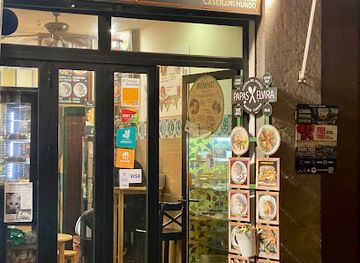
Papas Elvira
Discover Papas Elvira: Granada's top spot for healthy Mediterranean meals, catering to all dietary preferences including vegan and halal.
-
Restaurant
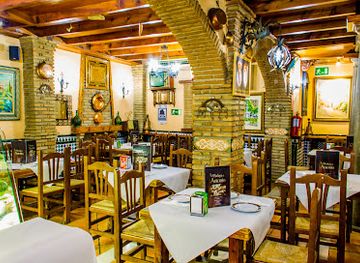
La Bodega de Antonio
Experience authentic Spanish cuisine at La Bodega de Antonio in Granada - where delicious tapas meet vibrant local culture.
Best bars in Andalusia
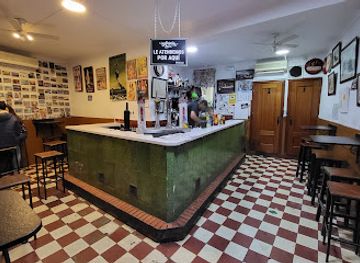
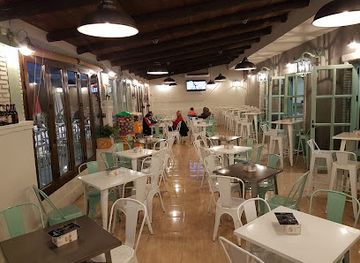
Evening life in Andalusia is usually organised around plazas, tapas bars, cafés, restaurants and traditional pubs rather than a single uniform club scene. Seville has the broadest choice of late-night neighbourhoods and live cultural venues, while Málaga combines old-town bars, contemporary cocktail spots and a substantial cultural programme. Cádiz is known for a sociable evening atmosphere shaped by its compact historic centre, and Granada’s student population supports a large range of inexpensive bars and music venues. Jerez places greater emphasis on sherry bars, flamenco and equestrian culture, while smaller inland towns tend to centre their nights on local bars and open-air terraces. The Costa del Sol has the region’s most internationally oriented resort nightlife, including clubs that operate seasonally. In rural Andalusia, evenings are generally quieter, with conversation, food, local wine and occasional live music more important than large nightclubs.
-
Bistro
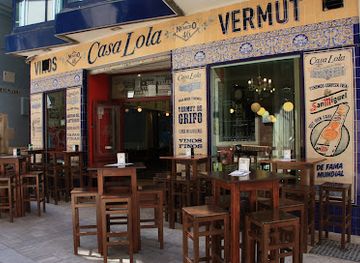
Casa Lola
Discover Casa Lola: A vibrant bistro in Málaga offering a delicious selection of traditional tapas in a warm, welcoming atmosphere.
-
Restaurant
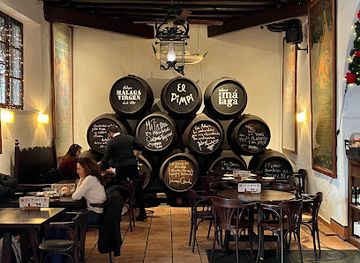
El Pimpi
Experience the essence of Andalusian cuisine and culture at El Pimpi in Málaga, where tradition meets vibrant dining.
-
Tapas Bar
El Lechuguita
Discover the authentic taste of Andalusia at El Lechuguita, Ronda's cherished tapas bar, where every dish is a celebration of Spanish flavors.
-
Tapas Bar
Bar D'TAPAS CHURRIANA
Savor the essence of Spain at Bar D'TAPAS CHURRIANA, a vibrant tapas bar in Churriana de la Vega offering authentic dishes at affordable prices.
Best nightclubs in Andalusia
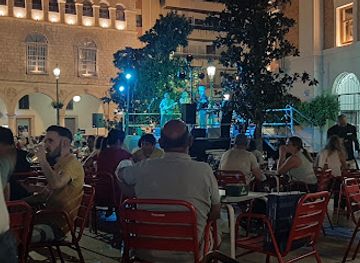
Evening life in Andalusia is usually organised around plazas, tapas bars, cafés, restaurants and traditional pubs rather than a single uniform club scene. Seville has the broadest choice of late-night neighbourhoods and live cultural venues, while Málaga combines old-town bars, contemporary cocktail spots and a substantial cultural programme. Cádiz is known for a sociable evening atmosphere shaped by its compact historic centre, and Granada’s student population supports a large range of inexpensive bars and music venues. Jerez places greater emphasis on sherry bars, flamenco and equestrian culture, while smaller inland towns tend to centre their nights on local bars and open-air terraces. The Costa del Sol has the region’s most internationally oriented resort nightlife, including clubs that operate seasonally. In rural Andalusia, evenings are generally quieter, with conversation, food, local wine and occasional live music more important than large nightclubs.
-
Disco club
Mae West Granada
Experience the vibrant nightlife of Granada at Mae West, the premier disco club with diverse music and an electrifying atmosphere.
-
Disco club
Eliete Siston
Experience the vibrant nightlife of Granada at Eliete Siston, where every night is a celebration of music, dance, and culture.
-
Disco club
Premium Black
Discover the dynamic nightlife at Premium Black, Almería's premier disco club, known for its electrifying atmosphere and diverse music scene.
-
Bar
Bar Dean
Discover Bar Dean in Jaén, where lively tapas, music, and a welcoming atmosphere create unforgettable memories.



Best shops in Andalusia
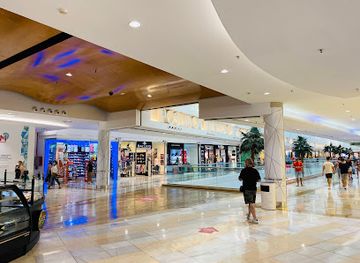
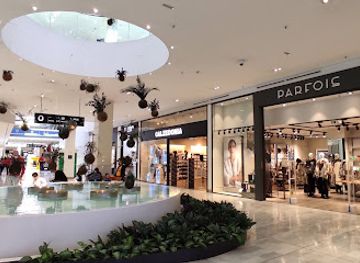
Shopping in Andalusia varies from substantial city high streets to weekly markets and small specialist businesses in rural towns. Seville is particularly associated with ceramics, azulejos, leather goods and flamenco-related products, while Granada offers local crafts, textiles and goods influenced by its long connection with North African and Islamic design. Córdoba has workshops and shops selling leather, silverwork and traditional decorative pieces, and Cádiz and Málaga have strong food markets alongside contemporary boutiques. In smaller towns, look for locally produced olive oil, sherry, cured meats, cheeses, preserves, almonds and regional sweets rather than generic souvenirs. The Jaén and Córdoba olive-growing districts are good places to compare oils by variety and harvest, while villages in the Alpujarras and other mountain areas may sell woven textiles and handmade ceramics. Market days differ by municipality, so check locally before making a special journey, and buy protected archaeological or historic materials only through legitimate retailers.
-
Shopping mall
La Cañada Shopping
Discover La Cañada Shopping in Marbella for a perfect blend of retail, dining, and entertainment in the heart of Costa del Sol.
-
Shopping mall
La Cañada Shopping Center
Discover La Cañada Shopping Center in Marbella, where shopping, dining, and entertainment come together in a vibrant atmosphere.
-
Shopping mall
Miramar Centro Comercial
Discover shopping, dining, and entertainment at Miramar Centro Comercial in Fuengirola, the ultimate destination for tourists and locals alike.
-
Shopping mall
Centro Comercial Los Arcos
Discover shopping, dining, and entertainment at Centro Comercial Los Arcos, Seville's vibrant shopping hub offering something for everyone.

Get your free copy of our complete guide to Andalusia, delivered straight to you.
Everything on this page, from attractions and restaurants to essentials and local phrases, in one PDF you can read offline, print or share.
Already have an account? Sign in
Your Andalusia guide is ready.
We'll send it to · Not you? Sign out

Getting your guide ready…
We are putting together a fresh copy of the Andalusia guide. This can take up to a minute.
This can take a few moments. If your browser asks, choose Allow so the download can start. You'll find the guide in your Downloads folder.
Nothing happened? Download it again
Sorry, the guide is taking longer than usual. Please try again in a minute, or get it by email instead.
Andalusia essentials
Currency and Payment
Safety
Emergency Situations
Do's and Don'ts
Local Tips
From Eve
Local phrases worth knowing
You don't need to get them perfect. A few words go a long way, and locals appreciate the effort.
Basics
| English | Local | Say it |
|---|---|---|
| Hello | Hola | [Ola] |
| Goodbye | Adiós | [Adios] |
| Yes | Sí | [Si] |
| No | No | [No] |
| Please/You're welcome | Por favor | [Por favor] |
| Thank you | Gracias | [Grathias] |
| Excuse me/Sorry | Perdón | [Perdon] |
| How are you? | ¿Cómo estás? | [Como estas] |
| Fine. And you? | Bien. ¿Y tú? | [Bien. I tu] |
| Do you speak English? | ¿Hablas inglés? | [Hablas ingles] |
| I don't understand | No entiendo | [No entiendo] |
Eating & Drinking
| English | Local | Say it |
|---|---|---|
| I'd like to see the menu, please | Me gustaría ver el menú, por favor | [Me gustaria ver el menu, por favor] |
| I don't eat meat | No como carne | [No como carne] |
| Cheers! | ¡Salud! | [Salud] |
| I would like to pay, please | Me gustaría pagar, por favor | [Me gustaria pagar, por favor] |
Emergencies
| English | Local | Say it |
|---|---|---|
| Help! | ¡Ayuda! | [Ayuda] |
| Go away! | ¡Vete! | [Vete] |
| Call the Police! | ¡Llama a la policía! | [Llama a la policia] |
| Call a doctor! | ¡Llama a un doctor! | [Llama a un doctor] |
| I'm lost | Estoy perdido | [Estoy perdido] |
| I'm ill | Estoy enfermo | [Estoy enfermo] |
Shopping
| English | Local | Say it |
|---|---|---|
| I'd like to buy... | Me gustaría comprar... | [Me gustaria comprar] |
| I'm just looking | Solo estoy mirando | [Solo estoy mirando] |
| How much is it? | ¿Cuánto cuesta? | [Cuanto cuesta] |
| That's too expensive | Eso es demasiado caro | [Eso es demasiado caro] |
| Can you lower the price? | ¿Puedes rebajar el precio? | [Puedes rebajar el precio] |
Time & Numbers
| English | Local | Say it |
|---|---|---|
| What time is it? | ¿Qué hora es? | [Que hora es] |
| It's one o'clock | Es la una | [Es la una] |
| Half past (10) | Y media (10) | [Y media] |
| Morning | Mañana | [Mañana] |
| Afternoon | Tarde | [Tarde] |
| Evening | Noche | [Noche] |
| Yesterday | Ayer | [Ayer] |
| Today | Hoy | [Hoy] |
| Tomorrow | Mañana | [Mañana] |
| 1 | Uno | [Uno] |
| 2 | Dos | [Dos] |
| 3 | Tres | [Tres] |
| 4 | Cuatro | [Cuatro] |
| 5 | Cinco | [Cinco] |
| 6 | Seis | [Seis] |
| 7 | Siete | [Siete] |
| 8 | Ocho | [Ocho] |
| 9 | Nueve | [Nueve] |
| 10 | Diez | [Diez] |
Transport & Directions
| English | Local | Say it |
|---|---|---|
| Where's a/the...? | ¿Dónde está un/una...? | [Donde esta un/una] |
| What's the address? | ¿Cuál es la dirección? | [Cual es la direccion] |
| Can you show me (on the map)? | ¿Puedes mostrarme (en el mapa)? | [Puedes mostrarme en el mapa] |
| When's the next (bus)? | ¿Cuándo es el próximo (autobús)? | [Cuando es el proximo autobus] |
| A ticket (to ....) | Un billete (a ...) | [Un billete a] |
History of Andalusia
Prehistoric Settlements and Tartessos
Andalusia contains some of Iberia’s most important prehistoric evidence, including megalithic monuments around Antequera and cave art in several mountain districts. From the first millennium BCE, the lower Guadalquivir and Atlantic coast supported the culture often associated with Tartessos, whose wealth was linked to agriculture, metals and long-distance exchange. Phoenician communities established coastal trading settlements, while later Carthaginian influence connected southern Iberia with the wider western Mediterranean. These early networks helped make Andalusia a long-standing meeting point between Atlantic and Mediterranean worlds.
Roman Baetica
Rome incorporated southern Iberia into its province of Baetica, administered from Córdoba and enriched by olive oil, wine, minerals and agricultural production. Cities such as Hispalis, the Roman Seville, and Italica near Santiponce developed roads, theatres, baths and monumental public buildings. The province produced major figures including the emperors Trajan and Hadrian, who were born at Italica. Roman bridges, roads, aqueducts and archaeological remains still form part of the historic fabric of Córdoba, Seville, Cádiz and other Andalusian settlements.
Al-Andalus and the Caliphate of Córdoba
Following the Umayyad conquest of most of Iberia in the eighth century, southern Spain became the core of Al-Andalus. Córdoba grew into the capital of the independent emirate and later caliphate, whose authority reached across much of the peninsula. The Great Mosque of Córdoba, begun in the eighth century and repeatedly enlarged, expressed the city’s political and religious importance. Irrigation, scholarship, crafts and urban administration also developed substantially, leaving enduring influences on Andalusian architecture, agriculture, language and place names.
The Taifa Kingdoms and Nasrid Granada
After the caliphate fragmented in the eleventh century, Andalusia was divided among smaller taifa kingdoms, including Seville, Granada and Almería. These courts supported poetry, science and architecture but were also drawn into conflict with one another and with Christian kingdoms to the north. Granada later became the centre of the Nasrid dynasty, which ruled a reduced Muslim kingdom from the thirteenth century until 1492. The Alhambra and Generalife preserve the courtly culture, hydraulic engineering and decorative arts of this final Muslim polity in Iberia.
The Christian Conquest and Mudéjar Heritage
Christian expansion transformed Andalusia between the thirteenth and fifteenth centuries. Córdoba fell in 1236, Seville in 1248 and Granada in 1492, when the Catholic Monarchs took the Nasrid capital. Mosques were converted or replaced by churches, castles and new civic institutions, while Muslim and Jewish communities continued to shape building methods, crafts and agriculture for varying periods. Mudéjar architecture, combining Christian patronage with Islamic artistic techniques, remains visible in towers, palaces, churches and domestic buildings throughout the region.
Seville, Cádiz and the Atlantic Empire
After the voyages of Columbus, Seville gained control of Spanish trade with the Americas through the Casa de la Contratación, established in 1503. The Guadalquivir connected the city to the Atlantic, although silting gradually increased the importance of Cádiz, which later became the principal port for transatlantic commerce. Wealth from imperial trade supported churches, palaces and charitable foundations, while also depending on colonial exploitation and forced labour. This maritime era helped shape the architectural and commercial character of both cities.
Agrarian Society, Industry and Modern Andalusia
For much of the nineteenth and twentieth centuries, Andalusia remained marked by large estates, seasonal agricultural labour and pronounced rural inequality, alongside mining around Huelva and Almería and industrial activity in Málaga and other ports. Civil War and dictatorship brought disruption, migration and economic change. From the later twentieth century, tourism, services, intensive agriculture and improved transport transformed the region, while the 1978 Spanish Constitution established autonomous communities and Andalusia gained its present autonomous status in 1982. Its modern identity combines older rural and maritime traditions with major urban and cultural centres.
Andalusia in Photos
Browse through our photo collection highlighting the charm and character of the destination.
Neighbouring regions of Andalusia
The closest regions to Andalusia, if you have time for more than one.
-

-

-

-
-


Swipe for more regions
Explore more

Explore more of Spain
Discover Spain: A vibrant tapestry of culture, history, and breathtaking landscapes, where every city offers a unique adventure and unforgettable experiences.
Explore Spain