

Free Castile-La Mancha Travel Guide & Mobile App
Explore Castile-La Mancha with free travel guides. Discover regional history, expert tips, proposed trips, and audio guides on web or mobile app.


Explore Castile-La Mancha for Toledo and Cuenca, Don Quixote landscapes, vineyards, historic towns, wildlife wetlands and regional cuisine.
Read more about Castile-La Mancha
When is the best time to visit Castile-La Mancha?
Best: May, September–October · 24–30°C| Month | High (°C) | Rainfall (mm) |
|---|---|---|
| January | 13 | 30 |
| February | 15 | 30 |
| March | 18 | 35 |
| April | 21 | 40 |
| May (best) | 25 | 35 |
| June | 31 | 25 |
| July | 35 | 10 |
| August | 34 | 10 |
| September (best) | 30 | 25 |
| October (best) | 24 | 35 |
| November | 17 | 35 |
| December | 13 | 30 |
Getting to and around Castile-La Mancha
How to get there
Transportation
Top city travel guides in Castile-La Mancha
The cities of Castile-La Mancha, and the easiest places to base yourself.
-

-

-

-

-
-


Swipe for more cities
Destinations in Castile-La Mancha
Resorts, valleys and scenic spots worth a trip of their own.
-

-

-

-


Swipe for more destinations
Best attractions in Castile-La Mancha
Castile-La Mancha's attractions range from dense historic cities to wide, lightly settled landscapes. Toledo offers an exceptional concentration of Christian, Jewish and Islamic heritage, including the cathedral, synagogues, mosques and fortified viewpoints above the Tagus. Cuenca combines its medieval old town with river gorges and the remarkable Museo de Arte Abstracto Español in the Casas Colgadas. Elsewhere, visitors can explore the Roman theatre and amphitheatre at Segóbriga, the medieval streets and theatre tradition of Almagro, and the hilltop windmills associated with Cervantes at Consuegra and Campo de Criptana. Nature is equally important: Cabañeros National Park protects Mediterranean woodland and open montes, while the Tablas de Daimiel and Lagunas de Ruidera provide wetlands, lagoons and birdwatching. The archaeological site of Motilla del Azuer, the mining heritage of Almadén and the castle country of Guadalajara add further variety. Wine routes, cycling, walking and rural food experiences connect these places, but distances between them mean that touring by area is more rewarding than attempting a single circuit.
-
Catholic cathedral
Santa Iglesia Catedral Primada de Toledo
Experience the grandeur of the Santa Iglesia Catedral Primada de Toledo, a stunning masterpiece of Gothic architecture and a symbol of Spain's rich cultural heritage.
-
Zoo
Zoo Aquarium de Madrid
Explore the enchanting Zoo Aquarium de Madrid, a wildlife haven featuring diverse species and captivating marine life in a beautiful natural setting.
-
Amusement park
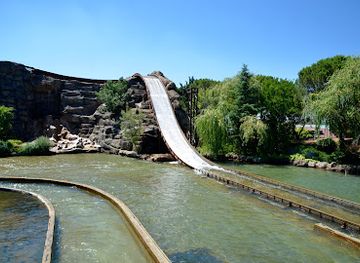
Parque de Atracciones de Madrid
Experience the thrills and spills of Parque de Atracciones de Madrid, where adventure and fun await for the entire family!
-
Historical landmark
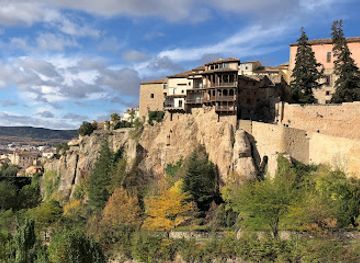
Casas Colgadas de Cuenca
Discover the breathtaking architecture of the Casas Colgadas de Cuenca, Spain's iconic hanging houses overlooking the stunning Huécar River.
Best landmarks in Castile-La Mancha
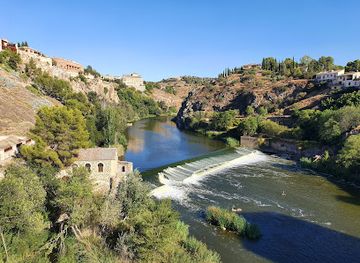
Toledo's skyline and fortified position above the Tagus are Castile-La Mancha's most recognisable architectural symbols. Its cathedral dominates the old city, while the Puerta de Bisagra, Alcázar and surviving medieval religious buildings express successive layers of power and belief. Cuenca's Casas Colgadas cling to the gorge edge above the Huécar, and the city's cathedral and stone bridge reinforce its dramatic setting. In the plains, the white windmills of Consuegra stand along the Cerro Calderico beside a medieval castle, creating one of the clearest visual associations with Don Quixote; the windmills of Campo de Criptana form another important group. The Roman theatre and amphitheatre at Segóbriga mark the region's ancient imperial past, while Almagro's Corral de Comedias is a rare surviving example of an early modern Spanish theatre. Further west, Almadén's mining complex records centuries of mercury extraction, and the landscape landmarks of the Tablas de Daimiel and Lagunas de Ruidera show how waterways and wetlands interrupt the otherwise expansive plateau.
-
Plaza
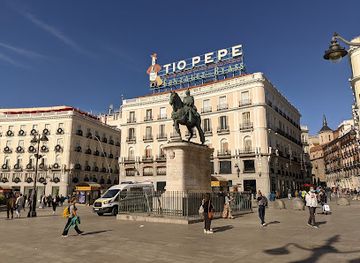
Puerta del Sol
Experience the vibrant heart of Madrid at Puerta del Sol, a historical plaza rich in culture, iconic landmarks, and lively atmosphere.
-
Castle
Alcázar de Segovia
Experience the enchanting history and breathtaking views at the Alcázar de Segovia, one of Spain's most iconic medieval castles.
-
Monument
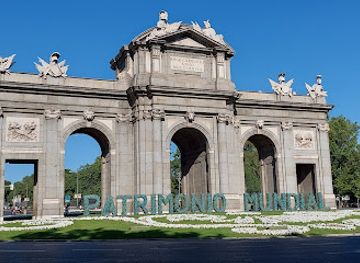
Puerta de Alcalá
Discover the grandeur of the Puerta de Alcalá, a neoclassical monument in Madrid symbolizing history and culture.
-
Memorial
Cibeles Fountain
Discover the iconic Cibeles Fountain in Madrid, a stunning neoclassical masterpiece and cultural symbol of the city, surrounded by vibrant plazas and historical landmarks.

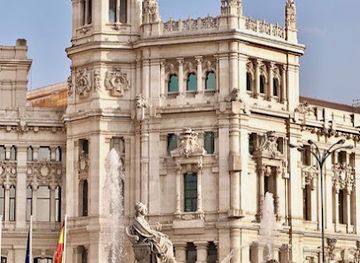
Explore Castile-La Mancha on the map
Plan your trip on one map. See where the top cities, national parks and sights are, and book hotels and experiences in a few clicks.
Best hotels in Castile-La Mancha
Best restaurants in Castile-La Mancha
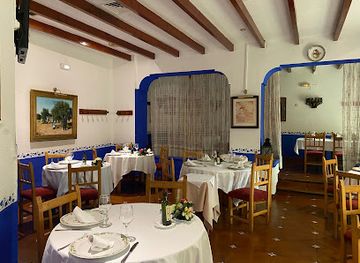
The region's cooking reflects cereal farming, sheep husbandry, vineyards, olive groves and a demanding inland climate. Manchego cheese is the best-known speciality, and is commonly served with bread, preserves or regional wine. Pisto combines Mediterranean vegetables, while migas, often made with bread and accompanied by pork or grapes, belongs to the hearty rural tradition. Gazpacho manchego is a substantial dish based on flatbread and game or poultry, distinct from the cold tomato soup associated with Andalusia; ajoarriero is particularly linked with the cuisine of Cuenca. Almagro aubergines, La Mancha saffron, olive oil and local wines make useful food souvenirs. Toledo and Cuenca have the broadest choice of restaurants, while Almagro, Sigüenza and smaller wine-country towns offer traditional dining in historic settings. Expect substantial menus in rural inns and family restaurants, alongside contemporary cooking that reworks regional ingredients. In summer, terrace dining is common, but meal times generally follow Spain's later national pattern.
-
Tapas Bar
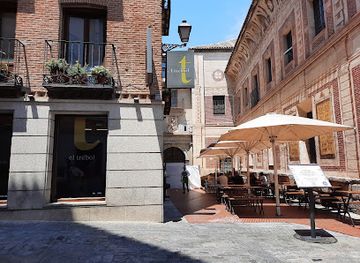
El Trébol
Discover El Trébol: A top-rated tapas bar in Toledo offering authentic flavors and vibrant ambiance for an unforgettable culinary journey.
-
Restaurant
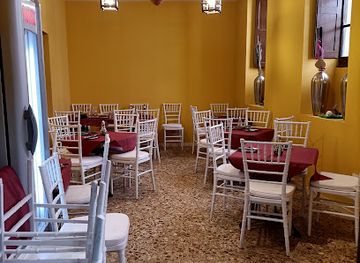
Taberna Skala
Experience authentic Mediterranean cuisine at Taberna Skala in Toledo - where traditional flavors meet warm hospitality.
-
Restaurant
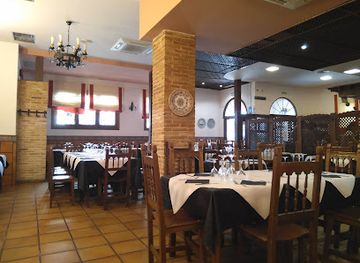
Restaurante Museo de Productos de Castilla-La Mancha
Discover authentic Spanish cuisine at Restaurante Museo de Productos de Castilla-La Mancha in Toledo - where tradition meets flavor.
-
Restaurant
Restaurante Nuestro Bar.
Experience authentic Spanish flavors at Restaurante Nuestro Bar in Albacete - a culinary gem that delights with every bite.
Best bars in Castile-La Mancha
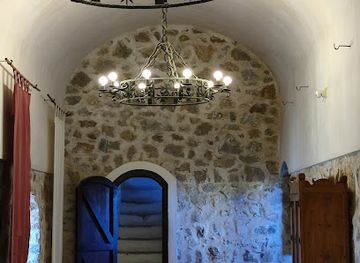
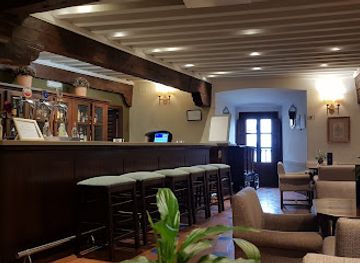
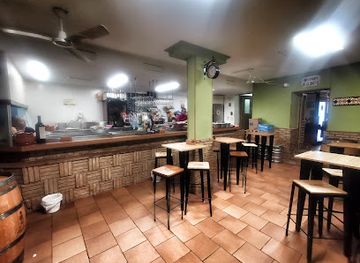
Evening life in Castile-La Mancha is centred more on cafés, tapas bars, traditional taverns and restaurant terraces than on a large club scene. Toledo and Albacete have the widest choice, with late-opening bars, music venues and younger nightlife concentrated in their central areas. Cuenca offers a smaller but sociable evening scene around the old town and lower city, while Ciudad Real and Guadalajara provide provincial-city bars, cafés and occasional live music. In Almagro and other historic towns, cultural events can animate plazas and theatre surroundings, particularly during the summer festival period, although programmes vary by year. Rural nightlife usually means a local bar, village fiestas at certain times of year, or a long meal rather than a dedicated nightclub. Wine bars and cellar visits are increasingly visible in La Mancha, but visitors should arrange transport carefully when tasting outside towns. Opening patterns are seasonal and changeable, so local listings are more reliable than assuming every venue operates nightly.
-
 Restaurant
Parador de Toledo
Experience the rich flavors of Spain at Parador de Toledo, where exquisite cuisine meets stunning views of the historic cityscape.
-
Castle
Castillo de Consuegra
Discover the historic Castillo de Consuegra, where stunning views meet rich cultural heritage in the heart of La Mancha.
-
Castle
Castillo de Oropesa
Explore the enchanting Castillo de Oropesa, a historic castle in Toledo, showcasing breathtaking architecture and stunning panoramic views.
-
Restaurant
Taberna Skala
Experience the vibrant flavors of Mediterranean cuisine at Taberna Skala, Toledo's top tapas destination.
Best nightclubs in Castile-La Mancha
Evening life in Castile-La Mancha is centred more on cafés, tapas bars, traditional taverns and restaurant terraces than on a large club scene. Toledo and Albacete have the widest choice, with late-opening bars, music venues and younger nightlife concentrated in their central areas. Cuenca offers a smaller but sociable evening scene around the old town and lower city, while Ciudad Real and Guadalajara provide provincial-city bars, cafés and occasional live music. In Almagro and other historic towns, cultural events can animate plazas and theatre surroundings, particularly during the summer festival period, although programmes vary by year. Rural nightlife usually means a local bar, village fiestas at certain times of year, or a long meal rather than a dedicated nightclub. Wine bars and cellar visits are increasingly visible in La Mancha, but visitors should arrange transport carefully when tasting outside towns. Opening patterns are seasonal and changeable, so local listings are more reliable than assuming every venue operates nightly.
-
Disco club
Cuenca Club
Dance the night away at Cuenca Club, Madrid's vibrant disco club where music and excitement come alive for an unforgettable nightlife experience.
-
Night club
Discoteca Karamba.
Dive into the electric nightlife at Discoteca Karamba, Albacete's leading night club for unforgettable dance and music experiences.
-
Disco club
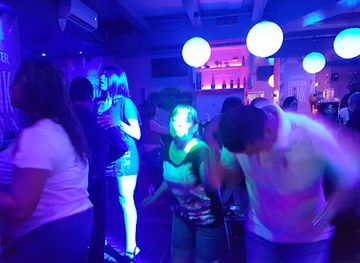
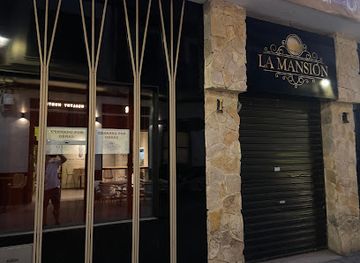
La Mansión
Discover La Mansión, Albacete's top disco club for an unforgettable night filled with music, dancing, and vibrant energy.
-
Disco club
Discoteca Bin Bong Illescas
Discover the electrifying nightlife at Discoteca Bin Bong Illescas, a top disco club in the Toledo region, perfect for an unforgettable night out.


Best shops in Castile-La Mancha
Shopping in Castile-La Mancha is strongest in historic city centres, provincial capitals and market towns rather than in large resort-style retail districts. Toledo is known for established craft traditions including damascene metalwork, ceramics, marzipan and religious or historic reproductions, though quality and provenance vary between shops. Cuenca has galleries and craft outlets alongside its historic streets, while Albacete is the region's principal urban centre for mainstream retail and its long-standing cutlery tradition. In smaller towns, look for local food shops, weekly markets and producers selling Manchego cheese, saffron, olive oil, wine, honey and cured specialities. Almagro's aubergines and regional preserves are practical culinary gifts, and winery shops provide bottles from the major La Mancha and surrounding appellations. Contemporary ceramics, textiles and handmade goods are more likely to be found in independent studios or seasonal craft fairs than in permanent specialist districts. For rural markets, check the town's current market day and carry cash in case smaller stalls do not accept cards.
-
Castle
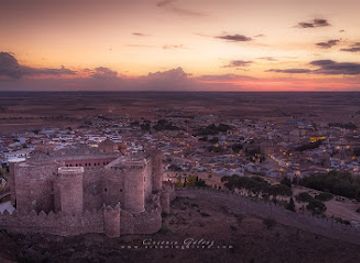
Belmonte Castle
Explore the enchanting Belmonte Castle, a medieval jewel in Cuenca, showcasing stunning architecture, rich history, and breathtaking views.
-
Shopping mall
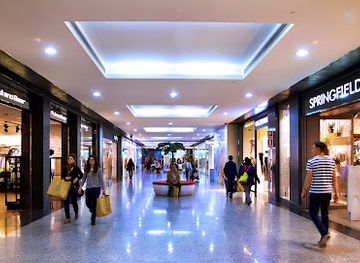
Albacenter
Explore Albacenter, Albacete’s premier shopping mall featuring diverse stores, dining options, and a vibrant atmosphere perfect for all tourists.
-
Shopping mall
Centro Comercial Ferial Plaza
Discover Ferial Plaza, the ultimate shopping destination in Guadalajara, Spain, featuring diverse stores, dining options, and entertainment for an unforgettable experience.
-
Shopping mall
Centro Comercial Los Alfares
Discover shopping, dining, and entertainment at Centro Comercial Los Alfares in Talavera de la Reina – a vibrant destination for all travelers.

Get your free copy of our complete guide to Castile-La Mancha, delivered straight to you.
Everything on this page, from attractions and restaurants to essentials and local phrases, in one PDF you can read offline, print or share.
Already have an account? Sign in
Your Castile-La Mancha guide is ready.
We'll send it to · Not you? Sign out

Getting your guide ready…
We are putting together a fresh copy of the Castile-La Mancha guide. This can take up to a minute.
This can take a few moments. If your browser asks, choose Allow so the download can start. You'll find the guide in your Downloads folder.
Nothing happened? Download it again
Sorry, the guide is taking longer than usual. Please try again in a minute, or get it by email instead.
Castile-La Mancha essentials
Currency and Payment
Safety
Emergency Situations
Do's and Don'ts
Local Tips
From Eve
Local phrases worth knowing
You don't need to get them perfect. A few words go a long way, and locals appreciate the effort.
Basics
| English | Local | Say it |
|---|---|---|
| Hello | Hola | [Ola] |
| Goodbye | Adiós | [Adios] |
| Yes | Sí | [Si] |
| No | No | [No] |
| Please/You're welcome | Por favor | [Por favor] |
| Thank you | Gracias | [Grasias] |
| Excuse me/Sorry | Perdón | [Perdon] |
| How are you? | ¿Cómo estás? | [Como estas] |
| Fine. And you? | Bien. ¿Y tú? | [Bien. Y tu] |
| Do you speak English? | ¿Hablas inglés? | [Hablas ingles] |
| I don't understand | No entiendo | [No entiendo] |
Eating & Drinking
| English | Local | Say it |
|---|---|---|
| I'd like to see the menu, please | Me gustaría ver el menú, por favor | [Me gustaria ver el menu, por favor] |
| I don't eat meat | No como carne | [No como carne] |
| Cheers! | ¡Salud! | [Salud] |
| I would like to pay, please | Me gustaría pagar, por favor | [Me gustaria pagar, por favor] |
Emergencies
| English | Local | Say it |
|---|---|---|
| Help! | ¡Ayuda! | [Ayuda] |
| Go away! | ¡Lárgate! | [Largate] |
| Call the Police! | ¡Llama a la policía! | [Llama a la policia] |
| Call a doctor! | ¡Llama a un doctor! | [Llama a un doctor] |
| I'm lost | Estoy perdido | [Estoy perdido] |
| I'm ill | Estoy enfermo | [Estoy enfermo] |
Shopping
| English | Local | Say it |
|---|---|---|
| I'd like to buy... | Me gustaría comprar... | [Me gustaria comprar] |
| I'm just looking | Solo estoy mirando | [Solo estoy mirando] |
| How much is it? | ¿Cuánto cuesta? | [Cuanto cuesta] |
| That's too expensive | Eso es demasiado caro | [Eso es demasiado caro] |
| Can you lower the price? | ¿Puedes bajar el precio? | [Puedes bajar el precio] |
Time & Numbers
| English | Local | Say it |
|---|---|---|
| What time is it? | ¿Qué hora es? | [Que hora es] |
| It's one o'clock | Es la una | [Es la una] |
| Half past (10) | Y media (10) | [Y media] |
| Morning | Mañana | [Mañana] |
| Afternoon | Tarde | [Tarde] |
| Evening | Noche | [Noche] |
| Yesterday | Ayer | [Ayer] |
| Today | Hoy | [Hoy] |
| Tomorrow | Mañana | [Mañana] |
| 1 | Uno | [Uno] |
| 2 | Dos | [Dos] |
| 3 | Tres | [Tres] |
| 4 | Cuatro | [Cuatro] |
| 5 | Cinco | [Cinco] |
| 6 | Seis | [Seis] |
| 7 | Siete | [Siete] |
| 8 | Ocho | [Ocho] |
| 9 | Nueve | [Nueve] |
| 10 | Diez | [Diez] |
Transport & Directions
| English | Local | Say it |
|---|---|---|
| Where's a/the...? | ¿Dónde está un/una...? | [Donde esta un/una] |
| What's the address? | ¿Cuál es la dirección? | [Cual es la direccion] |
| Can you show me (on the map)? | ¿Puedes mostrarme (en el mapa)? | [Puedes mostrarme en el mapa] |
| When's the next (bus)? | ¿Cuándo es el próximo (autobús)? | [Cuando es el proximo autobus] |
| A ticket (to ....) | Un billete (a ....) | [Un billete a] |
History of Castile-La Mancha
Prehistoric Settlements and the Motillas
Castile-La Mancha preserves evidence of settlement from prehistoric times, including the Bronze Age motillas of La Mancha. These fortified, mound-like structures were built around deep wells and are especially associated with the region's ancient attempts to manage scarce water. Motilla del Azuer, near Daimiel, is the best-known excavated example and reveals a complex society organised around storage, defence and access to groundwater. Other archaeological sites, including necropolises and hilltop settlements, show that the central plateau was neither empty nor culturally uniform before the arrival of Rome.
Roman Segóbriga and Imperial Networks
Rome incorporated much of present-day Castile-La Mancha into its provincial system, connecting settlements through roads and developing agriculture, mining and trade. Segóbriga, near Saelices in Cuenca province, became an important Roman town whose theatre, amphitheatre, forum and monumental remains can still be visited. Its prosperity was linked partly to nearby lapis specularis, a transparent gypsum used for windows and decoration. Roman infrastructure and land use left a long-lasting imprint on the plateau, even though later centuries transformed many of its towns and routes.
Toledo under Visigothic Rule
Toledo became the political centre of the Visigothic kingdom in the sixth century and hosted a series of important church councils. These gatherings addressed religious and political issues while reinforcing the city's status as the kingdom's capital. The Visigothic period is less visibly preserved than Toledo's later medieval heritage, but it established the city as a major centre of power in the Iberian interior. The recovery and display of archaeological material from this era help explain Toledo's unusually deep political and ecclesiastical importance.
Islamic Rule and the Christian Reconquest
Following the Umayyad conquest of Iberia in the eighth century, the region became part of al-Andalus and its towns developed within Islamic political and economic networks. Toledo later served as the centre of a taifa kingdom before being captured by Alfonso VI of León and Castile in 1085. Christian rule brought new settlements, fortifications, religious foundations and administrative structures, while Muslim and Jewish communities continued to shape urban life. The resulting architectural and intellectual legacy is particularly evident in Toledo, but medieval castles and historic towns across the region also reflect this contested frontier.
The Medieval and Early Modern Plateau
After the Christian conquest, military orders such as the Knights of Santiago, Calatrava and San Juan acquired extensive territories in what is now Castile-La Mancha. They controlled castles, agricultural lands and strategic routes, helping to organise settlement across the frontier zone. From the late Middle Ages into the early modern period, towns expanded through farming, sheep husbandry, trade and religious patronage. Almagro prospered through merchant and banking connections, while Toledo remained a major ecclesiastical and artistic centre before political power shifted decisively towards Madrid.
Don Quixote and the Cultural Landscape
Miguel de Cervantes's Don Quixote, published in two parts in 1605 and 1615, fixed La Mancha in the international imagination. The novel refers to real landscapes, roads, inns and settlements, although its locations are deliberately playful and not always geographically consistent. Windmills at Consuegra and Campo de Criptana, along with towns such as El Toboso and Argamasilla de Alba, are associated with the literary tradition. Cervantes's work turned an agricultural interior into one of Europe's most recognisable imagined landscapes.
Mining, Agriculture and Modern Transformation
Modern Castile-La Mancha was shaped by agriculture, railway construction, market integration and mining. Almadén's mercury mines operated for centuries and became one of the world's most significant sources of the metal, used historically in silver extraction; the mining heritage is now recognised with Idrija in Slovenia as a UNESCO World Heritage site. During the twentieth century, mechanised farming, vineyard expansion, migration and the growth of provincial capitals altered rural life. Since the creation of the autonomous community in 1982, heritage, food production, protected landscapes and cultural tourism have become increasingly important alongside agriculture.
Castile-La Mancha in Photos
Browse through our photo collection highlighting the charm and character of the destination.
Neighbouring regions of Castile-La Mancha
The closest regions to Castile-La Mancha, if you have time for more than one.
-
-

-

-

-


Swipe for more regions
Explore more

Explore more of Spain
Discover Spain: A vibrant tapestry of culture, history, and breathtaking landscapes, where every city offers a unique adventure and unforgettable experiences.
Explore Spain