

Free Extremadura Travel Guide & Mobile App
Explore Extremadura with free travel guides. Discover regional history, expert tips, proposed trips, and audio guides on web or mobile app.


Explore Extremadura for Roman Mérida, medieval Cáceres, dehesa landscapes, mountain valleys, birdwatching and distinctive Spanish regional cuisine.
Read more about Extremadura
When is the best time to visit Extremadura?
Best: April–May, October · 22–26°C| Month | High (°C) | Rainfall (mm) |
|---|---|---|
| January | 13 | 45 |
| February | 15 | 40 |
| March | 19 | 40 |
| April (best) | 22 | 35 |
| May (best) | 26 | 25 |
| June | 31 | 10 |
| July | 35 | 5 |
| August | 35 | 6 |
| September | 30 | 20 |
| October (best) | 23 | 35 |
| November | 17 | 40 |
| December | 14 | 50 |
Getting to and around Extremadura
How to get there
Transportation
Top city travel guides in Extremadura
The cities of Extremadura, and the easiest places to base yourself.
-

-

-
-

-

-


Swipe for more cities
Best attractions in Extremadura
Extremadura's attractions range from major Roman archaeology to protected Mediterranean landscapes. Mérida is the central cultural draw, with its theatre, amphitheatre, Roman bridge, aqueducts and museums integrated into the living city. Cáceres offers a dense medieval and Renaissance quarter, while Trujillo, Plasencia, Guadalupe, Zafra and Badajoz provide further combinations of palaces, churches, castles and historic squares. Outside the towns, Monfragüe National Park is known for raptor watching, river scenery and dehesa woodland, and the Villuercas-Ibores-Jara Geopark combines geology with villages, trails and traditional agriculture. The Jerte, La Vera and Ambroz valleys bring orchards, waterfalls and mountain walking, especially attractive in spring and autumn. Reservoirs, long-distance paths, birdwatching sites and quiet country roads broaden the outdoor offer, while food museums, craft producers and interpretation centres reveal how farming and pastoral life continue to shape the region.
-
Historical landmark
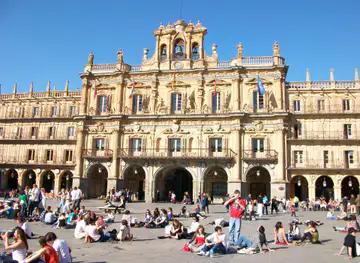
Plaza Mayor de Trujillo
Discover the charm and history of Plaza Mayor de Trujillo, a vibrant square brimming with culture, cuisine, and stunning architecture.
-
Historical landmark
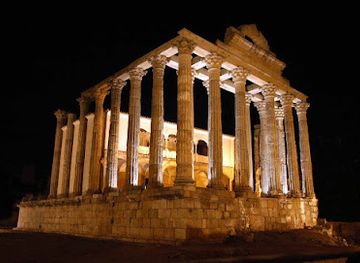
Temple of Diana
Discover the grandeur of the Temple of Diana in Mérida, a captivating historical landmark that embodies the essence of ancient Roman architecture.
-
Historical landmark
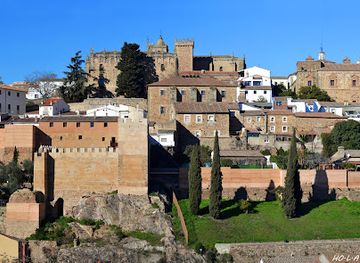
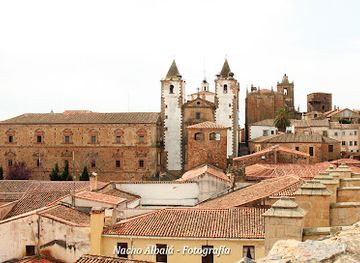
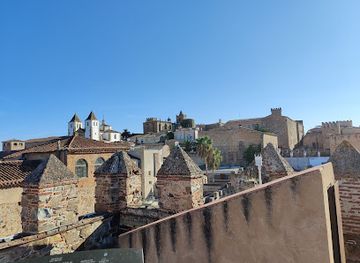
Old Town of Cáceres
Discover the historical charm and architectural beauty of Cáceres' Old Town, a UNESCO World Heritage Site rich in culture and history.
-
Historical landmark
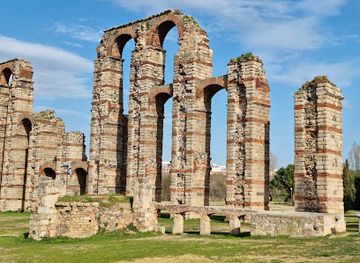
Acueducto de los Milagros
Discover the stunning Acueducto de los Milagros, a Roman aqueduct in Mérida, Spain, showcasing remarkable ancient engineering and rich history.
Best landmarks in Extremadura
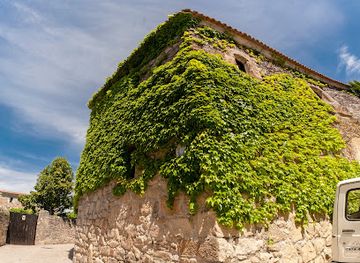
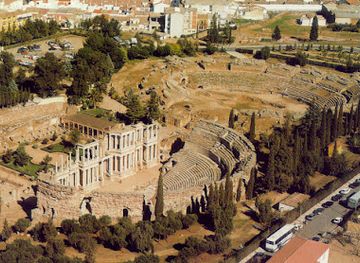
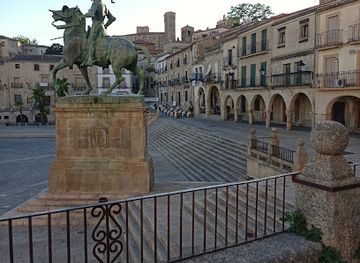
The Roman Theatre of Mérida is one of Extremadura's defining monuments, still used for performances and forming part of the city's extensive archaeological ensemble. Mérida's long Roman bridge across the Guadiana and the surviving aqueducts convey the scale of ancient Augusta Emerita's engineering. Cáceres's walled old quarter is distinguished by stone towers, palaces and churches assembled over Islamic, medieval and Renaissance layers, while Trujillo's Plaza Mayor is framed by historic residences and the statue of Francisco Pizarro. The Royal Monastery of Santa María de Guadalupe is an important religious and artistic landmark in the eastern highlands, and the Alcazaba of Badajoz dominates the city's historic skyline. Further west, the Roman bridge at Alcántara spans the Tagus with remarkable monumental confidence. Outside the towns, Monfragüe's Peña Falcón viewpoint and the folded ridges of the Villuercas provide geographical landmarks as significant as the region's built heritage.
-
Castle
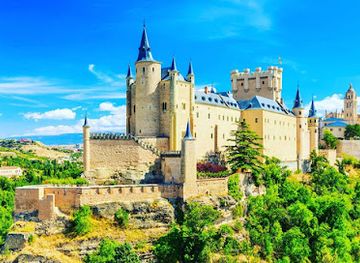
Alcázar de Segovia
Explore the enchanting Alcázar de Segovia, a historic castle that showcases Spain's royal past and stunning architecture amidst breathtaking landscapes.
-
Historical landmark
Teatro Romano de Mérida
Discover the majestic Teatro Romano de Mérida, an ancient Roman theatre rich in history and culture, and a vibrant hub for performing arts.
-
Historical landmark
Plaza Mayor de Trujillo
Explore the beauty and history of Plaza Mayor de Trujillo, a stunning historical landmark in the heart of Spain's captivating Cáceres region.
-
Historical landmark
Old Town of Cáceres
Discover the Old Town of Cáceres, a UNESCO World Heritage site that showcases Spain's rich history and stunning medieval architecture in a captivating cultural experience.
Explore Extremadura on the map
Plan your trip on one map. See where the top cities, national parks and sights are, and book hotels and experiences in a few clicks.
Best hotels in Extremadura
Best restaurants in Extremadura
Dining in Extremadura is rooted in dehesa, pasture, orchard and market garden produce. Iberian ham and other cured meats from the oak savannahs are central to many menus, while Torta del Casar, Queso de la Serena and Queso Ibores demonstrate the variety of local sheep and goat cheeses. Pimentón de la Vera gives colour and smoky depth to stews, sausages and vegetables, and Jerte cherries, honey, olive oil and seasonal game appear in regional cooking. Mérida, Cáceres and Badajoz offer the widest range of contemporary restaurants, traditional taverns and cafés, while smaller towns are known for hearty home-style dishes and rural inns. Look for migas, a rustic preparation of fried breadcrumbs, soups, legumes and pork-based specialities, alongside pastries and convent-inspired sweets. Markets and specialist food shops are particularly useful for tasting products associated with different parts of the region.
-
Restaurant
A de Arco
Discover authentic Spanish flavors at A de Arco in Mérida - a must-visit tapas bar offering delicious dishes and vibrant ambiance.
-
Restaurant
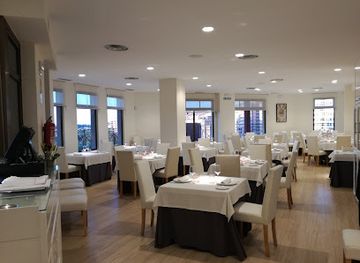
Restaurante Casa Claudio
Discover authentic Extremaduran cuisine at Restaurante Casa Claudio - where every meal tells a story of tradition and flavor.
-
Restaurant
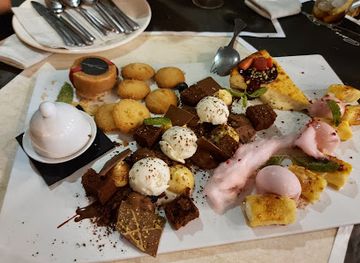
Restaurante alBalat
Discover exquisite Mediterranean flavors at Restaurante alBalat in Cáceres—where every dish tells a story of tradition and taste.
-
Fine Dining
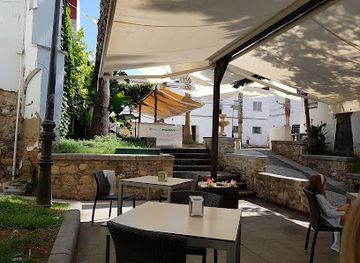
Mastropiero Gastrobar y Jardín
Discover exquisite culinary delights at Mastropiero Gastrobar y Jardín in Cáceres - where fine dining meets vibrant nightlife.
Best bars in Extremadura
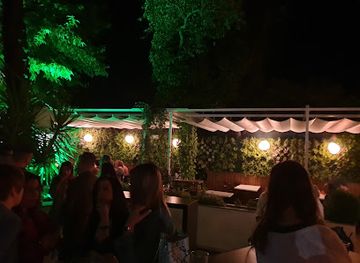
Evening life in Extremadura is concentrated in the larger towns and unfolds more gradually in villages. Mérida and Cáceres have the broadest choice of wine bars, cafés, traditional taverns and venues linked to their cultural and student populations, while Badajoz has a larger urban evening scene with bars and live entertainment. Plasencia, Trujillo, Zafra and other historic towns centre their nightlife on plazas, restaurant terraces and long-established local bars rather than large clubs. In rural areas, an evening often means conversation over a drink or meal, with activity increasing during town festivals and warmer months. Regional wines, including those from Ribera del Guadiana, are commonly available, as are local beers and non-alcoholic options. Check current arrangements locally, since smaller venues may operate seasonally or according to town events.
-
Pub
Pub Rincón Nazarí
Discover the vibrant atmosphere and delicious tapas at Pub Rincón Nazarí in Badajoz, a must-visit for an authentic Spanish pub experience.
-
Irish pub
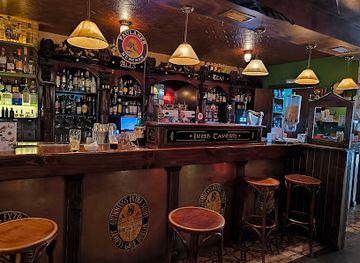
The Irish Tavern Badajoz
Discover the vibrant atmosphere and authentic Irish flavors at The Irish Tavern Badajoz, a top destination for food and fun.
-
Tapas Bar
Havoc
Experience the vibrant flavors of Spain at Havoc, Cáceres' top tapas bar, where tradition meets modern culinary artistry.
-
Bar
Bar Carmen
Experience the vibrant flavors of Badajoz at Bar Carmen, a delightful bar offering a mix of traditional dishes and refreshing drinks in a welcoming atmosphere.


Best nightclubs in Extremadura
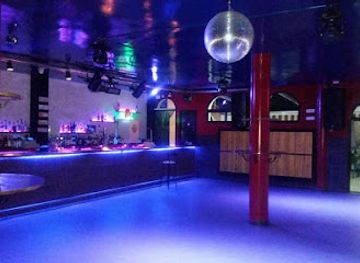
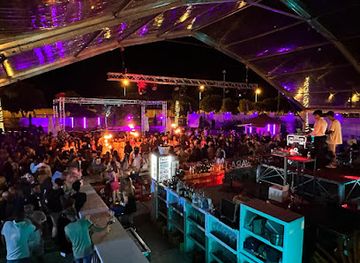
Evening life in Extremadura is concentrated in the larger towns and unfolds more gradually in villages. Mérida and Cáceres have the broadest choice of wine bars, cafés, traditional taverns and venues linked to their cultural and student populations, while Badajoz has a larger urban evening scene with bars and live entertainment. Plasencia, Trujillo, Zafra and other historic towns centre their nightlife on plazas, restaurant terraces and long-established local bars rather than large clubs. In rural areas, an evening often means conversation over a drink or meal, with activity increasing during town festivals and warmer months. Regional wines, including those from Ribera del Guadiana, are commonly available, as are local beers and non-alcoholic options. Check current arrangements locally, since smaller venues may operate seasonally or according to town events.
-
Disco club
Denber Club
Discover the vibrant nightlife of Don Benito at Denber Club, where electrifying music and an energetic atmosphere await you.
-
Disco club
Sala ZRRCUS
Discover the dynamic nightlife of Cáceres at Sala ZRRCUS, where unforgettable parties and lively music await every night of the week.
-
Disco club
DISCOTECA TIFFANI´S
Discover the electrifying nightlife of Discoteca Tiffani's in Valdefuentes, where great music and an energetic crowd create unforgettable memories.
-
Disco club
Botavara Summer CLUB
Discover the electrifying nightlife at Botavara Summer CLUB, Badajoz's premier disco destination for an unforgettable summer experience.


Best shops in Extremadura
Shopping in Extremadura is strongest in historic town centres, traditional markets and specialist food shops rather than large-scale luxury retail. Mérida, Cáceres, Badajoz, Plasencia and Trujillo combine ordinary high-street stores with independent boutiques, bookshops, galleries and craft outlets, while smaller market towns provide a more local selection. Regional products make practical souvenirs: Iberian ham and cured meats, Torta del Casar and other cheeses, La Vera paprika, olive oil, honey, wine and Jerte cherry products are widely associated with the area. Look for pottery, leatherwork, woven goods and handmade items in rural districts, but check customs and airline rules before buying food or liquids. Weekly markets vary by municipality and season, so confirm the day locally; they are often more useful for understanding everyday commerce than for finding tourist merchandise.
-
Historical landmark
Old Town of Cáceres
Discover the rich history and stunning architecture of the Old Town of Cáceres, a UNESCO World Heritage Site with a unique blend of cultures.
-
Shopping mall
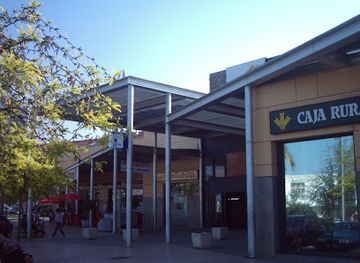
Centro Comercial Ruta de la Plata
Explore the lively shopping paradise of Centro Comercial Ruta de la Plata in Cáceres, where shopping, dining, and entertainment unite for a memorable experience.
-
 Hotel
HotelParador de Plasencia
Discover the enchanting Parador de Plasencia, a historic hotel blending luxury and culture in the heart of Extremadura, Spain.
-
Shopping mall
Plaza Shopping Center
Experience the vibrant shopping and dining scene at Plaza Shopping Center in Badajoz, where local culture meets modern retail.

Get your free copy of our complete guide to Extremadura, delivered straight to you.
Everything on this page, from attractions and restaurants to essentials and local phrases, in one PDF you can read offline, print or share.
Already have an account? Sign in
Your Extremadura guide is ready.
We'll send it to · Not you? Sign out

Getting your guide ready…
We are putting together a fresh copy of the Extremadura guide. This can take up to a minute.
This can take a few moments. If your browser asks, choose Allow so the download can start. You'll find the guide in your Downloads folder.
Nothing happened? Download it again
Sorry, the guide is taking longer than usual. Please try again in a minute, or get it by email instead.
Extremadura essentials
Currency and Payment
Safety
Emergency Situations
Do's and Don'ts
Local Tips
From Eve
Local phrases worth knowing
You don't need to get them perfect. A few words go a long way, and locals appreciate the effort.
Basics
| English | Local | Say it |
|---|---|---|
| Hello | Hola | [[ˈola]] |
| Goodbye | Adiós | [[aˈðjos]] |
| Yes | Sí | [[si]] |
| No | No | [[no]] |
| Please/You're welcome | Por favor | [[por faˈβor]] |
| Thank you | Gracias | [[ˈɡɾaθjas]] |
| Excuse me/Sorry | Perdón | [[peɾˈðon]] |
| How are you? | ¿Cómo estás? | [[ˈkomo esˈtas]] |
| Fine. And you? | Bien. ¿Y tú? | [[bjen] [i tu]] |
| Do you speak English? | ¿Hablas inglés? | [[ˈaβlas inˈɡles]] |
| I don't understand | No entiendo | [[no enˈtjenðo]] |
Eating & Drinking
| English | Local | Say it |
|---|---|---|
| I'd like to see the menu, please | Quisiera ver el menú, por favor | [[kiˈsjeɾa βeɾ el meˈnu por faˈβor]] |
| I don't eat meat | No como carne | [[no ˈkomo ˈkaɾne]] |
| Cheers! | ¡Salud! | [[saˈluð]] |
| I would like to pay, please | Quisiera pagar, por favor | [[kiˈsjeɾa paˈɣaɾ por faˈβor]] |
Emergencies
| English | Local | Say it |
|---|---|---|
| Help! | ¡Ayuda! | [[aˈʝuða]] |
| Go away! | ¡Vete! | [[ˈβete]] |
| Call the Police! | ¡Llama a la policía! | [[ˈʝama a la poliˈθia]] |
| Call a doctor! | ¡Llama a un médico! | [[ˈʝama a un ˈmeðiko]] |
| I'm lost | Estoy perdido | [[esˈtoj peɾˈðido]] |
| I'm ill | Estoy enfermo | [[esˈtoj emˈfeɾmo]] |
Shopping
| English | Local | Say it |
|---|---|---|
| I'd like to buy... | Quisiera comprar... | [[kiˈsjeɾa komˈpɾaɾ]] |
| I'm just looking | Solo estoy mirando | [[ˈsolo esˈtoj miˈɾando]] |
| How much is it? | ¿Cuánto cuesta? | [[ˈkwanto ˈkwesta]] |
| That's too expensive | Eso es muy caro | [[ˈeso es muɪ̯ ˈkaɾo]] |
| Can you lower the price? | ¿Puedes bajar el precio? | [[ˈpweðes βaˈxaɾ el ˈpɾeθjo]] |
Time & Numbers
| English | Local | Say it |
|---|---|---|
| What time is it? | ¿Qué hora es? | [[ke ˈoɾa es]] |
| It's one o'clock | Es la una | [[es la ˈuna]] |
| Half past (10) | Y media (10) | [[i ˈmeðja]] |
| Morning | Mañana | [[maˈɲana]] |
| Afternoon | Tarde | [[ˈtaɾðe]] |
| Evening | Noche | [[ˈnoʧe]] |
| Yesterday | Ayer | [[aˈʝeɾ]] |
| Today | Hoy | [[oi]] |
| Tomorrow | Mañana | [[maˈɲana]] |
| 1 | Uno | [[ˈuno]] |
| 2 | Dos | [[dos]] |
| 3 | Tres | [[tɾes]] |
| 4 | Cuatro | [[ˈkwatɾo]] |
| 5 | Cinco | [[ˈsiŋko]] |
| 6 | Seis | [[seis]] |
| 7 | Siete | [[ˈsjete]] |
| 8 | Ocho | [[ˈotʃo]] |
| 9 | Nueve | [[ˈnweβe]] |
| 10 | Diez | [[djes]] |
Transport & Directions
| English | Local | Say it |
|---|---|---|
| Where's a/the...? | ¿Dónde está un/una ...? | [[ˈdonde esˈta un/ˈuna]] |
| What's the address? | ¿Cuál es la dirección? | [[kwal es la diɾekˈθjon]] |
| Can you show me (on the map)? | ¿Puedes mostrarme (en el mapa)? | [[ˈpweðes mosˈtɾaɾme (en el ˈmapa)]] |
| When's the next (bus)? | ¿Cuándo es el próximo (autobús)? | [[ˈkwando es el ˈpɾoksimo (au̇toˈβus)]] |
| A ticket (to ....) | Un billete (a ...) | [[un biˈjet̪e (a ...)]] |
History of Extremadura
Prehistory and Megalithic Landscapes
Extremadura contains substantial evidence of prehistoric settlement, including megalithic tombs, rock art and hilltop sites. The granite and pasture landscapes around Valencia de Alcántara, for example, preserve groups of dolmens associated with communities that farmed, herded and buried their dead collectively during the Neolithic and Copper Age. The region's rivers and natural routes encouraged later settlement, while its mineral resources and strategic uplands continued to attract communities. These remains establish a human presence long before the Roman cities and frontier fortresses that later came to define Extremadura.
Roman Lusitania and the Foundation of Mérida
After the Roman conquest of western Iberia, Augusta Emerita was founded in 25 BC as a settlement for veteran soldiers and became the capital of Lusitania. Mérida developed into one of the Roman world's important provincial cities, linked by roads and supplied by bridges, aqueducts, temples, theatres and an amphitheatre. Much of the modern city stands among these remains, which explain its UNESCO World Heritage status. Roman agricultural, engineering and administrative systems also shaped the wider region, leaving traces in roads, villas and town plans.
Visigothic and Islamic Extremadura
After Roman authority declined, Mérida remained an important Christian and political centre under the Visigoths, although later power shifted towards other settlements. The Muslim conquest of Iberia in the eighth century brought Extremadura into al-Andalus, and fortifications, irrigation practices and urban traditions developed across the territory. Badajoz, founded in the ninth century as a major Islamic city, grew around the Alcazaba and became the capital of a taifa kingdom. Arabic influence remains visible in defensive architecture, place names, water management and the historic fabric of several towns.
The Christian Reconquest and Frontier Orders
From the twelfth to the thirteenth centuries, Christian kingdoms gradually conquered the region, with the Tagus and Guadiana frontiers becoming zones of military settlement. Religious-military orders, especially the Order of Alcántara and the Order of Santiago, received extensive territories and built castles, churches and planned communities. Towns such as Alcántara, Jerez de los Caballeros and Segura de León retain elements of this frontier past. The resulting mixture of military, monastic and aristocratic power shaped land ownership and settlement patterns for centuries.
Imperial Spain and the Conquistador Towns
In the fifteenth and sixteenth centuries, towns including Trujillo, Cáceres, Medellín and Badajoz were connected to Spain's expanding Atlantic empire. Several local families and military figures participated in the conquest and administration of territories in the Americas, while wealth returned to build palaces, churches and fortified residences. Trujillo's Plaza Mayor and Cáceres's monumental quarter reflect this period's social hierarchy and architectural ambition. The legacy is complex: the buildings are important historical evidence, but they also embody an imperial system whose consequences extended far beyond Extremadura.
Agriculture, Dehesa and Rural Society
For centuries, Extremadura's economy was dominated by extensive agriculture, transhumant livestock and large estates. The dehesa emerged as a carefully used landscape of holm and cork oaks, combining grazing with acorns, firewood and other resources. Sheep, goats, cattle and pigs supported local economies, while seasonal movement along historic drovers' routes connected uplands and plains. This rural system helped create the products now associated with Extremadura, including Iberian pork, cheeses, honey and paprika, but it also contributed to pronounced inequalities in land ownership and rural employment.
Modernisation, Migration and Regional Change
The nineteenth and twentieth centuries brought railways, new agricultural schemes, improved roads and gradual urban development, but Extremadura remained less industrialised than many parts of Spain. Large-scale emigration during the twentieth century took many residents to Madrid, Catalonia, the Basque Country and other areas, as well as abroad. Since Spain's democratic transition, the autonomous community has invested in education, heritage conservation, irrigation, tourism and protected landscapes. Mérida became the regional capital, and cultural and environmental assets now play an important role alongside agriculture and food production.
Extremadura in Photos
Browse through our photo collection highlighting the charm and character of the destination.
Neighbouring regions of Extremadura
The closest regions to Extremadura, if you have time for more than one.
-

-
-

-
-


Swipe for more regions
Explore more

Explore more of Spain
Discover Spain: A vibrant tapestry of culture, history, and breathtaking landscapes, where every city offers a unique adventure and unforgettable experiences.
Explore Spain