

Free Balearic Islands Travel Guide & Mobile App
Explore Balearic Islands with free travel guides. Discover regional history, expert tips, proposed trips, and audio guides on web or mobile app.


Explore the Balearic Islands for Mediterranean beaches, mountain villages, historic towns, island cuisine, coastal walks and distinctive local cultures.
Read more about Balearic Islands
When is the best time to visit Balearic Islands?
Best: May–June, October · 24–29°C| Month | High (°C) | Rainfall (mm) |
|---|---|---|
| January | 15 | 40 |
| February | 15 | 30 |
| March | 17 | 30 |
| April | 20 | 30 |
| May (best) | 24 | 20 |
| June (best) | 29 | 20 |
| July | 31 | 10 |
| August | 32 | 20 |
| September | 29 | 40 |
| October (best) | 24 | 50 |
| November | 19 | 40 |
| December | 16 | 40 |
Getting to and around Balearic Islands
How to get there
Transportation
Top city travel guides in Balearic Islands
The cities of Balearic Islands, and the easiest places to base yourself.

Swipe for more cities
Destinations in Balearic Islands
Resorts, valleys and scenic spots worth a trip of their own.
-

-


Swipe for more destinations
Best attractions in Balearic Islands
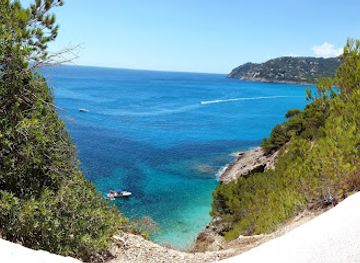
The Balearic Islands offer a broad range of experiences across four very different inhabited islands. Mallorca combines Palma's museums, cathedral and historic quarters with the mountain scenery of the Serra de Tramuntana, the wetlands of s'Albufera, the Roman remains of Pollentia and beaches, markets and villages around the north and east coasts. Menorca is especially rewarding for archaeology and walking, with Talayotic settlements, the long Camí de Cavalls, protected wetlands and coves reached by foot or boat. Ibiza extends well beyond its club reputation: Dalt Vila, rural churches, pine-covered hills, salt landscapes and northern beaches provide cultural and outdoor alternatives. Formentera is suited to cycling, swimming, snorkelling and low-key coastal exploration around its dunes, salt pans and lighthouses. Boat trips, kayaking, sailing and diving are available throughout the archipelago, subject to weather and seasonal arrangements. Cabrera National Park, reached by boat from Mallorca, protects a smaller island group with important marine and terrestrial habitats; access is regulated and should be arranged in advance. Summer visitors should expect crowded roads and beaches, while spring and autumn are particularly favourable for walking, birdwatching and heritage sightseeing.
-
Cathedral
Catedral-Basílica de Santa María de Mallorca
Discover the stunning Gothic architecture of the Catedral-Basílica de Santa María de Mallorca, a must-visit landmark in Palma's vibrant heart.
-
Tourist attraction
Drach Caves
Discover the Drach Caves in Mallorca: A Stunning Underground Wonderland with Majestic Stalactites, Stalagmites, and an Enchanting Lake.
-
Aquarium
Palma Aquarium
Experience the magic of the ocean at Palma Aquarium, where marine life comes alive through engaging exhibits and interactive learning experiences.
-
Beach
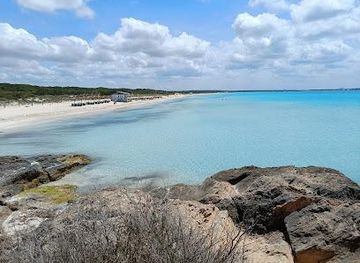
Es Trenc
Discover the breathtaking beauty of Es Trenc, Mallorca’s pristine beach known for its soft sands and clear waters, perfect for a relaxing getaway.

Best landmarks in Balearic Islands
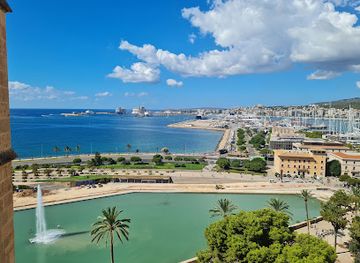
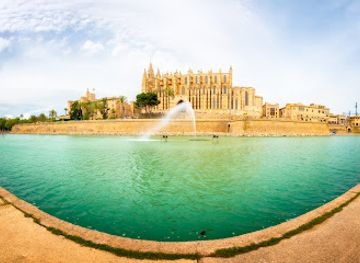
Palma Cathedral, known as La Seu, dominates the waterfront of Mallorca's capital and represents centuries of Christian, Gothic and later architectural development. Nearby, the Almudaina Palace preserves the layered history of the site, including its Islamic and royal past. In the Serra de Tramuntana, the villages and terraces around Sóller, Deià and Valldemossa express the relationship between mountain agriculture, stone construction and coastal trade. Menorca's prehistoric talayots and taula sanctuaries are among the archipelago's most distinctive monuments, while the old centres of Ciutadella and Maó reflect different phases of island rule and maritime commerce. Ibiza's Dalt Vila is a major Renaissance fortification enclosing a historic hilltop city, and its walls form one of the most recognisable urban silhouettes in the western Mediterranean. Formentera's lighthouses at Cap de Barbaria and La Mola mark exposed edges of the island, while its salt lagoons and dunes show how natural landscapes have also shaped local history. Across the islands, dry-stone terraces, watchtowers, windmills and traditional farmhouses provide a dispersed architectural record rather than a single monumental style.
-
Cathedral
Catedral-Basílica de Santa María de Mallorca
Discover the breathtaking beauty and rich history of the Catedral-Basílica de Santa María de Mallorca, Palma's iconic Gothic cathedral.
-
Tourist attraction
Drach Caves
Discover the Drach Caves: An underground paradise of stalactites, stalagmites, and an enchanting lake in Mallorca, Spain.
-
Castle
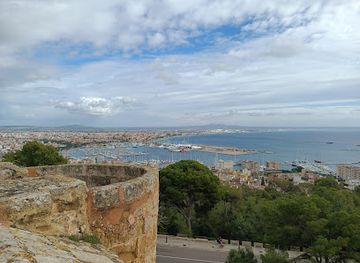
Castell de Bellver
Explore Castell de Bellver, a stunning circular castle in Palma, offering breathtaking views, rich history, and a unique museum experience.
-
Island
Majorca
Explore Majorca's stunning beaches, rich history, and vibrant culture in the heart of the Balearic Islands—a Mediterranean paradise for every traveler.
Explore Balearic Islands on the map
Plan your trip on one map. See where the top cities, national parks and sights are, and book hotels and experiences in a few clicks.
Best hotels in Balearic Islands
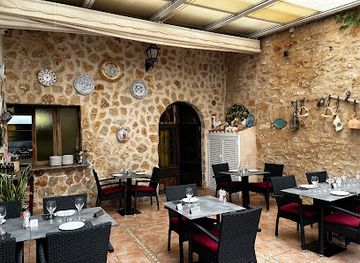
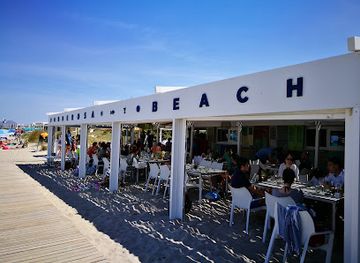
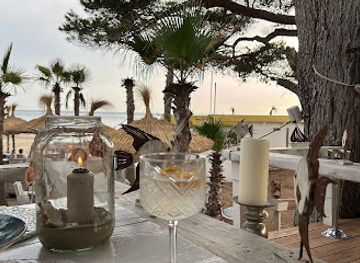
Best restaurants in Balearic Islands
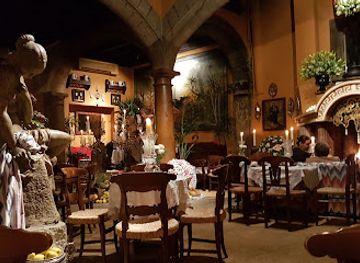
Balearic cooking draws on the islands' farming, fishing and Mediterranean trade. Mallorca is associated with ensaïmada, sobrassada, tumbet, vegetable-based dishes, roast meats and seafood, while local bakeries and market stalls provide an accessible introduction to everyday food traditions. Menorca is known for Mahón-Menorca cheese, caldereta de langosta and dishes built around seafood, vegetables and island livestock. Ibiza has its own rice dishes, fish stews, pastries and the aniseed-and-herb drink hierbas ibicencas, while Formentera's menus often emphasise simple rice, fish and locally sourced produce. Dining ranges from village cafés, bakeries and traditional taverns to contemporary restaurants in Palma, the island capitals and larger resorts. Coastal restaurants may focus on fish and shellfish, whereas inland establishments reveal more of the agricultural character. Farmers' markets and food markets are useful for finding almonds, olive oil, wine, cheese, fruit, cured products and seasonal vegetables. Reservations are sensible in popular areas during summer, but smaller local eateries may keep different hours outside the main season.
-
Mediterranean
Can Gavella
Experience authentic Mediterranean flavors at Can Gavella - home to Mallorca's finest paellas and breathtaking coastal views.
-
Majorcan restaurant
Restaurant Celler Ca'n Costa Alcúdia
Discover exquisite Majorcan flavors at Restaurant Celler Ca'n Costa in Alcúdia - a true haven for lovers of Mediterranean cuisine.
-
Mediterranean
Ponderosa Beach
Experience authentic Mediterranean flavors at Ponderosa Beach in the heart of the Balearic Islands—where every meal is a celebration.
-
Restaurant
MAR Y MAR
Discover exquisite Mediterranean flavors at Mar y Mar in Peguera—where fresh seafood meets Spanish culinary tradition.
Best bars in Balearic Islands
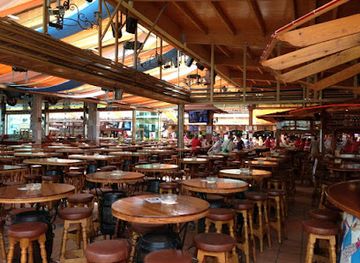
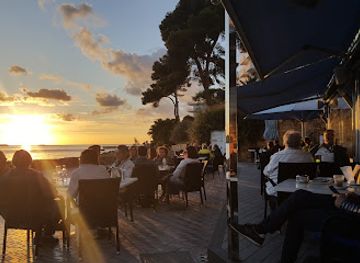
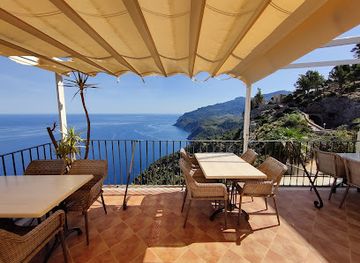
Nightlife varies sharply between the islands. Ibiza has the archipelago's most internationally recognised club culture, concentrated around Ibiza Town, Sant Antoni and major resort areas, with a season that is strongly shaped by large electronic-music venues and visiting performers. Its evening life also includes cocktail bars, beach venues, live music and quieter restaurants, while the fortified old town provides a more historic setting. Mallorca offers everything from Palma's wine bars, live-music venues and late restaurants to resort nightlife along busy coastal strips; smaller towns generally centre on cafés, pubs and seasonal events. Menorca and Formentera are more restrained, with evening life focused on harbour bars, traditional pubs, restaurants, music and outdoor terraces rather than large clubs. Across the islands, opening arrangements and event calendars are highly seasonal, and visitors should respect residential areas, local noise rules and safe transport arrangements after drinking.
-
Bar
Bierkönig
Experience the vibrant nightlife at Bierkönig, a premier bar and gastropub in S'Arenal, known for its live music and delicious German dishes.
-
Bar
Bar Abaco
Discover the magical atmosphere of Bar Abaco in Palma, where exquisite cocktails and enchanting decor create a night to remember.
-
Grill
Restaurante Beach Bar Empatheia
Experience the best of Mediterranean flavors at Restaurante Beach Bar Empatheia, where every meal is a celebration of exquisite taste and stunning views.
-
Mediterranean
Restaurant es Grau
Savor authentic Mediterranean flavors at Restaurant es Grau, a delightful dining experience in the heart of the Balearic Islands.
Best nightclubs in Balearic Islands
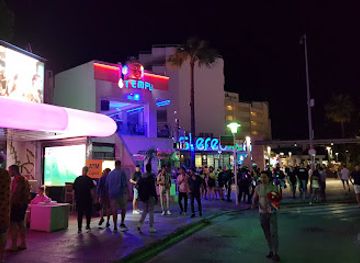
Nightlife varies sharply between the islands. Ibiza has the archipelago's most internationally recognised club culture, concentrated around Ibiza Town, Sant Antoni and major resort areas, with a season that is strongly shaped by large electronic-music venues and visiting performers. Its evening life also includes cocktail bars, beach venues, live music and quieter restaurants, while the fortified old town provides a more historic setting. Mallorca offers everything from Palma's wine bars, live-music venues and late restaurants to resort nightlife along busy coastal strips; smaller towns generally centre on cafés, pubs and seasonal events. Menorca and Formentera are more restrained, with evening life focused on harbour bars, traditional pubs, restaurants, music and outdoor terraces rather than large clubs. Across the islands, opening arrangements and event calendars are highly seasonal, and visitors should respect residential areas, local noise rules and safe transport arrangements after drinking.
-
Club
Stereo Mallorca
Stereo Mallorca: Where the beat drops and unforgettable nights come alive in the heart of Magaluf.
-
Night club
Banana Club | #1 Nightclub in the North of Mallorca
Discover the electrifying nightlife at Banana Club, the #1 nightclub in North Mallorca offering stunning views, world-class DJs, and unforgettable parties.
-
Disco club
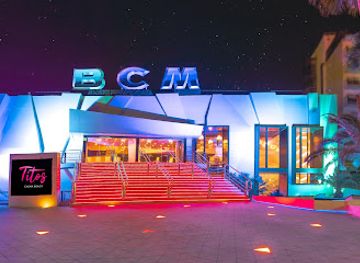
BCM Mallorca
Discover the pulsating heart of Mallorca's nightlife at BCM Mallorca, where unforgettable parties and world-class DJs create the ultimate dance experience.
-
Night club
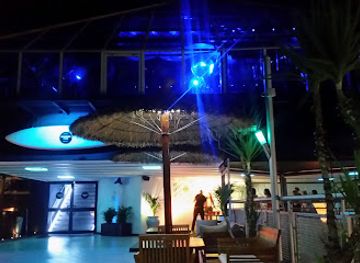
Banana Club
Discover the electrifying nightlife of Mallorca at Banana Club, a rooftop haven for music lovers and party-goers alike.

Best shops in Balearic Islands
Shopping in the Balearic Islands ranges from Palma's established commercial streets and food markets to small village shops, harbour boutiques and craft studios. Mallorca is a strong base for ceramics, leather goods, woven fabrics, footwear, jewellery, olive oil, wine, almonds and other food products, with different towns retaining their own craft and market traditions. Menorca is particularly associated with its cheese, footwear and locally made crafts, while Ibiza and Formentera offer baskets, textiles, ceramics, beachwear, art and products influenced by their contemporary and bohemian design scenes. Look for island produce in municipal markets and farm shops, where labels can help distinguish Balearic goods from generic souvenirs. Independent shops and galleries are often more prominent in historic centres than in large resorts, while resort areas tend to concentrate on beach clothing, convenience goods and ready-made souvenirs. Markets may operate on different days according to the town and season, so confirm local arrangements before making a special journey.
-
Shopping mall
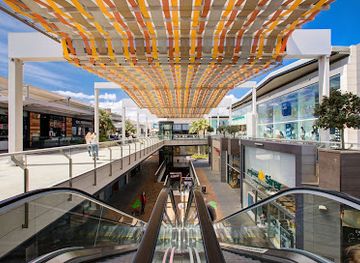
FAN Mallorca Shopping
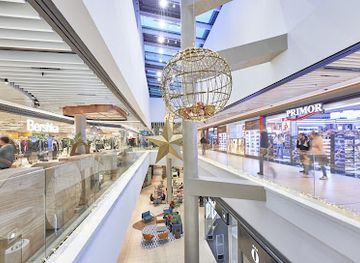
Discover shopping paradise at FAN Mallorca Shopping, where fashion, dining, and entertainment come together for an unforgettable experience in Palma.
-
Outlet mall
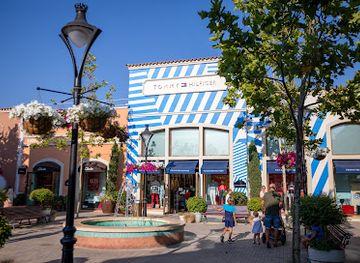
Mallorca Fashion Outlet
Shop, dine, and relax at the Mallorca Fashion Outlet – a premier shopping destination in the Balearic Islands offering unbeatable deals and entertainment.
-
Shopping mall
Porto Pi Centre Comercial
Porto Pi Centre Comercial: Your ultimate shopping and entertainment hub in Palma, where fashion, food, and fun meet.
-
Market
Sineu Market
Discover the colorful Sineu Market in Mallorca, where local produce, crafts, and culture come together in a vibrant weekly celebration.
Get your free copy of our complete guide to Balearic Islands, delivered straight to you.
Everything on this page, from attractions and restaurants to essentials and local phrases, in one PDF you can read offline, print or share.
Already have an account? Sign in
Your Balearic Islands guide is ready.
We'll send it to · Not you? Sign out

Getting your guide ready…
We are putting together a fresh copy of the Balearic Islands guide. This can take up to a minute.
This can take a few moments. If your browser asks, choose Allow so the download can start. You'll find the guide in your Downloads folder.
Nothing happened? Download it again
Sorry, the guide is taking longer than usual. Please try again in a minute, or get it by email instead.
Balearic Islands essentials
Currency and Payment
Safety
Emergency Situations
Do's and Don'ts
Local Tips
From Eve
Local phrases worth knowing
You don't need to get them perfect. A few words go a long way, and locals appreciate the effort.
Basics
| English | Local | Say it |
|---|---|---|
| Hello | Hola | [Ola] |
| Goodbye | Adéu | [Adayu] |
| Yes | Sí | [See] |
| No | No | [No] |
| Please/You're welcome | Si us plau | [Si us plau] |
| Thank you | Gràcies | [Grasies] |
| Excuse me/Sorry | Perdó | [Perdo] |
| How are you? | Com estàs? | [Com estas?] |
| Fine. And you? | Bé. I tu? | [Be. I tu?] |
| Do you speak English? | Parles anglès? | [Parles angles?] |
| I don't understand | No entenc | [No enteng] |
Eating & Drinking
| English | Local | Say it |
|---|---|---|
| I'd like to see the menu, please | M'agradaria veure el menú, si us plau | [M'agradaria veure el menu, si us plau] |
| I don't eat meat | No menjo carn | [No menjo carn] |
| Cheers! | Salut! | [Salut] |
| I would like to pay, please | M'agradaria pagar, si us plau | [M'agradaria pagar, si us plau] |
Emergencies
| English | Local | Say it |
|---|---|---|
| Help! | Ajuda! | [Ajuda] |
| Go away! | Vés-te'n! | [Ves-te'n] |
| Call the Police! | Truca a la policia! | [Truca a la policia] |
| Call a doctor! | Truca a un metge! | [Truca a un metge] |
| I'm lost | Estic perdut | [Estic perdut] |
| I'm ill | Estic malalt | [Estic malalt] |
Shopping
| English | Local | Say it |
|---|---|---|
| I'd like to buy... | M'agradaria comprar... | [M'agradaria comprar...] |
| I'm just looking | Només estic mirant | [Només estic mirant] |
| How much is it? | Quant costa? | [Quant costa?] |
| That's too expensive | Això és massa car | [Aixo es massa car] |
| Can you lower the price? | Pots rebaixar el preu? | [Pots rebaixar el preu?] |
Time & Numbers
| English | Local | Say it |
|---|---|---|
| What time is it? | Quina hora és? | [Quina hora es?] |
| It's one o'clock | És la una | [Es la una] |
| Half past (10) | Dos quarts de (10) | [Dos quarts de (10)] |
| Morning | Matí | [Mati] |
| Afternoon | Tarda | [Tarda] |
| Evening | Vespre | [Vespre] |
| Yesterday | Ahir | [Ahir] |
| Today | Avui | [Avui] |
| Tomorrow | Demà | [Dema] |
| 1 | 1 | [1] |
| 2 | 2 | [2] |
| 3 | 3 | [3] |
| 4 | 4 | [4] |
| 5 | 5 | [5] |
| 6 | 6 | [6] |
| 7 | 7 | [7] |
| 8 | 8 | [8] |
| 9 | 9 | [9] |
| 10 | 10 | [10] |
Transport & Directions
| English | Local | Say it |
|---|---|---|
| Where's a/the...? | On hi ha un/a...? | [On hi ha un/a...?] |
| What's the address? | Quina és l'adreça? | [Quina es l'adreça?] |
| Can you show me (on the map)? | Em pots mostrar (al mapa)? | [Em pots mostrar (al mapa)?] |
| When's the next (bus)? | Quan és el pròxim (autobús)? | [Quan es el pròxim (autobús)?] |
| A ticket (to ....) | Un bitllet (cap a ....) | [Un bitllet (cap a ....)] |
History of Balearic Islands
Prehistoric Talayotic Communities
The Balearic Islands preserve substantial evidence of prehistoric societies, particularly on Menorca and Mallorca. Menorca's talayots, taula sanctuaries and burial structures belong to the Talayotic culture, which developed during the later Bronze and Iron Ages. The monuments suggest organised communities with distinctive religious and social practices, while settlements such as Torre d'en Galmés demonstrate considerable skill in construction and water management. Mallorca also contains prehistoric talayotic sites. These remains are among the islands' most important archaeological legacies and give Menorca a historical depth extending far beyond its later Roman and medieval periods.
Phoenician, Punic and Roman Rule
The islands occupied a strategic position on Mediterranean sea routes. Ibiza was established as a major Punic settlement, known in antiquity as Ebusus, and its salt resources, harbour and agricultural hinterland supported wider trade. Rome incorporated the Balearics in the second century BC, after which towns, roads, farming systems and commercial links were reorganised within the Roman world. The settlement of Pollentia, near present-day Alcúdia in Mallorca, preserves important remains of this period, while Roman influence also shaped Ibiza and Menorca. Agriculture, maritime exchange and the islands' role between Iberia and the wider Mediterranean continued to develop.
Islamic Mallorca and the Christian Conquest
Muslim rule transformed much of the archipelago from the tenth century, particularly after the establishment of the taifa of Mallorca. Madina Mayurqa, the predecessor of Palma, became an important urban and commercial centre, supported by irrigation, gardens and Mediterranean trade. Arabic influence remains visible in place names, agricultural techniques and aspects of the historic urban fabric. James I of Aragon conquered Mallorca in 1229, followed by Ibiza and Formentera, while Menorca was incorporated into the Crown of Aragon later in the thirteenth century. The conquests brought new institutions, settlement patterns and Christian religious foundations.
Medieval Maritime Trade and the Crown of Aragon
During the later Middle Ages, the Balearics formed an important link in the maritime networks of the Crown of Aragon. Mallorca's shipbuilding, merchant communities and navigational knowledge supported commerce across the western Mediterranean. Jewish communities contributed to trade, scholarship and crafts before persecution and forced conversion altered their place in island society. Palma's cathedral, walls, palaces and churches reflect the wealth and political importance of this period. Menorca, Ibiza and smaller ports also experienced changing fortunes as trade, piracy and strategic competition shaped life along the island coasts.
Piracy, Fortifications and Early Modern Change
From the sixteenth through the eighteenth centuries, raids by corsairs and rivalry between Mediterranean powers made defence a central concern. Coastal watchtowers, fortified churches and stronger town walls were built or expanded, with the monumental walls of Dalt Vila in Ibiza among the clearest surviving examples. Menorca changed hands between Britain and Spain several times during the eighteenth century, leaving a notable British imprint on Maó's military and commercial history. Island communities balanced farming, fishing and maritime trade with the demands of defence and periods of economic uncertainty.
Agriculture, Crafts and Island Economies
Before mass tourism, the islands depended heavily on agriculture, fishing, salt production, livestock and small-scale manufacturing. Mallorca developed wine, almond, olive and citrus cultivation alongside textiles and food production. Menorca became known for dairy farming, footwear and its distinctive cheese, while Ibiza retained a rural economy based on mixed agriculture, salt and maritime activity. Dry-stone walls, terraces, windmills, farmhouses and traditional water systems are physical reminders of these economies. Many local foods and landscapes celebrated today emerged from practical adaptations to limited water, thin soils and exposure to the sea.
Tourism and Democratic Autonomy
Mass tourism expanded rapidly from the mid-twentieth century, first transforming Mallorca and later reshaping Menorca, Ibiza and Formentera. Airports, hotels, roads and ports connected the islands to European markets, bringing employment and prosperity but also pressure on water supplies, coastlines and housing. Ibiza acquired a global reputation for electronic music and club culture, while Mallorca and Menorca developed distinct resort and heritage economies. Following Spain's democratic transition, the Balearic Islands became an autonomous community in 1983. Contemporary policy increasingly combines tourism with landscape protection, heritage conservation and efforts to manage seasonal congestion.
Balearic Islands in Photos
Browse through our photo collection highlighting the charm and character of the destination.
Neighbouring regions of Balearic Islands
The closest regions to Balearic Islands, if you have time for more than one.
-

-

-

-

-


Swipe for more regions
Explore more

Explore more of Spain
Discover Spain: A vibrant tapestry of culture, history, and breathtaking landscapes, where every city offers a unique adventure and unforgettable experiences.
Explore Spain