Vasa Museum Travel Guide
Free Guide: A purpose‑built museum on Djurgården that presents the salvaged 1628 warship Vasa — monumental timbers, intricate carvings and active conservation under one roof.


A brief summary of Vasa Museum
A purpose‑built museum on Djurgården that presents the salvaged 1628 warship Vasa — monumental timbers, intricate carvings and active conservation under one roof.
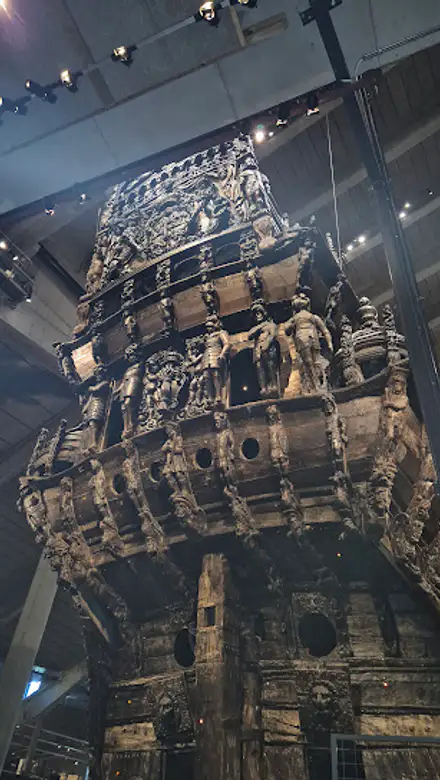
Housed on Djurgården, the Vasa Museum preserves the 17th‑century warship Vasa — salvaged after 333 years underwater — displayed upright in a purpose‑built hall with decks of artefacts, carved decorations and contextual exhibitions that explore life, technology and tragedy in early‑modern Sweden. Expect multi‑level vantage points, a museum shop and café, and a layered narrative that unfolds around the ship itself.
On-site amenities
 Restrooms
 Drinking water
 Food options
 Seating areas
 Information boards
 Visitor centre
Opening hours
- Every day8:30 am–6 pm
Opening hours as listed on the venue’s Google Business Profile. Hours can change for services and special events, so check with the venue before you go.
- Address
- Galärvarvsvägen 14, 115 21 Stockholm
- Phone
- Website
Getting there
Public transport (tram or bus)
Ferry (archipelago/water bus)
Taxi or ride‑hail
Discover more about Vasa Museum
A single ship that shapes the whole place
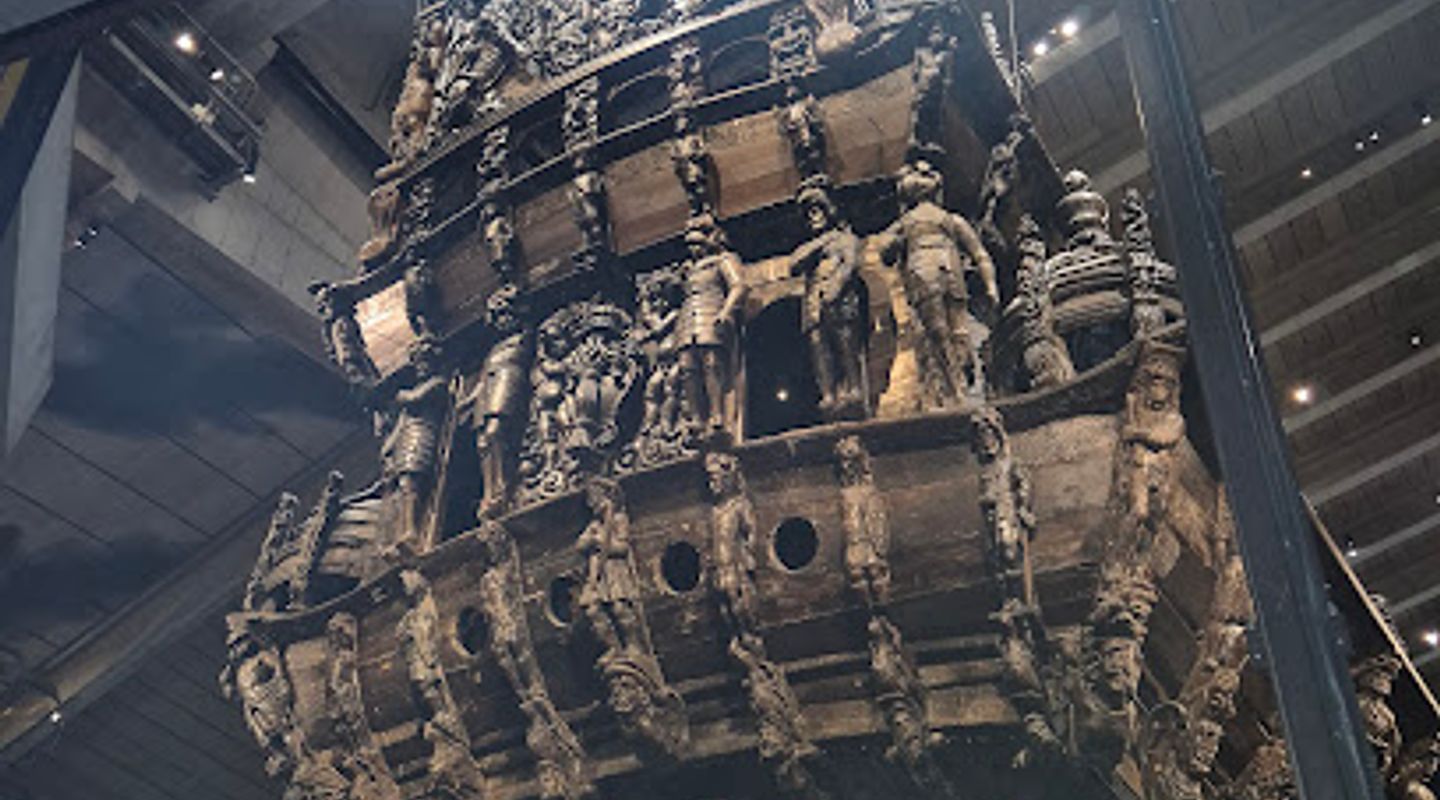
The Vasa Museum centres on one object: the Vasa, a richly carved Swedish warship launched in 1628 and raised from the seabed in 1961. The hull, timbers and surviving fittings fill the main hall from keel to towering masts; the vessel is presented as an intact three‑dimensional artefact so you can walk around and above her, reading the ship’s story from multiple levels. The architecture of the museum was conceived to frame the ship — galleries ring the hull, windows and platforms give differing perspectives, and lighting subtly emphasises carvings and the aged grain of oak.
Material evidence and everyday objects
Around the ship are thousands of objects recovered with her: rigging fragments, tools, clothing, personal items and ordnance. These finds are displayed in thematic cases and reconstructions that explain 17th‑century shipbuilding, naval life and the practical reasons behind the Vasa’s fate. Exhibits make clear the contrast between ornate exterior carving and the cramped, functional world below decks; you’ll see how crew clothing, food storage and small wooden toys connect social history to the ship’s archaeology.
Conservation as living science
The museum is also a conservation centre: the Vasa’s preservation is ongoing and visible. Interpretive panels outline treatment methods, the role of polyethylene glycol in stabilising timbers, and long‑term monitoring that keeps the vessel stable. This scientific framing turns the museum into both a display space and a working laboratory, so the atmosphere is partly that of a research site — cases, measurement devices and conservation work are part of the story as much as the ship itself.
Sensory atmosphere and spatial rhythm
Inside, the dominant impressions are scale and quiet: the hull’s dark wood and gilt carvings create an almost cathedral‑like focus while the galleries’ circulation produces a slow, deliberate rhythm as you ascend to view different decks. Ambient soundtracks, films and recorded accounts are used sparingly to add narrative context; lighting keeps attention on the ship and on illuminated object cases. Nearby, the museum café and shop provide warmer, more social spaces where the experience shifts from contemplative to convivial.
Context on Djurgården and cultural layering
The museum sits on Djurgården, an island that combines parkland, other museums and waterfront views. This setting frames the Vasa as both a national treasure and part of Stockholm’s cultural landscape: the museum’s exterior presence on the quay and its integration with surrounding green space emphasise connections to maritime trade, naval power and the waterfront that carried the ship’s story for centuries.
Visitor flow and what to look for
The layout guides you from an introductory film and timeline through chronological and thematic displays that build into the central view of the hull. Key moments include the carved stern and figureheads, the reconstructed gun decks, and intimate object displays that humanise the crew. The museum balances dramatic spectacle with close‑up archaeology: take time to alternate the broad overview from gallery vantage points with slower inspection of individual cases to appreciate both the ship’s scale and the small traces of life recovered with her.
Evendo Review Centre
 Google
Guest reviews
Best time to go
Quietest: Jan, Feb & Nov · before 8am or from 8pm
Busy times are Evendo estimates for a typical year, to help you plan. Actual crowds vary with events, school holidays and the weather.
Explore Vasa Museum on the map
A handpicked selection of must-see spots near Vasa Museum, mapped for you.
Get your free copy of our complete guide to Vasa Museum, delivered straight to you.
Everything on this page, from opening hours and how to get there to Eve’s tips and the best time to go, in one PDF you can read offline, print or share.
Already have an account? Sign in
Your Vasa Museum guide is ready.
We'll send it to · Not you? Sign out

Getting your guide ready…
We are putting together a fresh copy of the Vasa Museum guide. This can take up to a minute.
This can take a few moments. If your browser asks, choose Allow so the download can start. You'll find the guide in your Downloads folder.
Nothing happened? Download it again
Sorry, the guide is taking longer than usual. Please try again in a minute, or get it by email instead.
Unlock the best of Vasa Museum
Skip-the-line tickets, guided tours with entry, and walking tours of the area, booked in a few clicks.





Other nearby places you may find interesting
The closest places of the same kind, if this one is not quite what you had in mind.
-
-
-
-
-


Swipe for more places
More to explore near Vasa Museum

 Best experiences near Vasa Museum
 Best hotels near Vasa Museum
 Best landmarks near Vasa Museum
 Best attractions near Vasa Museum
 Best shops near Vasa Museum
 Best restaurants near Vasa Museum
 Best bars near Vasa Museum
Do you manage this location?
Take control to get all the benefits, like improved information, better appearance, and stronger visibility across AI-powered discovery.
Explore more

Explore more of Scania
Discover the idyllic landscapes, rich history, and vibrant culture of Scania, the enchanting southern region of Sweden.
Explore Scania
Explore more of Sweden
Discover Sweden's breathtaking landscapes, vibrant cities, and rich cultural heritage. From the Northern Lights to historic castles, experience the essence of Scandinavia.
Explore Sweden