

Strindbergsmuseet, Stockholm Travel Guide
Step into Blå tornet: Strindberg’s reconstructed flat and library offer an intimate look at the writer’s final years and working world.
Strindbergsmuseet occupies the ‘Blue Tower’, the distinctive art‑nouveau building where August Strindberg spent his final years (1908–1912). The museum centres on a reconstructed three‑room apartment and the writer’s library of about 3,000 volumes, supplemented by rotating exhibitions on his life, art and dramatic work. Modest in scale but rich in atmosphere, it offers an intimate encounter with one of Sweden’s most influential cultural figures.
A brief summary to Strindbergsmuseet
- Drottninggatan 85, Stockholm, 111 60, SE
- Click to display
- Click to display
- Duration: 1 to 1.5 hours
- Mid ranged
-
 Indoor
- Mobile reception: 4 out of 5
- Tuesday 12 pm-4 pm
- Wednesday 12 pm-4 pm
- Thursday 12 pm-4 pm
- Friday 12 pm-4 pm
- Saturday 12 pm-4 pm
- Sunday 12 pm-4 pm

Know before you go
Hi, I'm Eve. Here are a few practical things to know before exploring Strindbergsmuseet.
- Book timed tickets during peak seasons when advance reservations are offered; the apartment rooms are compact so visits follow a guided flow.
- Allow at least 1–1.5 hours to see the apartment, browse the library display and view the temporary exhibition.
- Look for small details—Strindberg’s desk items, the piano and printed marginalia in the library—to connect objects with the author’s life and work.
Do you manage this location?
Take control to get all the benefits, like improved information, better appearance, and stronger visibility across AI-powered discovery. Learn more about listing your business on Evendo
Activate your presenceOther nearby places you may find interesting
The closest places of the same kind, if this one is not quite what you had in mind.
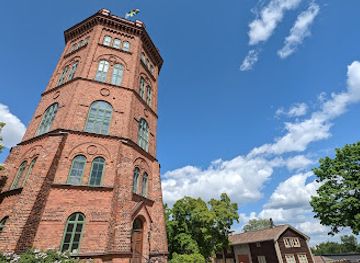
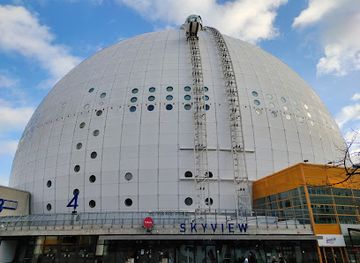


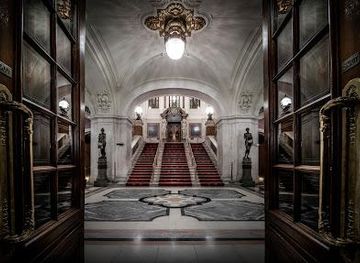
Explore Strindbergsmuseet on the Map
A handpicked selection of must-see spots near Strindbergsmuseet, mapped for you.
Unlock the Best of Strindbergsmuseet
Buy tickets
-
No tickets available
Book tours with entry

Book tours without entry

Getting There
-
Metro + short walk
Take Stockholm Metro to Hötorget station (green or red lines); typical travel time from central hubs is 5–12 minutes depending on start. From the station, expect a 6–10 minute walk along mostly level city streets; pavement is standard and accessible, but the final approach includes a short climb to the building’s entrance. Metro fares are charged per journey with common travel cards or single‑ride tickets (SEK range depending on card type).
-
Tram / Bus
Use city trams or buses that serve central Norrmalm; journey times from nearby districts typically range 8–20 minutes. Services run frequently during daytime but may be less frequent late evening or on public holidays. Single‑ride fares apply (SEK variable by ticket type) and vehicles usually allow step entry—check specific route accessibility if mobility assistance is required.
-
Taxi / Rideshare
A taxi or rideshare from central Stockholm takes roughly 6–15 minutes depending on traffic; expect higher travel time during peak hours. Fares vary by operator and time of day—budget for a modest city fare in SEK. Drop‑off is possible close to the building but central traffic and pedestrian streets can affect access and waiting times.
For the on-the-go comforts that matter to you
-
 Information Boards
-
 Seating Areas
Discover more about Strindbergsmuseet
Blå tornet and the building’s character
The museum is housed in the building August Strindberg nicknamed *Blå tornet* (the Blue Tower), an early 20th‑century art‑nouveau block with a copper‑clad corner turret that dominates the junction of Drottninggatan and Tegnérgatan. The façade’s vertical emphasis and period details reflect the architectural vocabulary of 1906–1907, and the building was for its time equipped with then‑modern conveniences such as an elevator and central heating. The tower’s slightly theatrical silhouette gives the house a stage‑set quality that suits a museum dedicated to a dramatist.Strindberg’s apartment brought back to life
At the heart of the museum is the reconstructed three‑room flat on the fourth floor where Strindberg lived from 1908 until his death in 1912. The layout—bedroom, living room and small study—has been refitted with original furnishings, many of them Strindberg’s own, and wallpapers and textiles have been recreated to match the period appearance. Intimate details remain: the worn desk where he worked, the piano, lamps and small domestic objects that anchor the rooms in everyday life and create a tangible sense of the writer’s private world.The library and the writer as collector
Strindberg’s library, preserved on the sixth floor, contains roughly 3,000 titles and stands as a testament to his restless intellectual curiosity. Shelves crowded with works in multiple languages, annotations and a mix of literary, scientific and esoteric volumes reveal a mind that moved between theatre, natural science, visual art and polemic. The library functions both as an object of display and as an interpretive key to Strindberg’s wide‑ranging interests and the cross‑disciplinary nature of his work.Exhibitions, objects and sensory atmosphere
Adjunct exhibition rooms present rotating thematic displays that place manuscripts, paintings, photographs and personal effects alongside contextual material about Strindberg’s activities as playwright, novelist, painter and photographer. The museum’s sound design and small period touches—piano music drifting from an adjoining room, recorded street sounds from Strindberg’s last birthday—help conjure a lived moment rather than a neutral display. The overall effect is domestic and slightly theatrical: you move through rooms that feel lived‑in rather than merely labelled.Research, stewardship and cultural role
The museum is managed by a foundation with local cultural institutions among its principals; its mission combines preservation of the house and library with active programming such as lectures, exhibitions and workshops. Archival material and curated displays support scholarly interest while the compact scale makes the site suitable for focused visits—students of literature, theatre historians and those intrigued by early modern Scandinavian culture will find concentrated resources here.Visiting tone and what to expect inside
Expect a quiet, contemplative interior where the emphasis is on close observation rather than spectacle. Lighting favours conservation‑friendly, warm tones; rooms are small and routes through the museum are intimate in scale. The apartment and library are the museum’s centrepieces, supplemented by a changing gallery: the experience is one of seeing Strindberg’s belongings in situ, appreciating the texture of a writer’s everyday environment and encountering the layered traces of a creative life.












Your all‑in‑one travel companion app
Explore expert travel guides, compare and book tours, experiences, hotels, and more—all from the palm of your hand. Download now for seamless trip planning wherever your wanderlust takes you.


Explore More of Stockholm
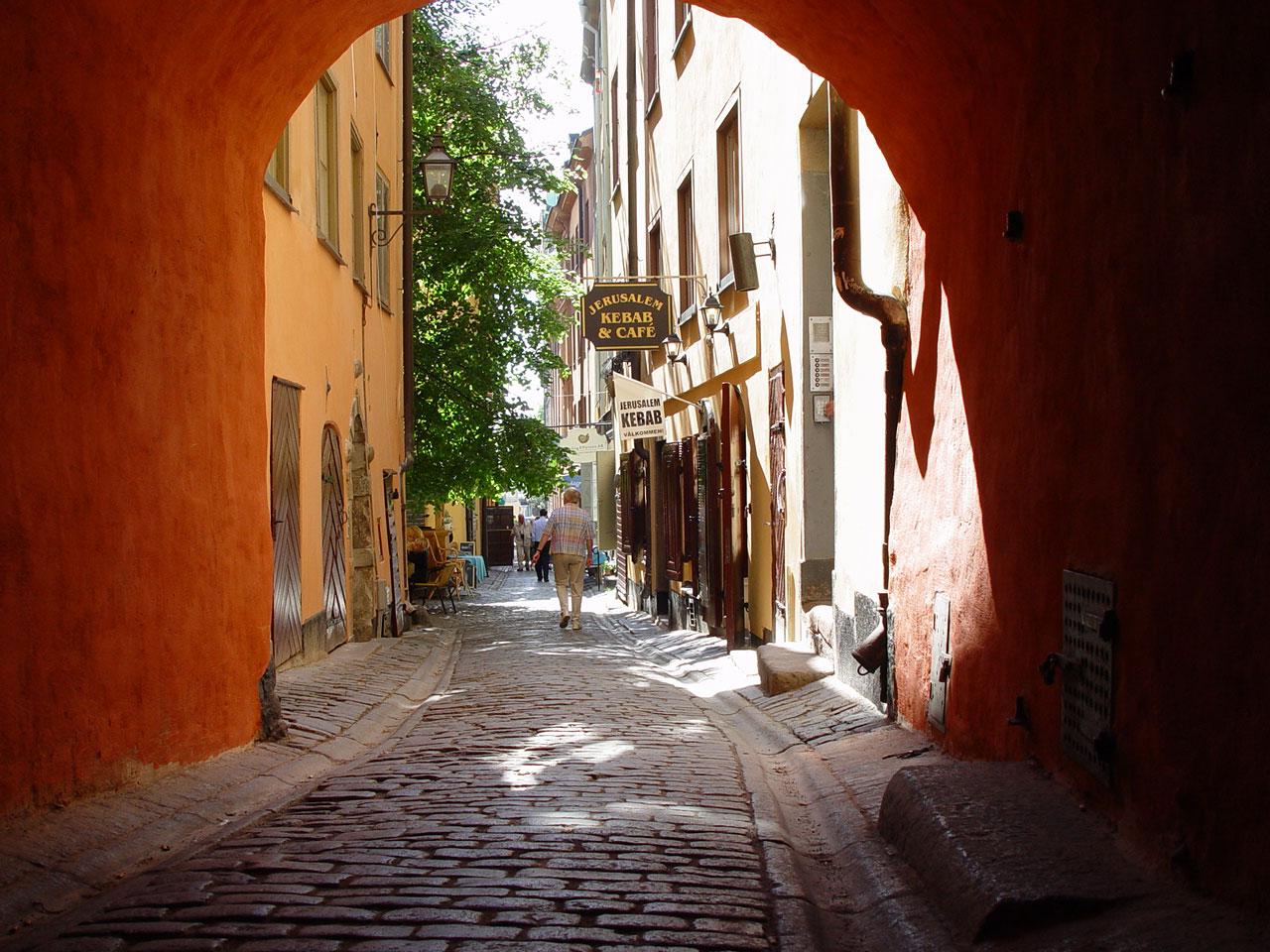
Looking beyond Strindbergsmuseet? Discover Stockholm for broader travel guides, local hot-spots, and regional highlights.
Explore Stockholm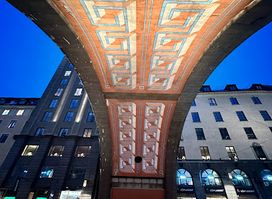
A broad, stone staircase and urban bridge that stitches Stockholm’s ridge-line into the city—subtle, seasonal and quietly cinematic.

A compact 19th-century pedestrian tunnel beneath Stockholm’s Brunkeberg Ridge — a practical, historic shortcut linking central neighbourhoods.
