

Lagmansereds kyrkoruin Travel Guide
Free Guide: A compact, melancholy medieval church ruin surrounded by an active graveyard — centuries of local memory carved into low stone walls and an exposed altar.


A brief summary of Lagmansereds kyrkoruin
A compact, melancholy medieval church ruin surrounded by an active graveyard — centuries of local memory carved into low stone walls and an exposed altar.
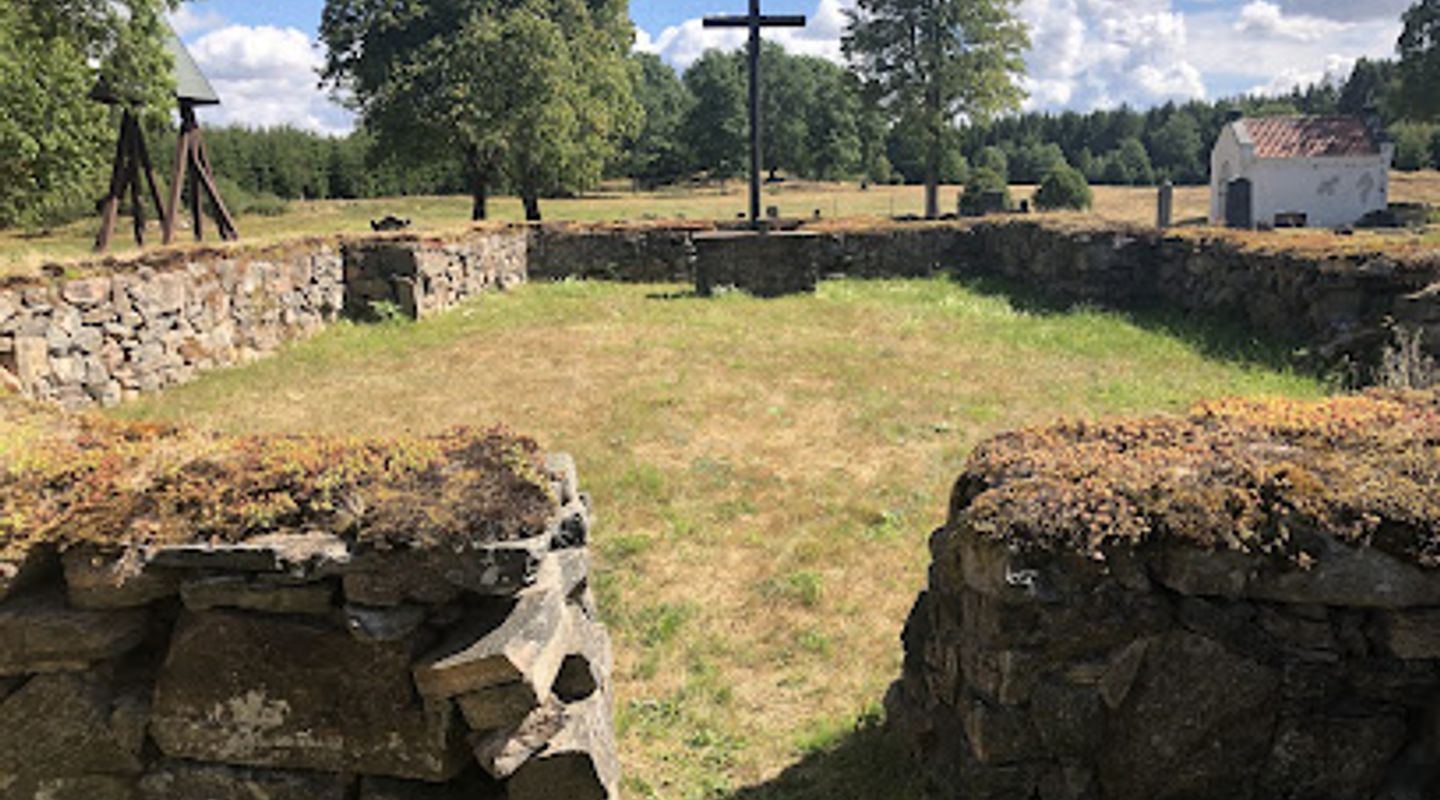
Lagmansereds kyrkoruin is the low, atmospheric stone remains of a medieval parish church set beside an active cemetery in rural Trollhättan municipality. The site traces layers from an early stave church through several rebuilt stone churches to the burned 1929 building whose walls were later reduced and preserved as a ruin; a wooden bell stand and a large cross now mark the place, which is quietly used for memorials and occasional burials.
On-site amenities
 Seating areas
 Trash bins
 Information boards
Opening hours
- Every dayOpen 24 hours
Opening hours as listed on the venue’s Google Business Profile. Hours can change for services and special events, so check with the venue before you go.
- Address
- Ö, Trollhättan
- Website
Getting there
By car
Regional bus + short walk
Cycling
Discover more about Lagmansereds kyrkoruin
Roots in the landscape
Lagmansereds kyrkoruin occupies a gently raised plot that has served as a sacred and burial place for centuries; archaeological and documentary traces point to an original *stavkyrka* (stave church) and earlier heathen burial use before a stone church took its place in the medieval period. The site’s long continuity is visible in the layered character of the ground and in older grave markers dotted around the churchyard, which together map centuries of local ritual and memory.
Architectural life and destruction
Over time the wooden forerunner was replaced by stone, and the church complex was altered repeatedly: records describe a nave and narrower chancel, a western tower with later timber additions and a notable octagonal family vault added in the 18th century. The stone church stood until catastrophic fire in April 1929 left it gutted. Rather than rebuilding on the original footprint the parish later constructed a new church nearby; the ruined walls were stabilized, lowered and finished in the mid-20th century to create the fragmentary structure you see today.
What you can see now
Today the ruin survives as low, weathered masonry—masonry reduced to roughly waist height in parts—with an austere stone altar and a conspicuous wooden cross erected within the footprint. A separate timber bell stand, reconstructed in the 1940s after restoration work, marks the site’s auditory presence. Gravestones of different ages encircle the ruin; some carved 18th- and 19th-century markers sit close to simpler, earlier stones that suggest continuous local use of the churchyard.
Stories within stones
The ruin bears traces of multiple episodes: rebuildings after earlier fires in the 18th century, a family memorial chapel and the later 20th-century decisions that led to preservation rather than full reconstruction. Local benefactors and estate connections appear in historical accounts—elements of private patronage shaped the church’s fabric and its memorials. The 1929 blaze marks a decisive moment that transformed an active parish church into a calm, contemplative ruin.
Atmosphere and seasonal character
Lagmansered feels particularly still: the lowered walls, grassy interior and surrounding birches give the place a restrained, melancholic beauty. Light and weather alter its mood—golden late-afternoon sun warms lichen and carved lettering; winter frost sharpens the masonry edges; spring brings green shoots among the graves. The adjoining cemetery is still used for burials, which keeps the site present in community life even as it functions as a quiet historical fragment.
Conservation and cultural value
The ruin is managed as a preserved church site: interventions in the 20th century—stabilising walls, erecting the bell stand and cross, and lowering vulnerable stonework—were made to arrest decay while maintaining the site's outline as a visible reminder of regional ecclesiastical history. Its combination of tangible ruin, visible archaeological layering and an active cemetery makes Lagmansered a compact but rich witness to local building practices, devotional life and shifting community choices across centuries.
Evendo Review Centre
 Google
Guest reviews
Best time to go
Quietest: Jan, Feb & Dec · before 8am or from 9pm
Busy times are Evendo estimates for a typical year, to help you plan. Actual crowds vary with events, school holidays and the weather.
Explore Lagmansereds kyrkoruin on the map
A handpicked selection of must-see spots near Lagmansereds kyrkoruin, mapped for you.
Get your free copy of our complete guide to Lagmansereds kyrkoruin, delivered straight to you.
Everything on this page, from opening hours and how to get there to Eve’s tips and the best time to go, in one PDF you can read offline, print or share.
Already have an account? Sign in
Your Lagmansereds kyrkoruin guide is ready.
We'll send it to · Not you? Sign out

Getting your guide ready…
We are putting together a fresh copy of the Lagmansereds kyrkoruin guide. This can take up to a minute.
This can take a few moments. If your browser asks, choose Allow so the download can start. You'll find the guide in your Downloads folder.
Nothing happened? Download it again
Sorry, the guide is taking longer than usual. Please try again in a minute, or get it by email instead.
Other nearby places you may find interesting
The closest places of the same kind, if this one is not quite what you had in mind.
-
-
-
-
-


Swipe for more places
More to explore near Lagmansereds kyrkoruin

 Best experiences near Lagmansereds kyrkoruin
 Best hotels near Lagmansereds kyrkoruin
 Best landmarks near Lagmansereds kyrkoruin
 Best attractions near Lagmansereds kyrkoruin
 Best shops near Lagmansereds kyrkoruin
 Best restaurants near Lagmansereds kyrkoruin
 Best bars near Lagmansereds kyrkoruin
Do you manage this location?
Take control to get all the benefits, like improved information, better appearance, and stronger visibility across AI-powered discovery.
Explore more

Explore more of Västergötland
Discover Västergötland: A blend of historical treasures, natural beauty, and cultural richness in the heart of Sweden.
Explore Västergötland
Explore more of Sweden
Discover Sweden's breathtaking landscapes, vibrant cities, and rich cultural heritage. From the Northern Lights to historic castles, experience the essence of Scandinavia.
Explore Sweden
