

Free Appenzell Travel Guide & Mobile App
Explore Appenzell with free travel guides. Discover regional history, expert tips, proposed trips, and audio guides on web or mobile app.





Appenzell combines painted villages, Swiss direct-democracy traditions, Appenzeller cheese and Alpstein mountain walks in a compact regional escape.
Read more about Appenzell
When is the best time to visit Appenzell?
Best: July–September · 19–22°C| Month | High (°C) | Rainfall (mm) |
|---|---|---|
| January | 3 | 75 |
| February | 4 | 65 |
| March | 7 | 85 |
| April | 12 | 95 |
| May | 16 | 115 |
| June | 20 | 125 |
| July (best) | 22 | 135 |
| August (best) | 22 | 125 |
| September (best) | 19 | 105 |
| October | 15 | 95 |
| November | 8 | 85 |
| December | 4 | 75 |
Getting to and around Appenzell
How to get there
Transportation
Destinations in Appenzell
Resorts, valleys and scenic spots worth a trip of their own.

Swipe for more destinations
Best attractions in Appenzell
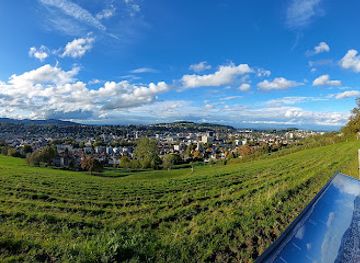
Appenzell’s attractions combine a preserved rural culture with accessible Alpine scenery. In Appenzell village, the Museum Appenzell introduces local history, costume, painting and everyday life, while the Kunstmuseum Appenzell presents changing exhibitions in a more contemporary setting. The compact centre is suited to an unhurried walk, with painted façades and traditional buildings providing an architectural counterpoint to the surrounding countryside. Across Appenzell Ausserrhoden, villages such as Urnäsch, Gais, Speicher and Trogen offer different perspectives on farming, Protestant heritage and the former textile economy. The main outdoor focus is the Alpstein, reached especially conveniently from Wasserauen, where routes lead towards Ebenalp, Wildkirchli, Säntis and high panoramic paths. Cable cars can reduce the ascent, but many routes remain demanding. In the lower hills, signed walking and cycling trails pass meadows, wooded slopes and widely scattered farmhouses. Seasonal cattle movements, local museums, dairies and craft traditions add cultural interest, while the region’s small scale makes it possible to combine a village visit with a mountain excursion without crossing the entire country.
-
Monastery
Abbey of Saint Gall
Discover the rich history and stunning architecture of the Abbey of Saint Gall, a UNESCO World Heritage Site in Switzerland.
-
Visitor center
Appenzeller Schaukäserei
Discover the rich heritage of Swiss cheese-making at Appenzeller Schaukäserei, where tradition meets taste in an immersive visitor experience.
-
State park
Three ponds
Experience the natural beauty and tranquility of the Three Ponds in St. Gallen, a perfect spot for hiking, relaxation, and family fun in Switzerland.
-
 Hotel
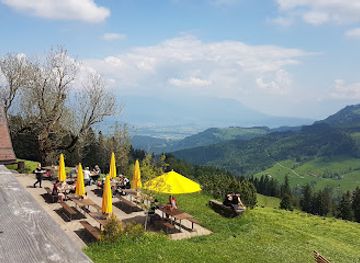
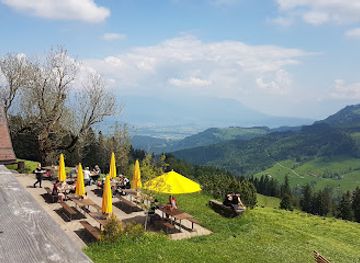
HotelBerggasthaus Ebenalp
Experience the breathtaking beauty and tranquility of Berggasthaus Ebenalp, a perfect destination for hiking and relaxation in the Swiss Alps.
Best landmarks in Appenzell
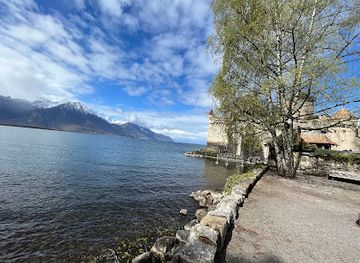
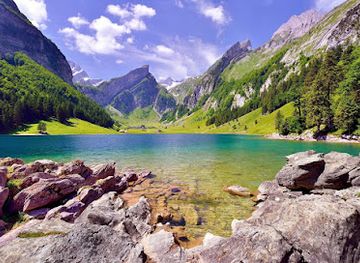
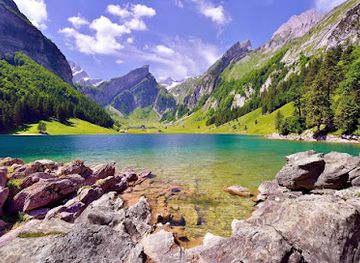
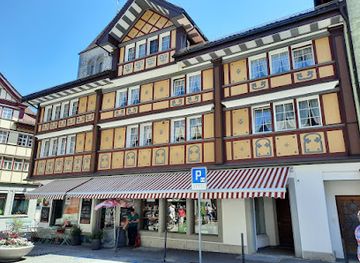
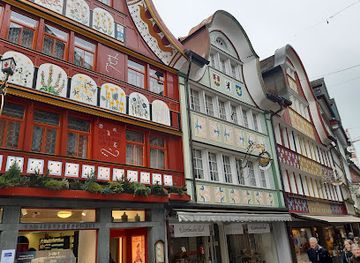
The painted houses and ornate façades of Appenzell village form the region’s most recognisable architectural landmark, expressing the commercial prosperity and civic identity of Innerrhoden in a compact streetscape. The parish church of St Mauritius, rebuilt in the nineteenth century, is a significant Catholic presence at the centre of the village. In Appenzell Ausserrhoden, Trogen’s village square and its historic buildings reflect the influence of wealthy textile merchants, while the church and civic architecture of Heiden recall the character of a nineteenth-century resort and trading town. The Stoss area near Gais is important as the setting of the 1405 battle that shaped Appenzell’s struggle for autonomy. In the natural landscape, the limestone formations around Ebenalp and Wildkirchli, the rugged skyline of the Alpstein and the summit of Säntis provide the region’s defining geographical symbols. Hoher Kasten, reached from Brülisau, is another prominent viewpoint, with broad panoramas across the Rhine Valley and the surrounding mountains. Together these landmarks show how Appenzell’s identity rests on both civic history and a strongly legible Alpine environment.
-
Visitor center
Appenzeller Schaukäserei
Experience the rich traditions of Swiss cheese-making at Appenzeller Schaukäserei, a must-visit destination in the heart of Appenzell.
-
Swiss
Hoher Hirschberg
Experience authentic Swiss cuisine at Hoher Hirschberg in Appenzell, where tradition meets breathtaking mountain views.
-
Hotel
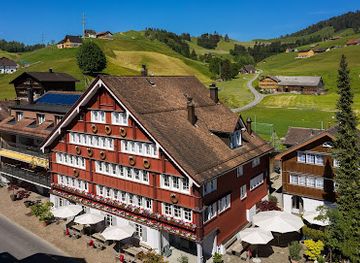
Romantik Hotel Säntis
Discover the perfect blend of comfort and Swiss charm at Romantik Hotel Säntis in Appenzell, where stunning landscapes meet exceptional hospitality.
-
Hotel
Appenzeller Huus - Huus Bären
Experience authentic Swiss hospitality at Appenzeller Huus in Gonten, where comfort meets culinary excellence amidst breathtaking mountain views.
Explore Appenzell on the map
Plan your trip on one map. See where the top cities, national parks and sights are, and book hotels and experiences in a few clicks.
Best hotels in Appenzell
Best restaurants in Appenzell
Dining in Appenzell is rooted in Alpine produce, village hospitality and the food traditions of north-eastern Switzerland. Appenzeller cheese is the best-known regional product and appears in cheese platters, melted dishes and savoury pastries, while Biberli, a spiced gingerbread filled with almond paste, is a familiar bakery speciality. Menus in inns and mountain restaurants often favour straightforward Swiss cooking, including rösti, soups, seasonal vegetables and meat dishes, with recipes differing from one establishment to another. Local farm shops and dairies are useful for buying cheese, butter and other regional produce, and bakeries provide practical picnic supplies for walkers. Appenzeller Bier, brewed in Appenzell, is a notable local drink, while cafés in the village serve cakes and coffee in a more leisurely setting. Dining is generally more concentrated in Appenzell and the larger villages than in the high mountains, where opening arrangements can be seasonal and choices are limited. Reservations are sensible for popular restaurants, especially at weekends and during local festivals.
-
Swiss
Hoher Hirschberg
Discover authentic Swiss cuisine at Hoher Hirschberg in Appenzell, where breathtaking views meet delectable dishes.
-
Restaurant
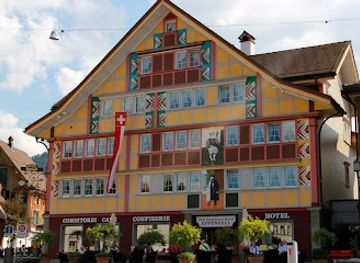
Café-Hotel Appenzell
Experience authentic Swiss cuisine at Café-Hotel Appenzell, where local flavors meet warm hospitality in the heart of picturesque Appenzell.
-
Swiss
Gass 17
Discover authentic Swiss cuisine at Gass 17 in Appenzell – where tradition meets flavor in every dish.
-
Swiss
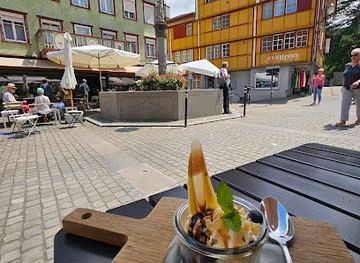
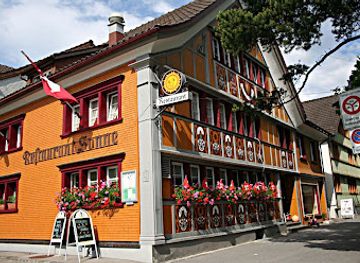
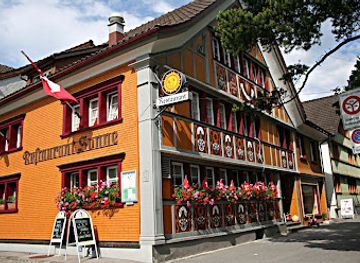
Sonne Appenzell
Experience authentic Swiss cuisine at Sonne Appenzell, where traditional flavors meet warm hospitality in the heart of picturesque Appenzell.
Best bars in Appenzell
Evening life in Appenzell is modest and sociable rather than centred on large nightclubs. Traditional inns, hotel bars and village restaurants provide the main places for a drink, with local beer and Swiss wines appearing alongside non-alcoholic options. Appenzell village has the greatest concentration of evening venues, while towns such as Herisau and Heiden in neighbouring Ausserrhoden offer a broader selection of cafés, bars and occasional live music. In rural districts, the evening usually revolves around dining, conversation and seasonal community events rather than late-night entertainment. The region’s cultural calendar can include music, traditional gatherings and performances, but dates and venues change, so local listings are more reliable than assuming a permanent nightlife programme. Visitors heading into the Alpstein should plan to return before mountain transport ends and should not expect high-altitude restaurants or cable-car stations to function as late-night venues.
-
Restaurant
Café-Hotel Appenzell
Discover the charm of Café-Hotel Appenzell, a perfect blend of culinary delights and cozy accommodations in the heart of picturesque Appenzell.
-
Swiss
Gass 17
Experience the authentic taste of Switzerland at Gass 17, where traditional dishes meet warm hospitality in the heart of Appenzell.
-
Swiss
Sonne Appenzell
Experience authentic Swiss cuisine at Sonne Appenzell, a charming restaurant in the heart of Appenzell, perfect for every culinary enthusiast.
-
Restaurant
Romantik Hotel Säntis
Discover the perfect mix of fine dining and comfortable lodging at Romantik Hotel Säntis in Appenzell, Switzerland.
Best nightclubs in Appenzell
Evening life in Appenzell is modest and sociable rather than centred on large nightclubs. Traditional inns, hotel bars and village restaurants provide the main places for a drink, with local beer and Swiss wines appearing alongside non-alcoholic options. Appenzell village has the greatest concentration of evening venues, while towns such as Herisau and Heiden in neighbouring Ausserrhoden offer a broader selection of cafés, bars and occasional live music. In rural districts, the evening usually revolves around dining, conversation and seasonal community events rather than late-night entertainment. The region’s cultural calendar can include music, traditional gatherings and performances, but dates and venues change, so local listings are more reliable than assuming a permanent nightlife programme. Visitors heading into the Alpstein should plan to return before mountain transport ends and should not expect high-altitude restaurants or cable-car stations to function as late-night venues.
-
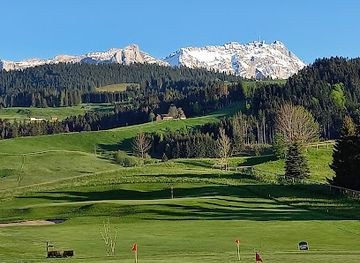
Golf course
Golf Gonten AG
Experience the best of Swiss leisure at Golf Gonten AG: exceptional golfing, delightful dining, and vibrant nightlife await.
-
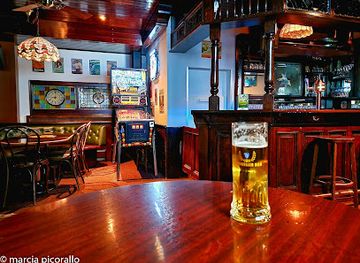
Irish pub
PUB Appenzell
Experience the vibrant atmosphere and local culture at PUB Appenzell, an Irish pub in the heart of Switzerland's scenic Appenzell.
-
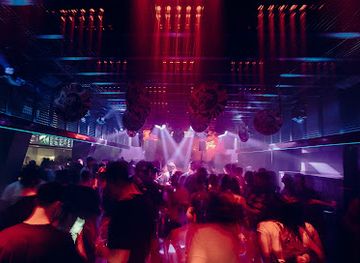
Nightclub
Garage St. Gallen Club
Explore the pulsating nightlife of St. Gallen at Garage St. Gallen Club, a top nightclub offering unforgettable music and dancing experiences.
-
Nightclub
Alpenchique
Experience the vibrant nightlife at Alpenchique, St. Gallen's leading nightclub, where electrifying music and a stylish atmosphere await.

Best shops in Appenzell
Shopping in Appenzell is concentrated around the village centre, where independent shops, bakeries, galleries and specialist retailers sell regional food, traditional clothing, books, crafts and small gifts. Appenzeller cheese, Biberli, local beer and other farm products make practical souvenirs, while shops associated with costume and handicraft reflect the area’s continuing cultural traditions. In Appenzell Ausserrhoden, the market streets and independent shops of towns such as Herisau, Heiden and Trogen offer a more everyday retail experience, with differences in scale and character between each settlement. Farmers’ stalls and direct-from-producer sales are particularly useful for seasonal produce, although availability depends on the time of year. Visitors interested in the region’s textile past may find embroidery, woven goods and locally made craft items, but should distinguish genuine regional work from generic Swiss souvenirs. The historic centre is easy to browse on foot; larger practical purchases are more readily found in the principal towns than in mountain villages.
-
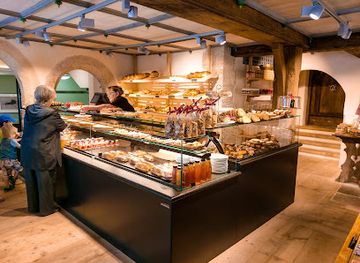
Bakery
Bäckerei und Wirtschaft Drei Könige
Experience the authentic taste of Swiss traditions at Bäckerei und Wirtschaft Drei Könige, Appenzell's beloved bakery and eatery.
-
Brewery
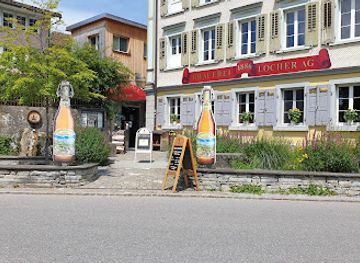
Brauerei Locher AG
Explore the brewing heritage of Switzerland at Brauerei Locher AG in Appenzell - a delightful fusion of tradition and taste.
-
Garden center
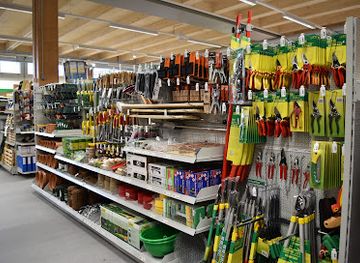
LANDI Appenzell AG
Explore LANDI Appenzell AG, a charming garden center offering an array of plants, gardening supplies, and Swiss-made goods in the heart of Appenzell.
-
Grocery store
Flauderei
Discover Flauderei, Appenzell's gem for artisanal groceries and local delicacies that capture the heart of Swiss culinary culture.
Get your free copy of our complete guide to Appenzell, delivered straight to you.
Everything on this page, from attractions and restaurants to essentials and local phrases, in one PDF you can read offline, print or share.
Already have an account? Sign in
Your Appenzell guide is ready.
We'll send it to · Not you? Sign out

Getting your guide ready…
We are putting together a fresh copy of the Appenzell guide. This can take up to a minute.
This can take a few moments. If your browser asks, choose Allow so the download can start. You'll find the guide in your Downloads folder.
Nothing happened? Download it again
Sorry, the guide is taking longer than usual. Please try again in a minute, or get it by email instead.
Appenzell essentials
Currency and Payment
Safety
Emergency Situations
Do's and Don'ts
Local Tips
From Eve
Local phrases worth knowing
You don't need to get them perfect. A few words go a long way, and locals appreciate the effort.
Basics
| English | Local | Say it |
|---|---|---|
| Hello | Grüezi | [Grye-tsee] |
| Goodbye | Adieu | [A-dyoo] |
| Yes | Ja | [Yah] |
| No | Nei | [Nay] |
| Please/You're welcome | Bitte | [Bit-teh] |
| Thank you | Danke | [Dahn-keh] |
| Excuse me/Sorry | Entschuldigung | [Ent-shool-dee-goong] |
| How are you? | Wie gaht's? | [Vee gahts?] |
| Fine. And you? | Guet. Und dir? | [Goo-et. Oond deer?] |
| Do you speak English? | Sprichsch du Englisch? | [Sprich-sh doo English?] |
| I don't understand | Ich verstah nöd | [Ish fer-shtah nohd] |
Eating & Drinking
| English | Local | Say it |
|---|---|---|
| I'd like to see the menu, please | Ich möcht das Menü sehen, bitte | [Ish merkt das Meh-nee zeh-en, bit-teh] |
| I don't eat meat | Ich esse kein Fleisch | [Ish ess-eh kine Flesh] |
| Cheers! | Prost! | [Prohst!] |
| I would like to pay, please | Ich möcht zahlen, bitte | [Ish merkt tsah-len, bit-teh] |
Emergencies
| English | Local | Say it |
|---|---|---|
| Help! | Hilfe! | [Hil-feh!] |
| Go away! | Geh weg! | [Geh weg!] |
| Call the Police! | Ruf d'Polizei! | [Roof dee Po-li-tzai!] |
| Call a doctor! | Ruf en Dokter! | [Roof en Dok-ter!] |
| I'm lost | Ich bi verlorä | [Ish bee fer-loh-rah] |
| I'm ill | Ich bi chrank | [Ish bee khrank] |
Shopping
| English | Local | Say it |
|---|---|---|
| I'd like to buy... | Ich möcht kaufen... | [Ish merkt kau-fen...] |
| I'm just looking | Ich lueg nur | [Ish loo-g noor] |
| How much is it? | Wie viel kost's? | [Vee feel kost's?] |
| That's too expensive | Das isch z'steif | [Das isch ts-tayf] |
| Can you lower the price? | Chasch du den Preis senke? | [Khash doo den Price sen-keh?] |
Time & Numbers
| English | Local | Say it |
|---|---|---|
| What time is it? | Was für e Zyt isch es? | [Vas fuer eh Tz-it ish es?] |
| It's one o'clock | Es isch ein Uhr | [Es ish ein Oor] |
| Half past (10) | Hälfti nach (10) | [Hailf-tee nahk (10)] |
| Morning | Morgä | [Mor-gah] |
| Afternoon | Nami | [Nah-mee] |
| Evening | Obend | [O-bend] |
| Yesterday | Gester | [Gesh-ter] |
| Today | Hüt | [Hoot] |
| Tomorrow | Morgen | [Mor-gen] |
| 1 | Eins | [Eins] |
| 2 | Zwei | [Zwei] |
| 3 | Drei | [Drei] |
| 4 | Vier | [Veer] |
| 5 | Fünf | [Fuenf] |
| 6 | Sächs | [Saex] |
| 7 | Sibe | [See-beh] |
| 8 | Acht | [Acht] |
| 9 | Nün | [Nuen] |
| 10 | Zehn | [Zeen] |
Transport & Directions
| English | Local | Say it |
|---|---|---|
| Where's a/the...? | Wo isch es...? | [Vo ish es...?] |
| What's the address? | Was isch d'Adresse? | [Vas ish d'Ad-res-seh?] |
| Can you show me (on the map)? | Chasch mir das zeige (uf de Karte)? | [Khash meer das tsai-ge (oof de Kar-te)?] |
| When's the next (bus)? | Wänn chunt de nächschte (Bus)? | [Ven khunt de naech-ste (Bus)?] |
| A ticket (to ....) | Es Ticket (nach....) | [Es Tikket (nahch....)] |
History of Appenzell
Early settlement and the influence of St Gallen
The Appenzell uplands were settled gradually, with farming communities developing alongside the expanding influence of the Abbey of St Gallen. The name Appenzell derives from the abbey’s landholding system, and for centuries the area was administered as part of the abbey’s territory rather than as an independent polity. Clearing forests, establishing farms and using high pastures created the pastoral landscape still associated with the region. Medieval churches, farmsteads and place names preserve traces of this long relationship between ecclesiastical authority and rural settlement.
The Appenzell Wars, 1401–1429
During the early fifteenth century, communities in Appenzell resisted the authority and financial demands of the Abbey of St Gallen. The conflict became part of a wider struggle over independence in the eastern Swiss Alps, and Appenzell secured support from neighbouring Swiss communities. The Battle of the Stoss in 1405, fought near Gais in present-day Appenzell Ausserrhoden, became a decisive episode in the region’s political memory. By the end of the wars, Appenzell had gained substantial autonomy, although the relationship with St Gallen continued to shape regional affairs.
Entry into the Swiss Confederation, 1513
Appenzell became the thirteenth full member of the Old Swiss Confederation in 1513, after a period of alliance and political consolidation. Confederation membership strengthened the territory’s autonomy and placed it within the military and diplomatic network of the Swiss cantons. The period also encouraged the development of local civic institutions, including forms of communal decision-making that later contributed to the region’s reputation for direct democracy. The memory of independence remains especially prominent in Innerrhoden’s public ceremonies and historical interpretation.
The religious division of 1597
The Reformation brought a lasting religious division to Appenzell. After prolonged disagreement, the territory was formally divided in 1597 into Catholic Appenzell Innerrhoden and Protestant Appenzell Ausserrhoden, while Appenzell’s shared external relationships were carefully managed. The division explains many contrasts visible to visitors today: different church interiors, civic traditions and architectural settings occur within a relatively small area. It also established the two half-cantons whose political and cultural identities continue to structure the region.
Textiles, embroidery and rural industry
From the eighteenth century into the nineteenth and early twentieth centuries, textile production and embroidery became important sources of income, particularly in Appenzell Ausserrhoden. Domestic work allowed rural households to supplement farming, while merchants connected local production to wider European markets. Industrial change later concentrated some production in workshops and factories, but the economic legacy remains visible in regional museums, former industrial buildings and the decorative culture of the villages. Commercial embroidery declined during the twentieth century, yet textiles and handcraft continue to influence the region’s cultural image.
Modern cantonal identities and living traditions
The modern Appenzell region retains two distinct cantonal identities while sharing an Alpine cultural landscape. Appenzell Innerrhoden is associated with Catholic traditions, the Landsgemeinde and a strong pastoral image; Ausserrhoden has its own Protestant heritage, textile history and dispersed settlement pattern. Improved railways, roads and mountain cable cars made the region more accessible to visitors from the nineteenth century onwards. Tourism today is closely linked to walking, scenery, local food and cultural events, but farming, seasonal alpine work and civic traditions remain active elements of regional life.
Appenzell in Photos
Browse through our photo collection highlighting the charm and character of the destination.
Neighbouring regions of Appenzell
The closest regions to Appenzell, if you have time for more than one.
-

-

-

-

-


Swipe for more regions
Explore more

Explore more of Switzerland
Discover Switzerland's majestic landscapes, vibrant cities, and rich culture. From alpine adventures to urban exploration, experience the best of Europe in one destination.
Explore Switzerland