

Free Glarus Travel Guide & Mobile App
Explore Glarus with free travel guides. Discover regional history, expert tips, proposed trips, and audio guides on web or mobile app.


Explore Glarus in Switzerland for dramatic Alpine geology, historic valley towns, Klöntalersee, car-free Braunwald and enduring local traditions.
Read more about Glarus
When is the best time to visit Glarus?
Best: June–August · 22–24°C| Month | High (°C) | Rainfall (mm) |
|---|---|---|
| January | 4 | 70 |
| February | 5 | 60 |
| March | 9 | 70 |
| April | 14 | 80 |
| May | 19 | 90 |
| June (best) | 22 | 100 |
| July (best) | 24 | 100 |
| August (best) | 23 | 90 |
| September | 19 | 80 |
| October | 14 | 80 |
| November | 7 | 80 |
| December | 3 | 70 |
Getting to and around Glarus
How to get there
Transportation
Best attractions in Glarus
Glarus’s attractions are closely tied to its valleys and mountains rather than concentrated in a single urban centre. Glarus town offers museums, civic buildings and streets shaped by the nineteenth-century rebuilding after the 1861 fire, while nearby Ennenda is associated with the Anna Göldi Museum and the story of Switzerland’s last woman executed for alleged witchcraft. Näfels provides access to Freuler Palace, an important Renaissance residence, as well as commemorative sites linked to the Battle of Näfels. The canton’s natural attractions include Klöntalersee, forested walking country around the Linth valley, and the high landscapes near Elm and Braunwald. The UNESCO-listed Swiss Tectonic Arena Sardona explains the geological forces that folded and thrust the Alps, with viewpoints and trails offering different levels of access. In warmer months, hiking, cycling, climbing and paragliding are prominent activities; in winter, Elm and Braunwald support skiing, snowshoeing and other snow-based pursuits. The range from industrial heritage to high mountain scenery is what gives Glarus its particular attraction profile.
-
Monastery
Kloster Einsiedeln
A working Benedictine abbey in Einsiedeln, known for its baroque church, Marian pilgrimage tradition, and calm, compact visitor experience.
-
Animal park
Wildnispark Zürich Langenberg
Experience the beauty of Swiss wildlife at Wildnispark Zürich Langenberg, an animal park perfect for families and nature enthusiasts.
-
Chocolate factory
House of Läderach | Schweiz | Bilten
A polished Swiss chocolate factory visit in Bilten, with a visitor centre, café, outlet store, and structured indoor experiences.
-
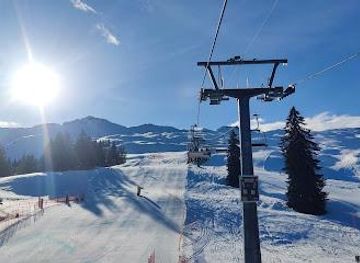
Ski resort
Hoch-Ybrig
A lift-linked mountain area in Schwyz for skiing, hiking, and long alpine views, with a day-trip rhythm shaped by weather and season.


Best landmarks in Glarus
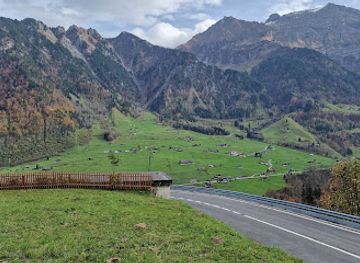
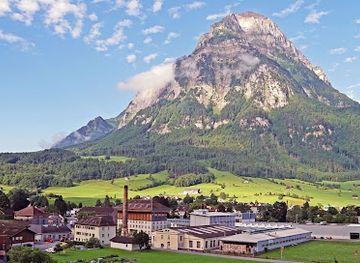
The most recognisable landmarks of Glarus range from civic architecture to dramatic Alpine formations. Glarus town’s planned streets and rebuilt nineteenth-century buildings are reminders of the 1861 fire and the canton’s industrial wealth, while the Landsgemeindeplatz represents the enduring tradition of open-air direct democracy. In Näfels, Freuler Palace is a substantial Renaissance house whose architecture reflects the influence and resources of an important local family; nearby commemorative sites evoke the Battle of Näfels. Klöntalersee is a geographical landmark as much as a leisure destination, its long waters enclosed by steep slopes and woodland. Above Elm, the Tschingelhörner and the Martinsloch form a striking geological ensemble associated with the Sardona tectonic landscape. The exposed rock layers of the UNESCO World Heritage area make the forces that built the Alps unusually legible. Braunwald’s car-free position on a high terrace is another defining feature, offering a distinct settlement pattern rather than a single monumental structure. Together these places express Glarus’s combination of political tradition, industrial history and Alpine geology.
-
 Hotel
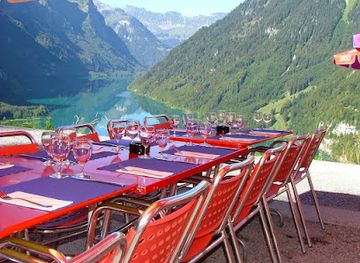
Rhodannenberg
Discover the enchanting Rhodannenberg hotel and restaurant in the Swiss Alps—your gateway to stunning nature and exquisite dining experiences.
-
Tourist attraction
Bergli Stüber Waterfall
Discover the breathtaking Bergli Stüber Waterfall in Fätschbach, Switzerland - a serene natural attraction perfect for nature lovers and photographers.
-
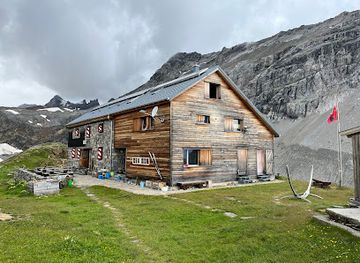
Mountain cabin
Claridenhütte
Experience the stunning Swiss Alps at Claridenhütte—a cozy mountain cabin perfect for relaxation, adventure, and delicious local cuisine.
-
History museum
Anna Göldi Museum Glarus
Explore the Anna Göldi Museum in Glarus, a captivating history museum dedicated to the legacy of Anna Göldi and the dark tales of witchcraft in Switzerland.
Explore Glarus on the map
Plan your trip on one map. See where the top cities, national parks and sights are, and book hotels and experiences in a few clicks.
Best hotels in Glarus
Best restaurants in Glarus
Dining in Glarus reflects eastern Swiss mountain cuisine, the canton’s farming traditions and its former industrial prosperity. Valley towns provide cafés, bakeries, traditional restaurants and contemporary places, while alpine restaurants serve visitors walking or skiing in areas such as Elm and Braunwald. Look for regional cheeses, alpine dairy products, rösti, soups, seasonal game and hearty meat dishes, alongside Swiss staples that are shared nationally rather than exclusive to Glarus. Glarner pastete, a sweet pastry associated with the canton, is a characteristic local speciality and is commonly found in bakeries. Farm shops and seasonal outlets offer cheese and other locally produced goods, while the larger settlements provide more varied menus. Dining patterns change with altitude and season: mountain huts and alpine restaurants may have limited or seasonal service, whereas Glarus and Näfels offer the most dependable choice in the evening. Swiss wine is available, although most production lies elsewhere in the country.
-
Swiss
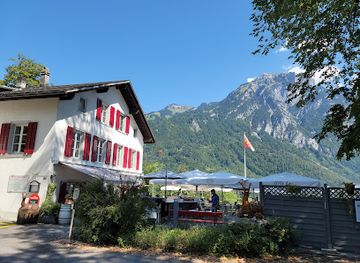
Schwammhöhe
Experience authentic Swiss cuisine at Schwammhöhe in Glarus - a culinary gem with breathtaking views and a warm atmosphere.
-
Restaurant
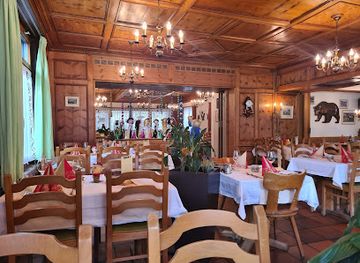
Bären
Experience authentic Swiss cuisine and warm hospitality at Bären in Netstal—your gateway to culinary delights and picturesque landscapes.
-
-
Swiss
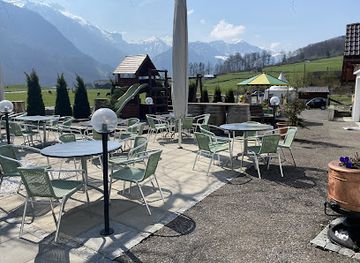
Horgenberg
Experience authentic Swiss cuisine amidst stunning landscapes at Horgenberg in Glarus Süd.
Best bars in Glarus
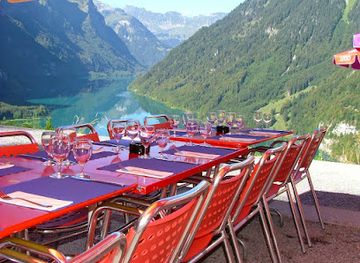
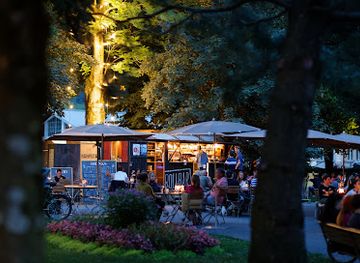
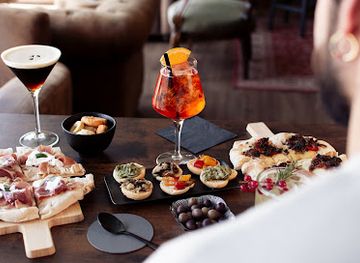
Evening life in Glarus is modest and locally oriented rather than focused on a large club scene. Glarus town and Näfels have the broadest selection of pubs, cafés and restaurants for an evening out, with traditional bars, modern meeting places and occasional live music or cultural programming. In smaller valley communities, social life usually centres on village restaurants, inns and community events, while mountain resorts such as Braunwald and Elm tend to offer a quieter après-ski atmosphere during the winter season. Some breweries and specialist drinks venues may appear in the larger settlements, but opening arrangements and individual businesses change, so current local information is useful. Visitors should not expect an extensive late-night circuit; an evening meal, a local drink or a performance is generally more representative of the canton than clubbing. Public transport becomes less frequent late at night, making advance planning important when staying outside the main valley centres.
-
Swiss
Schwammhöhe
Experience the true flavors of Switzerland at Schwammhöhe, a gem in the Glarus region offering exquisite local cuisine and stunning views.
-
Bar
Gastrorollbar
Experience the vibrant atmosphere of Gastrorollbar, Glarus' go-to destination for artisanal coffee and a wide selection of drinks.
-
Bar
Vista Bar
Discover a vibrant nightlife at Vista Bar in Näfels, offering exquisite cocktails and an energetic dance scene for an unforgettable evening.
-
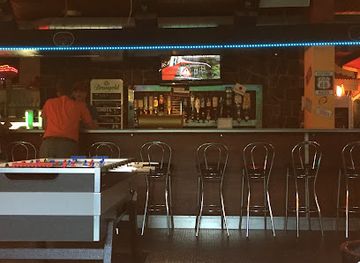
Bar
Bar Route 66
Experience the vibrant nightlife and local charm at Bar Route 66 in Glarus, a must-visit hotspot for tourists seeking relaxation and fun.
Best nightclubs in Glarus
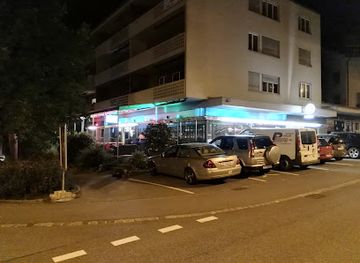
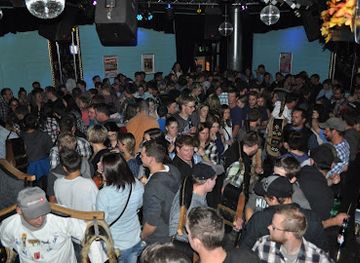
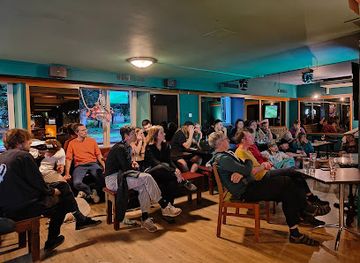
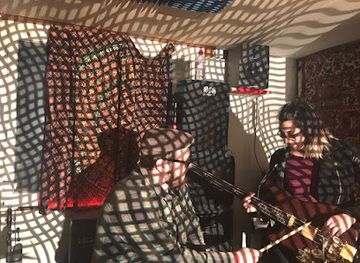
Evening life in Glarus is modest and locally oriented rather than focused on a large club scene. Glarus town and Näfels have the broadest selection of pubs, cafés and restaurants for an evening out, with traditional bars, modern meeting places and occasional live music or cultural programming. In smaller valley communities, social life usually centres on village restaurants, inns and community events, while mountain resorts such as Braunwald and Elm tend to offer a quieter après-ski atmosphere during the winter season. Some breweries and specialist drinks venues may appear in the larger settlements, but opening arrangements and individual businesses change, so current local information is useful. Visitors should not expect an extensive late-night circuit; an evening meal, a local drink or a performance is generally more representative of the canton than clubbing. Public transport becomes less frequent late at night, making advance planning important when staying outside the main valley centres.
-
Bar
Bar Route 66
Experience the vibrant American bar culture at Bar Route 66 in Glarus, where cocktails, laughter, and nostalgia come together for an unforgettable night.
-
Nightclub
BlueBox
Dive into the heart of Niederurnen's nightlife at BlueBox, where dance and music create unforgettable memories.
-
Bar
UFO Bar
Discover the vibrant nightlife at UFO Bar in Glarus, where delicious drinks and a welcoming atmosphere await every visitor.
-
Nightclub
Casa Bruna
Discover Glarus's nightlife at Casa Bruna, a vibrant nightclub offering unforgettable experiences amidst lively music and a welcoming atmosphere.
Best shops in Glarus
Shopping in Glarus is concentrated in the valley towns, where independent retailers, bakeries, cafés and practical local services are more prominent than large-scale luxury outlets. Glarus town offers the widest everyday choice and is a useful place to look for books, regional foods, gifts and goods connected with local culture. Näfels and other established settlements provide smaller high-street selections, while mountain villages focus on visitor essentials and outdoor equipment. Farm shops and alpine dairies are good sources of Glarner cheese, baked goods and other seasonal produce, although availability depends on the time of year. The canton’s textile past is an important part of its heritage, but visitors should distinguish historic manufacturing from assumptions that every shop sells locally made textiles. Markets and special sales may take place periodically rather than daily, so check local listings. For souvenirs, practical choices include regional food products, craft items, books on Glarus history and Alpine maps, all of which connect more directly with the canton than generic Swiss merchandise.
-
Bakery
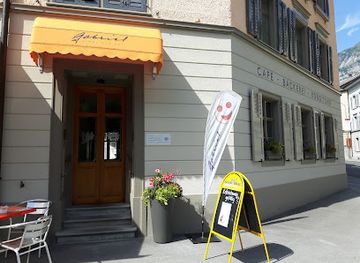
Bäckerei Gabriel - Spielhof Glarus
Experience the authentic flavors of Switzerland at Bäckerei Gabriel, where traditional baking meets modern charm in Glarus.
-
Bakery
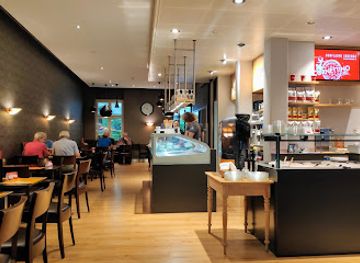
Cornetto
Discover the sweet taste of Switzerland at Cornetto, Glarus' charming bakery and café offering artisanal pastries and a cozy atmosphere.
-
Chocolate artisan
Läderach | Schweiz | Glarus
Discover the art of Swiss chocolate-making at Läderach in Glarus, where exquisite flavors and craftsmanship await every chocolate lover.
-
Supermarket
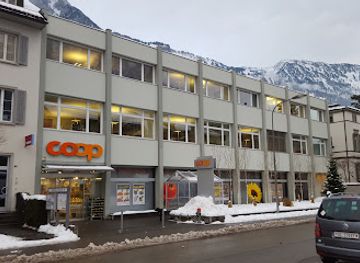
Coop Supermarkt Glarus
Explore the heart of Glarus at Coop Supermarkt, where local flavors and friendly faces await every traveler.

Get your free copy of our complete guide to Glarus, delivered straight to you.
Everything on this page, from attractions and restaurants to essentials and local phrases, in one PDF you can read offline, print or share.
Already have an account? Sign in
Your Glarus guide is ready.
We'll send it to · Not you? Sign out

Getting your guide ready…
We are putting together a fresh copy of the Glarus guide. This can take up to a minute.
This can take a few moments. If your browser asks, choose Allow so the download can start. You'll find the guide in your Downloads folder.
Nothing happened? Download it again
Sorry, the guide is taking longer than usual. Please try again in a minute, or get it by email instead.
Glarus essentials
Currency and Payment
Safety
Emergency Situations
Do's and Don'ts
Local Tips
From Eve
Local phrases worth knowing
You don't need to get them perfect. A few words go a long way, and locals appreciate the effort.
Basics
| English | Local | Say it |
|---|---|---|
| Hello | Hallo | [Hah-lo] |
| Goodbye | Auf Wiedersehen | [Owf Veeder-zayn] |
| Yes | Ja | [Yah] |
| No | Nein | [Nine] |
| Please/You're welcome | Bitte | [Bitt-eh] |
| Thank you | Danke | [Dahn-keh] |
| Excuse me/Sorry | Entschuldigung | [Ent-shool-dee-goong] |
| How are you? | Wie geht's? | [Vee gates?] |
| Fine. And you? | Gut. Und dir? | [Gooot. Oond deer?] |
| Do you speak English? | Sprechen Sie Englisch? | [Shprekh-en Zee Eng-lish?] |
| I don't understand | Ich verstehe nicht | [Ikh fersh-teh-eh nikht] |
Eating & Drinking
| English | Local | Say it |
|---|---|---|
| I'd like to see the menu, please | Ich hätte gerne die Speisekarte, bitte | [Ikh het-teh gair-neh dee Shpy-zeh-kahr-teh, bitt-eh] |
| I don't eat meat | Ich esse kein Fleisch | [Ikh ess-eh kine Flysh] |
| Cheers! | Prost! | [Prohst!] |
| I would like to pay, please | Ich würde gerne bezahlen, bitte | [Ikh vur-deh gair-neh beh-tsah-len, bitt-eh] |
Emergencies
| English | Local | Say it |
|---|---|---|
| Help! | Hilfe! | [Hihl-feh!] |
| Go away! | Geh weg! | [Gay vek!] |
| Call the Police! | Rufen Sie die Polizei! | [Roof-en Zee dee Pol-it-zai!] |
| Call a doctor! | Rufen Sie einen Arzt! | [Roof-en Zee eye-nen Artz!] |
| I'm lost | Ich bin verloren | [Ikh bin fer-lo-ren] |
| I'm ill | Ich bin krank | [Ikh bin krank] |
Shopping
| English | Local | Say it |
|---|---|---|
| I'd like to buy... | Ich möchte kaufen... | [Ikh meur-teh kow-fen...] |
| I'm just looking | Ich schaue nur | [Ikh shau-eh noor] |
| How much is it? | Wie viel kostet es? | [Vee feel kost-et es?] |
| That's too expensive | Das ist zu teuer | [Dahs ist tsu toy-er] |
| Can you lower the price? | Können Sie den Preis senken? | [Kern-en Zee den Price senk-en?] |
Time & Numbers
| English | Local | Say it |
|---|---|---|
| What time is it? | Wie spät ist es? | [Vee shpaht ist es?] |
| It's one o'clock | Es ist ein Uhr | [Es ist ine Oor] |
| Half past (10) | Halb (10) | [Hahlb (10)] |
| Morning | Morgen | [Mor-gen] |
| Afternoon | Nachmittag | [Nahkh-mit-tahg] |
| Evening | Abend | [Ah-bend] |
| Yesterday | Gestern | [Gehs-tern] |
| Today | Heute | [Hoy-teh] |
| Tomorrow | Morgen | [Mor-gen] |
| 1 | Eins | [Eyns] |
| 2 | Zwei | [Tsvi] |
| 3 | Drei | [Dry] |
| 4 | Vier | [Fear] |
| 5 | Fünf | [Foonf] |
| 6 | Sechs | [Zex] |
| 7 | Sieben | [Zee-ben] |
| 8 | Acht | [Aht] |
| 9 | Neun | [Noyn] |
| 10 | Zehn | [Tsen] |
Transport & Directions
| English | Local | Say it |
|---|---|---|
| Where's a/the...? | Wo ist ein/das...? | [Vo ist ine/dahs...?] |
| What's the address? | Was ist die Adresse? | [Vahs ist dee Ah-dress-eh?] |
| Can you show me (on the map)? | Können Sie mir (auf der Karte) zeigen? | [Kern-en Zee meer (owf der Kar-teh) tsai-gen?] |
| When's the next (bus)? | Wann kommt der nächste (Bus)? | [Vahn kommt dair nay-steh (Boos)?] |
| A ticket (to ....) | Ein Ticket (nach....) | [Ine Ticket (nahkh....)] |
History of Glarus
Early Alpine Settlement and Roman-Era Links
The Linth valley and its side valleys were settled long before the modern canton emerged. Archaeological evidence indicates prehistoric activity, while Roman influence reached the wider Linth corridor and connected Alpine communities with routes across eastern Switzerland. Later Alemannic settlement shaped many place names and farming communities. The mountainous terrain encouraged a pattern of dispersed villages, pasture use and seasonal movement between valley floors and alpine meadows, foundations that remained important long after Glarus became a recognised political territory.
Medieval Glarus and the Habsburg Connection
During the Middle Ages, Glarus developed under the influence of the Säckingen convent, whose ecclesiastical rights were significant in the valley. Habsburg power later expanded into the region, creating tensions with the local population and the emerging Swiss Confederacy. Glarus joined the Confederacy in 1352, although the political relationship was contested and temporarily altered. Medieval churches, settlement patterns and the memory of communal self-government reflect the gradual transition from ecclesiastical and dynastic authority towards a more autonomous rural canton.
The Battle of Näfels, 1388
The Battle of Näfels was the decisive episode in Glarus’s struggle against Habsburg attempts to reassert control. On 9 April 1388, Glarus forces, supported by troops from the Swiss Confederacy, defeated a substantially larger Habsburg-led army near Näfels. The victory secured the canton’s position within the Confederacy and became central to Glarus’s historical identity. The annual Näfelser Fahrt commemorates the battle through a religious and civic procession, linking medieval history with a living tradition of remembrance.
Reformation, Confessional Division and the Landsgemeinde
The Reformation reached Glarus during the sixteenth century, notably through the activity of Huldrych Zwingli, who had served as a priest in Glarus before becoming a leading reformer in Zürich. The canton became confessionally divided, with Reformed and Catholic communities living in different parts of the territory. This division influenced political and social life for centuries. At the same time, the Landsgemeinde developed as an open-air assembly through which eligible citizens exercised direct political authority, a tradition that helped define Glarus’s reputation for participatory government.
Textile Manufacturing and Industrial Transformation
From the eighteenth century onwards, linen production, cotton processing, printing and other textile activities transformed Glarus. Water power from the Linth and its tributaries supported mills, while merchants connected the valley’s products with wider European markets. Industrial growth brought wealth to some families, encouraged new housing and civic buildings, and altered the relationship between villages and surrounding farmland. Much of the canton’s nineteenth-century character, including former factory buildings and prosperous houses, is linked to this textile economy, even though the industry later declined under international competition.
The Fire of Glarus and Nineteenth-Century Rebuilding
A major fire destroyed much of Glarus town in 1861, prompting an ambitious reconstruction based on a planned street layout rather than a simple restoration of the medieval settlement. The rebuilt town incorporated wider roads, more regular building lines and improved measures against future fires. Its architecture illustrates the confidence of an industrial canton at the height of its economic development. The event also demonstrates how natural and urban risks, combined with modern planning, shaped the appearance of the present-day cantonal capital.
Modern Canton, Hydropower and Mountain Tourism
In the twentieth century, Glarus continued to adapt as textile manufacturing contracted and hydropower, engineering, services and tourism assumed greater importance. Reservoirs and power stations became part of the valley’s industrial landscape, while mountain destinations such as Braunwald and Elm developed facilities for walking, skiing and family recreation. The canton’s modern identity rests on this mixture of working valley, historic communities and protected Alpine landscapes. The recognition of the Sardona tectonic landscape as a UNESCO World Heritage site has further highlighted Glarus’s geological significance.
Glarus in Photos
Browse through our photo collection highlighting the charm and character of the destination.
Neighbouring regions of Glarus
The closest regions to Glarus, if you have time for more than one.
-

-

-
-

-


Swipe for more regions
Explore more

Explore more of Switzerland
Discover Switzerland's majestic landscapes, vibrant cities, and rich culture. From alpine adventures to urban exploration, experience the best of Europe in one destination.
Explore Switzerland