

Free Graubünden Travel Guide & Mobile App
Explore Graubünden with free travel guides. Discover regional history, expert tips, proposed trips, and audio guides on web or mobile app.


Explore Graubünden’s alpine valleys, Engadin lakes, historic villages, scenic railways and multilingual mountain culture in south-eastern Switzerland.
Read more about Graubünden
When is the best time to visit Graubünden?
Best: June–August · 20–23°C| Month | High (°C) | Rainfall (mm) |
|---|---|---|
| January | 3 | 60 |
| February | 4 | 50 |
| March | 8 | 60 |
| April | 12 | 70 |
| May | 17 | 80 |
| June (best) | 20 | 90 |
| July (best) | 23 | 100 |
| August (best) | 22 | 100 |
| September | 18 | 90 |
| October | 12 | 80 |
| November | 5 | 70 |
| December | 3 | 60 |
Getting to and around Graubünden
How to get there
Transportation
Top city travel guides in Graubünden
The cities of Graubünden, and the easiest places to base yourself.
-

-

-

-

-

-


Swipe for more cities
Destinations in Graubünden
Resorts, valleys and scenic spots worth a trip of their own.
-

-

-

-

-

-


Swipe for more destinations
Best attractions in Graubünden
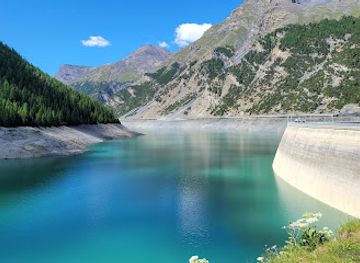
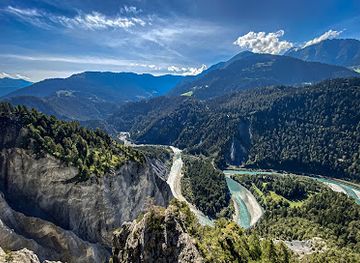
Graubünden’s attractions are distributed across a large network of valleys rather than concentrated in one city. Chur offers a historic old town, cathedral complex and museums, while the Engadin combines resort culture in St Moritz with villages, lakes and traditional houses around Pontresina, Samedan and the Lower Engadin. Davos, Arosa, Flims and Laax provide extensive opportunities for skiing, hiking, climbing, mountain biking and winter walking, each with different terrain and seasonal character. The Swiss National Park near Zernez is the canton’s best-known protected landscape, with marked trails through forests, meadows and high mountain terrain. Cultural and historic highlights include the monastery of St John at Müstair, Disentis Abbey and the UNESCO-listed Albula and Bernina railway landscape. The Rhine Gorge, often called the Swiss Grand Canyon, introduces a striking geological contrast to the high Engadin, while Val Bregaglia and Val Poschiavo offer southern architecture, chestnut landscapes and Italian-speaking traditions. Visitors should allow for substantial travel time between districts and check seasonal access to mountain facilities.
-
Tourist attraction
Heididorf
Explore Heididorf in Maienfeld, Switzerland, a delightful homage to the world of 'Heidi' with rich cultural heritage and breathtaking alpine views.
-
Spa
Bormio Terme Spa
Experience the ultimate relaxation at Bormio Terme Spa, where natural thermal baths meet luxurious wellness treatments in the heart of the Italian Alps.
-
Tourist attraction
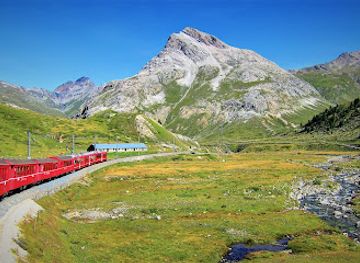
Bernina Express
Experience a breathtaking train journey through the Swiss Alps on the iconic Bernina Express, showcasing stunning landscapes and charming villages.
-
Tourist attraction
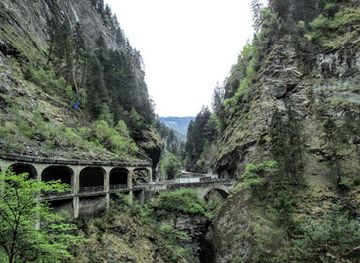
Viamala
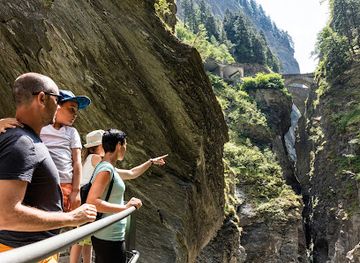
Discover the breathtaking beauty of Viamala Gorge in Switzerland, a must-visit destination for nature lovers and adventure seekers.


Best landmarks in Graubünden
Graubünden’s landmarks express the canton’s layered history and dramatic topography. Chur’s cathedral, episcopal quarter and medieval old town form the most important urban historic ensemble, while the Benedictine monastery of St John at Müstair preserves renowned Carolingian-era architecture and wall paintings. Tarasp Castle rises above the Lower Engadin as a powerful medieval silhouette, and Disentis Abbey remains a major religious and cultural landmark in the Surselva. The UNESCO-listed Rhaetian Railway landscape is represented by engineering works such as the Landwasser Viaduct and the high crossings of the Albula and Bernina routes, where bridges and tunnels are integrated into the mountain scenery. In the west, the Rhine Gorge provides a natural landmark of pale cliffs, wooded slopes and a winding river; in the Upper Engadin, the lakes around St Moritz, Silvaplana and Sils create a distinctive open alpine panorama. These places are spread across the canton and are best approached as part of valley-based itineraries rather than a single sightseeing circuit.
-
Tourist attraction
Viamala
Experience the breathtaking beauty of Viamala Gorge, a natural wonder in Switzerland, perfect for hiking and exploring stunning landscapes.
-
Park
Parc Ela
Discover the enchanting landscapes and diverse wildlife of Parc Ela, a true gem in the Swiss Alps offering adventure and tranquility.
-
National park
Swiss National Park
Explore the stunning landscapes and rich biodiversity of the Swiss National Park, a must-visit natural wonder in the heart of the Alps.
-
Observation deck
Il Spir
Experience breathtaking views at Il Spir, the premier observation deck in Flims, Switzerland, surrounded by stunning alpine landscapes and scenic trails.
Explore Graubünden on the map
Plan your trip on one map. See where the top cities, national parks and sights are, and book hotels and experiences in a few clicks.
Best hotels in Graubünden
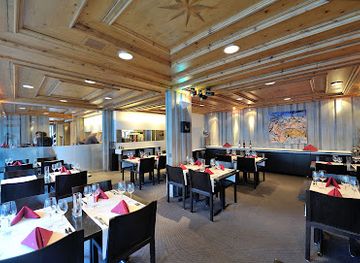
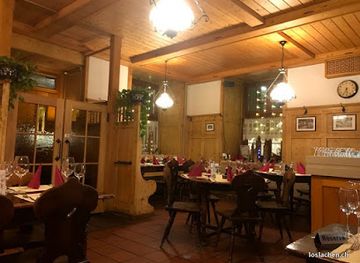
Best restaurants in Graubünden
Dining in Graubünden reflects its three-language culture, highland agriculture and historic links across the Alps. Regional specialities include Bündnerfleisch, air-dried meat traditionally associated with the canton, Bündner nut tart, barley soup, alpine cheeses and capuns, which combine leaf-wrapped fillings with a savoury sauce. Engadin villages offer traditional restaurants in historic houses, while Chur and the larger resorts provide a broader range of modern Swiss, Italian and international cooking. In Val Poschiavo, Val Bregaglia and Val Mesolcina, Italian culinary influences are particularly evident in pasta, polenta, chestnuts and local cheeses. Mountain huts and alpine restaurants serve practical dishes suited to walkers and skiers, often with regional ingredients, while farm shops and markets are useful for buying dried meat, cheese, bread, preserves and spirits. Menus and prices vary considerably between remote valleys, resort centres and the cantonal capital, so advance reservations are sensible during peak ski and summer periods.
-
Swiss
Rätushof
Experience authentic Swiss cuisine at Rätushof in Chur, where tradition meets modern culinary art in a welcoming atmosphere.
-
Fine Dining
Schloss Schauenstein
Discover unparalleled fine dining at Schloss Schauenstein in Fürstenau—where culinary artistry meets breathtaking surroundings.
-
Swiss
Sommerau
Discover the heart of Swiss cuisine at Sommerau - where every meal tells a story through authentic flavors.
-
Swiss
Restaurant Drei Bünde
Experience authentic Swiss cuisine at Restaurant Drei Bünde in Chur – where tradition meets taste in every delightful dish.
Best bars in Graubünden
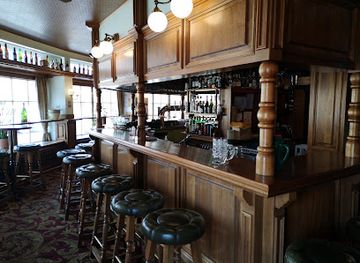
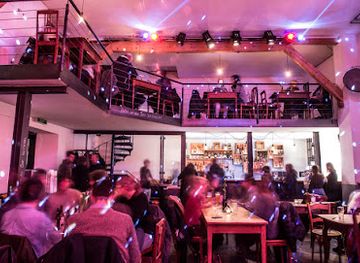
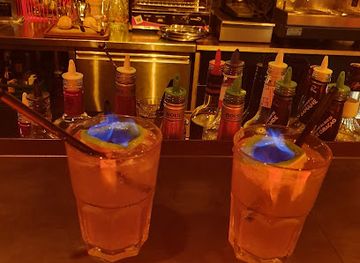
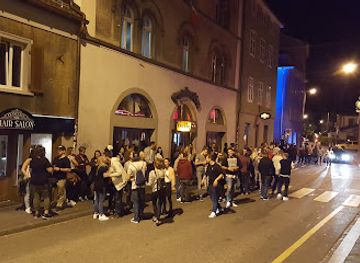
Evening life in Graubünden ranges from traditional village inns to polished resort lounges and a modest selection of clubs. Chur has the canton’s broadest urban choice, with bars, cafés, live music and late-night venues concentrated around the old town and central streets. St Moritz and Davos offer hotel bars, cocktail lounges and seasonal après-ski venues, attracting an international clientele during the winter season; their atmosphere and opening patterns can change between peak periods and quieter months. Smaller Engadin and mountain communities generally centre their evenings on restaurants, local bars, wine rooms and hotel lounges rather than a large club scene. Breweries and regional drinks can be found in several towns, while live performances and cultural programmes provide alternatives to nightlife based on alcohol. In rural valleys, public transport becomes less frequent at night, so check the return journey before staying out late.
-
Pizza
S'Pub Sunshine Pub
Experience the vibrant atmosphere and delicious pizzas at S'Pub Sunshine Pub in Chur, where local flavors meet friendly service.
-
Bar
Werkstatt Chur
Experience the vibrant nightlife and cultural richness of Werkstatt Chur, the ultimate destination for cocktails, music, and culinary delights.
-
Restaurant
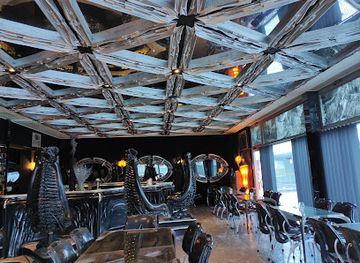
Giger-Bar Kalchbühl
Discover a surreal dining experience at Giger-Bar Kalchbühl in Chur, where art and gastronomy unite in a breathtaking atmosphere.
-
Bar
Schall & Rauch
Discover the vibrant nightlife at Schall & Rauch, Chur's top spot for cocktails and socializing in a cozy atmosphere.
Best nightclubs in Graubünden
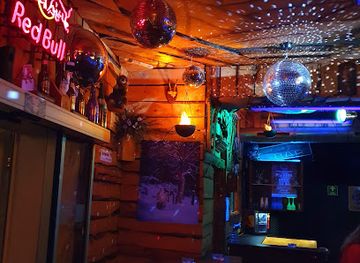
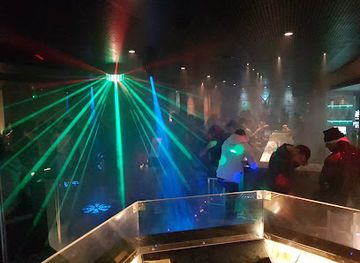
Evening life in Graubünden ranges from traditional village inns to polished resort lounges and a modest selection of clubs. Chur has the canton’s broadest urban choice, with bars, cafés, live music and late-night venues concentrated around the old town and central streets. St Moritz and Davos offer hotel bars, cocktail lounges and seasonal après-ski venues, attracting an international clientele during the winter season; their atmosphere and opening patterns can change between peak periods and quieter months. Smaller Engadin and mountain communities generally centre their evenings on restaurants, local bars, wine rooms and hotel lounges rather than a large club scene. Breweries and regional drinks can be found in several towns, while live performances and cultural programmes provide alternatives to nightlife based on alcohol. In rural valleys, public transport becomes less frequent at night, so check the return journey before staying out late.
-
Nightclub
Loucy Hall - Bar Club Eventhall Chur
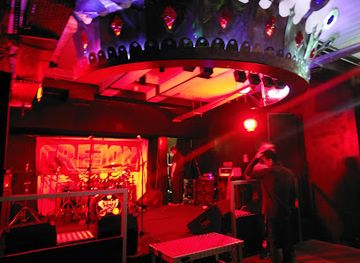
Discover the heartbeat of Chur's nightlife at Loucy Hall, a premier nightclub and live music venue featuring electrifying performances and a vibrant atmosphere.
-
Bar
Confetti aperitif bar
Experience the vibrant nightlife at Confetti Aperitif Bar in Chur, Switzerland, offering exquisite drinks in a cozy atmosphere.
-
Disco club
Selig Chur
Explore the vibrant nightlife at Selig Chur, a top disco club for music, dancing, and unforgettable evenings in the heart of Chur.
-
Sports bar
Caprizzi Sportsbar
Experience the thrill of live sports and a vibrant atmosphere at Caprizzi Sportsbar, the perfect spot for relaxation and excitement in Davos.
Best shops in Graubünden
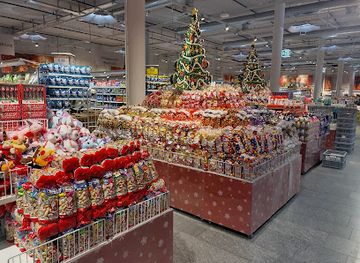
Shopping in Graubünden is strongest in Chur, where the pedestrianised old town combines everyday Swiss retailers with independent shops, galleries, bakeries and delicatessens. Resort centres such as St Moritz and Davos add outdoor equipment, jewellery, fashion and luxury goods, although the retail character is seasonal and prices reflect Switzerland’s generally high costs. Smaller Engadin villages are better suited to browsing craft workshops, art galleries, bakeries and shops selling regional food than to extensive retail shopping. Look for Bündnerfleisch, alpine cheese, nut tart, honey, preserves, wines from southern valleys and locally produced spirits as practical edible souvenirs. Traditional woodwork, textiles, ceramics and contemporary design may also be available through galleries and craft businesses. Market activity varies by town and season, so visitors should check local arrangements rather than assume that a weekly market operates year-round. Independent shops often close for a longer midday break than international visitors expect.
-
Outlet mall
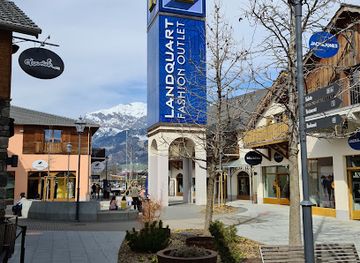
Landquart Fashion Outlet
Shop high-end brands at discounted prices in the scenic Landquart Fashion Outlet, a must-visit destination for tourists in Switzerland.
-
Tourist attraction
Viamala
Experience the breathtaking beauty of Viamala Gorge, a natural wonder perfect for hiking and unforgettable memories in the Swiss Alps.
-
Shopping mall
Einkaufszentrum City West Chur
Explore Einkaufzentrum City West Chur: A Shopping Haven with Diverse Retail and Dining Experiences in the Heart of Chur.
-
Outlet mall
Norrøna Outlet Store Landquart
Explore top-notch outdoor clothing and gear at the Norrøna Outlet Store in Landquart, Switzerland - where adventure meets fashion.

Get your free copy of our complete guide to Graubünden, delivered straight to you.
Everything on this page, from attractions and restaurants to essentials and local phrases, in one PDF you can read offline, print or share.
Already have an account? Sign in
Your Graubünden guide is ready.
We'll send it to · Not you? Sign out

Getting your guide ready…
We are putting together a fresh copy of the Graubünden guide. This can take up to a minute.
This can take a few moments. If your browser asks, choose Allow so the download can start. You'll find the guide in your Downloads folder.
Nothing happened? Download it again
Sorry, the guide is taking longer than usual. Please try again in a minute, or get it by email instead.
Graubünden essentials
Currency and Payment
Safety
Emergency Situations
Do's and Don'ts
Local Tips
From Eve
Local phrases worth knowing
You don't need to get them perfect. A few words go a long way, and locals appreciate the effort.
Basics
| English | Local | Say it |
|---|---|---|
| Hello | Allegra | [ah-leh-grah] |
| Goodbye | Adieu | [ah-dyuh] |
| Yes | Gea | [geh-ah] |
| No | Na | [nah] |
| Please/You're welcome | Per plaschair | [per plahsh-kair] |
| Thank you | Grazia | [grah-tsee-ah] |
| Excuse me/Sorry | Scusai | [skoos-eye] |
| How are you? | Co vai? | [koh vy] |
| Fine. And you? | Bun. E ti? | [boon. eh tee] |
| Do you speak English? | Parles ti englais? | [par-les tee ahn-glay] |
| I don't understand | Na capesch | [nah kah-pesh] |
Eating & Drinking
| English | Local | Say it |
|---|---|---|
| I'd like to see the menu, please | Vuless vidar il menu, per plaschair | [voo-less vee-dar eel meh-nu, per plahsh-kair] |
| I don't eat meat | Na mang a carne | [nah mahn-g ah kar-nah] |
| Cheers! | Salute! | [sah-loo-teh] |
| I would like to pay, please | Vuless pagar, per plaschair | [voo-less pah-gar, per plahsh-kair] |
Emergencies
| English | Local | Say it |
|---|---|---|
| Help! | Giuda! | [gee-oo-dah] |
| Go away! | Va via! | [vah vee-ah] |
| Call the Police! | Clama la polizia! | [klah-mah lah poh-lit-see-ah] |
| Call a doctor! | Clama in medic! | [klah-mah in meh-deek] |
| I'm lost | Sunt pers | [soont pears] |
| I'm ill | Sunt malat | [soont mah-laht] |
Shopping
| English | Local | Say it |
|---|---|---|
| I'd like to buy... | Vuless cumprar... | [voo-less koom-prar] |
| I'm just looking | Sunt be schar | [soont beh shahr] |
| How much is it? | Quant costa? | [kwant koh-stah] |
| That's too expensive | Quella es memia cara | [kwel-lah es meh-mee-ah kah-rah] |
| Can you lower the price? | Podes reducir il prezz? | [poh-des reh-doo-cheer eel pretz] |
Time & Numbers
| English | Local | Say it |
|---|---|---|
| What time is it? | Co l'ura es? | [koh loo-rah es] |
| It's one o'clock | Es l'ura ina | [es loo-rah ee-nah] |
| Half past (10) | Mez'ura (10) | [mez-oo-rah (ten)] |
| Morning | Matg | [maht] |
| Afternoon | Sira | [see-rah] |
| Evening | Sera | [seh-rah] |
| Yesterday | Ieri | [yeh-ree] |
| Today | Oz | [oh-ts] |
| Tomorrow | Dumeng | [doo-meng] |
| 1 | In | [een] |
| 2 | Dua | [doo-ah] |
| 3 | Tre | [treh] |
| 4 | Quatter | [kwah-ter] |
| 5 | Cinque | [cheen-kweh] |
| 6 | Sies | [see-es] |
| 7 | Set | [set] |
| 8 | Ot | [oht] |
| 9 | Nove | [noh-veh] |
| 10 | Dies | [dee-es] |
Transport & Directions
| English | Local | Say it |
|---|---|---|
| Where's a/the...? | Und es in...? | [oond es in] |
| What's the address? | Cosa es l'adressa? | [koh-zah es l'ah-dres-sah] |
| Can you show me (on the map)? | Podes mostrar (sin la carta)? | [poh-des mois-trar (seen lah kar-tah)] |
| When's the next (bus)? | Quand es il prochain (bus)? | [kwand es eel proh-shan] |
| A ticket (to ....) | In biliet (per ....) | [een bee-lee-et (per)] |
History of Graubünden
Prehistoric Alpine Communities
People have used Graubünden’s valleys and passes since prehistoric times, leaving archaeological evidence of settlement, agriculture and movement across the Alps. The region’s passes linked the northern Alpine foreland with areas south of the mountains, while high meadows supported seasonal pastoralism. Bronze Age and Iron Age finds demonstrate that the valleys were connected to wider trading and cultural networks rather than being isolated mountain pockets. This long relationship between settlement, transalpine movement and summer grazing remains visible in traditional village forms, alpine huts and the continuing importance of livestock farming.
Roman Raetia and the Alpine Passes
Rome incorporated the area into the province of Raetia during the first century BC and AD, consolidating control over routes through the Alps. Roads and settlements connected the Rhine valley and the Engadin with territories to the south, while Roman influence shaped administration, trade and language. Chur developed as an important early centre and later became the seat of a bishop. Although much of the Roman infrastructure has disappeared or been altered, the canton’s valleys and passes still reflect the strategic geography that made this mountainous territory valuable to successive powers.
The Bishopric of Chur and Medieval Monastic Culture
During the Middle Ages, the bishopric of Chur, noble families and monasteries competed and collaborated for influence across the valleys. Religious foundations helped organise settlement, farming and education, while castles and fortified houses guarded routes and expressed aristocratic power. The Benedictine monastery of Disentis became a major institution in the Surselva, and the monastery of St John at Müstair preserves outstanding early medieval wall paintings and architecture. Medieval German, Romansh and Italian cultural influences developed alongside one another, contributing to the canton’s lasting linguistic complexity.
The Three Leagues, 14th–18th Centuries
From the late Middle Ages, local communities and territories formed the Grey League, the League of the Ten Jurisdictions and the League of the House of God. Together these alliances became known as the Three Leagues, a flexible political system that limited the power of individual rulers and governed much of the area now comprising Graubünden. The leagues controlled important Alpine routes and maintained links with neighbouring lands, although their politics could be turbulent. Their legacy is central to the canton’s tradition of communal autonomy and helped shape its later relationship with the Swiss Confederation.
Reformation, Conflict and the Valtellina
The Reformation reached the Three Leagues in the sixteenth century, producing a mixed religious landscape in which Protestant and Catholic communities existed close to one another. The leagues also held territories south of the Alps, including the Valtellina, making them participants in wider European power struggles. During the Thirty Years’ War, religious and political conflict brought severe violence to the region, particularly in the Bündner Wirren. These events weakened the leagues and eventually contributed to the loss of their southern territories, while religious pluralism remained part of Graubünden’s historical identity.
Integration into Modern Switzerland
The upheavals of the Napoleonic period ended the independent political order of the Three Leagues. Graubünden became a canton of the Swiss Confederation in 1803, retaining substantial linguistic and regional diversity within the new federal state. Improved roads and later railways reduced the isolation of the valleys, strengthened trade and encouraged administrative integration. Chur grew as the principal urban and transport centre, while communities across the canton continued to preserve local institutions, architecture and language traditions.
Railways, Alpine Tourism and Winter Sport
From the late nineteenth century, railways and improved roads transformed Graubünden’s economy and reputation. The Rhaetian Railway opened access to the Albula and Bernina landscapes, while resorts such as St Moritz and Davos developed hotels, spas and winter sports. Tourism brought new employment and infrastructure but also altered village economies and building patterns. The railway corridors, grand hotels and sporting traditions remain visible expressions of this transformation, alongside a modern economy that combines tourism with agriculture, services, transport and environmental management.
Graubünden in Photos
Browse through our photo collection highlighting the charm and character of the destination.
Neighbouring regions of Graubünden
The closest regions to Graubünden, if you have time for more than one.
-

-
-

-

-


Swipe for more regions
Explore more

Explore more of Switzerland
Discover Switzerland's majestic landscapes, vibrant cities, and rich culture. From alpine adventures to urban exploration, experience the best of Europe in one destination.
Explore Switzerland